Tag: FMCG

  • Indian TV advertising takes a beating as FMCG brands tighten purse strings

    Indian TV advertising takes a beating as FMCG brands tighten purse strings

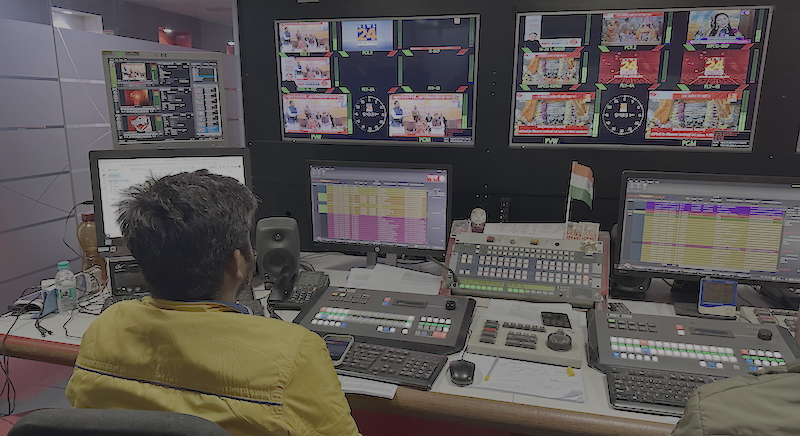
    MUMBAI: India’s television advertising market has hit the skids. The Economic Times reported that ad volumes plummeted 10 per cent year-on-year in the first nine months of 2025, according to TAM AdEx data, as fast-moving consumer goods companies—the industry’s biggest spenders—slashed budgets in response to anaemic consumer demand. Of course, the ban on real money gaming platforms in end-August added to the shrinkage in ad spends too . 
    The carnage shows up in broadcaster balance sheets. Zee Entertainment’s advertising income tumbled 11 per cent to Rs 3,591 crore. Sony Pictures Networks India posted a nine per cent drop to Rs 2,606 crore. Sun TV Network’s advertising and broadcast slot sales fell four per cent to Rs 1,440 crore. Star India, now merged with the erstwhile Viacom18, kept mum on the split between advertising and subscription revenue.
    The culprit is clear: viewers are ditching appointment viewing for on-demand convenience, leaving linear television scrambling for relevance.
    Food and beverages dominated advertising between January and September, claiming 21 per cent of total ad volume. Personal care, services, household products and retail rounded out the top categories. The top ten sectors hoovered up 88 per cent of all TV advertising—proof that consumer brands still see television as the mass-reach medium par excellence.
    TAM Media chief executive LV Krishnan explained that the “drop is largely led by softening of market conditions, whereby consumption had dipped, resulting in a cut in ad budgets. This is a pre-GST reduction period.
    Among individual advertisers, Hindustan Unilever remained the heavyweight champion, followed by Reckitt Benckiser India and Godrej Consumer Products. The top ten advertisers accounted for 42 per cent of total ad volume.
    General entertainment channels and news outlets continued to attract the lion’s share of advertising, together accounting for 57 per cent of total volume. News, movies and music saw a marginal drop compared with 2024, whilst general entertainment gained slightly—a sign that high-reach programming still packs a punch.

    Krishnan reckons the final quarter of 2025 will see year-on-year growth, thanks to GST rate cuts that kicked in on 22 September. He estimates the reforms will spur consumption and inject Rs 5,400 crore into overall advertising during the festive season, on top of organic festive growth. 

    If the green shoots turn into a proper recovery, television may yet claw back some swagger. For now, though, it’s licking its wounds.

  • ITC’s diversification strategy gains traction as profits climb to record highs

    ITC’s diversification strategy gains traction as profits climb to record highs

    KOLKATA: ITC, India’s Rs 1.25 lakh crore conglomerate, demonstrated the resilience of its multi-business model in the quarter ended 30th September 2025, posting net profit from continuing operations of Rs 5,179.82 crore—up 4.1 per cent—as its diversification investments continue to mature. For the half year, profit surged three per cent to Rs 10,092.18 crore, underscoring the momentum building across its portfolio.

    The numbers reveal a company hitting its stride. Cigarettes, the engine that funds ITC’s expansion ambitions, delivered robust 6.7 per cent revenue growth to Rs 8,722.83 crore, with segment profit reaching Rs 5,240.66 crore. This performance, achieved despite elevated taxation, provides the cash flow for the group’s ambitious forays into branded foods, personal care and digital ventures.

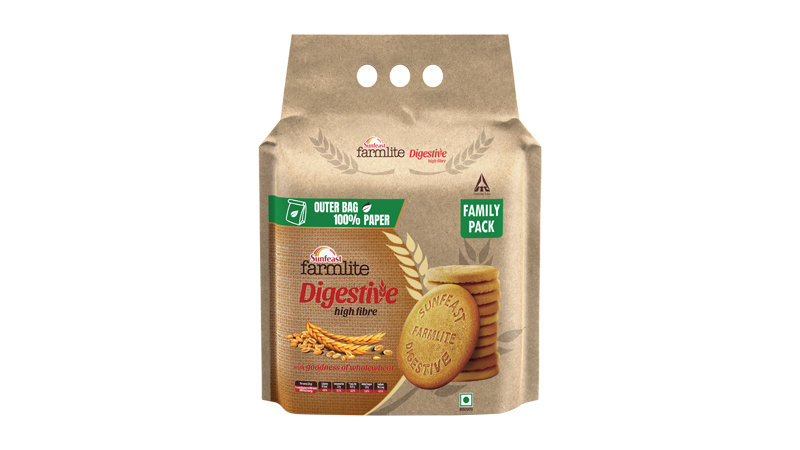
    More importantly, ITC’s strategic investments in FMCG are showing tangible progress. The other FMCG businesses—spanning Aashirvaad staples, Bingo snacks, Sunfeast biscuits and personal care products—grew revenue 6.9 per cent to Rs 5,964.44 crore. Whilst brand-building costs continue to weigh on near-term margins, EBITDA for this segment improved to Rs 594.08 crore. Management’s patient capital approach is paying dividends as these brands gain market share in India’s vast consumption economy.

    The paperboards division, a testament to ITC’s manufacturing prowess, grew revenue 5 per cent to Rs 2,219.92 crore with healthy margins. The agri business, though affected by seasonal commodity price volatility, remains a critical link in ITC’s farm-to-fork value chain.

    On a consolidated basis—reflecting the group’s expanding footprint through subsidiaries including ITC Infotech and new acquisitions like Sresta Natural Bioproducts—the picture brightens further. Revenue stood at Rs 21,255.86 crore whilst profit climbed 4.2 per cent to Rs 5,186.55 crore. For the half year, consolidated profit jumped 4.6 per cent to Rs 10,529.96 crore, with earnings per share at Rs 8.28.

    The company’s balance sheet remains fortress-like, with total assets of Rs 90,802.66 crore and negligible debt. Cash generation remained strong, with operating activities throwing off Rs 5,782.15 crore in the half year, funding both dividends of Rs 9,823.58 crore and continued capital expenditure of Rs 1,006.71 crore.

    The board’s decision to appoint Amitabh Kant, architect of India’s economic reforms as former Niti Aayog chief, as an independent director signals ambitions for the next phase of growth. The reappointment of Hemant Malik as wholetime director ensures continuity in execution.

    ITC’s transformation from a cigarette company into a diversified consumer powerhouse is well underway. With market-leading positions emerging in multiple FMCG categories, a robust pipeline of innovation, and the financial muscle to sustain long-term investments, the company is positioning itself to capture India’s consumption boom. The patience investors have shown may soon be rewarded as scale benefits begin to flow through.

  • Akash Nihalani joins RCM as general manager, marketing

    Akash Nihalani joins RCM as general manager, marketing

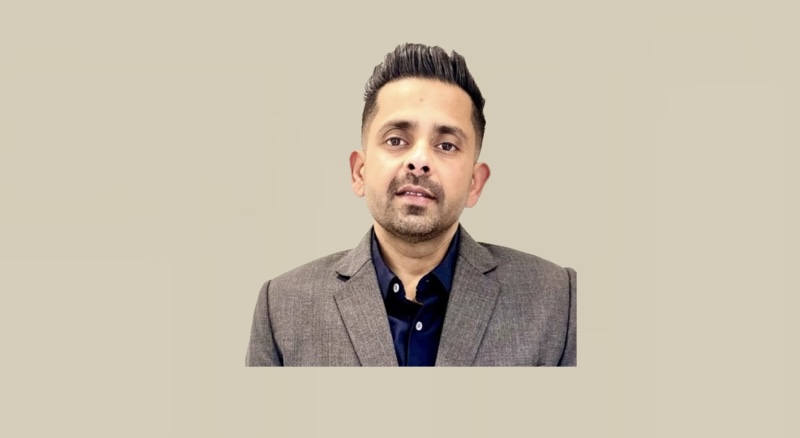
    MUMBAI: Akash Nihalani, a growth-focused marketing and business leader with over a decade of experience, has taken charge as general manager – marketing at RCM, one of India’s largest direct-selling companies. With a portfolio spanning FMCG, nutraceuticals, personal care, cosmetics, fashion, and accessories, RCM reaches over 2 million households nationwide.

    Nihalani brings a proven track record in building marketing ecosystems, leading cross-functional teams of 30 plus professionals and managing portfolios of Rs 35 crore. He has delivered measurable growth across sectors including FMCG, luxury, BFSI, entertainment, logistics, and technology, consistently improving brand visibility, customer acquisition, and retention through integrated strategies.

    His leadership philosophy blends a builder mindset, business acceleration, and a global-ready approach, combining performance marketing, digital storytelling, and data-led decision-making. At RCM, Nihalani focuses on shaping brand identity, strengthening customer engagement, and scaling marketing communications to create meaningful impact.

    Reflecting on his career, Nihalani recently concluded a chapter at The Minimalist, where he led a 30 plus member team through high-pressure campaigns, describing the experience as a journey of energy, creativity, and collaborative learning. He steps into his RCM role with a purpose-driven outlook, aligning with the company’s values of health, women empowerment, and self-reliance, aiming to contribute to building a stronger, more self-sufficient India.

  • Kantar Insights & Airtel bag top honour at MRSI’s 33rd research seminar

    Kantar Insights & Airtel bag top honour at MRSI’s 33rd research seminar

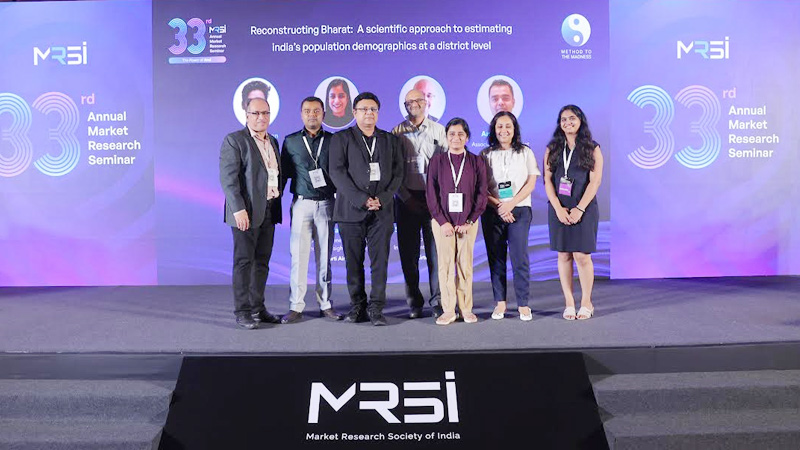
    MUMBAI: Held in Mumbai, the event crowned Kantar Insights and Bharti Airtel Ltd as winners for their paper, ‘Reconstructing Bharat: A scientific approach to estimating India’s population demographics at a district level.’ The research tackled the challenge of building a sharper, district-level picture of India’s vast and varied population.

    The runner-up slots went to Knowledge Excel for ‘Guardians of the survey: Fighting fraud to protect research integrity and data quality benchmarking’ and to Zee Entertainment Enterprises with Third Eye Integrated Services for ‘Streaming the paradox: Gen Z and the intergenerational remix.’

    This year’s theme, ‘The Power of And’ attracted over 100 submissions, with 22 shortlisted papers presented on stage.

    The seminar opened with a keynote by Ministry of statistics & programme implementation, secretary, dr Saurabh Garg, who underlined the importance of data-driven policymaking in India’s journey towards Viksit Bharat. He highlighted innovations in AI, machine learning, and geospatial data as tools that are strengthening decision-making.

    Panels through the day kept conversations lively, from the ‘Joys and dilemmas of insight in the age of technology’ to candid discussions on how brands can authentically connect with India’s cultural and economic diversity.

    MRSI, president, Nitin Kamat set the tone and said, “The industry must embrace integration between technology and creativity, data and human stories, clients and agencies to shape the future of market research.”

    Committee chair Rituparna Dasgupta added, “The diversity of ideas, from academic breakthroughs to brand case studies, reflects the ambition of India’s insights industry.”

    With thought leaders from healthcare, hospitality, FMCG, and media in attendance, the seminar reinforced MRSI’s role as the beating heart of India’s research ecosystem and a champion of ethical, future-ready insights.


  • Coolberg brews ‘jugaaro’ with Prime Video’s ‘Do You Wanna Partner’

    Coolberg brews ‘jugaaro’ with Prime Video’s ‘Do You Wanna Partner’

    MUMBAI:  When life gives you lemons, Coolberg adds ginger and calls it jugaaro! Prime Video and Coolberg have teamed up for a first-of-its-kind collaboration, bringing fiction off the screen and into people’s hands with a limited-edition drink inspired by Amazon Original series Do You Wanna Partner. Ahead of the show’s launch on 12 September, the duo unveiled the Coolberg ‘jugaaro’ lemon-ginger non-alcoholic malt beverage, designed to bottle up the show’s quirky, entrepreneurial spirit.

    The parallel is uncanny. Just as the series follows two women who hustle their way through the male-dominated world of craft beer, Coolberg itself is led by three trailblazing women: Ghodawat Consumer Limited, ceo, Salloni Ghodawat, co-founder Yashika Keswani, and brand lead Ritika Agrawal. Together, they have carved out Coolberg as India’s number one non-alcoholic beer brand and a flag-bearer for mindful drinking among Gen Z and millennials.

    “This collaboration isn’t just about a product, it is about a story,” said Ghodawat. “Coolberg’s journey mirrors the series about breaking barriers, challenging conventions, and showing that the future of FMCG belongs to diverse voices and fearless ideas.”

    The special-edition Jugaaro will be stocked across 3,500 plus general trade stores, 50 modern trade outlets including Nature’s Basket and Walmart, 800 plus Horeca destinations like Absolute BBQ and Wow Momo, and leading quick commerce apps including Blinkit, Zepto and Swiggy.

    Produced by Dharmatic Entertainment, Do You Wanna Partner stars Tamannaah Bhatia and Diana Penty as best friends chasing their dream of a beer start-up, alongside Jaaved Jaafery, Nakuul Mehta, Shweta Tiwari and Rannvijay Singha. The series promises a fizzy mix of comedy, heart, and jugaad, while Coolberg Jugaaro serves as the perfect real-world chaser. 

  • Rural India, local disruptors, small packs drive FMCG growth: Worldpanel

    Rural India, local disruptors, small packs drive FMCG growth: Worldpanel

    MUMBAI: Once a luxury, now a lifestyle. Premiumisation in India is no longer the preserve of posh metros and plush wallets, it’s trickling down to rural towns, reshaping FMCG, and even spilling over into housing, cars and gadgets.

    That’s the big takeaway from Worldpanel India’s latest report, which reveals that premium brands now account for 15 per cent of FMCG volumes across everyday categories like detergents, soaps, toothpaste, tea, biscuits and skincare. And while the trend slowed briefly in 2024, the long-term trajectory is clear: India wants more “premium” and it wants it on its own terms.

    Once seen as laggards in this space, rural households are now powering premium growth. Their share of super-premium volumes has jumped from 30 per cent in 2021 to 42 per cent in 2025, and affordable premium products now see over half their demand from villages.

    It isn’t just multinational giants raking it in. Homegrown disruptors like Burhani liquid dishwash in Madhya Pradesh, AVT gold cup tea in Tamil Nadu, and Meera shikakai shampoo in Karnataka and Odisha are winning hearts by marrying premium positioning with natural, health-focused credentials.

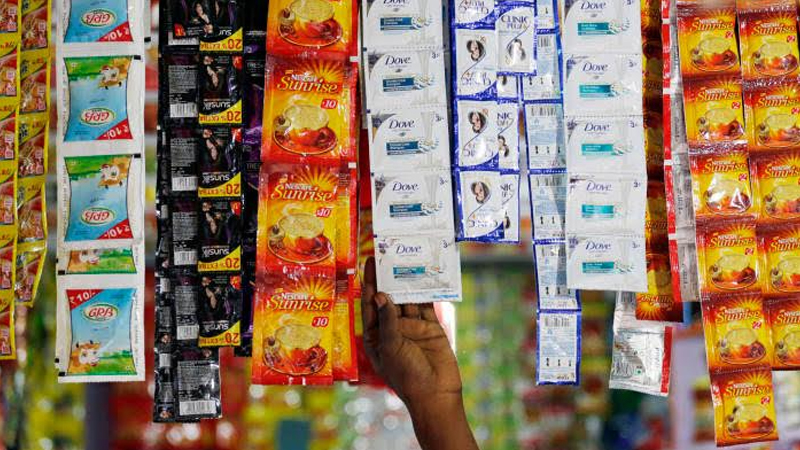
    Bite-sized formats like Sensodyne (75g), Nabati wafers (30g), and Tresemme sachets (6ml) are driving trials without denting the “premium” aura. Even super-premium players like Dove, Malkist and Taj Mahal tea are cashing in with affordable packs.

    It’s not just soaps and snacks. Luxury housing sales (Rs 3 crore plus homes) surged 80 per cent in 2024, premium smartphones grew 8 per cent YoY in Q2 2025, and luxury car sales crossed 50,000 units for the first time. Clearly, India’s “premium” shift is rewriting aspiration itself.

    “Premiumisation in India is no longer restricted to metros or high-income households,” said Worldpanel by Numerator, managing director – South Asia, K. Ramakrishnan. “Rural consumers are becoming aspirational, disruptors are redefining premium, and affluent households are reprioritising spends. For brands, this is both a challenge and a golden opportunity.”

  • Mindshare veteran Sonal Jadhav moves to lead Havas Media’s western operations

    Mindshare veteran Sonal Jadhav moves to lead Havas Media’s western operations

    MUMBAI: Sonal Jadhav has traded her corner office at Mindshare for the top job at Havas Media Network India, where she will serve as managing partner and west lead. The appointment marks a significant coup for Havas, which has poached one of the industry’s most seasoned media hands.

    Jadhav spent three years and seven months as principal partner at Mindshare, the GroupM-owned agency, before making the switch this month. Her departure represents a notable loss for Mindshare, where she had deep roots stretching back over a decade.

    The Mumbai-based executive brings formidable credentials to her new role. She cut her teeth during a marathon 10-year stint at Mindshare, rising through the ranks from client lead to senior cluster lead. In her most recent role there, she managed a portfolio of blue-chip accounts including Kellogg’s, ICICI, Rio Tinto and Onida, with full profit-and-loss responsibility.

    Her earlier Mindshare tenure was particularly notable for her stewardship of the Hindustan Unilever skincare portfolio, where she crafted media strategies for the conglomerate’s beauty brands from 2006 to 2013. The assignment cemented her reputation as a strategic thinker with a knack for marrying brand-building with performance metrics.

    Between her two Mindshare chapters, adhav spent four years as general manager at Wavemaker, another GroupM stable-mate, focusing on FMCG clients and honing her expertise across traditional and digital media channels.

    Her career began in print advertising, with early roles at Hindustan Times and Indian Express, where she learned the fundamentals of media sales and revenue optimisation.

    The appointment signals Havas Media’s ambitions to strengthen its presence in India’s fiercely competitive media landscape, where agencies are battling for a larger share of the country’s advertising spend. Ms Jadhav’s deep FMCG experience and client relationships make her a natural fit for a market where consumer goods companies remain among the biggest advertisers.

    At 15-plus years in the business, she represents the kind of seasoned leadership that agencies increasingly prize as they navigate the complexities of digital transformation and attribution-based media buying.

  • Kofluence report decodes India’s booming influence economy

    Kofluence report decodes India’s booming influence economy

    MUMBAI: India’s influencer economy is hitting its stride—and going hyperlocal. Ad-tech platform Kofluence has dropped the 2025 edition of its flagship report Decoding Influence, unravelling how data, AI, and regional creators are reshaping digital advertising in the world’s fastest-growing content market.

    Based on insights from over 1,000 creators, marketers and industry leaders, the report paints a picture of a maturing ecosystem where brands are treating influencer partnerships not as vanity plays but as performance levers.

    “India’s influence economy has not only seen growth but also a decentralisation of influence. There is a dynamic shift with creators in Tier 2 and Tier 3 cities, often creating content in regional and vernacular languages, who are building strongly engaged communities through hyperlocal narratives,” observes Kofluence CEO & co-founder  Sreeram Reddy Vanga. “Amidst a trillion-dollar influencer advertising opportunity in India, we’re seeing brands approach influencer partnerships with far more intention and as a strategic marketing lever, driven by data, sustained by technology, and measured against business outcomes.”

    Key takeaways from Decoding Influence 2025:

    * Instagram leads the pack: With an estimated 1.8–2.3 million Indian creators, Instagram remains the top monetisation playground. Reels dominate revenue—charging anywhere from Rs 500–5,000 for creators under 10,000 followers, and crossing Rs 2 lakh for celebrity posts.

    * Big money flows: India’s influencer market is pegged at Rs 3,000–3,500 crore and climbing. E-commerce leads with 23 per cent of total influencer spends, followed by FMCG at 19 per cent. Over 25 per cent of brands ramp up influencer budgets during launches.

    * Small is powerful: Micro-influencers (10k–100k followers) are gaining traction. Some 52 per cent of marketers say they’re best suited for regional outreach. Diwali remains the hottest season, with brands kicking off campaign plans 2–4 weeks ahead.

    * AI and automation take hold: A full 61 per cent of brands are deploying tech platforms to manage influencer ops, with 18 per cent fully integrated. Generative AI is already used by 29 per cent of marketers—mostly to generate content ideas and assets.

    “With India crossing 900 million internet users, the creator economy is poised for continued expansion, fueled by government initiatives as well as significant technological advancements. Looking ahead, I believe we are moving towards the phase of integrated influence in which advertising mediums will increasingly converge together,” saYS co-founder Kofluence Ritesh Ujjwal.  “Decoding Influence 2025 is built on strong platform intelligence and first-party data, and will give marketers strategic insights on a rapidly evolving industry that is being transformed by AI, cookie deprecation and shifting creator-brand relationships. We hope you will find this report useful as you plan your next steps.”

    The Decoding Influence 2025 report leans heavily on first-party data and platform intelligence, offering an in-depth look at an industry evolving rapidly under the pressure of AI disruption, cookie phase-outs, and changing brand-creator dynamics.

  • India’s Ad market to add nearly Rs.10,000 crore in 2025 surge: Magna report

    India’s Ad market to add nearly Rs.10,000 crore in 2025 surge: Magna report

    MUMBAI: India’s advertising industry is on track for another year of robust expansion, with new projections from Magna forecasting total ad spend to reach Rs1.37 lakh crore in 2025—a healthy 7.8 percent jump over last year. The near-Rs 10,000 crore increase keeps India among the world’s fastest-growing major ad markets, despite global economic headwinds.

    Digital platforms are driving the surge. Magna’s report estimates digital will account for more than 44 percent of all ad spends in 2025, fuelled by rapid growth in video, social, and e-commerce advertising. While TV will retain a major share of budgets, its growth is expected to be steadier as Indian audiences increasingly split their time across screens.

    Several factors are credited with powering the upward trend: brands are doubling down on digital campaigns, key state elections and a rebound in consumer sentiment are boosting traditional and online ad activity, and high-growth sectors like FMCG, e-commerce, fintech, and automotive are leading the way in campaign spending. This momentum is helping offset continued sluggishness in categories such as real estate and durables.

    Industry leaders highlight that India’s unique demographics, rapid smartphone adoption, and expanding high-speed internet access are the underlying forces reshaping the ad landscape. For marketers, the direction is clear: digital is the growth engine, but television and outdoor continue to deliver reach at a scale few other media can match.

    The upbeat outlook for 2025 follows a strong recovery in 2024, as ad spending rebounded from pandemic-era disruptions. With the market now set to break fresh records, India’s advertising ecosystem is poised for another year of innovation—redefining how brands connect with consumers nationwide.  

  • Top marketer Somasree Bose Awasthi steps down from Marico amid shifting FMCG landscape

    Top marketer Somasree Bose Awasthi steps down from Marico amid shifting FMCG landscape

    MUMBAI: Somasree Bose Awasthi has stepped down as chief marketing officer at Marico Ltd, ending a nearly three-year stint at the helm of the company’s marketing function. The news was confirmed today by individuals familiar with the development.

    Somasree joined Marico in late 2022 after a distinguished 15-year career at Godrej Consumer Products, where she rose through the ranks and contributed significantly to brands such as Godrej Aer, HIT, Cinthol and Godrej No.1. At Marico, she focused on strengthening marketing capabilities, mentoring teams, and championing innovation across a wide portfolio.

    During her tenure, she was credited with bringing sharper consumer insight to the table and driving impactful brand work that resonated in an increasingly competitive FMCG landscape. Her approach combined strategic vision with deep empathy for the consumer—qualities that earned her recognition across the industry.

    Her departure comes at a time when Marico, like much of the sector, is navigating a complex retail environment shaped by evolving customer preferences and the convergence of digital and offline channels. The next marketing leader will inherit a strong brand foundation—and the challenge of building on it in a dynamic market.

    Somasree’s next move has not yet been announced, but industry observers and executive search firms will be watching closely.