Tag: FM radio

  • French brand ZOOOK launches Explode 111, a new multimedia 2.1 speaker system

    French brand ZOOOK launches Explode 111, a new multimedia 2.1 speaker system

    Just days after introducing premium-quality tower speaker Tornado 101, French pioneering lifestyle brand ZOOOK has now launched a new multimedia 2.1 speaker system in India. Called ZOOOK Explode 111 BT, the latest Bluetooth 5.0v-enabled Multimedia 2.1 speaker system is an unparalleled combination of perfect sound with perfect design. With Explode 111 45 watts power, you can rest assured of a thumping deep bass sound, thanks to 4” subwoofer with 25w output. The unbeatable sound quality of the Zoook Explode 111 pops through every bit of music that is played. Be it jazz, dance music, your favorite video game, or just a movie, it will deliver the top-quality sound your heart deserves.

    The speaker system comes with a fully functional infrared remote control, allowing you to take complete control of your home audio. With a stylish LED display and smooth analog & digital controls, it adds the much needed style statement as well. ZOOOK Explode 111’s glass finish and beautiful looks make the speaker a treat for eyes and further add to the home décor.

    The multimedia 2.1 speaker can easily be paired with Bluetooth-enabled devices such as phones, laptops, phones and tablets for a seamless music streaming experience without the hassles of getting entangled in wires. Once a device is connected, the users can simply sync their favourite playlist. The speaker is engineered with perfection to be a standalone entertainment station for a laidback Sunday as one also gets the option to tune in to the favourite radio station with the built-in FM player.

    Referring to the new product, Achin Gupta, Country Head-India at ZOOOK said, “We are delighted to launch Explode 111 with 45 watts power, which is enough to get the beats on. The speaker has been designed for the highest acoustic standards to offer an optimal listening experience for all. We are sure that young and vibrant Indians will love our latest offering.”

    Designed for maximum portability, the speaker’s multi-input sources give you an all-round experience, whether it is USB Disk, FM Radio, RCA to AUX, or Bluetooth connectivity.

    ZOOOK Explode 111 is available on all leading online as well as offline stores. The speaker system is currently available at a price of Rs. 3,199.

  • Digital products drive Mirchi’s 30% sequential revenue growth in Q2

    Digital products drive Mirchi’s 30% sequential revenue growth in Q2

    MUMBAI: Entertainment Network (India) Ltd, FM radio channel Radio Mirchi, announced results for the quarter ended 30 September 2020.

    The company reported 30 per cent sequential revenue growth to Rs 47.0 crores in the second quarter, led by core radio which grew by 132 per cent and digital products which grew by 67 per cent. The company’s solutions business, which includes digital, accounted for 27 per cent of Q2 revenues, with gross margins of 53 per cent. Compared to a year ago however, revenues were down 59 per cent on account of Covid2019.

    The company cut costs drastically during the quarter. Direct variable costs (DVC), related toon-ground events and activations, fell by 63 per cent. Overall operating costs, including DVC reduced by 35 per cent over the same quarter last year.

    EBITDA loss during the quarter was Rs 6.2 crores, lower than the Rs 26 crores in the June quarter.Net loss for the quarter was Rs 23.7 crores, lower than the Rs 36.6 crores in June quarter. Balance sheet remains strong with cash reserves of Rs 240.8crores as on 30 September 2020.

    ENIL MD & CEO Prashant Panday said, “With the lockdowns gradually lifting in the second quarter, we saw a strong sequential growth in overall revenues during the period. The festive  season  of  the  year  has  begun  with  gusto  and  we  see  revenue  performance  improving further in the second half. Smart cost management will see strong positive EBITDA in the second half, with a likelihood of positive growth of last year. We remain confident about all our products –radio, solutions and digital in the months to come”.

  • NBCUniversal India gets Sangeetha Aiyer as marketing head

    NBCUniversal India gets Sangeetha Aiyer as marketing head

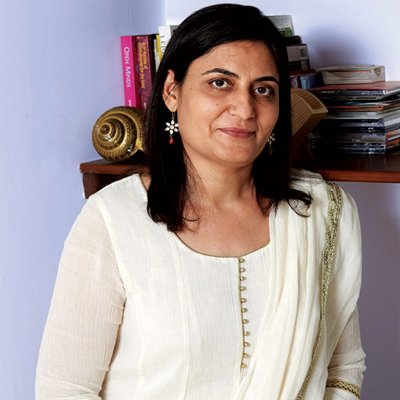
    MUMBAI: Former head of marketing: Network18 Digital, Sangeetha Aiyer, has been appointed as the head of marketing, NBCUniversal India. She will be responsible for the marketing, digital and promotional strategy of Universal Pictures theatrical products in India. In her new role, she will develop the cohesive strategy for the studio’s IPs and premium products in India working in tandem with the international marketing team and other functional heads in India to ensure the strategic direction of the studio’s releases is successfully implemented.
    With a career spanning over 19 years, Aiyer is an experienced marketing and content professional with comprehensive experience across industries. She has been instrumental in building media brands on both linear and non-linear platforms, ranging from FM radio, Youth, News, Factual and Lifestyle channels.

    Prior to Network18 Digital, Aiyer has had a long and fruitful association with AETN18 (JV between A+E Networks and TV18) for over 8 years. As one of the founding team leads, she has played a significant role in spearheading the growth strategy for the JV, specifically the brands History TV18 and FYI TV18 on linear and social platforms. 

    She has also worked with Times Network, Star Network, Reliance Big FM, Arvind Brands and Ambience Publicis.

  • TV Today Network elevates Aroon and Kalli Purie

    TV Today Network elevates Aroon and Kalli Purie

    MUMBAI: TV Today Network has elevated Kalli Purie from her current designation of Vice Chairperson. She has been given additional responsibility of Managing Director and Chairperson for the company for a period of five years starting from the next financial year, i.e., 1 April. The board has also re-designated Aroon Purie as the new Chairman and Whole Time Director for the same term. 

    Kalli Purie will be taking the seat of Aroon Purie in the new position shifts. The appointments are board approved and are subject to the approval of shareholders now.

    In October, India Today Group Chairman and Editor-in-Chief Aroon Purie had handed over the baton of the media group to Kalli Purie who was serving as the Group Editorial Director (Broadcast & New Media) of the India Today Group and was then made Vice-Chairperson of the group.

    TV Today houses the TV broadcasting and FM radio business in addition to Mail Today.

    The India Today Group has properties spanning TV, print and digital including news channels Aaj Tak and Headlines Today. Living Media is the parent company of the group and the promoter group in TV Today Network. It has more than 24 magazines including editions of leading international titles. Through its multiple media brands and platforms, the India Today group reaches more than 225 million people every month.

    Under the new structure, the Group CFO, Group CEO and all the heads will report to Kalli. However, the Group Editorial Director (Publishing) and Group CFO also have a dotted line reporting to the chairman.

    In an internal email to employees, Aroon Purie had said that he wants to spend time on the strategic steering of the group and exploring new opportunities. He has been at the helm of the India Today Group for 42 years and has been involved in its day to day operations.

  • TRAI suggests auction of 200 khz band for digital radio broadcast

    TRAI suggests auction of 200 khz band for digital radio broadcast

    NEW DELHI: While recommending financial incentives by government, the Telecom Regulatory Authority of India (TRAI) today recommended auctioning of 200 KHz bandwidth spectrum in VHF-II band for providing digital radio broadcasting services.

    “Auction should be carried out in phases, starting with cities of category A+ and A, and subsequently in cities of other categories,” TRAI said while releasing a series of recommendations for ushering in digital radio broadcasting services in India.

    TRAI further added: “Immediately after the successful auction of spectrum for digital radio broadcasting, an offer should be made to the existing FM radio broadcasters to get their existing frequency bandwidth of +100 KHz, already allocated through auction in Phase-III of FM radio, liberalised and provide digital radio broadcasting services in simulcast mode with analog FM radio services.”

    Suggesting further liberalisation of existing spectrum, already allocated to the FM radio broadcasters in Phase-III of FM radio, according to TRAI, the existing FM players will have to pay an amount equal to the difference of auction determined price of equivalent spectrum for digital radio broadcasting in a city and amount paid for allocation of FM radio frequency.

    At present, analog terrestrial radio broadcast in India is carried out in medium wave (MW) short wave (SW) and VHF-II (FM band) spectrum bands. AIR, the public service broadcaster, has established 467 radio stations encompassing 662 radio transmitters, which include 140 MW, 48 SW and 474 FM transmitters. Private sector radio broadcasters are licensed to transmit programs in FM frequency band (88-108 MHz) only and presently operate through 322 radio stations in 86 cities. Presently, radio signals are largely transmitted in analog mode in the country.

    Analog terrestrial radio broadcasting, when compared with digital mode, is inefficient and suffers from operational restrictions. With the advancement in technologies, digital radio technologies around the globe have been developed and adopted by a number of countries in order to offer more choice to listeners along with efficient use of spectrum. Digital Radio broadcasting provides a number of advantages over analog radio broadcasting. The biggest advantage of digital radio is that it is possible to broadcast three to four channels on a single frequency carrier, while ensuring excellent quality of audio for all the channels whereas analog mode broadcasts only one channel on a frequency carrier.

    The TRAI said it hopes the recommendations would enable a smooth transition from analog to digital radio broadcasting services, without disruption of the existing FM Radio services.

    The salient features of the recommendations are as follows:

    — Government should notify the policy framework for digital radio broadcasting in India in time bound manner with clear roadmap for rollout of digital radio broadcasting services.

    — The WPC wing of telecoms Ministry should carry out necessary amendments in NFAP- 2011 for permitting digital radio broadcasting in MW, SW, and VHF-II frequency bands.

    — Private sector should .be permitted to provide digital radio broadcasting services within the existing frequency band of 88 -108 MHz used for FM radio broadcasting.

    — Frequency and geographical area coverage planning for digital radio broadcasting using the vacant 600 KHz spectrum in VHF-II (88 -108 MHz) and VHF-III (174-230 MHz) bands should be completed by BECIL, AIR, and WPC together in phased manner.

    — 200 KHz bandwidth spectrum in VHF-II band should be auctioned for providing digital radio broadcasting services.

    — In case market determined price of 200 KHz for digital radio broadcasting is less than or equal to the price paid by FM radio broadcasters then FM radio broadcasters will not be required to pay any additional amount and it will be permitted to provide digital radio broadcasting services also for the remaining period of permission.

    — The broadcasters should be allowed to make use of any available digital technology, recognised by ITU, within the allocated/liberalised spectrum for providing digital radio broadcasting services subject to adaptation, if any, recommended by MIB/TRAI from time to time.

    — No date for digital switch over of radio broadcasting services should be declared at this stage.

    — Existing analog FM radio channels should be allowed to remain operational for the remaining period of their Phase-III permissions.

     — The continuance of operation of existing analog FM radio channels that do not migrate to digital radio broadcasting should be reviewed after the expiry of their existing Phase-III permissions.

    — The auction of remaining channels of Phase-III should be done by delinking them from technology. Broadcasters should be permitted to use any technology (analog or digital or both) for radio broadcasting on the frequency allocated to them through auction in future.

    — For initial three years after declaration of digital radio broadcasting policy, the government should grant fiscal incentives in the form of lower tax rates to manufacturers of digital radio receivers.

    Also Read:

    TRAI seeks to regulate online streaming platforms

    Trai paper seeks to streamline uplinking, downlinking norms

  • Broadcast media sector FDI norms see minor tweaks in govt’s fresh announcement

    Broadcast media sector FDI norms see minor tweaks in govt’s fresh announcement

    NEW DELHI: The government of India yesterday issued a comprehensive FDI policy for various sectors where a slight change has been noticed in the media sector from what had already been announced in June 2016. Now, 100 per cent FDI is allowed in cable TV and HITS under automatic route for both digital and non-digital carriage services.

    For those segments of the media where automatic FDI approval is not granted and a government okay is needed, it would now be the nodal ministry — Ministry of Information and Broadcasting (MIB) — that would be responsible for the green signal instead of Commerce Ministry’s Foreign Investment Promotion Board, a division that has been now dismantled as part of government’s bid to make easy doing business in India.

    public://b1_0.jpg

    FDI in broadcast carriage services like teleports, DTH, cable networks (both MSOs and LCOs for DAS and non-DAS areas), mobile TV, headend-in-the-sky broadcasting service (HITS) is 100 per cent under automatic route.

    The foreign investment limit (FDI) in terrestrial broadcasting of FM Radio and up-linking of news and current affairs TV channels remain at 49 per cent subject to government approval. Up-linking and downlinking of non-news and current affairs TV channels continue to be 100 per cent under automatic route.

    public://b2.jpg

    Publishing of newspaper and periodicals dealing with news and current affairs  and publication of Indian editions of foreign magazines dealing with news and current affairs have a 26 per cent FDI limit subject to government approval.

    The head of an MSO company, on condition of anonymity, said it’s slightly confusing as to why it has been stated that 100 per cent FDI is allowed for carriage services like cable TV and HITS in both digital and non-digital areas  under automatic route.

    Though the government is of the opinion that 100 per cent digitization has been achieved in the country, broadcast carriage industry (MSOs and LCOs) insist there analog pockets in the country persist as set-top-boxes are still being seeded in small towns and rural areas.

    The government has also notified — most of it reiteration of earlier policy decision — detailed conditions for the broadcast media and they can be viewed at http://dipp.nic.in/sites/default/files/CFPC_2017_FINAL_RELEASED_28.8.17.pdf:

    ALSO READ:

    Radical changes in FDI regime; Most sectors on automatic FDI route

    I&B Sector brings in over $1.25 billion  FDI between October 2014 and May 2016


  • 76% listen to FM radio using mobiles: Study

    MUMBAI: Seventy six per cent of people now listen to FM radio using their mobile phones, AZ research has shown. AZ Research Partners, a market research player in South East Asia, conducted a comprehensive survey to study current trends in FM Radio Listenership across India. Parameters for study included listenership, frequency, mediums, drivers and motivators, preferences and recall amongst others. Some of the key findings are included below.

    ·Representation: According to the study, respondents were asked about the radio station they thought represented the essence of their city best. Radio City topped the charts in Bangalore, Mumbai, Delhi and Pune while Suryan FM came out in front in Chennai and Radio Mirchi in Hyderabad. The cultural essence of the city was measured using parameters like local flavor, local preferences with locally popular activations and programs.

    ·Consumption patterns: With regards to the place and medium of radio consumption, the study found that a whopping 76 per cent  of consumers accessed FM Radio through their mobile phones while an average of 22.5 per cent of them listened to the radio while driving. Another 36 per cent used the radio at home. With mobile phone penetration growing in rural India, radio as a medium of mass communication is now reaching the remotest corners of the country  via the mobile phone.

    ·Listener Preferences: The study identified a set of drivers that motivated listeners to listen to one particular type of radio channel. These motivators were centered on four parameters including the image of the radio station, the kind of programs it aired, the kind of music it played and the Radio Jockey who hosted these activations. It is seen that while 100 per cent of respondents considered good music as a motivator, only 50% felt the image of the station and RJs impacted their listening patterns. A whopping 83% of respondents thought that the quality of programs aired highly impacted their frequency of listening on a particular station.

    ·Listenership: In terms of listenership, the study concluded that Radio City topped the list with a listenership of 5.2 crore followed by Radio Mirchi and Big FM with 4 crore and 2.6 crore respectively.

    ·Most popular Radio Jockeys: Based on overall recall and approval ratings, popularity of Radio Jockeys are ranked as below:

    City

    1

    2

    3

    Hyderabad

    Love Guru – Radio City

    Bharghav – Radio Mirchi

    Chaitu – Red FM

    Delhi

    Sayema – Radio Mirchi

    Annu Kapoor – Big FM

    Love Guru – Radio City

    Bangalore

    Love Guru – Radio City

    Rashmi – Big FM

    Didha – Red FM

    Chennai

    Love Guru – Radio City

    SHakthi – Radio City

    Munna – Radio City

    Mumbai

    Archana – Radio City

    Salil – Radio City

    Jeetury – Radio Mirchi

    Pune

    Shonali – Radio City

    Bandya– Radio City

    Filmy Chokri RJ Aparna – Radio City

    Methodology: The survey was conducted among a sizable portion of the population across 23 cities including male and female participating above the age of 12. The report documents factors like most popular radio channel based on listenership, drivers for listening behaviour and preferences, perception of these channels among listeners, top-of-the-mind recall of channel names, programs, jingles and names of radio jockeys (RJ). Additionally, it also compares radio listenership against other mass mediums of communication like print and television. It covers 23 cities including Jaipur, Nagpur, Bangalore, Mumbai, Delhi, Bareilly, Varanasi, Gorakhpur, Agra, Pune, Ranchi, Chennai, Hyderabad, Coimbatore, Vizag, Surat, Vadodara, Ahmedabad, Hisar, Jalandhar, Karnal, Lucknow and Ahmednagar with over 7000 respondents across cities.


  • FreeDish’s first e-auction after upgradation in Mar

    FreeDish’s first e-auction after upgradation in Mar

    NEW DELHI: A new era begins for Doordarshan’s free to air direct to home platform FreeDish as it takes the first major step to mark towards its target of 104 television channels by March end with its 32nd e-auction which will help it cross the existing capacity of eighty channels.

    With MPEG4 under final trials and existing channels having received extensions for their licences, the next e-auction of DD FreeDish is slated for 14 February 2017.

    With this new leap, DD has also raised its reserve price to Rs 48 million per slot from the hitherto Rs 43 million. Earlier, the price for one channel went up to Rs 53 million and gave DD the confidence to raise the pricem which had been Rs 37 million till 2015 but was raised to Rs 43 million for the 25th e-auction in January 2016.

    The e-Auction will be conducted by M/s. C1 India Pvt. Ltd., Noida which also conducted the FM Radio Phase III auctions on behalf of Prasar Bharati.   

    DD refused to disclose the number of slots being put up for e-auction as officials claim this leads to unhealthy practices.

    Doordarshan had in October last year formally announced that FreeDish was capable of carrying 104 television channels and 24 channels would be added to the existing 80 channels after the launch of MPEG4 technology.

    While three new channels were added in an auction held over two days in mid-October, another 24 got their licences renewed for a year. DD officials also confirmed that FreeDish will soon be capable of carrying up to 250 channels.

    In line with the ‘Digital India’ and ‘Make in India’, DD has decided to implement Indian CAS (iCAS) on DD FreeDish Platform. iCAS (which is an initiative of the central government) is being introduced in 24 MPEG-4 channels. The introduction of iCAS will provide enhanced viewing experience.

    DD officials said these additional 24 MPEG-4 SDTV channels will be available to viewers in FTA mode. The existing viewers will continue to get 80 SDTV channels, but will have to obtain iCAS-enabled authorised set-top boxes for accessing all 104 channels.

    Although FreeDish will remain free to air with no monthly or periodic fee, the viewers will be required to register with DD FreeDish on getting the new STB from Doordarshan authorised STB dealers.

    Slots on DD FreeDish are allocated to private channels through a transparent system of e-auction. DD earned Rs 980 million in 2014-15, Rs 1800 million in 2015-16, and Rs 1040 million till September in 2016-17. The 31st auction brought Rs 1293 million In October 2016.

    FreeDish was launched with a modest bouquet of 33 channels in December 2004, and now carries eighty TV channels and 32 radio channels. This includes 22 Doordarshan channels and two parliamentary channels, seven general entertainment channels, 18 movie channels, 13 news channels, seven music channels, three religious channels and eight channels of other genres. All All India Radio stations also piggy-back on the platform.

    The participation amount (EMD) in the e-Auction is Rs.15 million which has to be deposited in advance before or by 12 noon on the date of auction along with processing fee of Rs.10,000 (non-refundable) in favour of PB (BCI) Doordarshan Commercial Service, New Delhi.

    Incremental amount for the auction will be Rs one million and the time for every slot e-auction will be of fifteen minutes duration. This may be extended by five minutes if a bid is received before the closing time.

    Of the reserve price, Rs 11 million will be deposited within one month of placement and another Rs 11 million within two months along with service tax of 15 per cent on the bid amount.

    The balance bid amount will be deposited within six months, failing which the deposited amount will be forfeited and the channel discontinued after a 21-day discontinuation notice.

    DD officials said implementation of iCAS and authorisation of STB original equipment manufacturers (OEMs) by Doordarshan will give a major thrust to ‘Make in India’ and ‘Digital India’. At present, a majority of STBs are imported. However, the introduction of iCAS will help in standardisation of STBs and encourage quality STB manufacturing in India.

    Also read:

    FreeDish ready to beam 104 TV channels; 24 on MPEG4   

    Three new TV channels join DD FreeDish bouquet; 24 get extension

    Next FreeDish auction after MPEG4 operationalisation

  • FreeDish’s first e-auction after upgradation in Mar

    FreeDish’s first e-auction after upgradation in Mar

    NEW DELHI: A new era begins for Doordarshan’s free to air direct to home platform FreeDish as it takes the first major step to mark towards its target of 104 television channels by March end with its 32nd e-auction which will help it cross the existing capacity of eighty channels.

    With MPEG4 under final trials and existing channels having received extensions for their licences, the next e-auction of DD FreeDish is slated for 14 February 2017.

    With this new leap, DD has also raised its reserve price to Rs 48 million per slot from the hitherto Rs 43 million. Earlier, the price for one channel went up to Rs 53 million and gave DD the confidence to raise the pricem which had been Rs 37 million till 2015 but was raised to Rs 43 million for the 25th e-auction in January 2016.

    The e-Auction will be conducted by M/s. C1 India Pvt. Ltd., Noida which also conducted the FM Radio Phase III auctions on behalf of Prasar Bharati.   

    DD refused to disclose the number of slots being put up for e-auction as officials claim this leads to unhealthy practices.

    Doordarshan had in October last year formally announced that FreeDish was capable of carrying 104 television channels and 24 channels would be added to the existing 80 channels after the launch of MPEG4 technology.

    While three new channels were added in an auction held over two days in mid-October, another 24 got their licences renewed for a year. DD officials also confirmed that FreeDish will soon be capable of carrying up to 250 channels.

    In line with the ‘Digital India’ and ‘Make in India’, DD has decided to implement Indian CAS (iCAS) on DD FreeDish Platform. iCAS (which is an initiative of the central government) is being introduced in 24 MPEG-4 channels. The introduction of iCAS will provide enhanced viewing experience.

    DD officials said these additional 24 MPEG-4 SDTV channels will be available to viewers in FTA mode. The existing viewers will continue to get 80 SDTV channels, but will have to obtain iCAS-enabled authorised set-top boxes for accessing all 104 channels.

    Although FreeDish will remain free to air with no monthly or periodic fee, the viewers will be required to register with DD FreeDish on getting the new STB from Doordarshan authorised STB dealers.

    Slots on DD FreeDish are allocated to private channels through a transparent system of e-auction. DD earned Rs 980 million in 2014-15, Rs 1800 million in 2015-16, and Rs 1040 million till September in 2016-17. The 31st auction brought Rs 1293 million In October 2016.

    FreeDish was launched with a modest bouquet of 33 channels in December 2004, and now carries eighty TV channels and 32 radio channels. This includes 22 Doordarshan channels and two parliamentary channels, seven general entertainment channels, 18 movie channels, 13 news channels, seven music channels, three religious channels and eight channels of other genres. All All India Radio stations also piggy-back on the platform.

    The participation amount (EMD) in the e-Auction is Rs.15 million which has to be deposited in advance before or by 12 noon on the date of auction along with processing fee of Rs.10,000 (non-refundable) in favour of PB (BCI) Doordarshan Commercial Service, New Delhi.

    Incremental amount for the auction will be Rs one million and the time for every slot e-auction will be of fifteen minutes duration. This may be extended by five minutes if a bid is received before the closing time.

    Of the reserve price, Rs 11 million will be deposited within one month of placement and another Rs 11 million within two months along with service tax of 15 per cent on the bid amount.

    The balance bid amount will be deposited within six months, failing which the deposited amount will be forfeited and the channel discontinued after a 21-day discontinuation notice.

    DD officials said implementation of iCAS and authorisation of STB original equipment manufacturers (OEMs) by Doordarshan will give a major thrust to ‘Make in India’ and ‘Digital India’. At present, a majority of STBs are imported. However, the introduction of iCAS will help in standardisation of STBs and encourage quality STB manufacturing in India.

    Also read:

    FreeDish ready to beam 104 TV channels; 24 on MPEG4   

    Three new TV channels join DD FreeDish bouquet; 24 get extension

    Next FreeDish auction after MPEG4 operationalisation

  • Music Broadcast plans IPO; to make buys

    Music Broadcast plans IPO; to make buys

    MUMBAI: Music Broadcast Private Limited, which operates one of the leading FM radio stations — Radio City — is planning to list. It is preparing to bring out a public offer of over Rs 500 crore comprising a fresh issue of Rs 400 crore and an offer for sale of 26.59 lakh equity shares by the promoters’ family.

    The proceeds from the issue will be utilised to retire debt of around Rs 150 crore, and the remainder to create a “war chest” for future acquisitions.

    Radio City 91.1 FM brand has been synonymous with the category since inception in 2001. Innovative programming and marketing initiatives have helped Radio City pioneer FM in India. In phase III auction, the network expanded its footprint by efficiently adding 11 new markets after carefully selecting towns with greater SEC AB population. With the addition of the new towns and addition of Radio Mantra towns, Radio City reaches to 39 most important towns of India dominating the most important advertiser markets. The first FM station will be launching internet radio streams in India with 30 stations and counting

    Music Broadcast promoter Jagran Prakashan CFO R. K. Agarwal said that they already filed the DRHP and post-regulatory approvals, and intend to hit the capital market. Most of the funds would be used to strengthen the capital structure so that a war chest was created to acquire more radio stations as and when opportunity arose, he added.

    Agrawal said it sees a lot of opportunities in radio as its business has been expanding at a CAGR of 15-16 per cent for several years, and has been operating at a margin of 33 per cent.

    Music Broadcast director Apurva Purohit said that the radio sector was the youngest in M&E but was growing fast. Radio’s share in the media and entertainment industry pie was only four per cent of the total advertisement market size due to the tardy pace of regulation, which otherwise could have been as high as 12 per cent.