Tag: FM Radio Channels

  • FM P-III second batch auction from 25 Oct; 14 in fray

    FM P-III second batch auction from 25 Oct; 14 in fray

    NEW DELHI: The e-auction of the second batch of FM Phase III will commence on 25 October 2016 from 09.30am.

    The Information and Broadcasting Ministry announced that as stipulated in the Notice Inviting Applications of 20 June 2016, bidders are required to submit their bid for at least one city in the first Clock Round. Any bidder failing to do so in the first Clock Round will forfeit its EMD in its entirety.

    The Ministry said any assistance in this regard is available on contact helpdesk +91-124- 430 2039 or support@c1eauctions.com. The second batch of FM Radio Phase-III channels comprises 266 channels in 92 cities. The channels include 227 channels in 69 fresh cities and 39 channels in 23 existing cities which had remained unsold as there were no bids.

    As in the first stage, the e-auctions will be conducted by C1 India Private Ltd. A Pre Bid conference was held on 11 July 2016, following by training and then a mock auction earlier this month.

    After the pre-qualification of bidders, the shortlist is:

    | 1 | Abhijit Realtors & lnfraventures (P) Ltd. |
    | 2 | Dharmik lnfomedia Private Ltd. |
    | 3 | Entertainment Network (I) Ltd. |
    | 4 | Hotel Polo Towers (P) Ltd. |
    | 5 | JCL Infra Limited |
    | 6 | Kal Radio Limited |
    | 7 | Malar Publication (P) Ltd. |
    | 8 | Purvy Broadcasts (P) Ltd. |
    | 9 | Rockstar El Private Limited |
    | 10 | Sambhaav Media Ltd. |
    | 11 | South Asia FM Limited |
    | 12 | The Malayala Manorama Co. Ltd. |
    | 13 | The Mathrubhumi Printing & Publishing Co. Ltd. |
    | 14 | Ushodaya Enterprises Private Limited |

    The first payment of 25 per cent of the successful bid amount will be made within five calendar days, and the remaining within 15 calendar days of the close of the auction and notification of successful bidders by the Government. The e-auction of the first batch of private FM radio phase-III comprising 135 channels in 69 Phase-II existing cities commenced on 27 July and was completed on 9 September after 125 rounds of bidding. Out of these, no bid was received in 13 cities having 26 channels, and partial bids were received in 9 cities with 12 channels remaining unsold, which Information and Broadcasting Minister Arun Jaitley justified on the ground of “the demand – supply based market economics and bidder’s strategy”. However, he told the Parliament on 4 December 2015 that the Ministry had received the full payment of Rs.1055.9 crore notified on 16 September by 1 October.

    Against the cumulative reserve price of Rs.550.18 crore for 135 channels, the government received aggregate provisional commitment of Rs.1156.9 crore for 97 channels in 56 cities. Out of 97 channels, 53 channels in 35 cities were sold at a premium over reserve price whereas 44 channels in 21 cities were sold at reserve price. The Ministry had decided to conduct e-auction of FM Radio Channels in batches under the extant FM Phase-III Policy.

  • FM P-III second batch auction from 25 Oct; 14 in fray

    FM P-III second batch auction from 25 Oct; 14 in fray

    NEW DELHI: The e-auction of the second batch of FM Phase III will commence on 25 October 2016 from 09.30am.

    The Information and Broadcasting Ministry announced that as stipulated in the Notice Inviting Applications of 20 June 2016, bidders are required to submit their bid for at least one city in the first Clock Round. Any bidder failing to do so in the first Clock Round will forfeit its EMD in its entirety.

    The Ministry said any assistance in this regard is available on contact helpdesk +91-124- 430 2039 or support@c1eauctions.com. The second batch of FM Radio Phase-III channels comprises 266 channels in 92 cities. The channels include 227 channels in 69 fresh cities and 39 channels in 23 existing cities which had remained unsold as there were no bids.

    As in the first stage, the e-auctions will be conducted by C1 India Private Ltd. A Pre Bid conference was held on 11 July 2016, following by training and then a mock auction earlier this month.

    After the pre-qualification of bidders, the shortlist is:

    | 1 | Abhijit Realtors & lnfraventures (P) Ltd. |
    | 2 | Dharmik lnfomedia Private Ltd. |
    | 3 | Entertainment Network (I) Ltd. |
    | 4 | Hotel Polo Towers (P) Ltd. |
    | 5 | JCL Infra Limited |
    | 6 | Kal Radio Limited |
    | 7 | Malar Publication (P) Ltd. |
    | 8 | Purvy Broadcasts (P) Ltd. |
    | 9 | Rockstar El Private Limited |
    | 10 | Sambhaav Media Ltd. |
    | 11 | South Asia FM Limited |
    | 12 | The Malayala Manorama Co. Ltd. |
    | 13 | The Mathrubhumi Printing & Publishing Co. Ltd. |
    | 14 | Ushodaya Enterprises Private Limited |

    The first payment of 25 per cent of the successful bid amount will be made within five calendar days, and the remaining within 15 calendar days of the close of the auction and notification of successful bidders by the Government. The e-auction of the first batch of private FM radio phase-III comprising 135 channels in 69 Phase-II existing cities commenced on 27 July and was completed on 9 September after 125 rounds of bidding. Out of these, no bid was received in 13 cities having 26 channels, and partial bids were received in 9 cities with 12 channels remaining unsold, which Information and Broadcasting Minister Arun Jaitley justified on the ground of “the demand – supply based market economics and bidder’s strategy”. However, he told the Parliament on 4 December 2015 that the Ministry had received the full payment of Rs.1055.9 crore notified on 16 September by 1 October.

    Against the cumulative reserve price of Rs.550.18 crore for 135 channels, the government received aggregate provisional commitment of Rs.1156.9 crore for 97 channels in 56 cities. Out of 97 channels, 53 channels in 35 cities were sold at a premium over reserve price whereas 44 channels in 21 cities were sold at reserve price. The Ministry had decided to conduct e-auction of FM Radio Channels in batches under the extant FM Phase-III Policy.

  • Auction of 2nd batch of 266 FM Phase III channels around mid-Sept

    Auction of 2nd batch of 266 FM Phase III channels around mid-Sept

    NEW DELHI: The e-auction of the second batch of FM Radio Phase-III channels comprising 266 channels in 92 cities is to be held around mid-September this year. The channels include 227 channels in 69 fresh cities and 39 channels in 23 existing cities which had remained unsold as there were no bids.

    As in the first stage, the e-auctions will be conducted by C1 India Private Ltd and the process commenced on 20 June with the notice inviting applications (NIA).

    A Pre Bid conference will be held on 11 July 2016 at 2:30 PM and the last date for seeking clarifications on NIA is 14 July 2016 by 12:00 noon. Clarifications to NIA will be given on 21 July 2016.

    The last date for submission of Applications is 1 August 2016 by 5:00 pm. This will be followed on 16 August with the publication of ownership details of applicants. The Bidder Ownership Compliance Certificate will be issued on 22 August 2016.

    The Pre-Qualification of Bidders will be done by 1 September 2016 or completion of requisite formalities whichever is later, followed four to five days later by a Mock Auction.

    The main auction will start four days after the mock auction.

    The first payment of 25 per cent of the Successful Bid Amount will be made within five calendar days, and the remaining within 15 calendar days of the close of the Auction and notification of successful bidders by the government.

    The e-auction of the first batch of private FM radio phase-III comprising 135 channels in 69 Phase-II existing cities commenced on 27 July 2015 and was completed on 9 September 2015 after 125 rounds of bidding. Out of these, no bid was received in 13 cities having 26 channels, and partial bids were received in 9 cities with 12 channels remaining unsold, which Information and Broadcasting minister Arun Jaitley justified on the ground of “the demand – supply based market economics and bidder’s strategy”.

    However, he told Parliament on 4 December 2015 that the Ministry had received the full payment of Rs.1,055.9 crore notified on 16 September 2015 by 1 October that year

    Against the cumulative reserve price of Rs.550.18 crore for 135 channels, the government received aggregate provisional commitment of Rs.1156.9 crore for 97 channels in 56 cities. Out of 97 channels, 53 channels in 35 cities were sold at a premium over reserve price whereas 44 channels in 21 cities were sold at reserve price.

    The Ministry had decided to conduct e-auction of FM Radio Channels in batches under the extant FM Phase-III Policy.

    For the second batch, the Simultaneous Multiple Round Ascending e-auction process will be carried out for allotting the FM channels, conducted over the Internet. Bidders will be able to access the Electronic Auction System to be used for participation in the Auctions using web browsing software: Internet Explorer 11.x, or Mozilla 34.x. The EAS is a designated computer resource for the receiving of electronic records under the provisions of Section 13(2) of the Information Technology Act 2000, as amended from time to time.

    While issuing the notice for inviting applications, the government said it reserved the right to summarily disqualify any pre-qualified Bidder, at any stage of the Auction or after the Auction is completed on grounds of noncompliance with eligibility conditions, misrepresentation, non-compliance with the Auction Rules, non-compliance with any other pre-condition prescribed for participating in the Auction or for getting the FM channel, or any matter that may, in the opinion of the government, be contrary to general public interest.

    Interested parties were asked to get a copy of this document and any subsequent amendments to the NIA from the MIB website, www.mib.nic.in.

    Before operating the FM service a separate specific license i.e. Wireless Operating License shall be obtained by the company from the WPC (Wireless Planning & Co-ordination) Wing of Ministry of Communications & IT, permitting utilization of appropriate frequencies/band for the establishment and operation of concerned wireless component of FM radio Service under usual terms and conditions of such license. The Grant of such License shall be governed by the rules, procedures and guidelines and shall be subject to compliance with all requirements of the WPC wing.

    Winning Bidders of FM channel(s) in each city shall be determined in the first stage, a Channel Allocation Stage, which will allocate FM channel(s) simultaneously for all the cities. A second stage, a Frequency Allocation Stage, will identify specific frequencies for the Winning Bidders. More specifically, the two stages shall operate as follows:

    The Channel Allocation Stage will allocate number (count) of FM Channels in each of the Cities to the winning bidders. In this stage, Bidders in each City will bid for number of Channels only without linkage to any specific Radio frequency. This stage will consist of a number of Clock Rounds. These rounds will stop once the Auction Activity Requirement is 100 percent and there is no bid submitted by any of the bidders for all Cities in all the channels.
     

  • Auction of 2nd batch of 266 FM Phase III channels around mid-Sept

    Auction of 2nd batch of 266 FM Phase III channels around mid-Sept

    NEW DELHI: The e-auction of the second batch of FM Radio Phase-III channels comprising 266 channels in 92 cities is to be held around mid-September this year. The channels include 227 channels in 69 fresh cities and 39 channels in 23 existing cities which had remained unsold as there were no bids.

    As in the first stage, the e-auctions will be conducted by C1 India Private Ltd and the process commenced on 20 June with the notice inviting applications (NIA).

    A Pre Bid conference will be held on 11 July 2016 at 2:30 PM and the last date for seeking clarifications on NIA is 14 July 2016 by 12:00 noon. Clarifications to NIA will be given on 21 July 2016.

    The last date for submission of Applications is 1 August 2016 by 5:00 pm. This will be followed on 16 August with the publication of ownership details of applicants. The Bidder Ownership Compliance Certificate will be issued on 22 August 2016.

    The Pre-Qualification of Bidders will be done by 1 September 2016 or completion of requisite formalities whichever is later, followed four to five days later by a Mock Auction.

    The main auction will start four days after the mock auction.

    The first payment of 25 per cent of the Successful Bid Amount will be made within five calendar days, and the remaining within 15 calendar days of the close of the Auction and notification of successful bidders by the government.

    The e-auction of the first batch of private FM radio phase-III comprising 135 channels in 69 Phase-II existing cities commenced on 27 July 2015 and was completed on 9 September 2015 after 125 rounds of bidding. Out of these, no bid was received in 13 cities having 26 channels, and partial bids were received in 9 cities with 12 channels remaining unsold, which Information and Broadcasting minister Arun Jaitley justified on the ground of “the demand – supply based market economics and bidder’s strategy”.

    However, he told Parliament on 4 December 2015 that the Ministry had received the full payment of Rs.1,055.9 crore notified on 16 September 2015 by 1 October that year

    Against the cumulative reserve price of Rs.550.18 crore for 135 channels, the government received aggregate provisional commitment of Rs.1156.9 crore for 97 channels in 56 cities. Out of 97 channels, 53 channels in 35 cities were sold at a premium over reserve price whereas 44 channels in 21 cities were sold at reserve price.

    The Ministry had decided to conduct e-auction of FM Radio Channels in batches under the extant FM Phase-III Policy.

    For the second batch, the Simultaneous Multiple Round Ascending e-auction process will be carried out for allotting the FM channels, conducted over the Internet. Bidders will be able to access the Electronic Auction System to be used for participation in the Auctions using web browsing software: Internet Explorer 11.x, or Mozilla 34.x. The EAS is a designated computer resource for the receiving of electronic records under the provisions of Section 13(2) of the Information Technology Act 2000, as amended from time to time.

    While issuing the notice for inviting applications, the government said it reserved the right to summarily disqualify any pre-qualified Bidder, at any stage of the Auction or after the Auction is completed on grounds of noncompliance with eligibility conditions, misrepresentation, non-compliance with the Auction Rules, non-compliance with any other pre-condition prescribed for participating in the Auction or for getting the FM channel, or any matter that may, in the opinion of the government, be contrary to general public interest.

    Interested parties were asked to get a copy of this document and any subsequent amendments to the NIA from the MIB website, www.mib.nic.in.

    Before operating the FM service a separate specific license i.e. Wireless Operating License shall be obtained by the company from the WPC (Wireless Planning & Co-ordination) Wing of Ministry of Communications & IT, permitting utilization of appropriate frequencies/band for the establishment and operation of concerned wireless component of FM radio Service under usual terms and conditions of such license. The Grant of such License shall be governed by the rules, procedures and guidelines and shall be subject to compliance with all requirements of the WPC wing.

    Winning Bidders of FM channel(s) in each city shall be determined in the first stage, a Channel Allocation Stage, which will allocate FM channel(s) simultaneously for all the cities. A second stage, a Frequency Allocation Stage, will identify specific frequencies for the Winning Bidders. More specifically, the two stages shall operate as follows:

    The Channel Allocation Stage will allocate number (count) of FM Channels in each of the Cities to the winning bidders. In this stage, Bidders in each City will bid for number of Channels only without linkage to any specific Radio frequency. This stage will consist of a number of Clock Rounds. These rounds will stop once the Auction Activity Requirement is 100 percent and there is no bid submitted by any of the bidders for all Cities in all the channels.
     

  • Centre and states have gained from TV digitization, viewers to get better viewing experience: Economic Survey

    Centre and states have gained from TV digitization, viewers to get better viewing experience: Economic Survey

    New Delhi: The Government has claimed that preliminary data shows that central and state governments have gained significantly because of digitization of cable television, as transparency in the subscriber base through digitization has led to increase in tax collections.

    While stating this, the Economic Survey for 2015-16 did not give any figures specifically relating to increase in revenues because of digitization. But it said digitization achieved by December-end 2016 would usher a new era in broadcasting, as it would enhance the viewing experience of the users and upgrade the service, the survey said.

    The survey tabled by Finance Minister Arun Jaitley who also holds the Information and Broadcasting Ministry portfolio, said in order to achieve universal digitalization by 2017, the government is implementing the Broadcasting Infrastructure Network Development Scheme for modernization and upgradation of Prasar Bharati.

    He said India has been experiencing higher volume of content consumption due to increasing per capita consumption, media penetration and use of 3G devices.

    It was noted that India is the world’s second largest TV market after China with 168 million (16.8 crore) TV households, implying a TV penetration of 61 per cent.

    There are about 847 satellite television channels, 243 FM radio channels and 190 community radio stations operating in India.

    India’s broadcasting distribution network comprises 6,000 multi system operators (MSO) and seven direct to home (DTH) operators.

    At the outset, the survey said the Indian media and entertainment industry has recorded unprecedented growth over the last two decades, making it one of the fastest growing industries in India.

    According to a report by FICCI-KPMG, the Indian media and entertainment industry grew by 11.7 per cent to Rs 1026 billion(Rs 1,02,600 crore) in 2014 from Rs 918 billion  (Rs 91,800 crore) in 2013 and it is projected to grow at a CAGR of 13.9 per cent to reach Rs 1964 billion (1,96,400 crore) by 2019.

    DTH in India is also growing at a rate of about one million (10 lakh) subscribers per year. HITS (headend in the sky) technology will play a key role in achieving the goal of 100 per cent digital distribution in India. At present two HITS operators have been permitted by the Government to operate their set up.

  • Centre and states have gained from TV digitization, viewers to get better viewing experience: Economic Survey

    Centre and states have gained from TV digitization, viewers to get better viewing experience: Economic Survey

    New Delhi: The Government has claimed that preliminary data shows that central and state governments have gained significantly because of digitization of cable television, as transparency in the subscriber base through digitization has led to increase in tax collections.

    While stating this, the Economic Survey for 2015-16 did not give any figures specifically relating to increase in revenues because of digitization. But it said digitization achieved by December-end 2016 would usher a new era in broadcasting, as it would enhance the viewing experience of the users and upgrade the service, the survey said.

    The survey tabled by Finance Minister Arun Jaitley who also holds the Information and Broadcasting Ministry portfolio, said in order to achieve universal digitalization by 2017, the government is implementing the Broadcasting Infrastructure Network Development Scheme for modernization and upgradation of Prasar Bharati.

    He said India has been experiencing higher volume of content consumption due to increasing per capita consumption, media penetration and use of 3G devices.

    It was noted that India is the world’s second largest TV market after China with 168 million (16.8 crore) TV households, implying a TV penetration of 61 per cent.

    There are about 847 satellite television channels, 243 FM radio channels and 190 community radio stations operating in India.

    India’s broadcasting distribution network comprises 6,000 multi system operators (MSO) and seven direct to home (DTH) operators.

    At the outset, the survey said the Indian media and entertainment industry has recorded unprecedented growth over the last two decades, making it one of the fastest growing industries in India.

    According to a report by FICCI-KPMG, the Indian media and entertainment industry grew by 11.7 per cent to Rs 1026 billion(Rs 1,02,600 crore) in 2014 from Rs 918 billion  (Rs 91,800 crore) in 2013 and it is projected to grow at a CAGR of 13.9 per cent to reach Rs 1964 billion (1,96,400 crore) by 2019.

    DTH in India is also growing at a rate of about one million (10 lakh) subscribers per year. HITS (headend in the sky) technology will play a key role in achieving the goal of 100 per cent digital distribution in India. At present two HITS operators have been permitted by the Government to operate their set up.

  • Day 2: FM Phase III sees increase of Rs 100+ crore in provisional winning price

    Day 2: FM Phase III sees increase of Rs 100+ crore in provisional winning price

    NEW DELHI: The second day of the e-auction for FM Radio channels in Phase III infused new enthusiasm though there were no bids in as many as 14 cities and the provisional winning price was lower than the Clock round price in some cases.


    In all, eight rounds of e-auction have been completed including four today for 135 FM channels in all the existing 69 cities of the first stage.


    At the close of second day of bidding, 79 channels in 55 cities became provisionally winning channels with cumulative provisional winning price of around Rs 479 crore against their aggregate reserve price of about Rs 377 crore.


    The auction began today with Auction Activity Requirement set at 80 per cent. A total of 26 bidders were allowed to participate in the auction. 


    The demand over the price in many cities fell by up to three per cent below the aggregate demand. 


    The Percentage Price Increment (in INR) applicable for the Next Clock Round was five per cent in the metros of Mumbai and Chennai, and in Bhubaneswar, Bengaluru, Ahmedabad, Guwahati, Rourkela, Jodhpur, and Pune, whereas in Delhi, it went up to eight per cent.


    The highest Provisional winning price – the same as the Clock round price at the end of the eighth round – was in Mumbai – Rs 55.43 crore; followed by Delhi – Rs 48.11 crore with both showing sizeable increase compared to the first day; Hyderabad – Rs 18 crore; and Lucknow – Rs 14 crore. Among cities recording more than Rs 10 crore, it rose sizeably in Bengaluru – Rs 30.39 crore; and marginally in Chennai – Rs 17.26 crore; Pune – Rs 19.7 crore; Ahmedabad Rs 16.89 crore and Cochin – Rs 10.21 crore (marginally lower than the clock round price), but fell just marginally in Chandigarh – Rs 15.61 crore.


    The ongoing auction is a Simultaneous Multiple Round Ascending (SMRA) e-auction, which is being conducted online from Auction Control Room No. 404 B Wing, Shastri Bhawan.

  • India could have 1000 radio FM channels by 2016: JS Mathur

    India could have 1000 radio FM channels by 2016: JS Mathur

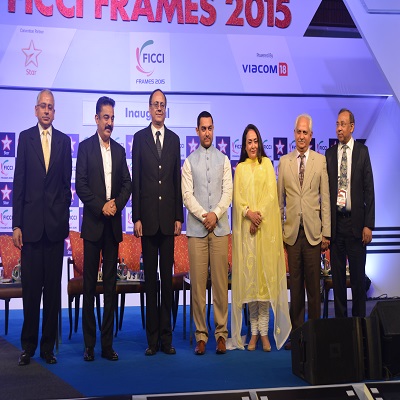
    MUMBAI: By the year 2016, India could have close to 1000 radio FM channels. Speaking at the FICCI Frames 2015 convention in Mumbai, Information and Broadcasting Ministry additional secretary JS Mathur said, “It is an exciting time for the radio industry. The FM radio expansion in the country, which has also got the nod of the government of India, will see the first batch of phase III e-auction very soon. This will be covering 69 cities and 135 channels.”


    Mathur added that while it is was exciting time for the industry, but with that also comes challenges. “The new government needs to meet these challenges and meet them in best possible manner,” he said.


    During his address, he agreed that there were issues of content diversification as also of newer business and revenue models. “For the new government under Prime Minister Narendra Modi, these are exciting times as there are things, which have started rolling out, while the others that have been proposed, needs to be rolled out,” he opined.


    He said that while the digitisation of phase I and II has been completed, the rollout of phase III and IV will digitise the entire country. “It is a major step forward. There is a lot at stake for all the stakeholders, which includes the broadcaster, the consumer and the platform providers. Everyone will have to ensure that the consumer gets the best product, while every stakeholder gets his due,” said Mathur.


    While congratulating the media for the great work, Mathur emphasized the role of the media as well. “Media can play an important role in spreading awareness about critical issues amongst consumers,” he opined.


    Mathur concluded by showing hope in the new government. “The Narendra Modi led government is prompt in ensuring that the M&E sector grows,” he concluded.

  • FM Radio Phase III first batch to have e-auction of 135 channels

    FM Radio Phase III first batch to have e-auction of 135 channels

    NEW DELHI: A total of 135 private FM radio channels will be auctioned in the first batch covering 69 cities in Phase III based on the reserve price formula approved by the Cabinet in 2011, the Parliament was informed on 20 March.


    This covers towns and cities, which already have FM but have vacancy for more, apart from areas which do not have FM Radio.


    Information and Broadcasting Ministry officials told Indiantelevision.com that the process would be completed by April-end.


    Speaking in the Lok Sabha, I&B Minister Arun Jaitley said that apart from news that will be taken from All India Radio (AIR) under conditions to be mutually agreed with Prasar Bharati, Phase III will consider as non-news and current affairs live coverage of sports events of local nature, information pertaining to weather and traffic, cultural events and festivals, topics relating to examinations, results, admissions, career counsel availability of employment opportunities and public announcements pertaining to civic amenities.


    In addition, categories not permitted at present, may subsequently be permitted by the Ministry from time to time, the Minister said.


    In reply to a separate question, Minister of State Rajyavardhan Rathore said that there is no proposal for community radios before the Ministry.


    The largest beneficiaries of the first batch are Maharashtra including Mumbai with 26 channels in 13 towns, Uttar Pradesh comes next with 22 channels in eight cities, followed by nine channels in six towns of Rajasthan and eight channels in five cities in Tamil Nadu. 

  • Government aims to give community radio a leg-up

    Government aims to give community radio a leg-up

    NEW DELHI: For the investors in radio projects, there is some good news. Stating that the government is trying to look into the investments made by entrepreneurs, the secretary, Information and Broadcasting ministry, government of India, said today that “we must look into how to help them realise their business projections on which the investments are based.”

    The government has decided to further liberalise norms for setting up Community Radio projects as the third arm of the radio policy that includes AIR and FM Radio channels to revolutionise the air waves and make radio entertaining, socially relevant and commercially viable.

    Arora said this while inaugurating the seminar on “Indian Radio Industry: the way forward”, organised by Federation of Indian Chambers of Commerce and Industry (FICCI). The seminar was the first interaction between industry and policy makers after the bids for Phase-II of FM Radio were finalised.

    Arora said, “We are waiting for the results of the Phase-II policy and after a due process of consultation with the stakeholders, and will tweak the policy and then go Phase-III of the radio policy.” He expressed satisfaction that in Phase-II, the number of radio stations was expected to jump from 20 to 270 by the end of the current fiscal year.

    He said competition to AIR from private FM radio channels had given the government radio station a run for its money but expressed confidence that this would force the station to provide quality programme and the available infrastructure that would enable them to withstand competition. “We are trying mix and match the bouquets for the listeners and asking AIR to revive programmes like Hawamahal dramas and skits which were once the hallmarks of Akashwani.

    Trai member AK Sawhney, noted that at while the process of roll-out of services by Phase-II licence is currently on, what is increasingly becoming clear is that the spectrum that was so far lying unutilised has the potential to allow a much greater variety in the offering of radio that was hitherto considered possible.

    He said the focus of Trai has been to expand the markets, provide room for more services and more competition and to allow new technology to come in without fresh approvals being taken at every stage. A key element of the approach is to reduce the cost of licences and spectrum and also to push the industry towards a low price-high growth scenario. The focus of changes in the policy for Phase-III should be in tune with this approach, Sawhney pointed out.

    ENIL Chairman FICCI Radio Forum and CEO and MD AP Parigi, empahsised the need for a continuing dialogue between all stakeholders so that the level of regulation can be decided on a consensual basis. Such dialogue, he said, would provide answers to questions of FDI and the participation of Indian financial institutions (FIs) in the growth of the FM Radio industry.

    FICCI Secretary General Dr Amit Mitra, said the radio industry which was Rs 2,400 million in 2004 is expected to grow to Rs 12,000 million by 2010, representing a 32 per cent growth CAGR when the entire media and entertainment industry is slated to grow at 19 per cent CAGR. This makes the radio industry the fastest growing medium in the media and entertainment sector.

    He announced the launch of the FICCI Radio forum under the chairmanship of Parigi. Among other objectives, the Forum will seek to consolidate the radio industry for effective lassoing with the government, promote interface of the industry with significant international players, support R&D in radio technology and provide facilitation, guidance and interface with government and key radio players for new start-ups.

    During the interactive session on “Regulatory Framework on Radio Industry”, Neil Curry of BBC expounded on the system that governs broadcasting in the UK, said that there are parallels from and lessons to be drawn from the model that has been developed in Britain. The main aim of the regulatory body should be to ensure freedom of speech from economic and political forces. He also emphasised in the UK, the key aspect of regulation is now shifted focus from outlet (that is what audiences hear) rather than input.

    T Sengupta Associates CEO Tamali Sengupta who was the moderator for the second session, asked a seminal question that somehow got buried later: through seeking a voice vote, she remarked that radio was loosing the youth factor, and that most young me were not listening to radio, rather choosing to use on-demand technology like the iPod.
    Issue of FDI and FII cropped up during the interactive session.

    Most speakers felt that radio was being discriminated against vis-à-vis the print medium since the latter had a FDI/FII cap of 26 per cent, where as radio had a cap of 30 per cent.
    Rajiv Sethi, S&R Associates, also raised the issue why private radio FM channels are debarred from hosting news and current affairs programmes. “All the FM channel owners are cleared by the ministry of home affairs in any case, and they have paid a 10-year licensing fee, so why they are debarred from hosting news programmes, whereas the TV channels are not, defies logic.”

    A major section of the debate in this session related to the upcoming broadcasting bill 2006. Questions were raised about the Code of Conduct, and speakers said that since the Supreme Court of India has been issuing orders that have more or less crystalised a sort of code of conduct, is there a need to have a fresh one. One of the major recurring irritants that surfaced was that the proposed bill is more biased towards the TV industry rather than the radio, and it was also stated that the Broadcasting Regulatory Authority proposed does not encapsulate the orders of the Supreme Court.