Tag: FM channels

  • State-level television committees to monitor FM & Community Radio

    NEW DELHI: The state / district-level monitoring committees will  henceforth be authorised to monitor the content broadcast on private FM I community radio stations also in addition to private satellite TV channels. The content can be monitored by the committees suo-moto and on the basis of complaints received.

    The information and broadcasting ministry has therefore requested all state governments to constitute these committees wherever these have not been set up so far and to effectively monitor all types of content.  A detailed office memorandum in this regard has been sent to all states.

    This has been done as the ministry is in the process of formalising the complaint redressal mechanism whereby viewers and listeners can file complaints against programmes they find offensive in television channels or radio stations.

    This follows a judgment delivered on 12 January in the case of Common Cause Vs. UOI & Ors where the court advised the government to formalise the complaint redressal mechanism.

    According to MIB sources, if any violations were found, those would be acted upon by the authorised officers or brought to the notice of the ministry for taking necessary action as per relevant guidelines.

    The ministry had, in orders on 6 September 2005 and 19 February letter on 17 January 2017, asked for constitution of monitoring committees to enforce the Cable Television Networks (Regulation) Act, 1995. According to information available with the ministry, the monitoring committees were set up in 19 states, five union territories and 327 districts for monitoring content telecast on private satellite channels.

    Broadcast of FM radio channels and Community Radio Stations (CRS) are in the nature of terrestrial transmission. Hence, monitoring their content centrally is not feasible, the Ministry said.

    The content aired by them rs also of local nature. All private FM channels and Community Radio Stations are required to follow the All India Radio’s Broadcast Code in terms of the Grant of Permission Agreement  (GOPA) signed by them with the Ministry of Information and Broadcasting. 

    The ministry said it is therefore essential that such committees are set up for all types of content monitoring including private FM channels and community radio stations.

    The Ministry has sent to the states a list of permitted private FM channels and Community Radio Stations as on date. However, as this is an evolving list, the states have been told to access the latest list on the ministry’s website.

    The Ministry in its letter also informed the states that TV broadcasters have set up their self regulating system where too the public can lodge complaints. News Broadcasters Association (NBA), a representative body  of news and current  affairs TV channels, set up News Broadcasting Standards Authority  (NBSA), to consider complaints against or in respect of broadcasters relating to content.

    The Indian Broadcasting Foundation (IBF), a representative  body of non-news and current  affairs  TV channels  has set up Broadcasting  Content Complaints Council (BCCC)  to examine the complaints relating to content  telecast  on private satellite TV channels.

    In addition, the ministry said the Advertising Standards Council of India (ASCI) has set up a Consumer Complaints Council (CCC) to consider complaints in respect of advertisements.

    Also Read:

    Govt formalising TV & radio complaints’ redressal mechanism

    After DTT, TRAI launches exercise on digital radio broadcasting

  • Pvt FM channels yet to touch 300; AIR targets another 115 locations

    Pvt FM channels yet to touch 300; AIR targets another 115 locations

    NEW DELHI: After almost two decades of introduction of the scheme, there are only 267 private FM channels operational in the country. Even the second batch of Phase III auctions was stopped before all the channels were auctioned and there was no bid for 44 cities.

    Information and broadcasting ministry sources had earlier told Indiantelevision.com’s sister company that the aim was to continue till all the channels slated in the second batch were auctioned, but breaks will have to be taken for weekends and national holidays.

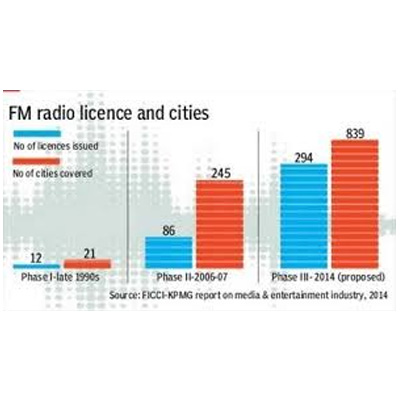
    The first phase in 1999 saw the start of 21 FM channels in 12 cities although 37 were sold in 19 cities. The auction was for 108 channels in forty cities.

    The second phase in 2005 saw the operationalisation of 219 channels in 86 cities although 245 channels were sold in 87 cities. The auction was for 337 FM channels in 91 cities.

    In view of the third phase covering 839 FM channels, it was decided to hold the auction in batches.

    The first batch between July and September last year led to the operationalisation of 27 channels in 21 cities although a total of 97 channels were sold in 56 cities (one channel is awaiting security clearance). The batch was to cover 135 channels in 69 cities.

    The second batch meant to auction 266 channels in 92 cities commenced on 26 October 2016 and was stopped on 13 December.

    In all, 14 bidding companies had been shortlisted for taking part in the second batch but only M/s South Asia FM Ltd was allotted FM channels in Surat, Amritsar, Patna, Chandigarh and Jammu.

    However, the ministry sources said that a full report would be released shortly.

    While All-India Radio has around 416 FM channels at present, it has plans for targeting another 115 locations in the near future. Besides FM Rainbow and FM Gold, Vividh Bharati has already come on FM and several other channels are planned to be put on FM even as they continue to be beamed on Medium Wave.

    In the second batch of Phase III, Hyderabad and Dehradun remained at top with Rs 23,43,48,266 and Rs 15,61,00,590 respectively on the 26th day with the completion of three rounds taking the total to 100.

    Other than Hyderabad and Dehradun, the top 16 cities remained static with bids of more than Rs 32 million. The bids at Alappuzha (Alleppey), Erode, Hubli-Dharwad, Nellore, Salem, Vellore and Vijaywada remained at just over Rs 70 million while bids for Tiruchy was just above Rs 50 million and Tirupathi, Puducherry and Muzaffarpur to a little over Rs 40 million. Amravati, Bhavnagar, Jamnagar and Ujjain bid a little over Rs 35 million and Mysuru a little over Rs 32 million.

    Also Read :

    South Asia FM bags five channels in first round of the second batch of FM Batch III

  • Pvt FM channels yet to touch 300; AIR targets another 115 locations

    Pvt FM channels yet to touch 300; AIR targets another 115 locations

    NEW DELHI: After almost two decades of introduction of the scheme, there are only 267 private FM channels operational in the country. Even the second batch of Phase III auctions was stopped before all the channels were auctioned and there was no bid for 44 cities.

    Information and broadcasting ministry sources had earlier told Indiantelevision.com’s sister company that the aim was to continue till all the channels slated in the second batch were auctioned, but breaks will have to be taken for weekends and national holidays.

    The first phase in 1999 saw the start of 21 FM channels in 12 cities although 37 were sold in 19 cities. The auction was for 108 channels in forty cities.

    The second phase in 2005 saw the operationalisation of 219 channels in 86 cities although 245 channels were sold in 87 cities. The auction was for 337 FM channels in 91 cities.

    In view of the third phase covering 839 FM channels, it was decided to hold the auction in batches.

    The first batch between July and September last year led to the operationalisation of 27 channels in 21 cities although a total of 97 channels were sold in 56 cities (one channel is awaiting security clearance). The batch was to cover 135 channels in 69 cities.

    The second batch meant to auction 266 channels in 92 cities commenced on 26 October 2016 and was stopped on 13 December.

    In all, 14 bidding companies had been shortlisted for taking part in the second batch but only M/s South Asia FM Ltd was allotted FM channels in Surat, Amritsar, Patna, Chandigarh and Jammu.

    However, the ministry sources said that a full report would be released shortly.

    While All-India Radio has around 416 FM channels at present, it has plans for targeting another 115 locations in the near future. Besides FM Rainbow and FM Gold, Vividh Bharati has already come on FM and several other channels are planned to be put on FM even as they continue to be beamed on Medium Wave.

    In the second batch of Phase III, Hyderabad and Dehradun remained at top with Rs 23,43,48,266 and Rs 15,61,00,590 respectively on the 26th day with the completion of three rounds taking the total to 100.

    Other than Hyderabad and Dehradun, the top 16 cities remained static with bids of more than Rs 32 million. The bids at Alappuzha (Alleppey), Erode, Hubli-Dharwad, Nellore, Salem, Vellore and Vijaywada remained at just over Rs 70 million while bids for Tiruchy was just above Rs 50 million and Tirupathi, Puducherry and Muzaffarpur to a little over Rs 40 million. Amravati, Bhavnagar, Jamnagar and Ujjain bid a little over Rs 35 million and Mysuru a little over Rs 32 million.

    Also Read :

    South Asia FM bags five channels in first round of the second batch of FM Batch III

  • MIB directs TV channels, MSOs, FM channels to follow directives of Delhi HC on Balaji comedy

    MIB directs TV channels, MSOs, FM channels to follow directives of Delhi HC on Balaji comedy

    New Delhi: Doordarshan and all private channels were today asked by the Information and Broadcasting ministry to comply with the directive of the Delhi High Court not to telecast or publicise in any manner the film Kya Kool Hain Hum 3.

     Justin Vipin Sanghi had passed the order earlier this year on a petition by Balaji Motion Pictures against WWW.1337.YOOTORRENT.COM and others barring them “from  communicating, making available, distributing ,duplicating, displaying, releasing, showing, uploading, downloading, exhibiting, playing, defraying the movie Kya KoolHai Hum 3 in any manner whatsoever without obtaining prior license from the plaintiff or in any other manner that would infringe the plaintiffs copyright in the said cinematograph film through any medium whatsoever.”

     Thirty-six other defendants were directed to ensure compliance of the order by the other defendants.

    The ministry directive dated 14 March was addressed to News Broadcasters Association (NBA), Indian Broadcasting Foundation Association of Regional Television Broadcasters of India, all TV Channels, all MSOs, and all FM Stations.

    In the petition, Balaji had said that release of any material or the film itself would lead to colossal losses to the company.

     Balaji impleading 300 defendants of which 1 to 203 are websites allegedly engaged in the business of uploading content. The plaintiff apprehends that the said websites may even upload unlicensed copy of the plaintiffs film Kya Kool Hai Hum3, of which the plaintiff claims to be the producer and copyright holder. defendants no.204 to 238 are Internet Service Providers (ISP), who are engaged in the business of providing basic telephony, mobile services and broadband network all over the world and are covered by the Information Technology Act, 2000 as well as Copyright Act, 1957 and the Telecom Regulatory Authority of India Act, 1997 (TRAI Act).

     The Ministry of Communication & Information Technology has been impleaded as defendant no.239. The plaintiff stated that defendants no.204 to 239 have been impleaded so that the orders that may be passed by the court may be implemented by them by blocking the infringing URLs of websites such as defendants no.1 to 203. Defendants no.240 to260 and 260-274 are Multi System Operators (MSOs) and cable operators governed by the Cable Network RegulationAct 1995 and the TRAI Act. The plaintiff stated that various MSOs and cable operators, including in Delhi could be engaged in unauthorised unlicensed production and broadcast, on their local channels and through other means, of various pirated contents, including cinematograph films through their cable network. The apprehension of the plaintiff was that the said defendants may indulge in broadcast of the aforesaid copyright of the plaintiff, which at the time of the court order of 19 January was yet to be released (on 22 January) and Balaji apprehends will infringe the copyright m  the  aforesaid cinematograph film.

  • MIB directs TV channels, MSOs, FM channels to follow directives of Delhi HC on Balaji comedy

    MIB directs TV channels, MSOs, FM channels to follow directives of Delhi HC on Balaji comedy

    New Delhi: Doordarshan and all private channels were today asked by the Information and Broadcasting ministry to comply with the directive of the Delhi High Court not to telecast or publicise in any manner the film Kya Kool Hain Hum 3.

     Justin Vipin Sanghi had passed the order earlier this year on a petition by Balaji Motion Pictures against WWW.1337.YOOTORRENT.COM and others barring them “from  communicating, making available, distributing ,duplicating, displaying, releasing, showing, uploading, downloading, exhibiting, playing, defraying the movie Kya KoolHai Hum 3 in any manner whatsoever without obtaining prior license from the plaintiff or in any other manner that would infringe the plaintiffs copyright in the said cinematograph film through any medium whatsoever.”

     Thirty-six other defendants were directed to ensure compliance of the order by the other defendants.

    The ministry directive dated 14 March was addressed to News Broadcasters Association (NBA), Indian Broadcasting Foundation Association of Regional Television Broadcasters of India, all TV Channels, all MSOs, and all FM Stations.

    In the petition, Balaji had said that release of any material or the film itself would lead to colossal losses to the company.

     Balaji impleading 300 defendants of which 1 to 203 are websites allegedly engaged in the business of uploading content. The plaintiff apprehends that the said websites may even upload unlicensed copy of the plaintiffs film Kya Kool Hai Hum3, of which the plaintiff claims to be the producer and copyright holder. defendants no.204 to 238 are Internet Service Providers (ISP), who are engaged in the business of providing basic telephony, mobile services and broadband network all over the world and are covered by the Information Technology Act, 2000 as well as Copyright Act, 1957 and the Telecom Regulatory Authority of India Act, 1997 (TRAI Act).

     The Ministry of Communication & Information Technology has been impleaded as defendant no.239. The plaintiff stated that defendants no.204 to 239 have been impleaded so that the orders that may be passed by the court may be implemented by them by blocking the infringing URLs of websites such as defendants no.1 to 203. Defendants no.240 to260 and 260-274 are Multi System Operators (MSOs) and cable operators governed by the Cable Network RegulationAct 1995 and the TRAI Act. The plaintiff stated that various MSOs and cable operators, including in Delhi could be engaged in unauthorised unlicensed production and broadcast, on their local channels and through other means, of various pirated contents, including cinematograph films through their cable network. The apprehension of the plaintiff was that the said defendants may indulge in broadcast of the aforesaid copyright of the plaintiff, which at the time of the court order of 19 January was yet to be released (on 22 January) and Balaji apprehends will infringe the copyright m  the  aforesaid cinematograph film.

  • TRAI: 35 companies control 243 operational FM channels, seven control 169

    TRAI: 35 companies control 243 operational FM channels, seven control 169

    New Delhi: Reliance Broadcast Network Ltd holds the largest number of FM radio channels with 45 Big FM channels in various cities.

    Figures released by the Telecom Regulatory Authority of India as part of its consultation paper on ‘Issues related to Radio Audience Measurement and Ratings in India’ shows that seven companies hold the largest number of FM channels (169) of the 243 channels currently operational after Phase II.

    Entertainment Network India Ltd through Radio Mirchi holds 36; South Asia FM Ltd through S FM has 23; Kal Radio Pvt. Ltd with S FM has 18; Music Broadcast Pvt. Ltd has 20 Radio City channels; D B Corp Ltd has 17 My FM channels; and BAG Information P Ltd runs ten Radio Dhamaal channels.A total of 28 companies run the remaining 74 FM channels in various parts of the country.

    Radio broadcasting services were opened to private sector in 2000 when the Government auctioned 108 FM radio channels in the VHF band (88 –108 MHz) in 40 cities in Phase-I of FM Radio. Out of these, only 21 FM radio channels became operational and subsequently migrated to Phase-II in 2005. In Phase-II of FM Radio, a total of 337 channels were put on bid across 91 cities having population equal to or more than 300,000. Of 337 channels, 222 channels became operational. At present, 243 FM Radio channels are operational in 86 cities.

    Phase-III auctions have begun to enable setting up of private FM Radio channels in all cities with a population of more than 100,000. As part of this Phase, auctions were done for 135 FM Radio channels in 69 cities where at least one channel of FM radio is already operational. Out of these, 91 FM Radio channels in 54 cities have been successfully auctioned.

    A total of 831 more FM Radio channels will be put up for auction in 264 new cities under FM radio Phase-III in addition to remaining channels of 135 FM radio channels put for auction recently.

    Terrestrial radio broadcasting which includes FM is a free-to-air service. A consumer can simply procure radio receiver equipment and tune into various radio channels available in that region. The business model of radio broadcasting service is based on advertisement revenue. Radio broadcasters are permitted to air commercials during their programme.

    The revenue of radio broadcasting sector in 2014 was Rs 1720 crore, with a year-on year increase of 18 per cent from 2013 to 2014, driven by increasing popularity of radio in smaller towns and cities. The radio broadcasting sector revenues are expected to grow at a CAGR of 18 per cent to reach Rs. 3950 crore by 2019.

    The total advertisement revenue of Media and Entertainment (M&E) industry was Rs. 41,400 crore in 2014, contributing approximately 31 per cent to the total M&E revenues. The advertisement revenue is expected to grow at a CAGR of 14.5 per cent to reach Rs 81,600 crore by 2019. Presently television and print media sectors corner the maximum advertisement revenue (approximately 80 per cent of the total revenues) spend in India. Though the radio broadcasting sector presently accounted for only 4 per cent of total advertisement revenue in 20143, it is however expected to garner 5 per cent of the total advertisement revenues by 2019.

  • TRAI: 35 companies control 243 operational FM channels, seven control 169

    TRAI: 35 companies control 243 operational FM channels, seven control 169

    New Delhi: Reliance Broadcast Network Ltd holds the largest number of FM radio channels with 45 Big FM channels in various cities.

    Figures released by the Telecom Regulatory Authority of India as part of its consultation paper on ‘Issues related to Radio Audience Measurement and Ratings in India’ shows that seven companies hold the largest number of FM channels (169) of the 243 channels currently operational after Phase II.

    Entertainment Network India Ltd through Radio Mirchi holds 36; South Asia FM Ltd through S FM has 23; Kal Radio Pvt. Ltd with S FM has 18; Music Broadcast Pvt. Ltd has 20 Radio City channels; D B Corp Ltd has 17 My FM channels; and BAG Information P Ltd runs ten Radio Dhamaal channels.A total of 28 companies run the remaining 74 FM channels in various parts of the country.

    Radio broadcasting services were opened to private sector in 2000 when the Government auctioned 108 FM radio channels in the VHF band (88 –108 MHz) in 40 cities in Phase-I of FM Radio. Out of these, only 21 FM radio channels became operational and subsequently migrated to Phase-II in 2005. In Phase-II of FM Radio, a total of 337 channels were put on bid across 91 cities having population equal to or more than 300,000. Of 337 channels, 222 channels became operational. At present, 243 FM Radio channels are operational in 86 cities.

    Phase-III auctions have begun to enable setting up of private FM Radio channels in all cities with a population of more than 100,000. As part of this Phase, auctions were done for 135 FM Radio channels in 69 cities where at least one channel of FM radio is already operational. Out of these, 91 FM Radio channels in 54 cities have been successfully auctioned.

    A total of 831 more FM Radio channels will be put up for auction in 264 new cities under FM radio Phase-III in addition to remaining channels of 135 FM radio channels put for auction recently.

    Terrestrial radio broadcasting which includes FM is a free-to-air service. A consumer can simply procure radio receiver equipment and tune into various radio channels available in that region. The business model of radio broadcasting service is based on advertisement revenue. Radio broadcasters are permitted to air commercials during their programme.

    The revenue of radio broadcasting sector in 2014 was Rs 1720 crore, with a year-on year increase of 18 per cent from 2013 to 2014, driven by increasing popularity of radio in smaller towns and cities. The radio broadcasting sector revenues are expected to grow at a CAGR of 18 per cent to reach Rs. 3950 crore by 2019.

    The total advertisement revenue of Media and Entertainment (M&E) industry was Rs. 41,400 crore in 2014, contributing approximately 31 per cent to the total M&E revenues. The advertisement revenue is expected to grow at a CAGR of 14.5 per cent to reach Rs 81,600 crore by 2019. Presently television and print media sectors corner the maximum advertisement revenue (approximately 80 per cent of the total revenues) spend in India. Though the radio broadcasting sector presently accounted for only 4 per cent of total advertisement revenue in 20143, it is however expected to garner 5 per cent of the total advertisement revenues by 2019.

  • TRAI managed to give broadcasting as much importance as telecom in 2014

    TRAI managed to give broadcasting as much importance as telecom in 2014

    NEW DELHI: A decade after broadcasting was handed over to it, the Telecom Regulatory Authority of India (TRAI) appears to have given equal if not more time to the broadcasting sector, thanks largely to convergence of technology.

    Thus, issues like spectrum, marketing and even FM radio have got equal space during the Regulator’s work as telecom, apart from the digital addressable system (DAS) introduced in 2011.

    TRAI also mastered the art of marketing during the year 2014. It developed radio jingles in Hindi, English and 10 regional languages on VAS/UCC which were aired on various FM channels in 84 cities across the country for one week in the months of June, July, August and October 2014.

     Admitting in its annual report that it had failed to carry out periodic reviews to make inflation- linked adjustments, TRAI said it had finally done so in concurrence with the Supreme Court. Thereafter it issued two tariff orders on 31 March and 31 December as far as broadcasting was concerned.

    Based on the rise in the wholesale price index (WPI) over the last five years and considering other relevant factors, the Authority came to a conclusion that an overall 27.5 per cent inflation hike is to be allowed, both at the wholesale and retail levels. Taking into account the consumer’s interest, the Authority prescribed that this hike be implemented in two installments. The first installment of 15 per cent was made effective from 1 April 2014. This was notified vide the Telecommunications (Broadcasting & Cable) Services (Second) Tariff (Eleventh Amendment) Order 2014 dated 31 March 2014. The second installment for the remaining inflation-linked increase has been made effective from 1 January 2015. This is expected to give adequate and reasonable time to all stakeholders to adjust to these hikes. To take care of the second installment of the inflation linked hike, the Authority notified the Telecommunications (Broadcasting & Cable) Services (Second) Tariff (Thirteenth Amendment) Order 2014 dated 31 December 2014.

    In a matter relating to a tariff order prescribing tariffs for commercial subscribers, the Supreme Court in April 2014, asked TRAI to come out with a new tariff dispensation for such subscribers. Accordingly, on 16 July and 18 July 2014, TRAI notified amendments to tariff orders / regulations pertaining to commercial subscribers of broadcasting and cable TV services. These amendments bring in clarity regarding the manner of distribution of TV signals to commercial subscribers, prescribe tariffs based on intended use of the TV signals, and aim to enhance transparency in tariff regulation.

    During phase I and phase II of digitisation of cable TV sector, it was noticed that the authorised agents/aggregators of the broadcasters were forming large bouquets, combining channels of different broadcasters and forcing it on the DPOs viz. cable, DTH, HITS and IP TV operators. This was resulting in distortions in the market. Incidentally, the Ministry of Information and Broadcasting (MIB) had also sent a reference to TRAI requesting for a review of the regulatory framework with regard to aggregators. The amendments aim at contributing to the orderly growth and overall development of the sector by streamlining the distribution of TV channels from broadcasters to DPOs. The salient provisions in these amendments are:

     A broadcaster is now defined as an entity having the necessary government permissions in its name. Only the broadcaster shall publish the Reference Interconnect Offers (RIOs) and enter into interconnection agreements with DPOs. However, in case a broadcaster, in discharge of its regulatory obligations, is using the services of an agent, such authorised agent can only act in the name of and on behalf of the broadcaster.

    As far as FM radio is concerned, TRAI on the request of MIB made recommendations on the amount of migration fee to be charged from existing FM operators on their migration from Phase-II to Phase-III of FM Radio Broadcasting. The permissions for operating FM Radio as per Phase-II policy were granted by MIB during the period 2005 to 2009 in 86 cities. As per the Phase-II policy, the permissions were granted for a period of 10 years to each FM Radio operator and there is no provision for extension of permission in the Phase-II policy.

    Therefore, Phase-II permissions will start expiring from 31 March 2015 onwards. There was no great incentive for an existing operator to pay a migration fee and operate as per the Phase-III policy only for the balance period of Phase-II permissions. Accordingly, the Authority in its recommendations on ‘Migration of FM Radio Broadcasters from Phase-II to Phase-III’ dated 20 February 2014 recommended a period of permission of 15 years after migration from Phase-II to Phase-III. The salient features of the recommendations are:
    TRAI reiterated early implementation of its recommendations on minimum channel spacing of 400 KHz for FM radio broadcast issued on 19 April 2012, which will in effect increase the number FM channels in each city for auction. The period of permission to operate the existing FM channels on migration from Phase-II to Phase-III will be 15 years.

    In the DTH Guidelines, under which licenses are issued to DTH operators, there is no explicit provision for an extension or a renewal of the licenses on completion of the license period. In this regard, the MIB sought recommendations of TRAI. After examination, the Authority concluded that to allow the DTH operators to continue their business after the expiry of the stipulated 10 year license period, the government will have to issue a new license. Accordingly, the Authority looked at the issues concerning the DTH sector holistically and, after following the due consultation process, sent its recommendations to the MIB on “Issues related to New DTH Licenses” on 23 July, 2014.

     Apart from removing the ambiguity over renewal of licenses, these recommendations suggest that the government came out with a new licensing regime for DTH sector which, amongst others, allows for longer license period, rationalised license fee, rationalised and regulated cross-holding and vertical integration between broadcasters and distribution platform operators including DTH operators. The recommendations also suggest a mechanism for migration of operators from the existing regime to the new regime. A new licensing regime, incorporating the provisions in the said recommendations, is expected to bring in, amongst others, certainty in DTH business, ease taxation pressures, attract better investments in the sector etc. and, thereby, promoting the overall efficiency in DTH operations.

     Ensuring plurality of voices in the media, that is, availability of fair, balanced and unbiased representation of a wide range of opinions and views, is critical for any democratic polity. Ensuring both external plurality, namely multiple voices in the national media market, and internal plurality, that is presentation of a range of facts and news in an unbiased manner by a media outlet, are fundamental in the working of a democracy.

    Regulatory restrictions on cross-media holdings seek to ensure external plurality in the media market, while restrictions in vertical holding by any entity of a broadcaster and a distribution entity are important to ensure that the distribution channels remain open to all desirous of presenting an opinion or view to the public. Finally, content regulation is critical in a time when news is increasingly seen as an asset belonging to a media entity’s owners to be monetized for political/ business/ or pecuniary gain.

    Recommendations on “Issues related to Media Ownership” were issued on 12 August

    The key issues addressed and the concerned recommendations included defining who owns a media entity and controls it – in brief, an entity that possess not less than 50 per cent of voting rights in the media entity or can appoint more than 50 per cent of the members of its board of directors will be deemed to control it. The Recommendations also take into consideration control through debt, and has recommended the loan threshold that will deem the lender to be in control of a media entity.

    The restrictions recommended on cross-media ownership apply on the media entities that cover news and current affairs genres in the television and print segments only, as impact of radio and internet in India on opinion formation is marginal. In the print segment, only daily newspapers, including business and financial newspapers, should be considered.
    The MIB had sent a reference to TRAI seeking recommendations of the Authority on extension of permission granted to Community Radio Stations (CRS) in India. According to the 2006 Policy Guidelines for CRSs, the period of validity of Grant of Permission Agreements (GOPA) is five years and the guidelines contain no provisions for the renewal/ extension of permissions. The validity of the GOPAs issued under these Guidelines for some of the CRSs, had expired on completion of five years, requiring them to stop operating. The Authority, therefore, in an interim reply suggested continuation of the GOPAs on the same terms and conditions.

    CRS are an important medium for empowerment and social development of the local communities. Therefore, going beyond the terms of reference from MIB, the Authority in a pre- consultation process sought inputs from CRS permission holders on the issues relevant for the growth of CRS in the country based on their experiences over the past decade. Several responses were received; these inter alia included comments on procedural matters; technical issues; content; aid and assistance.

    In addition to the issues highlighted, the Authority also noted the important role, the CRS play in serving the local communities by providing relevant information/alerts during natural calamities and emergency situations. The Authority, after analysing all issues comprehensively, sent ‘Recommendations on Issues related Community Radio Stations’ to MIB on 29 August, 2014. The salient features of the recommendations included initial permission for operating a CRS to be five years; extension of permission for five years at a time, to be allowed following performance evaluation; and CRS to be allowed to broadcast locally relevant news and current affairs content sourced exclusively from AIR, in its original form or translated into the local language/ dialect.

    MIB sent references to the Authority to provide its recommendations on issues relating to ground based channels being operated by cable TV operators and programming services being offered by DTH service providers to their subscribers. Collectively these kinds of programming services provided by the Distribution Platform Operators (DPOs) are referred to as Platform Services (PS).

    At present, the PS offered by DPOs are not subject to any specific regulations or guidelines. Similarly, there are several ground-based broadcasters who provided local TV channels to cable operators for distribution which are also not covered by any specific regulations. Since, all of these platform services and local channels are being operated and distributed without even a simple registration system in place; the possible impact of the content carried on these channels on the law and order/ security situation is a cause for concern. In addition, the differentiated treatment under the different policy guidelines applicable to the different types of DPOs has to be addressed, to provide for similar regulatory frameworks for what after all are inter-changeable services. Therefore, there is an urgent need to establish a simple, robust and fair regulatory system that addresses all concerns regarding the PS being distributed on cable TV networks.

    After an extensive consultation process in which open houses discussions were held with stakeholders in all four regions in India, the Authority forwarded its recommendations on ‘Regulatory framework for Platform services’ to the government on 19 November 2014.


  • Prasar Bharati: A ‘successful’ year gone by

    Prasar Bharati: A ‘successful’ year gone by

    Since 1995, Doordarshan has been trying to build bridges of communication with Indians living abroad and also to showcase its diverse culture, values and rich heritage to the world by launching its international channel.

    From March 2011, Doordarshan started availing of the service of ISRO’s INSAT-4B in both KU band and C band. However, the inadequacy of not being able to locate any significant global partners to distribute and connect DD to homes overseas continued. Doordarshan did make renewed efforts through Indian Missions to distribute its international channel abroad, but it could make little progress in this last mile distribution, because of several reasons. On the other hand, countries like Japan, Germany, China, Russia and France, invested heavily to ensure a global reach for their international channels.

    Over the last one year, concerted efforts made by Prasar Bharati to locate viable global distribution platform to DD India has resulted in an agreement with Deutsche Welle (DW), the international broadcasting arm of the German public broadcaster for a slot on the DTH platform of EUTEL SAT Hotbird 13 B. It is an extremely popular DTH platform and in Europe it was the logical choice for DD India to launch its overseas services afresh. Hotbird 13B has a total number of 1543 TV channels of which 1117 TV channels are free-to-air. A total of 124 English channels are available on this satellite, prominent amongst which are BBC, CNN, CCTV, RT, France24, VOA TV, Euromans, Sky News, Bloomberg TV, Al Jazeera, etc.  DD India will be in the basic package of the DTH service. The projection of India’s viewpoint to the global audience being  a dire necessity, Prasar Bharati has found a suitable platform with DW on extremely favourable terms on reciprocal basis which is no mean achievement.Placing DD on Hotbird DTH platform will also give it full access to the Middle Eastern GCC countries, where Indians work and reside in large numbers. The telecast trials are likely in a few days and formal launching is expected shortly.

    It was a feather in its cap and moment of honour for India when the Prasar Bharati CEO, Jawhar Sircar, was elected as vice president of the Asia Pacific Broadcasting Union (ABU) in 2014 with its presence in 63 countries, boosting its international presence.

    Doordarshan team has come up with new serials in the current year attracting more eye balls in the afternoon session of DD National creating a new record heralding resurgence of the public broadcaster towards fulfilling its mandate with renewed vigour away from market driven commercial initiatives. Meeting the aspirations of the people of Telengana, dedicated DD Yadagiri from Hyderabad and DD Saptagiri channels from Vijayawada for Seemandhra have become fully operational. Other major initiative was upgradation of  four Hindi channels as 24 hours channels as DD Rajasthan, DD Madhya Pradesh, DD Bihar and DD Uttar Pradesh  from the respective capital DD Kendras giving local look and feel enriching  the telecast with regional flavour.  The basic infrastructure to operationalise DD Kisan channel has been put in place by Doordarshan.  Concerted efforts are on to enrich the channel in the coming year meeting the aspirations of all the agro-economic zones with due importance to related fields and provide wholesome content to the agrarian population of the nation.  

    A major decision in 2014 was to optimise the huge advantage of Digital Terrestrial Transmitters from the four metros which are ready and from other important state capitals in cluster with ability to provide a bouquet of 20 attractive TV channels along with a combination of audio channels from each location with perfect digital output reaching the hand held smart devices equipped with tiny dongles or chips which are under field trials already. The technology is capable of live streaming content without buffering and circumventing ‘server down’ possibility fully.

    Doordarshan was in news for amateurish display by some casual assignees  highlighted in media exposed huge vacancies of creative professionals  in Prasar Bharati and absence of a vibrant mechanism to service the HR functions for cadre restructuring, removal of service conditions related anomalies, conduct of regular departmental promotion proceedings, induction and appointment of creative professionals after strict professional evaluation. After Dr Surya Prakash joined as chairman, the proposal for Prasar Bharati Recruitment Board gained impetus and its establishment looks to be on course.

    Prasar Bharati chose to strengthen its popular Vividh Bharati network in the metros by simulcasting in FM mode. While Kolkata has already commenced its operation, other metros are awaiting the launch. AIR’s 86 odd local radio stations across the country have already started simulcasting Vividh Bharati across the nation spicing up AIR’s airwaves in the cause of uniting India.

    Prime Minister Narendra Modi’s monthly Mann ki Baat – a heart-to-heart and intimate sharing of thoughts with the people living in every nook and corner of the country – is a shot in the arm for Prasar Bharati and AIR undoubtedly has emerged a clear winner in reaching the whole nation through all its channels. The programme has received spontaneous response from thousands of listeners spread all over the country including far flung areas. The broadcast has done the vastest disseminated public service through territorial, satellite and web modes.

    While AIR has decided to webcast all primary channels from all its capital Kendras, it has started field trials of its most popular Vividh Bharati as part of its internet bouquet of FM Gold, FM Rainbow and Urdu Service.

    The dream of CEO Jawhar Sircar is to connect the whole of India through FM-station utilising its existing terrestrial towers all over the country for mounting FM antennas and cutting costs and simulcasting its primary service to ride over shortcomings of Medium Wave transmission.

    For Prasar Bharati, creative dynamism has remained a challenge with innumerable competitors in the field. But its new team is optimistic to accomplish its mandate as a national public broadcaster to inform, educate and entertain the masses at home and abroad and achieve conspicuous deliverables in the new year.

    AIR has become the torchbearer of the Prime Minister’s clarion call for ‘Swachh Bharat’ i.e. Clean India mission through its extensive campaign so that it becomes a truly peoples’ movement and the Prime Minister’s dream of clean India by 2019 becomes a reality. To lend support to the mission, AIR launched extensively several programmes on all its channels, in a variety of formats. The objective is to bring about attitudinal changes and behaviour modifications in the way of life of people while making them aware about environmental hygiene and cleanliness.

    Apart from promos, jingles and slogans on the theme, a multi-episode serial in Hindi entitled ‘Des ApnaUjla-Ujla’ has been launched w.e.f. 2 October 2014.

    The yeoman service rendered by All India Radio (Radio Kashmir, Srinagar, Jammu) during the recent devastating deluge, which helped in saving hundreds of lives, connecting families, keeping the morale and spirit high of the population hit by the worst ever natural calamity and prevention of outbreak of epidemics in the aftermath of the disaster, have all come for lavish praise from every quarter including the Chief Minister of J&K and the cabinet secretary to the government of India. AIR’s uninterrupted service during this unprecedented disaster became all the more laudable as all other sources of information like print media and other electronic channels had come to a grinding halt in the State during those trying days.Similarly, AIR’s role in effective disaster management communication during the rescue, relief and rehabilitation operations at the time of recent Hudhud cyclone in the Andhra coast and particularly Vishakhapatnam also won accolades.

    Vividh Bharati, the old faithful, is avidly listened to even today in the face of stiff competition from rival media, especially private FM radio stations. Described as All India variety programme (Akhil Bharatiya Panchrangi Karyakram), it was initially radiated on two high-power shortwave transmitters at Mumbai and Chennai. Later, the service was progressively extended to 37 centres. Today, it is a veritable national service owing to its country-wide reach, with several stations/transmitters carrying the service:-

    • Exclusive/dedicated Vividh Bharati Channels                            37
    • Local Radio Stations (10:00 am to 5:00 pm)                               65
    • 100 Watt FM Relay Centres                                                         82

    Almost all these stations operate on the FM mode. Till recently, in the four metros, the service was available only on the emaciated medium wave transmitters. AIR has recently launched dedicated FM transmitters in the metros as well. Availability of the service on 102 FM transmitters, not to mention the 100 watt FM relay centres, has further enhanced the exposure to Vividh Bharati, owing to proliferation of FM receivers, car radios and mobile devices. To begin with, Vividh Bharati was an urban phenomenon. Today, it is able to penetrate deep into the country side and is an ideal vehicle for those eager to capture the rural markets.

    The fact that Vividh Bharati simultaneously reaches a vast section of people of all hues creates a psychological bond of togetherness, building up cohesion and common values.

    The year 2014 is the 75th anniversary year of external broadcasting in India and the 50th anniversary of its Urdu service. The External Services Division (ESD) is truly the extended arm of foreign policy and public diplomacy. The traditional modes of shortwave and medium wave transmission have been largely replaced during the year by FM and internet radio bringing about a turnaround during the year. The highlights of the revamping of the ESD are:

    1. Enhancing the level of engagement with the MEA particularly the External Publicity/ Public Diplomacy Division on an urgent basis, MEA will carry details of important programmes scheduled for broadcast in the General Overseas Service (GOS), the flagship service of ESD in English as well as other services in their bi-monthly magazine ‘India Perspective’.

    2. Modernisation efforts of ESD like creation and maintenance of multi-media websites with live internet radio and Radio on Demand components. Trial runs for the websites have been completed and GOS has already been informally hosted and ready for launch.

    3. ESD has also created three round-the-clock web radio portals, featuring live streaming of all the services. These have also been tested and ready for formal launch.

    4. With a view to reaching out to the Indian diaspora and involving the PIOs in the development agenda of the nation and making them true brand ambassadors for the country, multi-media websites for the Indian language services of ESD like Hindi, Bangla, Gujarati, Tamil and Urdu are being developed, with content specifically designed to the respective  target areas.

    5. General Overseas Service is targeted to the English speaking listeners all over the world with the exception of USA, Canada, South-America and the Caribbean. To reach these uncovered areas, a dedicated multi-media website ‘airworldservice.org.in’ has been launched during the year. The programmes of GOS are also available on the web radio portal of ESD. A GOS programme on Gandhian Philosophy has recently won the best programme award for the year 2014.

    6. To augment reception quality of cross-border and neighbourhood services targeted to South-East Asia and some countries in the East Asia from Chinsura (West Bengal) and to Pakistan, Afghanistan and some CIS countries from Rajkot, transmitters were upgraded. This will go a long way to support the new initiatives of the Central Government to strengthen its relations and engagement with the countries in the neighborhood and also undertake counter-propaganda and perception management programmes in a more effective manner. 

    • The News Services Division (NSD) of All India Radio is one of the world’s largest news gathering and dissemination apparatus.
    • Harnessing mobile technology, NSD launched free AIR news SMS service to the public in several regional languages viz. Asamese, Dogri, Gujarati, Hindi, Malayalam, Marathi, Nepali, Sanskrit and Tamil, besides English. The number of people registered for the Service has crossed 5 lakhs, with nearly 80% opting for the regional languages.
    • Substantially increased its presence on the social media, reaching out audiences far and wide. Popularity of AIR’s Facebook page can be gauged by the fact that the number of likes increased from 7 lakh in May, 2014 to 17 lakh in November, 2014. 
    • Twitter handle @airnewsalerts is also gaining momentum day by day, from 2,15,000 followers in May, 2014 to 3,70,000 in November, 2014
      • To further strengthen its reach, NSD joined another online audio platform sound cloud in May 2014. Sound cloud is an audio platform which is used in over 200 countries and has a global reach of 317 million per month. Within short span of time, it has become popular and has nearly 5.4 lakh plays so far, with an average of around 20,000 plays and 800 downloads per week.
    • To lend support to the Mann Ki Baat programme, NSD has been carrying content of  the PM’s speech in all bulletins, national as well as regional, the later carrying the regional language version. SMSes, based on the content, are sent in several languages to the people who had registered for the service. A special static home page was created on www.newsonair.nic.in with a link to take people directly to live webcast page of ‘Mann Ki Baat”.  A special window was created for the webcast of the speech, uploading the text of the address on the website. PM’s speech was live tweeted both in Hindi and English simultaneously. What is more, it was posted on Sound Cloud, generating unique plays within a short span of time reflecting its appeal
    • A variety of CDs based on the prized possessions in the treasure trove of AIR’s archives was prepared, released and uploaded on AIR’s Youtube. Significant among these CDs are the audio cuts of Mahatma Gandhi, Bharat Ratna and former Prime Minister Atal Bihari Vajpayee, Marian Anderson and Dr. Martin Luther King (Jr.).
    • CDs based on recordings of Sardar Vallabhbhai Patel are ready, with refurbishing in its final stage.
    • CD containing recordings on various subjects by Netaji Subhas Chandra Bose, Pt. Jawahar Lal Nehru, Dr. Rajendra Prasad, Dr. B. R. Ambedkar, Lal Bahadur Shastri, Dr. Sarvepalli Radhakrishnan is being prepared. Refurbishing of these recordings is in final stage.
    • 300 hours (approx.) fresh recording received from AIR stations have been digitized with detailed metadata. 3000 hours (approx.) of archival recordings have been deep archived with detailed metadata in Storage Area Network (SAN).
    • AIR has a humongous network of 590 transmitters serving 414 stations, covering virtually the entire population of the country.
    • Under an ambitious digitalisation programme, 31 old medium wave transmitters and five shortwave transmitters have been replaced by new DRM transmitters.
    • Archival facility was setup at Chennai, Delhi, Hyderabad, Kolkata and Mumbai, facilitating digitalization and restoration work
    • Under the Special Package for J&K and North-East, several new FM transmitters are being installed.
    • Modernization and automation of existing Regional News Units.
    • The dream of Prasar Bharati to connect whole of India through FM-isation, utilising its existing terrestrial towers all over the country for mounting  FM antenna cutting costs and simulcasting its primary service to ride over shortcomings of  medium wave transmission, especially the dwindling number medium wave receivers, is fast becoming a reality through a phased progamme launched by AIR.
    • While AIR has decided to webcast all its primary channels from all its capital sations, it has started live streaming, on a trial basis, to take field trial of its most popular Vividh Bharati service as part of its internet bouquet of FM Gold, FM Rainbow and Urdu Service.  This has helped in taking the service to listeners overseas, especially the Indian diaspora, clamouring for it.


    (These are purely personal views of Prasar Bharati principal adviser Brigadier (Retd) VAM Hussain and indiantelevision.com does not necessarily subscribe to these views.)

  • PM to give second radio broadcast on 2 November, last broadcast beamed by 270 FM channels

    PM to give second radio broadcast on 2 November, last broadcast beamed by 270 FM channels

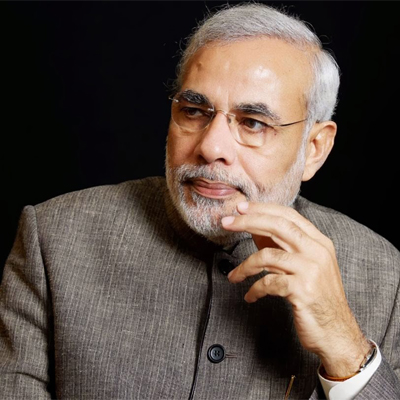
    NEW DELHI: In an effort to fulfill his promise of sharing his thoughts with the people through All India Radio at least twice a month, Prime Minister Narendra Modi’s next ‘Mann ki Baat’ broadcast will be on 2 November.


    “Looking forward to the 2nd “Mann Ki Baat” radio programme on Sunday 2nd November 2014 at 11AM,” the Prime Minister tweeted. 

    “Once again, I invite you to share thoughts, comments and examples of good governance initiatives that have left an impression on your mind,” the Prime Minister added. 

    An Open Forum has been created on MyGov.in where ideas and thoughts for the radio programme can be shared.


    Meanwhile, AIR director general F Sheheryar told indiantelevision.com that 270 private and AIR FM channels all over the country had carried the broadcast earlier this month, apart from almost all the television news channels. The address in Hindi was also streamed live on several websites. It is learnt that the broadcast was accessible to 91 per cent of the population.


    In his address on 4 October, Modi had announced that he will talk to the nation at least on two Sundays every month via radio, since that was the only medium that reached everyone including the farmers.


    In his first radio address titled Mann Ki baat on the occasion of Vijaya Dashami, he had called upon people to regularly send him their views through the social media as he had received many constructive suggestions in the past few weeks. 


    He had said AIR helped him get connected with the maximum number of people and with those who have no access to TV. “I am really happy to be talking to you on the radio. I can reach all of you through radio, especially our poor, the villages. Today is the start. In future too I will keep talking to you on the radio. It will be on a Sunday at 11:00 am,” he said.