Tag: Flipkart

  • Puma Urban Stampede across 8 cities; ropes in partners; media plans on the anvil

    Puma Urban Stampede across 8 cities; ropes in partners; media plans on the anvil

    BENGALURU:  Sports lifestyle brand Puma India is targeting about 10000 participants in this year’s edition of Urban Stampede from eight cities in the country. Last year’s edition of the event saw 3000 participants.


    With the philosophy of introducing running to people who were fitness-focused but leading busy lifestyles, the idea of a corporate relay race ‘Puma Urban Stampede’ was born.  Started in Bengaluru in 2008, Puma Urban Stampede has enjoyed unprecedented growth – prompting Runners for Life and Puma to take it to other cities says the company.


    Flipkart has come on board as an associate sponsor, thereby increasing the scale and reach of the event. This year the event will travel to Pune, Chandigarh, Kolkata and Chennai in addition to the existing races in Mumbai, Bangalore, Delhi and Hyderabad.


    Puma India MD Raji Mehta says, “Starting June 2014, the first Sunday of almost every month will see a Puma Urban Stampede taking place in one part of the country. This is the only national running event in India, and we’ve opened up the categories to allow more runners to participate – with the 4x5k Corporate Relay still taking pride of place in the overall event. This year, Puma will also fly down the national corporate relay winners to South Africa to participate in the renowned Safari Half-Marathon”.


    Further, The Puma Urban Stampede will now feature a 2x10k Open Challenge as well as an individual 5k competition in addition to the 4X5k Corporate Relay.


    Also, this year, Puma India has roped in Fortis as Medical Partners; Ginger as Hospitality Partners; Red FM as Radio Partners and Give India as Charity Partners.


    “Our media plans for promotion of the event include online, social media as well radio through our radio partners Red FM. We will be doing outdoor and are planning to work out a media plan with a print partner across the 8 cities in which the event will be held. Creative work as well as media buying will be in-house,” revealed Mehta to www.indiantelevision.com.


  • MEC India wins GoDaddy media account

    MEC India wins GoDaddy media account

    MUMBAI: WPP’s MEC India has won the media mandate for GoDaddy, the technology provider dedicated to small businesses.


    With over 12 million customers, GoDaddy manages more than 57 million domains globally. The company’s stated ambition is to help people easily start, confidently grow and successfully run their own ventures.


    GoDaddy has identified India as a priority market for their global expansion. The company recently signed on Mithun Chakraborty with a view to democratise internet-enabled businesses in India.  


    MEC North head Roopam Garg added, “We are delighted to have the opportunity to partner GoDaddy on their exciting journey. GoDaddy is all about empowering people in their quest for success and we are happy to play a small role in this great endeavour.”


    The clientele list of the agency includes Colgate Palmolive, Britannia, NIVEA,  FlipKart, Citibank, Honda Motorcycles and Scooters, General Electric, Zee Network, Reliance Group, CavinKare, to name a few.

  • Fab.com’s Maria Molland joins American Swan board of directors

    Fab.com’s Maria Molland joins American Swan board of directors

    MUMBAI: The online global fashion and lifestyle brand American Swan has appointed Maria Molland to the company’s board of directors.


    Optimistic about her association with a vibrant brand like American Swan Maria Molland said, “It feels exciting to join a young, dynamic brand and there is a massive opportunity for American Swan vis-?-vis the increasing amount of capital going into emerging markets. I look forward to bringing my expertise to the brand and help them expand their impressive product range in global markets, as they enter their next stage of growth”


    As a new entrant in the e-commerce space, American Swan is one of the rare examples that has adopted fast and strived for efficiency in a competitive domain. Its initiative to adopt the hybrid model by venturing into online and offline channels simultaneously has helped it maximise reach and de-risk the business. The growth for the American Swan brand has been fairly fast-paced, encouraging and consistent. So expanding the brand’s footprint globally after establishing itself in India was an inevitable next step.


    American Swan director and CEO Anurag Rajpal added, “We are delighted to have Maria Molland join us. She brings broad, international experience and deep knowledge of the e-commerce industry. We are confident that the perspective she brings to American Swan and its Board is extremely valuable, given our strategic priorities of International presence and ecommerce growth.”


    Molland will bring her vast experience in ecommerce to advise American Swan on international expansion as it seeks to be the leading online fashion brand in emerging markets apart from bringing the best ecommerce practices. American Swan has grown quickly in the Indian e-commerce domain by offering a range of classic preppy fashion and authentic smart casuals to the urban fashion-conscious consumers who seek International brands and styling. It is rapidly expanding to other emerging markets in Asia.


    Molland is an executive who recently served as the chief European officer at Fab.com, one of the fastest growing ecommerce companies. The European business grew from negligible to more than 40 per cent of Fab’s global revenues during her tenure.


    Prior to Fab, Molland was the global managing director of Digital Ventures at Thomson Reuters where she managed teams in the US, Europe, India, China and the Middle East. Molland has also held global executive roles at Dow Jones and Yahoo.


    India has close to 10 million online shoppers and is growing at an estimated 3 per cent CAGR and is poised to witness significant growth in the next few years. It has been speculated that the industry will touch a benchmark of $34.2 billion by 2015. As the e-commerce business is growing by leaps and bounds, the growth in the sector is a reflection of evolving nature of the market and that of the consumer. American Swan as a new, dynamic brand is seeking avenues to increase its presence through top online aggregators like Myntra, Jabong, and Flipkart as well as through a strong retail footprint pan India. Four Cross Media (www.fourcrossmedia.com), a high-end global digital media conglomerate with a network of innovative businesses has invested Rs 40 crore in this venture.


     “We welcome Molland at American Swan. There are not many entrepreneurs who have had the chance to scale companies from small teams to hundreds of people globally, and Maria has done that. We are looking forward to leveraging her expertise with fast growing technology companies as we continue to grow our business,” says Four Cross Media Asia co-founder and managing director Puneet Johar.

  • Samsonite launches High Sierra in India

    Samsonite launches High Sierra in India

    MUMBAI: With travelling becoming one of the most preferred activities of many, numerous luggage manufactures are launching travel-friendly and stylish brands.


    The latest entrant in the Indian market is High Sierra by Samsonite. The hi-end brand aims to wow the Indian travel enthusiasts with its feature rich designs and versatile functionality.


    Speaking on the launch, Samsonite South Asia MD Suresh Menon said: “The Indian youth today is far more keen to travel and explore new places than it ever has been. Over the last few years we have seen a steady increase of domestic and international travel in this segment and we feel that this trend has also created a demand for a specific product. High Sierra is one of the most popular outdoor, adventure brands in the US and we feel that the products will also receive a similar response from the Indian audience.”


    He added, “For the launch of High Sierra in India we have looked at a strong digital strategy and online presence. Right from day one our products are not only available across major online players but our social presence has also created a positive response across Facebook, Twitter and our own website www.highsierra.in. We have an active list of travel bloggers, fans who are experiencing the product and providing us feedback in real time.”


    Over the years, High Sierra has been associated with a lot of adventure sports and events across the world. The company is also the official supplier of bags and luggage for the U.S. Ski and Snowboard Team. In the past High Sierra has also been associated with the Outdoor Industry Association (OIA), Snow Sports Industries America (SIA) and the Travel Goods Association (TGA) amongst others.


    High Sierra bags are available at all Bagzone stores across India and are priced between Rs 1,200 – Rs 10,000. The brand is also available on leading e-commerce retailers like Bagzone.com, Jabong, Flipkart & Myntra.

  • Ads piggyback kids

    Ads piggyback kids

    MUMBAI: The latest advertisement to hit television screens is testimony to the fact that advertisers can’t seem to get enough of children when it comes to publicising brands. And this includes brands which don’t target kids; not even remotely.

    The ad in question is for IDBI Bank and rolls with a little girl sitting beside her friend, saying she loves to eat ganna (sugarcane) but can’t until she gets a new set of teeth which is why her pal is busy peeling it for her. The commercial ends with a voiceover: ‘Bank aisa, dost jaisa’. Two other ads are part of the campaign conceptualised by Ogilvy & Mather (O&M) and have children speaking of their friends in different scenarios.

    O&M NCD Abhijit Avasthi exults: “When we started work on the new campaign of IDBI Bank, we were very clear that we are changing the campaign and not the values that the bank stands for. The idea we came up with does exactly this. In an innocent and charming way, we are telling people ‘What if a bank would do what a friend would do’. When you say something like this, you really don’t need to say much more.”

    Indeed, the ad has charmed its way into people’s hearts, especially on social media. But that doesn’t stop one from wondering what kids can possibly have in common with a bank!

    Again, this isn’t the first instance where children have been used to sell products and services which they have nothing to do with; be it detergents, power inverters, cars, insurance policies or e-commerce websites. So what is it about kids that advertisers find so attractive? Ad veteran Alyque Padamsee reasons that people notice kids more than they do adults. “It is heart warming to see kids on screen. And who does not love them?” says he.

    Padamsee gives the example of Vodafone’s earlier campaign. “Vodafone used a little boy and her dog for its ‘everywhere you go, our network follows’ campaign, and it worked for them. Everyone remembers the commercial and it beautifully conveys the message the telecom company wants to tell people.”

    “Anything in life can be told through the eyes of a child. It’s not difficult,” says BBDO’s chairman and chief creative officer Josy Paul who elaborates on the point by giving the example of the agency David (founded in 2000 by BBDO) and adds, “When you joined the agency you got a resignation letter, not an appointment letter. You had to resign from adulthood to join David. The whole philosophy was to think like a child.”

    The other factor is that kids today play an important role in family decisions, say buying a car. Remember the ad with the Sardar kid whose car doesn’t run out of petrol ever – that’s how Maruti Suzuki tried to convince people about the car’s performance.

    Ernst & Young consultant (media) Mihir Date goes to the extent of calling present-day children decision makers. “What they watch on television is what they want. For example, my nephew only watches Cartoon Network but wants everything shown on the channel, be it a kiddie product or not,” he says.

    Peer pressure too plays an important part where kids want what their friends have; points out Date, adding, “And marketers have been smart enough to understand the GenY. It is working in their favour to use kids in advertisements wherein both kids and parents get targeted.”

    There are enough and more examples where brands and their creative agencies have used situations or scenarios where kids fit in beautifully, and the overall image is always happy and colourful. Say Nerolac paints, now being promoted by Shah Rukh Khan, which earlier had the jingle ‘Jab Ghar Ki Raunak Badhani Ho’ with happy scenes of children prancing around while the walls of their homes are being painted in bright colours.

    However, there’s a flip side as well to using kids in commercials.

    Says ad film director Prahlad Kakar, “If the brand value or what they stand for is not woven well into the story, then the message will be lost.”

    Padamsee agrees: “Amitabh Bachchan and Shah Rukh Khan are all over the place. They endorse so many brands; do we remember which commercial stands for which brand? Hardly… Similarly, one might notice and love the kids in an advertisement but that doesn’t mean that people will remember the brand. Many a times, the ad gets noticed but the brand isn’t.”

    While this is an open debate, it’s true that putting children in the ad is a sure way of getting viewers to like it, most of the times at least…

  • Brand Dialogue bags creative mandate for Flipkart

    Brand Dialogue bags creative mandate for Flipkart

    MUMBAI: Just within a month of its entry into the Indian Market, Brand Dialogue, a European brand communications company headquartered in Amsterdam and Mumbai, has bagged the mandate for providing branded packaging for Flipkart India.


    Brand Dialogue’s partner agency Yellow Dress Retail (YDR) will be providing the services to Flipkart India.


    Speaking about the association, Brand Dialogue CEO Willem Woudenberg said, “Flipkart India is a pioneer in its field and we are extremely delighted to get them on board with us. It’s just been a month and this win makes us feel more welcome in the Indian market. We are here to make a difference and this comes as the beginning of our creative journey. Yellow Dress Retail (YDR) team headed by Marcel Gort is a strong mix of experienced professionals and creative talents and they will definitely add value to Flipkart India’s brand position.”


    YDR will provide branded packaging for all private labels under Flipkart India and will support the brand in conceptualising and creating private labels in various key categories.


    Flipkart privaye labels director Roy Thomas said, “We have expanded our product range by launching our own label DigiFlip – offering camera bags, pen-drives, headphones, computer accessories and a lot more. Now we have got YDR on board to assist us in the brand packaging of our private label products. YDR may be new in India but their commitment and creativity goes a long way and we are confident that they will match the quality and standards that we are synonymous with.”

  • Viral on your mind?

    Viral on your mind?

    A‘Kolaveri Di’ kind of video with the capacity to go viral doesn’t happen every day, and that’s something marketers and the junta might do well to remember.

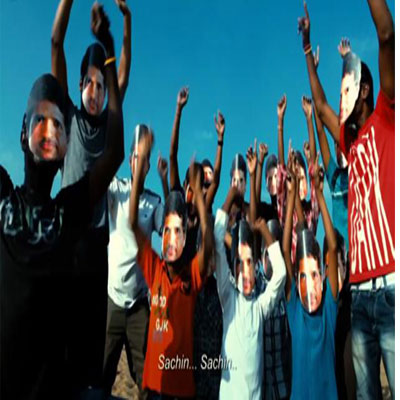
    There have been enough and more cases of online campaigns that fell flat on their face just as there have been instances of campaigns that fared considerably well in recent times (Dove’s real beauty, Flipkart’s Nation wants to know, Dhanush’s Sachin anthem).

    Content is king

    So what are the ingredients that make for success? First up, it’s the content. GroupM ESP national director (sports and live events) Vinit Karnik opines that videos like ‘Kolaveri Di’ and ‘It’s your fault’ are an engaging and entertaining way to disseminate a social message and build awareness.

    Watch the video: Boost pays tribute to Sachin’s 23 years of stamina!

    Gasoline founder and chief creative officer Anil Kakar says the first rule of creating online content is that it needs to be worth sharing. “The potential reach shareable content can offer is enormous and brands are currently only scratching the surface,” he says.

    Referring to two recent viral videos ‘It’s your fault’ and ‘I quit’, Draftfcb Ulka Interactive (digital arm of Draftfcb Ulka) creative head Sudarshan Sudevan says: “These two videos share different lights in the context of one’s feeling, one is targeted at the mass and the second, targeted at a single person….her boss. But the common platform that they share is – being vocal about it. That’s the lesson you can learn from it. Exercise your freedom of expression to the maximum… without fear. You can be a total stranger but your voice is surely heard if it has a message. That’s the power of this digital medium.”

    Not to do list

    Successful online content is often disruptive, based on a powerful insight and more importantly, follows a set of rules in social media that are way different from other forms of media.
    Experts believe the most common mistake that someone/some brand can make while launching a digital campaign is to create it to go viral. According to Infosys global head (digital marketing) Ashok Lalla, that is the biggest fallacy. “Virals happen. Of course, one can help them happen through content which is very high quality and well produced, and also through extensively promoting the content. For example, Idea’s Honey Bunny was promoted across media and that drove the viral-ness of the video online,” he points out.

    Similarly, Everest Brand Solutions president Dhunji Wadia says if one tries to create a campaign to go viral, there are a million ways to go wrong as there is no fixed formula or template for these videos. “You just have to click with the consumers, literally! Firstly, if it doesn’t impress me, how will it impress the world? One can get carried away with an idea, which does not make as much sense after production as much as it made on paper. Don’t hesitate to start fresh in such a case. Secondly, is the product/service forced into the communication? Sometimes there is a ‘disconnect’ between the product/service and the ad concept. If the two are not inter-twined, the product will be left hanging after a great concept.  It will hardly be noticed. Try to find a common ground between the two.”

    Highlighting mistakes marketers/advertisers tend to make, Sudevan adds: “Low budget for a promotion to be launched ‘asap’ plus maximum output demanded (for example say 1 million likes) and hence resorting to social media leads to bad ideas and bad execution, considering the time the agency gets to churn this out in that shoe-string budget. Also, no research of the ecosphere of social media or what or how much a campaign should cost or the time it should get competed within leads to selection of bad ideas presented by some smart agency.”

    With or without social media

    All said, the social media universe is swelling and no advertiser or marketer can afford to ignore it. Besides, with the dipping rupee and dwindling economy, conventional Indian media is facing the heat, rendering social media the smartest option in the current scenario. 

       
    Says Kakar: “What makes social media unique is the fact that brands can, for the first time, have a conversation directly with consumers. This is a huge paradigm shift of sorts, which is already testing our collective skills as an industry. Also, for the first time, we can gauge accurate responses through analytics and tools, engage with a select audience, should the need arise, and alter content according to responses. Social media is also a great platform to engage opinion leaders or ‘feeders’, who help promote content onto blogs, twitter, facebook and other platforms for a multiplier effect, generating free PR, which would have otherwise cost an arm and a leg for an advertiser.”

    Watch the video: AIB seeks an answer to whose fault is it anyway?

    FoxyMoron co-founder and director – new business and innovations Pratik Gupta seconds Kakar saying: “A lot of brands want to reach out to their audience and it might be as simple as uploading a TVC on YouTube. One must remember that a TVC is watched by the entire family, out of which, not all could be the target audience wherein the people who will click on social media are the correct viewers.”

    Gupta gives the example of the campaign Baby Lips Kiss Song featuring Alia Bhatt that FoxyMoron recently did for Maybelline. He says there are many brands that are utilizing the platform to the fullest to reach their TG.  He also talks about the YouTube channel Q-tiyapa by TheViralFeverVideos saying they are doing everything right to strike a chord with the youth.

    And what do advertisers have to say about digital platforms? “Advertising is a 360-degree experience. That’s when a user feels the brand in totality and since every medium has its own plus points, it’s best to design any campaign keeping in mind the purpose of the campaign,” say advertisers.

    Then again, there are the naysayers who feel digital media and by extension, social media is still not a mass channel of outreach in India. Statistics for internet usage vary between 70-140 million and those for social media are a subset of this. So, it’s unlikely to be the medium of choice for all brands for all seasons. At best, digital/social media may be the medium of choice for a younger, urban-centric demographic concentrated in major metros and towns across the country.

    Whatever be the case, one thing is clear that with the medium encouraging conversations on various social platforms, the movement of content from ‘airing’ to ‘sharing’ can catalyze the internet audience to great effect.