Tag: Flipkart

  • Indian weavers to get an online platform now

    Indian weavers to get an online platform now

    MUMBAI: With a view of giving a boost to the handloom industry of the county, the Ministry of Textiles has announced that the Ministry through Development Commissioner for Handlooms has signed a Memorandum of Understanding (MoU) with e-commerce platform Flipkart. The aim of the partnership is to provide online marketing coverage to the sector.


    The collaboration will empower the weavers and boost manufacturing in the country. Through this exclusive agreement, Flipkart’s aim is to provide weavers in India online marketing platform, infrastructural support in data analytics and customer acquisition to help them get remunerative prices for their products and scale up their business.


    The MoU was signed in the presence of the Minister of State (Independent Charge) Textiles, Santosh Kumar Gangwar, Flipkart VP – Marketplace, Ankit Nagori, Development Commissioner (Handlooms) SK Panda and other officials of the Ministry of Textiles.


    The Minister for Textiles while speaking on the occasion congratulated the heads all the organisations and maintained that they must work tirelessly for the uplift of weavers and ensure the success of the venture. He mentioned that periodic review of the sales and progress of the weavers in the targeted clusters should be carried out emphasising that the focus of this association should be to help weavers and weaver entrepreneurs to produce products in tune with the buyer requirements and grow significantly so that they may become manufacturers not only at a local but also at a national level.


    According to the release by Ministry; this kind of a coordinated effort has been planned and executed for the first time with Flipkart for handloom weavers which will bridge the missing linkages of market intelligence, market access and logistics and help the Indian weavers in getting remunerative prices for their products.


    The weavers will sell their products under their brand name and evolve as an entrepreneur selling his products directly to buyers across the country without stepping out of their workplace. The data analytics and market intelligence provided by Flipkart will help the weavers focus only on producing better saleable product ranges. This in turn will help them plan their production and inventory and expand their business.


    This partnership will connect the artisans directly to the buyers and the guidance by Flipkart in packaging, collecting and delivering to the buyer will motivate the artisans in rural India.


    Earlier this month, Flipkart signed a MoU with the Ministry of Labour and Employment’s Directorate General of Employment & Training (DGET), aiming to train at least 5,000 students by December. Flipkart joined hands with the government to train people from semi-urban and rural areas and possibly employ them at the company or its business partners.

  • OLX and Flipkart ink unique marketing tie-up

    OLX and Flipkart ink unique marketing tie-up

    MUMBAI: With more and more people accessing the internet through smartphones and tablets, the internet user base has grown to be around 243 million.  


    This has led to an exciting and booming e-commerce sector in the country. Last week, Flipkart announced that it had raised fresh capital of $1 billion; soon afterwards Amazon too announced that it will invest another $2 billion in India.


    And keeping the momentum going, OLX.in and Flipkart have tied-up for a unique marketing campaign that will leverage each other’s strengths to offer combined benefits of their platforms to the fast growing internet user base.


    OLX is marketplace for used goods, and Flipkart is a destination for online shopping, making this alliance between the two online brands an unprecedented one. The joint initiative by the two e-commerce leaders has been launched to further increase the awareness levels and accelerate the adoption of their online platforms for buying and selling. The campaign will run for one month, and will include several verticals within the electronics categories.


    OLX CEO Amarjit Batra said, “The idea for this tie-up was conceived keeping in mind the strong and independent position of OLX and Flipkart in their respective space. The rationale for the number one online classifieds platform and the leading e-commerce platform coming together for a marketing campaign is a seamless one. This tie-up will enhance consumer experience on OLX and Flipkart by giving users a more holistic online shopping experience in which they can sell their used goods on OLX before buying new products on Flipkart.”


    Flipkart sr VP marketing Ravi Vora added, “At Flipkart, our constant endeavor has been to make online shopping convenient and attractive to the masses in the country. With this partnership with OLX, we will be able to provide an end-to-end solution to customers especially in the electronics categories where selling old products is an integral part of the buying process.”

  • Amazon to invest additional $2 billion in India

    Amazon to invest additional $2 billion in India

    MUMBAI: Amazon is looking at India as a potential market. The e-commerce platform which launched its maiden TVC to woo Indian consumers during this edition of Indian Premier League, has now decided to invest an additional $2 billion to support its rapid growth and to enhance customer and seller experience in India.


    According to Amazon, since its launch just over a year ago, its marketplace (www.amazon.in) has grown to be India’s largest store with over 17 million products from a continually growing base of thousands of small and medium-sized businesses, serving millions of customers across India and delighting customers with its guaranteed next-day delivery service. 


    “After our first year in business, the response from customers and small and medium-sized businesses in India has far surpassed our expectations,” said Amazon founder and CEO Jeff Bezos. 


    He added, “We see huge potential in the Indian economy and for the growth of e-commerce in India. With this additional investment of US $2 billion, our team can continue to think big, innovate, and raise the bar for customers in India. At current scale and growth rates, India is on track to be our fastest country ever to a billion dollars in gross sales. A big ‘thank you’ to our customers in India – we’ve never seen anything like this.”


    On 29 July, Flipkart had announced that it was raising $1 billion which will be used to make long-term strategic investments in India, especially in mobile technology.

  • Flipkart raises $1 billion; to focus on mobile technology

    Flipkart raises $1 billion; to focus on mobile technology

    MUMBAI: Flipkart has raised $1 billion in one of the largest funding rounds for any e-commerce company, globally.


    The round led by existing investors, Tiger Global Management and Naspers, saw Singapore’s sovereign wealth fund, GIC, as the new investor along with existing investors Accel Partners, DST Global, ICONIQ Capital, Morgan Stanley Investment Management and Sofina also participating in the latest financing round.


    The funds will be used to make long-term strategic investments in India, especially in mobile technology.


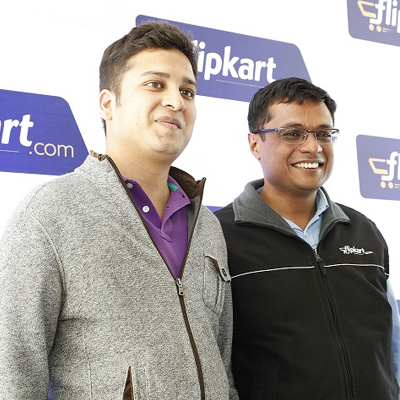
    “We believe internet will improve the quality of life for millions of Indians, and e- commerce is going to play a huge role in this change. The focus at Flipkart is to continue to make shopping online simpler and more accessible through the use of technology,” said founders Sachin Bansal and Binny Bansal.


    They added, “We have close to 22 million registered users today. We handle five million shipments a month. These numbers were unheard of a few years back and we are excited about the scale we have managed to achieve. But what is even more exciting is the huge opportunity that we still see before us.”


    India has 243 million internet users – and this number continues to grow very fast. By 2020, India will have more than half a billion mobile internet users. The platform will now focus on mobile and technology to take advantage of the massive opportunity.


    The new funding will enable it to step up its investments for innovations in products and technologies, setting it up to become the mobile e-commerce company of the future. It will help the e-retailer further accelerate momentum and build its presence to become a technology powerhouse.


    Over the past few years, Flipkart has led the supply-chain innovation in India. It has focused on making the online shopping experience as seamless as possible: being the first to launch 30 day replacement policy and the first player to run 24×7 customer support at scale in India, In-a-Day guarantee in 50 cities and the subscription service ‘Flipkart First’.


    Flipkart, which recently acquired Myntra, plans to continue investing in training sellers for the marketplace, providing all small  and  medium  entrepreneurs,  manufacturers  and  artisans  a  national  platform  to connect with millions of customers.

  • Packaging is the ‘silent salesman’: Loe Limpens

    Packaging is the ‘silent salesman’: Loe Limpens

    MUMBAI: In the world where the ‘little black dress’ has created enough waves, Yellow Dress Retail (YDR) is trying to leave a mark.


    YDR is an agency specialised in retail design and communication, founded in 2009 by Loe Limpens, Marcel Gort and Esther Koetsier and is part of the Dutch brand consultancy Brand Dialogue which forayed into the Indian market in 2013.


    The name does raise eyebrows but the story behind the selection of the name is an interesting one. The first time the founders visited India, they met a lady with a very impressive ‘live’ story, she couldn’t speak but only communicate by sign language and she was dressed in a vibrant yellow dress. Both of them were so impressed that they decided that if they ever start an agency it will be called Yellow Dress.


    It recently made news for creating Flipkart’s latest DigiFlip Pro. The tablet is the first from the e-commerce portal’s private label stable and has been an instant hit especially for its innovative branding and packaging which has received great reviews.


    The dual-SIM tablet, DigiFlip Pro XT712, with 7 inch touchscreen, 5 MP primary camera, Android v4.2.2 OS and 1.3 GHz processor is available only on the e-commerce platform at an affordable rate of Rs 9,999. DigiFlip Pro comes backed with additional benefits, where buyers will get shopping benefits worth thousands by shopping from the Flipkart app on the tablet.


    The tablet is in response to the growing demand for quality devices at great prices. To add to its appeal, Yellow Dress Retail provided simple yet upmarket packaging for the product.


    The agency specializing in retail agency, which creates store design, in store communication, packaging design and interactive design, believes that packaging is ‘the silent salesman’ as it is the real point of contact with the customer. “With Flipkart’s DigiFlip Pro tablet, we at Yellow Dress Retail have engaged with this product for creation of logo, packaging design and boot animation,” says YDR partner and chief creative officer Loe Limpens.


    When asked if there is a need to have an agency specialised in retail design and communication, Limpens says, “The retail business has its own rules, speed, time to market, flexibility, specialism, etc. We felt there is room for an agency that specialises entirely on retail. And here we are.”


    Business is getting better for the agency which has successful examples to its credit. Developing overall concepts for the worldwide strategic brands of Metro Cash & Carry is one of them. However, it still feels that a lot of attention is needed.


    Understanding the Indian market wasn’t easy as well and it needed time, initially, to get to know the Indian market better and the challenge was to find the right people and to train them as retail designers.


    The retail design agency has been working for more than 20 years at leading retailers in Europe, which gives it a lot of insight in the day to day business of retailers, price levels, speed to market and focus in retail companies. “Our experience is a subtle mix of both International and Indian markets that helps us in relating with the issues from a local and global level,” highlights Limpens.


    Retail design and particularly private label is where the agency’s stronghold lies. He elaborates, “Private label development is our main focus currently, if you look at the share of private label in Europe which have around 50 per cent market share in 2025, the potential for the Indian market is enormous with a current share of 7 to 8 per cent.”


    In India, the consultancy started with just three people in its office in Chennai. It currently employs eight people in Chennai and also has an office in Mumbai through the Brand Dialogue association.


    Today, when the team meets its clients, most want the focus point to be on how to establish a good private brand assortment and how to secure the quality and production. In the near future, it thinks that sustainability will become immensely important for the industry.


    “We have had our share of good luck in India, so we can’t complain. It’s hard work but we are also on track with our objectives,” concludes Limpen.

  • Do celebs really push the online gamut?

    Do celebs really push the online gamut?

    MUMBAI: Everyone is talking about it. Everyone is on it as well. Online retailers have caught everyone’s fancy and if stats are to be believed then they are here to stay.


    The e-commerce industry has been growing at a rapid pace; 2013 saw the industry grow over 65 per cent which is currently estimated to be at $3.2 billion. As new competitors entered the space to encourage the shopaholic in all of us to click on the ‘buy now’ button and get parcel at the place of convenience, the competition has only grown manifold.


    To woo the ever-confused shopper who has too many options to choose from, thanks to new players entering the lucrative e-commerce market, the online retailers have to lure them with various offerings. Be it delivery in one day or exclusive brands on board, they have done it all to make sure customers come to them, time and again.


    Discounts are offered every now and then, and on special occasions like anniversary through various contests, customers are awarded shopping points and gifts. For instance, eBay India launched a Way Too Fab (WTF) campaign for its ninth birthday bash. As part of the celebration, it created a special page www.ebay.in/waytoofab that allowed any user who purchased products which valued more than Rs 500 on 12, 13 and 14 March 2014, to spin the Wheel of Magic which offered consumers an assured gift ranging from special coupons to mobile phones and tablets to name a few.   


    However, the latest mantra has been to launch eye-catching TVCs. Amazon India launched its first TVC during the most-sellable property on Indian television – Indian Premiere League (IPL). Having said that, who can forget the ads of Flipkart? The ads featuring children role-playing as adults went viral and soon many others followed. After a lull period, the war on the television screen has begun again as the new entrants want to leave their mark on people’s mind.


    Like Victoria Secret would be just another brand without its angels, similarly, each e-commerce platform is trying to be different than the other.  And for this, these portals have decided to attach popular faces to the brand. The hottest fad currently is popular Bollywood faces associating themselves with various e-retailers.


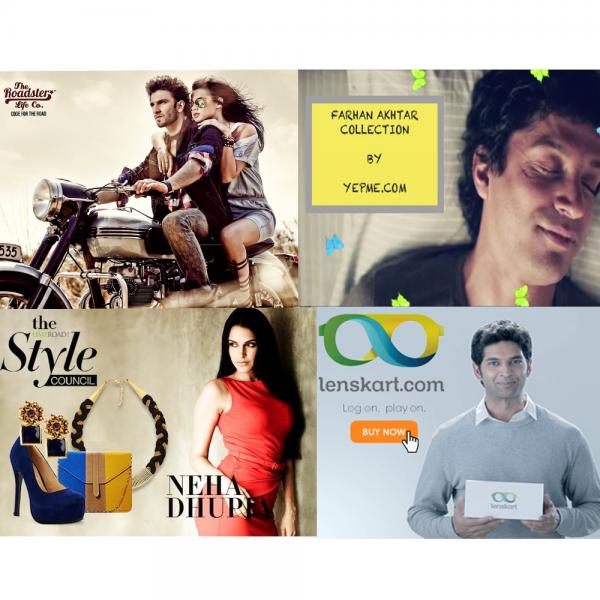
    Ranveer Singh, Lisa Haydon, Neha Dupia, Farhan Akhtar, Purab Kohli are just a few names associated with lifestyle e-retailers. When asked how does it help the platform, Myntra’s chief marketing officer Vikas Ahuja says, “By associating with celebrities, Myntra is making an effort to not just provide fashionable apparel and accessories but also be a thought leader in the latest style trends that are driving the fashion industry. Our association with celebrities such as Ranveer Singh for Roadster and Lisa Haydon for the Myntra brand has strengthened our focus on fashion, providing fans and customers an enthralling experience that goes beyond just shopping on our site.”


    LimeRoad, which caters to women’s sensibilities only, believes that though it has differentiated itself from other e-commerce players by moving away from a discount led offering, it did bring in Neha Dhupia on its management team. The reason behind it was that the team felt that her style could inspire a lot of women who shop on the site and those who make scrapbooks to express their style on LimeRoad. “Celebrities who reflect the brand’s promise help you get the right people to the site. They also bring in a lot of freshness and relevance to the context,” says CEO Suchi Mukherjee and adds, “Neha Dhupia is not only a pretty face but she epitomises the hard work, grit and dedication needed to make it big in life.”


    Others like YepMe, Lenskart etc too have celebs endorsing them. The rationale behind it is that most of them believe that celebrity associations help to create awareness, provide credibility and stature to the brand and rub-off of the celebrity’s personality and appeal onto the brand which strengthens the brand positioning / attributes further.


    Online apart, many companies have shopping on television ventures as well. However, these 24*7 channels which cater to mostly housewives don’t have celebs promoting them.   “Celebrity endorsement is beneficial for instant recall of the brand. When customers watch their favourite stars endorsing the brand or promoting a clothesline it does garner some visibility and helps draw eyeballs. But in the long run it’s all about the products and propositions that any brand has to offer,” believes HomeShop18 CMO Vikrant Khanna.


    The channel through its offerings, customer relationship management, value proposition, three-screen presence on TV-Web-Mobile and technology, wants to stand apart from the competition.


    HomeShop18 recently announced its TVC around the mantra “Shopping Makes Me Happy,” which had (talking) cats connecting with consumers to establish an emotional connect appealing to their desire for shopping. Similarly, Star CJ Alive, which parted ways with Star Network, introduced new mascot ‘Shoppie’ which works at bridging the gap between the current name and until the new name is finalised.


    TV has the highest media reach so irrespective of the industry, it’s still one of the most effective advertising medium. However, with changing times most of these brands have a 360 degree approach. New mediums like digital and social media have become an essential part of business today.


    Companies are taking extra efforts in the digital space to supplement the tools social media offers. Facebook, Twitter, YouTube channel, Instagram etc. are deployed to engage with peers and reach out to existing and potential customers across the digital platform.


    One of the best examples of luring youngsters today who are perpetually online is Myntra’s latest campaign -‘Live for Likes.’ The platform so far has also conducted other campaigns, both online and offline like the survey of India’s Most Fashionable Politician, Indian Fashion League, the Online Treasure Hunt, Online shopping fest, celebrity engagement through Fashion Icon of the Month among others. All this to encourage shoppers to be a part of its brand story.


    Online analysts believe that whatever be the case – online dominance or celeb in hand – a brand needs to be very clear of what it wants to accomplish. “There is a string of young actors who are willing to come on board. However, partnering with a right celeb is also very important. He/she should be able to generate interest among visitors on the site which should invert into sales to be successful,” says an analyst.


    A brand expert adds that these celebrities come at a certain price, so have to be used wisely. 


    Celebs might help generate initial traffic, but loyalty is dependent on product offerings, propositions, value, after-sales service, ease of use of the portal, hassle free delivery and return policies and lastly an overall virtual shopping experience. “If these important things are in place, shoppers will return to explore more, irrespective of the portal being endorsed by a celebrity or not,” concludes the expert.


  • E-commerce gives thumbs up to Budget 2014

    E-commerce gives thumbs up to Budget 2014

    MUMBAI: The e-commerce sector is a happy lot. Finance Minister Arun Jaitley in his maiden budget announced that manufacturing units will be allowed to sell their products through retail including e-commerce platforms without any additional approval.


    This paves path for the foreign direct investment (FDI) in the manufacturing sector.


    Foreign consumer brands with manufacturing units in the country have been piggybacking on the online retailers’ potential growth which is currently estimated to be at $3.2 billion.


    PwC India technology leader Sandeep Ladda says, “Liberalisation of FDI in e-commerce sector will provide much-needed certainty to foreign players and to a sector that has the promise to provide increased commerce and generate employment in the country. This will also provide boost to the sector and create healthy competition so as to benefit all the constituents in the ecosystem – consumers, government, e-commerce players, and retailers in general.”


    While the Department of Industrial Policy & Promotion (DIPP) is keen on opening e-commerce to FDI, as was made abundantly clear in the meeting with industry stakeholders, they were also clear that they needed to understand how FDI would help boost manufacturing.


    American Swan CEO and director Anurag Rajpal says, “A more robust online retail sector will spur manufacturing and help an economic revival. India currently does not allow global online retailers from selling goods directly to customers but allows them to own 100 per cent of a marketplace business, where third-party suppliers can use their platform. Both Amazon and eBay use such a platform to operate in the country.”


    Amazon India, which recently launched its first TVC in the country during IPL 7 and promises delivery on the same day, feels that FM’s announcement is a positive statement of intent for the e-commerce industry. “It recognises the role of e-commerce companies in the growth of manufacturing sector. Following this statement, we are hopeful of a more positive and liberalised policy on e-commerce in the near future aimed to help grow the manufacturing industry,” says a spokesperson from the e-retailer.


    One of the biggest players of this space in the country, Flipkart co-founder and CEO Sachin Bansal thinks this is a forward looking budget and hopes to see results over time. “The focus on giving a fillip to infrastructure and skill development is very encouraging. The fact that we could see a GST roll out by the end of the year is very positive and will augur well for all sectors. The attention to facilitating entrepreneurship and the allocation towards the National Rural Internet and Technology Mission is an extremely positive move, as collectively they provide the opportunity for both individuals as well as businesses to go digital,” he opines.


    Brands feel that the move will give a push to the manufacturing sector, and will also encourage foreign companies to set up manufacturing facilities in India.


    Currently, India allows wholly-owned overseas subsidiaries in single-brand retailers that sell products under a single label through physical stores such as Zara, Panasonic or Marks & Spencer. However, the catch is that they have to get clearance from Foreign Investment Promotion Board (FIPB) and produce 30 per cent of their products within the country.


    Moreover, other announcements in the budget too signal a positive way for the online sector. More internet penetration and connection in the rural areas, increase in logistics because of increase in railway freight and decrease in excise duties on shoes, apparel etc bring in good news for the portals.


    Jabong’s co-founder & MD Praveen Sinha feels that though it is still unclear that how increase in service tax on online advertising will impact the sector, one will have to wait and watch how these announcements will be implemented. 

  • Want to be an e-retailer? Then, click here

    Want to be an e-retailer? Then, click here

    MUMBAI: The world is moving online; today with a click of a button people can shop, pay bills and get entertained.


    Every business model today is or plans to ride the digital wave, but not many have been able to crack the code. There are many who have spent lakhs to set up the online business but haven’t been able to generate the right buzz amongst its target audience or generate enough revenue to sustain the competitive market.


    According to Internet & Mobile Association of India (IAMAI), the e-commerce market saw a jump of 33 per cent to Rs 62,967 crore in 2013 as compared to previous year’s Rs 47,349 crore. Also, currently, there are over 2.5 crore online buyers in the country and still counting.


    To cater to this need, new online portals are launched every now and then, thus making the sector highly competitive. And like how everyone once in a while needs a godmother, Rage Communications with the launch of Ystore has just done that.


    The new offering is a comprehensive e-commerce platform to enable retailers to go online with significant ease.


    “The success of large e-commerce sites such as Flipkart, eBay and Amazon in India is driving interest in various categories. Retailers from almost all consumer product industries have shown keen interest. In particular, clothing, jewelry, home accessories and lifestyle product retailers are most excited and several online stores have already been launched,” says Rage Communications director JRK Rao who adds that these are also the categories that are most suited for online commerce.


    It works on two business models. First, it builds a store either using the YStore platform, or any other commercially available e-commerce platform. Typically, there is a one-time fee for the design, development, and deployment of the store, followed by a nominal quarterly management fee to cover routine store maintenance functions.


    The second one works on a very reasonable monthly license fee basis. A single monthly charge covers all initial set-up costs, and all future software upgrades as they are made available. This makes it relatively easy for small retailers to enter the online commerce space at minimal cost.


    The 200 professionals in technology, design, user experience and business analysis provide a range of services to its clients.


    It includes store-front design using pre-designed templates, or fully customised layouts, implementation of all commerce features, from the basic to the most advanced features that are offered by high-end commerce sites, creation of the initial catalog of products for sale, managing taxes, shipping charges, payment gateway for credit card and bank transactions, order tracking, gift registry, inventory, merchandising, integration with external marketplaces such as Amazon and eBay, affiliate marketing sites, and more.


    Apart from that, it will also help clients to optimise performance across devices – laptops, tablets and smartphones, search engine optimisation, ongoing search marketing, database marketing, email marketing, leads management, online customer service, detailed analytics covering site traffic, user experience and sale conversions, server optimisation for efficient site performance and ongoing content and catalog management (if required by e-tailer).


    The company which has offices in Chennai, Mumbai, Singapore and Sydney already has over a dozen e-commerce sites on board – using both YStore and other commerce platforms.  A few among those are: soakandsleep.com –a premium bed and bath products; parisera.com – handcrafted products for women; strandofsilk.com – contemporary Indian designer wear and thejus.com – gold and multi plated gift articles among others.


    As per online space watchers, there are many factors driving the e-commerce industry worldwide. Penetration of smartphones and internet amongst tier II and III cities is slated to be the main cause behind it. Ready availability of inventory at a central warehousing location and for retailers the ability to reach customers anywhere and at any time are just a few others pointed out by them.


    Having said that, they also believe that apart from YStore there are many platforms, like Shopify and Browntape that help retailers sell online. “So, what’s important is how you’re able to be different from each other and how you’ve been able to master your particular niche. This is already a crowded sector, and any new entrant will need to significantly differentiate itself from the dozens of other companies who have been here successfully for years,” points out Seedfund managing partner Mahesh Murthy.


    Nonetheless, researchers and analysts agree that e-commerce will continue to grow in a practically limitless manner, for a wide range of product categories. In the years to come no retailer can survive without harnessing the reach and power of the internet.

  • KKR and e-commerce sites win IPL 7

    KKR and e-commerce sites win IPL 7

    MUMBAI: As fans chanted Korbo Lorbo Jitbo (We will do, we will fight, we will win ), Manish Pandey’s 94 off 50 balls not only ensured Kolkata Knight Riders (KKR) putting up a brave fight, it saw them seize the IPL cup from Kings XI Punjab in a nail-biting finish.


    However, this IPL not only brought smiles to the Knight Riders but also to broadcasters Multi Screen Media-owned Sony Max and Sony Six that aired the tournament.


    Before the seventh edition started, naysayers said not many advertisers would be interested in the property since India was going through the mother of all elections. To make things worse, the first phase of IPL was held outside India. And when Sony Entertainment Television president Rohit Gupta said that the broadcaster would charge Rs 4.9-5 lakh for a 10-second slot, a 20 per cent jump from last year’s Rs 4.25 lakh, eyebrows were raised.


    However, the story went in the other direction. Despite the T20 tourney being played in the UAE and the ninth phase of the polls coinciding with the matches back home, the popularity of the tournament wasn’t affected and the broadcaster charged as much as Rs18-20 lakh for a 10 seconder for the final match. “Last year, we had charged around Rs 15 lakh for the final match. So, the ad revenue has only gone up. One must understand that IPL is a mature property and shouldn’t talk about not attracting advertisers,” says Gupta.


    He went on to say, “Take a look at the English Premier League (EPL); it has been on for more than 20 years and it still attracts audiences and advertisers. Wonder why in India, people don’t understand that IPL is a yearly phenomenon and is here to stay for a long period.”


    The television viewership too went up by five per cent for the first 54 matches, from 175 million during IPL-6 to 184 million this year.


    “There is no risk to any advertiser,” said Gupta, while highlighting the fact that a big chunk of broadcasters’ revenues would be contributed by e-commerce companies.


    Apart from the big advertisers – Vodafone, Karbonn, Havells, Perfetti and Marico – this year saw many e-commerce companies, especially Amazon, which launched its first TVC during IPL and others like Flipkart, Myntra, Quikr and Snapdeal piggybacked on the tournament.


    Says GroupM ESP national director – Entertainment, Sports & Live Events Vinit Karnik, “A lot of e-commerce sites associated themselves with various teams. Also, there were a lot of on ground and on air activations so it won’t be wrong to say that this time one product category did leverage the league.”


    The reason behind the phenomenon is the intense competition in the online retail segment. And as every player tries to pitch something different be it in terms of product line or delivery model, the mass media property – IPL – becomes the perfect battle ground.


    “The IPL has got the reach and so it has delivered eyeballs to the brands. And the result has been achieved. With sites fighting tooth and nail what will be a better platform than IPL to reach out to as many as people?” says MEC national planning director Zubin Tatna.


    Havas Media India MD Mohit Joshi agrees on the fact that with booming online retail sector competition is only going to increase. “IPL as a format doesn’t let one innovate much but the brands always get what they want from it, if used appropriately.”


    “E commerce sites did dominate the advertisements this time as well as offline enough buzz was created. So, one shouldn’t be surprised if around 40 per cent of the revenue comes from this category,” he adds.


    However, Tatna feels otherwise. “You see a Quikr or an OLX ad on television anyhow so I wouldn’t agree with the fact e-commerce sites dominated only IPL.”


    The nerve-wrenching battle


    The tourney’s star cricketer this year, Glen Maxwell, along with his Punjab teammates David Miller, Virendar Sehwag and George Bailey managed to score a paltry nine runs between the four in an edge-of-the-seat finale. For KKR, it’s been smooth sailing with the final being their ninth win a row. This puts them in the league of Chennai Super Kings (whom they had defeated in the final two years ago) as multiple IPL winners.


    However, to their credit, Punjab were neck and neck with KKR so much so it could have been anyone’s match till the very end. Wriddihan Saha’s innings was a fitting precursor to the well fought finish. 


    Apart from Maxwell’s disappointing performance, this season’s highest run scorer Robin Utthappa too did not match expectations as Piyush Chawla was left to win the game for KKR. But Utthappa did win the Orange Cap. Man of the match Pandey said that winning the IPL was like the “icing on the cake” after winning the Ranji trophy, Irani trophy and Vijay Hazare trophy.


    KKR captain Gautam Gambhir said they never thought they would win this IPL. He also went on to add that winning at the Chinnaswamy Stadium was what the team fancied, considering the fact that it is a small ground. Incidentally, the stadium also hosted the very first IPL game in 2008. Gambhir told indiatoday.in, “This is a ground where it is very difficult to defend. We wanted to get it down to five overs, 50 or 60 to get. Manish played a fantastic innings.” Finally, Punjab’s late strikes could not dither KKR from taking the trophy home a second time with 200 runs.


    As for KKR, Kolkata Chief Minister Mamata Banerjee congratulated the team on Facebook. A post she put up on the social networking site said: “Congratulations…. KKR….Congratulations…Sharukh.” She also congratulated Saha for his “brilliant performance.”


    In 2012, the Banerjee government had come under sharp criticism for showering expensive gold chains and gold medals as part of the grand felicitation programme held in honour of KKR’s IPL win. But this time around, as Eden Gardens prepares for another such programme, it will be interesting to see what ‘Didi’ has to offer the boys in purple.

  • Flipkart and Myntra join hands

    Flipkart and Myntra join hands

    MUMBAI: The e-commerce sector saw a purple patch last year and continues to do so.


    Recently, LimeRoad raised $15 million series B funding; Jabong too closed a multi-hundred million dollar investment deal and Amazon India entered the fashion and lifestyle category.


    Keeping up with the competition is surely going to be tough. Therefore, to bring high quality and affordable lifestyle products to the customers, Flipkart has joined hands with Myntra, an e-commerce platform for fashion and lifestyle products. Bangalore-based Myntra has partnered with more than 650 leading fashion and lifestyle brands in the country.


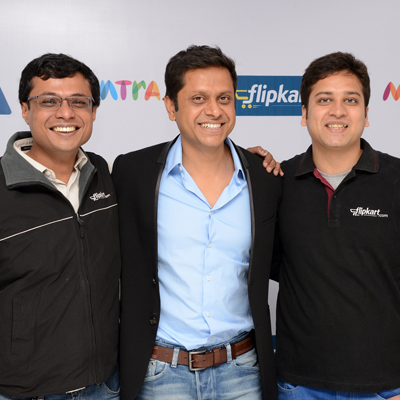
    Sachin Bansal and Binny Bansal, the co-founders of Flipkart, and Myntra’s founders, Mukesh Bansal and Ashutosh Lawania, are excited to work with each other. In this new association, along with being the CEO of Myntra, Mukesh Bansal will also head the fashion business for Flipkart and join the board.


    “We believe that the future of fashion in India is e-commerce. We have known Mukesh for a long time and are delighted to partner with him. Myntra has a strong team with excellent domain knowledge. They also have the best relationships with lifestyle brands. This partnership will strengthen both our positions in the fashion space. We will continue to work as independent entities and grow together as leaders in the Indian fashion and lifestyle industry,” said Flipkart co-founder Sachin Bansal and Binny Bansal jointly through a statement.


    “We are excited to partner with Flipkart, the biggest e-commerce platform in India. Sachin, Binny and their team have built a pioneering e-commerce platform on a foundation of strong technology and customer centricity. Flipkart is the most powerful e-commerce brand in India and has a very ambitious agenda to build the next generation of retail in India. Leveraging mutual strengths, we will build Myntra into India’s leading fashion powerhouse and create many original fashion brands,” said Myntra co-founder and CEO Mukesh Bansal.


    This partnership will support Flipkart’s and Myntra’s shared mission to bring high quality and affordable fashion and lifestyle products to each and every Indian consumer. Post this announcement, Flipkart and Myntra will continue to work as independent entities and grow together as leaders in the Indian e-commerce industry.