Tag: Flipkart

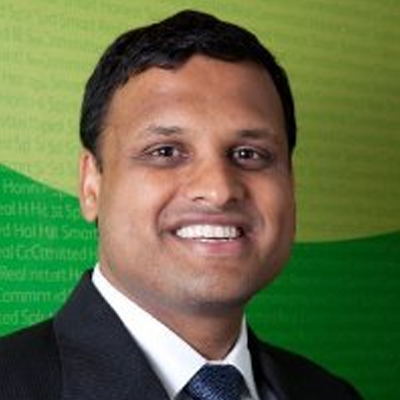
  • Fareed Jawad is VP and principal product architect at Freecharge

    Fareed Jawad is VP and principal product architect at Freecharge

    New Delhi: Fareed Jawad has been appointed the principal product architect and vice president (VP) payments at digital payments platform Freecharge. In his new role, Fareed’s mandate will be to build payments technologies at Freecharge. Additionally, he will lead the efforts on building technologies for solving the unique payments problems in India.

    Freecharge is on a mission to build the world-class payments ecosystem for merchants and customers. The company seeks to work collaboratively with various innovators and emerging FinTech players to implement the most reliable and frictionless payment method and Fareed will be instrumental in driving this with the senior leadership team at Freecharge.

    Prior to his appointment at Freecharge, Fareed most recently served as principal product architect at Amazon India, where he was responsible for building the core payment processing infrastructure for the organization. Before joining Amazon, Fareed was with Flipkart as director for Product Management and was part of the core team that launched PayZippy.

    “Fareed’s appointment reaffirms Freecharge’s commitment to hiring the industry’s best talent. We are on a cusp of a revolution to accelerate the FinTech capabilities in India.  We look forward to Fareed’s contribution in strengthening our technical expertise and payments capabilities with his in-depth understanding of payments sector. Fareed will be responsible for developing products for customers and merchants both online and offline, in line with our vision to be the digital OS for the payments business in India.” said Freecharge COO Govind Rajan.

    Fareed has been in the payments industry right from the earliest payment gateways with VeriFone in the US. He has also been part of large payment processors like Moneris Solutions in Canada and eFunds/FIS where he helped enhance the acceptance and issuance platforms for Chip Card processing.

    Jawad said “Freecharge is one of the most exciting brands in the digital payments sector today and I am happy to be part of this growth journey. I look forward to creating core payment assets that will help our customers experience a frictionless payments ecosystem in the country and establish FreeCharge as the leader in the Payments space.”

    Fareed has a bachelors degree in Computer Science Engineering from Dayananda Sagar College of Engineering, Bengaluru.

  • Fareed Jawad is VP and principal product architect at Freecharge

    Fareed Jawad is VP and principal product architect at Freecharge

    New Delhi: Fareed Jawad has been appointed the principal product architect and vice president (VP) payments at digital payments platform Freecharge. In his new role, Fareed’s mandate will be to build payments technologies at Freecharge. Additionally, he will lead the efforts on building technologies for solving the unique payments problems in India.

    Freecharge is on a mission to build the world-class payments ecosystem for merchants and customers. The company seeks to work collaboratively with various innovators and emerging FinTech players to implement the most reliable and frictionless payment method and Fareed will be instrumental in driving this with the senior leadership team at Freecharge.

    Prior to his appointment at Freecharge, Fareed most recently served as principal product architect at Amazon India, where he was responsible for building the core payment processing infrastructure for the organization. Before joining Amazon, Fareed was with Flipkart as director for Product Management and was part of the core team that launched PayZippy.

    “Fareed’s appointment reaffirms Freecharge’s commitment to hiring the industry’s best talent. We are on a cusp of a revolution to accelerate the FinTech capabilities in India.  We look forward to Fareed’s contribution in strengthening our technical expertise and payments capabilities with his in-depth understanding of payments sector. Fareed will be responsible for developing products for customers and merchants both online and offline, in line with our vision to be the digital OS for the payments business in India.” said Freecharge COO Govind Rajan.

    Fareed has been in the payments industry right from the earliest payment gateways with VeriFone in the US. He has also been part of large payment processors like Moneris Solutions in Canada and eFunds/FIS where he helped enhance the acceptance and issuance platforms for Chip Card processing.

    Jawad said “Freecharge is one of the most exciting brands in the digital payments sector today and I am happy to be part of this growth journey. I look forward to creating core payment assets that will help our customers experience a frictionless payments ecosystem in the country and establish FreeCharge as the leader in the Payments space.”

    Fareed has a bachelors degree in Computer Science Engineering from Dayananda Sagar College of Engineering, Bengaluru.

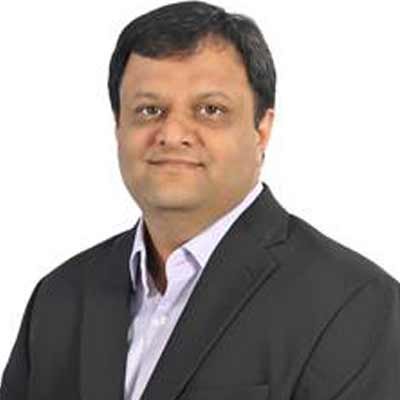
  • People access Facebook 2.4 times more than Twitter and 2.0 times more than YouTube: Kirthiga Reddy

    People access Facebook 2.4 times more than Twitter and 2.0 times more than YouTube: Kirthiga Reddy

    MUMBAI: It’s very easy to overlook a fundamental fact about brands: people bring brands to life – not companies. Brands aren’t to be found in the factory or in the studio and much less in the balance sheets, but in the minds of consumers, employees, suppliers and other stakeholders. In a sense a brand is a public object – and the strongest brands are those whose consumers feel a real sense of ownership: ‘That’s My Brand’. In other words, a brand exists only in people’s mind. So today what is driving people’s mind? Who is moving people? Where is it they go before they make a decision?

    How often today do we hear in our day to day conversation that ‘On my Facebook account I read this.’ Is it really one’s Facebook account, does anybody really own it? It’s just a successful evolution of a brand that someone feels her or his Facebook account is her or his?

    People today are driven by a small screen which moves along, supplies content on demand and reacts as per the personality of its owner. A personalised interactive medium called ‘Mobile’. “The world is not going mobile, it has gone mobile” says Facebook India MD Kirthiga Reddy. She shares some verified data, “More than 142 million people access Facebook every month in India through any of the access points of which 133 million log in via mobile devices. More than 69 million people get on Facebook every day, 64 million of them through mobile.”

    So there is a humongous amount of interaction which happens daily and it happens all across India. “The diversity of Facebook is also an important factor. The data confirms that Facebook has a very strong pan India reach and this perception that Facebook is only an urban Smartphone product is not true. What we found is for every urban user there are two from other parts of India which shows a very strong distribution of people,” asserts Reddy.

    Facebook in association with IMRB has done a study which shows, “63 per cent people on Facebook use 3G connections and 37 per cent use a 2G connection to access Facebook. 70 per cent people on Facebook own a Smartphone; 88 per cent use a prepaid connection.” Despite having such high numbers which are real by nature and not sampled or extrapolated, the investment on mobile, social media and digital is far from premium. Digitally born entrepreneur The Viral Fever founder Arunabh Kumar paints the scenario in the best possible way. He says, “The ad spend on a digital video which reaches to at least 15 times more number of people when compared to TV actually is equal to one meal catering spend of a television commercial (TVC) shoot.”

    Kirthiga Reddy also echoes same sentiments, but she speaks in terms of time investment of brands. “There is a big delta when it comes to how much time brands are spending on mobile and how much time people are spending on mobile” she says. As a frontrunner of the digital wave, Facebook has taken on multiple responsibilities of educating the ecosystem and the study is one of them, “Our intention through this study is to educate people about what people are doing on Facebook, on mobile, and how this information can help them move the business fast and bridge the gap between how much time people are spending on mobile and how time the brands are investing on mobile. We invest heavily on education as this new platform needs some educating. Late last year we rolled out a multi module educating program Blueprint in association with our partners,” she further adds.

    Blueprint is a new education program that trains agencies, partners and marketers on how to use Facebook, so they can create better campaigns that drive business results. Combining online courses, in-person training and certification Blueprint offers training from campaign optimisation, how to use video on Facebook, to effective ad measurement solutions. The Blueprint program features 34 online courses under various categories such as Facebook pages, targeting, buying and managing your ads, campaign optimisation, insight and Instagram. “Since March 2015, more than 175,000 people have taken more than 500,000 course enrolments. India ranks as the second largest country signing onto Blueprint. The top five countries include the US, India, Egypt, Brazil and the UK,” informs the Facebook India team.

    Platforms such as Facebook are also used to target people in TV dark areas, informs Reddy. She cites a case study on Nestle Everyday Whitener. “Nestle wanted to target people from media (traditional media) dark areas of the northeast. One creative was created for smartphones and another one was created for feature phones. The creatives drove that brand association and emotion to the end consumer, which later translated to positive results. This is an example of brands leveraging benefits of Facebook’s pan India presence.”

    The brand interaction with this disrupting social media platform is also happening in India  feels Reddy, “Three years back,if we were having this conversation, I would have only spoken about global case studies. I did not have a single India example to share,” says she. “But today we have so many examples across all the verticals, so the explosion is already happening. In the past also we saw when TV came in and print was there, it took its time,” she informs further.

    As per the FICCI – KPMG 2016 report, TV witnessed ad spends of Rs 542.2 billion (Rs 54,220 crore) which means a 14.2 per cent growth from the previous year. Whereas the growth rate of digital advertising which witnessed a spend of Rs 60.1 billion (Rs 6,010 crore) is an overwhelming 38.2 per cent. The same report projects a 15.1 per cent growth of television despite all the digital disruption and OTT emergence. The projected spend is believed to reach Rs 617.0 billion (Rs 61,700 crore). Digital is set to see a Rs 20 billion (Rs 2,000 crore) more spends as the projected figure for 2016 is Rs 81.1 billion (Rs 8,110 crore) which means a 33.5 per cent growth.

    So is it TV versus mobile? “We say it’s TV plus mobile,” says the Facebook India MD. But, at the same time she believes mobile has an upper hand, “Mobile is a screen kept close to you while TV is kept far with many distractions in between. A study shows that mobile has 82 per cent higher retention rate and 79 per cent lower distraction rate than any other screen,” she asserts. On TV there is a fight amongst brands to buy a prime time slot which shoots the 10 second ad rate sky high. “People are on Facebook throughout the day which means the brands no longer need to wait for the evening prime time to connect with people they can connect throughout the day,” says Reddy. “There are definitely key advantages when it comes to mobile. Mobile is a medium of discovery, mobile is a medium of personalisation it is a one screen one person platform which allows you to target individually, send the right message to the right person. You are seeing the kind of businesses that you can get, it gives you many opportunities which TV doesn’t, be it a whole day phenomenon or targeting,” she further sheds light on the advantages of mobile.

    Facebook has a strong ethos when it comes to value for money or return on investment or ROI, “We believe whenever a client pays a rupee to Facebook, he could have paid the same for either a TV ad or print or any-other medium. So what we promise is that a one rupee spend on Facebook is the most effective rupee spent by the client, that is what we want to strive for,” informs Reddy.

    Facebook is currently working with more than 85 per cent of Kantar’s reported top 100 advertisers in India, which includes Unilever, P&G, PepsiCo, Coca-Cola, Amazon, Nestle, Reckitt Benckiser, Mondelez, and L’Oreal.  This also includes companies headquartered in India like Tata and ICICI Bank, India’s largest private bank, eCommerce companies like Snapdeal, Flipkart, Ola, and new companies like Craftsvilla.com. In 2014 Facebook established the Facebook Client Council to learn more and develop better ad solutions.

    The study had a few proud findings for Facebook and Reddy throws light on them, “People access Facebook 2.4 times more than Twitter and 2.0 times more than YouTube,” says she while sharing India statistics.

    Facebook is focusing on videos too, as there is no India data available when it comes to video consumption Reddy shares global figures, “Everyday there are more than 8 billion (800 crore) video views on Facebook, and more than 45 per cent of video viewing happens on mobile.”

    “We are seeing a trend, where communication is going visual and with that Facebook is evolving in terms of being a visual storytelling platform” she concludes.
     

  • People access Facebook 2.4 times more than Twitter and 2.0 times more than YouTube: Kirthiga Reddy

    People access Facebook 2.4 times more than Twitter and 2.0 times more than YouTube: Kirthiga Reddy

    MUMBAI: It’s very easy to overlook a fundamental fact about brands: people bring brands to life – not companies. Brands aren’t to be found in the factory or in the studio and much less in the balance sheets, but in the minds of consumers, employees, suppliers and other stakeholders. In a sense a brand is a public object – and the strongest brands are those whose consumers feel a real sense of ownership: ‘That’s My Brand’. In other words, a brand exists only in people’s mind. So today what is driving people’s mind? Who is moving people? Where is it they go before they make a decision?

    How often today do we hear in our day to day conversation that ‘On my Facebook account I read this.’ Is it really one’s Facebook account, does anybody really own it? It’s just a successful evolution of a brand that someone feels her or his Facebook account is her or his?

    People today are driven by a small screen which moves along, supplies content on demand and reacts as per the personality of its owner. A personalised interactive medium called ‘Mobile’. “The world is not going mobile, it has gone mobile” says Facebook India MD Kirthiga Reddy. She shares some verified data, “More than 142 million people access Facebook every month in India through any of the access points of which 133 million log in via mobile devices. More than 69 million people get on Facebook every day, 64 million of them through mobile.”

    So there is a humongous amount of interaction which happens daily and it happens all across India. “The diversity of Facebook is also an important factor. The data confirms that Facebook has a very strong pan India reach and this perception that Facebook is only an urban Smartphone product is not true. What we found is for every urban user there are two from other parts of India which shows a very strong distribution of people,” asserts Reddy.

    Facebook in association with IMRB has done a study which shows, “63 per cent people on Facebook use 3G connections and 37 per cent use a 2G connection to access Facebook. 70 per cent people on Facebook own a Smartphone; 88 per cent use a prepaid connection.” Despite having such high numbers which are real by nature and not sampled or extrapolated, the investment on mobile, social media and digital is far from premium. Digitally born entrepreneur The Viral Fever founder Arunabh Kumar paints the scenario in the best possible way. He says, “The ad spend on a digital video which reaches to at least 15 times more number of people when compared to TV actually is equal to one meal catering spend of a television commercial (TVC) shoot.”

    Kirthiga Reddy also echoes same sentiments, but she speaks in terms of time investment of brands. “There is a big delta when it comes to how much time brands are spending on mobile and how much time people are spending on mobile” she says. As a frontrunner of the digital wave, Facebook has taken on multiple responsibilities of educating the ecosystem and the study is one of them, “Our intention through this study is to educate people about what people are doing on Facebook, on mobile, and how this information can help them move the business fast and bridge the gap between how much time people are spending on mobile and how time the brands are investing on mobile. We invest heavily on education as this new platform needs some educating. Late last year we rolled out a multi module educating program Blueprint in association with our partners,” she further adds.

    Blueprint is a new education program that trains agencies, partners and marketers on how to use Facebook, so they can create better campaigns that drive business results. Combining online courses, in-person training and certification Blueprint offers training from campaign optimisation, how to use video on Facebook, to effective ad measurement solutions. The Blueprint program features 34 online courses under various categories such as Facebook pages, targeting, buying and managing your ads, campaign optimisation, insight and Instagram. “Since March 2015, more than 175,000 people have taken more than 500,000 course enrolments. India ranks as the second largest country signing onto Blueprint. The top five countries include the US, India, Egypt, Brazil and the UK,” informs the Facebook India team.

    Platforms such as Facebook are also used to target people in TV dark areas, informs Reddy. She cites a case study on Nestle Everyday Whitener. “Nestle wanted to target people from media (traditional media) dark areas of the northeast. One creative was created for smartphones and another one was created for feature phones. The creatives drove that brand association and emotion to the end consumer, which later translated to positive results. This is an example of brands leveraging benefits of Facebook’s pan India presence.”

    The brand interaction with this disrupting social media platform is also happening in India  feels Reddy, “Three years back,if we were having this conversation, I would have only spoken about global case studies. I did not have a single India example to share,” says she. “But today we have so many examples across all the verticals, so the explosion is already happening. In the past also we saw when TV came in and print was there, it took its time,” she informs further.

    As per the FICCI – KPMG 2016 report, TV witnessed ad spends of Rs 542.2 billion (Rs 54,220 crore) which means a 14.2 per cent growth from the previous year. Whereas the growth rate of digital advertising which witnessed a spend of Rs 60.1 billion (Rs 6,010 crore) is an overwhelming 38.2 per cent. The same report projects a 15.1 per cent growth of television despite all the digital disruption and OTT emergence. The projected spend is believed to reach Rs 617.0 billion (Rs 61,700 crore). Digital is set to see a Rs 20 billion (Rs 2,000 crore) more spends as the projected figure for 2016 is Rs 81.1 billion (Rs 8,110 crore) which means a 33.5 per cent growth.

    So is it TV versus mobile? “We say it’s TV plus mobile,” says the Facebook India MD. But, at the same time she believes mobile has an upper hand, “Mobile is a screen kept close to you while TV is kept far with many distractions in between. A study shows that mobile has 82 per cent higher retention rate and 79 per cent lower distraction rate than any other screen,” she asserts. On TV there is a fight amongst brands to buy a prime time slot which shoots the 10 second ad rate sky high. “People are on Facebook throughout the day which means the brands no longer need to wait for the evening prime time to connect with people they can connect throughout the day,” says Reddy. “There are definitely key advantages when it comes to mobile. Mobile is a medium of discovery, mobile is a medium of personalisation it is a one screen one person platform which allows you to target individually, send the right message to the right person. You are seeing the kind of businesses that you can get, it gives you many opportunities which TV doesn’t, be it a whole day phenomenon or targeting,” she further sheds light on the advantages of mobile.

    Facebook has a strong ethos when it comes to value for money or return on investment or ROI, “We believe whenever a client pays a rupee to Facebook, he could have paid the same for either a TV ad or print or any-other medium. So what we promise is that a one rupee spend on Facebook is the most effective rupee spent by the client, that is what we want to strive for,” informs Reddy.

    Facebook is currently working with more than 85 per cent of Kantar’s reported top 100 advertisers in India, which includes Unilever, P&G, PepsiCo, Coca-Cola, Amazon, Nestle, Reckitt Benckiser, Mondelez, and L’Oreal.  This also includes companies headquartered in India like Tata and ICICI Bank, India’s largest private bank, eCommerce companies like Snapdeal, Flipkart, Ola, and new companies like Craftsvilla.com. In 2014 Facebook established the Facebook Client Council to learn more and develop better ad solutions.

    The study had a few proud findings for Facebook and Reddy throws light on them, “People access Facebook 2.4 times more than Twitter and 2.0 times more than YouTube,” says she while sharing India statistics.

    Facebook is focusing on videos too, as there is no India data available when it comes to video consumption Reddy shares global figures, “Everyday there are more than 8 billion (800 crore) video views on Facebook, and more than 45 per cent of video viewing happens on mobile.”

    “We are seeing a trend, where communication is going visual and with that Facebook is evolving in terms of being a visual storytelling platform” she concludes.
     

  • Network18 ropes in ex Flipkart  exec Manish Maheshawari as CEO of  Web18

    Network18 ropes in ex Flipkart exec Manish Maheshawari as CEO of Web18

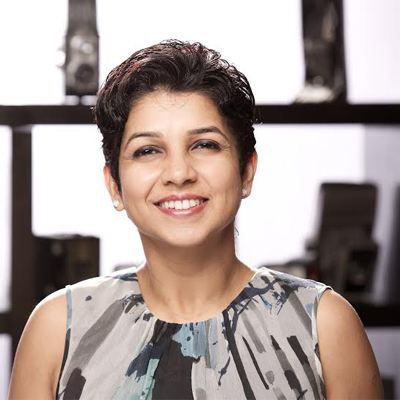
    MUMBAI: The Network18 Group has roped in Manish Maheshawari as the new CEO of Web18. Maheshawari was previously with Indian eCommerce major Flipkart as VP and head of its seller ecosystem. Maheshawari will lead Network18’s digital and e-commerce assets which includes digital portals such as moneycontrol.com, ibnlive.com, in.com, firstpost.com, etc.

    As the CEO of Web18, Maheshawari’s immediate priorities will be  to drive content, monetization, new business, inorganic growth, and product portfolio management.

    Talking about the new appointment, Network18 group chairman Adil Zainulbhai said, “Manish brings with him a good mix of Silicon Valley tech product culture and an understanding of ground realities of India. Both these qualities will be crucial as we take Network18 to the next level of digital transformation. He has a proven track record of taking up projects and achieving a scale of tens of millions, building cross-functional teams that deliver in large setting with an unflinching focus on customer experience.”

    Maheshawari can be credited with growing Flipkart’s marketplace by 10x — from 10,000 sellers in February 2015 to over 100,000 sellers in February 2016.  Prior to that, he co-founded txtWeb and grew it from scratch with over 16 million mobile users in India alone.


  • Network18 ropes in ex Flipkart  exec Manish Maheshawari as CEO of  Web18

    Network18 ropes in ex Flipkart exec Manish Maheshawari as CEO of Web18

    MUMBAI: The Network18 Group has roped in Manish Maheshawari as the new CEO of Web18. Maheshawari was previously with Indian eCommerce major Flipkart as VP and head of its seller ecosystem. Maheshawari will lead Network18’s digital and e-commerce assets which includes digital portals such as moneycontrol.com, ibnlive.com, in.com, firstpost.com, etc.

    As the CEO of Web18, Maheshawari’s immediate priorities will be  to drive content, monetization, new business, inorganic growth, and product portfolio management.

    Talking about the new appointment, Network18 group chairman Adil Zainulbhai said, “Manish brings with him a good mix of Silicon Valley tech product culture and an understanding of ground realities of India. Both these qualities will be crucial as we take Network18 to the next level of digital transformation. He has a proven track record of taking up projects and achieving a scale of tens of millions, building cross-functional teams that deliver in large setting with an unflinching focus on customer experience.”

    Maheshawari can be credited with growing Flipkart’s marketplace by 10x — from 10,000 sellers in February 2015 to over 100,000 sellers in February 2016.  Prior to that, he co-founded txtWeb and grew it from scratch with over 16 million mobile users in India alone.


  • Flipkart’s new campaign by Lowe Lintas Bangalore stresses on assurances of satisfaction

    Flipkart’s new campaign by Lowe Lintas Bangalore stresses on assurances of satisfaction

    MUMBAI: With the number of e-commerce platforms growing at a phenomenal pace, it is become necessary to think of unique ways to catch the consumer through either eye-catching television commercials or through purse-catching offers.

    Flipkart which is one of the earliest platforms in India has taken a new communication route promising consumers of the platform being not just convenient, but assured as well, to enhance its position. The new campaign, which has been conceptualized by Lowe Lintas Bangalore, has been weaved around the core thought that “Shopping with Flipkart is not just convenient, but assured as well.”

    The campaign attempts to address that segment which uses online shopping but have a certain fears that cross their minds. Some fears that people have are around “the fear of unknown” like fake products, and cumbersome returns process. The campaign attempts to reappraise people’s perception about Flipkart’s Service Promise and reassure the core target group on the benefits of online shopping.

    Commenting on the objective, Flipkart marketing VP Shoumyan Biswa said, “With over 50 million users, Flipkart is the largest ecommerce player in the country. We are seeing great traction with our consumers on the back of pioneering selection, service and pricing. While the start has been great, we feel the journey has only just begun especially when the majority of the country is yet to experience online shopping. In such a scenario, we believe that as market leaders it is our responsibility to develop the market and help onboard the next few million.”

    He added that Flipkart had initiated an extensive activity across multiple cities and different target segments of potential shoppers some months earlier. While there were some nuances in terms of the reservations towards shopping online, the overarching challenges could be distilled down to two key points –Reassurance that the consumers will get original products and the Ability to return products with ease if needed
    .
    Flipkart Matlab Bilkul Pakka is the new slogan and Biswa said, “Given the strategic importance of this project, our approach for this campaign was to design, plan and execute a complete 360 degree campaign leading with spots on TV, Integration and Sponsorships on key properties across genres like ICC T20 World Cup on Star Sports, Sa Re Ga Ma Pa on Zee TV amongst other key regional, youth and niche genre sponsorships.”

    Over the next few weeks this will get amplified by a strong social, digital and outdoor plan reaching out to national metro as well as regional markets.

    The campaign comprises a series of two films that focus on the assurance provided by Flipkart that the products sold on its platform are of genuine quality. In the first film titled ‘Easy Exchange & Returns’, a non-user of online shopping – who is also a boss – is asking his employee to buy a gift from a local retail store. But the employee suggests Flipkart. Not wanting to compromise on the choice and quality, the boss seems apprehensive of taking the online route. But upon further conviction by the employee on the assurance on quality and easy return policy, he decides to buy from Flipkart. He is completely satisfied as he gets to return the product without any questions asked.

    In the second film titled ‘100% Original Products’, a doctor is shown complimenting his patient on his choice of shoes. The patient leads him to the Flipkart App that has a range of shoes he can chose from. As he is apprehensive that he may not receive a genuine product, the patient promises him that the product is indeed genuine and is something that is vouched by Flipkart as well. In fact he could even return the product if he does not like it. Now convinced, the doctor goes ahead and shops from Flipkart and ends up being totally satisfied.

    Sharing his views on the creative thought process, Lowe Lintas CCO Arun Iyer said, “We wanted to get an entertaining creative expression which has the core cultural insight of our consumers ingrained in it. With our campaign “Flipkart matlab bilkul pakka”, we have been able to answer the most primary and oft repeated service related question, “Pakka na?” This campaign has been crafted with an attempt to connect to our consumers through instances which depict doubts which a lot of our prospective consumers have before shopping online. Hopefully through this campaign, we would have answered their questions and relieved them off their doubts regarding online shopping. Hopefully people enjoy it as much as we enjoyed working on this project.”

    Adding his views, Lowe Lintas Bangalore ECD Rajesh Ramaswamy said, “In today’s times of crazy clutter, we wanted to take an approach where we are sharp and to the point. The challenge was to still make it entertaining. So, this treatment of back and forth, set to a soundtrack of a TT match, really stood out, and added to the humour in the end. And yes, we also got characters we have always loved but never see in ads like Amol Palekar and Rajesh Sharma. It is always inspiring to work with Abhinay Deo, and we believe we have something really clutter breaking and enjoyable.”

    The treatment for the campaign is derived from a ping pong game, as the conversation follows that pattern of communication where each character ‘serves’ a response. The music too has been used in the pauses and silent moments of the film to ensure that the desired message is pronounced. It has been shot by Ramesh Deo Productions and will play on prominent offline and online mediums as part of its outreach plans.

  • Flipkart’s new campaign by Lowe Lintas Bangalore stresses on assurances of satisfaction

    Flipkart’s new campaign by Lowe Lintas Bangalore stresses on assurances of satisfaction

    MUMBAI: With the number of e-commerce platforms growing at a phenomenal pace, it is become necessary to think of unique ways to catch the consumer through either eye-catching television commercials or through purse-catching offers.

    Flipkart which is one of the earliest platforms in India has taken a new communication route promising consumers of the platform being not just convenient, but assured as well, to enhance its position. The new campaign, which has been conceptualized by Lowe Lintas Bangalore, has been weaved around the core thought that “Shopping with Flipkart is not just convenient, but assured as well.”

    The campaign attempts to address that segment which uses online shopping but have a certain fears that cross their minds. Some fears that people have are around “the fear of unknown” like fake products, and cumbersome returns process. The campaign attempts to reappraise people’s perception about Flipkart’s Service Promise and reassure the core target group on the benefits of online shopping.

    Commenting on the objective, Flipkart marketing VP Shoumyan Biswa said, “With over 50 million users, Flipkart is the largest ecommerce player in the country. We are seeing great traction with our consumers on the back of pioneering selection, service and pricing. While the start has been great, we feel the journey has only just begun especially when the majority of the country is yet to experience online shopping. In such a scenario, we believe that as market leaders it is our responsibility to develop the market and help onboard the next few million.”

    He added that Flipkart had initiated an extensive activity across multiple cities and different target segments of potential shoppers some months earlier. While there were some nuances in terms of the reservations towards shopping online, the overarching challenges could be distilled down to two key points –Reassurance that the consumers will get original products and the Ability to return products with ease if needed
    .
    Flipkart Matlab Bilkul Pakka is the new slogan and Biswa said, “Given the strategic importance of this project, our approach for this campaign was to design, plan and execute a complete 360 degree campaign leading with spots on TV, Integration and Sponsorships on key properties across genres like ICC T20 World Cup on Star Sports, Sa Re Ga Ma Pa on Zee TV amongst other key regional, youth and niche genre sponsorships.”

    Over the next few weeks this will get amplified by a strong social, digital and outdoor plan reaching out to national metro as well as regional markets.

    The campaign comprises a series of two films that focus on the assurance provided by Flipkart that the products sold on its platform are of genuine quality. In the first film titled ‘Easy Exchange & Returns’, a non-user of online shopping – who is also a boss – is asking his employee to buy a gift from a local retail store. But the employee suggests Flipkart. Not wanting to compromise on the choice and quality, the boss seems apprehensive of taking the online route. But upon further conviction by the employee on the assurance on quality and easy return policy, he decides to buy from Flipkart. He is completely satisfied as he gets to return the product without any questions asked.

    In the second film titled ‘100% Original Products’, a doctor is shown complimenting his patient on his choice of shoes. The patient leads him to the Flipkart App that has a range of shoes he can chose from. As he is apprehensive that he may not receive a genuine product, the patient promises him that the product is indeed genuine and is something that is vouched by Flipkart as well. In fact he could even return the product if he does not like it. Now convinced, the doctor goes ahead and shops from Flipkart and ends up being totally satisfied.

    Sharing his views on the creative thought process, Lowe Lintas CCO Arun Iyer said, “We wanted to get an entertaining creative expression which has the core cultural insight of our consumers ingrained in it. With our campaign “Flipkart matlab bilkul pakka”, we have been able to answer the most primary and oft repeated service related question, “Pakka na?” This campaign has been crafted with an attempt to connect to our consumers through instances which depict doubts which a lot of our prospective consumers have before shopping online. Hopefully through this campaign, we would have answered their questions and relieved them off their doubts regarding online shopping. Hopefully people enjoy it as much as we enjoyed working on this project.”

    Adding his views, Lowe Lintas Bangalore ECD Rajesh Ramaswamy said, “In today’s times of crazy clutter, we wanted to take an approach where we are sharp and to the point. The challenge was to still make it entertaining. So, this treatment of back and forth, set to a soundtrack of a TT match, really stood out, and added to the humour in the end. And yes, we also got characters we have always loved but never see in ads like Amol Palekar and Rajesh Sharma. It is always inspiring to work with Abhinay Deo, and we believe we have something really clutter breaking and enjoyable.”

    The treatment for the campaign is derived from a ping pong game, as the conversation follows that pattern of communication where each character ‘serves’ a response. The music too has been used in the pauses and silent moments of the film to ensure that the desired message is pronounced. It has been shot by Ramesh Deo Productions and will play on prominent offline and online mediums as part of its outreach plans.