Tag: Flipkart

  • Going from clicks to bricks

    Going from clicks to bricks

    MUMBAI: Nothing beats the feeling of being served at your doorstep and this convenience is what has thrust e-commerce to pole position among shoppers worldwide. Add to it the ease of picking, cross-checking prices across sites and the frequent discounts are the cherries on the cake.

    The growth of e-commerce became evident since 1994, with the first sales of Sting album in the United States. Soon, products like wine, chocolates and flowers became the pioneering retail categories which further fuelled the growth of online shopping. Before long, researchers dug out that some products are more appropriate for e-commerce buying than others – most of them turned out to be generic items which didn’t need physical touch validity. Nothing isn’t online today, you name a product and it’s up for purchase.

    India officially went online publicly in 1995; before that, it was only for research and educational institutes. It was in the early 2000s when India was introduced to a novel way of purchasing – teleshopping. With the advent of the internet age here, this hopped onto the web with Flipkart being one of the earliest entrants. Starting with books, the Softbank-backed company is now giving a tough fight to America’s Amazon.

    Old teleshopping TVC:

    Today, India has an internet user base of over 450 million, which accounts for 40 per cent of the country’s population. NASSCOM has projected the country’s e-commerce market to be worth Rs 2 lakh crore this year. As per Google, there were 100 million online shoppers in India in 2016. Online apparel is one of the most popular verticals, which along with computers and consumer electronics, makes up 42 per cent of the total retail e-commerce sales. According to various media reports, India’s online retail market grew at about 25 per cent in 2017 and is projected to touch $20 billion by the year 2020. It won’t be incorrect to say that it has been a joyride for online websites and e-commerce platforms in India.

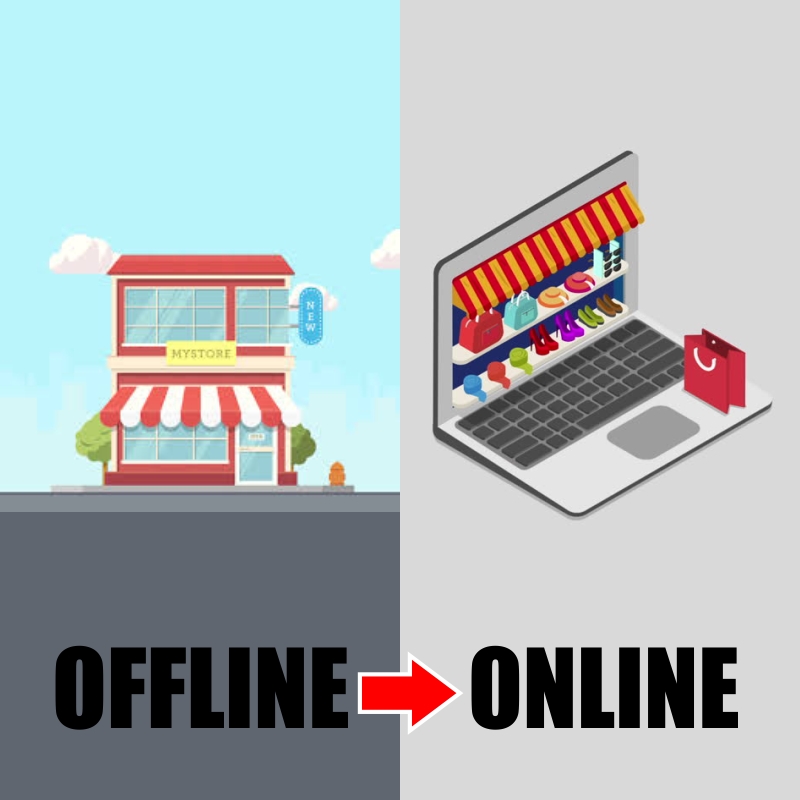
    But things seem to be changing now. Following a successful run in the online world, e-commerce companies are now venturing into a space they once thought would soon see the same fate as dinosaurs— brick and mortar stores.

    Globally, this phenomenon has taken the industry by a storm. Large organisations that were leaders in online have taken the route of opening physical stores or pop up shops. E-commerce marketplace Amazon is one such example. The global giant has teamed up with Calvin Klein to open holiday-themed pop-up stores in New York City and Los Angeles. Chinese e-commerce titan Alibaba is all set to steal a page from Amazon’s playbook by opening its first store in Shanghai.

    In India, lifestyle and fashion company Myntra, beauty and cosmetics website Nykaa, eyewear company Lenskart, housing and furniture websites Pepperfry and Urban Ladder and lingerie website Zivame are a few of those who have taken the online-to-offline route.

    Lenskart has established its strong presence in the offline space and is targeting to take its total brick and mortar count to over 900 in the next two years. Its current 400 offline stores contribute 50-60 per cent of its business. Online furniture website Pepperfry currently has over 23 physical stores which contribute 20 per cent to its overall sales.

    Flipkart owned online fashion marketplace, Myntra is considering launching its own multi-brand offline stores where customers can walk in and shop for all the collection that is also available on its online platform. Earlier in March 2017, Myntra launched its first offline store in Bengaluru for its homegrown brand – Roadster. The decision is in line with the company’s effort to aid profitability.

    Pepperfry, Lenskart and Urban Ladder are aiming to come up with their Initial Public Offering (IPO) in the next two to three years.

    Chinese mobile handset manufacturer Xiaomi, which was only available in India via Flipkart and Amazon in 2016, decided to open up stores here to boost sales and boy, did that work for the company!

    Xiaomi, which currently has 13 Mi Homes in top six metro cities, plans to increase the count to 100 by the end of next year. The Chinese manufacturer clocked revenue of about Rs 7000 crore in 2016 but doubled it in 2017 posting Rs 14,000 crore.

    Online leaders are investing heavily in setting up physical stores to fuel their next phase of growth. The move aids them in getting more customers and the hybrid strategy helps in gaining double-digit growth figure while expanding the business.

    Setting up offline stores also helps brands in balancing the high cost of acquisition that the online store demands. Although this is an emerging trend which will play an important role for online retailers in the days to come, brands have begun to embrace this omnichannel approach.

    Having said that, it is also a gamble that not every brand might have an appetite for. Setting up physical stores means investing heavy money into infrastructure and land acquisition while also running the risk of the store being an utter dud! It is a win-win situation for brands that are willing to embrace the step back.

    Also read:

    A year after demonetisation: E-payment services emerged winners

    BFSI’s changing communication in the digital era   

    E-commerce ad wars are the result of marketing myopia: experts
     

  • Myntra endorses hassle-free returns in latest campaign

    Myntra endorses hassle-free returns in latest campaign

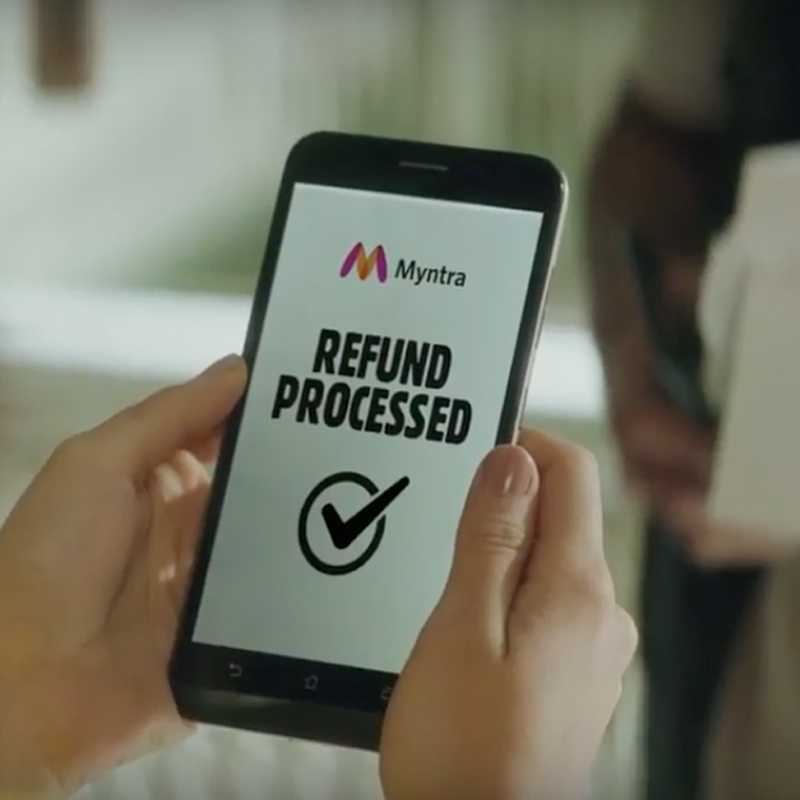
    MUMBAI: Fashion e-commerce site Myntra is wooing new customers, people who have never shopped online, from non-metro cities and smaller towns. The marketing campaign will focus on pain points such as seamless returns and instant refunds, which inhibit them from taking the online leap. The TVCs have been conceptualised by Taproot Dentsu.

    Commenting on the campaign, Jabong head and Myntra CMO Gunjan Soni said, “Non-metro cities are very important markets for Myntra as we see our next phase of growth coming from there. Our research shows that over 30 million SEC A internet users in non-metros do not shop online and, as a market leader, we have launched this campaign to drive adoption among them. We see about 25 per cent of our daily acquisitions coming from this segment. With this campaign, we are looking at acquiring half a million new customers from this target group over the next three weeks.”

    One of the TVCs features Dangal star Fatima Sana Shaikh as she threatens the Myntra delivery boy with dire consequences if the refund money gets stuck in the process. To this, he says that she can be assured of instant refund at Myntra. The second TVC talks about how someone can go to a great extent to convince a person the shirt doesn’t fit well and so needs to be returned. The Myntra executive says it has a no-questions-asked return policy.

    Taproot Dentsu creative director Neeraj Kanitkar said, “Myntra is undisputedly one of India’s most fashionable shopping outposts. But some shoppers, especially from non-metro cities, worry about the practicalities of the service features. Will my return be accepted? Will my return have to meet any requirements? When will I get a refund? And as a result simply stay away from shopping for fashion online. This campaign addresses these questions in a thoughtful, warm yet joyful manner. Which will hopefully get them to try Myntra because once people try Myntra, they really do love it.”

    The campaign will use other mediums like TV, digital, online and outdoor as well.

  • Brands bullish this festive season but not for Navratri

    Brands bullish this festive season but not for Navratri

    MUMBAI: Marketing mavens are aware that a majority of brand spending in India takes place between August and December every year because of a range of festivals that dot this period. It begins with Raksha Bandhan and chugs ahead with Ganesh Chaturthi and gathers steam in September with Navratri, Durga Pooja and Dussehra, only to move at a superfast speed during Diwali, until the calendar year ends. Indian consumers are in a celebratory mood, flush with cash, courtesy employment bonuses.

    The past 10 months have, however, been different. The reason: the double whammy of demonetisation and the rollout of goods and services tax (GST) put the brakes on optimism. Both forced brand custodians to zip up their ad purses and postpone any spends until customers had money to splurge and the entire GST process – which commenced on 1 July 2017 – panned out.

    Net result: even the months of August 2017 and early September 2017 have seen sedate brand activity. Questions are being asked whether marketers are ready to let their hair down during Navratri 2017 to get consumers back to spending on goodies ostentatiously?

    Indiantelevision.com got in touch with a clutch of marketers and agency heads and the consensus was that a majority of national brands are going to go easy on both, Navratri and Dussehra, but they are going to go hell for leather during Durga Pooja and Diwali, allocating a large chunk of their ad and promotional budgets during these two periods.

    Even in Gujarat, which normally goes into marketing overdrive during Navratri,  there will be some amount of softness this year between 21-29 September.

    “Navratri is clearly the biggest festival in Gujarat which is bigger than Diwali in terms of activations and promotions. It is a big period for Gujarati channels (national and local) as all major FMCG brands, automobile brands and local retailers want to make the most of this season but the spends will be soft this year because of GST and demonetisation,” says a media expert.

    Navratri event organisers in Mumbai and Gujarat had to struggle this year to find sponsors mainly due to the fact that real estate and telecom categories, which otherwise are heavy advertisers during the nine-day festival, shied away, unlike previous years.  The real estate sector was relatively cold as a majority of the developers are busy getting their houses in order to comply with the stringent requirements that new real estate regulations that have been thrust on them by RERA. Adding to developers’ relative lack of enthusiasm is the GST rollout.

    Says a media buyer from a leading agency: “Navratri this year will see a lot of local and retail advertising rather than multinational players. This is a great opportunity for local and small brands to promote themselves on the venue or via various BTL activations at a reasonable cost which otherwise would be priced very high.”

    Indeed, some savvy companies are stepping in to take advantage of the opportunity and spend on the various garba events that have been organised across Mumbai and Gujarat. Thousands gather on various grounds in these two states to dance to the rhythms of dandiya stars — Falguni Pathak, Parthiv Gohil, Preeti Pinky, among other. These events are normally aired on the local cable TV channels as well as on some of the handful Gujarati language channels.

    Consider:

    * ONE Broadband, Hinduja Group’s Flagship Company for Telecom Data Services for Consumer & Enterprise Segments will be offering unlimited 10mbs free Wi-Fi service to the devotees during Navratri season across Maharashtra and Gujarat.

    * Residential, commercial and real estate company Ruparel Realty is the title sponsor for Mumbai’s Navratri Mahotsav 2017 while Colors Gujarati is the television partner for the event. Gujarati queen Falguni Pathak will be seen performing at the event for nine days.

    * Ride hailing app Uber will provide lucky customers with a free gift hamper which consists of free passes for Radio Mirchi Rock n Dhol garba event in Gujarat along with two dandiya sticks.

    * Online e-commerce platforms  Flipkart, Amazon and Ebay have also announced their big sales to commence the festive season encouraging people to buy more products online. The sale on these platforms began yesterday and will go on for a week.

    Dentsu Aegis Network chairman and CEO – South Asia Ashish Bhasin told Indiantelevision.com that there’s no reason to worry, however, as overall he sees the festive season spends this year growing 20 per cent over the last year even as the advertising budgets for the whole year will expand 10-12 per cent. What this means is that the last quarters of this year should contribute heavily, and help make up for the losses during the previous quarters.

    Bhasin notes that consumer goods, automobiles and FMCG  sector are going to go all-out with campaigns to seduce India’s fast-burgeoning middle class.

    A media planner adds that brands are actually drawing up massive plans and there’s actually going to be a shower of spending (mainly by categories like automobiles, real estate, jewelry, electronics along with e-commerce)  this festive season as most of them have got over the demonetisation and GST issues.

    That should be music to most media and TV ad sales professionals who have been toiling away, struggling to meet their ad sales targets.

  • Flipkart announces new ‘sale’ through hilarious TVF video

    Flipkart announces new ‘sale’ through hilarious TVF video

    MUMBAI: In TVF’s From Papa with Love, Bhatiaji (Gajraj Rao) generously tells Jeetu (Jitendra Kumar) to ask whatever he wants as his birthday gift.

    In what follows, Jeetu asks for various gifts, each of which his father shoots down by giving mehengayi as an excuse and going on a rant about how Jeetu needs to start saving. Jeetu informs his father that Flipkart’s ‘Big Billion Day’ sale is around the corner and that for those few days they need not worry about ‘mehengayi.’

    Bhatiaji agrees, but does Jeetu get a gift that would make him happy? This is Jeetu’s eighth video with Rao and their chemistry always cracks people up and this time it’s no different.

    TVF and Flipkart’s ‘sale’ partnership has reached a milestone. For the third consecutive year TVF and Flipkart have partnered raising the bar for conversations around branded content partnership.

    TVF’s Shreyansh Pandey shared, “The combination of the father-son characters and brand communication have always lent an interesting premise to the funny exchange between the duo – Rao and Kumar resulting in the most relatable and hilarious conversation.”

  • DishTV extends its connection up to Flipkart

    DishTV extends its connection up to Flipkart

    MUMBAI: DishTV has joined hands with the e-commerce giant Flipkart to bring to its customers a hassle-free connection. With this association, DishTV becomes the first DTH service provider to be listed on Flipkart.

    As part of this collaboration, for a limited period, users of Flipkart, which was voted as one of the most popular e-commerce brands in India by RedSeer report, will get an opportunity to grab offers from DishTV on their new connections.

    Dish TV India senior vice president-marketing Sukhpreet Singh expressed, “Through this move, the company aims to integrate and connect the tech-savvy consumers to entertainment services on a platform which is dynamic.”

    Flipkart senior director – electronics Hari Kumar said, “Of the total cable and satellite base of 169 million, 47 million are non-digitised households. So, there is a huge opportunity with the existing customers itself. With the TV installations expected to double over the next five years, we see a significant upside in making DTH services available at the customers’ doorstep.”

  • Govt steps helping APEJ STB market, global sales may expand at 7.5pc CAGR

    Govt steps helping APEJ STB market, global sales may expand at 7.5pc CAGR

    MUMBAI: Owing to increase in penetration of television and TV services within rural areas as well as urban areas, the set-top box market will receive a boost all across the APEJ region. Disposable incomes are on a rise in India and China, and this is helping the set-top box (STB) market turnover to grow, according to Reportlinker study. In China and India respectively, governments have taken initiatives to focus on HD pictures, HD channels and decline in TV prices. This has led to the growth of the set-top box market in the APEJ region.

    The global set-top box market is estimated to be valued at US$ 22,269 million in 2017 and is projected to reach US$ 46,091 Mn by 2027 end. Sales revenue is expected to increase at a CAGR of 7.5 per cent during the forecast period (2017–2027), the Reportlinker report added.

    Increasing demand for TVs from rural areas boosting the set-top box market in the APEJ region: Due to increase in penetration of television and TV services within rural areas as well as urban areas, the set-top box market will receive a boost all across the APEJ region. In the Asia Pacific region, consumers are more aware about the features, quality and pricing of the set-top box, helping the market achieve greater growth and acceptability.

    Increasing demand for IPTV STBs is fuelling the market for set-top boxes in North America: Increasing demand of 4K TVs is expected to provide support to the growth of the set-top box market in North America. It has been observed that the demand for IPTV based services has increased by 12 per cent and operators are viewing IP-based services as an opportunity to differentiate their products. IP transmission recording features and higher storage specifications are anticipated to support steady revenue growth of the North America set-top box market.

    Domestic production and low-cost products hampering the market growth in APEJ: In the Asia Pacific region, domestic production of set-top boxes by local companies is leading to an increase in price competition with global set-top box manufacturers. Emerging companies are acting as competitors to the established players in the market, thus making the smooth operation of this market difficult.

    Focus on HD videos and powerful interfaces with technology a growing trend in the global set-top box market: It has been observed that set-top box vendors are focussed on supporting devices that enable seamless rendering of high-quality video on a powerful user interface and set-top box vendors have started manufacturing operation systems and app based set-top boxes. The global market is moving towards the 4K android customised set-top box and smart set-top boxes. It has been observed that in the past few years, set-top box manufacturers have shipped a large number of 4K set-top boxes in the APEJ region, and consumers are more aware about the technology and features of set-top boxes in this region.

    Flexible policies and government support encouraging the use of set-top boxes in the APEJ regional market: In November 2015, the Chinese government banned 81 third party apps that allow users to turn television sets into internet streaming devices. The Chinese State Administration of Press, Publication, Radio, Film and Television proposed a rule for governing set-top boxes. In China and India respectively, governments have taken initiatives to focus on high definition pictures, towards HD channels and decline in TV prices. This has led to the growth of the set-top box market in the APEJ region. Manufacturers in this region have also utilised e-commerce retailers such as Alibaba, Ali Express, Amazon, Flipkart etc., and this has propelled the growth of this market.In terms of value, the North America set-top box market is projected to be the most attractive regional market in the global set-top box market during the forecast period

    However, the APEJ market is also poised to register high Y-o-Y growth rates throughout the forecast period. In terms of value, APEJ is anticipated to register a CAGR of six per cent during the forecast period. In 2016, the APEJ market was valued at US$ 6,067.4 Mn and is expected to witness sustained growth in terms of revenue throughout the forecast period.

  • Qyuki partners Flipkart to create VR fashion video

    Qyuki partners Flipkart to create VR fashion video

    MUMBAI: Qyuki Media has collaborated with Flipkart to bring its newest creation – a 360-degree fashion video titled ‘Mera Joota Hai Japani’ with spatial audio featuring the digital superstar Arjun Kanungo.

    In this all-round immersive experience, the new song used a refreshed rendition of the classic hit. Spatial sound allows the user to hear a different version of the soundtrack by simply turning around. This technology has never been used by a brand in a music video before. The interactive content allows the viewer to explore 360 degrees of the video to see the latest fashion trends from Flipkart in an innovative manner.

    Through this video, Qyuki and Flipkart have created a groundbreaking concept for brands and enabled Flipkart to deliver a special 360 degree video with different audio themes to its customers. Combined with the technological prowess of YouTube, the video is a showcase of cutting-edge innovation on the internet.

    This is the third in a series of projects Qyuki has been spearheading with Flipkart, after a successful gamified music video with Rapper Ishq Bector’ and a second track with musical duo Maati Baani

    Qyuki co-founder and MD Samir Bangara shared, “We have created a brand new way of consuming content for Flipkart. It is not only important to innovate on the ideas end but also on the technology front. With Flipkart, we have created a stellar experience that will transport customers to an immersive world of fashion to pique their curiosity. We are stoked to be associated with a strong brand who has its customer’s best interests at heart.”

    Flipkart CMO Shoumyan Biswas commented, “Flipkart is the market leader in fashion amongst all online businesses. Our vision is to be India’s most preferred destination for trendy and affordable fashion and our category communication task is to ‘Democratize Trendy Fashion’ for every Indian consumer.”

    “In our endeavor to showcase trendy fashion in an interesting and innovative format, we have engaged with Qyuki & Google to come up with a first of a kind 360 degree music video that combines a new technology with the evergreen music classic – “Mera joota hai japaani” – and latest fashion trends. Our fashion is for everyone and hence we wanted the right technology to enable the same being experienced by all. This video will revolutionize the way consumers across various demographics view and experience trendy fashion,” Biswas said.

  • Be smart in phone buys, say kids in Flipkart TVCs

    Be smart in phone buys, say kids in Flipkart TVCs

    MUMBAI: Smartphones are a basic necessity today and consumers spend a great deal of time researching on what’s the best model suitable for them. Most consumers often end up questioning their decision when it comes to a smartphone purchase, as they can never be sure if there is a better deal on the phone elsewhere. This peculiar problem is solved by Flipkart, as users can be sure that they will get the best features in the required budget as well as the convenience of exchange, from the comfort of their homes.

    The campaign has been launched online across popular social platforms.

    To help consumers make an informed and a smart decision before purchasing their phone, Flipkart has unveiled its latest campaign that promotes Flipkart as the one-stop platform to buy a phone. Conceptualised and executed by Lowe Lintas Bangalore, the campaign brings out the inconvenience customers go through before their purchase and even when they do settle for a phone, they may not always be getting the best deal for it. They can avoid all that and make a smart choice by shopping on Flipkart. That’s because on Flipkart, shoppers are assured of best features at unbelievably low prices and hassle-free exchange at great prices.

    Explaining the rationale behind the campaign, Kartikeya Bhandari, Senior Director, Brand Marketing, Flipkart said: “Amongst ecomm portals, Flipkart is the market leader in the smartphone category and being a market leader, it is our responsibility to further grow this category online. In order to do so, we looked deeply at the offline consumer purchase behaviour of smartphones and the pain points associated with the same. We realised that there is a clear difficulty in finding that “one place” where you get everything right – a range of phone models, the latest features, exchanging the old phone and of course, getting all this within the right budget. This makes consumers feel that despite the effort put in, there is always another place they could potentially get a ‘smarter’ deal.

    “Basis this knowledge we crafted our offering which would allow us to showcase the ‘smart’ in smartphone shopping. Hence we created the campaign ‘Be Smart. Buy Smartphone only on Flipkart’. The idea being that when you buy a phone on Flipkart, you can be sure you are getting the best features in your budget as well as the convenience of exchanging your old phone at great prices, right at your doorstep.”

    The campaign comprises a series of two films that depict the choices that consumers make before they buy a smartphone and how Flipkart is the best solution for making the smartest choice. In one film, the protagonist goes on to brag about a new phone that he has purchased which contains all the latest specifications. But his claims take a beating when he is made to realise by his friend that he has paid a hefty sum for the phone as compared to what is being offered on Flipkart.

    In the second film, the protagonist is shown talking about how he spent a lot of time and effort in finding a good selling price for his old phone. His friend mocks him for not choosing to exchange on Flipkart – where he would have got a good deal, all from the comfort of his home.

    Highlighting the campaign thought, Rajesh Ramaswamy, Executive Director, Lowe Lintas said: “People love to show off their latest smartphones. They are also usually confident that they’ve got the perfect exchange price for their old phones. Working off these insights, we decided to set the latest Flipkart mobiles campaign in a gym – a place where there is usually no shortage of people looking to show off more than just their muscles! Across two films, the gym stud who is proud of his new phone and the guy who’s confident that he’s got the perfect exchange price for his old phone, have their bubbles burst by their savvy friend, who knows that the smartest way to buy smartphones is on Flipkart.”

  • OYO among LinkedIn’s top 10 for job-seekers

    MUMBAI: Action and engagement by over 500 million LinkedIn members have put OYO among the top 10 companies in India that attract the best talent. It is the only hospitality player among the top ten, rubbing shoulders with marquee global and Indian companies such as Alphabet, Amazon, Flipkart, KPMG, Adobe and Reliance Industries. OYO has jumped seven places to the 9th spot (from 16th last year) in the second edition of the LinkedIn’s survey titled Top Companies 2017: Where India wants to work.

    “OYO is an urban innovator that continues to engage world-class talent driven by commitment and passion to transform the world,” said OYO founder and CEO Ritesh Agarwal.

    OYO CHRO Dinesh R said, “OYO is a unique workplace that caters to diverse skill-sets bound by a common thread – the drive to excel and impact the world.”

    According to LinkedIn Tech Editor Adith Charlie “The list of market leaders in their chosen sectors represents the firms where LinkedIn members most want to work now. Our methodology takes into consideration three main pillars to uncover the companies our members are most interested in; job applications, both views and applies on postings; engagement with employees as well as with the company directly and retention.”

    In a short span of over three years, OYO expanded its network to become the largest hospitality company in India.

    Watch Here :

  • Amit Sadh is Gritstones’ new face

    MUMBAI: Gritstones has been creating an ensemble in the world of Men’s Fashion. With customers support and positive acclamation, Gritstones have been touching heights with its abundance presence in the online shopping market. Its association with Bollwood promotions and presence has formed a complete new picture for the brand. To make the picture more youthful and attractive, Gritstones have roped in famous Bollywood actor Amit Sadh as their brand face for their brand.

    Amit Sadh, being young, stylish and popular name among the people has a good fandom. Being a versatile actor, Amit is most welcoming to face new challenges and adjoin with new experiments and innovation. Similarly Gritstones have been evolving since then with sheer sense to grow and expand their fashion ranges in over multiple shopping stops. At present they are widely and easily available at top online fashion shopping portals like Amazon, Flipkart, Jabong, Snapdeal, Voonik, Myntra and Limeroad among many.

    “I genuinely feel that the clothes are very comfortable and very stylish. It has a very lower east- New York Jamaican vibes to it. The fitting is amazing and the styling is unique and i feel really sexy being in Gritstones. I have grabbed the latest collection of Gritstones and its time you guys grab it soon,” says Amit Sadh.

    Amit Sadh also started as a beginner with no godfather in the film industry and established himself as a brand by taking up television soaps then film acting as a career and became popular among us with his bold and mesmerising acting skills and dialogue delivery, same with Gritstones, they launched themselves online without thinking of the risk of failure or dissonance from the customers and now is one of the most trending and followed brand in the industry. Gritstones has always been developing according to the changing dynamics of the industry and has formulated itself as the most promising brand among the customers.

    Gritstones has bagged the award and recognition for “Most Trusted Fashion Apparel brand in India in quality and service” on Flipkart Marketplace for year 2016-2017.