Tag: Flipkart

  • How Amazon, Flipkart performed in 2020

    How Amazon, Flipkart performed in 2020

    KOLKATA: The stringent lockdown during the early phase of the Covid2019 pandemic brought about sea changes in consumer behaviour in India. E-commerce was one of the sectors which emerged as beneficiaries thanks to first time online shoppers and increasing online payment. Among the leading players, both Amazon and Flipkart grew substantially.

    While Amazon started the year 2020 with a substantial lead on penetration, Flipkart has closed in by December. Both etailers grew reach, as more consumers shifted online during the age of social distancing. However, Flipkart’s 20 per cent growth left Amazon’s five per cent growth, although on a much larger base, looking low, a report from Kalagato said.

    Moreover, e-commerce penetration has deepened across the board. Interestingly, the highest growth was seen among older customers of 45+ age group and the 35–45 age group to a lesser extent. The former category has the potential to unlock further growth for the sector, as it still remains the most under penetrated segment. Data from the research firm also showed that this is the cohort where the gap between Amazon and Flipkart is the biggest.

    From the transacting/paying customers, Flipkart performed better in the year. While the Walmart-owned online retailer started 2020 on a stronger footing than Amazon, the platform has come out on top through the pandemic as well, the report added. Amazon grew transacting reach by 1.5X, while Flipkart doubled it during the year. The growth was sharper among females, tier-3 towns and older customers.

    Flipkart with higher open rates and time spent also led in average transaction value per customer at 12 per cent higher order values on average than Amazon, and a whopping  30 per cent lead during the festive period – October 2020. But an Amazon customer orders 30 per cent more frequently than a Flipkart customer, highlighted the report. The better loyalty of Amazon customers have been attributed to holistic bundled service including Prime Video content.

    The report added that Flipkart would need to work on greater reach and desirability, whereas Amazon needs to move its inactive base into transacting customers. Moreover, the entry of Reliance Industries with Ajio and JioMart and the Tata Group with TataCliq and its investment into 1MG and BigBasket has made the competitive e-commerce space more complicated.

  • Flipkart strengthens vernacular language offerings, app now available in Marathi

    Flipkart strengthens vernacular language offerings, app now available in Marathi

    NEW DELHI: Flipkart has further strengthened its vernacular language offerings with the introduction of Marathi, the third most widely spoken language in India. With this, the Flipkart app is now accessible in six major languages including English, Hindi, Marathi, Tamil, Telugu and Kannada for Indian consumers.

    The e-tailer has utilised a mix of translation and transliteration of over 5.4 million words to offer a personal and colloquial e-commerce experience for millions of Flipkart users. Built on Flipkart’s ‘Localisation and Translation Platform’, customers can now enjoy an easy end-to-end e-commerce experience in Marathi.

    The expansion of the platform’s vernacular capabilities is in line with Flipkart’s continuing innovations to address the pain points of Indian consumers who are transitioning to e-commerce, reducing the access barriers to e-commerce for millions of native language speakers.

    According to industry reports, Indian-language internet users are expected to account for nearly 75 per cent of India’s internet user base by the end of 2021, and over 50 per cent of all Flipkart users come from tier-2 and tier-3 cities, necessitating the need for an expanded regional language offering.

    Flipkart chief product and technology officer Jeyandran Venugopal said, “As part of our continuing efforts to innovate and bring e-commerce closer to customers in Bharat, we have significantly expanded our vernacular language universe over the past two years. The addition of Marathi on the platform as one of the six language offerings reflects our commitment towards making e-commerce more inclusive and will play a crucial role in removing language barriers. These developments are a part of our continued efforts towards further expanding the vernacular language universe on Flipkart, thereby making e-commerce more accessible and convenient for millions of consumers a across the country and will be key to democratising e-commerce in India.”

    Flipkart has launched numerous initiatives under its three pillars of video, voice and vernacular. Since 2019, 95 per cent of users who opted to interact with the platform in a regional language have continued to use it, serving as a testament to the acceptability of regional languages on the digital platform.

  • Unleash your inner detective with Kaun? Who did it?

    Unleash your inner detective with Kaun? Who did it?

    MUMBAI: As a nation, we have always been fascinated by crime stories – the unpredictable nature of a case, analysing the crime scene, and the thrill of the detective-suspect chase. We've often caught ourselves getting ahead of the detectives, wanting to get past the TV screen, and catching the killer! So what if the next time you're watching a whodunit, you could actually be a part of the process? Flipkart Video in collaboration with Guneet Monga’s production house, Sikhya Entertainment gives you the one-of-a-kind chance to play detective from the comfort of your phone, with their all-new interactive crime fiction series – Kaun? Who did it? 

    The showrunner is Umesh Bist, director of the upcoming movie Pagglait and the series is written by veteran TV writer Sunjoy Shekhar.

    Every episode will feature a spine-chilling murder case, giving audiences the ultimate opportunity to don the detective's hat and win exciting prizes as they manoeuvre through intriguing twists, solve cryptic clues, and identify suspects in real-time. The series features versatile actor Sushant Singh playing the lead role of Adi, an ex-cop turned private detective. His disdain for the police force, the brace on his leg, and his walking sticks leave a lot to be discovered about his past. Seen playing his partner-in-solving-crime, is film and theatre actress Samvedna Suwalka AKA Malini, a gritty assistant police inspector who teams up with Adi for his innate deductive skills, in solving seemingly unsolvable cases.

    Flipkart growth & monetisation VP Prakash Sikaria said, “Our consumer-first approach helps us to be at forefront of innovation, enabling us to push the boundaries and bring interactivity to content. Guneet has been a valuable partner who shares our vision and brings her creative zeal to help us raise the bar each time. Kaun? Who did it? is built on people's increasing fascination for shows with an element of ‘guessing’ and the innate urge to unravel a mystery. This show will provide the thrill of visceral entertainment and the rush of decoding a secret before the protagonist does. We’re excited to have users at the edge of their seats and will continue to explore many more engaging concepts within this genre.”

    Sikhya Entertainment CEO Guneet Monga said the show was conceptualised, shot and delivered this show in the lockdown.

    “Umesh Bist and Sunjoy Shekhar ensured that the content is cleverly planned within the limitations of lockdown without compromising on the much-loved flavour of a crime thriller. I’m happy to partner with Flipkart Video after Zindagi Inshort. I am confident that Flipkart’s enormous reach amongst the masses and knowledge of consumer behaviour will help the show reach its audience.

    The trailer gives audiences a peek into the characters of the show. Fast-moving and fascinating, the series will feature captivating episodes each day on the Flipkart App. The unique concept will not only keep you at the edge of your seat but will also give you an opportunity to win exciting prizes by recognising the killer before the protagonists.

  • Kiranas, MSMEs hop onto e-commerce with Flipkart Wholesale app in 2020

    Kiranas, MSMEs hop onto e-commerce with Flipkart Wholesale app in 2020

    NEW DELHI: Over a million small retailers in the country and hundreds of MSMEs continued to repose their faith on online platforms and digitisation as the entire retail ecosystem opts for e-commerce as a mode of doing business during the challenging times of the pandemic. Flipkart Group’s B2B businesses — Flipkart Wholesale and Best Price cash-and-carry stores — have witnessed an increased uptake of e-commerce in 2020.

    Flipkart Wholesale, the digital B2B marketplace of India’s homegrown Flipkart Group which was launched in September, and 29 Best Price modern wholesale stores enabled growth and prosperity for small kiranas by offering a wide range of selections at great prices.

    Flipkart Wholesale and Walmart India SVP & head Adarsh Menon said, “As India’s leading omni-channel B2B marketplace, we strive towards making e-commerce inclusive for every small kirana and drive growth for every MSME in the country. As the entire retail ecosystem was grappling with unprecedented challenges posed by the pandemic, suppliers and buyers came together seamlessly to unlock the potential of technology and e-commerce. At Best Price, during the lockdown, we encouraged members to place orders on our e-commerce platform and have products delivered to them. We also launched a revamped Best Price app and website and saw order volumes surge through our e-commerce channels. Our members adapted very quickly to ordering online and we believe this trend will continue going forward. Flipkart Wholesale, launched in September, has also seen tremendous success from retailers who can now order fashion products just at the touch of a button. We have consistently worked towards creating an ecosystem that serves kiranas’ growing needs and helping Indian MSMEs access the pan-India market more effectively and we will step up our efforts in the coming year as well.”

    Future is Digital 

    Flipkart Wholesale app which currently offers fashion products — clothing, footwear and accessories — to retailers across 23 cities has also just launched the grocery category in NCR on its platform.

    Fashion retailers, who were not able to travel to fashion hubs for sourcing products in the aftermath of Covid2019, came on board Flipkart Wholesale which is a one-stop destination for a wide selection of men’s wear, women’s wear, kidswear and footwear from hundreds of suppliers across all the fashion mandis of India such as Jaipur, Kolkata, Mumbai, Kanpur, Delhi, Surat, Agra, Tirupur, among others.

    Flipkart Wholesale has already recorded 50% month-on-month growth in fashion category suppliers and enabled 2.5 lakh listings on its platform since its launch, delivering a major boost to MSMEs in the country and helping realise the Atmanirbhar Bharat dream.

    Bharat Retailers opt for E-commerce 

    Within just a few months of its launch, Flipkart Wholesale app has become a runaway success with 90% month-on-month growth in transactions on its platform. Encouraging trends have emerged from retailers in small towns who have taken onto e-commerce as a preferred mode to do business at ease. Infact, one in every five customers on Flipkart Wholesale is from tier 2 or tier 3 cities.

    Through the year, Best Price cash-and-carry business worked closely with its supplier partners on transportation and logistics and significantly ramped up e-commerce and delivery capabilities to ensure members could order and receive products conveniently amidst the pandemic. As a result, its e-commerce channels saw a significant uptick.

    E-commerce adoption by Best Price members grew over 10X across 29 stores, with smaller towns such as Meerut, Kota, Guntur, Rajahmundry, Aurangabad, Karimnagar, Amravati and Vijayawada accounting for a large part of the e-commerce traction at Best Price, which signals a surge in Bharat transacting online.

    Kirana is King 

    Flipkart Wholesale app saw 75% month-on-month growth in customer base since launch in September. This growth is the affirmation of the trust that kiranas place with e-commerce and the potential it has to enable convenience, value for products, reach and selections, thus helping small businesses thrive.

    Despite the challenging business environment posed by the pandemic, Best Price launched a new store in October in Tirupati to cater to kiranas and small businesses. The newly launched store in Tirupati is Best Price’s 29 store in the country where it is present across nine states, and serves kiranas, offices and institutions, and hotels, restaurants and caterers (HORECA) through a membership model. The launch of the new Tirupati store further ensured that the retail ecosystem has a safe and robust omnichannel option for retailers who are constantly looking for avenues for business continuity.

    MSME Champions 

    Best Price’s suppliers, most of which are MSMEs, showed exemplary entrepreneurship amidst the pandemic and created opportunity out of adversity. 

    Shree Shakti Enterprises director Rahul Bajaj who has been selling kitchenware to Best Price stores for the last decade, pivoted to manufacturing hands-free sanitiser dispensers and hand wash stations at a time when the outbreak had just started. Best Price helped this supplier during the product building stage through insights on technical feasibility and commercial viability. Sarangi Creations' Babita Gupta who sells bed sheets and pillowcases to Best Price stores, pivoted to selling cotton masks during the lockdown using surplus cloth she had at her factory. Ananth Sagar of Sagar Asia Pvt, a ladder supplier, pivoted to building disinfection tunnels and Covid2019 testing booths and supplied these to local hospitals. Flipkart Wholesale’s connection with the retail ecosystem helped several MSMEs become atmanirbhar (self-reliant) despite challenges posed by the pandemic.

  • Throwback2020: The great show that Indian e-commerce industry put up

    Throwback2020: The great show that Indian e-commerce industry put up

    NEW DELHI: It was more than a decade-and-half long journey for the e-commerce industry in India to grow from a ticket booking platform to an  offeror of everything – from a needle to a car – online. The initial hurdles of  low internet accessibility, pricey data charges, and lack of trust were vaporised  by Reliance Jio in 2014, giving a major boost to the industry. And then came 2020 and  the much spoken about coronavirus, that made e-shopping more of a necessity than an option for almost all on planet earth. It has been said by many and trusted by all that what 2020 did for the digital and e-commerce industry, wouldn’t have been possible to happen in the next five years or so. Here’s an overview of what all went down in 2020 that made e-commerce a stronger and stiffer chap, giving a tough competition to the offline retail stores that remained the predominant choice of buying and selling for most, up until 10 months ago.

    2020 growth story

    The Indian e-commerce industry was  struggling, climbing a steep incline for the past many years, given the strong intent of policymakers to support a digitally-enabled India. From increasing FDI in e-commerce ventures to signing MoUs with banks to rolling out 5G fibre networks, the past few years have seen great strides being made in that direction. However, the 2020 growth story was more the gift of an unexpected catastrophe than organised attempts in the direction. Yes, the sector faced some hiccups in the beginning, because of the uncertain situations and market slowdown, It, however set a new peak in terms of growth this year.

    Starcom CCO Rajiv Gopinath notes, “The e-commerce industry has seen a massive boost in 2020 all over the world due to the pandemic. Global retail e-commerce will hit a staggering 3.9 trillion dollars in 2020– the equivalent of 17 per cent of all retail sales. Meanwhile in India, the industry saw a momentary fall in March and April due to the pandemic and the resultant logistics constraints and curbs on sales of non-essentials. However, after April, there has been a steady rise in the number of orders placed.”

    Overall, it grew about 35-40 per cent and achieved a GMV of around 38 billion dollars, as per IBEF and Redseer Consulting estimates. A report by Kantar and Amazon Advertising indicates that 42 per cent of Indian urban active internet users were shopping online during COVID times.

    Hustlers of the e-comm town

    The e-commerce industry hogged most of the spotlight this year, given the situation the consumers found themselves in with the Covid-2019 imposed lockdown. However, according to data from Venture Intelligence — a firm that tracks private companies’ investments, financials and valuations, private equity and venture capital (PE-VC) investments in e-commerce companies in India from  January to September dropped by 55 per cent as compared to the same period last year. It stood at $1223.12 million in 2020. Additionally, only 66 firms raised funding in 2020 against 107 in 2019. The reasons behind this could possibly be attributed to anti-China sentiments and consolidations within the industry.

    Yet, majors like Amazon, Flipkart, and the biggest star Reliance managed to keep the mills running with a great infusion of dollars.

    Amazon invested $95.51 million in its Indian payments unit AmazonPay, in October. It was the second round of investment into the platform after the company pumped in Rs 1,355 crore in January. Additionally, as the e-grocery industry heated up, Amazon announced the expansion of its ‘Amazon Pantry’ to over 300 new cities in India, delivering to 10,000 pin codes across the country.

    Amazon also forayed in the food-delivery business, an alcohol-delivery service, and an online prescription medicine delivery service, making the most of the year.

    Its closest competitor, the Walmart-backed Flipkart found its base strengthening further as Tencent, the second-biggest shareholder in the e-commerce marketplace, put in $62.8 million in it.

    Additionally, Flipkart tied up with e-pharma company 1MG, foraying into the e-med space. It rolled out ‘dark stores’ to service customers in nearby localities, and unveiled its plans in the wholesale market with the unveiling of its exclusive B2B marketplace – Flipkart Wholesale. Flipkart also acquired the wholesale business of its parent company Walmart in India.

    And of course, most of the headlines space was reserved for Reliance this year as well. Its stock values went through a crushing journey early in the year, dropping to Rs 880 by the end of March from the peak of Rs 1,610 in December 2019, due to the pandemic. However, it was quick to get back on its feet as RIL sold about 10 per cent of Jio Platforms to Facebook in April. A series of marquee investors followed the suite, including Google, and Jio Platforms secured investments of $20.6 billion.

    Reliance Retail Ventures also secured investments worth over $5.1 billion through various investments from leading global investors including two tranches from Silver Lake (1 and 2), KKR, General Atlantic, Mubadala, GIC, TPG, ADIA and PIF.

    The launch of Jio Mart was one of the biggest events in the Indian e-commerce space this year. The megacorp also announced important acquisitions including digital pharma marketplace Netmeds, a chunk of the Future Group’s businesses, and Urban Ladder.

    It created an omni-channel retail strategy which smartly included its brick and mortar presence with its ecommerce wings also spurred the next phase of its growth, which we will see giving fruit in the future as well. Some of the smartest moves in this direction were partnering  with SBI in Jio Payments Bank and collaborating with Facebook-controlled WhatsApp that has launched its UPI-based payment platform.

    Enough space for everyone

    What essentially started as a space for fashion hauls and ticket bookings, the  e-commerce industry really got its due in 2020 with purchases, across all the categories being driven online. According to Google Trends, the interest in the category went up by around 50 per cent since this time last year.

    Logicserve Digital founder & CEO Prasad Shejale shares: “The number of e-commerce shoppers has at least doubled during Covid. Talking about the wide reach of the online shopping phenomena, a recent report by Bain & Co. suggests that 97 per cent postal codes in India ordered at least 1 item online in the last year, which is great. The report also mentions that for many businesses, including the small sellers, 60-70 per cent of the sales happen through e-retail.”

    Gopinath notes:  “Online marketplaces have witnessed a total growth of 30-40 per cent of new users. E-commerce leader in India, Flipkart recorded a new user growth of close to 50 per cent right after the lockdown, with tier 3+ regions registering the highest growth of 65 per cent during the "unlock" July – September phase. Consumers from tier 2 and tier 3+ regions also spent the most time on the platform, signalling a continuing rise in user engagement and a shift in shopping preferences. From the supply side, it saw close to a 35 per cent increase in sellers on board in 2020, in comparison to the same period last year.”

    22Feet Tribal Worldwide Preetham Venkky adds, “Brands have significantly upped their investment on both owned channels as well as a marketplace (Flipkart, Amazon, Nykaa etc.). While investments in the marketplace have borne fruit immediately, in mid and high involvement categories, brands have shown interest in growing their branded e-commerce platforms. For instance, we’ve seen a growth of over 40 per cent on e-commerce in the home appliances space.”

    Gopinath elaborates: “The top-selling category in e-commerce has long been electronics, especially mobile phones, followed by apparel. Rather, in January-March, the most searched categories included personal care, men's clothing, footwear and women's clothing. Though these still remain the dominant categories, a “work from home” category is emerging primarily due to Covid-2019, consisting of products related to office activity like laptops, chargers, small furniture, etc.

    “However, during the lockdown, food and nutrition, household, toys and audio products witnessed the highest demand among consumers. Grocery and FMCG goods were one of the biggest beneficiaries during the pandemic even though fulfilled orders were only a fraction of the total in-demand orders (due to a steep hike in demand). However, even after the lockdown ended, e-grocery orders have been seeing an upward trend.”

    According to a study by RazorPay, categories like beauty and personal care and home furnishings also witnessed massive growth, especially after May. While the former saw an increase of almost 295 per cent in the number of transactions, the latter saw a spike in orders in May and June given lifestyle changes and the need to work from home.

    dentsu Asia Pacific (APAC) Chief Data & Product Officer and dentsu Programmatic – South Asia CEO Gautam Mehra adds, “Sectors that benefitted the most were electronics, pharma and education. Even fintech to a large extent benefitted, with more and more demat accounts, digital-only savings accounts being opened and UPI usage increasing.”

    The Indian retail market also saw a new wave of direct-to-consumer brands such as Lenskart, Licious, Zivame, Epigamia, BoAt, Wow Skin Science, Healthkart, Mamaearth, MyGlamm, SUGAR Cosmetics, IncNut, Country Delight, among others, establishing a strong market  presence. Relying on technology and smart interactive solutions, these brands have made big within the industry.

    Growing in potential

    The industry not just grew in numbers but also made great investments in improving the overall customer experience. They relied heavily on smart-tech interventions and UI/UX development to make the consumer journey more smooth sailing.

    More and more brands were forced to step into the online world and create their own shopping platforms. According to the report titled ‘E-commerce Trends Report 2020’ by Unicommerce, there has been a 65 per cent increase in brands developing their own website in India. Bisleri, Cornitos, Nivea, Kiehl’s and Amaris Jewels were some of the brands that launched their own shopping platforms in India this year. Apple, which used to get 30 per cent  of its annual sales in India from e-commerce sites here, also launched its own online store for India.

    At the same time, brand websites have witnessed 88 per cent order volume growth compared to 32 per cent for ecommerce marketplaces.

    Carwale SVP (used cars) Abhishek Patodia mentioned in an Indiantelevision.com virtual roundtable that the platform included video upload option for car-sellers, which eventually driven up the number of consumers on their platform.

    Baggit head of marketing Atul Rohan Garg added that they are working on incorporating options like video-calling and on-call assistance for its shoppers to make the experience more transparent and wholesome. The same plans are in place for a number of lifestyle, fashion, and jewellery brands.

    Many restaurants, QSRs, and salons adopted options like e-menus, pre-bookings, on-app valet services to fit into the new normal and make physical stores more comfortable and safe.

    Venkky quips: “The growth of e-commerce will be on the back of four services: technology, user experience design, dynamic creative optimisation and performance marketing. This creates the need and demand for fully integrated digital agencies, which will benefit the maximum.

    Driven by Technology

    Mehra notes: “Digital commerce is almost entirely tech-driven. From better warehousing to better personalisation to customers, every part of the commerce journey has an opportunity to be disrupted or innovated on. Ad-tech / mar-tech will play an important role in the acquisition and driving lifetime value, whereas traditional operations where SAP/ERP used to be deployed are now being disrupted by startups like Khatabook and several others.”

    According to Shejale, personalised SaaS-based platforms that are powered by AI also gained great preference from the e-commerce players as they work on systems that ensure that a seamless omnichannel approach is followed.

    The year, therefore saw, ecommerce software platforms making a big mark in India Brands and e-commerce platforms partnered with payment gateways, cloud computing and analytic service providers. Ready-to-use ecommerce software from Shopify, Magento, Ecwid, BigCommerce, Volusion, Wix and others eased out the pain of setting up online stores, making D2C bigger than ever in the country. Use of inbuilt RFID, GPS, and IoT, and telematics played a crucial role in evolving the ecomm world.

    Additionally, brands are also experimenting a lot in closing the gap between the online look and  feel of the product and how it physically is. This has attracted great strides in involving technologies that can create realistic 3D imageries, refine digital texture and colour palette and at the same time keep the site design simple and light. Jewellery brands invested in technologies that can help the retailers and e-platforms to customise designs, do online virtual trials  on a real-time basis.

    Another simple platform that greatly assisted e-commerce players this year was Whatsapp. Reliance Industries started limited use of WhatsApp to connect customers to grocery stores. JioMart successfully interacted with its customers on orders using WhatsApp, simplifying the whole process. Jewellery brands like Mellora are also relying on the Facebook-owned platform to reach consumers.

    In the papers and on the screens

    Keeping up with the buoyancy in online shopping, e-commerce and digital-first players greatly supported the Indian advertising industry too. Online gaming platforms like Dream 11, also the sponsor of IPL, MPL, Poker Stars, e-learning platforms like Vedantu, WhiteHat Jr, and BYJUS, and e-shopping platforms like Flipkart, Myntra, and Amazon were some of the top advertisers this year, keeping the industry afloat.

    Not just that, the marquee sales events like Myntra End of Reason Sale, Amazon Great Indian Sale, Pepperfry Shubh Aarambh Sale, Paytm Maha Cashback Sale, etc. got the bucks moving in the brand’s direction as the sales and supply chains remained largely impacted through the year.

    Has the inflection point been reached. Observers are betting their hats that there’s no going back from here; only forward. 
  • Flipkart sees tier 3+ markets as the new frontier for e-commerce

    Flipkart sees tier 3+ markets as the new frontier for e-commerce

    KOLKATA: With the need for social distancing and prioritising safety, the pandemic has led to millions of people turning to e-commerce this past year, not only in metros but in tier-3 regions and beyond as well. Etailers have focused on ecosystem partnerships, technological advancements and new tools that enable ease of experience for first-time users and to meet the needs of consumers this year, while ensuring business continuity for millions of MSMEs and sellers.

    Flipkart has witnessed interesting demand patterns across India in 2020 as it catered to an array of consumer requirements in this unprecedented year. The company focused on consistently addressing the needs of aspiring customers in tier-3+ regions, who seek the latest products but have limited access, and customers in metros who seek new products with a minimum delivery time frame.

    From changes in category preferences, the emergence of the ‘new essentials’ category, to the adoption of native languages, and surge in new-age forms of payments, 2020 has borne witness to an array of unique consumer trends.

    ‘Bharat’ consumers lead the race in a post-pandemic world

    E-commerce established deep inroads in different regions of the country this year. As people turned to online shopping to meet daily necessities as well as non-discretionary purchases, Flipkart witnessed a new user growth of close to 50 per cent right after the lockdown, with tier-3+ regions registering the highest growth of 65 per cent during the Unlock (July-September) phase. Consumers from tier-2 and tier-3+ regions also spent the most time on the platform, signalling a continuing rise in user engagement and a shift in shopping preferences.

    Increased adoption courtesy voice assistant and vernacular interface

    To ensure that first-time users are at ease while shopping, Flipkart introduced two new capabilities to handhold them through the purchase journey – a voice assistant in grocery, and vernacular interfaces across multiple languages including Hindi, Tamil, Telugu and Kannada. As more consumers joined the e-commerce bandwagon this year, a growing preference to shop in their local language was seen. This year, the adoption of native languages saw a 2.5X increase from pre-Covid to the festive period (January to November 2020).

    Digital transactions reach new heights with UPI surge

    This year, consumers across India embraced and increasingly relied on the convenience of online financial transactions. UPI adoption on the Flipkart platform increased nationally by 4.5X from January 2020 to August 2020, with Maharashtra taking the lead with a 5.2X growth. Andhra Pradesh, Telangana, Kerala, Karnataka and Tamil Nadu were the other states that were at the top of the list for UPI adoption on the platform.

    MSMEs and micro-businesses become atmanirbhar

    E-commerce, over the last few years, has played a significant role in accelerating the growth of MSMEs, micro-businesses, artisans, weavers and handicraft makers across the country. This year, e-commerce played an even more essential role in extending livelihood opportunities and a chance of operational revival as these businesses were hit severely due to the pandemic.

    Flipkart saw close to a 35 per cent increase in sellers onboarded in 2020, in comparison to the same period last year. These sellers came from tier-2 and tier-3 regions such as Tirupur, Howrah, Zirakpur, Hisar, Saharanpur, Panipat, and Rajkot. They primarily catered to categories such as household needs, women’s ethnic wear, grooming, home decor and toys and school supplies.

    To ease the transition of MSMEs to online retail, Flipkart has offered working capital support, constant counsel to leverage unique benefits on its marketplace model, analytics and market intelligence to support business decisions as well as on-ground support to ensure smooth movement of goods.

    The emergence of ‘new essentials’ in 2020

    The term ‘essentials’ got a whole new interpretation in 2020, as consumer needs evolved dynamically throughout the year. Moving beyond what was previously perceived as critical goods, the definition has now shifted to include daily items that a consumer needs, not just for food or health, but also for work and even remote learning. Pre-Covid, the most searched products included personal care, men’s clothing, footwear and women’s clothing. During the lockdown, food and nutrition, household, toys and audio products witnessed the highest demand.

    In fact, this year has been marked by catering to evolving consumer preferences, said Flipkart Group chief corporate affairs officer Rajneesh Kumar said.

    “The emergence of ‘the new essentials’ has seen the creation of greater opportunities and partnerships on our marketplace. This past year, we have strived to expand our offerings across categories to ensure our consumers are well-equipped with everything that they need. We have consistently worked towards creating an ecosystem that serves consumers’ growing needs and also helping Indian sellers and MSMEs access the pan-India market more effectively and efficiently,” Kumar added.

  • Indian Brand Mivi Launches First Made in India Bluetooth Speaker ROAM 2

    Indian Brand Mivi Launches First Made in India Bluetooth Speaker ROAM 2

    Mivi, a homegrown electronics brand, today launched its first Made in India product. ROAM 2 which is the upgraded version of its highly successful product ROAM 1.0 is the 1st Bluetooth speaker which is fully Made in India. This is the first product Mivi has produced in India end to end i.e. from imagining it, to designing it, to building it, to fixing it, to testing it and even boxing it right in our country. 

    The company was previously designing and developing the products in India and was getting the products manufactured from other countries. Now, the company has taken the fast strides into the manufacturing space by setting up its own unit at Hyderabad, India. This also aligns with the Prime ministers’ Vocal for Local and Aatma Nirbhar initiatives. The launch of this plant marked the beginning of a new journey for Mivi- to imagine, design, engineer and build locally but also to compete at international standards.

    Midhula Devbhaktuni, Co-founder, Mivi, shared, “Within a short span of time Mivi has become a most sought out brand in the Audio technology space. The market response and the success of our products have propelled us to take the plunge into manufacturing space and we have set up fully integrated manufacturing unit in India and soon we will be making all the products completely in India. We are sure that this product will become even bigger and successful than its predecessor Roam 1.0 and will soon become the most sought-after Bluetooth speaker.”

    Roam 2 is a 5-watt speakers and has 24 hours of play time at mid volume, Aircraft grade aluminium grill, Bluetooth 5.0 and many more exciting features. The biggest advantage for Roam 2 is its sound. It has a HD Stereo Sound and powerful bass that has been fine tuned for the Indian audience’s preference of hearing music. Roam 2 is available in 4 beautiful metallic colors and is completely dust and waterproof. It will not be wrong to say, this speaker is really pushing the limits of audio technology.

    The brand has been disrupting the audio space with its high-quality audio and charging products for a while now. The founders remain confident that the customers will encourage and support an Indian brand with an exceptional product and value pricing over other foreign brands. They believe that many first time customers will join the brand with this flagship product and we just couldn't agree more!

    The speaker retails for Rs. 1199. It is available at Mivi.in, Amazon and Flipkart right now.

  • #Throwback2020: The year of noise in the news industry

    #Throwback2020: The year of noise in the news industry

    NEW DELHI: It would be no exaggeration to describe 2020 as a nightmarish sequence straight out of an apocalyptic film – with a global pandemic throwing the world in turmoil, disturbing footage of numerous coffins being lowered into the ground, a number of beloved celebrities breathing their last, and a sense of uncertainty looming over everyone’s head. Industries across sectors battled production-stoppages, demand changes, cash crunch, and had to make many tough choices for sustenance. It was no different for the Indian news industry. While the year also turned out to be a hot bed of controversies, the businesses also won big on certain levels. It went through its own set of good, bad and ugly moments through the year. 

    Innovations, launches & rebrandings

    Despite the prevailing state of affairs, 2020 was marked by new beginnings. Several prime media outlets including ABP News Network, Zee Hindustan, Suvarna News, News18 Rajasthan, India Ahead, and Hindustan Times got rebranded. Apart from that, Republic launched its Hindi and Bengali websites, and TV9 and AajTak entered the Bangla digital news market. TV9 also forayed into the business content vertical this year.

    In terms of innovation, apart from stellar programming line-ups and marketing for Delhi, Bihar, and the US elections, special programmes for Covid2019 coverage, some media houses experimented in their offerings too. While Republic Bharat and Republic TV started streaming on e-commerce platform Flipkart, TOI launched a unique print-linked digital game called Times Housie Plus. 

    The frontline battle with the pandemic

    While most of the world went into a work-from-home mode, hundreds of journalists joined the frontline forces battling the pandemic, keeping the 24×7 news cycles running for channels, digital outlets, and the print medium. From doing pathbreaking on-ground coverage from red-zone areas, walking alongside migrant labourers for miles, and brave journalism on cases like Hathras and the farmer’s protests, to holistic reporting on Bihar and the US elections, the Indian news industry tried its best to keep citizens well-informed. In fact, to a large extent the news media played a huge role in helping control the spread of the novel coronavirus by running campaigns advising citizens to stay home, and updating viewers about the latest news on the killer disease’s spread as well as measures being taken to bring it under control. News viewership on TV recorded a staggering 298 per cent growth during the initial 21-day lockdown, as per BARC data, as citizens struggled to stay informed in a world that seemed to be going insane. 

    While media outlets were burning the midnight oil with full gusto, the pandemic hit them hard on the ad revenue and subscription front, which in turn led to a number of job losses, pay cuts, and shutdowns.

    Outlook Magazine was one of the first to go under a temporary shutdown earlier this year, followed by The Bloomberg Quint shutting down its TV division, Sakal Media Group pulling the plug on Sakal Times and Gomantak Times, India Today network shuttering Delhi AajTak, and Times Group bidding adieu to Pune Mirror and relaunching Mumbai Mirror as a weekly. Several editions and bureaus of leading national newspaper shut down, and journalists once used to fat salaries and comfortable jobs were suddenly evicted from their desks and on to the streets. The cost cutting ran across hundreds of media organisations which suddenly saw advertisers vanishing into the distant horizon and showing very little signs of returning for most of the year. Thousands across media lost their jobs while some in NDTV, Quint, Times Group, India Today, Network18, etc bore the brunt of salary cuts for the major part of the year. 

    Controversies galore

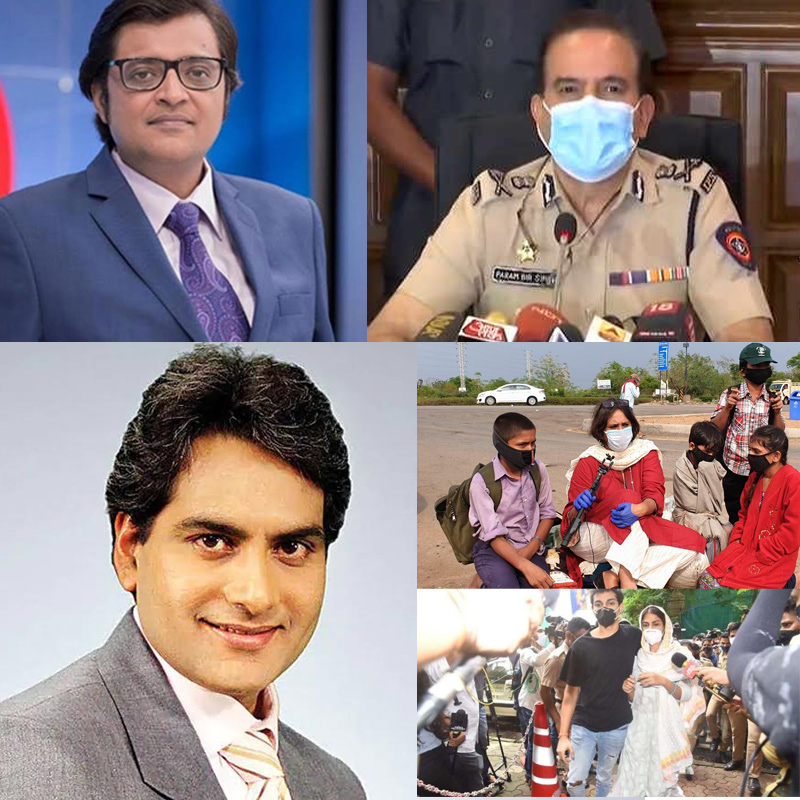
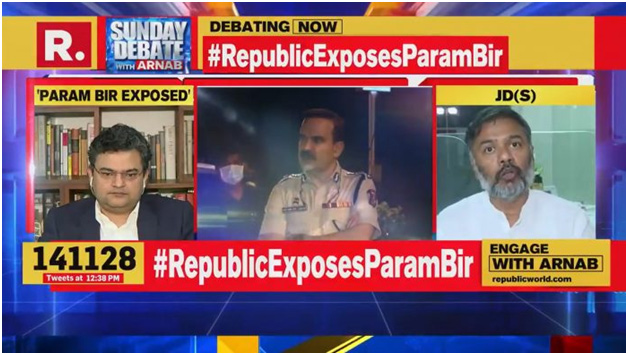
    News media became a breeding ground for controversies in 2020 with many CEOs getting embroiled in police cases. Sanket Media director PVS Sarma got arrested by the enforcement directorate in a PMLA case. Republic TV and its ringmaster Arnab Goswami found themselves in a soup for their coverage on sensational topics like Palghar lynching, Bandra migrant crisis, Sushant Singh Rajput’s demise and then got accused of rigging the ratings. Goswami was also arrested in an alleged, dismissed abetment to suicide case from 2018, which he maintains is a case of vendetta against him by the Mumbai police chief commissioner ParamBir Singh for his critical reporting against the way Rajput’s case was being handled.  The  Mumbai police also booked the channel’s senior management and editorial staff for airing the news about a “revolt” against commissioner Param Bir Singh by the police force. 

    An ABP Majha reporter got ensnared in the Bandra migrant crisis controversy when his name appeared in an FIR, citing that his false reportage played a role in gathering the crowd there. However, he was later released by the Supreme Court, which ruled that no direct connection could be established between his reporting and the people collecting at Bandra railway station.

    Additionally, four prominent associations from Bollywood along with 34 leading producers filed a lawsuit against Republic TV and Times Now for irresponsible reporting in the Rajput case and vilifying the film industry. The channels were directed by the Delhi high court to refrain from posting any derogatory content. They were reprimanded by the court thus: “Media can't run a parallel trial. You're a broadcaster… show news. There is less news and more opinion… things are being pre-judged.”


    Zee News editor-in-chief Sudhir Chaudhary was named in an FIR registered by Kerala police for presenting “a programme that is offending the Muslim religion.”

    “The highlight of the show on 11 March was the ‘jihad chart.’ In his show, he explained to his viewers what the chart detailed: ‘types of jihad,’” the report stated.


    Another news channel that faced severe flak and action from the courts was Sudarshan News and its show Bindas Bol that somehow managed to find ‘jihad’ in the UPSC. 

    The TRP turmoil

    While all the channels worked hard to gain audiences, allegations of TRP manipulationerupted when the Mumbai police commissioner held a press conference stating that channels were paying viewers to say they were watching them.  Amongst those who were accused were the promoters of Fakt Marathi, Box Cinema and Republic TV. The latter had been running a campaign against the Mumbai police commissioner and the Maharashtra government led by Uddhav Thackeray about the Rajput investigation. The channel stated that the empire was fighting back, that ed-in-chief Arnab Goswami had nothing to do with any TRP shenanigans. But the police force picked him forcibly from his home and kept him in custody for seven days. And they kept on arresting more and more Republic TV executives; the harder Arnab cried and yelled unfair on TV, the harder they came down upon him and his team. At the time of writing, 12 arrests had been made, withthe latest being that of  Republic TV CEO Vikas Khanchandani.

    In response to the scandal, the Broadcast Audience Research Council (BARC) decided to suspend the measurement of television viewership ratings of all news channels for 12 weeks.

    “Besides augmenting current protocols and benchmarking them with global standards, BARC is actively exploring several options to discourage unlawful inducement of its panel home viewers and further strengthening its code of conduct to address viewership malpractice," BARC CEO Sunil Lulla had said in a statement.

    Integrity questioned

    Probably the worst thing that could have happened to the industry this year was the scathing attacks it faced on its integrity as slew of fake news and “polarised opinions” battered the screens throughout the year. Several advertisers, like Parle and Bajaj, also said they would be forced to pull out monies from “toxic” news channels.

    It was in February this year when several leading news channels covering the Jamia violence had falsely claimed that the wallet held in a student’s hands was a stone. Additionally, the students who were sitting in the library covering their faces to protect themselves from tear-gas shelling were called “rioters.” 


    The same month, Wall Street Journal found itself mired in controversy as a police complaint was registered against it for spreading ‘fake news’ on the death of IB officer Ankit Sharma. The publication was said to be “defaming a particular religion” as they ran an interview of Sharma’s brother, who later said that he never made such a statement.


    Then there was the scrum of fake news and disinformation surrounding the pandemic. It started with running scores of unverified or false reports on the role of Tablighi Jamaat in spreading the virus. A number of officials and city police sources had to clarify many myths, chiefly being peddled by several media outlets.

    The Saharanpur police debunked the narrative of publications like Amar Ujala and Rajasthan Patrika that quarantined Tablighis in the city defecated in the open at the facility after being denied non-vegetarian food. 


    The Arunachal Pradesh police called out Zee News for spreading false information about Coronavirus cases. The channel had claimed that 11 Tablighi members tested positive in the state, when in fact there was just one reported case of the virus infection there.


    Noida police, too, cracked the whip on ANI News for misquoting and misreporting a quarantine exercise.


    These are just a handful of the many instances of false reporting against the Jamaat,as well as the false narratives spun by news organisations amid the pandemic. From ABP News inventing a non-existing ICMR report stating how the lockdown lowered the Covid infections below expectations, to News18 misreporting SAARC nations and other countries joining PM Modi’sinitiative of lighting candles as a show of support for frontline warriors, to News 24 sharing old clips of namaz at Jama Masjid to claim that mass gatherings were happening during the lockdown, to the travesty that Bandra railway station became during the migrant crisis, the news industry blaredunwarranted noise this year. 

    Most recently, several news channels including AajTak, ABP News, Times Now and Republic Bharat, engaged in high-pitch rhetoric for hours on the evening of 19 November, over a purported airstrike by Indian forces in Pakistan-occupied Kashmir. Eventually, PIB had to clear the air around this fake news in a tweet. 


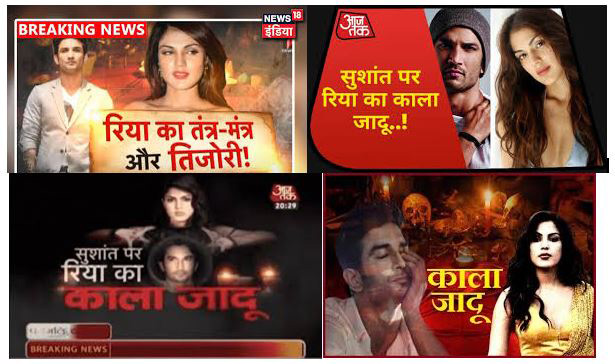
    Another black chapter that Indian media outlets wrote for themselves was when they started on their own will, a highly dramatised and unseemly media trial in the alleged Sushant Singh Rajput suicide case, which begged the question if there was any integrity or sensitivity left in the news industry

    From splashing on screens the disturbing images of the actor’s dead body,shoving microphones into his grieving father’s face, to running a bogus post mortem on live television, news channels hit new lows in their quest for higher TRPs. Given this sorry state of affairs, the Press Council of India had to advise media outlets to adhere to the norms of journalistic conduct in their reportage. 


    News outlets went hammer and tongs after Rajput’s paramour Rhea Chakraborty for her alleged, and till now unproven connection to Sushant Singh Rajput’s death. From sensational headlines to character shaming, Indian news channels stooped as low as they could to grab every bit of misinformation, they could show the world. Personal privacy went for a toss as they accessed and “investigated” primetime actors’ leaked text messages. Also, Times Now anchors were seen struggling with millennial lingo as they thought “Imma Bounce” meant a check getting bounced. 


    So, this was all the noise that newsrooms generatedin 2020. While the industry was lauded for its efforts to deal with the pandemic and keep the news cycle grinding on, it was also questioned for its reportage. No doubt, the TRP scandal has left an indelible blot on its image. However, some channels have told Indiantelevision.com that they are taking this year as a lesson and using the time of TRP suspension to work on their content. Whether or not this year leads to a serious course correction, only time will tell. 

  • Flipkart’s Dina D’Souza joins Trell

    Flipkart’s Dina D’Souza joins Trell

    KOLKATA: Dina D’Souza has joined Trell as vice president & monetisation head. Prior to joining this homegrown startup, she was associated with Flipkart.

    D’Souza worked as monetisation director at the e-commerce giant. She also had stints with brands like Microsoft, 9X Media, POKKT.

    With over 24 years’ exposure in the media, internet & ad-tech industry, she has generated revenues across print, web, mobile, ad tech, data and commerce products. D’Souza is passionate about the intersection of media, data and technology and the vast opportunities it throws up for consumers, marketers and publishers.

  • PubNation: Converging segregated data should be next big martech success

    PubNation: Converging segregated data should be next big martech success

    NEW DELHI: The confluence of marketing and technology has reshaped how sales and promotions are done by marketers. With the infiltration of digital technologies even in the remotest corners of the world, marketers now sit on loads of data and possess the means to target their customers better. However, most of them might be missing the bus by a few miles. 

    Dentsu Performance Group CEO Vivek Bhargava pointed out, “There is so much information we have in the marketing world that we are not using effectively to make advertising more targeted and result-oriented. The data remains segregated in so many disparate sources and we need to connect them.” 

    He was speaking at PubNation (print & digital) organised by Indiantelevision.com, in partnership with Quintype and Gamezop, in a panel discussing ‘Marketing & Technology: Two Sides of the Same Coin.’ Other speakers on the panel, moderated by Indiantelevision.com founder, CEO, and editor-in-chief Anil Wanvari, were Affle co-founder, chief revenue & operating officer Anuj Kumar, Xaxis country head – India Bharat Khatri, Gamezop co-founder Gaurav Agarwal, Publicis Groupe COO – Indigo Consulting Jose Leon, Schbang co-founder, chief design & technology officer Sohil Karia, and Foxymoron & Zoo Media Network co-founder Suveer Bajaj. 

    Bhargava cited the example of a food delivery platform to make his point. “Say one person gets registered on Swiggy and the platform doesn’t have any algorithm in place to identify what food one actually likes. It identifies it as a virgin. So, if in the past he has skipped 10 ads of various pizza-delivery platforms and had clicked on a keto diet programme, there is data in the marketing world available. There should be a merging of this data for both the platforms, so they can build on each other. This will create significant efficiencies on both ends of the system.” 

    He added that he sees a great opportunity for companies that can aggregate this data and find out niche tools to support this segment. 

    The panel agreed that there is a huge scope of growth in the martech world and digital advertising – if all brands start keeping consumers at the core of their marketing functions and not as mere numbers. 

    Kumar highlighted that it is very important for brands and marketers to understand how consumers are engaging with technology: what kind of devices they are using, what platforms they are present on, etc, to reach them better using the power of programmatic advertising. 

    Karia noted, “What I am seeing is that a lot many brands are now working with the D2C (direct to consumer) model and they have consumers at the centre of their experience. For B2B operations, websites are becoming their focus. While we speak about programmatic buying and driving traffic to the website, it is also essential to look at how we’re retaining these consumers and how we are serving them better during and after-sale. Personalising their experience on the site post-sale is how we can nudge them to make repeat purchases.” 

    He added that if the marketers have third-party data visible and the right tools to identify what industry is this person (customer) coming from and what are his preferences, they will be better able to serve him with a personalised experience on the platform. 

    In the same vein, Khatri highlighted, “If you look at young brands like Mamaearth, they worked excellently in the D2C category. They opened with a reverse approach that okay, I don’t want to create a big buzz or have millions of views on my YouTube videos, but they instead identified their target customers and pitched to them directly. They did not say that I want 10 million customers in that market but instead, they said that they want 50 per cent of their revenue from there and this is the return on my advertising spend I am expecting.” 

    He continued, “So, they got themselves present on each channel they found fit to reach their target audience. Be it through Amazon or Flipkart, or having influencers onboard whose single post or tweet would have converted into hundreds of buyers.” 

    There are more than 8,000 platforms today, offering various data and tech solutions, noted Leon, but what should remain any brand’s focus is to realise who the consumer is and what the consumer wants. “Is the platform able to differentiate the consumer behaviour on a real-time basis and hence you can go back to the advertiser and monetise it better? The way to this is to start (campaign) testing on digital platforms,” he advised.

    Another interesting insight was brought to the table by Bajaj, who said that marketers should also keep into consideration how technology can support and enable the content they are creating. 

    “Today, the right tools and technologies could even tell me what should I name my video, which ‘influencer’ should be starring in my video, what music I can use, what keywords are to be used, and how to package my video using predictive intelligence. That’s where open-source platforms guide us, they let us use their tools and marketing intelligence,” he stated.

    Agarwal seconded the thought and shared how better and engaging content can help acquire and retain new consumers. “With Gamezop, we work on a B2B2C model, that means we partner with publishers who want to create unique gamified experiences for their consumers and help them with that. So, we are in the process of creating better experiences where users might compete for discounts and offers.”

    The panel opined that publishers and advertisers both should be focusing on creating better experiences for consumers, and ethically use the data available to curate unique products and services.