Tag: fixed broadband

  • Global broadband subs hit 1.52 billion as fibre dominates

    Global broadband subs hit 1.52 billion as fibre dominates

    MUMBAI: Global broadband subscribers surged past 1.52 billion in the first quarter of 2025, marking a 1.21 per cent quarterly rise as South and East Asia drove expansion, according to Point Topic data. Yet the picture remains patchy, with 22 countries—up from 14 in the previous quarter—seeing subscriber numbers fall as consumers shift to mobile broadband or grapple with economic headwinds and market saturation.

    India topped the largest 20 fixed broadband markets with a blistering 4.7 per cent quarterly growth rate, whilst Britain stood out as an outlier, suffering a 0.3 per cent decline as fibre rollout failed to offset broader connection losses.

    Fibre-to-the-home and building connections now command 72.34 per cent of global fixed broadband subscriptions, cementing the technology’s dominance. Other fixed technologies saw their market shares shrink, bar satellite and fixed wireless access, which bucked the trend with spectacular annual growth of 47.4 per cent and 29.9 per cent respectively.

    The satellite boom was largely driven by Starlink breaching the 5 million customer mark, though growth has slowed due to capacity constraints and pricing pressures. Competition is set to intensify as Amazon’s Project Kuiper prepares for launch by year-end, with Britain expected among the first markets to go live following Ofcom approvals. Residential plans currently start at around £75 monthly.

    Fixed wireless access is reshaping rural connectivity, particularly in America and India, with aggressive investments from Reliance, Bharti, T-Mobile, Verizon and AT&T driving adoption.

    Industry consolidation is accelerating, with potential mega-deals including Charter’s merger with Cox in America and a possible carve-up of France’s SFR among Orange, Bouygues and Iliad. Meanwhile, sub-Saharan Africa represents untapped potential, attracting significant infrastructure investment targeting broadband expansion.

  • Indian mobile count goes up as does broadband: TRAI data Jan 2025

    Indian mobile count goes up as does broadband: TRAI data Jan 2025

    MUMBAI: India’s telecom sector added a modest 2.1 million net subscribers in January 2025, nudging the total count to 1.19 billion, according to the Telecom Regulatory Authority of India’s monthly data release. But it wasn’t all smooth signal—wireline connections tanked, dropping over 10 per cent as TRAI shifted 5G Fixed Wireless Access (FWA) from wired to wireless accounting.

    Mobile still rules the roost, with 1.16 billion users riding the wireless wave, including 5.7 million FWA users. Urban India continued to drive growth, adding over 5 million new mobile connections. Meanwhile, rural areas quietly chipped in with just under a million more.

    Broadband subscriptions inched up 0.04 per cent to 945.16 million—an uninspiring climb, considering Reliance Jio and Bharti Airtel hold over 80 per cent of the market. Wireline broadband, meanwhile, shrank slightly as users cut the cord in favour of FWA.
    MARKETSHAREDATAMobile Number Portability (MNP) remained red-hot with 14.14 million requests in Jan alone—pushing the all-time tally past 1.09 billion. Uttar Pradesh (East) and Maharashtra topped the charts for most switched loyalties.
    The market remains firmly in private hands, with Jio and Airtel leading across broadband and mobile. 

    Government-owned players like BSNL and MTNL continue to struggle, holding just 8 per cent of wireless subscribers and less than a quarter of the wireline market.

    Tele-density stood at 84.54 per cent—Delhi being the most connected with an eye-popping 274 per cent, while Bihar lagged behind at 56.6 per cent.

    And while fixed lines may be flatlining, India’s telecom story continues to be a mostly wireless wonder.

  • Fixed broadband demand peaks again as offices switch to work from home

    Fixed broadband demand peaks again as offices switch to work from home

    KOLKATA: India has exemplified its excellence in democratising internet through mobile data. But the growth of fixed broadband was at a much tepid rate until the country had to turn to work from home and school from home due to the raging Covid2019 pandemic. While more and more people needed high speed and stable internet and opted for home broadband connections last year, the demand for new connections is again on the rise as many parts of the country descend into lockdown.

    UCN Cable Network director Jagdish Paliya said that demand for connections has again picked up in last one month or so but not as much as last year. The company has witnessed a ten per cent growth in demand. In addition to that, data consumption of existing consumers has surged drastically, up 25 per cent, he added.

    Compared to the last quarter, broadband customer addition has gone up for GTPL Hathway too, one of the leading players in the segment. GTPL Hathway cable TV head & chief strategy officer Piyush Pankaj said the requirement for new connections has increased somewhere around 15-20 per cent month-on-month. However, this trend has been on an upward trajectory since March 2020 itself. As a large part of the workforce switches to WFH mode for the next few months, the incremental demand will remain for the next quarter at least, he noted.

    Kerala based Asianet is witnessing the same trend with 25 per cent surge in demand, Asianet Satellite Communications vice president & technology head Salil Thomas shared. “We saw a surge in demand when lockdown started last year because lot of employees started working from home. There was a surge in demand during first quarter of lockdown. That trend was evident throughout the year but when people started moving back to their respective workplaces at the end of the year, there was slow decrease in demand. Now, it has picked up again,” he detailed.

    Siti Networks CEO Anil Malhotra had a different take. According to him, the trend is not similar this year because the impact of the pandemic is much severe. Even the workers who do installations are at risk right now, people both in-office and on the field are getting infected. Consumers are also affected as the virus is permeating almost every household.

    Everybody is focused more on providing seamless service to existing customers rather than improving numbers, Malhotra stated. However, if the situation again culminates into a prolonged work from home culture, and more people start staying at home, there will be surge in demand in the long run, he added.

    Considerably, even the players who are seeing a surge in demand are facing on-ground issues. With a Covid positive case in almost every household, it is becoming increasingly difficult for operators to install new connections in these homes. Societies have barred entry to resist rapid spread of the deadly virus. But the situation is not dire like last year, as the service providers have learnt how to tackle the issues. On the backend of the services, broadband players are facing fewer issues with advance planning. In terms of inventories, these firms have stocked enough equipment – although a longer lockdown may create difficulties again.

    According to the Telecom Regulatory Authority of India’s report, there were 22.67 million wired broadband subscribers in the country as of 31 January 2021. The top five wired Broadband service providers were BSNL (7.69 million), Bharti Airtel (2. 90 million), Reliance Jio Infocomm Ltd (2.25 million), Atria Convergence Technologies ( 1.80 million) and Hathway Cable & Datacom ( 1. 06 million).

    “Penetration of home broadband in India is very low compared to advanced countries. We have a long way to go to reach ideal penetration,” Win Broadband MD & CEO K V Seshasayee noted. “It is cheaper to consume data through fibre than wireless. Customers can get a much better deal at a lower price. Fibre-based wired broadband is beneficial for small businesses as well.  Couple with these factors, the work from home culture will accelerate the demand for home broadband in India. Moreover, the bandwidth requirement will also go up with more users in rural areas.”

  • What is hindering the fixed broadband growth in India?

    What is hindering the fixed broadband growth in India?

    KOLKATA: The last few years have seen a major explosion in internet usage, especially post Covid2019 crisis with the boom of digital payments, e-commerce, online video consumption, e-learning. Despite the huge scope, fixed broadband sector has seen a tepid growth in India, unlike mobile broadband. Issues like poor optical fibre infrastructure, high capex cost for ground networks, hardship in obtaining Right to Way (RoW) permission are deterring the expansion of the sector, as major players have commented in response to the Telecom Regulatory Authority of India’s (TRAI) consultation paper.

    GTPL Hathway pointed out three main reasons for the poor subscription of fixed broadband service – lack of availability, affordability, accessibility. The MSO has pointed out that more and more optical fibre infrastructure in the access network needs to be rolled out across the country. Along with the high capex cost involved in rolling out of last-mile access network, obtaining NoC and RoW permissions at several levels of authority for laying cable also prevents the development, as per the MSO.

     “Fixed-line services are capex intensive as the provider needs to invest a lot of funds in providing the services in the ground networking and also at the subscriber end so availability is very limited so is the subscription,” Siti Networks said.

    However, one of the largest Internet Service Providers in India, Atria Convergence Technologies (ACT) has denied that the subscription rate of fixed broadband is low. But the reach of the optical fibre cable network needs to be greatly improved upon, ACT said.

    The telecom service provider Bharti Airtel echoed the same sentiment. Lack of single window clearance and the complicated and time-consuming process for obtaining RoW permissions coupled with exorbitant fees result in unviable commercial fibre deployments, it said.

    “Another hindrance to creating a viable fixed-line network is the cost TSPs incur in installing and maintaining the infrastructure of a fixed network. Also, the additional burden of license fees of 8 per cent on AGR further reduces the commercial viability of such networks,” Airtel added. Moreover, several government and private projects for road widening, laying of electrical cables, maintenance of water and sewer pipelines result in damage to the laid fibre, it mentioned.

    GTPL Hathway mentioned that less than 15 per cent of wireline broadband connections are working on FTTH technology. Commenting about the slower growth of fibre-to-the-home (FTTH) in the country, Siti Networks said the absence of local supply chain is a major issue. The ISP added that the government should take the initiative in developing a robust supply chain in the country in order to facilitate local production to ensure sufficient inventory.

    “The wired broadband penetration is capital intensive and it’s difficult to lure financial investors to this industry due to slow reachability, fees, and taxes applicable on the sector,” ACT added. The ISP also noted that ease in the policy framework for promoting FTTH connectivity will result in-service providers providing an affordable and better quality of services which in turn, will enable the public at large to subscribe to these services.

    While the local cable operators in the country could play significant role in fixed broadband growth, there are several factors like non-lucrative business model, the burden of AGR issues, high cost for obtaining ISP license, requirement of high capex for upgrading to new technology that is holding them back from providing broadband services. 

  • Fixed broadband subscribers cross 1bn mark globally

    Fixed broadband subscribers cross 1bn mark globally

    MUMBAI: With the changes in lifestyle and technology, internet has become inevitable for everyday life across the world. Now, there are more than one billion fixed broadband connections as per new data from the Broadband Forum. The statistics revealed in Broadband World Forum 2018, has been confirmed by market analysis firm Point Topic.

    Point Topic’s World Broadband Statistics Q2 2018 report has shown the number of fixed broadband subscribers grew by 2.5 per cent from Q1 2018, the highest surge in the last six quarters. “This is a truly outstanding achievement, led by the communications industry, that has resulted in a major leap forward for humankind,” said Broadband Forum CEO Robin Mersh.

    He further added that a billion installations leave broadband service providers an enormous opportunity for building new value on top of this foundation with new cloud-based services, enhanced efficiencies.

    More interestingly, majority of new subscribers are from less developed regions and countries. In the developed markets, improved offerings and services supported by gigabit-capable broadband are driving the growth in ARPU.

    Among this one billion subscriber base, 80 per cent of global connections are fibre-based – including Fibre-to-the-Home/Business/Cabinet connections – or cable-based. Asymmetric digital subscriber line (ADSL) is witnessing gradual fall having dropped eight per cent in the last year.

    “In more saturated broadband markets, operators are focusing on upgrades to support gigabit broadband as they prepare to meet the requirements of new technologies such as IoT and the needs of more demanding consumers,” Point Topic CEO Oliver Johnson said.

  • India lags in fixed broadband, but ahead in mobile: ESCAP

    India lags in fixed broadband, but ahead in mobile: ESCAP

    NEW DELHI: India had just over 100 million fixed broadband subscriptions in 2015 as compared to Iran and Japan which had more than 250 million.

    There were only 1.3 fixed broadband subscribers per 100 inhabitants in the country as against South Korea which had 40.2 per 100 inhabitants and China and Hong Kong which had 31.9. India stood at the 40th place, even below its immediate neighbours Bangladesh and Sri Lanka.

    However, a map of fixed broadband subscriptions per 100 inhabitants in Asia and the Pacific in 2015 shows India as the most developed country in this regard.

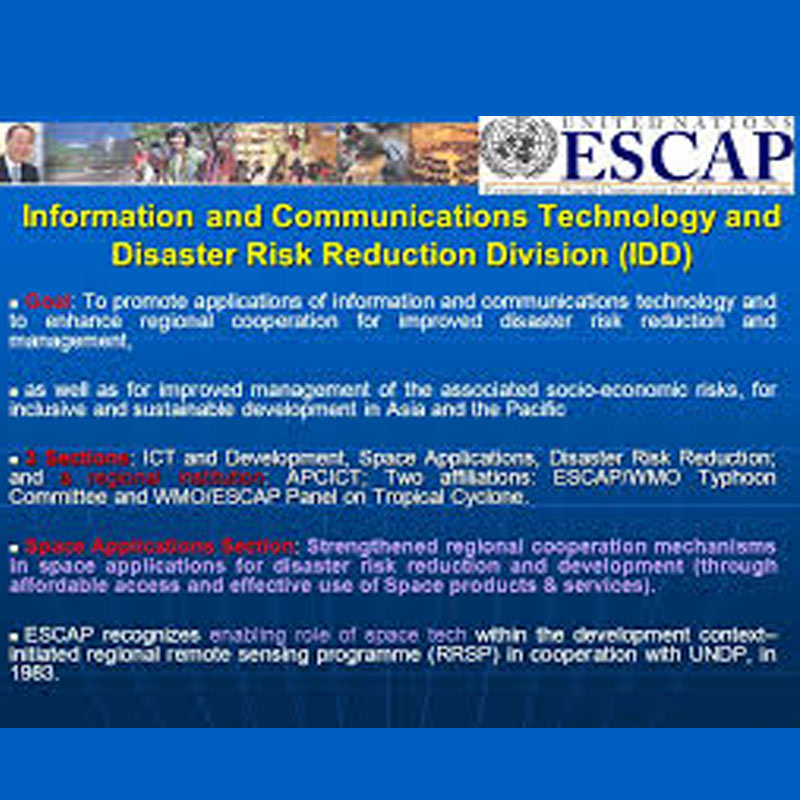
    These facts were revealed by the State of ICT in Asia and The Pacific 2016 Report by the Information and Communications Technology and Disaster Risk Reduction Division of the United Nations Economic and Social Commission for Asia and the Pacific (ESCAP).

    South and South-West Asia, Sri Lanka, Turkey, India and the Islamic Republic of Iran progressed well in both online services and telecommunications infrastructure development between 2008 and 2014. Other countries such as Bangladesh and Maldives performed well predominantly in the development of the telecommunications infrastructure.

    India has risen from just under 4 to around 5.5 out of seven in online services index among South Asian countries between 2008 and 2014.

    India was also among the top active mobile broadband subscriptions per 100 inhabitants in the Asia-Pacific region in 2015 with 120 million subscribers in 2015, the study showed.
    Disaster Risk Reduction Division.

    In 2015, China announced the One Belt One Road (OBOR) initiative, based on six economic corridors corresponding to the Silk Road. These economic corridors (China-Mongolia-Russia Corridor; New Eurasia Land Bridge; China-Central Asia-West Asia; China-Pakistan; Bangladesh-China-India-Myanmar; and China-Indochina Economic Corridor) aim to promote connectivity of these economies with China through infrastructure, trade and investment based on the original Silk Road’s pathway.

    The Global NGO Online Technology Report found that there are diverse regional differences in how NGOs worldwide utilize online technology. Within Asia Pacific, the report notes that the NGOs’ use of online technology varies greatly from subregion to subregion. For instance, India has hundreds of thousands of NGOs likely to come online in the next five years, while internet access throughout South-East Asia is growing as smartphone sales soar across the country. In Australia and Oceania, Europe and North America, NGOs’ use of web and e-mail communications, online fundraising tools, and social media is high, but NGOs in Asia, Africa and Latin America lag behind.

    Lack of a robust internet infrastructure is suggested to be a potential cause for this NGO divide. The report remarks that social, economic and political factors have either hastened or hindered the development of the infrastructure, and thereby also the uptake by the NGO sector.

    In a discussion on net neutrality, the paper says “Free Basics, formerly known as Internet.org, has sparked discussions in India and is one such case of net neutrality. This initiative pursues telecom companies in emerging markets, such as India — the world’s second largest market — to provide their customers free access to Facebook and entailing websites willing to play by its rule.”

    TechCrunch notes that these Facebook rules make it difficult to build competing social network or messaging applications. In February 2016, the Telecom Regulatory Authority of India (Trai) announced the prohibition of internet services such as Free Basics, claiming that they offer discriminatory tariffs for data services on the basis of content. While this may be a victory for neutrality supporters, others might be disappointed with the outcome as the goal of the Facebook initiative is to connect people who may otherwise not have internet access. The ruling will be in place for two years but may be open for review — it is still an open question whether the project will succeed in the long term.”

    The competition for spectrum has significant impact on the cost and affordability associated with broadband networks and access. As observed in the cases of the recent fourth generation (4G) spectrum auctions in India and Thailand, the quests for bandwidth and frequency would intensify along with the demand for mobile access and services, and subsequent need for more extensive broadband infrastructure.

    The report says Asia-Pacific countries are expanding their investments in the ICT infrastructure. For instance, in July 2015, the Chinese State Council announced the plan to develop underground telecommunication networks connecting 10 cities, which will be funded by the USD 160 billion bond programme designed for infrastructure projects.

    A mobile operator in India announced its plan to invest USD 9 billion for their mobile broadband network expansion in the next three years.

    Maldives will soon have USD 25 million nationwide fibre optic submarine networks of 1,200 kilometres to provide high-bandwidth services throughout the island nation. A mobile operator in Brunei announced plan for a nationwide Wi-Fi network rollout through more than 60 hotspots.

    The report found that connectivity still constrains not only ICT development but also various socioeconomic development opportunities. For instance, an UNCTAD report found that despite the unparalleled promise of the digital economy, the main barrier to B2C transactions in Asia and the Pacific appear to be the low internet penetration, the relatively poor postal reliability, and the low number of secure servers, which are essential for online shopping sites.

    China has demonstrated an exponential increase in fixed and mobile broadband, while slowest growths have been detected among LDCs, LLDCs and SIDs. The persistent challenge is that one-third of ESCAP member-countries have made only negligible progress over the last 15 years. In these countries, broadband access is still largely unavailable and unaffordable, while the gap as compared to the fast-growing economies is widening. Some sub-regions, such as Central Asia, seem to have made more holistic progress. The report also conducted descriptive statistical analysis using standard deviation on fixed broadband subscriptions per 100 inhabitants so as to statistically understand the digital divide.

    The results showed that Europe is the only region that has demonstrated a reduction in the broadband digital divide, while in Asia and the Pacific, it
    is in fact widening.

    Despite the increasing spotlight on newer technologies such as the IoT that aims to connect millions of devices and machines worldwide, the region still suffers from the lack of ICT connectivity, and mobile devices are mainly used for communication and entertainment.

    The report found that some countries have focused on broadband access expansion over online content and service development, but, in the long run, both infrastructure and content should be developed in tandem. The telecommunications investment seems to co-relate with fixed broadband subscriptions more strongly than with mobile broadband, indicating the investment-intensive nature of the fixed broadband infrastructure, which is a prerequisite for e-commerce.

    The report also found that weak regulatory framework might be associated with slow broadband growth.

    Regional broadband initiatives, such as the Asia-Pacific Information Superhighway, have become an essential and strategic development intervention that will shape the future of the region, the report concludes.

  • India lags in fixed broadband, but ahead in mobile: ESCAP

    India lags in fixed broadband, but ahead in mobile: ESCAP

    NEW DELHI: India had just over 100 million fixed broadband subscriptions in 2015 as compared to Iran and Japan which had more than 250 million.

    There were only 1.3 fixed broadband subscribers per 100 inhabitants in the country as against South Korea which had 40.2 per 100 inhabitants and China and Hong Kong which had 31.9. India stood at the 40th place, even below its immediate neighbours Bangladesh and Sri Lanka.

    However, a map of fixed broadband subscriptions per 100 inhabitants in Asia and the Pacific in 2015 shows India as the most developed country in this regard.

    These facts were revealed by the State of ICT in Asia and The Pacific 2016 Report by the Information and Communications Technology and Disaster Risk Reduction Division of the United Nations Economic and Social Commission for Asia and the Pacific (ESCAP).

    South and South-West Asia, Sri Lanka, Turkey, India and the Islamic Republic of Iran progressed well in both online services and telecommunications infrastructure development between 2008 and 2014. Other countries such as Bangladesh and Maldives performed well predominantly in the development of the telecommunications infrastructure.

    India has risen from just under 4 to around 5.5 out of seven in online services index among South Asian countries between 2008 and 2014.

    India was also among the top active mobile broadband subscriptions per 100 inhabitants in the Asia-Pacific region in 2015 with 120 million subscribers in 2015, the study showed.
    Disaster Risk Reduction Division.

    In 2015, China announced the One Belt One Road (OBOR) initiative, based on six economic corridors corresponding to the Silk Road. These economic corridors (China-Mongolia-Russia Corridor; New Eurasia Land Bridge; China-Central Asia-West Asia; China-Pakistan; Bangladesh-China-India-Myanmar; and China-Indochina Economic Corridor) aim to promote connectivity of these economies with China through infrastructure, trade and investment based on the original Silk Road’s pathway.

    The Global NGO Online Technology Report found that there are diverse regional differences in how NGOs worldwide utilize online technology. Within Asia Pacific, the report notes that the NGOs’ use of online technology varies greatly from subregion to subregion. For instance, India has hundreds of thousands of NGOs likely to come online in the next five years, while internet access throughout South-East Asia is growing as smartphone sales soar across the country. In Australia and Oceania, Europe and North America, NGOs’ use of web and e-mail communications, online fundraising tools, and social media is high, but NGOs in Asia, Africa and Latin America lag behind.

    Lack of a robust internet infrastructure is suggested to be a potential cause for this NGO divide. The report remarks that social, economic and political factors have either hastened or hindered the development of the infrastructure, and thereby also the uptake by the NGO sector.

    In a discussion on net neutrality, the paper says “Free Basics, formerly known as Internet.org, has sparked discussions in India and is one such case of net neutrality. This initiative pursues telecom companies in emerging markets, such as India — the world’s second largest market — to provide their customers free access to Facebook and entailing websites willing to play by its rule.”

    TechCrunch notes that these Facebook rules make it difficult to build competing social network or messaging applications. In February 2016, the Telecom Regulatory Authority of India (Trai) announced the prohibition of internet services such as Free Basics, claiming that they offer discriminatory tariffs for data services on the basis of content. While this may be a victory for neutrality supporters, others might be disappointed with the outcome as the goal of the Facebook initiative is to connect people who may otherwise not have internet access. The ruling will be in place for two years but may be open for review — it is still an open question whether the project will succeed in the long term.”

    The competition for spectrum has significant impact on the cost and affordability associated with broadband networks and access. As observed in the cases of the recent fourth generation (4G) spectrum auctions in India and Thailand, the quests for bandwidth and frequency would intensify along with the demand for mobile access and services, and subsequent need for more extensive broadband infrastructure.

    The report says Asia-Pacific countries are expanding their investments in the ICT infrastructure. For instance, in July 2015, the Chinese State Council announced the plan to develop underground telecommunication networks connecting 10 cities, which will be funded by the USD 160 billion bond programme designed for infrastructure projects.

    A mobile operator in India announced its plan to invest USD 9 billion for their mobile broadband network expansion in the next three years.

    Maldives will soon have USD 25 million nationwide fibre optic submarine networks of 1,200 kilometres to provide high-bandwidth services throughout the island nation. A mobile operator in Brunei announced plan for a nationwide Wi-Fi network rollout through more than 60 hotspots.

    The report found that connectivity still constrains not only ICT development but also various socioeconomic development opportunities. For instance, an UNCTAD report found that despite the unparalleled promise of the digital economy, the main barrier to B2C transactions in Asia and the Pacific appear to be the low internet penetration, the relatively poor postal reliability, and the low number of secure servers, which are essential for online shopping sites.

    China has demonstrated an exponential increase in fixed and mobile broadband, while slowest growths have been detected among LDCs, LLDCs and SIDs. The persistent challenge is that one-third of ESCAP member-countries have made only negligible progress over the last 15 years. In these countries, broadband access is still largely unavailable and unaffordable, while the gap as compared to the fast-growing economies is widening. Some sub-regions, such as Central Asia, seem to have made more holistic progress. The report also conducted descriptive statistical analysis using standard deviation on fixed broadband subscriptions per 100 inhabitants so as to statistically understand the digital divide.

    The results showed that Europe is the only region that has demonstrated a reduction in the broadband digital divide, while in Asia and the Pacific, it
    is in fact widening.

    Despite the increasing spotlight on newer technologies such as the IoT that aims to connect millions of devices and machines worldwide, the region still suffers from the lack of ICT connectivity, and mobile devices are mainly used for communication and entertainment.

    The report found that some countries have focused on broadband access expansion over online content and service development, but, in the long run, both infrastructure and content should be developed in tandem. The telecommunications investment seems to co-relate with fixed broadband subscriptions more strongly than with mobile broadband, indicating the investment-intensive nature of the fixed broadband infrastructure, which is a prerequisite for e-commerce.

    The report also found that weak regulatory framework might be associated with slow broadband growth.

    Regional broadband initiatives, such as the Asia-Pacific Information Superhighway, have become an essential and strategic development intervention that will shape the future of the region, the report concludes.