Tag: Firstpost

  • FIRSTPOST nails it yet again with a contextual video on Mother’s day, created with HDFC Bank

    FIRSTPOST nails it yet again with a contextual video on Mother’s day, created with HDFC Bank

    MUMBAI: On Mother’s day, HDFC Bank and Firstpost collaborated to release a video that has since then clocked millions of views on our social media channels and has recorded high engagement numbers. The video captured the nuance of how millennials celebrate the occasion with their mothers on a single day, and tend to forget them through the rest of the year. The relatable content combined with the heartfelt message broke through the clutter, while promoting HDFC Bank’s PayZapp and banking app.

    The video was conceptualized tailored to fit the requirements for HDFC Bank. Keeping it simple, the video had in its essence a heartfelt message that was bound to tug at the heartstrings of the viewers. The content highlighted that with offerings such as HDFC Bank’s digital wallet and banking app with intuitive features, it’s never too late for parents to adopt new technology. The youth can do a role reversal and educate their parents about the changing digital eco-system. The information will empower the elders and seniors in the family and allow them to enjoy their dreams independently right at their fingertips. 

    The video has been widely accepted/appreciated garnering over 3 million views across social media platforms. In addition to that, the video recorded a reach of over 10 million, with more than 3 lakh engagement across platforms. 

    Speaking about the collaboration, HDFC Bank – CMO, Ravi Santhanam said, “We are extremely delighted with the way the utility of HDFC Bank’s PayZapp and banking app has been seamlessly integrated into the story-line. Our engagement with Firstpost to create compelling stories has been very good.”

    Commenting on the success of the video, Azim Lalani, Business Head, Firstpost said, “Firstpost has firmly set its sights on delivering high-quality content and value to its audience through innovative formats.  Firstpost Studios along with bringing compelling content to the fore, magnifies the synergy between the brand/client onboard and the audience to highlight the brand message.”

    Firstpost Studios constantly strives to innovate and has plans to launch multiple small and large scale content initiatives in the coming months. With Firstpost’s wide reach, compelling content and a robust distribution strategy it’s not wrong to say they have nailed it yet again.

  • Firstpost celebrates phenomenal success of 9 months season 2

    Firstpost celebrates phenomenal success of 9 months season 2

    MUMBAI: Close at the heels of its 7-year celebration, Firstpost achieves another milestone that of its popular web-series – 9 Months Season 2, India’s first and only comprehensive show on pregnancy and childcare recording a remarkable 11.8 million views across platforms. Adding to that, the show has gained traction as the go-to guide for new parents amassed a reach of 20 million and 43,000 engagements in form of reactions, comments and shares on the on Facebook. The show has been highly appreciated by the audience for delivering high-quality and valuable content for new parents.

    As India’s largest and premier platform for digital news, analysis and opinions, Firstpost has successfully delivered clutter-breaking, innovative content. With the success of 9 Months Season 1 that captured the nine months of pregnancy, Season 2 dealt with the 0 to 1 year of a baby’s life. In collaboration with Tickled Media’s theindusparent.com, the show witnessed the presence of some of the most reputed experts, opinion makers and celebrities who came onboard to share their personal experiences.

    Commenting on the success of season 2, Firstpost, Business Head, Azim Lalani said:9 Months has once again stipulated that Firstpost is truly delivering innovative content in captivating formats. We remain committed to delivering excellent content to our audiences. We’re on the right path and are coming up with many more intellectual properties which have never been done before. We are excited with this new revenue stream which has enhanced our brand value and business manifold. The show was distributed on 5 different platforms and that goes to show we are considered a valuable partner. This is a feather in our caps and I thank all the brands who have partnered with us.

    Anchored by Meghna Pant -Presented by Baby Dove, powered by Huggies, in association with Kansai Nerolac Paints Limited and Eureka Forbes, the web-series covered the entire gamut right from lactation, check-lists for bringing the baby home, skin-care essentials, sleeping patterns, dietary needs, impact of colors, mental and behavioural development as well as a mother’s health-care post-partum and a host of other subjects.

  • Firstpost turns 7: a look back at the milestones

    Firstpost turns 7: a look back at the milestones

    MUMBAI: Firstpost.com India’s leading digital news platform known for its path breaking content and remarkable journalism, celebrates 7 years in the industry. The platform was launched in 2011 by Network18 as an exclusive online news and views website and app accessible across platforms and devices.  In the short duration of its existence, the platform has witnessed record growth numbers and has been bestowed with some of the most prestigious titles and accolades in the industry. The platform that stands for original, clutter-breaking content and innovative formats, has successfully kept its audiences engaged year-after-year. 

    Outstanding Growth 

    Over the years, Firstpost has recorded staggering development with 65% month-on-month growth of unique visitors and a remarkable average of 6.5 minutes spent for every visit on desktop, as per comScore MMX report. Comprehensively, the platform has witnessed an average of 150% month-on month growth in page views on desktop. On mobile, Firstpost has recorded a similar growth trajectory with monthly unique visitors and page views growing at 175% and 280%, respectively.

    Innovation 

    The platform is credited for pioneered a four-hour live Digicast – an amalgamation of broadcast television, web streaming and Facebook Live – during the announcement of the May 2016 election results. Firstpost also became the only Indian publication to be recognized by Facebook as being featured in its Global Case study as one of the most innovative users of FB Live feature, nationally as well as internally. Firstpost has become the most preferred destination for news or any major event, such as the Olympics, elections results and others.

    Foraying further into the vast and fast growing digital news content space in Indian languages, the platform announced the launch of Firstpost Hindi in 2016, offering consumers news in Hindi language. Catering to various sections the platform has rolled out Showsha.com dedicated towards Bollywood and entertainment news for cinema fans. Firstpost also has a dedicated platform for cricket-lovers – Firstcricket, as well as First-culture, that brings the country’s various facets to the fore, giving wide gamut of offerings to its audience at a single digital destination.

    Digital IPs

    Expanding its footprints into creating original content IPs, the platform has launched some amazing digital shows such as 9 Months, Tech2 Talks, Caraoke, WhatTheApp amongst others. A path-breaking show on pregnancy and parenting, 9 Months, garnered over 13 Million views across platforms. Both season 1 and 2 of the show have received tremendous response from its viewers. Firstpost has also recently launched a new chat show – Social Media Star, featuring stars like Sonam Kapoor, Rajkumar Rao and Bhuvan Bham among others to give the audience an understanding of what goes on behind-the-scenes for a social media star. Other captivating IPs in the pipeline include – ‘Better Halves’ and ‘9 Months Season 3.’

    Recognition and Accolades

    Firstpost’s outstanding news coverage has been widely recognized. The platform has bagged Red Ink Awards for its extensive and in-depth coverage of Marathawada Drought Coverage. It has also received the ‘Best Series of Article – Digital’ honour at Content Marketing Awards 2017 for its excellent coverage of the Rohingya refugees issue. Priyanka Sehgal, VP Content & Marketing at Firstpost bagged the title of Smartest Digital Marketing Leader In India at the World Digital Marketing Awards by CMO Asia. At India’s Buzziest Brand Awards, Firstpost bagged the award under the ‘Websites’ category. Firstpost has also won Citi Journalistic Excellence Award for their reporting on demonetisation, adding another illustrious feather to the hat.

    The unprecedented growth stands as testimony to the platform’s efforts in bringing news in a variety of formats to deliver a comprehensive experience to its audience.

    Speaking about the platforms 7th anniversary, Azim Lalani, Firstpost Business Head said, “The digital universe is expanding and just like any other sector the digital space too is growing to become highly competitive. So, to have been around for 7 years and to have recorded some great growth numbers certainly speaks volumes about the effort put in and the force that Firstpost is today. We look forward to further strengthen our presence and keep our audiences thoroughly engaged year after year.”

    Commenting on the occasion, BV Rao, Firstpost Editor said, “It’s only marriages that wait for the seen-year itch. At Firstpost we itch constantly to break new ground every day. Beginning with the very concept of a breaking views paper to introducing marathon real-time video digicast of elections and budgets, to launching new products such as Firstcricket, Showsha, FirstCulture and Firstpost Hindi the itch to innovate to serve our readers has been a constant companion. And will continue to for several decades more.”

    On completion of its 7 glorious years, Firstpost moves ahead with the aim to further strengthen its position in the Indian news genre over the coming years and deliver more quality IPs, compelling social media campaigns and bring newer developments in regional languages, in addition to amplifying the comprehensive user-experience on the platform.

    Please let me know incase you’d require further information on the same.

  • Firstpost’s 9 months season 2 serves as the go-to guide for new parents

    Firstpost’s 9 months season 2 serves as the go-to guide for new parents

    MUMBAI: Firstpost’s first ever web-series and India’s first and only comprehensive show on pregnancy and parenting – 9 Months, in its 2nd Season continues to serve as a go-to digital guide for new parents navigating their journey in their new roles, with their babies. The Season 2 of the digital series arrived with host Meghna Pant and experts in tow, and is being widely appreciated by the audience. In the first three episodes, the viewers have been introduced to leading pediatricians, lactations consultants, dieticians, and psychologists amongst other experts.

    The show has welcomed experts who have shared in-depth information and knowledge, do’s and don’ts, essential advice and more on the show. Some guests include Dr. Barkha Chawla (Paediatrician), Sonali Shivlani (Lactation Consultant), Dr. Vinit Samdani (Paediatrician), Dr. Nihar Parekh (Pediatrician), Dr. Nirmala Rao (Child Psychologist) and Bina Chheda (Child Dietician). The experts covered a number of topics right from a baby’s moisturizing needs, maintenance of oral health, weaning, baby’s feeding needs, breast-feeding, hygiene, vaccinations and impact of colour psychology on the baby, amidst a host of other invaluable details. The episodes are strategically divided to cover bringing the baby’s transition to coming home, to the baby’s journey in the 3rd – 6th month period, followed by 6 month onwards until the baby turns a year old. The approach has been taken with the intention to make the knowledge easy to consume for the audience.

    The upcoming episodes of 9 Months Season 2 will put a mother’s health front and centre; with experts gracing the show to guide new mothers with weight management, tackling emotions and new challenges and reclaiming their life, post-pregnancy. The series will then invite upon single parents who faced the odds and learnt excellent lessons to successfully serve in their new roles. The web-show will invite upon popular actor Tusshar Kapoor to share his journey as a single father who used surrogacy to give birth to a child, as well as Aditya Tiwari, India’s youngest single man to adopt a child, and Firstpost’s  VP Content & Strategy, Priyanka Sehgal, who narrates her inspiring tale as a single mother.

    In an episode on the show, actor Tusshar Kapoor will be seen in a candid conversation where he opens up about the insecurities and challenges he faced as a single father. He said, “I was expecting a lot of different reactions and expected people to judge me when I took the decision of having a child.” He said, “I wanted to be a father and I wanted to start a family, so I did it. People then messaged me that I am inspiring them.”

    Priyanka Sehgal spoke about the challenges of being a single mother when you have separated from your partner. She said,  “When you separate or uncouple it is extremely important to resolve your own emotions first,  many single parents miss this crucial step as one is dealing with not just broken dreams but also the pain a child undergoes. One needs to accept that the relationship hasn’t worked out and let not that negativity impact your parenting.”

    Viewers can dabble into such effective pieces of wisdom and a whole lot more, in the upcoming episodes of 9 Months Season 2.

  • Firstpost announces lauch of its web-series ‘9 months’ – season2

    Firstpost announces lauch of its web-series ‘9 months’ – season2

    MUMBAI: Firstpost, India’s largest and premier platform for digital news analysis and opinions, has been the front-runner in developing and curating innovative content for its audience. It is all set to premiere Nine Months on March 14, 2018. Azim Lalani, Business Head, Firstpost said –“Following the success of Season 1 which was a finalist in the Healthcare & Pharmaceutical Sector at the Indian Marketing awards and has been acknowledged as a path breaking show that clocked over 13 million views, we are now launching Season 2.

    In collaboration with Tickled Media’s theindusparent.com, South East Asia’s largest parenting website, presented by Baby Dove, co presented by Huggies, in association with Eureka Forbes & Nerolac, 9 Months will air on  www.firstpost.com and on www.theindusparent.com.

    Commenting on the launch, Network 18, VP, Content and Strategy, Priyanka Sehgal said, This Season has 0-1 years of the baby and parenting for single, adoptive parents. It is very real in addressing key issues related to mental health after childbirth/ separation or divorce. 

    9 Months is a comprehensive guide to parenting and will cover 0-1 years, from breastfeeding to care for the new born. The show will also see guest appearances of actors like Tushar Kapoor, Amrita Raichand along with Aditya Tiwari sharing their personal experiences, prominent doctors- pediatricians, psychologists and dieticians answering everything a parent is curious to know. 

    Please let me know incase you’d require further information on the same.

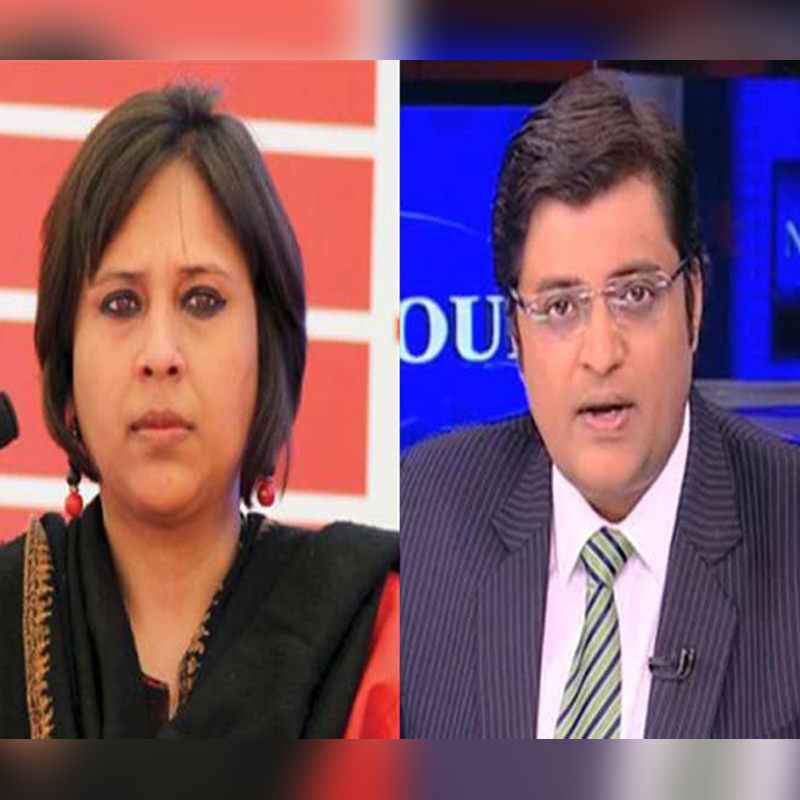
  • Arnab-Barkha face-off amplifies disturbing trends

    Arnab-Barkha face-off amplifies disturbing trends

    When a section of the Indian media tries to make a case for prosecution of industry colleagues, it’s a disturbing trend. It’s more worrisome when the case being made out is based on the assertion either-you-are-with-us-or-against-us, implying that plurality of opinion (no matter how unpalatable the `other’ view is) is not welcome and that everyone needs to subscribe to just one narrative.

    Is it a case of bloated egos?

    Could be.

    Is it a case of a section of powerful media succumbing to political pressure?

    Very much possible.

    Is it a case of corporate vested interests at work?

    Why not? As most Indian media organisations, especially the big ones, are owned and run by corporations who treat media just as a business.

    Or, is it an example that in a big democracy like India a pillar of democratic right — freedom of expression — now is being readied for sacrifice at the altar of short-term gains?

    The Arnab Goswami-Barkha Dutt (AG-BD) spat that’s keeping the nation interested presently and consuming lot of online space probably is the result of all the reasons listed in the previous para – and much more.

    While the AG-BD scrap, which has spilled over everywhere, has managed to corner eyeballs (wonder whether BARC would have data on this saga), another media related development seems to have largely gone unnoticed.

    According to the Mukesh Ambani-controlled online publication Firstpost, controversial teleevangelist Zakir Naik, accused of allegedly spreading hate through his sermons on his TV channel Peace TV, has slapped a Rs 500 crore defamation suit on Times NOW and AG.

    Why are we mentioning this defamation suit by Naik at all here? Simply because such cases will chip away at the foundation of Indian democracy and Indian media’s role as a watchdog or the Fourth Estate. This will also encourage vested interests in the country to take on more often a divided news media.

    Coming back to the face-off between AG and BD, it echoes many things, but more sharply two facts: growing intolerance in the country towards plurality of thought and opinion and increasing commercialisation of a news media where fact and fiction mix freely without alerting the consumer.

    Old school journalists have been aghast at the public display of verbal fisticuffs and washing of dirty linen (and egos) terming such behaviour from two high-profile news anchors as “shrewish and infantile,” egoistical and unworthy of such perceived role models for youngsters in the media.

    On the other hand, there are supporters of AG too, who is said to have started it all when during one of his recent shows he advocated that everybody who’s seen as anti-national (to be defined, probably, as per standards laid down by him and like-minded people), including media persons, should be legally prosecuted and punished. BD and some others media pros waded into the debate sullying the waters further with views and counter views.

    Where does that leave thousands of faceless and not-so-high profile journalists trying to eke out a living being a watchdog far away from the limelight?

    That’s a question that the media itself has to answer if it has to regain its fast-losing credibility and also protect its freedom that’s so essential in a democracy like India. For the present, it seems the Indian media is reeling under the Donald Trump effect.

  • Arnab-Barkha face-off amplifies disturbing trends

    Arnab-Barkha face-off amplifies disturbing trends

    When a section of the Indian media tries to make a case for prosecution of industry colleagues, it’s a disturbing trend. It’s more worrisome when the case being made out is based on the assertion either-you-are-with-us-or-against-us, implying that plurality of opinion (no matter how unpalatable the `other’ view is) is not welcome and that everyone needs to subscribe to just one narrative.

    Is it a case of bloated egos?

    Could be.

    Is it a case of a section of powerful media succumbing to political pressure?

    Very much possible.

    Is it a case of corporate vested interests at work?

    Why not? As most Indian media organisations, especially the big ones, are owned and run by corporations who treat media just as a business.

    Or, is it an example that in a big democracy like India a pillar of democratic right — freedom of expression — now is being readied for sacrifice at the altar of short-term gains?

    The Arnab Goswami-Barkha Dutt (AG-BD) spat that’s keeping the nation interested presently and consuming lot of online space probably is the result of all the reasons listed in the previous para – and much more.

    While the AG-BD scrap, which has spilled over everywhere, has managed to corner eyeballs (wonder whether BARC would have data on this saga), another media related development seems to have largely gone unnoticed.

    According to the Mukesh Ambani-controlled online publication Firstpost, controversial teleevangelist Zakir Naik, accused of allegedly spreading hate through his sermons on his TV channel Peace TV, has slapped a Rs 500 crore defamation suit on Times NOW and AG.

    Why are we mentioning this defamation suit by Naik at all here? Simply because such cases will chip away at the foundation of Indian democracy and Indian media’s role as a watchdog or the Fourth Estate. This will also encourage vested interests in the country to take on more often a divided news media.

    Coming back to the face-off between AG and BD, it echoes many things, but more sharply two facts: growing intolerance in the country towards plurality of thought and opinion and increasing commercialisation of a news media where fact and fiction mix freely without alerting the consumer.

    Old school journalists have been aghast at the public display of verbal fisticuffs and washing of dirty linen (and egos) terming such behaviour from two high-profile news anchors as “shrewish and infantile,” egoistical and unworthy of such perceived role models for youngsters in the media.

    On the other hand, there are supporters of AG too, who is said to have started it all when during one of his recent shows he advocated that everybody who’s seen as anti-national (to be defined, probably, as per standards laid down by him and like-minded people), including media persons, should be legally prosecuted and punished. BD and some others media pros waded into the debate sullying the waters further with views and counter views.

    Where does that leave thousands of faceless and not-so-high profile journalists trying to eke out a living being a watchdog far away from the limelight?

    That’s a question that the media itself has to answer if it has to regain its fast-losing credibility and also protect its freedom that’s so essential in a democracy like India. For the present, it seems the Indian media is reeling under the Donald Trump effect.

  • Rajat Nigam: Innovation, pricing and technological flexibilities are keywords of the business model

    Rajat Nigam: Innovation, pricing and technological flexibilities are keywords of the business model

    People are seldom aware of the importance of technology in seamlessly supporting a large media network such as the one Reliance has. Owned by Mukesh Ambani’s Reliance Industries, Indian mass media venture Network18 Media and Investments Limited is one of the oldest television networks in India. Known for its array of business channels in India, the network has partnered with other networks such as ETV and Viacom.

    At the helm of the group’s technologically integrating other networks and channels under one umbrella efforts is Group Chief Technology Officer Rajat Nigam. Managing the technology and technical infrastructure of all Network 18 products, be they television, radio or digital and also looking after Reliance Infocomm, industry veteran Nigam has an experience of about 20 years in the fields of television, radio, sports etc.

    Nigam is gearing up to bring better upgradations and new technologies with best practices that include having an unified digital newsroom with integrated technology and workflow supporting different businesses of traditional broadcast and digital platforms.

    Speaking with Indiantelevision.com’s Megha Parmar, Nigam sheds light on the challenges that he faces for the smooth functioning of all the channels under the network, digitization, DAS, VOOT, on HD and 4K, competition and the technological roadmap. Excerpts of the interaction:

    What books and blogs do you read, more so currently?

    In this collected world, you have lots of things to read about. If you are asking about my personal interest, I like reading blogs on cricket and the discussions that happen in various business forums. I also keep track of multiple newsletters globally that keep me updated about everything for which I have subscribed. It’s my sneak-peek into what is happening in this world.

    What has been the most complicated assignment done by you?

    I have been here in Network18 for about 10 months now, which is a significantly small time. However, I can’t say that there was nothing challenging, because Network18, just by its size and expanded horizon is a challenge as well as an integrated opportunity.

    With so many channels under the group, what are the challenges that you usually face for the smooth functioning of all of them?

    Broadly speaking, we can divide Network 18 into two parts. One is the entertainment sector and the channels which are related to it and the other is the news sector. In entertainment there is fiction as well as factual entertainment. So the more challenging aspect from a technical point of view is to create a workflow around the sector. Entertainment channels by their very nature are packaged channels with more emphasis on the creative content.

    From the technology point of view, the challenge of virtue and integration happens mostly in news channels. The content keeps generating instantly and all the time across the globe to which we need access. You have to start putting it out with speed and accuracy. So, from Network18’ perspective, it’s a very difficult thing to integrate this and to enhance the quality and productivity to ensure an efficient workflow. It’s more of an opportunity. But this requirement is more on the news channels side. We currently operate more than 20 news channels in India and are the biggest news network in the country. All the news channels are based out of different places and locations in the country. We have an integrated newsroom operation which creates an opportunity for professional satisfaction as well as the channels’ growth.

    Network18, on the one hand is a content generator, and on the other is a content aggregator. We are quite rich on digital as well, with portals like moneycontrol.com which has a huge subscriber base.

    Network 18 has taken over some other networks. How easy or difficult was it integrate technologically these other networks and channels under the Network18 umbrella. What were the challenges faced?

    Technology in the broadcast and digital industry is moving very fast. That by itself is a challenge in every aspect. Having different networks and groups integrated is a challenge, but it is a challenge that is possible to overcome. We have laid a roadmap for it and are working towards it. We have partly achieved it as well.

    We will reveal more information about the unified newsroom soon.  As far as integration is concerned, it will be one of the biggest in the globe.

    Network18 has recently launched VOOT, what are your thoughts on that and other digital properties?

    Yes, VOOT managed by our group company Viacom18, is the OTT carrying content of entertainment genre. We, as a group, are committed to provide premium quality offering for our viewers across platforms. VOOT is a destination where superior quality entertainment content for all age groups can be accessed at any place and on any device. Network18 has been one of the top two digital networks for many years now, having a variety of rich content. All of our products have uniqueness and are widely accepted, be it Moneycontrol, Firstpost, Overdrive or any other property. News18 and Pradesh18 provide digital consumers news as it happens with the latter being highly localised and available in multiple language. We shall continue to expand our digital offerings in the coming months with innovative and smart technology solutions creating digital destinations underlined with philosophy of mobility and personalisation.  

    What are the challenges you face on your digital platform as India is yet to see a completely rolled-out phase of digitization?

    If you see the global practices, it’s natural to consider and figure out what could be in store for India. We clearly are at an early stage when it comes to digitisation. One part of it is happening on field – that is the roll-out of DAS IV which will get completed by December 2016 and is very important from broadcast’s business point of view. But, from the technology point of view, digitisation or the digital world, enabling us around content differentiation is more relevant. There are a large number of OTT platforms that are getting rolled out in India, while some are available in India from outside. VOOT is an entertainment platform which has rolled-out effectively and the response has been very good. We are very confident about the content that we have.

    VOOT uses high end technology and surely provides a high quality experience which is very important in this era. With respect to content, the advantage that we see as a network is the vastness in our content, which is our USP.

    How many updates has the app undergone so far as in the software that runs these devices, considering that portable devices – be they on mobile screens and other touch screens that are evolving quickly?

    In a digital era, the upgrades and updates are extremely important. Five years back, innovation was supposed to be a unique thing where the focus on innovation was an option. In today’s time, innovation is a routine and continuous. If we don’t innovate, we are sure to perish. The upgradations and updations will be a regular part, whether it is VOOT or for all our digital products. We will continue to enhance our user experience and the aim is to provide quality service. Consumer gratification is the bottom line.

    We have a highly capable team of talented people who remain updated on what is happening in the world and they innovate themselves. It gives us confidence in enhancing our product. We continue to reach the expectations of the viewers and that also provides us an edge over the competition. Everything which is good for the network will be explored.

    What is your take on OTT and where do you see it over the next five years in India and globally?

    OTT is openly a very generic word. It’s a term which is used in hurry. The most common OTT that we use in our daily lives is WhatsApp. When we see the bigger picture, OTT is across. From the content consumption point of view, the challenge is with respect to the infrastructure as we are not yet a digital country. We are yet to have a digital structure at par with the other countries in the world. In the next few months or in a year, we will have a better infrastructure and that’s when the actual OTT business model will start working.

    With Netflix entering India, is India using that as an advantage and leapfrogging technologically?

    India is a different country and the consumers are totally different. We cannot generalise what is happening outside with the Indian market. The platform that you are referring to is extremely successful in the world, but the challenge with respect to India is pluralism of taste, language and the fragmented consumers. This is where the problem lies in India in contrary to other international players.

    Innovation, pricing and technological flexibilities are keywords of the business model. We keep that as a part of our working guidelines. The challenge that we have from a network’s point of view and a network dominated by news is skilled talent with innovative approach. It is a part of the culture and it needs to be imbibed.

    What’s your idea about expanding Talent Quotient (TQ)?

    There is always a need to improve TQ and should happen in a coordinated fashion, so that we can reach the common objective.

    Will DAS IV be a boon or a curse for the network? How has DAS I, II and III affected Network 18?

    This is the last phase of digitisation. Digitisation has been long in demand from the industry. We surely look forward to get benefitted from it. DAS IV is in the interest of everyone i.e., the broadcasters as well as the viewers. Honestly, even if there is no guarantee on it, digitisation is bound to happen. One has to compete with different platforms with the content available across platforms, its digital formats. It is also important to have content delivered in good quality as well as in a controlled or adequate manner that the consumer wants. It’s good that we are in the last phase and post December, the scenario is going to be better and there will be unification across.

    The earlier phases have been beneficial. DAS has provided us better control on the business. More of control and transparency is good for business.

    Given that many networks are going HD and 4K, what is your take? And your take on 8K?

    India as a country has been late at adopting technology. High definition TV channels started in 2010 in India which was by far quite late if we compare the availability of HD TV and content outside. From 2010 to 2016, suddenly there was a splurge of HD channels in the country and that will continue to happen. Going further into the next stage, more people have started talking about 4K and 8K. Honestly, 8K is something which is used as a term in the labs today; it does not have relevance for the consumer’s application at present. From the television perspective, 4K is a generic term. The real term is UHD TV which is more relevant for television.

    Now the way the chain for television is built, for the conversion of a channel to 4K, the complete chain has to be changed from content production to content delivery. The content can be produced at a controlled rate as a broadcaster. 4K is surely bound to happen, but it will take time. 4K content is premium quality content which will ride on the digital platform for sure. In the days to come, there are platforms which will carry 4K content, but the challenge there again would be the availability of 4K content.

    We have been exploring 4K content and as a group we want to be at the forefront in that respect. We have also highlighted some 4K content. We have studied the entire workflow. We are sure that we would be one of the early adopters of 4K content, but it’s still sometime away before 4K content starts streaming into houses.

    What are Network18’ plans in that direction?

    4K is more relevant for entertainment channels and sports. We don’t have a demand or high compulsion for news channels in HD as yet. Conversions are driven by business models, and currently the models that are followed in SD news channels are themselves not hugely motivating. That is why if a channel wants to get upgraded to HD, the big value chain has to get upgraded. The entire infrastructure also needs to get upgraded. However, gradually we will see a few news channels in HD, but the entire news fraternity going HD is not an immediate proposition.

    In the case of Network 18, we are HD ready and have a proper technology roadmap with us whenever it happens. We will look into giving HD feeds in near future.

    What is your opinion about reverse signals and the challenges its implementation will bring out?

    They all are different philosophies and ideas to provide innovation to the consumers. We are looking at new cultures and technologies and building them up even more, which will translate to a good workflow. The challenges are common, though the viewer/consumer remains the king and he needs to be gratified. Every strategy needs to be driven for the viewer’s benefit. We are migrating to a unicast industry, but as the number of users is high and each consumer would be the user of the content, it is still far for us.

    Many companies have started going the cross platform partnership way. Your view on that? Will Network 18 do something similar?

    As I mentioned earlier, innovation is the key in today’s time and is extremely important. Network 18 has a portfolio which is highly diversified. There is no immediate need for looking for collaborations from outside. However if there is an opportunity, we will be open to it.

    Network18 has an eCommerce platform, online publications, etc. How are they different from the technology perspective compared to eCommerce giants such as Flipkart, Amazon, etc.?

    Every organisation is bund to have an advantage of carrying legacy with it. We were in the business much before the earlier younger players started coming into this market. We have been in the market. However, legacy also comes with experience and that is our strength. But the challenge is to have an integrated infrastructure and technology to support each other that we are working on.

    We have seen news in two forms – video and text. What type of results does that have?

    Video is certainly going to be the future. We have recently rolled out our new website news18 and it has got a good response. The user satisfaction has been high and the quality is good. The technology that has been used for it is also optimum quality. The decoding that has been done is also high. It is integrated with news TV. It is only to provide news in a better way to the on-the-go users.

    What else is there on Network18’s technology road map?

    Technology has, off late, changed its form from being a business enabler to being a business driver and this has been duly recognised internally by us. The industry is witnessing interesting times wherein technology is galloping imparting pluralism in relevant aspects from content production of next generation 4K and HDR immersive experience to gratifying content consumption on multiple platforms taking the industry from broadcast to unicast mode

    Network18 technology teams, supported by the management, are engaged in all these emerging trends and continue to focus on evaluating newer technologies and innovative workflows to enhance working efficiencies and improve presentation values. Upgradations and bringing new technologies with best practices in the facility is work- in- progress.

    We shall soon have a unified digital newsroom with integrated technology and workflow supporting different businesses of traditional broadcast and digital platforms. Going by our size of such a vast news network in multiple languages and genres, a global solution designed for the network that would allow searching and sharing of content and news stories across locations with ease and efficiency will soon be commissioned. It will be a one of its kind, even globally. We are quite excited about our plans and these will unfold in the days to come. We continue to strive for professional excellence.


  • Rajat Nigam: Innovation, pricing and technological flexibilities are keywords of the business model

    Rajat Nigam: Innovation, pricing and technological flexibilities are keywords of the business model

    People are seldom aware of the importance of technology in seamlessly supporting a large media network such as the one Reliance has. Owned by Mukesh Ambani’s Reliance Industries, Indian mass media venture Network18 Media and Investments Limited is one of the oldest television networks in India. Known for its array of business channels in India, the network has partnered with other networks such as ETV and Viacom.

    At the helm of the group’s technologically integrating other networks and channels under one umbrella efforts is Group Chief Technology Officer Rajat Nigam. Managing the technology and technical infrastructure of all Network 18 products, be they television, radio or digital and also looking after Reliance Infocomm, industry veteran Nigam has an experience of about 20 years in the fields of television, radio, sports etc.

    Nigam is gearing up to bring better upgradations and new technologies with best practices that include having an unified digital newsroom with integrated technology and workflow supporting different businesses of traditional broadcast and digital platforms.

    Speaking with Indiantelevision.com’s Megha Parmar, Nigam sheds light on the challenges that he faces for the smooth functioning of all the channels under the network, digitization, DAS, VOOT, on HD and 4K, competition and the technological roadmap. Excerpts of the interaction:

    What books and blogs do you read, more so currently?

    In this collected world, you have lots of things to read about. If you are asking about my personal interest, I like reading blogs on cricket and the discussions that happen in various business forums. I also keep track of multiple newsletters globally that keep me updated about everything for which I have subscribed. It’s my sneak-peek into what is happening in this world.

    What has been the most complicated assignment done by you?

    I have been here in Network18 for about 10 months now, which is a significantly small time. However, I can’t say that there was nothing challenging, because Network18, just by its size and expanded horizon is a challenge as well as an integrated opportunity.

    With so many channels under the group, what are the challenges that you usually face for the smooth functioning of all of them?

    Broadly speaking, we can divide Network 18 into two parts. One is the entertainment sector and the channels which are related to it and the other is the news sector. In entertainment there is fiction as well as factual entertainment. So the more challenging aspect from a technical point of view is to create a workflow around the sector. Entertainment channels by their very nature are packaged channels with more emphasis on the creative content.

    From the technology point of view, the challenge of virtue and integration happens mostly in news channels. The content keeps generating instantly and all the time across the globe to which we need access. You have to start putting it out with speed and accuracy. So, from Network18’ perspective, it’s a very difficult thing to integrate this and to enhance the quality and productivity to ensure an efficient workflow. It’s more of an opportunity. But this requirement is more on the news channels side. We currently operate more than 20 news channels in India and are the biggest news network in the country. All the news channels are based out of different places and locations in the country. We have an integrated newsroom operation which creates an opportunity for professional satisfaction as well as the channels’ growth.

    Network18, on the one hand is a content generator, and on the other is a content aggregator. We are quite rich on digital as well, with portals like moneycontrol.com which has a huge subscriber base.

    Network 18 has taken over some other networks. How easy or difficult was it integrate technologically these other networks and channels under the Network18 umbrella. What were the challenges faced?

    Technology in the broadcast and digital industry is moving very fast. That by itself is a challenge in every aspect. Having different networks and groups integrated is a challenge, but it is a challenge that is possible to overcome. We have laid a roadmap for it and are working towards it. We have partly achieved it as well.

    We will reveal more information about the unified newsroom soon.  As far as integration is concerned, it will be one of the biggest in the globe.

    Network18 has recently launched VOOT, what are your thoughts on that and other digital properties?

    Yes, VOOT managed by our group company Viacom18, is the OTT carrying content of entertainment genre. We, as a group, are committed to provide premium quality offering for our viewers across platforms. VOOT is a destination where superior quality entertainment content for all age groups can be accessed at any place and on any device. Network18 has been one of the top two digital networks for many years now, having a variety of rich content. All of our products have uniqueness and are widely accepted, be it Moneycontrol, Firstpost, Overdrive or any other property. News18 and Pradesh18 provide digital consumers news as it happens with the latter being highly localised and available in multiple language. We shall continue to expand our digital offerings in the coming months with innovative and smart technology solutions creating digital destinations underlined with philosophy of mobility and personalisation.  

    What are the challenges you face on your digital platform as India is yet to see a completely rolled-out phase of digitization?

    If you see the global practices, it’s natural to consider and figure out what could be in store for India. We clearly are at an early stage when it comes to digitisation. One part of it is happening on field – that is the roll-out of DAS IV which will get completed by December 2016 and is very important from broadcast’s business point of view. But, from the technology point of view, digitisation or the digital world, enabling us around content differentiation is more relevant. There are a large number of OTT platforms that are getting rolled out in India, while some are available in India from outside. VOOT is an entertainment platform which has rolled-out effectively and the response has been very good. We are very confident about the content that we have.

    VOOT uses high end technology and surely provides a high quality experience which is very important in this era. With respect to content, the advantage that we see as a network is the vastness in our content, which is our USP.

    How many updates has the app undergone so far as in the software that runs these devices, considering that portable devices – be they on mobile screens and other touch screens that are evolving quickly?

    In a digital era, the upgrades and updates are extremely important. Five years back, innovation was supposed to be a unique thing where the focus on innovation was an option. In today’s time, innovation is a routine and continuous. If we don’t innovate, we are sure to perish. The upgradations and updations will be a regular part, whether it is VOOT or for all our digital products. We will continue to enhance our user experience and the aim is to provide quality service. Consumer gratification is the bottom line.

    We have a highly capable team of talented people who remain updated on what is happening in the world and they innovate themselves. It gives us confidence in enhancing our product. We continue to reach the expectations of the viewers and that also provides us an edge over the competition. Everything which is good for the network will be explored.

    What is your take on OTT and where do you see it over the next five years in India and globally?

    OTT is openly a very generic word. It’s a term which is used in hurry. The most common OTT that we use in our daily lives is WhatsApp. When we see the bigger picture, OTT is across. From the content consumption point of view, the challenge is with respect to the infrastructure as we are not yet a digital country. We are yet to have a digital structure at par with the other countries in the world. In the next few months or in a year, we will have a better infrastructure and that’s when the actual OTT business model will start working.

    With Netflix entering India, is India using that as an advantage and leapfrogging technologically?

    India is a different country and the consumers are totally different. We cannot generalise what is happening outside with the Indian market. The platform that you are referring to is extremely successful in the world, but the challenge with respect to India is pluralism of taste, language and the fragmented consumers. This is where the problem lies in India in contrary to other international players.

    Innovation, pricing and technological flexibilities are keywords of the business model. We keep that as a part of our working guidelines. The challenge that we have from a network’s point of view and a network dominated by news is skilled talent with innovative approach. It is a part of the culture and it needs to be imbibed.

    What’s your idea about expanding Talent Quotient (TQ)?

    There is always a need to improve TQ and should happen in a coordinated fashion, so that we can reach the common objective.

    Will DAS IV be a boon or a curse for the network? How has DAS I, II and III affected Network 18?

    This is the last phase of digitisation. Digitisation has been long in demand from the industry. We surely look forward to get benefitted from it. DAS IV is in the interest of everyone i.e., the broadcasters as well as the viewers. Honestly, even if there is no guarantee on it, digitisation is bound to happen. One has to compete with different platforms with the content available across platforms, its digital formats. It is also important to have content delivered in good quality as well as in a controlled or adequate manner that the consumer wants. It’s good that we are in the last phase and post December, the scenario is going to be better and there will be unification across.

    The earlier phases have been beneficial. DAS has provided us better control on the business. More of control and transparency is good for business.

    Given that many networks are going HD and 4K, what is your take? And your take on 8K?

    India as a country has been late at adopting technology. High definition TV channels started in 2010 in India which was by far quite late if we compare the availability of HD TV and content outside. From 2010 to 2016, suddenly there was a splurge of HD channels in the country and that will continue to happen. Going further into the next stage, more people have started talking about 4K and 8K. Honestly, 8K is something which is used as a term in the labs today; it does not have relevance for the consumer’s application at present. From the television perspective, 4K is a generic term. The real term is UHD TV which is more relevant for television.

    Now the way the chain for television is built, for the conversion of a channel to 4K, the complete chain has to be changed from content production to content delivery. The content can be produced at a controlled rate as a broadcaster. 4K is surely bound to happen, but it will take time. 4K content is premium quality content which will ride on the digital platform for sure. In the days to come, there are platforms which will carry 4K content, but the challenge there again would be the availability of 4K content.

    We have been exploring 4K content and as a group we want to be at the forefront in that respect. We have also highlighted some 4K content. We have studied the entire workflow. We are sure that we would be one of the early adopters of 4K content, but it’s still sometime away before 4K content starts streaming into houses.

    What are Network18’ plans in that direction?

    4K is more relevant for entertainment channels and sports. We don’t have a demand or high compulsion for news channels in HD as yet. Conversions are driven by business models, and currently the models that are followed in SD news channels are themselves not hugely motivating. That is why if a channel wants to get upgraded to HD, the big value chain has to get upgraded. The entire infrastructure also needs to get upgraded. However, gradually we will see a few news channels in HD, but the entire news fraternity going HD is not an immediate proposition.

    In the case of Network 18, we are HD ready and have a proper technology roadmap with us whenever it happens. We will look into giving HD feeds in near future.

    What is your opinion about reverse signals and the challenges its implementation will bring out?

    They all are different philosophies and ideas to provide innovation to the consumers. We are looking at new cultures and technologies and building them up even more, which will translate to a good workflow. The challenges are common, though the viewer/consumer remains the king and he needs to be gratified. Every strategy needs to be driven for the viewer’s benefit. We are migrating to a unicast industry, but as the number of users is high and each consumer would be the user of the content, it is still far for us.

    Many companies have started going the cross platform partnership way. Your view on that? Will Network 18 do something similar?

    As I mentioned earlier, innovation is the key in today’s time and is extremely important. Network 18 has a portfolio which is highly diversified. There is no immediate need for looking for collaborations from outside. However if there is an opportunity, we will be open to it.

    Network18 has an eCommerce platform, online publications, etc. How are they different from the technology perspective compared to eCommerce giants such as Flipkart, Amazon, etc.?

    Every organisation is bund to have an advantage of carrying legacy with it. We were in the business much before the earlier younger players started coming into this market. We have been in the market. However, legacy also comes with experience and that is our strength. But the challenge is to have an integrated infrastructure and technology to support each other that we are working on.

    We have seen news in two forms – video and text. What type of results does that have?

    Video is certainly going to be the future. We have recently rolled out our new website news18 and it has got a good response. The user satisfaction has been high and the quality is good. The technology that has been used for it is also optimum quality. The decoding that has been done is also high. It is integrated with news TV. It is only to provide news in a better way to the on-the-go users.

    What else is there on Network18’s technology road map?

    Technology has, off late, changed its form from being a business enabler to being a business driver and this has been duly recognised internally by us. The industry is witnessing interesting times wherein technology is galloping imparting pluralism in relevant aspects from content production of next generation 4K and HDR immersive experience to gratifying content consumption on multiple platforms taking the industry from broadcast to unicast mode

    Network18 technology teams, supported by the management, are engaged in all these emerging trends and continue to focus on evaluating newer technologies and innovative workflows to enhance working efficiencies and improve presentation values. Upgradations and bringing new technologies with best practices in the facility is work- in- progress.

    We shall soon have a unified digital newsroom with integrated technology and workflow supporting different businesses of traditional broadcast and digital platforms. Going by our size of such a vast news network in multiple languages and genres, a global solution designed for the network that would allow searching and sharing of content and news stories across locations with ease and efficiency will soon be commissioned. It will be a one of its kind, even globally. We are quite excited about our plans and these will unfold in the days to come. We continue to strive for professional excellence.

  • Network18 ropes in ex Flipkart  exec Manish Maheshawari as CEO of  Web18

    Network18 ropes in ex Flipkart exec Manish Maheshawari as CEO of Web18

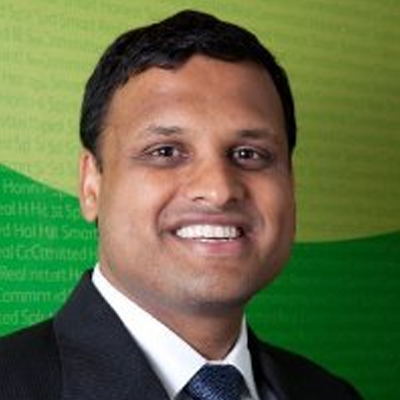
    MUMBAI: The Network18 Group has roped in Manish Maheshawari as the new CEO of Web18. Maheshawari was previously with Indian eCommerce major Flipkart as VP and head of its seller ecosystem. Maheshawari will lead Network18’s digital and e-commerce assets which includes digital portals such as moneycontrol.com, ibnlive.com, in.com, firstpost.com, etc.

    As the CEO of Web18, Maheshawari’s immediate priorities will be  to drive content, monetization, new business, inorganic growth, and product portfolio management.

    Talking about the new appointment, Network18 group chairman Adil Zainulbhai said, “Manish brings with him a good mix of Silicon Valley tech product culture and an understanding of ground realities of India. Both these qualities will be crucial as we take Network18 to the next level of digital transformation. He has a proven track record of taking up projects and achieving a scale of tens of millions, building cross-functional teams that deliver in large setting with an unflinching focus on customer experience.”

    Maheshawari can be credited with growing Flipkart’s marketplace by 10x — from 10,000 sellers in February 2015 to over 100,000 sellers in February 2016.  Prior to that, he co-founded txtWeb and grew it from scratch with over 16 million mobile users in India alone.