Tag: FIPB

  • Four FDI media proposals await govt. nod

    NEW DELHI: A total of 99 proposals including four relating to the information and broadcasting sector for foreign direct investment are pending before various ministries, the Parliament has been informed.

    This follows the decision to entrust the work of granting government approval for FDI investment in eleven notified sectors/activities requiring government approval to the concerned  ministries/departments.

    Commerce and industries minister Nirmala Sitharaman said the decisions would be taken under the extant FDI Policy and Foreign Exchange Management Act (FEMA),

    The government, through the erstwhile Foreign Investment Promotion Board (FIPB), had already been considering and taking decisions on FDI proposals in the sectors on approval route.

    Consequently, the Standard Operating Procedure (SOP) for processing FDI proposals was issued on 29 June, 2017.

    According to the SOP, once the proposal is complete in all respects, which should not be later than six weeks/eight weeks (in cases where comments of the home ministry have been sought from security clearance point of view) from the receipt of the proposal, the competent authority will, within the next two weeks, process the proposal for decision and convey the same to the applicant.

    In respect of proposals where the competent authority proposes to reject the proposals or in cases where conditions for approval are stipulated in addition to the conditions laid down in the FDI policy or sectoral laws/regulations, concurrence of Department of Industrial Policy and Promotion will compulsorily be sought within 8-10 weeks weeks (in cases where comments of the home ministry have been sought from security clearance point of view) from the receipt of the proposal.

    The 99 FDI proposals pending in various ministries/departments are:

    Name of Ministry/Department

    No. of Proposals

    Department of Economic Affairs

    13

    Department of Pharmaceuticals

    14

    Department of Industrial Policy & Promotion

    48

    Department of Telecommunications

      8

    Department of Defence Production

      4

    Ministry of  Home Affairs

      5

    Ministry of Information and Broadcasting

      4

    Department of Space

      2

    Department of Financial Services

      1

    Total

    99

    ALSO READ:

    FDI proposals in print, broadcasting to be cleared by MIB; satellites by DoS

    You Broadband-Vodafone proposal accepted, Atria & Netmagic FDI cleared

    Mobile data traffic grew by 76%, tele-market to cross Rs 6.6 trn by ’20

  • FDI proposals in print, broadcasting to be cleared by MIB; satellites by DoS

    MUMBAI: 5 June, 2017. That’s the date the Indian government announced that all foreign  direct investment (FDI) proposals  relating to the print and broadcast sector will be approved by the ministry of information and broadcasting (MIB).

    Approvals for proposals relating to satellite and telecom FDI investment have been put under the ambit of the department of space and department of telecom, ministry of communications, respectively.

    This was announced by the government  through a circular issued on the foreign investment promotions board (FIPB) website by ministry of finance joint secretary Saurabh Garg. The circular has pointed out that the following ministries will provide approval for foreign capital inflow proposals:

    *Ministry of mines (mining), department of defence production,

    *ministry of defence (defence),

    *ministry of homes affairs (FDI in small arms manufacturing),

    * ministry of civil aviation (aviation),

    *ministry of home affairs (private security agencies),

    *department of industrial policy and promotion (DIPP), ministry of commerce & industry (trading – single and multi brand and food products retail trading),

    *department of financial services, ministry of finance (banking – both public and private);

    *department of economic affairs (DEA), ministry of finance (financial services in areas where there is no regulator or more than one or ambiguity about the regulator)

    * department of pharmaceuticals, ministry of chemicals & fertilizers (pharamceuticals)

    The circular has also stated that NRI FDI proposals or FDI proposals for  export oriented units will continue to come under the ambit of the DIPP and will be processed by it. The DIPP will also have the responsibility to identify the right ministry if there is a doubt about who should deal with an FDI application. Applications for FDI into core investment companies or into Indian investment companies which will solely invest in Indian companies will need the DEA approval no matter which sector the investment is being made, says the circular.

    Investors  will continue making their FDI applications through the FIPB portal, the oversight of which is being transferred to the DIPP from the DEA by next month.

    The government has stated that the DIPP will lay down a standard operating procedure (SOP)  in consultation with each department/ministry.  It has stated that the SOP could involve the inter-ministerial committee (IMC) where necessary and it has to have a consistency of treatment and uniformity of approach towards all sectors. It has also ordered that departments and administrative ministries will need to get the approval  of the minister in charge/cabinet committee on economic affairs on each FDI application as per the FDI policy.

    Also Read :

    Star Den, Flag Telecom, You & Idea FDI meet on 28 Dec

    Top M&E industry honchos see no major benefit from Budget ’17


  • Tele-components co Twinstar to bring in Rs 9k-cr FDI

    MUMBAI: Twinstar Technologies is among the 15 proposals worth Rs 12,200 crore on Monday cleared for foreign direct investments into India. Twinstar proposal will however also require the approval of the Cabinet Committee of Economic Affairs (CCEA).

    Twinstar specialises in Optical Communications Passive Components for telecommunication and focuses on providing low-cost and high quality products for the rapidly developing FTTH market.

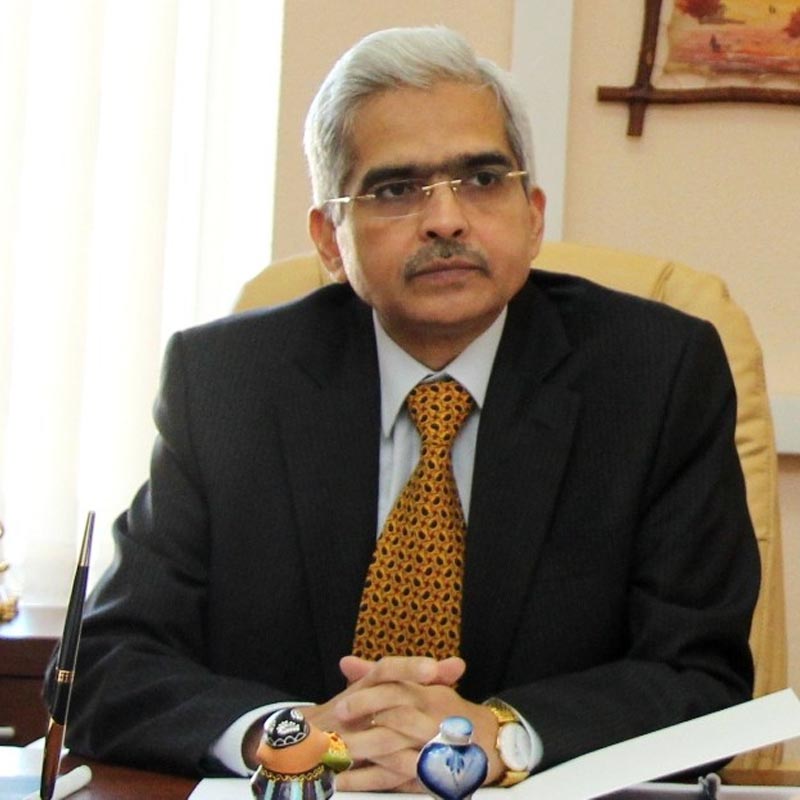
    The inter-ministerial body Foreign Investment Promotion Board (FIPB), led by the economic affairs secretary Shaktikanta Das, cleared the 15 of the 24 proposals it discussed, while deferring six and rejecting three proposals. Proposals which got the green signal primarily included Twinstar’s Rs 9,000-crore proposal, Apollo Hospitals’ Rs 750 crore proposal, and a proposal of Vodafone India, an official from the finance ministry said.

    Proposals of Hindustan Aeronautics and Dr Reddy’s were also approved.

    Also Read:

    http://www.indiantelevision.com/regulators/ib-ministry/idea-star-den-among-rs-1200-cr-fdi-proposals-approved-latter-to-switch-to-investing-biz-170120

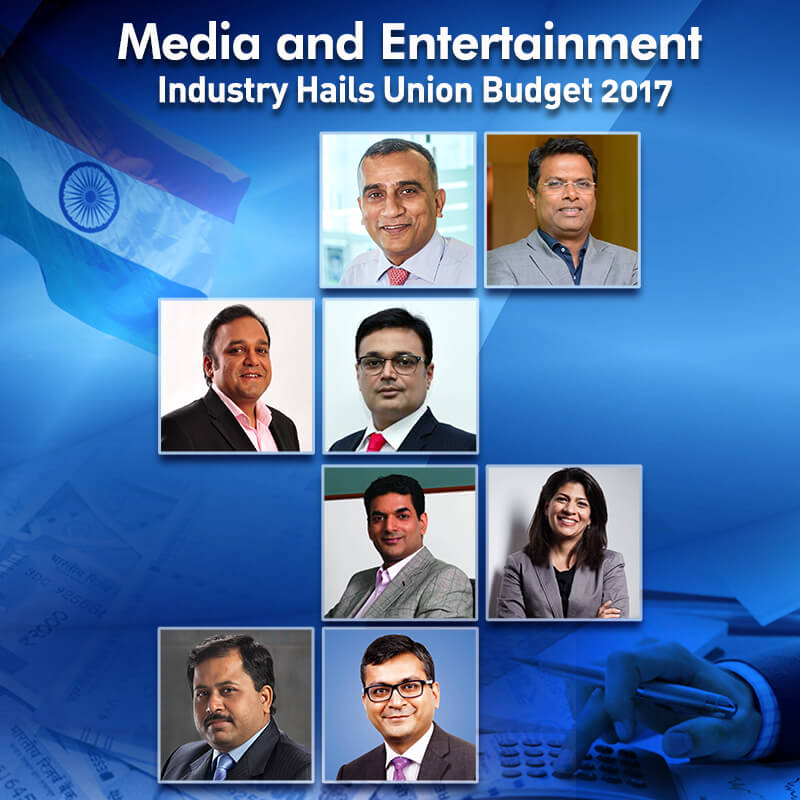
  • Media and entertainment industry hails Union Budget 2017

    Media and entertainment industry hails Union Budget 2017

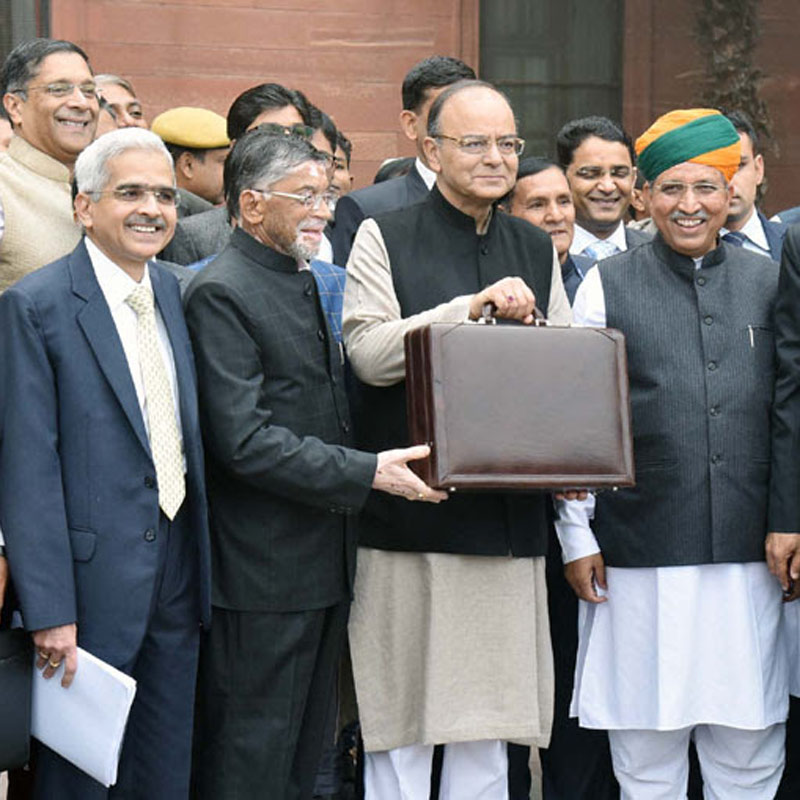
    MUMBAI: On 1 February, the finance minister Arun Jaitley made significant announcements during the presentation of the Union Budget 2017. Although, there was no specific mention of measures for the media and entertainment industry, certain steps which have been taken to boost the economy have been appreciated by the industry, but it also disappointed some.

    The budget 2017 mainly focused on boosting the infrastructure and lifting rural income besides bringing in reforms in the financial sector such as the abolition of the Foreign Investment Promotion Board (FIPB) so as to facilitate a new policy for foreign direct investment (FDI). The budget also focused on digitisation — allocating Rs 10, 000 crore to boost the rural fibre optics network, which came as a great news for many in the media and broadcast industry.

    Indiantelevision.com reached out to several industry stalwarts to find out how they interpreted the Union Budget 2017. Here’s what they had to say:

    Viacom18 group CEO and CII Media and Entertainment Committee chairman Sudhanshu Vats said, “Much had been speculated about the economic slowdown post demonetisation. With this budget, the government has taken important steps to boost the economy in a structured manner, building on the promise of transparent growth. Steps to liberalise the FDI regime further coupled with the abolishing of FIPB and tax reforms for MSMEs are bound to have impact in the foreseeable future. This budget has seen some positive solutions to tackle poverty in our country including one of the highest allocation of funds to MNREGA and rationalisation of rate for the lower personal tax slabs. I am particularly enthused by the strong reforms push for digitization and look forward to digital transactions increasing in the country. This also augurs well for digital consumption of video content. The move to cap political donations in cash at Rs 2000 and all-cash transactions at Rs 300,000 are also much-needed, bold steps that are in line with the government’s commitment to uprooting corruption. With Swaach Bharat being close to our hearts, the budget has built further on this theme in a welcome move. I’ve said this before and will say it again: as the M&E sector we have a lot to gain from buoyance in the economy at the aggregate level and I believe this Budget has delivered on that front.”

    Zee Entertainment Enterprises Limited (ZEEL) MD and CEO Punit Goenka stated, “Budget 2017 speaks a lot about the government’s positive and committed approach towards creating a stronger and balanced economy. Being directionally right and focused on spending in growth-centric areas, it clearly reassures the fact that remonetisation is in.”

    Times Network MD and CEO M K Anand said, “After the recent massive policy implementation of demonetisation, my expectation was of some radical reforms. I was a bit disappointed on that count. However, enhanced provision for MNREGA and allocations for rural, agriculture and allied sector and a clear push for the affordable housing sectors is the silver lining. Agriculture and real estate are the most important employment generating sectors in India. This should improve the rural situation which is still recovering from demonetisation. Hopefully, that will have a ripple effect on spending and the larger economy.”

    Says ABP COO Avinash Pandey, “The Union Budget 2017 was disappointing as far as the expected incentive for the broadcast business is concerned. Service tax remains the same. Most importantly, there is no parity with the print sector. The ‘wow’ factor was missing (in the budget) as far as the business is concerned. Disposable income is going to increase, and hence the quantum of spending. Economy may revive after the implementation of the budget.”

    Network 18 president revenue and Forbes India CEO Joy Chakraborthy is hopeful, saying, “We are seeing it as a positive budget. The budget is going to help consumption. Significant measures to improve electrification is eventually going to help the television industry. The general sentiment is that it is, overall a positive budget. Once people start spending money, consumption will be there and subsequently advertising too will follow.”

    Says, BBC Worldwide – ‎BBC Worldwide India South East Asia and South Asia SVP and GM Myleeta Aga, “Overall a positive popular budget with personal income tax changes in line with the government’s declared intention to collect more taxes from the rich and reduce the tax burden on the middle income group.”

    She added, “I was particularly encouraged to hear that the GST roll out will not be delayed. Operationally, for the production business, this will complicate working across states but this disruption should be temporary. Continued emphasis on the digital economy and increasing digital transactions will boost growth of e-commerce.”

    SAB group CEO Manav Dhanda said, “Overall, there has been positives for the media and entertainment sector post the Union Budget. As digitization is the next big thing now, the end of March 2018 will see a great growth for digital video consumption across OTT. The youth can now have great opportunities laid for them by initiating the skill India mission that aims to start 100 India International centres. Also, since digitization is on a high, setting up high speed internet in 1.50 Lakh Gram Panchayat is a good move and will give a boost to internet penetration in India. There is no increase service tax by the government and is a positive outcome particularly for the M&E sector, a stable and positive fiscal situation is good for the economy which will also give an impetus to our advertising sales projections. Increased public spending through various schemes and focus on infrastructure investments should further help to accelerate economic growth. The economy seems to have being slowing down since demonetisation, impacting almost all sectors and one hopes this budget to act as a catalyst to propel the growth in the media sector as well.”

    KPMG India partner tax Naveen Aggarwal said, “The Budget was based on broad themes of curbing black money, boosting individual spending, ensuring transparency and providing much needed impetus to agricultural and rural sector, infrastructure and digital economy.”

    He added, “While the announcement to abolish FIPB in light of successful e-governance was surprising, further liberalisation in FDI policy will be keenly watched in context of M&E industry. Lastly, the FM provided much needed assurance on roll-out of GST as per schedule, confirming GST council finalising majority of its recommendations.”

    He further added, “Similar to last two years, the Budget did not bring much respite or specific announcements benefiting M&E industry. While the expectation of overall reduction in corporate tax rate and abolition of MAT was given a miss, the proposal to reduce corporate tax rate for MSMEs to 25% (having turnover up to Rs 50 crore) and increasing the MAT credit entitlement (from 10 to 15 years) is a welcome move and will benefit medium scale service companies in M&E sector.”

  • Media and entertainment industry hails Union Budget 2017

    Media and entertainment industry hails Union Budget 2017

    MUMBAI: On 1 February, the finance minister Arun Jaitley made significant announcements during the presentation of the Union Budget 2017. Although, there was no specific mention of measures for the media and entertainment industry, certain steps which have been taken to boost the economy have been appreciated by the industry, but it also disappointed some.

    The budget 2017 mainly focused on boosting the infrastructure and lifting rural income besides bringing in reforms in the financial sector such as the abolition of the Foreign Investment Promotion Board (FIPB) so as to facilitate a new policy for foreign direct investment (FDI). The budget also focused on digitisation — allocating Rs 10, 000 crore to boost the rural fibre optics network, which came as a great news for many in the media and broadcast industry.

    Indiantelevision.com reached out to several industry stalwarts to find out how they interpreted the Union Budget 2017. Here’s what they had to say:

    Viacom18 group CEO and CII Media and Entertainment Committee chairman Sudhanshu Vats said, “Much had been speculated about the economic slowdown post demonetisation. With this budget, the government has taken important steps to boost the economy in a structured manner, building on the promise of transparent growth. Steps to liberalise the FDI regime further coupled with the abolishing of FIPB and tax reforms for MSMEs are bound to have impact in the foreseeable future. This budget has seen some positive solutions to tackle poverty in our country including one of the highest allocation of funds to MNREGA and rationalisation of rate for the lower personal tax slabs. I am particularly enthused by the strong reforms push for digitization and look forward to digital transactions increasing in the country. This also augurs well for digital consumption of video content. The move to cap political donations in cash at Rs 2000 and all-cash transactions at Rs 300,000 are also much-needed, bold steps that are in line with the government’s commitment to uprooting corruption. With Swaach Bharat being close to our hearts, the budget has built further on this theme in a welcome move. I’ve said this before and will say it again: as the M&E sector we have a lot to gain from buoyance in the economy at the aggregate level and I believe this Budget has delivered on that front.”

    Zee Entertainment Enterprises Limited (ZEEL) MD and CEO Punit Goenka stated, “Budget 2017 speaks a lot about the government’s positive and committed approach towards creating a stronger and balanced economy. Being directionally right and focused on spending in growth-centric areas, it clearly reassures the fact that remonetisation is in.”

    Times Network MD and CEO M K Anand said, “After the recent massive policy implementation of demonetisation, my expectation was of some radical reforms. I was a bit disappointed on that count. However, enhanced provision for MNREGA and allocations for rural, agriculture and allied sector and a clear push for the affordable housing sectors is the silver lining. Agriculture and real estate are the most important employment generating sectors in India. This should improve the rural situation which is still recovering from demonetisation. Hopefully, that will have a ripple effect on spending and the larger economy.”

    Says ABP COO Avinash Pandey, “The Union Budget 2017 was disappointing as far as the expected incentive for the broadcast business is concerned. Service tax remains the same. Most importantly, there is no parity with the print sector. The ‘wow’ factor was missing (in the budget) as far as the business is concerned. Disposable income is going to increase, and hence the quantum of spending. Economy may revive after the implementation of the budget.”

    Network 18 president revenue and Forbes India CEO Joy Chakraborthy is hopeful, saying, “We are seeing it as a positive budget. The budget is going to help consumption. Significant measures to improve electrification is eventually going to help the television industry. The general sentiment is that it is, overall a positive budget. Once people start spending money, consumption will be there and subsequently advertising too will follow.”

    Says, BBC Worldwide – ‎BBC Worldwide India South East Asia and South Asia SVP and GM Myleeta Aga, “Overall a positive popular budget with personal income tax changes in line with the government’s declared intention to collect more taxes from the rich and reduce the tax burden on the middle income group.”

    She added, “I was particularly encouraged to hear that the GST roll out will not be delayed. Operationally, for the production business, this will complicate working across states but this disruption should be temporary. Continued emphasis on the digital economy and increasing digital transactions will boost growth of e-commerce.”

    SAB group CEO Manav Dhanda said, “Overall, there has been positives for the media and entertainment sector post the Union Budget. As digitization is the next big thing now, the end of March 2018 will see a great growth for digital video consumption across OTT. The youth can now have great opportunities laid for them by initiating the skill India mission that aims to start 100 India International centres. Also, since digitization is on a high, setting up high speed internet in 1.50 Lakh Gram Panchayat is a good move and will give a boost to internet penetration in India. There is no increase service tax by the government and is a positive outcome particularly for the M&E sector, a stable and positive fiscal situation is good for the economy which will also give an impetus to our advertising sales projections. Increased public spending through various schemes and focus on infrastructure investments should further help to accelerate economic growth. The economy seems to have being slowing down since demonetisation, impacting almost all sectors and one hopes this budget to act as a catalyst to propel the growth in the media sector as well.”

    KPMG India partner tax Naveen Aggarwal said, “The Budget was based on broad themes of curbing black money, boosting individual spending, ensuring transparency and providing much needed impetus to agricultural and rural sector, infrastructure and digital economy.”

    He added, “While the announcement to abolish FIPB in light of successful e-governance was surprising, further liberalisation in FDI policy will be keenly watched in context of M&E industry. Lastly, the FM provided much needed assurance on roll-out of GST as per schedule, confirming GST council finalising majority of its recommendations.”

    He further added, “Similar to last two years, the Budget did not bring much respite or specific announcements benefiting M&E industry. While the expectation of overall reduction in corporate tax rate and abolition of MAT was given a miss, the proposal to reduce corporate tax rate for MSMEs to 25% (having turnover up to Rs 50 crore) and increasing the MAT credit entitlement (from 10 to 15 years) is a welcome move and will benefit medium scale service companies in M&E sector.”

  • Budget 2017: From highway to e-way media sector searches for sops

    Budget 2017: From highway to e-way media sector searches for sops

    MUMBAI: The Indian government today unveiled a roadmap for financial year 2017-18 that covers areas from “highways to e-ways” (PM Modi’s words while describing the Union Budget 2017) aimed at “strengthening the hands of the poor”, while looking at further easing doing business by abolishing Foreign Investment Promotion Board and hinting at a new FDI policy. However, for India’s media and entertainment sector, especially the broadcast and cable sector looking to reach the $ 100 million turnover mark, there wasn’t much to cheer about — unless an angel is hiding in the fine prints that are still being deciphered.

    Finance minister Arun Jaitley, while announcing the Budget, has brought in macro-level major financial reforms by slashing tax rates for middle level income groups and opening the FDI floodgates in favour of a rural economy.

    Jaitley’s budget focused on boosting infrastructure and lifting up rural incomes besides bringing in reforms in the financial sector such as the abolition of the FIPB to enable a new policy for FDI. The Indian Railways Catering and Tourism Corporation (IRCTC), one of the world’s biggest e-commerce companies, will be now be listed, Jaitley said, aside from sending out an indirect warning to economic offenders such as Lalit Modi and Vijay Mallya that for for absconders new legislation would be drafted soon.

    But a big thumbs up to the government for allocating Rs. 10,000 crore (Rs 100,000 million) to boost rural fibre optics network to give further leg up to all round digitisation.

    While the fine prints are still being read, some highlights are as follows:

    # The FIPB will be abolished. Further liberalisation in the FDI policy would be done in the next few days. (Star Den, etc to benefit)

    # SANKALP – Rs 4000 crore allotted for market-oriented training. (At least 4 million youth will be provided market-relevant training under Sankalp programme)

    # Cashback scheme – Petrol pumps card payments, launch two more schemes for use of BHIM app

    # In yet another boost for digitisation, the government has removed service tax on e-tickets .

    #IRCTC to be listed.

    # The government proposes to create a payment regulatory board at RBI. (The proposal assumes significance as there is currently no regulator for FinTech companies such as Paytm in India.)

    # Small and Medium enterprises (MSME) to be encouraged. Income tax reduced to 25% from 30% if turnover is up to Rs 50 crore or Rs 500 million.

    # Startups to pay tax on profits for three out of seven years, increased from three out of five years.

    # Under Bharat Net, optic fibre cable has been laid out In 1,55,000 km. (Recent spectrum auctions have removed spectrum scarcity.) Bharat Net allocation at Rs 10,000 crore.

  • Budget 2017: From highway to e-way media sector searches for sops

    Budget 2017: From highway to e-way media sector searches for sops

    MUMBAI: The Indian government today unveiled a roadmap for financial year 2017-18 that covers areas from “highways to e-ways” (PM Modi’s words while describing the Union Budget 2017) aimed at “strengthening the hands of the poor”, while looking at further easing doing business by abolishing Foreign Investment Promotion Board and hinting at a new FDI policy. However, for India’s media and entertainment sector, especially the broadcast and cable sector looking to reach the $ 100 million turnover mark, there wasn’t much to cheer about — unless an angel is hiding in the fine prints that are still being deciphered.

    Finance minister Arun Jaitley, while announcing the Budget, has brought in macro-level major financial reforms by slashing tax rates for middle level income groups and opening the FDI floodgates in favour of a rural economy.

    Jaitley’s budget focused on boosting infrastructure and lifting up rural incomes besides bringing in reforms in the financial sector such as the abolition of the FIPB to enable a new policy for FDI. The Indian Railways Catering and Tourism Corporation (IRCTC), one of the world’s biggest e-commerce companies, will be now be listed, Jaitley said, aside from sending out an indirect warning to economic offenders such as Lalit Modi and Vijay Mallya that for for absconders new legislation would be drafted soon.

    But a big thumbs up to the government for allocating Rs. 10,000 crore (Rs 100,000 million) to boost rural fibre optics network to give further leg up to all round digitisation.

    While the fine prints are still being read, some highlights are as follows:

    # The FIPB will be abolished. Further liberalisation in the FDI policy would be done in the next few days. (Star Den, etc to benefit)

    # SANKALP – Rs 4000 crore allotted for market-oriented training. (At least 4 million youth will be provided market-relevant training under Sankalp programme)

    # Cashback scheme – Petrol pumps card payments, launch two more schemes for use of BHIM app

    # In yet another boost for digitisation, the government has removed service tax on e-tickets .

    #IRCTC to be listed.

    # The government proposes to create a payment regulatory board at RBI. (The proposal assumes significance as there is currently no regulator for FinTech companies such as Paytm in India.)

    # Small and Medium enterprises (MSME) to be encouraged. Income tax reduced to 25% from 30% if turnover is up to Rs 50 crore or Rs 500 million.

    # Startups to pay tax on profits for three out of seven years, increased from three out of five years.

    # Under Bharat Net, optic fibre cable has been laid out In 1,55,000 km. (Recent spectrum auctions have removed spectrum scarcity.) Bharat Net allocation at Rs 10,000 crore.

  • Star Den, Flag Telecom, You & Idea FDI meet on 28 Dec

    Star Den, Flag Telecom, You & Idea FDI meet on 28 Dec

    MUMBAI: The foreign investment board will consider 17 foreign investment proposals on 28 December, including that of Star Den Media Services and others.

    Star Den Media Services Pvt. Ltd. develops and distributes television, cable, and the related network platforms. It offers a platform for distributing television channels in India through all fixed networks including cable, direct to home, and internet protocol television.

    Other investment proposals include that of Idea Cellular Infrastructure Services, Flag Telecom Singapore Pte Ltd and You Broadband India.

    FIPB had in June this year rejected a proposal of Flag Telecom Singapore, a wholly-owned unit of Reliance Communications (RCom), to set up a telecom subsidiary in India. Flag Telecom reportedly planned to acquire a company, payout for which would have been around US$120 million — in two parts.

    Now, the Foreign Investment Promotion Board, helmed by the economic affairs secretary Shaktikanta Das, is planning to meet on 28 December, 2016. Around 17 proposals would be discussed, a finance ministry meeting notice stated. AMP Solar India, Grand Pvt Ltd. and Sanofi Synthelabo India proposals would also be considered.

    India allows FDI in some of the industry sectors via the automatic route, but, in certain segments that are considered sensitive for the economy and security, the proposals need to be cleared by FIPB first.

    FIPB had earlier met on 26 September to consider foreign investment proposals, including that of Idea Cellular Infrastructure Services.

    The Indian government has taken a series of measures in the recent past to give a fillip to foreign direct investment. In the first half of the current fiscal year, the inflows were USD 21.62 billion. FDI increased by 29 per cent to USD 40 billion in 2015-16 as compared to the previous fiscal.

  • Star Den, Flag Telecom, You & Idea FDI meet on 28 Dec

    Star Den, Flag Telecom, You & Idea FDI meet on 28 Dec

    MUMBAI: The foreign investment board will consider 17 foreign investment proposals on 28 December, including that of Star Den Media Services and others.

    Star Den Media Services Pvt. Ltd. develops and distributes television, cable, and the related network platforms. It offers a platform for distributing television channels in India through all fixed networks including cable, direct to home, and internet protocol television.

    Other investment proposals include that of Idea Cellular Infrastructure Services, Flag Telecom Singapore Pte Ltd and You Broadband India.

    FIPB had in June this year rejected a proposal of Flag Telecom Singapore, a wholly-owned unit of Reliance Communications (RCom), to set up a telecom subsidiary in India. Flag Telecom reportedly planned to acquire a company, payout for which would have been around US$120 million — in two parts.

    Now, the Foreign Investment Promotion Board, helmed by the economic affairs secretary Shaktikanta Das, is planning to meet on 28 December, 2016. Around 17 proposals would be discussed, a finance ministry meeting notice stated. AMP Solar India, Grand Pvt Ltd. and Sanofi Synthelabo India proposals would also be considered.

    India allows FDI in some of the industry sectors via the automatic route, but, in certain segments that are considered sensitive for the economy and security, the proposals need to be cleared by FIPB first.

    FIPB had earlier met on 26 September to consider foreign investment proposals, including that of Idea Cellular Infrastructure Services.

    The Indian government has taken a series of measures in the recent past to give a fillip to foreign direct investment. In the first half of the current fiscal year, the inflows were USD 21.62 billion. FDI increased by 29 per cent to USD 40 billion in 2015-16 as compared to the previous fiscal.

  • FIPB refuses to consider Turmeric Vision proposal for contravention of foreign equity of 80%

    FIPB refuses to consider Turmeric Vision proposal for contravention of foreign equity of 80%

    NEW DELHI: Even as it refused to consider a proposal by M/s Turmeric Vision Private Limited on the ground that this does not come within its domain, the Foreign Investments Promotion Board has deferred a proposal by M/s Quintillion Business Media Private Limited seeking approval for the issuance of equity shares to BLOOMBERG L.P.

    With regard to the Quintillion proposal, the Finance Ministry said “the investee company is proposed to be engaged inter alia in the uplinking and broadcasting of a business news television channel and operating the related digital content platform in India”.

    Turmeric Vision Private Limited had sought Post facto approval for contravention of the foreign equity of 80% as approved vide approval letter of even no. FC II 60(10)/91(2010) of 14 June 2010.

    FIPB also deferred a proposal by M/s Tikona Digital Networks Pvt Ltd for approval for the issuance of CCDs thereby increasing foreign equity to 76.73%; and a proposal by Netmagic Solutions Private Limited for increase in the shareholding of NTT Communications Corporation, Japan, in the company from 81.63% to 100%.

    The Board rejected a proposal by M/s Sistema ShyamTeleServices Limited seeking approval for the exit of the resident shareholders and transfer of their holdings to the existing foreign shareholders i.e. M/s Sistema Joint Stock Financial Corporation, Russia and Federal Agency for the State Property Management (Rosimushchestvo), thereby increasing the foreign shareholding in the company from 73.95% to 100% and consequently increasing the foreign shareholding in its downstream company i.e. Shyam Internet Services Limited to 100%.