Tag: Fino Payments Bank

  • AI gets a brand new story as marketers debate data, trust and creativity

    AI gets a brand new story as marketers debate data, trust and creativity

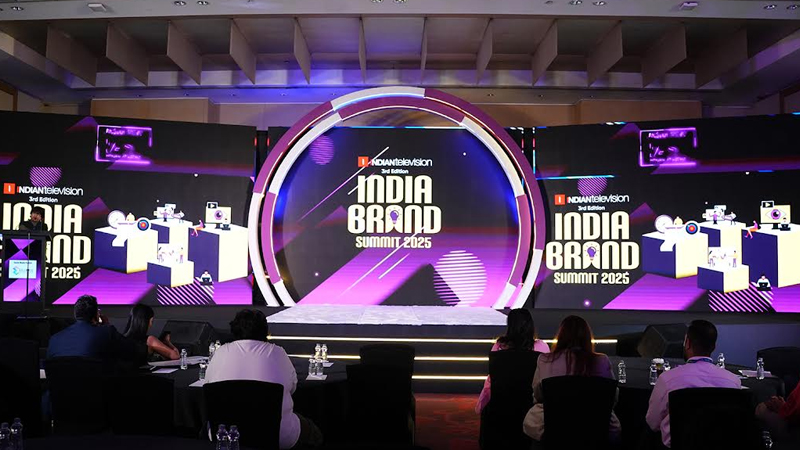
    MUMBAI: When machines meet marketing, sparks and questions fly. That was the mood at the 3rd India Brand Summit 2025 during a lively session titled AI Powered Branding: Reimagining Storytelling and Personalisation.

    Moderated by Publicis Groupe India CEO for digital technology business Amaresh Godbole the panel brought together industry voices grappling with the fine line between automation, personalisation, and authenticity.

    Tata Cliq CTO and Tata digital,VP for synergy tech Suman Guha opened with a reality check: while AI unlocks precision, data overload is a growing challenge. “Brands need to strike the right balance, AI can suggest, but it cannot substitute judgement. The winning formula lies in combining AI-driven insights with human empathy,” he said.

    Adding a regulatory lens ASCI CEO & secretary general Manisha Kapoor stressed the urgency of maintaining consumer trust. “When personalisation borders on intrusion, the line between relevance and manipulation blurs. Ethical guardrails are essential if AI-led branding is to build, not break, relationships,” she warned.

    Crompton Greaves Consumer Electricals head of digital transformation Akhil Duggal noted that AI is most effective when it complements not dictates brand building. “We’re using AI to decode consumer intent, but the human narrative must lead. Consumers don’t remember algorithms; they remember stories.”

    From the BFSI perspective Fino Payments Bank head of marketing Prashant Choudhari pointed out the stakes are higher in financial services. “Trust is currency. AI can personalise offers, but one misstep erodes credibility. The challenge is scaling innovation while keeping the customer relationship sacred.”

    Mediasmart chief growth officer Nikhil Kumar highlighted how AI is revolutionising programmatic advertising. “Real-time personalisation is not the future, it’s already here. But effectiveness depends on transparency. If users feel misled, personalisation backfires into alienation.”

    Bringing in the social tech angle Explurger vice president Jwala Kumar underlined AI’s role in experiential storytelling. “Travel and lifestyle brands are leveraging AI to make every interaction feel personal. But authenticity is non-negotiable, people will spot the difference between engineered intimacy and genuine connection.”

    As the discussion unfolded, a common thread emerged: AI can supercharge scale, speed, and segmentation, but the secret sauce remains human creativity. Technology may tailor the message, but culture, trust, and empathy define whether it lands.

    By the end, Godbole summed it up neatly: “AI isn’t replacing storytellers, it’s arming them with sharper tools. The brands that thrive will be those that wield AI with responsibility, respect, and imagination.”

    The session closed with consensus that 2025 is not about AI versus humans, but AI with humans, a collaboration where algorithms analyse and humans empathise, together shaping the next chapter of branding.

  • “Chalo Rural Conclave and Awards fills in this gap by offering a platform to discuss everything related to rural marketing”: Eggfirst’s Ravi Banka

    “Chalo Rural Conclave and Awards fills in this gap by offering a platform to discuss everything related to rural marketing”: Eggfirst’s Ravi Banka

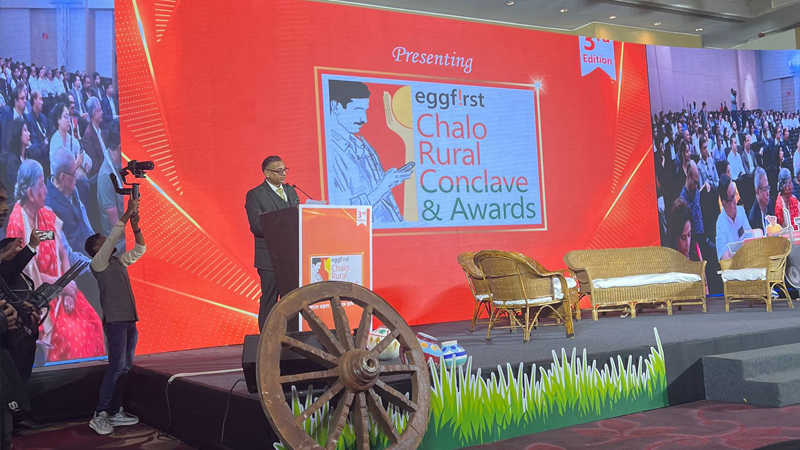
    Mumbai: The 3rd edition of the Eggfirst Chalo Rural India Conclave & Awards, held at the Westin Goregaon, Mumbai, marked a historic milestone in the advertising and digital marketing landscape. The event, organised by Eggfirst, a prominent advertising and digital agency specialising in rural advertising, brought together over 500 industry leaders from more than 250 renowned brands for a transformative evening dedicated to exploring the vast potential, growth prospects, and digital advertising avenues in rural India.

    The Conclave featured two insightful panel discussions: ‘Rural India ki Kahaani, Brands ki Zubaani’ and ‘Badhte Bharat ki Nayi Kahaani,’ where leaders from top-tier companies including Bayer CropScience, Corteva, Fino Payments Bank, DeHaat, Ambuja Cement, Yes Bank, Del Monte, Parle, SBI General, and NABARD shared profound insights and experiences related to rural India.

    Rural India is a vast and diverse landscape, comprising more than 70 per cent of the country’s population. With such a significant portion of the population residing in rural areas, it is crucial for businesses and brands to tap into this market through effective advertising strategies. Rural advertising in India has gained prominence in recent years, as companies recognize the immense potential and untapped opportunities that lie within these regions.

    In recent years, the rise of digital technology has also opened up new avenues for rural advertising. With the increasing penetration of smartphones and internet connectivity in rural areas, brands can leverage social media platforms and mobile applications to reach their target audience. Social media campaigns, influencer marketing, and targeted online advertisements can effectively engage rural consumers and create brand awareness.

    The highlight of the event was the presence of YouTube influencers Akash Jadhav and Santosh Jadhav known for their Indian Farmers channel, which boasts 18.2 million subscribers and serves as a valuable resource for millions of farmers across the country.

    Indiantelevision.com in an email interaction with Banka, shared insights on the conclave and the significance of rural marketing in this modern dynamic world

    Edited excerpts

    On Chalo Rural India Conclave and Awards fostering innovation in the field of digital advertising

    Rural India has a huge consumer base and naturally harbours endless opportunities for the marketing and advertising fraternity. However, much of the rural marketing campaigns go unnoticed due to lack of reach and awareness. Chalo Rural Conclave and Awards fills in this gap by offering a platform to discuss and reward everything related to rural marketing.

    On trends in digital advertising that have shown the most promise for reaching rural audiences

    There are a few points I would like to highlight

    Mobile phones are the primary internet access point for rural audiences so designing marketing strategies compatible with mobile phones is a must.

    Next, influencer marketing can be a strong way to leverage local influencers for building trust and credibility in rural areas.

    Third, the content has to be localised to suit the taste of the target audience. The culture and values should be kept in mind while crafting the communication.

    On the challenges and opportunities existing for digital advertisers when targeting rural markets

    Opportunities galore as the rural landscape is a playing field with a major chunk of population with diverse culture and markets to tap into. At the same time, there are a few challenges like limited internet connectivity, low levels of digital literacy and a lack of trust in the digital medium.

    The conclave can play a pivotal role in addressing these aspects by bringing together industry experts, advertisers, policymakers, and community representatives to discuss and propose strategies, share success stories, and create awareness.

    On the impact digital advertising industry had on rural India

    The digital advertising industry has penetrated into the rural population with the advent of easy and affordable access to digital devices and media. A shift towards digital has been observed as more and more people from rural areas have adopted technology and keep in touch with the outside world. This has certainly impacted rural India for the better in a way that digital advertising has enabled communication better than ever before.

    On content creators shaping the field of rural advertising today

    Certainly. The intent behind setting up a session with the youtubers was to highlight the present of rural creators and the thriving discourse happening online.

    I feel rural India is a treasure trove of knowledge and generational wisdom. With increased use of digital media, communication has increased manifold. On one hand, creators are able to put their thoughts before an eager audience ready to consume such content. So, it is a win-win situation that defines the effective communication facilitated in contemporary rural India. 

  • IBS: Marketing in a VUCA world

    IBS: Marketing in a VUCA world

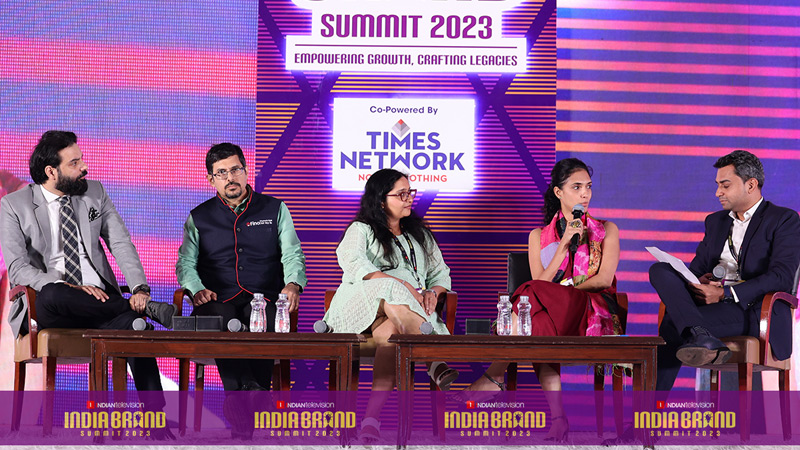
    Mumbai: The India Brand Summit held on 28 November 2023 at The Lalit Mumbai, convenes leaders, marketers, entrepreneurs, and experts to explore current trends, challenges, and opportunities in the dynamic brands and marketing arena.

    The session offered an in-depth exploration of the strategies and insights required to effectively navigate the challenges posed by a VUCA environment. VUCA stands for Volatility, Uncertainty, Complexity, and Ambiguity – characteristics that define the modern business landscape’s fast-paced & unpredictable nature.

    The panel was moderated by Ernst & Young LLP partner & head marketing advisor Amiya Swarup. Panellists for this session were Aditya Birla Fashion and Retail Ltd head- corporate marketing & strategy Apeksha Gupta, Bisleri International Pvt. Ltd. marketing head Tushar Malhotra, Fino Payments Bank CMO Anand Bhatia, Shemaroo Entertainment Ltd. CMO Anuja Trivedi.

    Key highlights of this session was to understand the VUCA dynamics & how it impacts marketing strategies and to learn about the tactics to respond to sudden market shifts, emerging trends, and unforeseen disruptions. Along with this, they will also speak on what role does data & decision making play in such dynamic structure, the role of digital platforms and technology in VUCA marketing and much more..

    The panel was started by Swarup asking Gupta on how marketing has evolved over the years, as it is at the forefront of generating data and the role it plays in the dynamic structure to which Gupta answered, “VUCA has always been around, because it’s always been an unstructured, volatile environment, because that’s the nature of how things move. It’s  just that the pace has increased right now and it’s multi fold in terms of what’s happening in the unpredictability of it. So I broadly kind of focus on three broad mantras to deal with this kind of uncertainty. My first one is, it’s perfectly okay to not know, I think we kind of get caught up in saying, okay, I’m supposed to be so and so. And I have to know all the answers, and I’m supposed to connect the dots. Actually, it’s perfectly okay to not know because that’s really where the starting point is. If you don’t know, you will work really hard to figure it out. So I’m always very open to saying, look, I don’t know how Gen Z is working, I don’t know how data works, I don’t know how digital is working. It’s a great starting point. The second for me really is  earlier, we were always told, go targeted, go really sharp, I think maybe that’s changing a little bit. Now, to the extent that anything that we do, actually try and figure out the larger implication or the ripple effect of it, because the ripple effect will actually help you be agile. Because when you shoot that stone, you can choose to jump off one ribbon to the other if you’re keeping your eye around that and not that Bullseye essentially. And of course, third, again, very spoken off in the past, but a lot more implication now is to celebrate failures. If we don’t have that cultural DNA to sort of help us celebrate our failures to take that much risk to constantly keep coming up with new and the new itself is so difficult because it’s like changing so rapidly. But those would be my three ways of dealing with uncertainty in terms of mindset and approach to how I deal with challenges.”

    Swarup was delighted by the answer as he shifted towards the content side by asking Trivedi on the evolution and strategies of marketing over the years to which she replied, “Marketing for the longest time been about, you know, you bring out the brand film and then you wait for the next brand track to know where things are going. Today with the data and you know the access we have, marketing has never been as close to business as it is today, like you said connecting the dots. So what I put out in 24 to 48 hours, I know whether it’s working or whether it’s not working, it allows me the agility to change those things. It allows me to, I mean, with digital, it allows us to experiment as AV testing, you can get those results. Marketing is a lot more two way process today. So you’re also listening to what your consumer is saying, and making those changes. So to my mind, actually, you know, we are as close to business today as we could be.”

    Marketing plays a fundamental role in terms of driving ROI, business goals etc. Bhatia shared his views by saying, “India is an incredibly homogeneous country. We are a country of ABCD. A as “Adda” when people get together to talk, you know, whether it’s politics or you know, whatever it is, B is “Bollywood”, hence any kind of old, you know Tolly calls you whatever comes with it, C “Cricket”, right? Everywhere. D is “Devotion” or only depends on which side of the spectrum you want. Marketing has just got very simplified over time. And I guess, the best thing that a CMO can do today is really bring it down to a few controllable variables. Good part is that technology today allows you that, right, so fundamentals don’t change. Technology just allows you to bring everything down to a few variables, few moving parts, and you can really leverage that in a big way and deliver ROI.

    At the end of the day, the name of the game is ROI. If the CMO is not getting in business, you really won’t be in business anymore, right? In fact, I think marketers need to start looking at the function as, as a profit center marketing is a profit center, it has always been a profit center, they, you know, they’ll always be disagreements on the way certain measurements happen, we counters will have the views, marketer will have his views, or her views, you know, that life goes on. But I think that fundamental shift is critical.”

    Swarup then asked Malhotra on the role of marketing and especially gave a lot of insights on the mindset of today’s Gen Z people. He said, “This is an everyday morning board conversation, right? The role of marketing. I would say four things stand out today, more than anything else. One is that marketing is a strategic and tactical function at the same time. Strategic from a perspective of brand building and tactical from sales delivery. So both go hand in hand together and the focus of marketing is on both parts, right. The second part is of course, the evolution of the consumer landscape today.

    Gen Z’s today are a very woke audience and conversations happen in a matter of minutes. So understanding Gen Z, understanding your product and understanding the relevance because truth be told, India is a very young country today. Its demographic dividend that we spoke about conditions are favourable. There are a lot of tailwinds towards business and how do businesses harness consumer trends? How do businesses prepare themselves when Gen Z’s really take over? Because this is an audience with a very different mindset. Very woke, looking for a brand for purpose? But also looking at getting away from a lot of stressors in life, right?

    The third bit I will speak about is that today, a marketer needs to be an integrated marketing specialist, there are so many channels, right? Traditional channels still exist as a mass brand, if you reach out for awareness, it has to be TV. So how do you make your campaigns tick across all channels, and get a proper ROI rather than just focus on one channel. And the last point is that whatever we speak about there is no one detail. You have to wait in different mini India’s with your messaging with your communication, because India is also filled with a lot of different cultural landmarks. If you go to South India, it behaves slightly differently from West or North India, and you have to appeal to those audiences to see what works for them as well.”

    The session concluded with many panellists agreeing on one thing that today Gen Z is where the conversations are happening and will also be the key to unlocking and staying relevant in the next 10 years as they are different drivers who talk about sustainability, brands with purpose, imagery, stresses, and by addressing all these things, their being ready for future of the consumers.