Tag: Financials

  • Zee’s profit crumbles as advertisers flee the Hindi heartland

    Zee’s profit crumbles as advertisers flee the Hindi heartland

    MUMBAI:Zee Entertainment’s latest quarterly results lay bare the industrial-scale headwinds battering India’s media and entertainment industry. Profit after tax collapsed by 63 per cent year-on-year to just Rs 76.5 crore in the quarter ended September, whilst EBITDA—already anaemic—shrank by 54 per cent to Rs 146.4 crore. The numbers paint a picture of a company caught between the need to invest for tomorrow and the inability to generate returns today.

    Operating revenue edged up just eight per cent sequentially to Rs 1969.2 crore, but this masks a troubling underlying picture. Advertising revenue, the lifeblood of India’s television industry, fell 12 per cent year-on-year, ravaged by a pullback in fast-moving consumer goods spending. The company has been forced into the classic trap of fighting for market share through costly content investments and higher marketing spend, both of which hammered margins to just 7.4 per cent.

    The half-year performance is equally grim. H1 FY26 revenues fell eight per cent to Rs 3794 crore, whilst operating profit plunged 37 per cent to Rs 374.4 crore. Profit after tax declined 34 per cent to Rs 220.2 crore. Even subscription revenues—heralded as the growth engine—managed only modest growth (five per cent to Rs 1023 crore against Rs 969..9 crore a year ago)  in an increasingly crowded digital battleground, driven by OTT and domestic linear price increases.

    The company’s content strategy has become a costly bet on volume. Zee5 posted a headline-grabbing 32 per cent year-on-year revenue jump to Rs 310.8 crore, but this comes on the back of mounting losses being narrowed down from Rs 244 crore to Rs 31.2 crore. The trajectory is encouraging but the losses remain substantial. Zee Studios churned through 13 film releases during Q2 alone—a scatter-gun approach that signals desperation rather than precision.

    The domestic television network held firm on other parameters.. Zee’s market share rose 100 basis points quarter-on-quarter to 17.8 per cent, with weekly reach steady at 749 Mn viewers. Yet this stability masks stagnation. The company has been forced to launch two new general entertainment channels and ramp up non-fiction content, both expensive propositions that yield uncertain returns.

    On the cost front, operating expenditure surged nine per cent year-on-year to Rs 1822.8 crore, driven by higher programming costs and elevated marketing spend in Q2 FY26. The company’s attempts to trim fat appear half-hearted; personnel costs held steady but content acquisition and production spending ballooned.

    There are fragments of hope. Cash and equivalents stood robust at Rs 2110 crore, with the balance sheet broadly stable. Content inventory declined by Rs 60 crore  during the half-year, suggesting improved discipline in acquisition. Zee Music Co added 3.9 million YouTube subscribers during the quarter, now boasting 172 million followers—a rare bright spot in an otherwise darkening tableau.

    The company has positioned itself as an environmental and social responsibility leader, landing in the 93rd percentile for ESG scores globally. Whether this counts for much in an industry where the bottom line is bleeding red remains a moot question.

    Zee Entertainment faces a brutal choice. Content investment without advertising growth is simply loss-making at scale. The company’s hope rests on a festive-season ad bounce and the long-tail of digital revenue eventually hitting profitability. 

  • Havas hits the accelerator as AI strategy bears fruit

    Havas hits the accelerator as AI strategy bears fruit

    PARIS: Havas is charging into the final quarter of 2025 with a spring in its step. The advertising group posted organic net revenue growth of 3.8 per cent in the third quarter, smashing expectations and vindicating its strategic pivot towards artificial intelligence and data-driven marketing. The surge in top-line performance prompted management to sharpen full-year guidance decisively upwards, signalling confidence that the worst of the economic headwinds facing the sector have passed.

    The results reveal a business in motion. North America blazed a trail with organic growth of 7.4 per cent, driven chiefly by Havas Health’s double-digit expansion and its ability to wring higher budgets out of existing clients—a rare feat in an industry where money typically flows only to new business wins. The Asia-Pacific region bounced back smartly from a tepid second quarter with 8.2 per cent growth, whilst the United Kingdom performed solidly. France, dragged down by a tough comparison with last year’s Olympic Games boost, and Latin America, battered by unfavourable currency moves, were the laggards.

    Havas now expects full-year net revenue organic growth of between 2.5 and 3.0 per cent, up from previous guidance of above 2.0 per cent. More significantly, the group reckons on an adjusted EBIT margin improvement of around 50 basis points to approximately 12.9 per cent—a meaningful lift that suggests operational leverage is kicking in. The nine-month figures show organic growth of 2.8 per cent, buoyed by cross-selling wins amongst the top 30 clients.

    The financial picture is straightforward: Havas is extracting better returns from its existing client base whilst simultaneously expanding its footprint. Operating margin expansion of this magnitude rarely happens by accident. The group has plainly succeeded in persuading clients to spend more on higher-margin services and shifted work into more profitable lines—precisely what a well-functioning agency should accomplish.

    Two strategic moves underscore management’s ambition. The majority acquisition of Tidart, a Spanish digital performance specialist, plugs gaps in Havas’ capabilities across e-commerce and performance marketing. More consequential is the formation of Horizon Global, a joint venture with Horizon Media Holdings worth a combined $20 billion in global billings. Styled as an “AI-native solution,” the venture signals that Havas’ Converged.AI strategy—the group’s bet on helping clients harness artificial intelligence across their marketing ecosystems—is moving from rhetoric into revenue-generating reality.

    Chief executive vYannick Bolloré  spoke of “impressive commercial momentum” and “notable new business wins.” Translation: the market is buying what Havas is selling.

    None of this occurs in a vacuum. Foreign exchange movements clipped 3.9 per cent from reported revenue growth, with the dollar’s recent weakness particularly stinging. Geopolitical tensions, trade pressures and political uncertainties lurk in the background. The group remains cautious about the year ahead, even as it tightens guidance.

    The broader picture for Havas: a global advertising industry grinding through modest growth and relentless margin pressure is being challenged—and beaten—by a group that has successfully positioned itself as a challenger taking share through genuine commercial innovation. Whether that momentum persists through 2026 is the question investors are asking now. For the moment, the trajectory looks encouraging.

  • Q1 FY26: JioStar smashes profit records as IPL juggernaut drives Rs 11,222 crore revenue surge

    Q1 FY26: JioStar smashes profit records as IPL juggernaut drives Rs 11,222 crore revenue surge

    MUMBAI: JioStar has delivered a blockbuster first quarter, posting record revenues of Rs 11,222 crore and profits that soared 154 per cent to Rs 581 crore, powered by what the company calls the “biggest ever IPL in terms of viewership and monetisation.”

    The media behemoth’s earnings before interest, taxes, depreciation and amortisation jumped to Rs 1,017 crore from Rs 774 crore in the previous period, whilst EBITDA margins expanded to 10.6 per cent from 8.1 per cent.
    The stellar performance was underpinned by IPL 2025, which shattered viewing records with 1.19 billion viewers across television and the JioHotstar platform. The tournament’s final match became the biggest T20 match ever on digital, reaching 237 million viewers with a peak concurrency of 55.2 million—obliterating the previous IPL record of 35.9 million.

    JioHotstar’s dominance was on full display during the quarter, with the app hitting 1.04 billion downloads on Android and averaging 460 million monthly active users. The platform reached 652 million viewers during IPL—a staggering 28 per cent year-on-year growth—whilst television delivered 514 billion minutes of watch-time.
    Beyond cricket, JioStar consolidated its entertainment stranglehold with a commanding 35.5 per cent share of TV entertainment viewership. Star Plus retained its Hindi general entertainment channel leadership with six of the top 10 shows, whilst regional powerhouses Star Pravah, Star Jalsha, Star Maa and Asianet maintained their number one positions in respective markets.

    The quarter also saw strategic moves in the free-to-air space, with Star Utsav and Colors Rishtey relaunching on DD Free Dish. Star Utsav became the number one channel from day one, reshaping the FTA Hindi GEC landscape.

    JioHotstar’s content strategy bore fruit beyond sports, posting its highest-ever monthly entertainment watch-time in June 2025. The latest season of Criminal Justice scored the strongest opening for any OTT original in 2025, according to Ormax Media, whilst Kesari 2 emerged as the year’s biggest movie across all languages on the platform.

    International content remained a key differentiator, with Captain America: Brave New World debuting as the quarter’s second most-watched film and Mufasa: The Lion King becoming the most-watched international movie ever on JioHotstar.

    The company’s subscriber base swelled to 287 million during IPL on JioHotstar, whilst reaching over 800 million people on television during the quarter—cementing its position as India’s undisputed entertainment colossus.

  • Bright Outdoor outdoes itself in FY25

    Bright Outdoor outdoes itself in FY25

    MUMBAI: The lights are definitely on and someone’s at home at Bright Outdoor Media. India’s first listed out-of-home advertising firm has delivered a corker of a year, with total income soaring 19 per cent to Rs 128 crore and net profit jumping nearly 19 per cent to Rs 19 crore in the fiscal year ending March 2025.

    The numbers tell a gleaming story. Earnings per share climbed to Rs 13.11 from Rs 11.45, whilst EBITDA expanded a healthy 18 per cent to Rs 27 crore. The second half proved particularly bright, with income surging 22 per cent half-on-half to Rs 70 crore—suggesting the company’s momentum is accelerating rather than dimming.

    For a firm that started life in 1980 flogging billboard space, Bright Outdoor has certainly illuminated its path to prosperity. The Mumbai-based outfit now commands over 400 hoardings nationwide, including a hefty chunk of the city’s 85 large digital LED displays. That’s no small feat in a market where prime real estate comes at a premium and visibility is everything.

    The company’s recent coups read like a property developer’s wishlist. Bright Outdoor has bagged exclusive advertising rights for the entire Navi Mumbai Metro Line 1—a decade-long deal covering 85,000 square feet of prime eyeball territory. Not content with underground domination, it also secured a seven-year contract with Western Railways, adding another 17,555 square feet of high-visibility real estate to its empire.

    Chairman & managing director Yogesh Lakhani is clearly more than pleased with the results. His company has been on a billboard-buying spree, unveiling 13 new LED displays across Mumbai’s most coveted spots—from the Goregaon flyover to the Eastern Express Highway. The digital expansion adds 12,569 square feet of advertising space to Bright’s already impressive portfolio.

    Shareholders have reason to smile beyond the robust financials. The board has recommended a five per cent dividend (Rs 0.50 per share) and proposed a generous 1:2 bonus issue—one free share for every two held. It’s a clear signal that management believes the good times will keep rolling.

    The outdoor advertising market has been riding high on India’s economic growth and urbanisation boom. Digital displays, in particular, have become the new battleground as advertisers seek more dynamic, targeted campaigns. Bright Outdoor’s focus on high-traffic transit corridors and tech-savvy solutions appears to be paying dividends—quite literally.

    From cinema slides to full train wraps, the company’s diverse offerings have attracted over 5,000 corporate clients and facilitated campaigns for more than 200,000 movies, TV shows and events. Its claim to fame includes being the first globally to install solar panels on hoardings, supplying electricity back to Indian Railways—proof that being green can indeed mean more greenbacks.

    Trading on the BSE SME platform since March 2023, Bright Outdoor has certainly lived up to its billing as a “game changer” in the IPO landscape. With urban India’s appetite for advertising showing no signs of dimming, this billboard baron looks set to keep the lights on—and the profits flowing.

  • JioStar blitzes in FY 2025, clocks Rs 10,006 crore in revenue since merger

    JioStar blitzes in FY 2025, clocks Rs 10,006 crore in revenue since merger

    MUMBAI: JioStar is scripting a blockbuster success story, delivering a knockout performance since its merger launch on 14 November 2024. The entertainment juggernaut reported gross revenues of Rs 10,006 crore and an EBITDA of Rs 774 crore, posting a margin of 7.7 per cent — all while still ramping up operations.

    At the heart of this meteoric rise lies JioHotstar, the OTT powerhouse that debuted on 14 February 2025 and rapidly changed the game. Within just five weeks, JioHotstar crossed the milestone of 100 million paid subscribers — a feat unrivalled in the Indian streaming landscape. By March-end, monthly active users (MAUs) hit a staggering 503 million, thanks to a blockbuster calendar packed with the ICC Champions Trophy, IPL, and a digital library boasting over 320,000 hours of content.

    Sport was JioStar’s turbocharger with IPL 2025 opening with fireworks, clocking 1.4 billion digital views (a 35 per cent spike year-on-year), 253 million TV viewers (up 14 per cent), and a colossal 49.6 billion minutes of total watch time across platforms (up 33 per cent). JioHotstar alone posted a dazzling 38 per cent jump in digital viewership, buoyed by a 47 per cent surge in connected TV (CTV) audiences and a 60 per cent higher CTV watch time.

    The ICC Champions Trophy 2025 turned out to be another mega-hit, recording the highest TV ratings ever for a multi-nation cricket tournament in India. The tournament delivered a 4.3 TVR — a 23 per cent gain over the ICC ODI World Cup 2023 — and set a new peak concurrency record with a staggering 61.2 million live viewers during the final.

    JioStar also scored with the Tata WPL season 3, which posted a 19 per cent ratings lift and expanded its reach by 49 per cent. On JioHotstar, WPL viewership surged by 34 per cent, underpinned by a massive 130 per cent growth in CTV engagement.

    In a strategic brand play, all sports channels were unified under the Star Sports banner, now comprising 24 channels — with dedicated Hindi, Tamil, Telugu, and Kannada sports offerings to deepen regional footprints.
    Beyond cricket fever, JioHotstar is claimed to be reshaping entertainment with a new wave of digital experiences. The Mahashivratri night live-stream drew an impressive 39 million views, while Coldplay’s Music of the Spheres tour streamed live to 8.3 million fans, bringing global experiences closer to Indian audiences.

    A new content vertical, “Sparks,” featuring short, snappy segments from India’s top digital superstars, has tapped into the nation’s appetite for quick-binge entertainment — a strategic play to capture Gen Z and millennial attention spans.

    Coupled with its arsenal of premium OTT originals and international content, JioHotstar is fast positioning itself as the de facto platform for premium digital storytelling.

    While the digital frontier blazed ahead, linear TV continued to deliver knockout blows.

    Star Plus cemented its dominance as India’s top Hindi GEC, with six out of the top 10 shows under its belt. Star Gold’s premiere of Stree 2 garnered a reach of 41.2 million, further reinforcing its draw among movie buffs.
    Regional GECs — Star Pravah (Marathi), Star Jalsha (Bengali), Star Maa (Telugu), Star Vijay (Tamil), and Asianet (Malayalam) — retained their #1 spots across states, showcasing JioStar’s deep local connect.

    Meanwhile, niche genres — Kids, Youth, and English — remained the network’s unchallenged playgrounds, extending JioStar’s leadership across every major viewer segment.

    In less than six months post-merger, JioStar has not just delivered on audacious promises — it has rewritten the rulebook. With a dominant hold across digital and linear entertainment, record-breaking sports audiences, and an evolving playbook for new-age content, JioStar is emerging as India’s undisputed entertainment giant.

    As Reliance’s media empire keeps building momentum, it’s clear that for rivals, the chase is only getting harder.

  • Hindustan Unilever lathers up growth in FY’25 with a five per cent profit shine

    Hindustan Unilever lathers up growth in FY’25 with a five per cent profit shine

    MUMBAI:Hindustan Unilever Limited (HUL) has managed to keep its balance sheet gleaming, reporting a five per cent jump in profit after tax to Rs 10,644 crore for FY’25, even as topline growth remained modest at two per cent. 

    The year’s big soap opera? A slick pivot to premiumisation, digital demand drivers, and a hard scrub of its product portfolio.

    For the March quarter (MQ’25), HUL clocked an underlying sales growth (USG) of 3 per cent, with volumes up two per cent. The FMCG major’s EBITDA margin stood at 23.1 per cent, slipping 30 basis points year-on-year, largely due to higher investments in innovation and future-facing channels. PAT for the quarter rose four per cent to Rs 2,497 crore.

    The home care division sparkled, with mid-single digit volume growth buoyed by strong performance in fabric conditioners and a renewed push on premium liquids like Surf Excel Smart Shots. Liquids, in fact, are the brand’s current crush – the portfolio grew in double digits and is now being democratised with new formats and price points.

    Beauty & wellbeing rose three per cent with hair care flexing double-digit volume muscle. Despite softness in mass skin care, the segment rode high on emerging channels and product launches like Liquid IV hydration sachets and summer-targeted sun care under Lakme and Vaseline.

    The personal care vertical delivered three per cent USG despite a slight volume dip. Skin cleansing lathered up high-single digit growth in the non-hygiene segment, while Closeup ventured into whitening territory with its ‘White Now’ range. Lifebuoy took centre stage at the Maha Kumbh with a refreshed ‘skin protection’ pitch.

    Food sales slipped one per cent, thanks to a drag in nutrition drinks, still reeling from pricing resets and category challenges. But there was flavour elsewhere – tea and coffee brewed growth, while ice cream melted hearts with double-digit volume gains and indulgent launches like Magnum Pistachio.

    CEO Rohit Jawa highlighted a year of “competitive performance” driven by “portfolio transformation, premiumisation and digital-first growth”. Big moves included the Minimalist acquisition, Pureit exit, and ice cream demerger approval. HUL also declared a hefty Rs 53 per share dividend (including a special Rs 10) – a total payout of Rs 12,453 crore.

    Looking ahead, the company expects demand to warm up in FY’26. With commodities stabilising, HUL is betting on low-single digit price growth and a volume-led playbook to deliver double-digit EPS growth.

    While volume may not have exploded, HUL’s strategic polish, from digital detours to premium suds, helped it stay competitive, confident, and cash-rich. Not bad for a company that just turned 90.

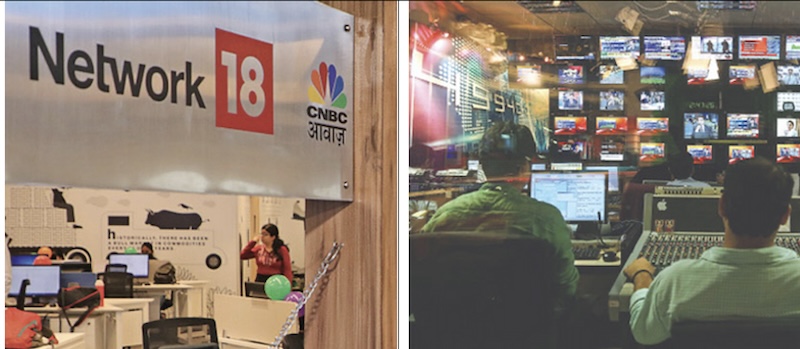
  • Network18’s financial performance reflects mixed trends amidst restructuring

    Network18’s financial performance reflects mixed trends amidst restructuring

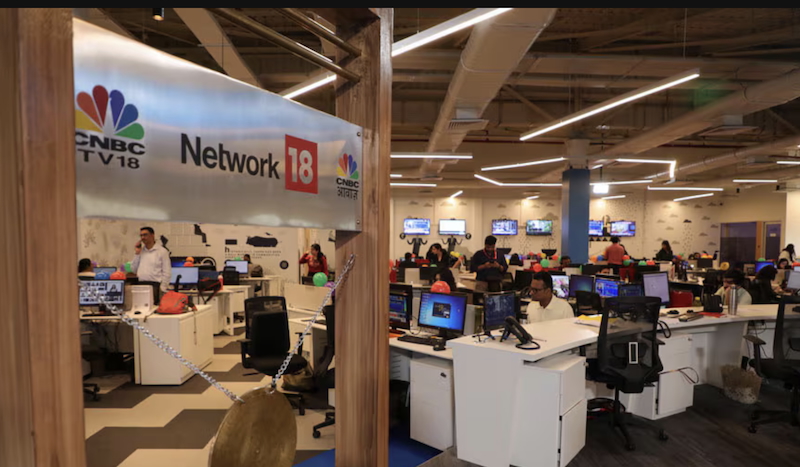
    MUMBAI: Network18’s financial results for the year ended 31 March 2025 present a complex picture, marked by operational challenges and the impact of strategic restructuring activities. The company has reported a net loss, but this is juxtaposed with substantial gains from exceptional items.

    Revenue from operations shows a slight decrease, indicating some pressure on the company’s core business activities.
    * Revenue from operations increased  to Rs 1,896.21 crore from Rs 1,817.73 crore in the previous year. 
    * The primary component, value of sales and services, was Rs 2,206.87 crore, compared to Rs  2,114.86 crore in the previous year.
    * Other income contributed a smaller amount, Rs 16.75 crore, down from Rs 18.70 crore. 

    Expenses increased, impacting profitability.
    * Total expenses rose to Rs   2,197.81 crore from Rs 2,086.95 crore. 
    * Key expense categories include: 
    o Operational costs: Rs 402.66 crore (previous year: Rs 381.35 crore) 
    o Marketing, distribution, and promotional expense: 478.24 crore (previous year: Rs 428.12 crore) 
    o Employee Benefits Expense: Rs 729.99 crore (previous year: Rs 702.68 crore) 
    o Finance costs:  Rs 213.42 crore (previous year: Rs 186.20 crore) 
    o Depreciation and amortisation expense: Rs 121.66 crore (previous year: Rs 101.02 crore) 
    o Other expenses: Rs  251.84 crore  (previous year: Rs  287.58 crore) 

    The company’s profitability was affected, but exceptional items provided a substantial offset.
    * Profit/ (Loss) before exceptional items and tax was a loss of Rs (284.85) crore, compared to a loss of Rs (250.52) crore in the previous year. 
    * However, the company recorded exceptional items of Rs 3,498.21 crore. 
    * This resulted in a profit/ (loss) before tax of Rs 3,213.36 crore, compared to Rs (250.52) crore in the previous year. 
    * After accounting for tax, the profit/ (loss) for the Period/Year was Rs 3,213.36 crore, compared to a loss of Rs 185.41 crore in the previous year. 

    The composite scheme of arrangement involving Viacom18, Digital18, and Star India has significantly reshaped the company’s structure.  The sale of shares in Indiacast Media Distribution Private Limited and changes in the shareholding of Viacom18 contributed to the exceptional items. 

    Network18’s financial performance reflects a period of transition.

    (updated 19 April at 11:40 am) 

    The company issued a press release on 19 April which reads as follows: 

    MUMBAI: Network18 Media & Investments Ltd’s standalone operating revenue for the news business rose 4.3 percent to Rs 1,896 crore in the year ended March 31, while operating EBITDA nearly doubled to Rs 33 crore, led by tight cost control, stronger ad pricing and viewership gains.

    Growth in operating EBITDA was aided by its expanding viewership and gains in advertising pricing. The network continued to lead in Hindi, English, and Business News segments, while also rising to leadership in Marathi and Bengali markets.

    In the fiscal fourth quarter, the company reported an operating EBITDA of Rs 13 crore for its standalone news business, showing resilience amid a subdued advertising environment and a high base from election-driven revenues a year ago. EBITDA margin widened to 2.6 percent in the fourth quarter from 2.2 percent in the preceding three months. Standalone operating revenue rose 9.5 percent quarter-on-quarter to Rs 522 crore. Operating expenses rose 3 percent to Rs 508 crore from a year earlier.

    Q4 Standalone loss narrows

    The company posted a standalone loss of Rs 69 crore for Q4 FY25. That compares with the Rs 31 crore loss in the year-ago period. Total standalone income stood at Rs 524 crore, up from Rs 484 crore in Q3 but lower than Rs 537 crore in Q4 FY24. The quarter saw muted advertising spends across the TV news industry, with inventory consumption falling 15 percent YoY, although the company maintained traction in digital ad revenues.

    Network18 ended the year as India’s top TV news network with a 14.1 percent all-India market share and a weekly reach of over 180 million viewers. Viewership share rose 330 basis points year-on-year, driven by strong gains in regional markets. News18 Lokmat and News18 Bangla climbed to the number 1 position in their respective states, while News18 Kannada emerged as a strong number 2, more than doubling its market share. Moneycontrol, continued to strengthen its position. Moneycontrol Pro remained India’s largest subscription-based financial platform, crossing over 1 million paid subscribers and ranking among the top 15 globally.

    The company also retained leadership in key national genres with News18 India as the top Hindi news channel, CNBC-TV18 leading the business news space, and CNN-News18 topping English news.

    The company’s consolidated financials reflected the impact of its restructuring deal involving Viacom18, Digital18, and Star India. Network18 recorded an exceptional loss of Rs 1,436 crore on the consolidated books due to the derecognition of Viacom18 as a subsidiary and sale of Indiacast. This led to a consolidated net loss of Rs 1,777 crore for FY25 despite strong operating performance in the core news segment.

    Chairman Adil Zainulbhai said: “We are really happy to end the fiscal on a strong note as the largest news network in the country on all fronts—viewership share, audience reach and language footprint. Despite short-term macro headwinds, we are confident in the company’s long-term growth trajectory.”

  • Asia Pacific region leads in Netflix Q3 2024 results

    Asia Pacific region leads in Netflix Q3 2024 results

    MUMBAI: The Asia Pacific region is shining for Netflix. At least as far as net subscribers additions  (net paid adds) are concerned.  The region at 2.28 million net adds in Q3 calendar year 2024 was the topmost contributor. It was followed by  2.17 million net adds in Europe, middle east and Africa (EMEA) and 0.69 million net adds  in the US and Canada.  Latin America saw a shaving off of 0.07 million net adds during the period. This was revealed by the global streaming giant in its  latest financial performance report on Thursday in the US. 

    Overall, that totted up to five million net paid sub adds in the latest quarter, giving the streamer 282.7 million subscribers globally. It also helped increase its revenue to $9.8 billion  – a 15 per cent rise over the corresponding quarter of the previous year. Net income also showed improved to $2.3 billion.  

    The company said it was working on  improving its  product/market fit in APAC and it had a strong local content slate in Japan, Korea, Thailand and India in Q3. As a result, its  revenue growth rate in APAC (19 per cent growth year on year) led all regions.  The  revenue growth figures for the other regions were: US & Canada and EMEA  (16 per cent – 10 per cent growth in average paid members and five per cent growth in average revenue per member) and Latin America (nine per cent). 

    “..(We are)…increasingly seeing a steady drumbeat of hit titles from countries around the world,” said Netflix co-CEO, president & director Gregory Peters, during an earnings call with investment analysts. “…you’ve got Japan. You’ve got Korea. You’ve got Thailand. You’ve got India. This represents, again, that decade-plus investment in those creative communities, working with local storytellers there and making sure that they have the capability to tell their stories in a compelling way. So that’s super exciting and we expect to see more of that.”

    Among the shows and films from APAC  which did well in the quarter included: Tokyo Swindlers  from Japan (10.5 million views) and Culinary Class Wars from South Korea (11.0 million views),  Officer Black Belt  (South Korea, 32.8 million views), and Maharaja (India, 22.6 million views).

    Netflix revealed that it streams around 200 billion hours of content yearly and that engagement continues to be healthy at about two hours per day per paid membership on average, despite the impact of paid sharing.  That is only expected to go up with the push into live streaming of the WWE  for 52 weeks, the Mike Tyson-Jake Paul fight (15 November), and the NFL in December.

    Peters said that “it’s worth noting that our share of viewership in even our biggest countries is still less than 10 per cent of TV time. So we look at this as there’s a huge opportunity to grow that share by.. invest (ing) more in our slate, continue (ing) to improve the variety and quality of our offering.”

    Additionally, it is continuing its push into the ad based free subscription service which grew 35 per cent in term of number viewers getting into it. This is being done through refining the tech in its back end platform , increasing the number of viewers signng up for it and coming up with new formats for advertising.

    On the content front , Netflix  Ted Sarandos said that Q3 had some big hits: Perfect Couple, Monsters: The Lyle and Erik Menendez Story, and Nobody Wants This.

    He added that “we’re really excited about our Q4 slate because it’s filled with great big titles from the U.S., from Brazil, from Korea, from the U.K., from Germany…. Carry-On, Piano Lesson, Spellbound, Six Triple Eight, Emilia Pérez.  So when we look forward into 2025 and beyond, we want to build on that success So our 2025 slate, I look at that as another ambitious step towards this push to make us even greater for our members. 
    So looking into 2025, you’ve got new seasons of our biggest shows: Wednesday, Squid Games, Stranger Things, on top of new shows from Shonda Rhimes and Ryan Murphy, a new Knives Out film from Ryan Johnson, Guillermo del Toro’s Frankenstein, even the return of Happy Gilmore. So we could not be more excited about where we sit right now and where we’re heading.”


  • Network18: mixed financial performance in Q2 FY 2025

    Network18: mixed financial performance in Q2 FY 2025

    MUMBAI: That the television industry is going through a rough phase has been talked about ad nauseum. Normally, the June-September quarter is subdued -especially in media and entertainment – with the monsoons setting in and most categories slowing down on their ad spends. But, in 2025, the spends were even further muted despite some tentpole properties being shown on television. Or at least that’s what the media pundits are saying. And this is reflected in the Q2 FY 2025 consolidated financials of the Reliance Industries-owned Network18 Media.

    Network18 Media’s losses have climbed to Rs 1520 million as against Rs 1190 million in the corresponding period of FY2024. Revenues too have marginally dropped to Rs  18,250 million (Rs 18,6600 million in Q2FY 2024). For Q2 FY2025, the company has tightened its belt and reduced its operational costs to Rs 10,670 million (Rs 12,380 million). However, its marketing, distribution and promotional expenses have climbed to Rs 5020 million (Rs 3,720 million); its finance costs have escalated to Rs 1,700 million (Rs 660 million).

    On a half yearly basis, the financials to 30 September 2024 look more respectable. H1 FY2025 profit is at Rs 490 million as compared to a loss of Rs 270 million in H1 FY 2022. The company has turned up a profit despite a drop in revenues to Rs 49,660 million (Rs 51,040 million). It has managed to put a handle on operational expenses which fell to Rs 33,690 million (Rs 36,040 million). However, its marketing, promotion and distribution costs have shot up to Rs 10,120 million (Rs 8,970 million). Employee benefit costs too have risen to Rs 7010 million (Rs 6650 million). Finance costs have more than doubled to Rs 3,200 million (Rs 1,340 million).

    The company said in the a press release posted on the Bombay stock exchange that the news portfolio revenue grew only six per cent primarily driven by growth in digital segment ad revenue across all platforms (Rs 4450 million against Rs 4220 million in Q2 FY 2024). TV advertising was soft during the quarter as industry advertising volumes for the news genre declined by 20 per cent YoY. News’ share in overall advertising inventory consumption also declined by over 200 bps YoY and QoQ.

    Its entertainment vertical  under Viacom18 saw a decline in operating revenue of five per cent during Q2 FY 2025  primarily due to the drop in movie segment revenue. In Q2FY24, Viacom18 Studios had released two big-ticket movies whereas there were no movies released this quarter, which had an impact of Rs 3300 million on the revenue. Growth in ad revenue was primarily driven by digital, across both sports and non-sports segment (Rs 4450 million vs Rs 4200 million). Entertainment TV revenue was shaved to Rs 13,390 million (Rs 14,160 million). This was largely offset by growth in subscription revenue (Rs 7,330 million vs Rs 5110 million) aided by new pricing as well as the increased monetisation of its sports portfolio.

    JioCinema’s recently launched SVOD plans witnessed strong traction and helped it become the fastest-growing subscription-based OTT platform in the country.

    The good news for the company is that The scheme of arrangement for the merger of Network18, TV18 Broadcast Ltd. (TV18) and e-Eighteen.com (E18) became effective on 3 October 2024.  The merger creates India’s largest platform-agnostic news media powerhouse with the widest widest footprint across languages, straddling both TV and digital.  

    The network has a monthly reach of over 350 million on TV and around 250 million monthly unique visitors across its digital portfolio. As consumers and advertisers increasingly gravitate towards omni-channel experiences across different aspects of their lives, having a deep and integrated presence across both TV and digital media will enable the merged entity to serve them better.  The combination of the businesses will result in operational synergies, cost optimization and opportunities for increased revenue realization.

    “We are happy to have completed the merger of our news businesses. With a strong portfolio of TV channels and digital platforms, covering the breadth of the country and catering to its linguistic diversity, we are ideally positioned to become the most preferred news network of India. We are committed to push boundaries of and lead the growth of the industry as we build on this strong foundation,” said Network18,chairman Adil Zainulbhai.
     

  • NxtDigital revenue grows 12.8% to reach Rs 807.6 crore in 9MFY2022

    NxtDigital revenue grows 12.8% to reach Rs 807.6 crore in 9MFY2022

    Mumbai: Integrated digital platforms company NxtDigital, the media vertical of Hinduja Group announced its results for the nine month period ending 31 December 2021 and Q3 of FY22.

    The company’s consolidated revenue for the nine months grew by 12.84 per cent to Rs 807.6 crore, up from Rs 715.71 crore for the corresponding period of the previous year. During the same period, the Earnings Before Interest Depreciation and Taxes (EBIDTA) on a consolidated basis was Rs 155.8 crore as against an EBIDTA of Rs 149.81 crore during the corresponding period of the previous year, at a growth of 4.01 per cent.

    The company ended the third quarter with a 10.9 per cent year-on-year growth in EBIDTA at Rs 52.92 crore. It grew by 2.48 per cent over Q2 of this fiscal – after allowing for AGR payment of Rs three crore.

    The company said that its subscription revenues both for digital video and data businesses continued to be completely prepaid thereby generating healthy cash flows.

    NxtDigital also shared that it has paid its debt of Rs 260 crore in line with the objects of the “Rights Issue,” and completed land sale in January 2022 for a consideration of Rs 69.30 crore, reducing debt further by this amount. Debt-to-equity ratio now stands at 1.5, down from over four at the start of the fiscal. The board also reiterated in-principle approval for transfer of the media & entertainment business to Hinduja Global Solutions to fuel its next phase of growth; subject to regulatory and other approvals.

    Vision For NxtDigital

    The company also recorded progress on the acquisition of the digital and media businesses by Hinduja Global Solutions Ltd (HGSL) which is subject to all statutory or regulatory approvals and approval of the shareholders. The move aims to fuel the expansion plans of NDL in the digital space, as it looks to grow its digital portfolio across video, broadband, OTT and WIFI services. The company said that it has also appointed independent valuers to carry out the valuation exercise and will submit a detailed report including the share exchange ratio once ready.

    Post the proposed acquisition, the company said it will review and assess proposals received, to define new business verticals for the future that will be moulded on the same lines, defining a robust roadmap for growth.

    Key Business Drivers For Growth In Q3

    The company said it took several digital initiatives to provide an end-to-end digital user experience for its customers – covering digital video, broadband and OTT services; the success of which is reflected in the growth of its subscriber base across its digital platforms.

    It continued to push its broadband penetration into new markets, expanding its subscriber base, and also launched the first “combo” product that offers offers up to 700 digital television channels + up to 300,000 hours of OTT content from leading international, national and regional OTT platforms + broadband, with speeds up to 1,000 Mbps – all through a single product offering.

    NxtDigital CEO and MD Vynsley Fernandes said, “Our Q3 strategy hinged on leveraging our unique technology, national footprint and our digital product portfolio to adapt to changing customer preferences vis-à-vis consumption of digital services. Whether our broadband push, our roll-out of NXTHUBs nationally or the launch of the first ‘combo’ product covering digital TV, OTT and broadband – our focus was on giving our customers a unique digital user experience.”

    Growth Drivers In Q4

    For Q4, it said the focus will remain on not just rolling out more NXTHUBs but also increasing the product capability that could extend shortly to WiFi and other e-services. “Broadband will remain a key driver for growth, as it continued to proliferate into NxtDigital markets offering currently digital television only. The ‘combo’ product offering nationally and operationalisation of its infrastructure sharing platform further drive growth as the media group continues on its path of digital transformation,” it stated on Saturday.