Tag: Financial Services

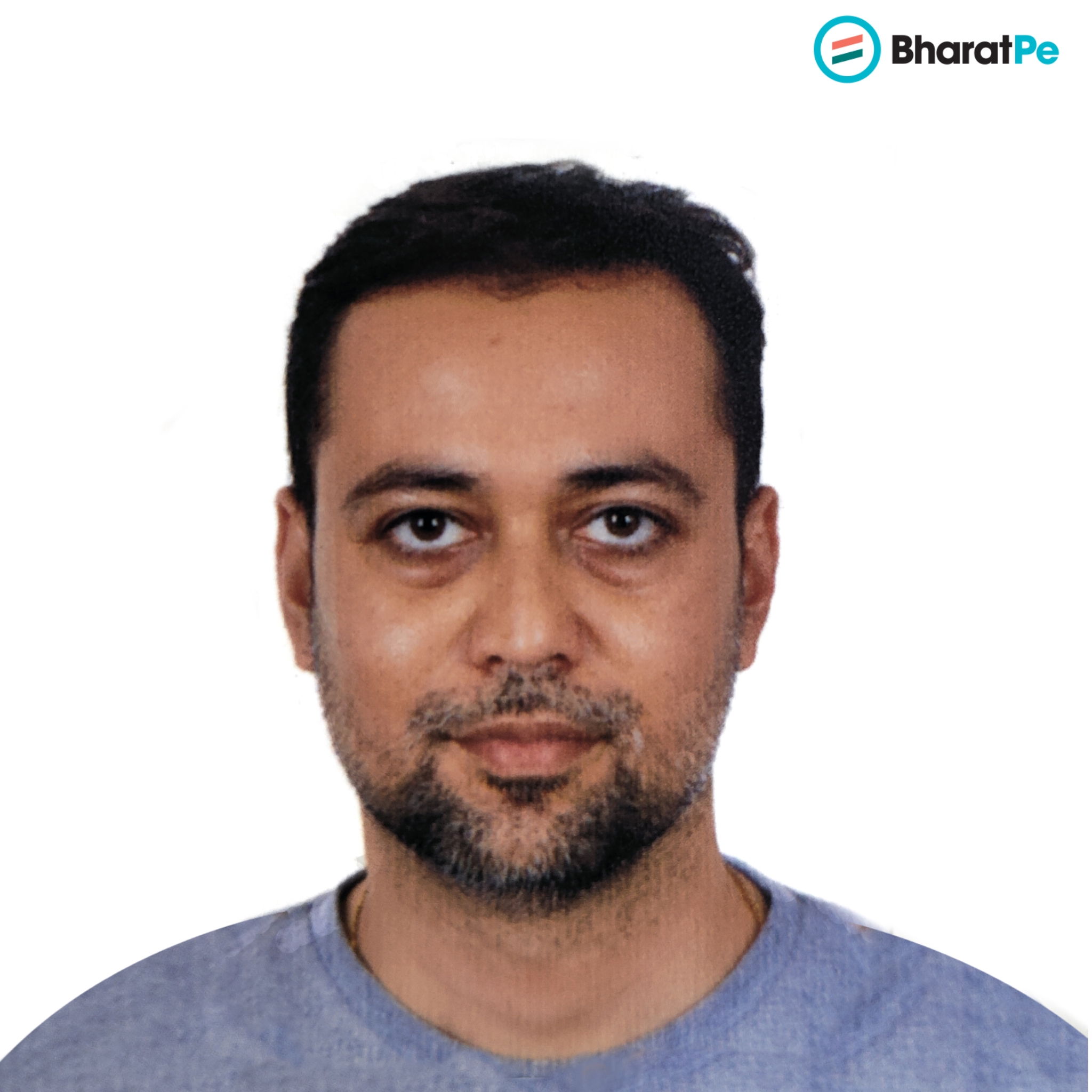
  • BharatPe ropes in Amit Jain as chief risk officer

    BharatPe ropes in Amit Jain as chief risk officer

    New Delhi: BharatPe on Wednesday appointed Amit Jain as its chief risk officer. A seasoned professional in credit risk and portfolio management, Jain will work closely with BharatPe’s co-founder and CEO, Ashneer Grover and BharatePe’s group president, Suhail Sameer, said the company.

    Prior to joining BharatPe, he was the chief risk officer for consumer lending at Bajaj Finance.

    Jain has over 17 years of experience in portfolio and credit risk management across consumer and SME lending, in renowned banking and financial institutions. During his stint of over nine years at Bajaj Finance, he held multiple roles including managing Risk for Personal Loans, Consumer Lending, Credit Card, EMI Cards and Payments, as well as Business Head for the EMI Cards Portfolio. Prior to Bajaj Finance, he held a senior role at SBI Cards in Risk, and Credit Policy team. He has also worked with Standard Chartered Bank and GE Capital.


    Commenting on the appointment, BharatPe co-founder and CEO Ashneer Grover said, “Talent at BharatPe is an amalgamation of Grade A operators with industry experience and passion to do things differently. Amit Jain joining us from Bajaj is a great validation for our lending business model and sets us up for building a high quality book at scale. I look forward to working closely with Amit to build a differentiated lending team and business with a wider set of products for our merchants.”


    The new appointment is part of the company’s larger goal to strengthen its leadership team. Earlier this year, BharatPe roped in PAYBACK’s former MD and CEO, Gautam Kaushik to lead the payments business, and Amarchand Mangaldas’ former partner Sumeet Singh as general counsel and head of corporate strategy.

    Talking about his new role, Jain said, “These are exciting times in the digital lending industry and I look forward to working with this incredible team at BharatPe and serving the credit needs of millions of unbanked and underserved merchants in the country. I believe, with my experience of leading risk and credit for several products in great institutions like Bajaj Finance, I would be able to make a meaningful impact at BharatPe, and therefore, in the lives of our merchants.”


  • Real estate emerges biggest spender on OOH advertising in 2020

    Real estate emerges biggest spender on OOH advertising in 2020

    NEW DELHI: 2020 was a very crucial year for humanity, as the entire world went into sleep mode due to the Covid2019 outbreak. From wearing masks, social distancing, the deadly virus changed the way people have been living for centuries. The pandemic also brought about changes in the out-of-home (OOH) ad segment, as people limited their lives inside their homes. 

    OOH segment de-grew 60 per cent in 2020

    As a majority of people were confined to their homes for the better part of last year, the OOH sector de-grew by 60 per cent in India. Revenue generated by the category was 15.6 billion in 2020, a steep drop I from Rs 39.1 billion in 2019. According to a recent study conducted by FICCI and EY, OOH advertising  will Blake a comeback in 2021, with the revenue rising to Rs 21.6 billion. By the end of 2023, the sector’s revenue will be Rs 31.8 billion, though still less than the 2019 earnings. 

    Traditional OOH comprised 60 per cent of revenues and remained the largest segment, while transit media comprised 35 per cent of the sector. The OOH spends on transit media was 39 per cent in 2019, and it witnessed a drastic fall as rail, metro, and air all witnessed large drops due to the lockdown and restrictions on travel. 

    Findings of the study showed that transit media comprised Rs 5.5 billion in 2020, and it is expected to grow to Rs 10.8 billion by 2023. This will be mainly due to 452 kilometers of metro line projects across the top seven cities that are currently under construction. Moreover, the government also plans to build or widen 60,000 km of roads by 2025. 

    As the vaccine rollout is progressing steadily, the sector is currently on the road to recovery. 

    Real estate dominates the ad sector in OOH

    Real estate and construction, FMCG, financial services, auto, and media are the top five categories that contributed to OOH spends in 2020. With 21 per cent spends, real estate dominated the OOH ad sector. Primarily, the factors that drove the real estate sector in 2020 were revision in home loan interest rates and conducive government policies. 

    However, OOH spends from hospitals, restaurants, educational sector, organised retail, and telecom witnessed a sharp fall in 2020. Moreover, from April to June 2020, most of the OOH sites were dominated by government ads about the pandemic. During this time, several companies refrained from spending on OOH, as Covid cases in the country were on the rise. 

  • Paytm to acquire Raheja QBE General Insurance to expand financial services offerings

    Paytm to acquire Raheja QBE General Insurance to expand financial services offerings

    NEW DELHI: India's homegrown financial technology platform Paytm (owned by One 97 Communications Ltd) along with Vijay Shekhar Sharma is set to acquire Mumbai-based private sector general insurer Raheja QBE. The acquisition is subject to customary conditions, including, approval from the Insurance Regulatory and Development Authority of India (IRDAI). Raheja QBE which started its operations in 2009, is a joint venture between Prism Johnson Ltd and QBE Insurance Group, one of Australia’s largest insurers. The company said that all employees of Raheja QBE would continue working at Mumbai and other locations.

    This strategic acquisition is through QorQl Pvt Ltd, a technology company with a majority shareholding of Vijay Shekhar Sharma and remaining held by Paytm. After enabling millions of Indians with services of homegrown Payments bank, it is now setting sights on democratising general insurance services.

    India's Paytm has a large consumer base and merchant ecosystem with extensive knowledge of consumer behaviour. The company would leverage this reach to innovate insurance products and services to accelerate its reach and adoption. It is in furtherance of Paytm’s mission of driving financial inclusion for over half a billion Indians.

    Paytm president  Amit Nayyar said, "We are excited to welcome Raheja QBE General Insurance into the Paytm family. Its strong management team will help us accelerate our journey of taking insurance to the large population of India with the aim to create a tech-driven, multi-channel general insurance company with innovative and affordable insurance products.”

    QBE Australia Pacific CEO Vivek Bhatia said, “Today’s announcement marks both a continuation of QBE’s strategy to simplify our business and the beginning of a new & exciting chapter for our strong team at Raheja QBE.”

    Prism Johnson Ltd MD Vijay Aggarwal said, "We are happy to announce the sale transaction of our entire 51 percent stake in Raheja QBE General Insurance Company Limited. Our decision to sell our stake in Raheja QBE is in line with our mission to create sustainable shareholder value and will enable us to focus our resources on our core businesses. This move will help the insurance business scale up to new heights by leveraging the large customer base and innovative products offered by Paytm. I would like to thank Raheja QBE’s management team and all the employees for their strong contribution and commitment over the years and wish them every success."

  • PhonePe launches a new Savings Product to help Indians earn more

    PhonePe launches a new Savings Product to help Indians earn more

    Mumbai: PhonePe, India’s leading digital payments platform today announced the launch of a new savings product ‘Liquid Fund’ on its app. The all-digital product will help over 175 million PhonePe users grow their savings by earning higher short term FD-like returns with the ease and liquidity of a Savings Account.  

    Users can begin saving with as low as Rs.500/- in a completely secure and paperless process in less than 5 minutes. Liquid Funds are the best way for new users to experience Mutual Funds as the money is invested in safer instruments such as bank and government securities. Customers can withdraw their money instantly – anytime and from anywhere*. There is no lock-in period and the customer does not have to maintain a minimum balance. The best part is that customers can watch their money grow every day.

    With this launch, PhonePe is taking large strides towards its goal of expanding awareness and adoption of Financial Services products in India. PhonePe aims to achieve this by creating simple products and offerings that are intuitive for customers to understand and easy to apply for. PhonePe’s Liquid Fund product is targeted at users across India including those from smaller towns and cities, who have never experienced solutions beyond Savings Accounts. PhonePe already sees over 56% of its transactions from Tier 2 and Tier 3 cities.    

    Speaking on the launch, Terence Lucien, Head of Mutual Funds, PhonePe, said, “This is our second product in the Mutual Funds space after Tax Saving Funds where we have created a completely digital investment flow for our users. Liquid Funds will allow millions of our users to earn higher returns on their savings with the ability to withdraw their money instantly 24×7*. We will continue to add more such financial solutions for our users to manage their money and fulfill their life aspirations in a better way.”

  • Inter-Ministerial group examining TSPs’ system issues

    NEW DELHI: Communications minister Manoj Sinha has said that an inter-ministerial group (IMG) has been formed to examine systematic issues impacting viability and repayment capacity in telecom sector.

    He said the IMG would furnish recommendations for resolution of stressed assets at the earliest and recommend policy reforms and strategic interventions for telecom sector.

    The IMG has held wide consultations with Banks and telecom service providers and is likely to submit its report shortly.

    The Minister assured that the necessary corrective steps will be taken by the Government for ensuring orderly growth in this sector in terms of services to the common-man including in rural areas.

    The Minister said this in a meeting with promoters of telecom service providers where representatives of Department of Financial Services and State Bank of India were also present.

    The industry put forward the problems of telecom sector causing financial stress on the companies and roadmap for addressing the situation.

  • MRSI Symposium explores opportunities in financial services

    MUMBAI: No parallels can be drawn here. But the fact that in the past couple of years the ‘sell it’ phenomenon has quietly engulfed the financial and banking services sector in India, can only bring a ‘con’ smile to the face of a market researcher. The buzz is that Market Research, which until now was core to the FMCG categories only, is now making gradual inroads into the nascent territories of developing or executing the marketing strategies of the financial products and services. MRSI Symposium: Financial Services, organized by the Market Research Society of India on 4 February, only seems to validate the upcoming trend.
     
     
    Commending on the initiative keynote speaker director general Somaiya Institute of Management Prof. P. V. Narsimha said, “The banking and the financial sectors in India are no more in the evolutionary phase. They are growing very fast. A decade back most of us relied heavily upon the report, either about a depositor or a creditor, by the manager. Today it has become more impersonal. We don’t see our clients as often as we should. In this scenario the only way the system can be replaced is through highly quantitative model building techniques.”
     
     
    Substantiating the thought, TNS India regional director Poonam Saxena said, “I believe that now the financial sector is doing a lot of data mining while using a lot of technological and statistical tools to better understand there customers. However there is also a need to understand what drives the people on emotional levels. In today’s context there is a strong need to develop a strong correlation between customers’ emotional drivers and the behavioral drivers to get a complete picture.”
    But is the Research community in India ready to commit itself to the challenge? The skepticism amongst the financial community vis-?-vis dissemination of information and the confidentiality of key data poses serious concerns. The preparedness of a Research Agency to actually deliver tangible results also haunts the Bankers. As it is still in an evolutionary phase market research agencies’ approach towards the financial services sector is still more akin to the traits of FMCG oriented consumer research. However, certain agencies have initiated focused driven business intelligence models to suffice the lack of empirical research database (most of the models being applied in India are replicas of overseas markets). Millward Brown Services vice president & head, south asia Prasun Basu explained, “Generally the research for the financial services sector is still evolving. It is the same for IMRB too. But in the last few years we have done a huge amount of financial research in various fields like Insurance, Mutual Funds, Credit Cards etc. with a variety of companies both nationalized and private sector companies. In the process we have developed a few specialized models and syndicated studies which work for the sector.”


    Addressing concerns about confidentiality of key data Basu denies any huge amount of skepticism in the financial community. He said we work with ICICI Bank very closely. It is the biggest private bank in India. Our experience with the institution had been extremely enriching. I believe the issue of confidentiality is more of an issue of trust. If that is maintained between the agency and the client then I believe that financial institutions in India are willing to share critical data with the agency.”
    Unilever – Asia director, consumer & market insight, home & oral care and Market Research Society of India president B. V. Pradeep was more apt about the relevance of market research in the financial sector. He said, “One of the issues with market research is that it is not a product that can be displayed on the shelves like an FMCG or an automobile product. The financial sector mindset still is about managing the money. And I think that that should change to managing the consumers’ mind. Today a consumer doesn’t go to buy a product, he wants a brand with which it can relate to and trust upon. The concept of the brand being intangible makes it very difficult for a person in the financial sector to expect tangible results out of it. The objective of a research in the financial sector will remain to produce convincing tools and models capable of producing tangible outputs while the financial sector has to realize that the purse of a consumer follows the heart rather than otherwise.”

    Although the symposium was well represented by the Market Research community, the absence of top executives from the Financial Services sector certainly dampened the spirits. However, the initial trends of big Financial Institutions like ICICI and HDFC pushing for greater application of quantitative techniques of research is a certain sign of strong growth oriented future for the market research fraternity.