Tag: Financial Express

  • Balaji Telefilms posts Rs 90 crore profit after last year’s Rs 22 crore loss

    Balaji Telefilms posts Rs 90 crore profit after last year’s Rs 22 crore loss

    MUMBAI: It’s not just the daily soaps serving plot twists Balaji Telefilms just delivered one of its own, posting a dramatic turnaround from loss to profit in its latest annual results. Balaji Telefilms Ltd., one of India’s most iconic television and content production houses, has posted a stunning financial comeback, reporting a standalone net profit of Rs 90.59 crore for the financial year ending March 31, 2025. This is a significant leap from a net loss of Rs 22.52 crore the previous year, a turnaround worthy of prime-time applause.

    According to the audited results filed with stock exchanges and published in leading dailies on 5 July, the company’s total standalone income from operations stood at Rs 45,306.92 crore for FY25. On a consolidated basis, it reported a net profit of Rs 84.57 crore, recovering sharply from a loss of Rs 26.08 crore in FY24.

    This reversal comes despite a notable dip in revenue for the final quarter ending March 2025, where standalone income dropped to Rs 8.63 crore, down from Rs 13.46 crore in the same quarter last year. Still, profits surged in the final stretch, with the company posting Rs 99.31 crore in Q4 profit, a complete U-turn from the Rs 22.52 crore loss in the comparable quarter.

    The earnings per share (EPS) rose to Rs 6.68 basic for the year, up from negative territory last year signalling restored investor confidence.

    The company, led by Chairman Jeetendra Kapoor, published the results in Financial Express and Mumbai Lakshadeep and noted that detailed financials are available on its website as well as on BSE and NSE portals.

    With flagship shows still ruling the ratings and digital spin-off ventures gaining traction, Balaji seems to have re-scripted its business drama into a tale of fiscal finesse. Whether this rebound is a one-season wonder or the start of a long-running hit remains to be seen but for now, the curtains have risen on a new chapter of profitability.

    (If you are an Anime fan and love Anime like Demon Slayer, Spy X Family, Hunter X Hunter, Tokyo Revengers, Dan Da Dan and Slime, Buy your favourite Anime merchandise on AnimeOriginals.com.)

  • ET Digital brand & business strategy head Syed Fazal Bari moves on

    ET Digital brand & business strategy head Syed Fazal Bari moves on

    Mumbai: The Economic Times Digital head, brand and business strategy, Syed Fazal Bari has quit Times Group. Syed is leaving the organisation in the first week of August after more than 14 years stint.

    According to our sources, Syed has joined The Indian Express Group-owned The Financial Express as business head, digital.

    Syed is a brand and marketing management specialist with a career path spanning close to 15 years. He had joined Times Group-owned The Economic Times Print as a brand chief manager in October 2006. He joined Times Internet in January 2017, where he led brand and business strategy for ET Digital for more than four years.

  • In memoriam: Remembering the lives lost to COVID-19

    Mumbai: The ebbing of the second wave of the pandemic is gradually paving the way for “normal” life to return. The restrictions are beginning to ease and industries are opening up. But with scientists warning of a possible third wave of infections, uncertainties are clouding what the future might hold. Even as people go about picking up the pieces of their lives and putting them back together- trying to return to some semblance of normalcy, some things will remain unchanged, things like the loss of loved ones.

    IndianTelevision joins these families, in remembering the life of some of the industry’s brightest minds lost to the deadly virus.

    Apurv Kumar Passi, 35 – Adobe India 

    Apurv Kumar Passi, 35 joined Adobe India in 2019 as a senior marketing specialist for digital media solutions. In a career spanning over 12 years, Passi spent a decade working for Publicis Groupe Co. He succumbed to COVID-19 on 10 May after battling the virus for three weeks. He is survived by his mother, younger brother, and wife.

    In a double tragedy that struck the family, Passi first lost his father to the dreaded virus, and within two weeks of his death, he succumbed to it. He desperately tried to ensure that his father gets critical medical care at the right time, even as his condition deteriorated rapidly.  In his memory, his colleagues and friends launched a fundraising campaign to raise funds for covid relief.

    His marketing colleague from Adobe, Bhavna Saluja, posted a personal memoir on the fundraiser page, detailing Apurv’s courageous battle with the dreaded virus while looking after his family. “He was everyone’s well-wisher who managed to cross the biggest hurdles of life, with a smile on his face. He was always available to help and sacrificed a lot. Everyone can find a piece of themselves in our Apurv. That’s how special he was!” wrote Saluja “If Apurv were alive today, he would’ve rushed to help more families going through this crisis, maybe just extend that warm hand so that no one else went through the pain he and the Passi family went through, (while) trying to save his dad.”

    Anirban bora, 42 – Economic Times 

    Senior journalist, infographic editor, and illustrator Anirban Bora, 42 worked with The Economic Times, New Delhi. He breathed life into stories with his stunning infographics, drew caricatures & designed the paper. A food aficionado,  Bora also wrote a gastronomy column in the ET’s Sunday Magazine. His work had a character and style, and he loved applying ancient art strokes to modern illustrations. “A quick thinker, a problem-solver, and a magical artist who helped writers on a visual block day,” recalled his colleagues at ET.

    Bora succumbed to COVID-19 on 1 May and survived by his wife and son. “Thank you for making us look at life from your canvas. Thank you for clearing our chaotic minds with your visuals. Thank you for being a fine storyteller. We will miss you! On behalf of team Brand Equity, Ani, this one’s for you,” wrote his colleague Priyanka Nair after his demise in a column in ET.

    Rohit Sardana, 41 – Aaj Tak 

    TV news anchor Rohit Sardana was the executive editor of Aaj Tak of the India Today Group, who also presented the evening show ‘Dangal’ on Aaj Tak. Before joining Aaj Tak in 2017, he was with Zee News where he anchored a prime-time show Taal Thok Ke. Prior to this, Sardana worked for ETV Network and All India Radio. He was a recipient of the 2018 Ganesh Vidyarthi Puraskar Award.

    Sardana died of cardiac arrest caused by Covid-related complications on 30 April, days after he tested positive for the infection. He is survived by his wife, two young daughters, and parents. Aaj Tak and India Today News director Rahul Kanwal remembered Sardana as a “sharp young anchor” who never flinched from asking questions. “Rohit Sardana was the sharpest young anchor I have met. Superb command over Hindi, brilliant with his turn of phrase, precise questions, clear in his thinking, loved by the masses, warm and humble off the screen, he was destined for great things,” Kanwal tweeted.

    India Today Group Founder, chairman, and editor-in-chief Aroon Purie remembered him as ‘a star of the newsroom’. “He had conquered the hearts of both TV and digital viewers. He had so much more to do,” he said.

    Syed Mohammed Talha Nazim, 46 – Ogilvy India

    Nazim, 46 was appointed the executive creative director for Ogilvy’s Bangalore office in May last year, his second stint at the agency. Before a short spell as an entrepreneur in 2019, he was the creative head at Innocean Worldwide. In a career spanning 21 years he worked with Leo Burnett, Bates, McCann, and Ogilvy, and was responsible for his work on several renowned brands. He had won over 180 metals and nominations in international and domestic award shows such as Cannes, D&AD, The One Show, Clio, LIA, Andys, Adfest, Spikes, NY Festivals, and Abbys, having also won Ogilvy’s only Cannes Lion in 2015.

    Nazim died after contracting covid on 10 May. “There was never any room for a negative talk with him. We weren’t allowed to be self-deprecating. His kindness made us want to be better. Write better,” wrote his colleague, Ogilvy Group creative director Divya Bhatia on LinkedIn.

    Nazim’s untimely death was mourned by many of his industry colleagues, whose lives he had touched. Communication professional & screenwriter, Prasoon Joshi tweeted, “He was a beautiful human being. His exceptional Penguin Audiobooks campaign will always resonate. Will miss you.”

    Rajeev Karwal, 57 – Milagrow Business and Knowledge Solutions

    Remembered as ‘Indian consumer goods industry’s brightest star’, Karwal, 57 was known for his brand-building efforts at LG, ONIDA, Philips, and Electrolux. He was credited with LG Corp’s entry into India, while also bringing a paradigm shift to the way robotics is viewed in the country. Rajeev Karwal, the man behind the Made-in-India robots, entered the domestic robots market in 2012 through Milagrow Robotics- the human tech division of his self-founded company, Milagrow Business, and Knowledge Solutions.

    Karwal’s robots were later deployed in COVID-19 wards of hospitals, as doctors and nurses were fearful of getting infected with the coronavirus. In his own words, unfortunately, it took a pandemic for the country to realize the potential of this industry. The company grew by 400 to 500 per cent during the lockdown. But in a cruel twist of fate, just when his ingenious products started to garner mass appeal, Karwal contracted the deadly virus, and on 12 May the Milagrow founder lost his battle to covid after being on ventilator support for almost a week. His attention to detail, his firm grip on data and trends, and his insight into Indian consumer behaviour made him the poster boy of the industry.

    ‘A dynamic leader, inspiration to many like me. Carried aura with humility, was flamboyant yet down to earth and ever-smiling. We have lost a visionary, mentor to many, and a strong leader.’ wrote a friend about him. “The fact that anyone and everyone who ever worked with Rajeev could turn to him for support speaks volumes of the human being Rajeev was”, wrote another.  It is truly tragic that while Karwal’s robots are helping healthcare workers across the country win the battle against COVID-19, he succumbed to the virus.

    Sunil Jain, 58 –  Financial Express 

    Sunil Jain started his career as a financial journalist with the India Today magazine in 1991 and went on to become the business editor at The Indian Express. In 2013, he became the managing editor of The Financial Express. He was credited with managing the newspaper’s circulation and readership in the competitive market. His column in the Financial Express, titled Rational Expectations focused on macroeconomic topics with a searingly honest outlook. Prior to Financial Express, Jain was a senior associate editor at Business Standard. The eminent business journalist was admitted to AIIMS on 3 May after testing positive for COVID-19. Jain passed away on 15 May. Considered one of the finest minds in Indian business journalism, fearless in his commentary, his sharp and incisive opinion pieces will forever be missed.

    Today, as the world tries to heal and revive itself, learning and evolving as we go, the imprints left by these stalwarts on each life they touched has the latter eternally grateful for their distinguished service to humanity. As a famous song goes, “The song has ended, but the melody lingers on…”

    [To Be Continued… ]

  • ‘Vibrant’ Sony Entertainment refreshes with new shows; ESPN to localise global shows

    ‘Vibrant’ Sony Entertainment refreshes with new shows; ESPN to localise global shows

    MUMBAI: Sony Pictures (SPN)’s general entertainment channel Sony Entertainment (SET), celebrating 21st anniversary, has carved a new brand identity and is undertaking a fresh look at programming to bolster its viewership base and build continuous viewing.

    Now taking on new colours of purple, gold and orange, the new on-air display of SET is a plan to build a striking visual appeal for the Indian audience. The channel had a few years ago modified its packaging to convey content innovation and creative vision.Since 2015, however, SET has been trying hard to connect with viewers as it kept slipping on BARC reviews owing to the poor performance of its shows. SET was then highly dependent on Crime Patrol and CID, the Financial Express reported.

    Sony Entertainment Television recently peaked to number three in the Hindi GEC urban ratings chart on BARC India with Mahabali Hanuman, The Kapil Sharma Show, Super Dancer and Kuch Rang Pyar ke Aise Bhi doing quite well.

    The positioning SET plans to adopt is ‘When a relationship turns into partnership, life looks up and leaps forward’, and this is what it will reflect through its programming going ahead.

    Its primary focus area will be to bolster the weekday line-u. The new strategy is to expand the programming hours from the existing 8-11pm to 7pm-12 midnight by bringing in new shows such as Moh Moh ke Dhaage and Peshwa Bajirao, among other.

    In a bid to offer localised and differentiated content, ESPN, which operates in India as Sony ESPN, meantime is planning to customise its international shows such as SportsCenter’ and ‘Pardon the Interruption’ for the Indian market. ESPN at present offers the international version of ‘Pardon the Interruption’, a sports show compered by commentators Michael Wilbon and Tony Kornheiser on Sony ESPN.

    ESPN is also aiming to bring X Games to India, an annual sports event which focuses on action sports such as snowboarding and skateboarding. The US-based ESPN re-entered India in January 2016 and jointly launched new sports channels, a multi-sports website and a mobile app in partnership with Sony Pictures Networks.

    The Indian sports sector is undergoing a sea change with a hike in viewership, sponsorship and participation in sports other than cricket as per a a report titled ‘The Business of Sports’, from consulting firm KPMG and the Confederation of Indian Industry (CII). Sports sponsorship market in 2015 grew approximately 12% from a year ago to reach Rs 5,190 crore, the report stated.

  • ‘Vibrant’ Sony Entertainment refreshes with new shows; ESPN to localise global shows

    ‘Vibrant’ Sony Entertainment refreshes with new shows; ESPN to localise global shows

    MUMBAI: Sony Pictures (SPN)’s general entertainment channel Sony Entertainment (SET), celebrating 21st anniversary, has carved a new brand identity and is undertaking a fresh look at programming to bolster its viewership base and build continuous viewing.

    Now taking on new colours of purple, gold and orange, the new on-air display of SET is a plan to build a striking visual appeal for the Indian audience. The channel had a few years ago modified its packaging to convey content innovation and creative vision.Since 2015, however, SET has been trying hard to connect with viewers as it kept slipping on BARC reviews owing to the poor performance of its shows. SET was then highly dependent on Crime Patrol and CID, the Financial Express reported.

    Sony Entertainment Television recently peaked to number three in the Hindi GEC urban ratings chart on BARC India with Mahabali Hanuman, The Kapil Sharma Show, Super Dancer and Kuch Rang Pyar ke Aise Bhi doing quite well.

    The positioning SET plans to adopt is ‘When a relationship turns into partnership, life looks up and leaps forward’, and this is what it will reflect through its programming going ahead.

    Its primary focus area will be to bolster the weekday line-u. The new strategy is to expand the programming hours from the existing 8-11pm to 7pm-12 midnight by bringing in new shows such as Moh Moh ke Dhaage and Peshwa Bajirao, among other.

    In a bid to offer localised and differentiated content, ESPN, which operates in India as Sony ESPN, meantime is planning to customise its international shows such as SportsCenter’ and ‘Pardon the Interruption’ for the Indian market. ESPN at present offers the international version of ‘Pardon the Interruption’, a sports show compered by commentators Michael Wilbon and Tony Kornheiser on Sony ESPN.

    ESPN is also aiming to bring X Games to India, an annual sports event which focuses on action sports such as snowboarding and skateboarding. The US-based ESPN re-entered India in January 2016 and jointly launched new sports channels, a multi-sports website and a mobile app in partnership with Sony Pictures Networks.

    The Indian sports sector is undergoing a sea change with a hike in viewership, sponsorship and participation in sports other than cricket as per a a report titled ‘The Business of Sports’, from consulting firm KPMG and the Confederation of Indian Industry (CII). Sports sponsorship market in 2015 grew approximately 12% from a year ago to reach Rs 5,190 crore, the report stated.

  • Outbrain expands network to drive growth for Indian publishers

    Outbrain expands network to drive growth for Indian publishers

    MUMBAI: Content discovery platform Outbrain has experienced substantial growth in developing its publisher network in India since the beginning of 2015.


    Joining its list of premium publications in India and around the globe are leading titles across all major verticals, including: news, lifestyle, finance and youth.


    Publishers that have recently joined the Outbrain network include Indian Express, ABP Live, Financial Express, MTV India, ScoopWhoop, Sanjeev Kapoor, StoryPick, MissMalini, and fossBytes.


    Additionally, Outbrain has also renewed its partnership with Network18 in India.


    India continues to be one of the company’s fastest growing markets and Outbrain already counts The Times of India, The Hindu and ESPNcricinfo within its network of premium publications.


    Network18 vice president and head of mobile business Kavi Madan said, “Outbrain is constantly innovating its product and services to provide something truly valuable to online publishers. We decided to renew our partnership with them because over time they have provided the highest quality recommendations and best monetisation across desktop, mobile and apps for Network18.”


    “Outbrain has been an integral part in helping us figure out how to drive engagement with our audiences, as well as supporting our efforts to improve personalisation. This isn’t just about that widget that you see at the bottom of an article. Through the Outbrain Engage solution, we are able to serve the best of our content to all kinds of audiences and deliver what users crave – the best content recommendations,” said Indian Express head of product Vikas Handu.


    The continued expansion of Outbrain’s publisher network across all major verticals in India further extends the content marketing opportunity for brands in this region and significantly increases marketers ability to strengthen their audience relationships and get their content discovered. Outbrain’s network combines both local publishers and global sites such as CNN and recent wins like Time Inc., ESPN and Mashable.


    Outbrain general manager SEA & India Gulshan Verma added, “We are thrilled to welcome these new publishers to the Outbrain network, as well as renew our partnership with Network18. Outbrain’s focus on trust and audience experience is what brings real value to our publisher partners. Our vision is to maximise the monetisation of our audience for publishers, while at the same time driving increased audience engagement, and providing key insights and analytics about their core digital users.”

  • Vice Media sells 10% stake to A+E Networks

    Vice Media sells 10% stake to A+E Networks

    MUMBAI: Shortly after media reports about Time Warner ending talks to buy a stake in Vice Media flashed, Financial Times reported that Vice is wrapping up a deal to sell a 10 per cent stake to A+E Networks, the cable television group jointly owned by Walt Disney and Hearst Corporation for $250 million.


    According to the report, the sale could be announced as early as next week. This deal puts the entire company’s market value at $2.5 billion which represents a steep increase in Vice’s valuation since last year. The company, last year, sold a 5 per cent stake to Rupert Murdoch’s 21st Century Fox for $70 million, valuing the company at $1.4 billion then.


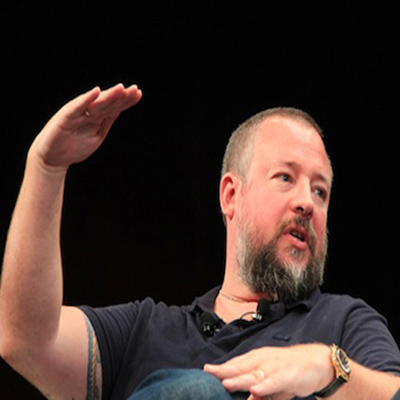
    Talking to the Financial Times, Vice Media co-founder Shane Smith said, “It’s a great deal for us, it means we can preserve our independence and it gives us a war chest for another three years of dramatic growth.”


    Smith also added that Vice is exploring the possibility of having its own channel, for the moment it will be producing programming for the network, which runs shows such as Duck Dynasty and Storage Wars.


    Vice operates a global network of online channels covering news, sport, technology and music. The company currently has 25 offices across six continents, while its YouTube channel has around 4 million subscribers and over 500 million views.


    According to reports, while Vice will produce digital and cable programming for A+E as part of the deal, it will not currently take over running any of its cable channels.


    Until recently, Time Warner was in acquisition talks with Vice about buying a 40 per cent stake in the company. The deal would have reportedly valued the company at about $2 billion. But talks stalled due to disputes over Vice’s valuation, The New York Times reported.


    Founded in 1994, Vice started out as a Montreal music and youth culture magazine but has since expanded into web content, making a splash with its myriad documentary videos on YouTube. It also has a television series on HBO. Vice’s free magazine is printed in 28 countries. 

  • ‘We have a 3-tier growth plan and are eyeing a bn viewers internationally in 3 years’ : MD & CEO – ZEE Punit Goenka

    ‘We have a 3-tier growth plan and are eyeing a bn viewers internationally in 3 years’ : MD & CEO – ZEE Punit Goenka

    For Subhash Chandra the last 20 years has been one man‘s war. He has allied and fought against Rupert Murdoch, fallen and bounced back in winning spirit, triumphed over the competitors, and grown a media empire that can make anybody proud. A nationalist to the core, he has a strong footprint in all the value chains of the media business and stands independent in a media landscape that is occupied by the multinationals.

    When in my early years of journalism, I remember the day I rushed to my editor. I told him that I heard from a source that the merger talks between Chandra and Murdoch had snapped. He told me to go ahead with the story and I was afraid that I could be proven wrong.

    I felt happy that the divorce took place. Some may call this a sadistic pleasure but it made me feel nice that my story in The Financial Express was right and, more importantly, allowed me to observe the growth of a warrior who was blessed with intuitive powers, strong business acumen and an innate ability to get into untapped areas.

    Chandra showed his true colours very early in life and in 1991 got the better of Hong Kong tycoon Li Ka-Shing who asked for $5 million to lease a transponder on AsiaSat. He signed a deal with Richard Li a few months later that would kick-start his Zee empire.

    Zee‘s unchallenged growth from its origins in October 1992 halted in 2000 when Murdoch‘s Star launched Kaun Banega Crorepati (KBC) and the three Balaji ‘K‘ soaps. Chandra‘s convergence game also went nowhere and kicked in losses. But Zee expanded into the regional language markets and Chandra also ventured into online lottery with Playwin.

    The rebound in the Hindi entertainment business happened slowly. Chandra appointed Pradeep Guha as CEO in 2005 and inducted his son Punit Goenka  into the organisation.

    Zee Telefilms Ltd (ZTL) got demerged in late 2006 into Zee Entertainment Enterprises Ltd (Zeel), Zee News Ltd (ZNL), Wire and Wireless India Ltd (WWIL) and Dish TV (DTH). He acquired Ten sports and has a growing sports broadcasting business.

    Chandra‘s sprawling empire is not just in India but has strong positions in different corners of the world with his Indian content.

    Even in 2012, Chandra is not in full retreat. He has passed on the baton to his son but is still around. His overwhelming personality can‘t be missed in the Zee office.

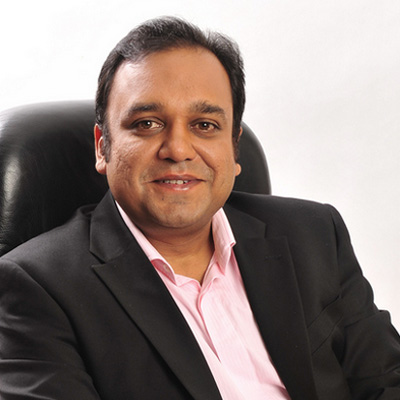
    Asked to “get off the fence” and “get in the game” as head of Zeel in 2008,Goenka has proved that he definitely is his father’s son. He ended the rivalry with Murdoch and formed a distribution joint venture company in 2011 to correct revenue leakages and lift subscription revenues. He has identified growth areas in regional, international and new media. His target: to reach a billion viewers internationally in three years.

    Punit (as he is called by his colleagues in the Zee group) is hungry to grow his charge; whether it is sports broadcasting, entertainment, overseas or in niche genres. In a tete a tete with Indiantelevision.com’s Sibabrata Das, he speaks pretty forthcomingly about the road ahead.

    Excerpts:

    Q. When did you first realise that your father was building a media powerhouse in India and that you would be part of this momentous history of television broadcasting?
    For over 12 years, he was practically handling the business by himself. He was running around, surmounting all hurdles, and being a pioneer in all ways to spearhead private satellite television in India. I never thought I would run this kind of organisation. But when he told me to get into it, I quickly became a part of the Zee culture and liked it.

    Q. Now when you look back, do you see any lost opportunities amid this explosive growth of the company?
    The company has grown so rapidly in such a short span of time that it completely overshadows everything else. Zee started in 1992 from a single channel network and two hours of original programming – and look at where it is today! In fact, the first ten years were maddening growth. We have grown to 31 channels spread across genres, languages and geographies. Our international business is also very healthy. And today Zee (read Zee Entertainment Enterprises Ltd) is one of the top ranked Ebitda delivered companies in the media sector.

    Q. What did you feel when the joint venture with Rupert Murdoch collapsed and your father bought out New Corp‘s stakes in Asia Today, Patco and Siticable?
    The split was bound to happen. Murdoch violated the JV agreement and began to show Hindi content. The pact prescribed Star to focus only on non-Indian language programming. When Zee bought out the JV companies, it was a proud moment for all of us.

    Q. You broke this 12-year divorce three years after you took charge as CEO of Zeel and inked a JV agreement for the distribution business. What made you overcome the past enmity?
    We formed Media Pro Enterprise to correct the faulty distribution structures of the analogue cable TV business. It took us almost a year to finalise the agreement. The purpose is to fix the problems of the industry. There are revenue leakages in the distribution business and broadcasters get a small share of the subscription income collected by the cable networks.

    The media industry has matured and we are living in a period of history when there is need to both compete and co-operate. That is what Star and Zee are doing in India. And it has been beneficial for all the partners. Zee and Star were growing their subscription incomes from domestic cable by 6-7 per cent when they were handling the distribution of their bouquet of channels independently. But both the companies are seeing 15 per cent growth from cable subscription income in the first year of operations of Media Pro itself. We are happy with the way Media Pro is shaping up.


    ‘The industry can’t survive on ARPUs of Rs 180. Broadcasters have heavily subsidised the content cost to support the DTH companies to grow. A similar trend is happening in digital cable‘


    Q. Media Pro is currently distributing 75 channels and more launches are planned by the JV partners. Won‘t this be too heavy a load and the logic of a distribution JV become irrelevant in a completely digitised television carriage-services environment? Are we completely different from the rest of the world where broadcast companies manage their carriage agreements independently?There is no reason why we can‘t work independently in India as well. In a transparent environment, there may not be a need. In any case, the JV agreement is only for five years. We will weigh the market conditions then and take a call after that.

    But having said that, Media Pro has been set up not to just take care of revenue leakages. There are other challenges in the distribution side of the business. The industry can‘t survive on ARPUs (average revenue per user) of Rs 180. Broadcasters have heavily subsidised the content cost to support the direct-to-home (DTH) companies and allow them to grow. A similar trend is happening in digital cable. But content is worth much more and we will have to lift ARPUs.

    Q. Zeel gets subscription income of Rs 4.58 billion from content supply to 20 million paying DTH customers while domestic income from analogue cable is Rs 4.14 billion. What is the potential revenue growth from cable after the networks are digitised?
    We expect healthy growth in subscription income over the next few years. As the cable TV subscriber universe becomes transparent, the paying subscribers will automatically become much more than DTH. Zee will be able to monetise its digital cable subscribers and the revenue gains will be significant. ARPUs will also have to go up.

    Q. Since you have taken charge of Zee‘s broadcasting business, what are the future growth engines that you have identified amid new challenges of digitisation, audience fragmentation and competition from multinationals and big Indian corporates who are tiptoeing into the media business?
    We have identified three-tier strategies for our growth. On the domestic front, regional will drive growth for us. We will participate in fragmenting the regional markets. Our launch of a Bengali movie channel, Zee Bangla Cinema, is part of this game plan. We are working on other genres and in other languages.

    On the international front, we plan to expand our reach from 650 million viewers to 1 billion viewers within three years. We will not just restrict our focus on South Asian audiences; we will have to address local audiences in those geographies as well.

    We have identified Middle East as a key market for us and intend to invest between Rs 1 billion and Rs 2 billion over the next two years. We have just launched our second Arabic channel, Zee Alwan. This will complement Zee Aflam, our first Arabic channel that shows Bollywood movies dubbed in Arabic. We plan to invest $100 million in that market.

    Q. What made Zee so bullish about the Middle East market?
    We had success with Zee Aflam which is a profitable channel. We are also look aggressively at growing in Russia (digitisation by 2014 in that market) and Africa. Russian audiences love Bollywood and our drama content. Besides, we are doing extensive research for the Indonesian and Malaysian markets where we are growing in single digits.

    Q. Is new media a big growth piece for you?
    Yes, this forms the third pillar of our future growth strategy. We have launched our over-the-top (OTT) television distribution platform, Ditto TV, in India and plan to take it to the rest of the world next year. We also have India.com and will continue to offer content across leading genres. With these content formats and advanced distribution avenues, we intend to target new audience segments. I cannot give you a number (in terms of investments or revenues), but we are committed to see that these businesses become successful.


    ‘On the domestic front, regional will drive growth for us. Internationally, we plan to expand our reach from 650 mn to 1 bn viewers in 3 years.New media forms the third pillar of our future growth strategy‘

     
    Q. Digitisation will throw open a lot of growth opportunities. Will we see a more aggressive Zee launching new genre channels and addressing new geographies as distribution costs fall?
    We are getting into the kids TV segment and will be launching Zee Q. The content will aim at ‘learning through fun and entertainment.‘ In the past year, we have already launched six channels.

    But only the four metros will have digital cable. The real action will start in the second phase of digitisation when we go to the smaller towns. We have not studied the potential yet. We will have to wait for knowing the impact after the first phase of digitisation rollout. And then possibly you will see a flurry of channel launches.

    We will also have to keep in mind what we are launching and whether it is going to cannibalise on our Hindi product. And let us not forget that there may be free-to-air (FTA) opportunities in the broadcasting space as well.

    Q. Zeel is sitting on a cash pile of Rs 11 billion. Will you acquire channels to grow in a digital environment?
    We are looking at acquisition opportunities if they come at the right price and make business sense for us. But we are also aware that it is cheaper to build.

    Q. Zee has always been conscious of its costs and its Ebitda margins from non sports business is around 34 per cent and is higher than Star‘s. But with plans to increase original content hours on flagship Hindi GEC Zee TV and more channel launches in the pipeline, will Ebitda margins fall?
    There should be some fall. Even in this fiscal, we are increasing our original content from 24.5 hours to 32-34 hours. This in itself will amount to a rise in content cost by 14-15 per cent. Our revenue in the first quarter of this fiscal has also seen strong growth.

    Q. Zee has already renewed the South Africa and Zimbabwe cricket boards at around 10 per cent inflation cost. But Star has bought out Disney‘s stake in ESPN Star Sports and Sony, deprived of the BCCI rights, will be hungry for acquiring cricket rights. There is also the threat of ESPN entering the marketplace after the two-year non compete contract with Star is over. So will we see Zee bid aggressively to renew the rights for the three boards that are going to come up?
    We are in active negotiations with two boards. But we will be aggressive up to a reasonable level. We realise that sports is a strategic business for us. It gives us dedicated youth and male audiences and adds to our viewership base.

    Q. Will forex fluctuations affect the earlier target of the sports business turning around in FY‘14?
    Yes it could, as most of our sports content is contracted in dollars. But we expect our sports business to come out of the negative zone. We also realise at the same time that sports broadcasting across the world is a low Ebitda margin business.

    Q. Is Zee News Ltd planning to launch an English-language general news channel?
    At ZNL, we are working on our English language strategy. We believe the news channel business will go through a phase of consolidation.

  • Zee Telefilms lodges FIR against T-Series’ Bhushan Kumar

    Zee Telefilms lodges FIR against T-Series’ Bhushan Kumar

    MUMBAI: Subhash Chandra’s Zee Telefilms Ltd. has accused T-Series promoter and Super Cassettes Industries Limited (SCIL) CMD Bhushan Kumar of non-payment of dues and forging of agreement papers. Accordingly, the company has registered an FIR with Mumbai’s Economic Offence Wing (EOW) against Kumar for cheating and forgery.

    According to Zee Telefilms lawyer Ramesh Pandey, the basis of the case with the EOW are two letters drafted by Bhusan Kumar, one on 15 September and the other on 15 May, in which he claims that an amount of Rs 57.3 million was to be paid to SCIL by ETC Channel Network Ltd., on the basis of alleged agreement/Letter dated 15 May 2006.

    However, there is no such agreement/Letter dated 15 May 2006 on the records of ETC Channel Limited, and therefore ETC Channel Network has exercised its legal right & filed a complaint before the EOW for commission of an act of forgery, cheating and criminal conspiracy against Kumar. Pursuant to the same an FIR has been registered at Oshiwara Police Station against Bhusan Kumar and others of SCIL for commission of offence as mentioned above, Pandey adds.

    T-Series lawyers have been quoted in a Financial Express report as saying that, “The letters are not forged and if at all there was a case in the matter, its civil in nature.” The company also claimed that the two officials who had signed the agreement on behalf of ETC have been removed.