Tag: films

  • FICCI FRAMES 2020 postponed

    FICCI FRAMES 2020 postponed

    MUMBAI: FICCI has decided to postpone its annual conference FICCI FRAMES 2020 in view of the public health concerns over coronavirus and the recent advisory from the Ministry of Health & Family Welfare, which has recommended to avoid mass gatherings.

    The three-day global convention was scheduled to be held from 18 to 20 March 2020 at the Grand Hyatt Hotel in Mumbai. It was to cover the entire gamut of media and entertainment segments such as films, TV & radio, print media, digital entertainment, advertisement, live entertainment events, digital and new media.

    A release said that FICCI will soon announce the new dates for the event.

  • India’s leading content creators to come together at The Content Hub 2020

    India’s leading content creators to come together at The Content Hub 2020

    MUMBAI: India’s content creation community will head to The Content Hub 2020, India’s largest content creators’ gathering organised by Indiantelevision.com, today and tomorrow (4-5 March 2020) in Mumbai’s Sahara Star Hotel.

    The Content Hub has been designed as a coming together of thought leaders in the creation and production of films, TV shows, OTT digital series, short-form digital videos, and podcasts. The conference will also have masterclasses and workshops by writers, directors and creators of some the biggest box office and viewing hits.

    “There’s a tremendous demand for content – video and audio – and there is not enough quality supply to meet it,” said Indiantelevision.com Group founder, CEO and editor-in-chief Anil Wanvari. “The Content Hub is bringing together leaders from both the business and creative spaces of film, TV, OTT and short form content to catalyse new ideas, conversations, relationships, opportunities for those involved in the content ecosystem.”

    Close to 80 professionals will discuss and share the experiences of their journeys and giving insights on how success can be attained in the content creation ecosystem through fireside chats, presentations, and panel discussions. 

  • PVR Ltd. launches brand film in the entertainment ecosystem

    PVR Ltd. launches brand film in the entertainment ecosystem

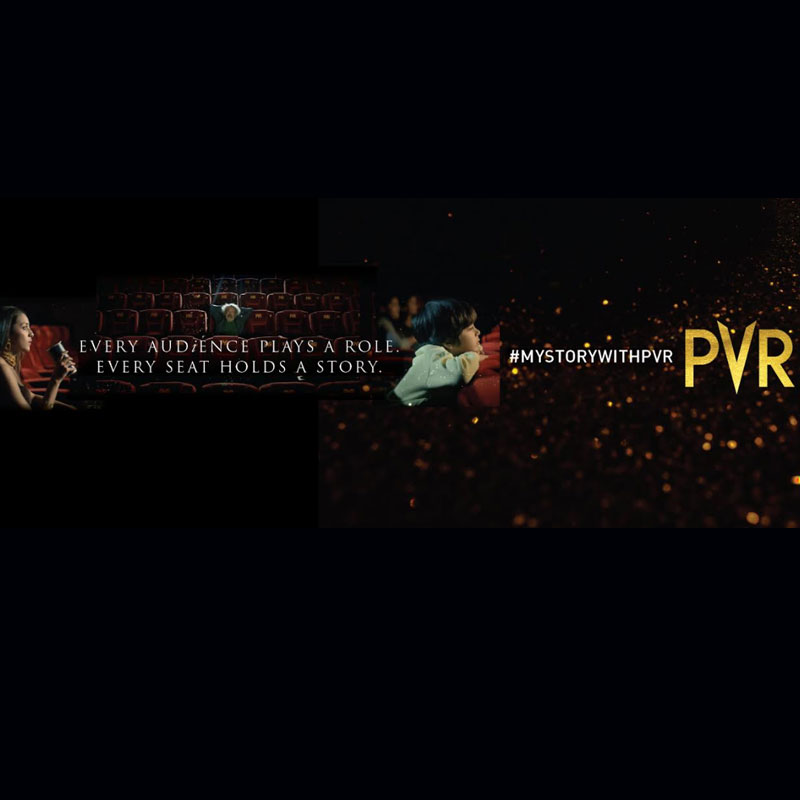
    MUMBAI:  PVR Ltd, India’s largest film exhibitor and a name synonymous to excellence in the entertainment ecosystem, has launched the brand film recently to celebrate its audience for over two decades. The film observes the patrons and the million experiences while stating “Every seat has a story.” Conceptualized around the significance of customer-centricity, PVR Ltd. with the newly launched film reiterates its focus on the customer and their experiences.

    PVR Ltd  chairman and managing director Ajay Kumar Bijli commented “It has been over two decades since we started and if there is one thing which has stayed constant; it is our focus on the customer and the experiences they yield in that 3 hours inside the cinema. We have evolved in every aspect but at the heart of our business lays the audience who drive us, guide us and encourage us to do better, push the envelope and explore new things.”

    “It has been an exceptional year on the business front, and I am grateful to our patrons and partners in supporting us in all our endeavors. Wishing all a very happy and entertaining year-end with family and friends.”

    The film celebrates the stories of the patrons, sharing a million emotions from inside the cinema theaters. It is launched across traditional, digital and social media platforms. 

  • Star India’s ambitious foray into content with Hotstar Specials

    Star India’s ambitious foray into content with Hotstar Specials

    MUMBAI: Star India, the nation’s storyteller and its most innovative content company across TV, Films & Sports, is ready with its next big leap in content on the back of its OTT, Hotstar. The company today announced the launch of Hotstar Specials, a bold and ambitious content foray featuring shows from India’s most acclaimed storytellers. 

    “Star has always challenged conventions and been at the forefront of content reinvention in India" said Sanjay Gupta, MD, Star India. “With the mobile phone leading an explosion in the number of screens in the country, we feel that our content also needs to reinvent and boldly move forward. With Hotstar Specials we hope to create the biggest Indian stories delivered to a billion screens. To bring this vision alive, we are proud to partner with a stellar line up of talent who are headlining our first set of Hotstar Specials"

    For its first set ofHotstar Specials, Star India has partnered with the best storytellers of India including Shekhar Kapur, Neeraj Pandey, Kabir Khan, NikkhilAdvani, Ram Madhvani, Venkat Prabhu, Sudhir Mishra, Tigmanshu Dhulia, NageshKukunoor, Mahesh Manjrekar, Vishal Furia, Rohan Sippy, Debbie Rao, Sharad Devarajan and Salman Khan!

    Hotstar Specials will feature an extensive variety of Indian stories, mounted on a big scale, unconstrained by format. The company's ambition is not to make this a narrow or niche play but to explode into the consciousness of the country in an unprecedented way.  

    Hotstar Specials will enable makers to tell their most passionate stories and provide them unmatched reach. The stories will provide a burst of variety across genres and formats and will be available in seven languages for viewers to consume them in a language of their choice. They will leverage the unprecedented reach of Hotstar to reach the length and breadth of the country and also reach global audiences.  With 350 million downloads and over 150mn monthly active users,  Hotstar is the country’s biggest OTT, significantly bigger than its closest competitors. The launch of Hotstar Specials is yet another moment of disruption for Hotstar, which has been at the forefront of change in the space of digital content in India.

  • M&E to cross Rs 2 trillion by 2020: FICCI-EY report

    M&E to cross Rs 2 trillion by 2020: FICCI-EY report

    MUMBAI: FICCI Frames 2018 saw the launch of its annual media and entertainment (M&E) report, this year by Ernst & Young (E&Y) titled ‘Re-imagining India’s M&E sector’ which captures key insights from the exciting and fast growing Indian M&E sector.

    Launched on Sunday in the presence of the Information & Broadcasting minister Smriti Irani and other industry stalwarts like Star India MD Sanjay Gupta, Siddharth Roy Kapoor, filmmaker Karan Johar and others, the FICCI-EY report highlights that the M&E sector continues to grow at a rate faster than the GDP growth rate, reflecting the growing disposable income led by stable economic growth and changing demographics.

    The report suggests that the Indian M&E sector reached Rs 1.5 trillion in 2017, a growth of around 13 per cent over 2016 and is expected to cross Rs 2 trillion by 2020, growing at a compounded annual growth rate (CAGR) of 11.6 per cent. The digital segment led growth, demonstrating that advertising budgets are in line with the changing content consumption patterns.

    The report states that subscription growth outpaced advertising growth in 2017 but advertising will continue to grow till 2020 led by digital advertising. The report estimates that approximately 1.5 million consumers in India today are digital only and would not normally use traditional media. It is expected that this customer base will grow to 4 million by 2020 generating significant digital subscription revenues of approximately Rs 20 billion. Going forward, micropayment, enabled through the Unified Payment Interface (UPI) and Bharat Interface for Money (BHIM) platforms developed by the National Payments Corporation of India (NPCI) will further accelerate subscription revenues for entertainment content.

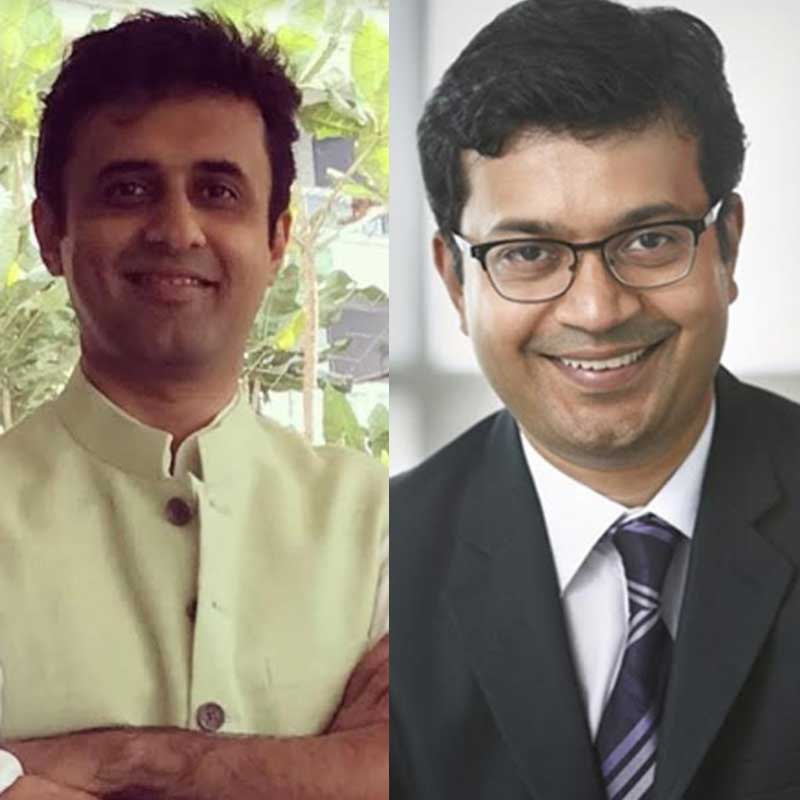
    EY India partner and M&E leader Ashish Pherwani expects digital and gaming sectors to grow between 2 to 3 times by 2020.

    Television
    While advertising is 41 per cent of the total revenues today, the report expects it to grow to 43 per cent by 2020. There are over 30 per cent households in India which are yet to get television screens, but being at the bottom of the pyramid, these households will tend to move first towards free and sachet products. 

    EY report states that the TV industry grew from Rs 594 billion to Rs 660 billion in 2017 and advertising grew to Rs 267 billion while distribution grew to Rs 393 billion. At a broadcaster level, however, subscription revenues including international subscription made up approximately 28 per cent of revenues. 

    Digital media

    250 million people viewed videos online in 2017 and the figure is expected to double to 500 million by 2020. 93 per cent of time spent on digital videos is in Hindi and other regional languages and OTT subscription in India is expected to touch Rs 20 billion by 2020.

    Digital media has grown significantly over the past few years and continues to lead the growth charts on advertising. Subscription revenues are emerging and are expected to make their presence felt by 2020. In 2017, digital media grew at 29.4 per cent on the back of a 28.8 per cent growth in advertising and a 50 per cent growth in subscription. Subscription, which was just 3.3 per cent of total digital revenues in 2016, is expected to grow to 9 per cent by 2020.

    Print

    Today, 98 per cent of readers read dailies and 20 per cent read magazines. Reader base is 395 million, or 38 per cent of the population. Readership has grown by 110 million over the last 3 years. Rural (52 per cent) reader base is larger than urban (48 per cent). 44 per cent of children aged between12-17 years read a newspaper or magazine. Magazines have a higher readership in urban area (57 per cent) as compared to rural areas (43 per cent).

    Print accounted for the second largest share of the Indian M&E sector, growing at 3 per cent to reach Rs 303 billion in 2017 and is estimated to grow at an overall CAGR of approximately 7 per cent till 2020. 

    This growth is expected despite the FDI limit remaining unchanged at 26 per cent and therefore, restricting access to foreign print players and the imposition of GST at 5 per cent on the advertising revenues of the print industry for the first time in history.

    Films

    Regional movies drove the growth in number of releases in 2017. Screen count increased from 9481 in 2016 to 9530 in 2017. Number of Hindi movies crossing the Rs 1 billion mark was highest in 2017 in the past five years. From 31 movies in 2016, Hindi dubbed movies increased more than three times to 96 in 2017.

    The Indian film segment grew 27 per cent in 2017 on the back of box office growth – both domestic and international, coupled with increased revenues from sale of satellite and digital rights. All sub-segments, with the exception of home video grew and the film segment reached Rs 156 billion in 2017. 

    The Hindi films comprise the majority component of the Indian film segment. They contribute almost 40 per cent of the net domestic box office collections annually, despite comprising only 17 per cent of the films made. Films in 29 other Indian languages account for approximately 75 per cent of the films released but they contribute approximately 50 per cent to the annual domestic box office collections. Hollywood and international films comprise the balance.


    M&A in M&E

    The Indian M&E sector witnessed a relatively new trend in deal activity with emerging segments such as gaming and digital gaining momentum, while the deal activity in the traditional media segments was slower. The slowdown can be partially attributed to challenges faced by the advertising segments of the industry due to demonetisation and GST. Overall, the number of transactions in the M&E sector decreased from 56 deals in 2016 to 40 deals in 2017.

  • First Step Entertainment Capital announces ‘Writer’s Lounge’ in Mumbai

    First Step Entertainment Capital announces ‘Writer’s Lounge’ in Mumbai

    Mumbai : A good story is essential to make a film and, hence, writers are critical in the film making process. To consistently create some good stories, writers need a workspace that allows them to sit, think and pen-down their thoughts. The lack of such a space in Mumbai was noticed by Swati Semwal, Creative Head of First Step Entertainment Capital (FSEC). Being a writer herself of many notable short films, she created the FIRST-EVER-FREE co-working space called Writer’s Lounge. It is an inviting space that is located at the epicentre of Television and Films, Versova, Andheri West, Mumbai.

    Writer’s Lounge does not levy any charges for using its space. Its aim is to fill a lacuna that exists due to space constraints in the city. It is available for writers of all ages, associated with Screenwriters Association (SWA), to come, sit and write. Talented writers are groomed in the company of senior writers and peers while they write freely without the fear of paying exorbitant rent.

    Actor, director, writer Swati Semwal, the Creative Head of First Step Entertainment Capital, says, “The idea to start the space actually came to my mind while trying to meet my own needs of finding a suitable space to write. I came from Dehradun to Mumbai and soon realized that there was a need for a common place, where writers could collect, sit, write, exchange and bounce-off ideas amongst each other. This space should become the destination for production houses to come looking for budding writers with fresh ideas. We are helping them feel the ownership of their space. We hope Writer’s Lounge becomes a haven for all aspiring writers.”

    Research indicated that though there were a few websites offering a virtual lounge offering support to writers to send in their stories or exchange ideas across the world, but there was no such facility on-ground in Mumbai. There is a need for a common place, where budding writers are groomed, and nurtured, in good company of senior writers and peers.

    “All writers should have access to a place where their creativity flows easily to become strong narratives. Writer’s Lounge will ensure that all serious writers, who are members of the Screenwriters Association in India, are given a comfortable place and a peaceful environment to write their stories. It allows like-minded people to work under a common roof”; says National Award Winner, Juhi Chaturvedi.

    The well-known Director-Writer of several films, Tanuja Chandra says, “Since the time we were young, we were highly encouraged to read and write and to be creative. Despite being into creative arts, it took me a while to write my first book because I found it very intimidating, since every word counts and affects the impact of the story. When I ventured into script writing and direction, Bollywood was largely a male dominated industry. I managed to make a mark. Today, as I see myself standing with my fellow writers, all women, I must say women have always had to move against the tide and they have come up as winners. I believe if you have talented and motivated people, they should be encouraged to work in a peaceful arena where creativity or efficiency is the highest priority. Here’s wishing Writer’s Lounge the very best to be a successful destination for writers.”

    Writer’s Lounge is a community workspace that’s more than just a few desks, fast internet and free coffee. The team at First Step Entertainment Capital have been working hard at curating the ambience of the lounge and creating a workspace where the writers can just get their head down, and be focused and productive.

    First Step Entertainment Capital’s vision is to support small budget Indie Cinema, and give creative people all they need to make their ‘First Break’ into films, be it in terms of a beautiful space like Writer’s Lounge to write their stories and in giving them all the facilities to make their stories a reality– as a short film, feature film or documentary and can also give them a platform, Net Pix Shorts to showcase their short films.

    Speaking on the occasion Imran Ashraf, the Founder of First Step Entertainment Capital says, “First Step is an incubator of content and creative talent with a goal to discover and nurture fresh talent of film makers and writers. We believe in good storytelling, because content is the king. The mission of First Step Entertainment is to tell stories with social impact, have thought leadership in content, make films fast and give writers of all ages who have innovative ideas and concepts an opportunity to make a film.”

    “At First Step, we personally handpick content and execute it without compromising the story. We want to bring newer and differentiated stories by giving opportunities to fresh talent, and make movies that will make you ‘Think, Laugh and Thrill;” Imran further adds.

    Do visit Writer’s Lounge and enjoy the neat and clean surroundings, with no maddening din to clutter the mind. With the availability of essentials like free community writing space, WiFi, Writer’s Lounge is the First Step towards bringing about a change in a writer’s life!.

    Writer’s Lounge is located at Z A Tower, Yari Road, Versova, Andheri West, Mumbai.

  • Focus shifts to online streaming for Eros

    Focus shifts to online streaming for Eros

    Mumbai: Production and distribution company Eros International no longer wants to be a film studio but a digital content company.

    Listed on the BSE as well as the NYSE, Eros is reducing its dependence on box office and is focussing on its online video streaming platform Eros Now instead. “Over the last two and a half years, Eros Now has tripled in growth. About 25% of our overall revenue comes from digital platform and in three years, digital will be three quarters of our revenue. We are moving on from being a film studio to a digital company,” said Jyoti Deshpande, group chief executive officer at Eros, which aims $260-270 million revenue this financial year.

    Launched in 2014, Eros Now has 3.7 million paying subscribers, which the company expects to touch 6-8 million by March. Eros Now charges Rs 50 a month for streaming content and Rs 100 a month for downloading and watching the content offline. The company has commissioned six films which will be released directly on Eros Now.

    As part of its strategy, Eros, which produced movies such as comedy drama Shubh Mangal Saavdhan, Rajkumar Rao-starrer Newton and Amole Gupte-directed Sniff in 2017, is now only investing in films which are low cost, have a high return on investment and are suitable for digital platforms.

    Although the platform is film-heavy with Eros’s library, the company is working on launching one or two digital series every month. “We are doing a series on human trafficking starring Radhika Apte. We are also working on a comedy one,” said Deshpande.

    Revenue from domestic theatrical releases saw a 1.6% decline in 2016 to Rs9,980 crore, down from Rs10,140 crore in 2015, according to the Indian Media and Entertainment Report 2017 released by lobby group Ficci and consulting firm KPMG, in March. The number of movies that were able to record a positive return on investment also declined from 27 in 2014 to 18 in 2016.

    “On an industry level, the charm of big budget films with star cast appeal is going away as no such project is making money. Even the films which have been declared hit, there is nothing in the profit and loss accounts, when you actually look there. We were one of the first companies to call the trend,” added Deshpande.

    Earlier this year, Eros suffered a brief liquidity crisis ahead of the maturing of its $85 million revolving credit facility (RCF) on 31 March. Standard and Poor’s (S&P) had lowered its long-term corporate credit rating on Eros International to “B-” from “B+” and placed it on credit watch with negative implications. The company, however, won a last-minute reprieve from creditors by executing documentation to extend the maturity of the RCF by six months.

  • Section 377: Films, TV, Online and LGBT content

    Section 377: Films, TV, Online and LGBT content

    MUMBAI: Ten years ago most Indians probably did not know what Section 377  of the Indian Penal Code was all about. But the lobbing around that it has received since then has made it a common-as-garden word in the country today.

    It dates back to 1860 and it criminalises  “voluntarily carnal intercourse against the order of nature (by) any man, woman or animal.” Under it, any member of the already marginalised lesbian, gay, bisexual, transgender (LGBT) community could be sent to jail.

    In 2009, in keeping with the rising LGBT voices, it was declared unconstitutional by the Delhi High Court. Four years later, that decision was overturned by the Supreme Court, which said that its amendment or annulment should be the prerogative of the parliament, not the judiciary. Then on 2 February, 2016, a three-member bench of the Supreme Court said that a five-member bench would review afresh all the petitions that had been filed with it. A decision that was met with resounding applause by an estimated three million publicly declared Indian LGBTs (the number would be higher if one were to consider those who prefer to keep their sexual preferences private).

    Indiantelevision.com decided to take a dekko at how TV channels and other audiovisual media have dealt with those who prefer the same gender.

    Indian news channels have on the whole been objective, giving both sides – those favouring gay and bisexual rights and those against – an equal platform to air their views. Some English news channels have however taken an advocacy position for them. India’s first transgender news anchor Padmini Prakash made her debut on Tamil television recently. A few years ago, India’s first transgender television talk show hostess Rose Venkatesh was seen on Ipapdikku Rose on Star Vijay.

    Hindi GECs on the whole have caricatured and forced stereotypes on audiences – whether it was ‘Maddy’ in Jassi Jaisi Koi Nahi or characters in Pyaar Kii Yeh Ek Kahani. On the unscripted front, cross dressing male actors on various comedy shows have parodied the third gender. Recently, MTV India was bold enough to air an episode of The Big F titled ‘I Kissed A Girl,’ which featured two young girls’ desire for each other and also the first lesbian kiss on Indian television.

    TV audiences either did not watch the episode or thought it was okay for girls to make out and fall in love with each other because no complaints to the Broadcasting Content Complaints Council (BCCC) were announced at least till the time of writing this story. However, a few months back viewers objected to an episode of Grey’s Anatomy featuring a homosexual encounter and complained against the broadcaster Star World to the BCCC. They however have kept mum when episodes of American series like Orange is the New Black, Lost Girl, Orphan Black, Faking It, and How to Get Away with Murder aired, featuring steamy and risqué scenes between members of the same sex.

    “Though TV has tried to experiment with LGBT content, shows like Maryada… Lekin Kab Tak, which dealt with matured relationship between two married gay men, need to come back to the idiot box,” says Sridhar Rangayan, who directed many a Hindi TV series before setting up Solaris Pictures, which makes films with a special focus on queer subjects.

    Rangayan has also been the festival director of the Kashish Mumbai-International Queer Film Festival. This year’s edition, which is to be held from 25 to 29 May 2016, will take a look at the LGBT community in a larger way. “Love is not just romantic love but is also different shades of love. We are bringing in more regional and Indian films this year. We are going to encourage more parents, friends and colleagues to attend this festival,” adds Rangayan.

    Talking about the representation that the community gets in today’s society in India he further adds, “There is a need for happy, affirmative and positive stories or at least a normal portrayal of them. What bothers me and is sickening is this entire image of them taken as caricatures. Shows like Comedy Circus or Comedy Nights with Kapil (now off air) ridicule them and the way they are conceptualised is gross. I don’t know why they can’t have actual transgender actors coming in which can make it look more real for people to watch them.”

    “I don’t think a subject or work or genre works independently. It goes hand-in-hand. In such a scenario, producers need to be sensitive about not using the characters in the show as caricatures just for the sake of it,” expresses Monozygotic co-founder Rajiv Ram. “I also believe that we should watch our sense of humour. Jokes are being cracked on other communities as well, which is not a problem. The problem is the lack of acceptance, knowledge, sensitivity and the mindset of the people in the society.”

    Rangayan believes that Indian TV production houses have been progressive and have been open to deal with stories around various subjects (including those targeting the LGBT community) but the fear of governmental, legal and societal retribution has made them tread cautiously. “The same applies to actors, broadcasters and the entire TV fraternity. We all are just waiting for that spark from the government,” he adds.

    Whether there will be a backlash or not will be tested in the not too distant future. If the gossip rags are to be believed, veteran actor Anil Kapoor has expressed his interest to adapt the American sitcom Modern Family (featuring gay characters as two of the main protagonists) for Indian television.

    “We look for great stories wherever they come from. I believe there are great stories within the gay and lesbian community just like any other and we do seek to tell them within the confines of what is permitted by broadcasting regulations and sensibility. In our youth series Kaisi Yeh Yaarian, we explored stories in this space and told them well and were also well received,” says BBC Worldwide India MD and creative head Myleeta Aga.

    Industry professionals say shows will pass muster as long as certain criterion are kept in mind.

    “The content should comply with the internal decency standards of the regulatory board and the government,” says AXN and Sony Pix business head Saurabh Yagnik.

    “The characters need to be interesting and universal, and the stories need not be written from the western mindset. They need to have an Indian context,” says Sunshine Productions founder Sudhir Sharma. “If you are creating something, which is not relevant to the Indian audiences or from the Indian culture’s point of view, such content will be difficult to digest. I think the government will have an issue only if we get into some edgy controversial topics.”

    Media and creative professionals say the winds of change have been blowing in other mediums and will continue to do so. Hindi cinema, for instance. Films like Margarita with a Straw and Aligarh have gone an inch forward in spreading the right message about the community. Other films like Dostana, Fire, Bomgay, My Brother Nikhil, Honeymoon Travels Pvt Ltd, etc, have portrayed characters partially related to those preferring same sex or from the third gender.

    Online is one medium, which is going to see a flood of LGBT content flowing. Badmshiyaan director recently shared the promo of his soon to be launched series titled All About Section 377. The web series consists of eight episodes produced by Weirdoze and The Creative Gypsy. It features Gulshan Nain, Ankit Bhatia, Mustafa Shaikh and Amit Khanna himself. 

    Yash Raj Films’ youth banner Y-Films has also got into the fray when it launched the music video of India’s first transgender band named 6-pack band. The video features its first song titled as ‘Hum Hai Happy,’ which is a cover version of Pharell Williams’ song, ‘Happy.’

    ALT Entertainment – a Balaji Telefilms company – is believed to be incubating ambitions to launch many a web series targeting LGBT subjects for its soon to be launched OTT platform.

    Khanna echoed many an Indian’s thought at the launch of his web series promo when he said, “The existence of Section 377 itself is frightening. How does someone else get to decide how, when and who, one should love? Basically the right of ‘freedom of choice’ isn’t legal anymore…”

    That is something the five member  Supreme Court bench will have to really ponder on.
  • Section 377: Films, TV, Online and LGBT content

    Section 377: Films, TV, Online and LGBT content

    MUMBAI: Ten years ago most Indians probably did not know what Section 377  of the Indian Penal Code was all about. But the lobbing around that it has received since then has made it a common-as-garden word in the country today.

    It dates back to 1860 and it criminalises  “voluntarily carnal intercourse against the order of nature (by) any man, woman or animal.” Under it, any member of the already marginalised lesbian, gay, bisexual, transgender (LGBT) community could be sent to jail.

    In 2009, in keeping with the rising LGBT voices, it was declared unconstitutional by the Delhi High Court. Four years later, that decision was overturned by the Supreme Court, which said that its amendment or annulment should be the prerogative of the parliament, not the judiciary. Then on 2 February, 2016, a three-member bench of the Supreme Court said that a five-member bench would review afresh all the petitions that had been filed with it. A decision that was met with resounding applause by an estimated three million publicly declared Indian LGBTs (the number would be higher if one were to consider those who prefer to keep their sexual preferences private).

    Indiantelevision.com decided to take a dekko at how TV channels and other audiovisual media have dealt with those who prefer the same gender.

    Indian news channels have on the whole been objective, giving both sides – those favouring gay and bisexual rights and those against – an equal platform to air their views. Some English news channels have however taken an advocacy position for them. India’s first transgender news anchor Padmini Prakash made her debut on Tamil television recently. A few years ago, India’s first transgender television talk show hostess Rose Venkatesh was seen on Ipapdikku Rose on Star Vijay.

    Hindi GECs on the whole have caricatured and forced stereotypes on audiences – whether it was ‘Maddy’ in Jassi Jaisi Koi Nahi or characters in Pyaar Kii Yeh Ek Kahani. On the unscripted front, cross dressing male actors on various comedy shows have parodied the third gender. Recently, MTV India was bold enough to air an episode of The Big F titled ‘I Kissed A Girl,’ which featured two young girls’ desire for each other and also the first lesbian kiss on Indian television.

    TV audiences either did not watch the episode or thought it was okay for girls to make out and fall in love with each other because no complaints to the Broadcasting Content Complaints Council (BCCC) were announced at least till the time of writing this story. However, a few months back viewers objected to an episode of Grey’s Anatomy featuring a homosexual encounter and complained against the broadcaster Star World to the BCCC. They however have kept mum when episodes of American series like Orange is the New Black, Lost Girl, Orphan Black, Faking It, and How to Get Away with Murder aired, featuring steamy and risqué scenes between members of the same sex.

    “Though TV has tried to experiment with LGBT content, shows like Maryada… Lekin Kab Tak, which dealt with matured relationship between two married gay men, need to come back to the idiot box,” says Sridhar Rangayan, who directed many a Hindi TV series before setting up Solaris Pictures, which makes films with a special focus on queer subjects.

    Rangayan has also been the festival director of the Kashish Mumbai-International Queer Film Festival. This year’s edition, which is to be held from 25 to 29 May 2016, will take a look at the LGBT community in a larger way. “Love is not just romantic love but is also different shades of love. We are bringing in more regional and Indian films this year. We are going to encourage more parents, friends and colleagues to attend this festival,” adds Rangayan.

    Talking about the representation that the community gets in today’s society in India he further adds, “There is a need for happy, affirmative and positive stories or at least a normal portrayal of them. What bothers me and is sickening is this entire image of them taken as caricatures. Shows like Comedy Circus or Comedy Nights with Kapil (now off air) ridicule them and the way they are conceptualised is gross. I don’t know why they can’t have actual transgender actors coming in which can make it look more real for people to watch them.”

    “I don’t think a subject or work or genre works independently. It goes hand-in-hand. In such a scenario, producers need to be sensitive about not using the characters in the show as caricatures just for the sake of it,” expresses Monozygotic co-founder Rajiv Ram. “I also believe that we should watch our sense of humour. Jokes are being cracked on other communities as well, which is not a problem. The problem is the lack of acceptance, knowledge, sensitivity and the mindset of the people in the society.”

    Rangayan believes that Indian TV production houses have been progressive and have been open to deal with stories around various subjects (including those targeting the LGBT community) but the fear of governmental, legal and societal retribution has made them tread cautiously. “The same applies to actors, broadcasters and the entire TV fraternity. We all are just waiting for that spark from the government,” he adds.

    Whether there will be a backlash or not will be tested in the not too distant future. If the gossip rags are to be believed, veteran actor Anil Kapoor has expressed his interest to adapt the American sitcom Modern Family (featuring gay characters as two of the main protagonists) for Indian television.

    “We look for great stories wherever they come from. I believe there are great stories within the gay and lesbian community just like any other and we do seek to tell them within the confines of what is permitted by broadcasting regulations and sensibility. In our youth series Kaisi Yeh Yaarian, we explored stories in this space and told them well and were also well received,” says BBC Worldwide India MD and creative head Myleeta Aga.

    Industry professionals say shows will pass muster as long as certain criterion are kept in mind.

    “The content should comply with the internal decency standards of the regulatory board and the government,” says AXN and Sony Pix business head Saurabh Yagnik.

    “The characters need to be interesting and universal, and the stories need not be written from the western mindset. They need to have an Indian context,” says Sunshine Productions founder Sudhir Sharma. “If you are creating something, which is not relevant to the Indian audiences or from the Indian culture’s point of view, such content will be difficult to digest. I think the government will have an issue only if we get into some edgy controversial topics.”

    Media and creative professionals say the winds of change have been blowing in other mediums and will continue to do so. Hindi cinema, for instance. Films like Margarita with a Straw and Aligarh have gone an inch forward in spreading the right message about the community. Other films like Dostana, Fire, Bomgay, My Brother Nikhil, Honeymoon Travels Pvt Ltd, etc, have portrayed characters partially related to those preferring same sex or from the third gender.

    Online is one medium, which is going to see a flood of LGBT content flowing. Badmshiyaan director recently shared the promo of his soon to be launched series titled All About Section 377. The web series consists of eight episodes produced by Weirdoze and The Creative Gypsy. It features Gulshan Nain, Ankit Bhatia, Mustafa Shaikh and Amit Khanna himself. 

    Yash Raj Films’ youth banner Y-Films has also got into the fray when it launched the music video of India’s first transgender band named 6-pack band. The video features its first song titled as ‘Hum Hai Happy,’ which is a cover version of Pharell Williams’ song, ‘Happy.’

    ALT Entertainment – a Balaji Telefilms company – is believed to be incubating ambitions to launch many a web series targeting LGBT subjects for its soon to be launched OTT platform.

    Khanna echoed many an Indian’s thought at the launch of his web series promo when he said, “The existence of Section 377 itself is frightening. How does someone else get to decide how, when and who, one should love? Basically the right of ‘freedom of choice’ isn’t legal anymore…”

    That is something the five member  Supreme Court bench will have to really ponder on.
  • Are film promotions on TV losing novelty?

    Are film promotions on TV losing novelty?

    MUMBAI: Television has carved a niche for itself in India.  There are many different kinds of shows ranging from fictional, non-fictional, reality and seasonal programmes. While the film fraternity used to earlier view television as a subordinate to movies, today, it is hard for the fraternity to imagine its existence without television. Over the years, television shows have become the most sought after platform when it comes to film promotions. Films are being promoted radically on every show and by doing so, the audience gets a chance to formulate opinions about an upcoming movie. The films get noticed and it builds curiosity amongst the viewers. But is this trend wearing out?


    Speaking on how the promotion of films influences the audience, producer of Taarak Mehta Ka Ooltah Chashmah, Asit Kumar Modi says, “Film promotion on television shows is very common. These days, everybody needs media publicity. So, a film will definitely benefit by being on a popular show on TV. At the same time, the TV show will also have celebrities for an episode or two. It’s a win-win situation.”


    Having a similar opinion on the impact of film promotions on television, producer of Diya Aur Bati Hum, and Punar Vivah, Sumeet H Mittal opines, “I believe it works to the advantage of both the show as well as the film being promoted. For the television series, it gives the audience a twist to look forward to while in the case of the film being promoted, it helps to reach an assured mass audience.”


    With the stupendous success of ‘Happy New Year’ (HNY), one has to agree that marketing strategies are vital for a film to get the right kind of attention. The baadshah of Bollywood, Shah Rukh Khan promoted HNY on platforms like ‘Kaun Banega Crorepati’ (KBC), ‘Comedy Nights with Kapil’ and went a step ahead by even launching a reality show, ‘Dil Se Naachein Indiawaale’ on Zee TV.

    Founder of Director’s Kut Productions and director of many popular hit television shows, Rajan Shahi, expresses, “In terms of film promotions on television, I feel that the novelty has gone away. Few years back, it was a rarity to see a Bollywood celebrity on television. The audience used to look forward to it.  It was something new and generated lots of curiosity. These days, every film is being promoted on every show, on various channels. It is not as exciting as it used to be before. The audience has understood that these are all promotional tactics.”


    Well, the fact is – trends are temporary. The audience today is wise enough to understand that a celebrity appearing on a show is just part of the movie’s promotional campaign. Whether or not this promotional mechanism will be equally popular in the next few years would depend on what new marketing strategies film makers come up with.