Tag: Film

  • Tamil Nadu minister says film releases should come back to theatres

    Tamil Nadu minister says film releases should come back to theatres

    MUMBAI: Will blockbuster film releases make a comeback to the cinema halls away from OTT platform premieres?

    The jury is out. First the government has to allow theatres and multiplexes to pull down the padlocks they have put on them. Of course the multiplex association, Ficci and CII have all been making a push with the government on how the opening up can happen. 

    Now another push has come from Tamil Nadu, which has seen some  films coming out on OTT platforms first, skipping  theatre releases. Tamil Nadu’s state minister of information and publicity Kadambur Raju today stated that the their unfettered release would end up as a revenue loss for the state government.

    Speaking at a local function in Tuticorin in southern Tamil Nadu  he said it was okay that films such as Ponmagal Vandhal were released on OTT platforms during the lockdown phase but now that Unlock 1.0 has started, the government is not in favour of filmmakers taking such a route. He had a simple reason for this: the government is losing GST as well as entertainment tax in Tamil Nadu.

    Hence, he has urged the various stakeholders – producers, distributors and exhibitors –  to come together to find solutions to reverse this trend, according to a report in The Hans India.

    Meanwhile, the union minister of information and broadcaster Prakash Javadekar had last week told  a delegation of film producers and distributors via video-conference that he would look into the opening up of cinema halls by end June. He also told them he would inform the various ministries to provide succor as far salary subsidies, interest free loans for three years, exemption on taxes and duties, waiver of minimum demand charges on electricity and power at industrial rates. 

  • M&E industry grew by almost 9% to reach Rs 1.82 tn in 2019: FICCI – EY report

    M&E industry grew by almost 9% to reach Rs 1.82 tn in 2019: FICCI – EY report

    MUMBAI: The Indian Media and Entertainment (M&E) sector reached RS 1.82 trillion (US$25.7 billion) in 2019, a growth of 9 per cent over 2018 states the FICCI EY report ‘The era of consumer A.R.T. – Acquisition Retention and Transaction,’ launched today. With its current trajectory, the M&E sector in India is expected to cross INR2.4 trillion (US$34 billion) by 2022, at a CAGR of 10 per cent*.

    While television and print retained their positions as the two largest segments, digital media overtook filmed entertainment in 2019 to become the third largest segment of the M&E sector. Digital subscription revenues more than doubled from 2018 levels and digital advertising revenues grew to command 24 per cent of total advertising spend.

    The sector continues to grow at a rate faster than the GDP, driven primarily by growth in subscription-based business models and India’s attractiveness as a content production and post production destination.

    The rapid proliferation of mobile access is enabling on-demand, anytime-anywhere content consumption nationwide. With a population of 1.3 billion, a tele-density approaching 89% of households, 688 million internet subscribers and nearly 400 million smartphone users, India’s telecom industry is poised to become the primary platform for content distribution and consumption. India ranks as one of the fastest-growing app markets globally, where entertainment apps are driving significant consumer engagement.

    Online gaming retained its position as the fastest growing segment on the back of transaction-based games mainly fantasy sports, increased in-app purchases and a 31 per cent growth in the number of online gamers to reach around 365 million.

    Uday Shankar, Senior Vice President FICCI, said, “Riding the wave of exponential progress made towards digital accessibility and adoption, the M&E industry has been a forerunner of a dynamic and aspirational India. New products and business models are being imagined to capitalize on the rise in media consumption. Global players are recognizing the need to build India-centric offerings. The coming years are likely to usher in greater innovation in content formats, means of dissemination, and business models.”

    Ashish Pherwani, Partner and Media & Entertainment Leader, EY India, stated, “The M&E sector witnessed a surge in content consumption as digital infrastructure, quantum of content produced and per-capita income increased in 2019.  Driven by the ability to create direct-to-customer relationships, the sector firmly pivoted towards a B2C operating model, changing the way it measured itself. As entertainment and information options grew and choice increased the era of consumer Acquisition, Retention and Transaction (ART) redefined the media value chain leading to the emergence of many new trends and strategies across content, distribution, consumption and monetization.”

    “The coronavirus outbreak will have a significant adverse impact on the sector, the situation is still evolving both in India and many parts of the world, the scale of the impact cannot be estimated immediately,” he added.

    Key findings

    Television:

    The TV industry grew from Rs 740 billion to INR 788 billion in 2019, a growth of 6.5 per cent. TV advertising grew 5 per cent to Rs 320 billion while subscription grew 7 per cent to Rs 468 billion. Regional channels benefited from the New Tariff Order as their consumption increased by over 20% in certain cases. General entertainment and movie channels led with 74 per cent of viewership. On the back of several key announcements by the central and state governments such as Article 370, the Citizenship Amendment Act, and a general election, the news genre witnessed a growth to almost 9 per cent of total viewership, up from 7.3 per cent in 2018. In sports cricket emerged as the big winner in 2019 as it accounted for over 80 per cent of the sports viewership, up from 70 per cent last year, due to the ICC World Cup.

    Key insights – Television will remain the largest earner of advertising revenues even in 2025, approaching Rs570 billion. Viewership of regional language channels will continue to grow and reach 55 per cent of total viewership in India as their content quality improves further. Content viewed on smart TV sets will begin to reflect that consumed on mobile phones, providing a window for user generated content companies and other non-broadcasters to serve content on the connected television screen.

    Print:

    Despite a 3 per cent revenue degrowth at Rs 296 billion, print continued to retain the second largest share of the Indian M&E sector. Circulation revenues increased by 2 per cent to Rs 90 billion as newspaper companies tactically increased prices in certain markets. Advertising revenues fell 5 per cent to INR 206 billion in 2019 as AdEX volumes fell by 8 per cent. Margins improved as newsprint cost measures were implemented and companies benefited from the reduction of newsprint prices.

    Key insights – 2019 witnessed a significant growth in digital news consumers over 2018 when 300 million Indians consumed news online. Most large print companies had a defined digital business, with two companies crossing Rs 1 billion in digital revenues. Digital subscription, though nascent, has increased as several publications have put digital products behind a paywall.

    ·Digital media:

    In 2019, digital media grew 31 per cent to reach INR 221 billion and is expected to grow at 23 per cent CAGR to reach Rs 414 billion by 2022. Digital advertising grew 24 per cent to Rs 192 billion driven by increased consumption of content on digital platforms and marketeers’ preference to measure performance. SME and long tail advertisers increased their spends on digital media as well.  Pay digital subscribers crossed 10 million for the first time as sports and other premium content were put behind a paywall.  Consequently, subscription revenue grew 106 per cent to Rs 29 billion. Digital consumption grew across platforms where video viewers increased by 16 pe cent, audio streamers by 33% and news consumers by 22 per cent.

    Key insights: By 2020, OTT subscription market will approximate 10 per cent of the total TV subscription market (without, however, considering data charges).  We estimate over 40 million connected TVs by 2025, which will provide a huge opportunity for content creators to reach family consumers.  Better bandwidth will drive large screen consumption. By 2025, 750 million smart phone screens will also increase the demand for regional, UGC and short content, creating a short video ecosystem that can create significant employment.  The battle for content discovery will intensity and move to the unified interface.

    ·Films:

    The Indian film segment grew 10 per cent in 2019 to reach INR 191 billion driven by the growth in domestic theatrical revenues and both rates and volume of digital/ OTT rights sold. Domestic film revenues crossed INR 115 billion with Gross Box Office collections for Hindi films at Rs 49.5 billion – the highest ever for Hindi theatricals. Overseas theatricals revenues fell 10 per cenr to Rs 27 billion despite more films being released abroad primarily as films with superstars didn’t perform as well in 2019. 108 Hollywood films were released in 2019 as compared to 98 in 2018. The gross box office collections of Hollywood films in India (inclusive of all their Indian language dubbed versions) grew 33 per cent to reach Rs 16 billion. As single screens continued to reduce, the total screen count decreased by 74 to 9,527.

    Key Insights: Digital rights continued to grow in 2019 with an increase in revenues from Rs 13.5 billion in 2018 to Rs 19 billion in 2019. Digital release windows shortened with some movies releasing on OTT platforms even before their release on television. In-cinema advertising grew marginally to Rs 7.7 billion in 2019 as multiplexes and advertising aggregators started signing long-term deals with brands. Seventeen hindi films entered the coveted Rs 100 crore club in 2019, which is the highest ever. Interestingly, six movies made it to the rs 200 crore club in 2019, as opposed to three in 2018. The future will be driven by immersive content (technology and VFX rich) experiences to drive theatrical footfalls and some genres of films could migrate to home viewership only.  We can expect to see creation of a segmented Hindi-mass product for the heartland at low ticket prices.

    Mergers and Acquisitions in M&E

    While the number of deals increased to 64 in 2019 from 41 in 2018, the overall deal value was

     much lower at Rs 101 billion as compared to Rs 192 billion in the previous year. This was largely due to the absence of big-ticket deals with only four deals crossing the US$100 million threshold. The highest amount of investment was made in television, followed by digital, radio and gaming. Deal activity was spearheaded by new media such as digital and gaming, which witnessed 54 of the 64 deals in 2019, however, in terms of deal value, the share of traditional media segments such as TV, radio and film exhibition was 63 per cent.

  • Oddball Motion Pictures gets Rs 250 cr for film production

    Oddball Motion Pictures gets Rs 250 cr for film production

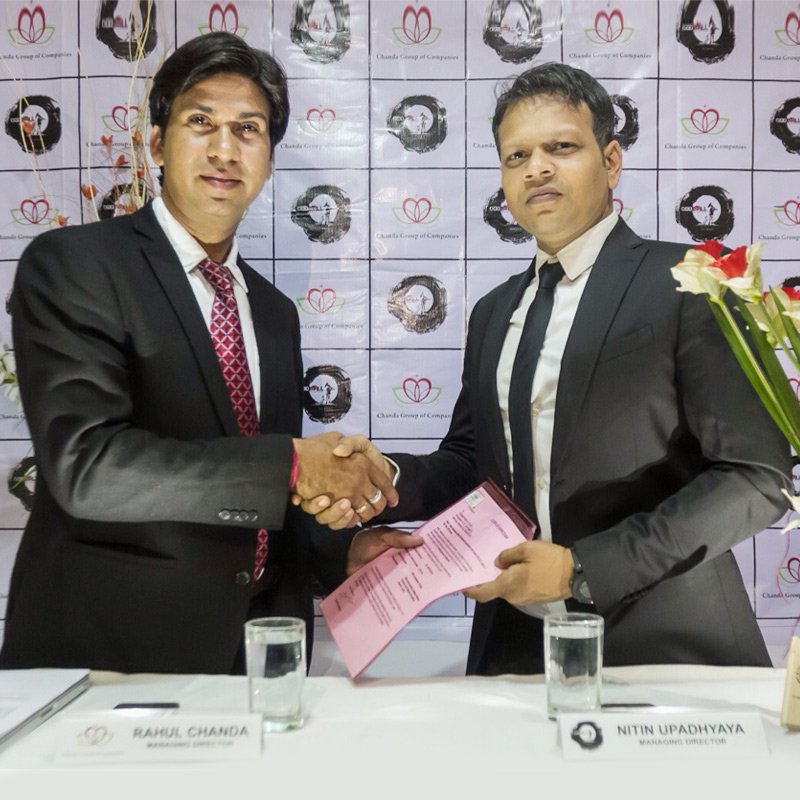
    MUMBAI: Oddball Motion Pictures, founded by filmmaker Nitin Upadhyaya, announced its association with Chanda Group where the latter will be funding a seed capital of up to Rs 250 crore for the feature films and original digital video content that will be exclusively developed and produced by Oddball.

    This deal will help the upcoming production house develop feature films, long form and short form content across genres, and over time, a platform of its own.

    Speaking on the association, Chanda group managing director Rahul Chanda said, “Indian film & media sector is one of the fastest growing markets and in a country which has an exceptional appetite for information and content, it is about time that this sector is explored as a serious business avenue. This association with Oddball Motion Pictures will help us to power forward in the Industry. They are passionate and developing some great content.”

    Upadhyaya said, “All a dream needs is a dreamer. What Chanda group has offered is an unparalleled opportunity to produce and deliver high quality films and world-class entertainment content at an uncompromising scale. Over the past few years a lot of new avenues have cropped up that have taken precedence as the profit centre in the media business than just the classic feature films, an encouraging example being the humongous growth of OTT platforms and content in India. While films will remain our key focus area, we now also plan to expand in the digital domain and venturing into South Indian film industry. We are very thankful for them putting so much trust in a relatively younger organisation like ours and we will forever strive to make them proud.”

    This unique collaboration will leverage Upadhyaya’s rich experience in film-making. Under his leadership, Oddball Motion Pictures produced Behen Hogi Teri starring Rajkummar Rao and Shruti Hasan in 2017 and has a great line up of films in 2018. This year it will be producing seven films including the much awaited Emraan Hashmi starrer Captain Nawab. Its slate contains three Hindi and two Marathi films to be released next year.

    Chanda group will be exclusively investing in Oddball Motion Pictures for five years, for its developments in the media and entertainment Industry. Its first release will be Gulshan Devaiah, Sagarika Ghatge and Kunal Roy Kapur starrer bilingual thriller Haadsa.

  • Sony Yay builds local characters to monetise

    Sony Yay builds local characters to monetise

    MUMBAI: The Indian arm of the Sony Network had it all – GEC, music, film, sports, you name it. What lacked was a brand for the children of the country. That gap was filled when it launched Sony Yay in April this year.

    It’s not as if Sony was devoid of kids content. It launched Animax in 2004, a pure anime destination, but branded it as ‘animation for everyone – not just for kids’. In two years time, it dropped kids and plugged into the youth audience of 15-24 year olds and in 2006, it introduced live action.

    Over time, the channel lost its lustre and the channel decided to convert it to Yay  in 2017 and grab a share of the 2-14 age group. “Technically we didn’t replace Animax but it sort of gave way to our intention of launching into the kids space, which was the only missing genre for the network. Animax is still available for interested audiences online on SonyLiv,” says Sony Pictures Network India kids genre business head Leena Lele Dutta.

    It was early 2016 when the network started researching on what Indian kids love to watch on TV and data pointed to three areas. “Firstly, they like to see funny, happy and laugh-out-loud animation; second they don’t want both animation and live action on the same channel and last was that local characters, local names, ‘takiya qalam’ words strike and instil a chord with children,” she shares. This led to picking 100 per cent animation over live action for Sony Yay.

    Sticking to its principle, the channel tied up with local creators for four original animation series – Guru aur Bhole, Sab Jholmaal Hai, Paap-O-Meter and Prince Jai aur Dumdaar Viru, 52 episodes per show. A fifth show, The Fab 5 – Initial Tango, will release during Christmas and the sixth original will be launched next year. “Slowly we will build new stories and characters to resonate with kids of today,” says an excited Lele. Soon it will build a movie bank for the Sab Jholmaal Hai franchise, similar to what Nick does with Motu Patlu and Pogo with Chhota Bheem.

    Kids tuning into the channel have become addicted to Sab Jholmaal Hai and Guru aur Bhole. Wasting no time, the channel has started displaying back-to-back episodes now so they can binge watch and connect with the characters. “Once kids start watching these existing shows, you will yourself see the movement of the channel,” she adds. Paap-o-Meter is a novel concept and the channel doesn’t expect it to shoot up instantly. Indeed, data from Broadcast Audience Research Council (BARC) indicates that for week 39-42 the two shows did top the channel with average Impressions (000s) of 115 and 110 respectively.

    public://barc_0.png

    Sony owns the intellectual property (IP) rights for all the shows to squeeze out all the benefits, which cannot be done in acquisitions. Though Sony was ready to shed some bucks for dubbed or acquired content, they could not find one with a large repertoire of episodes (more than 100) and neither did any content fit the channel’s bill.

    BARC data also shows that in its first four weeks of launch (week 20-23), the channel had 25,011 average Impressions (000s) sum while the number changed to 22,100 Impressions (000s) sum in week 39-42 for all India age 2-14. Despite the decline, it shows that the initial impression hasn’t faded away.

    Keeping in mind the demographics, the channel abstained from keeping it English-centric. “We wanted to remain indigenous, home-grown and local,” she adds. Thus, the main Hindi channel is dubbed into languages of Tamil and Telugu too.

    Speaking of advertisers, Dabur Red Paste, Hershey’s, Domino’s Pizza and Lifebuoy are some of the brands associated with the channel. Datta mentions they had 7-8 brands coming on board every week, from FMCG and even those targeting kids.

    It will soon look at minting money through other areas and not depend solely on on-air advertising. “Once we make our characters popular, it opens up all avenues for us such as product licencing and digital distribution because we own the IPs,” she says.

    Very soon there will be canter activations for kids in 50 cities in Maharashtra, Gujarat, Tamil Nadu, Andhra Pradesh, Punjab and Madhya Pradesh.

    With big ambitions, it remains to be seen if the channel can fight the crowded kids market and see a significant jump in its claim.

    public://barc...1_0.png

  • Time Warner shareholders approve merger with AT&T

    MUMBAI: Time Warner Inc. shareholders voted to adopt the merger agreement between AT&T Inc. and Time Warner Inc., with 78 per cent of the outstanding shares of common stock voting in favor; and of the shares voted, 99 per cent were cast in favor of the proposal. Having obtained shareholder approval of the transaction, and with regulatory review of the deal underway, the company continues to expect the transaction to close before yearend 2017.

    Time Warner, a global leader in media and entertainment with businesses in television networks and film and TV entertainment, uses its industry-leading operating scale and brands to create, package and deliver high-quality content worldwide on a multi-platform basis.

    Time Warner Inc. chairman and CEO Jeff Bewkes commented: “On behalf of our board of directors and management team, I’m pleased that the Company’s shareholders have approved the proposal to combine with AT&T. In addition to providing shareholders with immediate value and the ability to participate in the upside of the combined company, the deal advances our long-term operational strategy. By combining Time Warner’s leading brands and video content with AT&T’s distribution, we will accelerate our ability to innovate, develop and deliver the next generation of video services, making our content even more valuable to consumers and business partners.”

    Also Read :

    http://www.indiantelevision.com/television/tv-channels/english-entertainment/time-warner-fy-16-and-fourth-quarter-numbers-up-170209

    http://www.indiantelevision.com/television/tv-channels/english-entertainment/content-a-game-of-thrones-atts-control-over-hbo-cartoon-network-warner-bros-faces-regulatory-lens-161023

  • Rama goes unnoticed; ‘Ae Dil…’ made Rs 78 cr, Shivaay Rs 28 cr in first week

    Rama goes unnoticed; ‘Ae Dil…’ made Rs 78 cr, Shivaay Rs 28 cr in first week

    This week had a solo release, Mahayoddha Rama (Animation); the week after Diwali saw two releases, namely, Shivaay and Ae Dil Hai Mushkil. However, the film, lying in cans for eight years now, failed to draw audience. Lacking in publicity and promotion, the film went unnoticed.

    Ae Dil Hai Mushkil had a below par opening and, as the reports that came out from the early audience went against the film, it deteriorated on Saturday and Sunday leading to a weak opening weekend of Rs 35.25 crore. However, after Diwali, the film peaked on Monday almost doubling its opening day figures. The collections remained strong even on Tuesday, being a holiday and a day of family outing. Wednesday onwards, the film found its own level to match its merit as the collections dropped for the film to close its first week with a tally of Rs 78.2crore.

    hivaay, Ajay Devgn’s second attempt at direction with this action adventure, did not generate the expected anxiety and faced a poor opening day response. The collections remained static on the lower side on Saturday and Sunday as the film could put together just Rs 27.8 crore for its first weekend braving dull Diwali days.

    However, the next two days into the new week, the film made the most of two holidays on Monday and Tuesday as the collections on both days took a massive leap. By then, Devgn had also deleted about 10 minutes of length from the film following reports of the 172 minute length affecting collections.

    Collections dropped thereafter on Wednesday and Thursday as the film collected Rs 65.1crore for its first week.

    Minor releases like 31st October (tax free in Punjab), My Father Iqbal, Ek Tera Saath, Gandhigiri rated as total loss projects.

    Motu Patlu (3-D; Animation) added about Rs 10 lakh in its third week to take its three week total to Rs 4.25 crore.

  • Rama goes unnoticed; ‘Ae Dil…’ made Rs 78 cr, Shivaay Rs 28 cr in first week

    Rama goes unnoticed; ‘Ae Dil…’ made Rs 78 cr, Shivaay Rs 28 cr in first week

    This week had a solo release, Mahayoddha Rama (Animation); the week after Diwali saw two releases, namely, Shivaay and Ae Dil Hai Mushkil. However, the film, lying in cans for eight years now, failed to draw audience. Lacking in publicity and promotion, the film went unnoticed.

    Ae Dil Hai Mushkil had a below par opening and, as the reports that came out from the early audience went against the film, it deteriorated on Saturday and Sunday leading to a weak opening weekend of Rs 35.25 crore. However, after Diwali, the film peaked on Monday almost doubling its opening day figures. The collections remained strong even on Tuesday, being a holiday and a day of family outing. Wednesday onwards, the film found its own level to match its merit as the collections dropped for the film to close its first week with a tally of Rs 78.2crore.

    hivaay, Ajay Devgn’s second attempt at direction with this action adventure, did not generate the expected anxiety and faced a poor opening day response. The collections remained static on the lower side on Saturday and Sunday as the film could put together just Rs 27.8 crore for its first weekend braving dull Diwali days.

    However, the next two days into the new week, the film made the most of two holidays on Monday and Tuesday as the collections on both days took a massive leap. By then, Devgn had also deleted about 10 minutes of length from the film following reports of the 172 minute length affecting collections.

    Collections dropped thereafter on Wednesday and Thursday as the film collected Rs 65.1crore for its first week.

    Minor releases like 31st October (tax free in Punjab), My Father Iqbal, Ek Tera Saath, Gandhigiri rated as total loss projects.

    Motu Patlu (3-D; Animation) added about Rs 10 lakh in its third week to take its three week total to Rs 4.25 crore.

  • China bans K-Pop and K-Dramas?

    China bans K-Pop and K-Dramas?

    MUMBAI: It is one of the biggest markets for south Korean dramas and pop music known to all as K-Pop. China, according to some experts, accounts for more than a few dollar billion in revenues for the K-Pop and K-Drama industry.

    But now the market appears to be shutting down as the Chinese seem to be prone to restricting Korean entertainment’s access to the mainland following Seoul’s plan to deploy the US Terminal High-Altitude Areas Defense (THAAD) anti-missile system.

    Reports from Chinese media state that the media industry’s watchdog State Administration of Press, Publications, Radio, Film, and Television (SAPPRFT) has issued orders to at least two stations in the province of Gaungdong they should not come with new approvals for TV programs featuring South Korean pop stars as they would not be given the approval.

    According to China Film Insider, reports have appeared locally which state that Korean talent will not be allowed to appear in films, television dramas, musical concerts, variety shows, or advertisements in the immediate future. The restrictions will supposedly begin on 1 September.

    Shares of many listed South Korean entertainment companies, such as SM Entertainment (Girls Generation) and YG Entertainment (Psy) have been seen an erosion in their values following the ban murmurings which have been emanating from media outlets such as People’s Daily.

    An official announcement was yet to be made by the Chinese government but apparently verbal instructions had come from the regulator. How the ban will impact several China-South Korean co-productions was yet to be clarified at the time of writing, though observers expect the restrictions to apply to them too.

    “Could this be an opportunity for Indians to swoop in and push Indian content in China?” asks a media observer. “Let the Indian production and broadcasting community give it a closer look see.”

  • China bans K-Pop and K-Dramas?

    China bans K-Pop and K-Dramas?

    MUMBAI: It is one of the biggest markets for south Korean dramas and pop music known to all as K-Pop. China, according to some experts, accounts for more than a few dollar billion in revenues for the K-Pop and K-Drama industry.

    But now the market appears to be shutting down as the Chinese seem to be prone to restricting Korean entertainment’s access to the mainland following Seoul’s plan to deploy the US Terminal High-Altitude Areas Defense (THAAD) anti-missile system.

    Reports from Chinese media state that the media industry’s watchdog State Administration of Press, Publications, Radio, Film, and Television (SAPPRFT) has issued orders to at least two stations in the province of Gaungdong they should not come with new approvals for TV programs featuring South Korean pop stars as they would not be given the approval.

    According to China Film Insider, reports have appeared locally which state that Korean talent will not be allowed to appear in films, television dramas, musical concerts, variety shows, or advertisements in the immediate future. The restrictions will supposedly begin on 1 September.

    Shares of many listed South Korean entertainment companies, such as SM Entertainment (Girls Generation) and YG Entertainment (Psy) have been seen an erosion in their values following the ban murmurings which have been emanating from media outlets such as People’s Daily.

    An official announcement was yet to be made by the Chinese government but apparently verbal instructions had come from the regulator. How the ban will impact several China-South Korean co-productions was yet to be clarified at the time of writing, though observers expect the restrictions to apply to them too.

    “Could this be an opportunity for Indians to swoop in and push Indian content in China?” asks a media observer. “Let the Indian production and broadcasting community give it a closer look see.”

  • Content Tokyo 2016 sees 1,530 exhibitors covering all genres of content

    Content Tokyo 2016 sees 1,530 exhibitors covering all genres of content

    MUMBAI: At Content Tokyo 2016, a record number of 1,530 exhibitors will gather from across Japan and the world to showcase their latest, most creative and innovative products and technologies. They are dealing with all genres of content such as music, game, animation, TV, film, technology in expression, AI, and publishing, etc. It causes chemical reactions not only between exhibitors and visitors, but also among all the participants, so the venue will be filled with excitement and creativity.

    Exhibitors are both content creators & production companies and companies dealing in the solutions for content business Content Tokyo consists of 6 specialised shows. At Production Companies Expo, Creators’ Expo, and

    Licensing Japan, you will meet from major production companies to up-and-coming creators and unique licensors. At the other 3 shows, Advanced Content Technology Expo, Content Solutions Expo, and Content Marketing Expo, you will find the solutions for your business.

    Industry front-runners will speak at Conference (free admission)

    At conference, industry leaders will reveal their secrets to make attractive content. David Lee from Netflix will talk about useful factors for when making original films and Netflix’s objectives for Japanese and Asian markets. Ms. Sandra Karpman, a camera operator of PIXAR, will reveal how the magical world of PIXAR is created through their camera techniques. Katsuro Onoue, the film director of “Attack on Titan”, will speak focusing on SFX/VFX. Access the website for the information on the other speakers and details on the sessions. These sessions are free of charge specially for visitors coming from outside of Japan.

    Visitors from Around the World

    38,000 professional visitors of the content industry are expected to gather from all across Asia. If you belong to content industry, you have no choice but to join this exciting 3 day event!