Tag: Film

  • Ficci Frames makes a comeback with Ficci Frames Fast Track

    Ficci Frames makes a comeback with Ficci Frames Fast Track

    Mumbai: Ficci Frames Fast Track 2022, a pre-cursor to the Ficci Frames which makes a comeback after the pandemic, is slated to be held on 27 & 28 September in Mumbai.

    Ficci Frames, organised by the Federation of Indian Chambers of Commerce & Industry (Ficci), is the country’s biggest international seminar for the media and entertainment industries, which spans across film, television, digital entertainment, animation, gaming and visual effects.

    The theme of Ficci Frames Fast Track is the comeback after the pandemic. The two-day long conference will commemorate the industry which underwent the heat of COVID and has only emerged stronger. It seeks to bring the industry back to its feet and is raring to go.

    Ficci assistant secretary general and head media & entertainment Leena Jaisani brought forth, “The idea is to bring together the industry under one roof and just celebrate the fact that we have not only survived the pandemic that affected people and industries world over, but also came together during that period to help and support people. Many studios and associations took the responsibility of vaccinating employees and their families.”

    As OTT emerged as a very robust player during the pandemic, the focus this year will also be on OTT. The convention would discuss top trends, policies and regulations in the industry with various stakeholders including filmmakers, technicians, actors, heads of the film studios and representatives from exhibition sectors.

    There will be dialogues and exchanges around what kind of a change has the pandemic triggered and what the future looks like for the media and entertainment sector. Conversations will also be around film tourism, IP rights and film incentives.

    Ficci Frames Fast Track will also organise masterclasses and workshops around various aspects of filmmaking. This year, students from various schools and colleges will also get an opportunity to hear and learn from the leaders in the sector.

    The celebrated and much loved actor, Ranveer Singh, would be inaugurating the event and shall be present for the opening session.

  • Independence Day 2022: JSW Paints launches a new film ‘Think Beautiful’

    Independence Day 2022: JSW Paints launches a new film ‘Think Beautiful’

    Mumbai: JSW Paints released a new ad film titled “Think Beautiful” on Friday to commemorate India’s 75th Independence Day. The film drives home the brand’s promise—”Thoughtful is Beautiful.”

    The film was conceptualised by TBWAIndia. It captures India’s struggle and originality in the same breath.

    Always putting forth interesting takes on what beautiful truly means, JSW Paints seems to say real beauty is in our thoughts and it shows in the way a person, a home, a community, and a nation behave.

    The new film takes “Think Beautiful” out of the four walls of a home and into the neighbourhood. It takes a leap and makes a larger point. The power that beautiful thoughts have to make our nation beautiful Playing off a relatable event, the film finds an ingenious twist. One that suits the mega occasion of India’s 75th Independence Day and puts a smile on your face.

    This is a challenge that every neighbourhood in India faces. A problem that no amount of fines, warnings, or well-meaning public advisories has been able to solve. Until JSW Paints decided to modify the canvas and present a bold new answer in blazing tricolour.

    Speaking about the new film, JSW Paints chief marketing officer Anuradha Bosesaid, “Since our launch, we have been standing by the clarion call to ‘Think Beautiful’. Hence, we have ensured that every aspect of the JSW Paints brand has a never done before quality and a promise to deliver true value to our consumers. It appears everywhere-from our product innovations to price, community and marketing interventions.”

    Commenting on the widespread resonance of the work and its timing, TBWAIndia CEO Govind Pandey said, “As India stands today at the precipice of the future, we are realising that only thinking good is not enough. Beautiful thoughts that translate into beautiful deeds are what truly make a meaningful difference. Our progressive stories for JSW Paints are a reflection of this realisation and signal our commitment to creating a thoughtful and beautiful India. There is no better time to highlight how individual acts contribute to a beautiful nation than the 75th Independence Day of the country.”

    Speaking about the inception of the idea, TBWAIndia managing partner creative Parixit Bhattacharya said, “When a brand stands for beautiful thoughts, it becomes easy to imagine a beautiful world. We see our new film for JSW Paints as more than a film. It hints at a practical solution to a nagging problem nationwide. Here’s to making India more beautiful, one wall at a time.”

  • The Asian Academy Creative Awards to be held in December

    The Asian Academy Creative Awards to be held in December

    Mumbai: The Asian Academy Creative Awards have announced details of their highly anticipated awards ceremonies and conference events, revealing a return to physical events.

    The awards and gala final will be staged over two evenings at Singapore’s Chijmes Hall. This is a historic 19th Century Gothic styled chapel that was the location for the extravagant wedding scene in the movie “Crazy Rich Asians.”

    The Awards will be staged on 7 December, and the Gala and AAAtv Red Carpet are set for 8 December.

    The old chapel precinct has become a major tourist attraction but, on this occasion, it aims to be a match made in heaven for the film and TV industries as they vie for the elusive golden ‘Goddess of Creativity’ statuette.

    The National Winners Conference will be staged across the morning of the same two days. The conference, the organisers said, has become something of a hot ticket due to its heavy focus on the best creatives from each nation or territory, creating an ideal platform for those on the lookout for international co-production partners.

    “We hope the historic chapel grounds will inspire quite a few ‘production marriages’ during the conference,” said the Asian Academy’s CEO Fiona McKay.

    She added, “Certainly, within our region, the pandemic is still uppermost in mind, so we’ll be staging the awards across four unique sessions, and turning around the audience each time, to ensure a more controlled environment. That said, we want to be able to maximise the networking and B2B opportunities that drive global sales and production alliances.”

    The AAAtv Red Carpet will welcome the public and be seen live around the world, but the awards ceremonies will be attended exclusively by invitation and broadcast in various countries in the APAC region, reaching millions of viewers.

    The Convent of the Holy Infant Jesus Chapel (now called Chijmes Hall) was completed in 1903, and its stained-glass windows were imported from Bruges, Belgium.

    Award entrants will discover if they’re in the running for the golden statuette when the national winners are announced as part of a global livestream on 30 September on the Asian Academy Creative Awards official Facebook Page and YouTube Channel.

    The Asian Academy Creative Awards are supported by several companies, including Warner Bros. Discovery, The Walt Disney Company, Viu, Elevate Broadcast, Motion Picture Association, and social networking company Meta, as well as global insurance giant Gallagher and international law firm Baker McKenzie.

  • UK’s films and HETV production to hit £7.07 bn – £7.66 bn by 2025: Study

    UK’s films and HETV production to hit £7.07 bn – £7.66 bn by 2025: Study

    Mumbai: The United Kingdom’s film and high-end TV (HETV) production is expected to touch £7.07 – £7.66 billion by 2025, found a new study by pan-industry skills body ScreenSkills.

    The same study also predicts that an additional crew of 15,130 – 20,770 will be needed in the next three years to meet the demand. By 2025, training existing and new workforce will need an annual investment of £95.1 million to £104.3 million. The estimated economic return is more than 15 times the cost of the training investment

    Film and high-end television production in the UK could be worth £7.66 billion – up from £5.64 billion – by 2025 and require nearly 21,000 more crews as per the analysis.

    The research was commissioned by ScreenSkills and is supported by the British Film Institute (BFI).

    The forecast of labour market shortages and training investment needs in film and HETV production was carried out by the consultancy Nordicity with the accountancy firm Saffery Champness LLP. They estimate that between £95.1 million and £104.3 million will be needed annually by 2025, to train the film and HETV workforce – both existing and the new recruits.

    The indirect and induced impact of training investment in the order of £104.3 million would go a long way to creating a further 23,270 full-time jobs across the UK economy on top of the additional 20,770 crew. Latest figures show film and high-end television currently generate the equivalent of 1,22,000 full-time jobs.

    Spending approximately £289.3 million on training during the three-year period 2023 to 2025 would enable film and high-end TV production to generate an additional £4.56 billion in GVA (gross value added) including direct, indirect and induced impact.

    The authors of the study described this return on investment as “compelling” and acknowledged that the personnel needed to meet demand “may be understated”.

    The authors conducted interviews with film and HETV production companies alongside an analysis of existing published and unpublished research to conclude that there is still room for growth on top of the rapid expansion fuelled by the introduction of the HETV tax relief in 2013 and a strong bounce back after the Covid lockdown.

    Film and HETV production in the UK are likely to grow at an annual average rate of 7.3 per cent between 2022 and 2025. It is projected that spending will reach between £7.07 billion and £7.66 billion by 2025 – an additional £1.43 billion to £2.02 billion spending from the 2021 figure of £5.64 billion.

    Just under 2.7 million square feet of additional stage space is due to come online by 2025 in response to physical constraints of the under-supply of stage space suited to film and HETV production.

    The cost of training the workforce – with both light-touch and more intensive interventions – was based on figures for existing ScreenSkills training programmes.

    In a high-growth scenario, annual spending of £104.3 million on training would represent 1.4 per cent of the forecast level of production spend of £7.66 billion in 2025. This would be higher than sectors such as manufacturing and construction but lower than the business services and hotels and restaurants sectors where training investment rates were 3.5 per cent and 2.5 per cent respectively in 2019.

    Many parts of the sector, including public service broadcasters, subscription video-on-demand and independent production companies, already run their own training programmes with proven track records, although it has not been possible to quantify that investment.

    In addition, financial support from the sector to ScreenSkills totalled £12.91 million last year. This was amplified by £4.3 million National Lottery funding awarded by the BFI as part of its Future Film Skills strategy.

    ScreenSkills CEO Seetha Kumar said, “The data in this report will help us all plan sensibly to ensure the UK has the skilled and inclusive workforce needed to capitalise on the potential for further growth. The film and television industry are one of the UK’s great success stories and we need to work together to keep it that way. Growing the workforce will help ensure the country fully benefits from the projected growth in production expenditure.”

    ScreenSkills Film Skills Council producer and chairperson Anita Overland said: “It is important that films of every scale and budget have the right people for those productions, so it is useful to understand what is likely to happen in the next few years. I am very proud of what the Film Skills Council does to support training, but this is a reminder of how much further work is needed – financially but also in terms of creating opportunities for people to learn on the job.”

    Watford, Essex COO, ScreenSkills High-end TV Skills Council chairperson Christine Healy said, “High-end TV is already deeply committed to investing in training and retention and as a sector, we work really closely with ScreenSkills through the council and our working groups to make sure we are addressing skills priorities, both at entry and mid-career level. It is valuable to have further intelligence on the likely scale of the challenges ahead so that we can keep ahead of the game.”

  • DNEG hires Academy Award winners Eric Brevig, Greg Butler as visual effects supervisors

    DNEG hires Academy Award winners Eric Brevig, Greg Butler as visual effects supervisors

    MUMBAI: Visual effects (VFX) and animation studio DNEG has announced on Friday the hiring of Eric Brevig and Greg Butler as visual effects supervisors. Brevig and Butler each join DNEG with decades of experience in the film industry.

    Brevig’s notable award-winning credits as VFX supervisor include ‘Total Recall’ (1990), for which he received the Academy Award for Best Visual Effects, “Hook” (1991), for which he was nominated for the Academy Award for Best Visual Effects, “Men In Black” (1997), which earned him a Bafta nomination for Best Visual Effects, and “Pearl Harbor” (2001), which earned him an Academy Award nomination for Best Visual Effects.

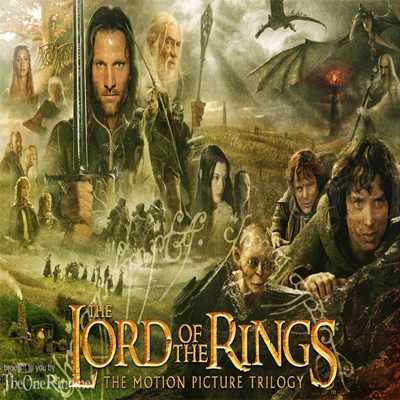
    Butler’s portfolio of credits as VFX supervisor includes Sam Mendes’ ‘single shot’ war drama ‘1917’ (2019), which earned him an Academy Award and a Bafta for Best Visual Effects, and ‘Harry Potter and the Deathly Hallows: Part 2’ (2011), which earned him his first Bafta. Earlier in his career, Butler received a Visual Effects Society Award for ‘Outstanding Character Animation’ for his work on Gollum in ‘The Lord of the Rings: Return of the King’ (2003).

    “I am proud to have both Eric and Greg, two highly accomplished industry veterans each with their own incredible legacy of breathtaking work, join DNEG’s creative ranks. Eric and Greg will certainly help us continue to push the creative boundaries of what is possible during this period of technological advancement in our industry and unprecedented demand for our services. Adding professionals with track records, talent, and expertise such as theirs further solidifies DNEG as the VFX and animation studio leader in the category” said DNEG chairman & CEO Namit Malhotra.

    Talking about his new role, Brevig said, “I have had the pleasure of working with DNEG and Namit on several projects in the past and I am delighted to become part of this world-class creative team. DNEG’s commitment to excellence and future growth plans make this a very exciting time for me to join the company.

    “My approach to the craft of VFX has always been to find the right techniques to create the most believable, engaging, and immersive experience for the audience. Using both virtual and physical tools, we can now realize anything the filmmaker can envision.”

    Butler joins DNEG from Method Studios, where he worked as a VFX Supervisor on various feature, episodic, and advertising projects, including most recently on a large scale, yet to be announced project for Amazon.

    “I have been following DNEG for many years – even before my London Soho days – as a competitor, a collaborator and as the home to many of my favorite people in visual effects. I am very excited to join DNEG’s Montréal office and I know we are going to make some great work together.

    “Visual effects is a magic trick. Its purpose, to keep the audience engaged in the story and the world of the film. Whether it is used to create fantastic wand duels in Harry Potter or invisible cuts in 1917, visual effects is a series of illusions created in service of the story. While it’s the end result that matters, I have always been enthralled by the filmmaking process; the dynamic behind-the-scenes collaboration of VFX artists and the live action crews whose work is their foundation” said Butler.

  • “The best in the film-exhibition sector is yet to come” – PVR’s CEO Gautam Dutta

    “The best in the film-exhibition sector is yet to come” – PVR’s CEO Gautam Dutta

    Gautam Dutta is a veteran of the theatrical business. As CEO of PVR, he is taking the multiplex major through one of its most exciting phases, following the tough two years of the pandemic forcing it to shut down cinema halls. 

    A couple of months ago – March 2022, to be exact – PVR’s promoters – the Bijlis – announced that it was amalgamating with another major theatrical player Inox Leisure, which is run by Siddharth Jain – the brother-in-law of Sony-Zee managing director Punit Goenka.

    Post the merger, the combined entity will have under its umbrella 1,546 screens across 341 properties in 109 cities. Post the merger, the joint entity is to be renamed PVR Inox. Screens that already exist as PVR or Inox will continue under those names but those opened after the fusion will operate under the combined name.

    Dutta joined PVR in 2006 and has managed various portfolios spanning from marketing, media sales and now overall operations. Under his leadership, media sales grew from Rs 7 crore to Rs. 375 crore in FY 2019-2020. He is also credited with launching the bowling chain bluO. 

    As CEO, Dutta is responsible for advancing PVR’s mission and objectives whilst keeping the brand relevant to the changing audiences, developing and monitoring strategies for ensuring the long-term financial viability of the organisation, promoting revenue and profitability, technology adoption and innovation. Dutta is also a director of Zee Maize, a subsidiary of PVR that owns the 4700BC Gourmet Popcorn brand

    Indiantelevision.com’s Ashwin Pinto caught up with the once-upon-a-time advertising exec (he worked with MullenLowe Lintas and Rediffusion DYR earlier on in his career) and spoke with him about consolidation in the exhibition sector, the future and why the theatrical experience and OTT will co-exist.

    Excerpts:

    On the factors that prompted PVR to merge with Inox Leisure.

    The combination would augur well for the growth of the Indian cinema exhibition industry, besides ensuring tremendous value creation for all stakeholders, including customers, real estate developers, content producers, technology service providers, the state exchequer and above all, the employees. With consumers at the core of the decision, the merger would focus on using the strengths of both the organisations to provide exceptional customer service and cinema experience to Indian moviegoers. 

    On whether consolidation is going to be a big theme in the multiplex industry in India and globally this year.

    The film exhibition sector has been one of the worst impacted sectors and is going through a rapid transformational change due to the advent of technology. To compete effectively, creating scale to achieve efficiencies, it has become imperative to consolidate for the long term sustainability of the business. The merged entity will allow it to accelerate the pace of growth for further expansion to more tier two and tier three markets and take the modern multiplex experience to new cities and towns across the country in a severely under-screened market like India.

    On whether consolidation will help multiplex operators negotiate better terms with movie distributors.

    Consolidation will bring enhanced productivity through scale, deeper reach in newer markets and numerous cost-optimisation opportunities while continuing to delight cinema fans with world-class experiences and landmark innovations. 

    On whether the direct to OTT movie release day and date release on OTT will impact the theatrical business.

    Cinema is an experiential medium that is difficult to replicate and the entire package comes in the form of technology, F&B, service standards and comfort. While OTT is long-form storytelling, cinema is a three-hour movie-cation experience. OTT like all other home entertainment will continue to coexist with theatrical entertainment as both are differentiated by content. 

    During the period while cinemas were shut, filmmakers responded to the exceptional circumstances by releasing new films on streamers, leading to a rise in OTT audiences. Audience behaviour to consume entertainment did change on account of the pandemic. Being confined at home, OTT became a necessity for people and became a part of their daily lives. But otherwise, home entertainment through VCR, video, DVD, cable TV and streaming was always there.

    Now with the cinemas open, producers are back to theatrical releases as this is where they make money. A theatrical release earlier before OTT makes commercial sense to them as they know the performance of the movie and pay the price for the content accordingly. But the good thing is that due to OTT, producers get back their money and they get encouraged to make more content. There is a much bigger opportunity and not as if one thing is eating into the other. 

    On whether the box office in the exhibition sector has come back to normalcy. 

    The pandemic was unexpected and unprecedented but it is not going to stay forever and people are getting vaccinated. Things have started to regain normalcy as people flock back to cinemas with a consistent supply of good films. A host of big-ticket films have hit the theatres post the third wave.

    Recently, Doctor Strange: In the Multiverse of Madness performed well in the opening weekend alone and has become the second-highest Hollywood grosser since the reopening of cinemas. Our belief in the ability of the industry to bounce back swiftly was further vindicated by our quarter’s results. Over 90 lakh admissions in March and a stellar content pipeline for the next few quarters tells us that the best is yet to come.

    On how PVR adjusted during two difficult years of the pandemic when it came to operational expenses.

    The Covid-19 pandemic disrupted business across the country and impacted the company’s operations. During this challenging phase, the company placed greater emphasis on safeguarding the health and well-being of its employees, customers, and communities on one hand, and continuing the business operations with greater responsibility on the other.

    With zero revenue from our business never witnessed any time in the past, sustaining business operations was very difficult with restrictions on normal capacity utilisation due to the implementation of social distancing measures. 

    The company undertook decisive action to mitigate the adverse impact of covid-2019 on businesses by implementing cost optimisation strategies, enhancing liquidity and prudent cash-flows management

    On whether the pandemic resulted in only certain kinds of films being viable in the multiplex when you talk about Hindi, Hollywood and regional cinema as older audiences may still be reluctant to visit multiplexes.

    In the film exhibition business, a multiplex is viable because it can screen a wide range of films be it Hindi, Hollywood and regional with different shows in different auditoriums catering to diverse sets of audiences. In addition, there is an audience for various genres of movies that get made. For instance, while Marvel fans span multi-generation though primarily in the 15-35 age group, there are more mature audiences for movies such as Kashmir Files which have a distinct and strong storyline. 

    On the other hand, the appetite for movie viewing is higher in south India with passionate audiences, hence we see major Hollywood movies being dubbed in south Indian languages to reach a larger section of the cinema going audiences. India is a heterogeneous market for movie content be it regional, Bollywood or Hollywood content with their unique areas of strengths and would appeal to all kinds of audiences.

    On how 2022 is looking in terms of the release slate.

    We are witnessing a growing trend with regional movies breaking the geographical and language barrier leading to a cosmopolitan effect. Starting from Pushpa – The Rise – a Telugu language origin film which was released in Tamil and Hindi – received huge appreciation from pan-India audiences. The ‘Indian film’ success formula continued with the huge success of RRR which was released in five Indian languages (Telugu, Tamil, Hindi, Kannada and Malayalam) and resonated with all kinds of audiences. KGF: Chapter 2 originally a Kannada film (additionally released in Malayalam, Tamil, and Telugu) saw the Hindi version breaking all records in the first weekend of release with huge success in Hindi-speaking regions.

    Audiences are returning to the cinemas for good content, unmatched sound and projection quality, the big screen experience and a community experience. Movie lovers can look forward to a robust content lineup due to the huge backlog of movies that are waiting for their turn for releases in theatres as big ticket movie producers space out their content to prevent any clashes with other big titles. 

    On whether PVR will be picking up films for distribution during film festivals like Cannes. 

    We conduct the movie distribution business through PVR Pictures, our wholly-owned subsidiary. PVR Pictures is the largest distributor of independent foreign-language films in India as well as a prolific distributor of Indian films as well. PVR Pictures aims to be the preferred distributor for Hollywood production houses that do not have a base in India for distributing movies. Our team is already there in Cannes evaluating the films that are being screened there for picking them up for distribution in India.

    On the potential for multiplex growth from the smaller towns and cities which do not yet consume much OTT content.

    Over the past several years, the movie-going taste has transformed in India, with audiences’ preference for multiplexes going up multifold. The multiplex growth is linked to the mall culture which has become an aspirational space, hence multiplexes have percolated to the smaller towns and have appealed to audiences due to limited options for out of home entertainment.

    A lot of expansion in PVR lately has been around in smaller towns such as Jamnagar, Narsipatnam and Rourkela in view of its strategy to increase its presence in tier-2 and tier-3 cities to address the growing demands for the big screen experience from the local populace. 

    Better infrastructure availability, improved lifestyle choices and rising disposable incomes amplify the aspirational levels of people in smaller towns. A young and large working population have led to increasing footfalls at multiplexes. The multiplex experience characterised by a great aural and visual experience, good ambience, and comfortable seating is some of the factors driving this demand. These factors act as great opportunities for multiplexes to expand in tier-2 and tier-3 markets. Mall development is happening at a great pace in these towns providing large spaces at lower lease rentals which multiplexes find attractive. 

    On whether the current box office split between Hindi, Hollywood and regional cinema will change. 

    In the pre-pandemic year of FY 2019-20 which is a true representation of the film exhibition business, Hindi was the largest segment with a 44 per cent mix in the overall Indian gross box office collections (GBOC). This was closely followed by 41 per cent regional and 15 per cent Hollywood. Regional movies’ share in total GBOC increased from 41 per cent in CY 2019 to 54 per cent in CY 2020.

    India produces the maximum number of movies due to its multi-lingual content and now Hollywood studios also consider India as an important market due to the sheer size of the movie going audience. Box-office collections of Hollywood movies have started to grow further due to their deep penetration in the Indian market. They are now being dubbed in multiple regional languages due to their easy acceptability among audiences located in varied geographies. 

    Regional films are becoming an important element of the Indian cinema industry, accounting for a considerable portion of net box office earnings. Films are being released in a variety of languages and the popularity and presence of regional cinema are growing at a rapid pace.

    On whether screen expansion will happen now or post complete disappearance of covid-19. 

    We are consciously foraying into the rapidly expanding sub-urban markets to address the growing demand for the big-screen experience. Setting our foot across small towns and cities across regions in India, we at PVR are trying to reinvent and redefine the cinema experience for our patrons to provide them with a memorable one each and every time they visit us. We look forward to expanding our footprint and there is a strong impetus on screen addition as the company plans to add 120-125 screens in FY’23.

    Besides, we feel extremely encouraged by the recovery trends and audience willing to come back to cinemas for high-quality content and hence we will continue to remain extremely bullish on the company’s long-term expansion plans to invest and innovate in bringing richer and more experiential formats for our audiences pan India. 

    On whether a 3D version of a movie helps grow revenues. 

    For the entertainment industry, a whole new level of interactivity and immersive storytelling and visual spectacle through presentation technologies combined helps retain cinema’s edge over home entertainment. These include 3D, Imax, 4DX, P[XL], Onyx immersive experiences that can’t be replicated at home. These formats command premium pricing, hence contributing to a higher average ticket price (ATP) and thereby revenues. 

    This is the precise reason in addition to Hollywood mega-blockbusters that come in these formats, there is an increasing trend among Bollywood and regional movies being made in 3D, Imax and other premium formats as well to get the extra share of the pie in the box office collections.

    On the sentiment towards cinema advertising amongst advertisers. 

    Advertising sentiments have been turning pro on a much faster rate with the exciting big-star releases that we witnessed week on week which get further bolstered by the robust content lineup of blockbusters lately announced. Providing further fuel to the positive sentiment is the week-on-week increment of occupancy and footfalls due to the robust content lineup. Witnessing this growing trend, most of our large-scale reckoning clients have already resumed their association to capitalise on this resurgence of footfall and occupancy to increase their audience reach.

    On the in-cinema advertising experiential solutions that PVR is offering. 

    Recently, we collaborated with OOH company Xperia group to introduce industry-first experiential in-cinema advertising in India. It would offer a one-of-its kind exposure to in-cinema advertisers and push the boundaries of on-screen cinema advertising to create a larger than life and immersive experience of brands in the mind of the consumer. This special feature of experiential in-cinema advertising intends to increase the ‘wow’ factor of the commercial which can make viewers stop, look, observe and relate.

    On whether inflation will impact families’ proclivity to spend on movie outings.

    The movie-going culture and love for films have long been ingrained in the public consciousness. Over the past several years, the movie-going taste has transformed in India, with the audience’s preference for multiplexes going up multifold.

    In PVR, we have witnessed that in FY 22 even though admissions were lower, higher ATP and spending per head (SPH) contributed to the increase in revenues. In FY 22, we recorded the highest ever ATP of Rs 235 and SPH of Rs 124 demonstrating the fact that movie viewing is a discretionary spend and people value this form of out-of-home entertainment to bond with their loved ones as a shared experience. This shared experience of watching a movie together rates much more than other entertainment avenues as movie viewing continues to be the cheapest form of out-of-home entertainment. 

    The average household income is expected to grow over the next few years, resulting in a greater number of people with capabilities for discretionary spending. This is likely to have a positive impact on ticket sales and viewership. It is estimated that the average household spending on movies was pegged at Rs 620 in FY 2019-20 and it is projected to increase to Rs 660-680 by FY 2024-25.

  • Vidnet’22: Shining a light on the art of OTT filmmaking- What’s different?

    Vidnet’22: Shining a light on the art of OTT filmmaking- What’s different?

    Mumbai: The OTT sector in India has witnessed a massive surge in viewership during the pandemic era with a host of new players and paid subscribers tuning into the online streaming space. With manifold growth across metrics, the sector continues its bull run even post pandemic, even as the next growth wave is expected to come from tier II, III, and IV cities and regional language content.

    To discuss the role of OTT in influencing the content preferences in our country, Applause Entertainment CEO Sameer Nair, and Dharma Cornerstone Agency COO and renowned film critic Rajeev Masand got together for a fireside chat on the ‘Art of Creating Diversified Content and Secret of Mastering Them’ at the Vidnet 2022 summit organised by IndianTelevision.com in Mumbai last month.

    Mumbai-based content studio Applause Entertainment led by CEO Sameer Nair has been betting big on the web series format since its inception in 2017. The company struck gold with several of its recent shows such as Hansal Mehta’s “Scam 1992,” Pankaj Tripathi-starrer “Criminal Justice,” “Hostages” to name a few on various OTT platforms. Nair acknowledges that in the last four to five years the single biggest revolution that has happened in the business of content is via the streaming platforms globally. “TV was always fundamentally limited by its nature- a linear medium with geographic and language boundaries and appointment viewing,” he says in response to Masand’s query of whether he sees OTTs replacing linear television in India ever.

    Nair goes on to say that these being early days for the OTT medium, every operator will go through its fair share of teething troubles trying to find their own business models. Along the way, there will be challenges on how to make content better, to improve storytelling and take our content to other markets and how budgets can be bettered.

    The biggest discovery or learning in the emerging medium has been in the writing. “If you can imagine it, then you can probably shoot it,” declares Nair. “Its not the star cast, it’s not a ‘big name’ director, it’s not a budget- the key lies in the writing. If it’s written well, chances are it may turn out well. After that everything falls into place.”

    The other thing about this business, Nair adds, is that it’s not ‘star-dependent.’ “We have done some 36 series so far and it’s primarily been a collection of ensemble cast,” Nair asserts.

    Referencing the massive hits and popular web shows delivered by the studio, Masand proceeds to ask Nair about “the process of knowing what’s worth pursuing”. While there’s no such “green light” moment, idea sources can be wide-ranging- from an original script or a book, or a foreign series or movie that they wish to adapt, Nair says. The journey from idea to screen, after a particular idea has been greenlighted is a process that takes time and effort, even before one starts filming.

    Expounding on the studio’s hit vehicle “Scam 1992,” Nair says, “From the moment we bought the book rights from Sucheta (Dalal) to the time the series released, it took three years in the making. And all through this period we were on board, we stayed the course, and that’s what is important- to take it across the line.”

    Over time, most platforms have developed their own particular character, when it came to content, noted Nair in response to a query from Masand on making platform-specific content. He added that when they first started out, it was only about making shows for the audiences and not about which streamer it should stream on. “We don’t have as much of a ‘platform-theory’ as trying to understand what genres to go after, where are programming trends headed and what are people watching more of.”

    Now, of course, we get lots of inputs from platforms themselves because they have so much data, insights and understanding, Nair continues. “I think a lot of this is connected to essentially, ‘social-signalling’,” noting that it’s important to have one’s ears to the ground.

    The other significant thing, Nair points out, is the scale at which you want to take an idea- whether it will be a big-budget show. That’s a decision which is full of risk in their business, considering the show is first created, produced and executed before finding a buyer platform for it. “So we have to be very sure and everything has to be planned in detail- the genre, the writing, the casting, the money we are going to be spending over it etc.”

    In that sense, we complement the platform’s services and aid in their pain point by taking over the complete production and directorial decisions pertaining to a show. This allows them to focus on other things to worry about like, gaining subscribers, increasing paid user base, marketing etc, he adds. The studio usually has a pipeline of 12 to 15 shows lined up in various stages of production, reveals Nair on the company’s plans to expand its content library of shows.

    The kind of content being produced and the price point are the chief issues, according to Nair. And then it depends upon how the entire market dynamics works. Deliberating on the recent Netflix stocks crash, Nair observes, “Using any one player, even if they are the leader, as the bell weather for how the entire industry works may not be the right way to do it. Because different businesses have different models of operation.” Larger players like Netflix and Amazon Prime, he says without naming the giant streamers, have very long investment horizons with long investment cycles and diversified businesses. So that becomes a very different dynamic, as compared to securing only streaming.

    On a macro level, the numbers can only increase hereon, as the OTT market continues to grow, Nair observes. Along the way, there is bound to be discovery of various operable models like ad-supported, subscriber-supported models or lower-end content or upper end content catering to every available market.

    On adapting books and shows, Nair says it makes business sense to adapt a good story. “The reason why great stories exist is because they have been retold. So what we do is re-visualise a good story and adapt it according to our cultural sensibilities, while staying true to the original plot.”

    “Measuring success on streamers is sketchy, one way to go would be to check if the platform is happy with the show’s outcome or performance,” says Nair. “We look at the social noise around it and the audiences are happy overall. Another critical way is the data insights provided by the streamer- they have a lot more information, on new subscribers added, drop-off points etc which give a better clue on a show’s performance.”

    “The way forward for the studio is working with debutantes or first-time filmmakers, we are also finding our way around this evolving landscape of the streaming business. For the industry in India, the language content will become more pan-Indian, and the audience for this content will grow. The onus is on us to make the most of this space,” Nair signs off.

    To tune in to the entire conversation, click on the below link:

  • MIIFF to be held in January, launches logo

    MIIFF to be held in January, launches logo

    Mumbai: The first Mumbaindia International Film Festival (MIIFF) will be held in January 2023. There will be six sections from world cinema to Marathi cinema.

    The founders of Mumbaindia International Film Festival (MIIFF), Sharon Prabhakar, Sudhir Attavar, Trivikram Belthangady, Sandip Soparrkar and Chaitali Chatterjee launched the spectacular logo of this unique film festival. In a grand event held at the Cinepolis in Mumbai, its founders revealed many interesting things about the film festival. Veteran actor Om Puri’s wife Nandita Puri and actress Shazahn Padamsee were also present at the event.

    Sharon Prabhakar said, “People might say that there are many film festivals, so what is the need to do this, but I do not think about it. You should try your best to fulfill your dream. I go against the routine work, and this is one such festival which will be different, unique and exciting. We women are multi-taskers.”

    Sudhir Attavar said, “We have kept 6 sections in this film festival. The first category is of world cinema, the second category is of the LGBTQIA community and another category is of women filmmakers. There is a category for a film institute. The fifth category will be for ad films and the sixth category will be for Marathi cinema. There will also be a section for dance and music based films. The first MIIFF will be held in Mumbai in January 2023. Registration for it will start from July 2022.

    The founder of the film festival Sudhir Attavar said, “The festival is not being done to earn money. There will be neither politics nor commercial angle in this meaningful festival.”

    Dancer-choreographer Sandip Soparkar said, “I express my sincere gratitude for making me a part of this festival. When I came to Mumbai 22 years ago, the next day I went to visit the temple of Mumba Devi and I told her that this city has been named after you, when will such a day come when I will be able to associate with your name. And today after 22 years I am very happy to be associated with Mumba India International Film Festival. We will promote culture through cinema.”

    Trivikram Belthangady said, “When Sudhir ji and Sharon asked me to join this festival, I immediately agreed, because it is filled with creative energy. Through this festival, the audience will get to see meaningful cinema. Doors will also be opened for new filmmakers. I am very excited about this journey.”

    Chaitali Chatterjee also expressed her heartfelt thanks.

    Ompuri’s wife Nandita Puri said, “My heartfelt congratulations to the entire team for organizing this festival. Sharon is my great friend, I am also her fan, she is my favorite and an amazing woman. I have seen issues behind film festivals, we will keep Mumba India International Film Festival away from politics or lobbying.”

    Shazahn Padamsee, who has acted in Hindi, Tamil and Telugu films, said, “Everyone has worked hard for this festival. My mom Sharon has given her heart and soul to this festival.”

    Krishna Bhardwaj, Ratna Pratap and Vidyadhar Shetty also extended their best wishes here. Vidyadhar Shetty of Success Films organized the event.

    Sharon Prabhakar added, “People are passionate about filmmaking and some have even sold their houses to make a good film. This festival is for such passionate makers. We will try to do something better, new and different through this.”

  • Unacademy’s new campaign highlights role of mother as first teacher

    Unacademy’s new campaign highlights role of mother as first teacher

    Mumbai: The edtech learning platform, Unacademy has launched its new campaign celebrating motherhood titled ‘Meri Pehli Academy’. The film commemorates the role of every mother as the first teacher, educator in every child’s life.

    Conceptualised by Ogilvy, the film showcases the story of a young student – Bulbul, who is moving to a new city to live alone. It highlights how her mother has come along to help her set up the place, guiding her to do things on her own, testing and mentoring her to live her life independently. The heartfelt appreciation soon turns into a deeper realisation, as Bulbul begins to see her mother as her first academy.

    The film outlines several instances which reinforce the subconscious learnings from the mother. When the mother asks Bulbul to make ‘chai’ – Bulbul learns the whereabouts of items in the kitchen and it is a metaphor for learning how to fend for yourself. When Bulbul starts unpacking her room, her mother hands her the box opener, highlighting how she is equipping Bulbul to start the new journey.

    Speaking on the launch of the film, Unacademy’s partner & chief marketing officer, Karan Shroff said, “Throughout our formative years, our mother figures teach us several valuable life lessons. For most of us, we do not realise during our entire lifetime, the pivotal role they play in our lives, which is that of our first educator, our first Academy.

    “This year, we are commemorating the learnings we all got from our #MeriPehliAcademy with the hope that the message resonates with all our learners. It also conveys Unacademy’s promise of being a lifelong ally to learners at every step of their journey along with their mother,” he added.

    Ogilvy’s chief creative officer Puneet Kapoor said, “A mother is our first teacher and our first school. From learning our first lessons from her, we also learn valuable life lessons. A mother is the foundation to a child’s being, her/his pillar of strength. The role that a mother plays in a child’s life, can’t be paralleled by any other human relationship. This was the genesis of the wonderful idea of the film:Maa- #MeriPehliAcademy.”

  • AR Rahman returns as BAFTA Breakthrough India ambassador

    AR Rahman returns as BAFTA Breakthrough India ambassador

    Mumbai: The British Academy of Film and Television Arts (BAFTA) has announced AR Rahman as the Breakthrough India ambassador for another year as they invite a new round of applications in India for the programme. Supported by Netflix, this programme will be open for prospective talent across the film, games, and television industries. 

    The BAFTA Breakthrough India programme will once again identify, promote and support Indian talent within these industries on a global scale, said the organisation in a statement on Wednesday. 

    “BAFTA Breakthrough India is an awe-inspiring initiative that offers the unique opportunity to promising artists to connect with influential experts in their field, serving as a life-changing experience,” remarked AR Rahman. “India has the supreme talent to offer which was evidenced by the overwhelming response received during the first round of Breakthrough India that compelled the jury to select ten deserving participants instead of five as originally planned.”

    Akin to the debut initiative, BAFTA Breakthrough aims to celebrate Indian talent by offering a bespoke programme of support – helping participants develop knowledge about the industry, develop their craft, address barriers to progression, and network globally with people who can influence their careers. 

    The programme provides a bursary to support international networking opportunities, further to this, recipients will also receive: One-to-one industry meetings and group roundtable sessions; Global networking opportunities with BAFTA membership, industry and peer to pee Breakthrough cohorts; Access to Career Coaching sessions and support with professional skills development; Access to BAFTA’s virtual programme of events and screenings for 12 months, and PR support and showcasing as part of Breakthrough.

    “India has a wealth of talent waiting to be discovered and showcased. For the second year, we are delighted to open applications for BAFTA Breakthrough supported by Netflix,” stated BAFTA chief executive Amanda Berry OBE. “The high quality of applicants in our first year prompted the jury to select ten individuals rather than five, and we look forward to receiving applications from the very best emerging talent in film, games, and television again.”

    The incredibly talented list of BAFTA Breakthrough’s first cohort comprised of the future stars of the film, games, and television industries: Akshay Singh (writer), Arun Karthick (director/writer), Jay Pinak Oza (cinematographer), Karthikeya Murthy (composer), Palomi Ghosh (actor), Renu Savant (director/writer), Shruti Ghosh (game developer & art director), Sumit Purohit (director/writer), Tanya Maniktala (actor) and Vikramaditya Singh (director).

    “Coming together to create opportunities for fresh talent and offering them a global platform is vital to the growth of the entertainment industry,” said Netflix India VP – content Monika Shergill. “Through the BAFTA Breakthrough India initiative, we want to drive progress in creating a more inclusive industry where many tales are told, and many voices tell those stories. We look forward to an equally enthusiastic and quality response as in the first year.”