Tag: Film Sector

  • We should aim for the M&E industry to grow more than $100 bn by 2030: I&B secretary at Ficci Frames Fast Track’ 22

    We should aim for the M&E industry to grow more than $100 bn by 2030: I&B secretary at Ficci Frames Fast Track’ 22

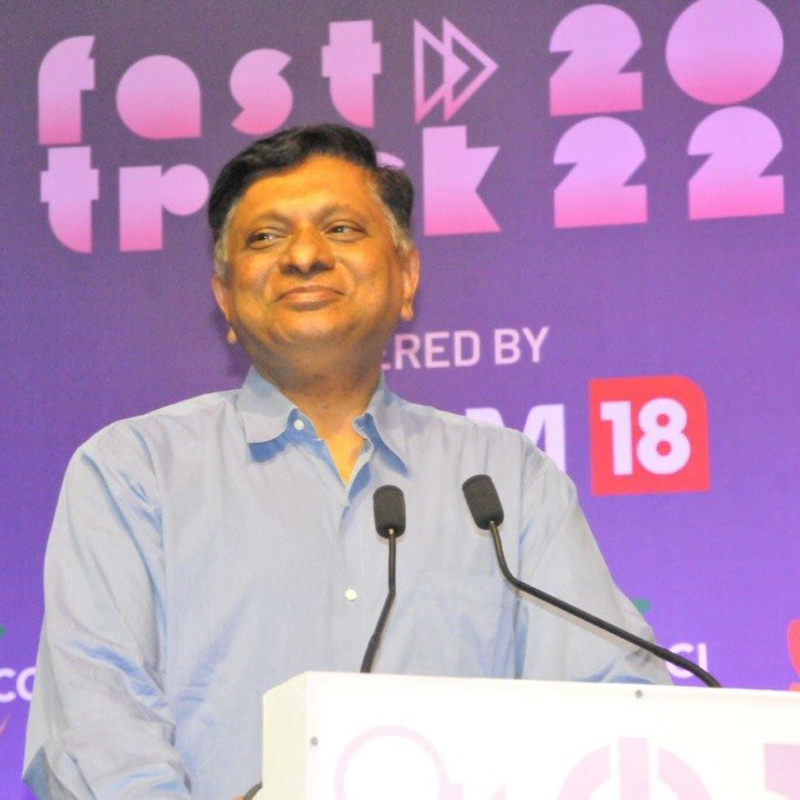
    Mumbai: The union secretary for information and broadcasting Apurva Chandra has exhorted the media and entertainment industry to set a target of growing the industry to more than $100 billion by the year 2030. “India will be a $10 trillion economy in the next ten years. We should aim for a media and entertainment industry worth more than $100 billion by 2030. The ministry of information and broadcasting will do whatever it takes to support the M&E industry and help it grow.” The secretary was addressing the inaugural session of Ficci Frames Fast Track 2022 in Mumbai on Tuesday, 27 September 2022.

    The secretary announced that Invest India is going to be leveraged in order to bring in higher foreign investment into India in the film sector. “The ministry has merged various film units under one; NFDC, based in Mumbai, is going to be the hub of the cinematic arm of the government. With this, we want to revamp the Film Facilitation Office. We are going to hand this over to Invest India, the main investment arm created by the government under the leadership of prime minister Narendra Modi to attract industry to India. More than $100 billion of FDI is coming to India this year. We want to leverage Invest India to bring in foreign investment. We will reach out to foreign filmmakers to come to India.”

    The secretary informed that the government will work with states to facilitate and promote film shooting in India. “We recently announced an Incentive Scheme for Audio-Visual Co-production and an Incentive Scheme for the Shooting of Foreign Films in India at the Cannes Film Festival. With incentives given by states too, it becomes a viable and attractive package for filmmakers.”

    The secretary announced that the government of India will work with the states and formulate a ‘Model Theatre Policy.’ “Over the past five-six years, the number of theatres has been on a decline. We need to reverse this trend. We will assign the Film Facilitation Office to work with Invest India to come up with a single-window portal for opening theatres, so that more and more theatres can come up and the public can get more avenues to watch the magic of films in theatres. We will also work with the states to create a ‘Model Theatre Policy,’ so that the states can adopt and work on the same.”

    Observing that viewing habits of people have changed due to the Covid-19 pandemic, the secretary noted that when ticket prices were brought down to Rs 75 three days ago, all shows were full. “This shows that if price points are right, people can afford theatres. The craving to go to the theatre is there, so we need to work on how we can bring people back to theatres.”

    The secretary said that he had a fruitful meeting with some stalwarts of the film industry on Monday, on the proposed amendments to the Cinematograph Act. “All stakeholders present supported the proposed amendments for the introduction of anti-piracy provisions and age classification with the UA category.” With the support of the film industry, we hope to table the amended bill in the winter session of parliament, he added.
  • Merger of schemes under MIB lead to reduction to one-third of 11th Plan

    Merger of schemes under MIB lead to reduction to one-third of 11th Plan

    NEW DELHI: The Information and Broadcasting Ministry has brought down the number of schemes under it from 65 in the Eleventh Plan to just 21 in the 12th Plan by the year 2016-17 by merely merging together under umbrella schemes the various schemes of its different media units with similar objectives and activities.

    The Parliamentary Standing Committee for Information Technology which goes into issues relating to I and B was informed that the ministry carried out a comprehensive rationalization and restructuring of the Plan schemes to achieve the thrust areas of the 12th Five Year Plan.

    The ministry said this is expected to result in optimum and effective utilization of outlay earmarked and better monitoring of Plan Schemes at implementing stages during the year 2016-17.

    Progress in the achievement of physical and financial targets in respect of schemes is now being reviewed by the secretary in the ministry to boost utilization in the current fiscal.

    In addition, the Financial Advisor of the ministry and the concerned joint secretaries also convene meetings at their level in order to review the performance of the plan schemes. In such meetings representatives from various media units under the ministry and implementing agencies are also called for discussion, whenever required.

    The allocation of funds to various sectors during 2015-16 and 2016-17 is:
    (Rs. in crore) Sector wise Budgetary Support
    BE 2015-16
    RE 2015-16
    Expenditure as on 31.03.2016
    BE 2016-17
     
    Information
     
    70.65
     
    193.42
     
    188.20
     
    183.02
    Film
    208.55
    77.31
    69.01
    141.48
    Broadcasting
    Main Sectt.
    30.30
    25.50
    23.41
    25.50
    Prasar Bharati
    605.03
    453.77
    453.77
    450.00
    Total Broadcasting
    635.33
    479.27
    477.18
    475.50
    Total
    914.53
    750.00
    734.39
    800.00

    Thus, allocation for Broadcasting and Film Sectors has been reduced compared to last fiscal, i.e. 2015-16 but the Information Sector has got an enhanced allocation in 2016-17.

    When questioned about the reduction in other sectors and increase in the Information sector, the ministry informed the committee that the sector-wise fund allocation are based on the following rationale:

    1.    The scheme-wise expenditure trend during last four years of the 12th Five Year Plan;
    2.    Overall ceilings approved by Expenditure Finance Committee/Standing Finance Committee/Revised Cost             Estimates, for the 12th Plan (2012-17) with respect to each scheme;
    3.    Annual scheme-wise budget proposals from different wings based on their expenditure capacity;
    4.    Full provision for continuing schemes for completion of the schemes.
    5.    Overall ceiling fixed by the ministry of Finance.

    As the Revised Cost Estimates (RCE) of sub-scheme “People’s Empowerment through Development Communication (Conception and Dissemination) (Directorate of Advertising and Visual Publicity” was under consideration at the beginning of 2015-16, an amount of Rs 131 crore for this scheme was kept in the scheme “National Film Heritage Mission” of the film sector. After the RCE of this sub-scheme was approved by the Finance ministry, the allocation for this sub-scheme was enhanced to Rs 151 crore. Consequently, allocation with respect to information sector at revised estimate stage increased to Rs.193.42 crore and the allocation for the film sector decreased to Rs.77.31 crore.

    When questioned whether the present allocation of Rs.800 crore for the current fiscal is sufficient to carry out the planned activities, the ministry told the committee that given the availability of resources and the set priorities of the government, the financial allocations are made to the ministries/departments which are mostly less than what is proposed to the Finance ministry.

    The Budget Estimates allocation of Rs 800 crore for the year 2016-17 for the I and B Ministry is less than the proposed amount of Rs 1,240.69 crore.

    However subject to the resource constraint, the ministry has tried to optimize the reduced allocation of Rs 800 crore amongst the schemes of the ministry sector-wise, by allocating funds to the media units in a rational manner to overcome the difficulty of reduced allocation.

    Subject to the availability of the budget, the ministry will make all out efforts to reach out to the people of the country and fulfill their mandate of the public broadcaster, Prasar Bharati.
     

  • Merger of schemes under MIB lead to reduction to one-third of 11th Plan

    Merger of schemes under MIB lead to reduction to one-third of 11th Plan

    NEW DELHI: The Information and Broadcasting Ministry has brought down the number of schemes under it from 65 in the Eleventh Plan to just 21 in the 12th Plan by the year 2016-17 by merely merging together under umbrella schemes the various schemes of its different media units with similar objectives and activities.

    The Parliamentary Standing Committee for Information Technology which goes into issues relating to I and B was informed that the ministry carried out a comprehensive rationalization and restructuring of the Plan schemes to achieve the thrust areas of the 12th Five Year Plan.

    The ministry said this is expected to result in optimum and effective utilization of outlay earmarked and better monitoring of Plan Schemes at implementing stages during the year 2016-17.

    Progress in the achievement of physical and financial targets in respect of schemes is now being reviewed by the secretary in the ministry to boost utilization in the current fiscal.

    In addition, the Financial Advisor of the ministry and the concerned joint secretaries also convene meetings at their level in order to review the performance of the plan schemes. In such meetings representatives from various media units under the ministry and implementing agencies are also called for discussion, whenever required.

    The allocation of funds to various sectors during 2015-16 and 2016-17 is:
    (Rs. in crore) Sector wise Budgetary Support
    BE 2015-16
    RE 2015-16
    Expenditure as on 31.03.2016
    BE 2016-17
     
    Information
     
    70.65
     
    193.42
     
    188.20
     
    183.02
    Film
    208.55
    77.31
    69.01
    141.48
    Broadcasting
    Main Sectt.
    30.30
    25.50
    23.41
    25.50
    Prasar Bharati
    605.03
    453.77
    453.77
    450.00
    Total Broadcasting
    635.33
    479.27
    477.18
    475.50
    Total
    914.53
    750.00
    734.39
    800.00

    Thus, allocation for Broadcasting and Film Sectors has been reduced compared to last fiscal, i.e. 2015-16 but the Information Sector has got an enhanced allocation in 2016-17.

    When questioned about the reduction in other sectors and increase in the Information sector, the ministry informed the committee that the sector-wise fund allocation are based on the following rationale:

    1.    The scheme-wise expenditure trend during last four years of the 12th Five Year Plan;
    2.    Overall ceilings approved by Expenditure Finance Committee/Standing Finance Committee/Revised Cost             Estimates, for the 12th Plan (2012-17) with respect to each scheme;
    3.    Annual scheme-wise budget proposals from different wings based on their expenditure capacity;
    4.    Full provision for continuing schemes for completion of the schemes.
    5.    Overall ceiling fixed by the ministry of Finance.

    As the Revised Cost Estimates (RCE) of sub-scheme “People’s Empowerment through Development Communication (Conception and Dissemination) (Directorate of Advertising and Visual Publicity” was under consideration at the beginning of 2015-16, an amount of Rs 131 crore for this scheme was kept in the scheme “National Film Heritage Mission” of the film sector. After the RCE of this sub-scheme was approved by the Finance ministry, the allocation for this sub-scheme was enhanced to Rs 151 crore. Consequently, allocation with respect to information sector at revised estimate stage increased to Rs.193.42 crore and the allocation for the film sector decreased to Rs.77.31 crore.

    When questioned whether the present allocation of Rs.800 crore for the current fiscal is sufficient to carry out the planned activities, the ministry told the committee that given the availability of resources and the set priorities of the government, the financial allocations are made to the ministries/departments which are mostly less than what is proposed to the Finance ministry.

    The Budget Estimates allocation of Rs 800 crore for the year 2016-17 for the I and B Ministry is less than the proposed amount of Rs 1,240.69 crore.

    However subject to the resource constraint, the ministry has tried to optimize the reduced allocation of Rs 800 crore amongst the schemes of the ministry sector-wise, by allocating funds to the media units in a rational manner to overcome the difficulty of reduced allocation.

    Subject to the availability of the budget, the ministry will make all out efforts to reach out to the people of the country and fulfill their mandate of the public broadcaster, Prasar Bharati.
     

  • From ‘Red Tape’ to ‘Red Carpet’: Maharashtra govt’s vision for M&E sector

    From ‘Red Tape’ to ‘Red Carpet’: Maharashtra govt’s vision for M&E sector

    MUMBAI: The demand for single window clearance for the film sector is nothing new, but the good news now is that the newly appointed state government under Chief Minister Devendra Fadnavis is looking into it, and seriously.


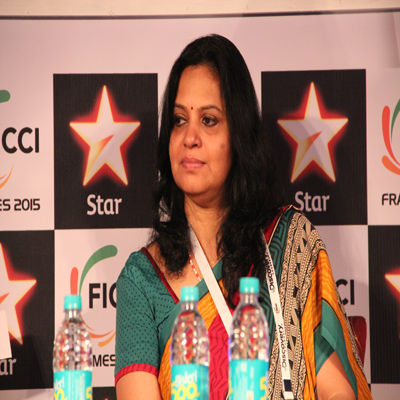
    Government of Maharashtra Tourism & Culture secretary Valsa Nair Singh told the gathering on the concluding day of FICCI Frames 2015, that the process for single window clearance has begun. “The problem is that no one is aware how many clearances are needed to be able to produce a movie in Maharashtra. While someone says 70, others say 60 or 50. It has been a month and I have been trying to collect all the data regarding clearances that are currently needed. I still don’t have a clear picture,” she informed.


    The government, after collecting the required data, will start analysing the clearances which are actually needed. “I am sure almost half of it would either be repetitive or redundant. We will then see how many of the clearances can be clubbed. We will also appoint a nodal officer, who would be handling everything, thus ensuring that the producer doesn’t have to go to each department,” informed Singh.


    Once the process is completed for films, the government will look at coming up with single window clearance even for live events. “What we have seen is that people are moving away from the state for live events and the reason they cite is the long process of approvals. So we have to make the system more conducive,” she added.

    The single window clearance has been set in motion, said Singh adding that the Chief Minister who had attended the Pune Film Festival had also suggested that the procedure will be in place before the next film festival.

    Considering that the film industry contributed almost Rs 50 billion to the GDP in 2013 and an employment of 7.75 lakhs in just one year, the Maharashtra government is looking at ensuring that more films are shot in the state. “We need to make the process simpler and provide the infrastructure,” she said.


    Singh raised concerns over the multiple authority clearance, which according to her leads to red tapism. “We want to move from red tape to red carpet, this is the intention of the Maharashtra government,” announced Singh.  


    In a meeting held on 25 March, the government has already taken the decision to start moving towards single window clearance and reduce the number of approvals.

    The Maharashtra government also wants to create awareness about the locations in the state, which can be used for shooting. “We would be doing it through a ready reckoner for locations. It will have the photographs, the connectivity, the location and the helpline numbers for the location. We will be compiling everything and uploading the same on the website,” she said.


    The government wants to move to the online regime, “but that will take time and so the single windowing process will start manually first as a pilot project and then move to online,” informed Singh. The nodal officer for the entire project will be the managing director of Film City located in Goregaon in Mumbai. “We are trying it on pilot basis from the next month and the announcement for the same will be made soon.”

    Singh also agreed that the industry needed to be incentivised. “The more movies that are shot here, the government stands to benefit and that will happen with incentives. We would like to take it up soon,” she said.

    This is a new beginning for the film industry. “The M&E has so far not got its due. We will look at it closely,” concluded Singh.