Tag: Fifa World Cup

  • Narendra Modi triumphs again, this time on twitter

    Narendra Modi triumphs again, this time on twitter

    MUMBAI: Twitter as a global social platform, has always allowed netizens to express themselves in 140 characters, during moments of celebration, protest, mourning and joy. The micro blogging site receives more than 500 million tweets per day. And we Indian’s are not far away.

    Politicians, actors, cricketers, opinion leaders and citizens have taken to the platform quite well this year. But for the year 2014, Prime Minister Narendra Modi didn’t just steal the show during the elections, but also on twitter.

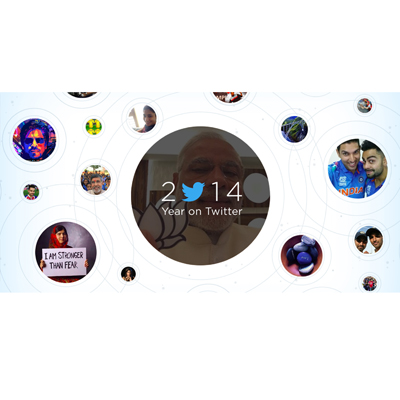
    The Golden tweet aka .the most-retweeted tweet for India in 2014 was Modi’s election-winning tweet. It received more than 70,000 RTs as it became the most retweeted tweet ever in India. The tweet read, “India has won. Bharat Ki Vijai. Aache Din Aane Wale Hain.”

    Globally, the golden tweet went to the Ellen Show’s starry photo from the Oscars telecast, which gave rise to the selfie phenomenon world over. It received more than 33,67,817 RTs.

    Meanwhile, India’s list of power tweeters is dominated by Bollywood stars, apart from Modi. In the top 10, Amitabh Bachchan leads with 1,18,18,056 followers, followed by Shah Rukh Khan at 1,02,46,755. Cricketers Sachin Tendulkar and Virat Kohli too make their entry but at number 15 and 16, respectively. Author Chetan Bhagat adds variety to the list, rounding off the top 20 for India.

    Rohit Sharma’s smashing the world record for the highest individual ODI cricket score of 264, on 13 November was the top peak moment for twitter. In fact, of the top 10 moments, three are related to cricket including the Indian Premier League. The second largest peak in twitter conversation for the year was Rajinikanth’s arrival on twitter. With over 2,00,000 followers in the first 24 hours and now over 1.1 million in total, it’s clear that he has many loyal fans both off and on twitter. Hardly surprising, two of the top five peaks in conversations were about Modi.  With 8.5 million followers, he is currently the second most followed political leader in the world (after President Barack Obama) and continues to grow his followers at a rapid pace.

    The fastest rising Twitter hashtag trends in India saw a mixture of sports, disasters and political campaigns. Conversations around the 2014 FIFA World Cup lead the trend, followed by the disappearance of the Malaysian Airlines flight, MH370. Meanwhile, Mufflerman, a campaign led by the fans of the Aam Aadmi Party in support of leader Arvind Kejriwal, gathered momentum towards the end of the year.


  • 21st Century reports 10 per cent operating income growth for Q1-2015: Television segment lags

    21st Century reports 10 per cent operating income growth for Q1-2015: Television segment lags

    BENGALURU: Rupert Murdoch’s Twenty-First Century Fox Inc. (Fox) reported a 10 per cent growth in operating income before depreciation and amortization (OIBDA) in Q1-2015 (quarter ended September 30, 2014) at $ 1,779 million from $ 1,618 million in the corresponding quarter of last year, and 0.7 per cent more than the $ 1,766 million in Q4-2014. 


    Commenting on the results, Fox Chairman and Chief Executive Officer Rupert Murdoch said, “Our strong earnings and revenue growth in the quarter were driven by continued momentum at our Cable Network Programming and Filmed Entertainment segments, reflecting sustained increases in affiliate fees as well as the global box office success of Dawn of the Planet of the Apes and The Fault in Our Stars. Additionally, we continued our focus on driving long-term value through our planned investments in a number of our growing brands, most notably our new channels FXX, Fox Sports 1 and Star Sports.” 


    Television segment 


    The company’s television segment reported flat y-o-y revenue at $ 1,048 million (13.3 per cent of Q1-2015 revenue or TIO and 14.8 per cent of Q1-2014 TIO), and 1.6 per cent more than the $ 1,031 million (12.2 per cent of TIO) in Q4-2014. The segment reported OIBDA of $ 174 million (9 per cent of overall OIBDA) in Q1-2015, down 24.7 per cent from the $ 231 million (14.3 per cent of overall OIBDA) in Q1-2014, but 20 per cent more than the $ 145 million (8.2 per cent of overall OIBDA) in Q4-2014.


     Here is what the company had to say about Television segment 


    Quarterly segment revenues were consistent with those from the corresponding period in the prior year as strong retransmission consent revenue growth was counterbalanced by a 5 per cent decline in advertising revenues primarily reflecting the impact from lower general entertainment ratings at the FOX Broadcast Network. The decline in segment OIBDA principally reflects segment expense growth driven by higher programming costs at the Fox Broadcast Network from the investment in additional hours of original scripted content, higher program cancellation costs and higher rights fees related to the new National Football League contract.


     Let us look at the other Q1-2015 numbers reported by Fox 


    TIO in Q1-2015 at $ 7,887 million was 11.7 per cent more than the $ 7,061 million in Q1-2014 and 6.4 per cent less than $ 8,424 million in the immediate trailing quarter. OIBDA numbers have been mentioned above. 


    Cable Network Programming 


    Cable Network Programming, the largest contributor to Fox numbers, reported 15 per cent growth in y-o-y revenue to $  3,231 million (41 per cent of TIO) in Q1-2015 from $ 2810 million (39.8 per cent of TIO) but a 3.5 per cent drop from $ 3,347 million (39.7 per cent of TIO) in Q4-2014. This segment reported a 4.7 per cent growth in OIBDA in Q1-2015 to $ 1,038 million (58.3 per cent of overall OIBDA) from $ 991 million (61.2 per cent of overall OIBDA) in Q1-2014, but 13.6 per cent less than the $ 1,202 million (68.2 per cent of overall OIBDA) in the immediate trailing quarter Q4-2014. 


    Here is what the company has to say about Cable network programming:  


    The revenue improvement was partially offset by a 21 per cent increase in segment expenses, nearly half of which reflected the combined impact of the planned investments in the new sports channels launched in the prior year, coupled with the consolidation of the Yankees Entertainment and Sports Network (the Yes Network). The expense growth at the new sports channels principally reflected increased rights fees related to the broadcast of the India vs. England cricket series at STAR Sports and the inaugural broadcast of regular season Major League Baseball games at Fox Sports 1. In addition to the continued investment in these channels, quarterly segment expenses included increased programming and marketing costs at the FX Networks for additional hours of original programming including The Strain, Tyrant and Sons of Anarchy at FX and the exclusive cable rights to air all 552 episodes of The Simpsons at FXX. Segment OIBDA growth was adversely impacted by 4 per cent from foreign exchange rate fluctuations, primarily in Latin America. 


    Domestic affiliate revenue grew 18 per cent reflecting the combination of sustained growth at the regional sports networks (RSNs), FX Networks and Fox News Channel, the contribution from Fox Sports 1, as well as the consolidation of the Yes Network. Reported international affiliate revenue increased 8 per cent driven by strong local currency growth at the Fox International Channels (FIC) and Star channels which was partially offset by an 8 per cent adverse impact from the strengthened US dollar, primarily in Latin America.


     Domestic advertising revenue grew 10 per cent in the quarter over the prior year period driven by the consolidation of the Yes Network and solid growth at the FX Networks and Fox News Channel. Reported international advertising revenue increased 13 per cent due to strong growth at the STAR channels.


     OIBDA from the domestic channels increased 15 per cent from the corresponding period in the prior year, reflecting OIBDA growth at the Fox News Channel and the RSNs, which included the impact of the consolidation of the Yes Network. This quarterly domestic growth was partially offset by lower contributions from the FX Networks due to the increased investment in programming and marketing. Reported quarterly OIBDA at the Company’s international cable channels’ declined 28 per cent from the corresponding period of the prior year as strong double-digit local currency growth at FIC was more than offset by the timing of the continued investment in STAR Sports and a 19 per cent adverse impact from the strengthened US dollar. 


    Filmed Entertainment Segment 


    Filmed Entertainment Segment reported 16.8 per cent growth in revenue in Q1-2015 to $ 2,476 million (31.4 per cent of TIO) from $ 2,120 million in Q1-2014, but was 11.7 per cent lower than the $ 2803 million (33.3 per cent of TIO) in Q4-2014. 


    OIBDA from Fox’s Filmed Entertainment Segment in Q1-2015 at $ 458 million (25.7 per cent of overall OIBDA) was 39.6 per cent more than the $ 328 million (20.3 per cent of overall OIBDA) in Q1-2014 and 39.6 per cent more than the $ 339 million (19.2 per cent of overall OIBDA) in Q4-2014.


     This is what the company has to say about Filmed Entertainment: 


    This growth was led by the performance of several successful worldwide theatrical releases in the quarter including Dawn of the Planet of the Apes and Maze Runner, which have grossed over $ 700 million and over $300 million in worldwide box office to date, respectively, continued contributions from the worldwide theatrical and domestic home entertainment performance of The Fault in Our Stars, and the worldwide home entertainment performance of Rio 2. As a result of these successful releases, the film studio became the first to cross the $ 4 billion mark in worldwide box office this year. Quarterly results also reflect higher contributions from the television production businesses driven by higher syndication and SVOD revenues. 


    Direct Broadcast Satellite Television


     Revenue from Filmed Entertainment Segment in Q1-2015 at $ 1449 million (18.4 per cent of TIO) was 11.7 per cent more than the $ 1,390 million (19.7 per cent of TIO) in the year ago quarter but 6.4 per cent lower than the $ 1,593 million (18.9 per cent of TIO) in Q4-2014.


    OIBDA for Filmed Entertainment Segment in Q1-2015 at $ 207 million (11.6 per cent of overall OIBDA) was 8.9 per cent more than the $ 190 million (11.7 per cent of overall OIBDA) in Q1-2014 and 41.8 per cent more than the $ 146 million (8.3 per cent of overall OIBDA) in Q4-2014.


     This is what the company has to say about Direct Broadcast Television:


     This increase reflects a $ 59 million or 4 per cent revenue increase primarily due to Sky Deutschland subscriber growth, partially offset by higher sports programming costs including SKY Italia’s broadcast of the FIFA World Cup. Sky Deutschland grew net direct subscribers by approximately 96,000 during the quarter, bringing total direct subscribers to 3.91 million, while SKY Italia’s subscriber base declined by 21,000 during the quarter bringing total subscribers to 4.70 million.
  • LIV Sports bags exclusive rights for the Champions Tennis League

    LIV Sports bags exclusive rights for the Champions Tennis League

    MUMBAI: Multi Screen Media (MSM) has announced that its digital sports entertainment destination www.LIVSports.in holds the mobile and internet broadcast rights of the Champions Tennis League (CTL) for India.


    The league has been conceptualised by Vijay Amritraj and All India Tennis Association (AITA). Viewers will be able to watch the live telecast of the league and catch video-on-demand highlights on LIV Sports.


    Sony Entertainment Network executive vice president and head digital Uday Sodhi commented that the network was excited to bring the CTL, which has been designed to ignite the passion for tennis and inculcate a love for the sport. “LIV Sports started as the official mobile and internet broadcaster for the 2014 FIFA World Cup Brazil and then moved on to bagging the exclusive web and mobile rights for the ongoing qualifying matches for the 15th European Championship – Euro 2016, for India. It was conceived to offer quality sports-entertainment content that is mass inclusive and not designed to cater only to ardent sports fans”, he added.


    The CTL teams made up of the world’s top 25 ranked male and female players will be structured into two groups, each having three teams each, where they would play each other in a home and away format. The teams topping their respective group will play each other in the grand finale for the prize money of Rs 1 crore. The runner-up will receive Rs 50 lakhs. Each of the six teams will also have an international legend as their playing captain, apart from a noted Indian male tennis player, plus a top ranked junior Indian girl and boy from each city.


    The CTL will feature six city based teams, who will play 12 matches over a 10-day period from 17 November to 26 November 2014. Each of the six official CTL teams from Chennai, Bangalore, Pune, Delhi, Chandigarh and Mumbai comprises of Indian and International marquee players, including local youngsters handpicked by AITA. Some notable players to participate in India include Martina Hingis, Venus Williams, Somdev Dewarman and David Ferrer among others.

  • CFL Derby watched by 19.7 lakh viewers on Jalsha Movies

    CFL Derby watched by 19.7 lakh viewers on Jalsha Movies

    MUMBAI: It is a known fact that Bengal is the mecca of Indian football. That East Bengal and Mohun Bagan continue to rule the hearts of millions of Bengali’s was proven yet again with the success of the Derby match held during Calcutta Football League. People tuned in hoards to watch the most followed tie in Bengal, according to Star India.


    The match was watched by 19.7 lakh viewers on Jalsha Movies that surpassed the viewership of the FIFA World Cup Finals (18.3 lakh) on Sony Aath, according to data provided by Star India.


    This is also the highest rated Derby match ever across any channel in Bengal. It garnered a rating of 266 TVTs in M 25 + AB and 801 TVTs in CS 4+ beating all previous records.


    Not only did the viewers tune in but on an average they spent over 66 minutes watching this engrossing match.


    The hall mark of this year’s CFL is its short, tighter schedule and for the first time ever in the leagues history, the tournament will be decided in a month’s time.


    Star Jalsha and Jalsha Movies business head Kevin Vaz commented, “The success of the Derby match and the average match ratings of CFL strengthens our belief that football is big in Bengal.”


    He added that the the channel would continue to bring unmatched football coverage with never before seen packaging, high definition slow motion cameras along with commentary by former national football captains which they hope will bring in new viewers.


    Jalsha Movies reaches out to nine million viewers every week. The channel which has showcased some of the biggest movies is optimistic of increasing its footprint even further with its foray into football.


  • Tata Sky’s celebrity association: Key to increasing sales

    Tata Sky’s celebrity association: Key to increasing sales

    MUMBAI: ‘Isko laga dala toh life jingalala’ was one line that caught the attention of the entire country. To add to it, DTH operator Tata Sky got on board Bollywood celebrity Aamir Khan to endorse the product in his inimitable style. Last year, it took a u-turn to the south and roped in Kerala film star Mohanlal to do the trick in the Malayalam market and recently it tapped into the north east section of the country with popular singer Papon.

    While Khan endorsed the product years ago, Mohanlal was taken up only last year and Papon was roped in during the 2014 FIFA World Cup to send the message of Tata Sky into areas where it hasn’t gained traction. Mohanlal was used extensively across the state through TVCs, van activations and outdoor hoardings. “We wanted to tell that Tata Sky is as much a Malayalam brand as it is in other parts of the country. So we wanted a name that would connect not just with the audience but with the brand offering as well.  We had Mohanlal speak to the family audience after he tested our product and approved its quality,” says Tata Sky CCO Vikram Mehra.

    Simultaneously it launched 19 Malayalam channels and set up sales and services structure in the state including 3000 dealers across 10 districts along with service partners and call centre executives trained in the local language. The perception of the brand was that it had less Malayalam channels and poor infrastructure. The TVC with Mohanlal sought to communicate a new message- ‘there can be arguments on many things but no arguments on our set top boxes’. A year on, Mehra says that its sales in the area have multiplied by 800 per cent.

    Taking advantage of the FIFA fever in June 2014, Tata Sky went ahead and introduced HD and personal video recorder (PVR) along with its latest innovation of streaming Tata Sky channels on the laptop. “With these products, we wanted to associate with someone who could talk to the youth segment,” says Mehra. Hence, popular singer Papon’s photo was spread across print, outdoor and digital with a lot of stress on the former.

    The result was a 110 per cent increase in sales in the seven sister states with a lot of it coming from its laptop viewing service. Phone and iPad service did not pick up well.

    Soon, the operator is looking to unite itself with two more personalities. “We will be making an announcement soon regarding two other south Indian markets,” says Mehra.

    This apart, Tata Sky also undertakes several associations for its ‘home’ channel, targeting markets at a time. The personalities roped in for promotion of the home channel include former cricketer Navjot Singh Siddhu and actors Nina Gupta and Richa Chadda. According to Mehra, personalities are used depending on the market, the product and whether there is a need for a famous face to be associated with the product.

    Several researches are conducted for particular markets as well as on a regular basis. Regular research is done with GFK Mode and Nielsen as and when required. “I personally visit 300 customer homes every year for feedback,” says Mehra. The core team of 14 people ensures that every month 3 million Tata Sky homes are reached out to, to know their feedback on its services.

    Surveys are conducted for all states individually every month and the market is analysed over two or three years. Simultaneously its product offerings are also studied in terms of consumer reception.

    This involves third party agencies reaching out to random sample size of people who are ready to buy a DTH set top box and ask them which brand will they buy and why? This is termed as ‘intention to buy score’. The measurement is done comparing ‘intention to buy score’ to the actual sale in that area.

    Similarly, Tata Sky also introduced six new Odiya channels to promote that it is not only great in customer service but also its channel offerings.

    A few years ago, this wouldn’t have been so easy, since it hadn’t been getting the additional transponder space from the Indian Space Research Organisation (ISRO). But now that has been overcome by using MPEG-4 technology compression.

  • HDFC Bank tops the BrandZ Top 50 most valuable Indian brands 2014

    HDFC Bank tops the BrandZ Top 50 most valuable Indian brands 2014

    MUMBAI: Before the FIFA World Cup commenced in Brazil, several concerns were raised about its execution and other related issues, however when it started, all those concerns were laid to rest as the world experienced a strong tournament both on and off the field.

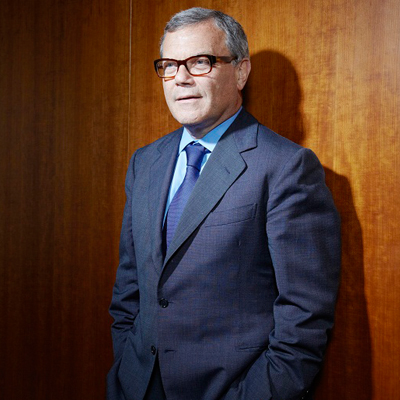
    With this example, WPP CEO Sir Martin Sorrell, while speaking at the launch of ‘Brandz Top 50 Indian brands’ emphasised on the importance of one. Highlighting the potential of the Indian market, Sorrell said that the worldwide advertising spend and revenue have remained constant and in mature markets it is not growing as rapidly as it is in fast-growing markets like India.

    With $500 million revenue from India, the conglomerate believes that the country has grown strongly for WPP and predicts a positive future as well, especially with the new government.

    After nine long years, the BrandZ valuations rankings, commissioned by WPP and carried out by Millward Brown, has finally entered the Indian market.

    In its debut year, the top 50 most valued bands report was unveiled in a glittering night in the presence of the media and corporate stalwarts by none other than Sorrell.  

    The list which includes the various sectors ranks HDFC Bank as the most valued brand in the banks category with the brand value of $9,425 million, followed by Airtel in telecom with $8,217 million. At the third position is once again a bank, State Bank of India, with $6,828 million brand value.

    The top 10 consisted of banks, automobiles, telecom industry with just one from the paint category, Asian Paints at number six with $2,812 million brand value.

    The research agency claims to be the only global rankings study that uses a unique brand valuation mechanism that combines officially released financial data and consumer-driven brand equity measurement to calculate brand value.

    “There is no other valuation which is statistically as rigorous as Millward Brown’s approach. Others lack the rigour and the credibility which BrandZ has,” said Sorrell while adding that the group has the global data and it was about time to tap the regional markets as well given the importance of the BRIC (Brazil, Russia, India and China) countries.

    The model of Brandz was thought of by Sorrell in 2006 with the vision of a common framework that will enable understanding of how brands work and help everyone in the WPP group.  It would also help the group understand the relationship brands have with consumers and help it service its clients.

    “The methodology is different and much more reliable, consistent and credible”, said Sorrell. Globally, the BrandZ study covers two million consumers and more than 10,000 different brands in over 30 countries, in India it was more than 25,000 consumers, 500 brands in 37 categories.

    The ranking combines rigorously analysed financial data from Bloomberg and Kantar Worldpanel with consumer opinions gathered from Indian consumers. “The core of the data comes from interviews with consumers and what relationship brands play with them,” added The Store CEO David Roth highlighting the big data collected by it.

    The brands valued in the report had to meet the eligibility criteria: of being owned by a company which is publicly traded in India, reported positive earnings and derived at least 25 per cent of revenue from retail business. The report that includes the MNCs trading in the country also spoke to rural consumers.

    Explaining the mathematics behind it, the Millward Brown MD south Asia Prasun Basu said that what makes the brand value is the financial value of a company along with the brand contribution for the consumers.

    The stronger the relationship a brand can build with consumers in its category and the more it can leverage that scale, the more profitable and sustainable it becomes, highlights the study while elaborating the key takeaways from it to help brands grow.

    One of the most important takeaways is that a brand needs to be meaningful to its consumers and be able to differentiate itself through its services. For example, the 70 year old brand, Colgate, has remained relevant and continues to differentiate itself from the competition.

    Also, one needs to have a perfect balance between brand equity and financial value to drive it.

    Examples like McDonalds tell how international brands have taken an understanding of Indian needs and tastes and adapted to it. “India has evolved into a powerhouse where premium as well mass brands survive and the story will only grow stronger,” said Basu.  

    With the middle class and disposable income growing, the conglomerate sees a massive growth potential in the country. “After a year or two, we might take the list to top 100!” concluded an optimistic Sorrell.

  • Who controls the remote?

    Who controls the remote?

    A TV remote control is the most sort-after item in a household. From parents to kids, everyone wants to get their hands on the small black device controlling the idiot box in the living room.


    The battle has been going on for decades now. The broadcasters, a very few of them in the beginning, understood it very early wherein they smartly segregated their programmes into time slots pertaining to a particular gender.


    Afternoons were meant for housewives who after finishing their work had their daily dose of soaps to entertain them before the children came back from schools and tune into shows catering to their tastes. It was in the evening that men got hold of the television set to catch-up on the day’s news.


    The pattern has been passed down the history even though the number of channels available to entertain a household has multiplied. Everybody is spoilt of choice, be it the women or men of the house or children.


    Everyone has numerous channels to surf before they pick their favourite.


    As per a new research published by Croma, the electronics megastore from Infiniti Retail, India’s women ‘own’ the household TV throughout the day; however by the time the clock chimes 9 pm it’s the men who take over.


    The findings highlighted in Croma’s ‘Household Habits’ survey reveal that 9 pm as a form of ‘Remote Relay’ hour is when control of the ubiquitous and all-important remote finally passes from female to male jurisdiction. According to the findings nearly 40 per cent of men claim that their female partners dominate the remote control all afternoon (from midday to 9 pm); while over half of all respondents collectively claim that it’s their respective mothers who rule the remote during the same period. Over half of the female respondents actually admit to ‘fighting for control’ of the precious device.


    Before the recently concluded FIFA World Cup even started, the jokes doing the rounds were of men telling their wives to keep away from the remote control at night. Every now and then, the battle intensifies especially during sporting events or some major political development. However, this doesn’t mean that women aren’t interested in sports or politics but in general it’s the soaps that catch their fancy.


    However, with the increase in disposable income and technology wherein multi-device and cross-screen usage has become common in certain sections of our society, the survey demonstrates the importance, protocols and household politics relating to control of the household TV set. And, according to the findings, the females of the household exercise a near monopoly on the remote; at least during daylight hours.


    The 9 pm slot symbolises a form of ‘changing of the guard’ when the females of the household cede control of the TV to their male counterparts.  This form of ‘remote control diplomacy’ confirms the central role and meaning the TV set continues to exert in the Indian household.


    While women clearly rule the noon and evening slot of the remote relay, men take over from 9 pm, with over a quarter of all respondents citing fathers overtaking mothers for control of the remote during this period. The time slot (primetime as per most channels) has seen a significant increase in male partner dominance in terms of control over the TV remote.


    But, if men rule the 9pm slot, one is forced to think about the primetime slot which broadcasters, especially general entertainment channels (GECs), invest in?


    As per various media analysts who study the medium and plan and buy for it every day, the study might be true, but the ‘change of guard’ doesn’t happen sharp at 9!


    They insist that times are changing and men too are interested in watching what their partners watch every night. It is a transition period wherein almost for one to two hours, both men and women, sit and watch two channels overlapping the couple’s or of family’s interest.


    It is family time where everyone watches together. And as kids and others move away from the TV sets as night progresses, men are left as the sole controller of the remote, free to watch whatever interests them.


  • Social Media-the stadium for 2014 World Cup

    Social Media-the stadium for 2014 World Cup

    MUMBAI: Brazil had a reason to cheer this FIFA World Cup season. While it lost the big title, it was still the hub of all the excitement related to the football extravaganza. What is interesting to note is that social media platforms like Facebook and Twitter became another venue where the action unfolded with an audience comprising global fans.


    The entire span of the World Cup saw a total of 672 million tweets being sent out: the highest number, Twitter has announced so far related to any event.


    Of the 672 million tweets, a bulk of the conversation was during the live matches. The semi-final between Brazil and Germany saw fans sending out more than 35.6 million tweets —setting a new Twitter record for a single event.


    The other top four matches were Germany versus Argentina with 32.1 million tweets. Next was Brazil versus Chile which garnered 16.4 million tweets followed by the match between Netherlands and Argentina receiving 14.2 million tweets. Finally it was the Brazil versus Colombia game which got 12.4 million tweets.


    Three of the top five most-tweeted moments occurred during Brazil’s 7-1 semi-final loss to Germany on 8 July, while the other two moments came in during the final match. The top five moments that generated the biggest peaks of Twitter conversation, measured in tweets per minute (TPM), during the entire tournament was Germany defeating Argentina to win the World Cup final with 6,18,725 TPM. Next was Germany’s Sami Khedira scoring a goal assisted by Mesut Ozil during the semi-final versus Brazil which got 5,80,166 TPM. Germany’s Mario Gotze scoring the winning goal of the World Cup on 13 July generated 5,56,499 TPM. Germany’s Toni Kroos scoring his second goal in the semi final against Brazil was fourth in line with 5,08,601 TPM. Finally, Toni Kroos scoring his third goal during the same semi-final match against Brazil garnered 4,97,425 TPM.


    The top 10 mentioned players in India during the WC were Lionel Messi, Luis Suarez, Cristiano Ronaldo, James Rodriguez, David Luiz, Robin Van Persie, Neymar Junior, Mesut Ozil, Pepe and Wayne Rooney.


    While Twitter was buzzing, Facebook wasn’t far behind. 350 million people joined the conversation during the entire span of the World Cup generating 3 billion interactions (posts, comments and likes).


    Brazil’s demolition by Germany spurred around 66 million people to create more than 200 million Facebook interactions in the semi final match. People thronged to the platform: 10.5 million people from the US in the final and host country Brazil with 10 million. Men in the age group of 18-24 posted on Facebook the most as compared to any other demographic. This was followed by men aged 24-34, women aged 18-24, women aged 24-34 and men aged 13-17.


    NeymarJr saw the most fan growth on his page since approximately 15 million fans ‘liked’ his page since the beginning of the World Cup.


    Meanwhile, to give  a perspective of the  fervor and excitement surrounding FIFA World Cup – Vdopia a leader in online and mobile video advertising recently released an info-graphic calling it ‘The ultimate multi-screen event’ after  examining the impact of online and mobile devices on fan interaction with the World Cup.


    The report found that fans across the Asia Pacific (APAC) region and India were following the FIFA on multiscreens like TV followed by mobiles and then laptops. The most significant trend the report noted was a paradigm shift in consumer’s video consumption behaviour termed as “multi-screen intake” or “platform agnostic” intake. Simplified, it means a typical consumer who was watching the match, checked FIFA updates and shared highlights of his favourite match on his mobile, updating them on Facebook, looking up for some information on their tablet or just sending an email – all during the same time.


    Some of the finds mentioned that the mobile has become the second most preferred medium in APAC after television with 80 per cent of the respondents looking at television+smartphones. It also said that 2,50,000 Indian unique viewers visited football sites everyday via their mobile. It says that the social buzz volumes in India were the highest between 8:00 pm to 4:00 am.


    The report further mentions that India saw one of the highest ever online sports audiences in May with 6.5 million viewers who watched 59.7 million sports related videos in May 2014.  The report appropriately sums up that the 2014 FIFA World Cup has been regarded as the ‘most social event ever.’

  • Sony Six banks on FIFA finale to reach viewership target

    Sony Six banks on FIFA finale to reach viewership target

    MUMBAI: This Sunday, 13 July, the biggest sporting event FIFA 2014 World Cup will crown its ultimate champions: Germany or Argentina. Sony Six, which bet big on FIFA to churn out viewership claims that the game has garnered them good TVTs.


    The World Cup has also been a money spinner in terms of ad rates for the games. It can be noted that for the initial matches the ad rate for a ten second slot was selling for Rs 2 lakh to Rs 2.5 lakh. But now the figure has doubled. “The ad rates for a 10 second slot for the last four matches were sold for Rs 5 lakh ,” says MSM president Rohit Gupta. But according to some media planners the sum quoted is too high and marketers would end up paying between Rs 3.5 lakh to Rs 4 lakh.


    Sony Six business head Prasana Krishnan says, “The football story in India has been pretty good for our channel. It has been a driver for growth in terms of viewership. The singular prime time slot of telecasting games at 9:30 pm has paid well.”


    For the audiences in CS male 15+ years category, Sony Six had 605 TVTs, Sony Aath had 209 TVTs, Sony Pix had 85 TVTs and combined the three channels had a combined total of 899 TVTs. For the West Bengal market, (CS male 15+ years) Six had 218 TVTs, Aath had 203 TVTs, Pix had 27 TVTs and the combined TVTs were 448. According to the channel, its TG mostly lies in the CS 15+ category.


    In terms of reach (in 000s), for CS 4+ years at an all India level, Six had a reach of 43,968; Aath 9,816; Pix 5,350 and combined reach of 50,184. Though Krishnan had expected Six’s reach to be 125 million during this FIFA World Cup, he is yet optimistic about the final. “The World Cup is not yet over, we expect the total number to increase,” he says. Giving viewers a local flavor through Bengali commentary on Aath and the resultant viewership numbers is validation of their strategy being a success, Krishnan added.


    According to TAM data sourced from the channel for week 16 to week 26 (13 April to 5 July 2014) Six has been placed number one for 11 weeks now. Krishnan adds “It is a pointer for the future. In the next five years many international titles like UEFA Euro 2016 and FIFA World Cup 2018 will help our channel immensely. The time zone for FIFA will be more favorable this time for our telecast to the Indian audiences as FIFA will be held in Russia.”

    The male and female ratio in terms of viewership for this FIFA World cup has been 67 per cent and 33 per cent respectively. Compared to the FIFA World Cup 2010, female viewership has grown.

    When questioned which has been the best performing market for Sony Six so far Krishnan says, “No prizes for guessing. It has been West Bengal followed by Kerala, Mumbai, Chennai and Assam.”

    But what is Six’s strategy once FIFA ends? “We have a few properties lined up already. The Caribbean Premier League took off on 11 July and later in the year we will be focusing on World Kabaddi League and Champions Tennis League while NBA JAM is set to hit the ground in September 2014,” Krishnan says proudly.


    It seems like the channel is all set for the year. Meanwhile, it’s time to relax and enjoy the finale of FIFA World Cup 2014.

  • Sony Six bags World Kabaddi League broadcast rights

    Sony Six bags World Kabaddi League broadcast rights

    MUMBAI: Multi Screen Media’s (MSM) sports arm Sony Six has bagged the television broadcast rights of the World Kabaddi League (WKL) in India. That apart, the sport will be exclusively telecast on Geo TV in Pakistan and ARY TV in Dubai and UAE.


    Indiantelevision.com was the first to report about the possible acquisition. Sony Six currently has big sports properties on board, right from the Indian Premier League (IPL) to the ongoing FIFA World Cup.


    While seven countries including India, Pakistan, England, Belgium, USA, Canada and Australia will participate in the WKL as of now, 10 teams that are neither state- nor country- specific have already been confirmed. WKL has been modeled on lines of a travelling sports property where all 10 teams will play each other in the same week, similar to the Formula One format.


    The prize money for the opening season of the League is Rs 4 crore.


    World Kabaddi League commissioner Pargat Singh commented on the deal saying “Since time immemorial Kabaddi has incited passion among the North Indian youth. By and large a rural sport, Kabaddi is going through a transformation, as seen in the last four successful seasons of the World Cup with participation from over 21 countries. In our endeavor to professionalize the sport we intend to take Kabaddi to the next level through our partnership with Sony SIX as the official broadcaster of WKL in India. With World Kabaddi League (WKL) our attempt is to give Indian emerging talents a platform for a serious Kabaddi career. ”


    World Kabaddi League CEO Raman Raheja commenting on the selection of the premier broadcasters said, ”We were in talks with various broadcasters for each region and out of them all Sony Six had the most promising line up of premier sporting properties this year. For a debutant sporting property the broadcaster becomes a very crucial associate in determining the economic success of a league and I am extremely delighted to announce this association. WKL’s underlying philosophy has been to build a sustainable eco system for all its league partners and associates. WKL will leave no stone unturned in providing a rich engaging experience to the sports fans through its enhanced production values.”


    MSM EVP and Sony Six business head Prasana Krishnan said “We are pleased to sign World Kabaddi League as this game has a latent following in North India where it is seen as a community sport. We feel it is time to revive its legacy and make it an exciting venture for all those involved in the Kabaddi ecosystem. It will be interesting to take this sport to the swanky stadiums in India and abroad. It’s our endeavor to popularize Indian sports and through this association we aim to create visibility and generate interest for the game.”