Tag: fiction

  • One Take Media rides high on the K-wave in India

    One Take Media rides high on the K-wave in India

    Mumbai: While India may have warmed up to K-dramas only recently, One Take Media already knew that Korean content is going to be the next big thing.

    Indians have always loved the dramatic long-running fiction serials on Indian

    Television until 2020. However, the pandemic locked the world into their homes, and since then, Indians have caught up within the whirl of ‘Hallyu’ – the South Korean wave. The viewership of Korean dramas in India shot up by 370 per cent.

    The Mumbai-based company, One Take Media Co (OTMC) – a leading hub that provides content and value-added services to DTH, Cable, OTT, and TV Channels in India and overseas has been a frontrunner in Korean content in India.

    Long before other players realised the magic of Korean content, the company had already acquired Korean shows and dubbed them in local Indian languages like Hindi. They have been providing their curated Korean content to mainstream platforms and has now become a go-to spot for broadcasters and platforms wishing to spruce up their library with primetime Korean series dubbed in Hindi.

    Some of the leading K-titles in One Take Media’s library are ‘Goblin’, ‘I am Not A robot’, ‘Flower of Evil’ and ‘SF8’ amongst others. The exciting storyline, great performances, good production sets, and relevant emotions are some of the elements that connected with the Indian audience.

    One Take Media has recognised that Indians are not a big fan of watching shows with subtitles and hence has been the leader in providing their 50+ K- dramas dubbed in Hindi, for the entertainment of the Indian audience.

  • Aiming to produce 50 % of content outside of traditional non-fiction space: Gaurav Gokhale

    Aiming to produce 50 % of content outside of traditional non-fiction space: Gaurav Gokhale

    An accomplished professional with an MBA from INSEAD (France/Singapore), and over a decade-long experience in the industry, Gaurav Gokhale has been at the forefront of handling the day-to-day operations for Endemol Shine India since October, 2018. The content production company has been credited with the success of several large format shows including Bigg Boss, Khatron Ke Khiladi, and MasterChef India in multiple languages. As the chief operating officer (COO), Gokhale is also responsible for the long-term strategy and P&L of the content production company.

    In his career spanning over 13 years, Gokhale has worked with several organisations including BCG India, where he helped organisations solve strategic issues and improve business performance. Later on, he went on to work with Nimbus Communications as head of strategy and business development. In his previous stint at Star India, he handled the strategic mandates across sports and distribution businesses. He also played a pivotal role in launching the Indian Super League and Hockey India League, and was instrumental in managing the business transition of Star Sports.

    As the OTT boom brings a content revolution in the media and entertainment industry, Indiantelevision.com got into a freewheeling conversation with Endemol Shine India, COO, Gaurav Gokhale to understand how the company is gearing up for this evolution. Gokhale also delved upon the challenges in meeting the burgeoning demand for content, growth opportunities in regional markets, and how the company is executing multiple scripted productions in parallel.

    Edited excerpts

    On the OTT boom and how it has changed the consumption patterns of viewers? Also elaborate on new opportunities that it offers in terms of content production.

    We’re seeing more of a big-bang moment in the OTT space rather than a boom. Digital content consumption is going through an exponential expansion phase. At one end, cheap data and entry-level smartphones have made streaming content easily accessible. Today, we have about 800 million smartphones in India priced from Rs 1,000 onwards. One hour of watching streamed content consumes about 500-700 MB of data and costs around Rs 7. Monthly, that’s around Rs.210, which is the average cable TV bill in the country. We can say that watching quality streaming content has now become truly democratised in India.

    Moreover, consumption of content on personal mobile devices offers better privacy and convenience over communal TV viewing. At the delivery end, streaming services and OTT platforms are bettering their streaming infrastructure and content supply to meet this burgeoning demand. A billion-dollar industry today, the OTT content ecosystem is estimated to grow 15X in the next nine years! These numbers are indicative and convey an upward move in demand and supply. As creators of content, we are happy to ride the wave and do what we do best – churn out quality content to satiate the rising consumption.

    On how media entertainment companies can meet this burgeoning demand for fresh, high-quality content, and the underlying challenges

    We need to re-invent ourselves constantly to feed this burgeoning demand and keep making investments into the sector. Media companies, producers and broadcasters need to re-think their existing models and come up with more efficient work-flows to accelerate content creation. Unlike a manufacturing process, AI and Robots cannot replace human creativity. One machine cannot substitute 10 writers and create 10X output. The only way to scale up production in a human-intensive industry such as ours, is to quickly build skills and efficiency and try and shorten the turnaround timelines.

    On the production setup, there are genuine supply-side constraints. There are a limited number of trained writers, technicians, artists and HODs who can work on OTT shows. It’s a problem the Indian IT industry faced 20 years back, and they solved it with concerted skilling initiatives across over two decades. By 2025, it is projected to become a $100 billion industry contributing in excess of five to seven per cent GDP. We need to push ourselves and aspire to reach there one day. This requires fresh thinking in the way we plan shows, the turnaround times for development, the post-production cycle and so on. These are real challenges today and over time, we need to find ways to optimise them.

    On Endemol Shine India’s plan for TV, OTT and cinema going forward

    As a production house, we produce quality content agnostic of form-factor and medium of consumption. Over the last decade, we have produced shows for TV – both fiction and non-fiction and in the last few years, we have ramped up our production for OTT platforms. We are also steadily building our films slate and have announced a few interesting collaborations in this space.

    On the balance between non-fiction factual, drama, dailies and cinema

    We have historically been known for our large format non-fiction shows such as Bigg Boss, MasterChef and Khatron ke Khiladi. These shows have given us the experience and expertise of delivering big productions in tight timelines and to a budget. Platforms prefer us for this proven track record, our audit transparency and clean operations — an emerging new factor for international platforms as they commission marquee scripted shows in India. That is a natural extension to our existing skill-sets.

    Over the last couple of years, we put in place a very efficient modular setup for executing multiple fiction productions in parallel. This year alone, we have more than 10 fiction shows on the floor. Over the next few years, our ambition is to produce 50 per cent of content outside of the traditional non-fiction space.

    On the growth opportunities in regional markets

    Regionalisation is critical for all content creators. OTT has made content language-agnostic and as we have seen from shows like Money Heist and Narcos. Good content finds its takers all around, irrespective of the language in which they are created. We must also remember that in India, nearly 40 per cent of TV viewership comes from regional markets. Over time, regional budgets have also gone up and today we have streaming services and OTT platforms dedicated to regional content. We are currently producing five versions of Bigg Boss for the regional markets (Tamil, Telugu, Marathi, Kannada, Malayalam), four regional versions of MasterChef and four regional daily fiction shows. We are producing both theatrical and finite fiction content in Tamil. There is a lot of talent and creativity in regional that is waiting to explode and the potential is huge.

    On whether co-production will become the new norm, and if yes, then the kind of financial structuring deals we might see coming in this area.

    If you look at the macro trends, we have a roughly Rs. 25,000 crore TV content industry growing at 10-12 per cent annually, and a nascent Rs. 2,000 crore OTT content industry growing at over 30-40 per cent annually. To fuel this kind of future growth in volumes of production, we need to create content hubs and content factories that can churn out shows on a large scale. This will require innovative ways of working and new kinds of investments and partnerships that bring together different individuals and entities with diverse and complementary skill-sets. In such a ‘co-production’, idea-generators join hands with execution experts like us to pitch and create multiple shows. The ‘creative producer’ then takes over development and the overall creative onus while the ‘line producer’ takes on execution onus and delivers the financial target. Such a partnership is based on implicit trust between the stakeholders but if done well, the synergies can yield hugely positive outcomes and most importantly, faster turn-arounds.

    Apart from the traditional commissioning model where platforms fund development and production and are deeply involved in creating a platform original, we are seeing a growing demand from platforms for ready-for-sale shows that help fill content gaps at relatively lower costs, especially given the longer turn-around of commissioned shows. A natural need-gap situation has emerged and offers a very interesting opportunity for an institutionalised fund play.

    Today, wealth managers and funds in India are sitting on undeployed capital and need a differentiator to sell to their HNI clients. Now, if done right, here is an opportunity to invest in a low-risk vehicle with fairly guaranteed returns and a fundamentally strong demand cycle and with an implicit X-factor. With the right production partner to bet on, I see a lot of organised financial investors wanting to participate in this asset class.

    On whether Endemol Shine India is looking at the studio model too, wherein it will work as an aggregator and distributor for smaller producers

    Strategically, our interest lies in producing shows we can actively shape. While tactical distribution opportunities may arise due to our strong relationships with platforms, our core business is to develop and produce shows that we strongly believe in, with talented writers and accomplished show-runners.

    On the company’s positioning in India

    Endemol Shine India is today an end-to-end content production powerhouse. We produce premium fiction and non-fiction shows; regional daily fiction shows and also factual content. We manage some of the largest shows produced in India and our USP is managing large productions within agreed timelines and budgets. We are well positioned to take advantage of the growing demand for more original fiction content from India. We are producing shows for all leading platforms – Netflix, Amazon, Disney+ Hotstar, Lionsgate, MX Player, Discovery Plus and AltBalaji.

  • Bhuvan Bam to launch new show ‘Dhindora’ on YouTube

    Bhuvan Bam to launch new show ‘Dhindora’ on YouTube

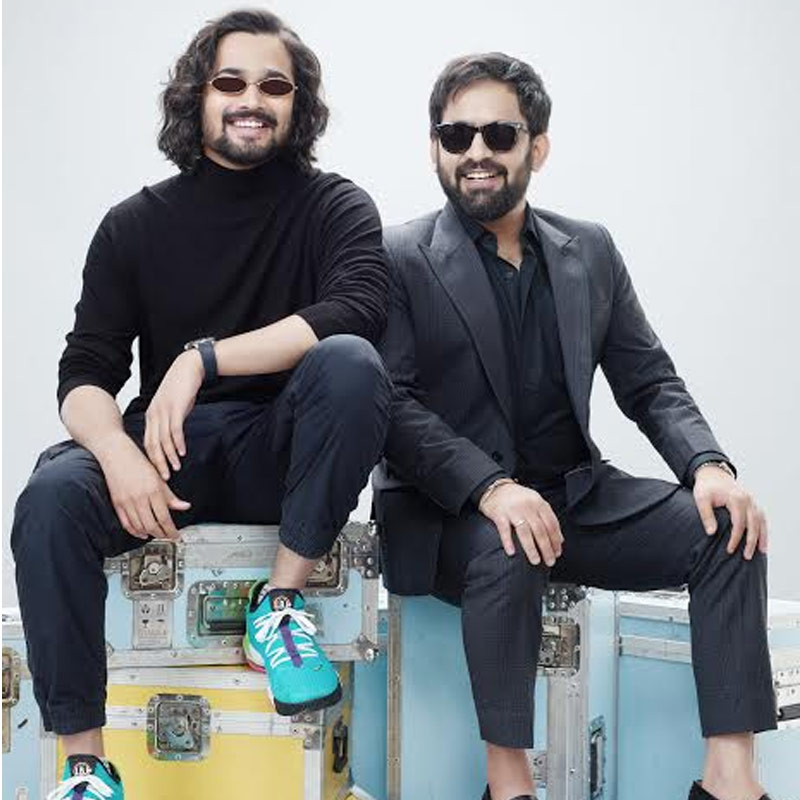
    Mumbai: Content creator and comedian Bhuvan Bam is all set to launch his fiction show Dhindora on YouTube Originals. Slated as India’s first fictional YouTube Original Show, the eight-parts web-show is created by Bhuvan Bam and helmed by Himank Gaur.

    Produced by Rohit Raj under the label of BB Ki Vines Productions, this light-hearted entertainer guarantees a laughter riot, featuring 10 characters from the BB Ki Vines Universe. While the launch date still remains unannounced, Bhuvan will soon announce the release details for all his fans across the country and beyond to enjoy his most treasured piece of work.

    Expressing his delight at the announcement, Bhuvan Bam said, “It has been truly incredible to have received all the love since I started out with YouTube, six years ago. I feel YouTube Originals is the most fitting platform for Dhindora to reach all our audiences. I hope this association will only strengthen going forward.”

    “We are extremely thrilled to announce that Dhindora is going to be India’s first fictional YouTube Original Show. There is some great potential in this story with some of Bhuvan’s most loved characters. And who better to partner with, than YouTube to take this franchise forward.” said producer, Rohit Raj.

    The story revolves around Bhuvan and his family’s everyday lives, when an unexpected purchase leads to a hysterical yet acute series of events. Depicting every common man’s larger than life dreams, the show is sure to strike a chord with all age groups alike.

    With the premise promising to be an adventurous ride, packed with rib-tickling moments, the audiences can’t wait to witness what their most-loved creator has in store. 

  • #Throwback2020: Programming across OTT & television

    #Throwback2020: Programming across OTT & television

    MUMBAI/KOLKATA: Life coach and motivational speaker Tony Robbins once remarked that “we aren’t in an information age, we are in an entertainment age.” The past year has shown that Robbins' observation wasn’t far off the mark. As people were bombarded with information from all sides, most of it unpleasant (what with a global pandemic, wildfires, erupting city blocks and violent racial protests, just to name a few), and with cinemas shuttered and live sports cancelled, they retreated to the only safe space left – their television and mobile screens. In fact, 2020 was also remarkable for another fact; TV and OTT saw unprecedented rise in viewership and time spent on the platforms compared to preceding years.

    One of the biggest trends that we saw on OTT and television in 2020 was the re-emergence of the golden era of family viewing. A classic example of this was the reruns of Mahabharat and Ramayan on Doordarshan during the lockdown. IndiaToday touted Mahabharat as the “baap of all masala entertainers” and no wonder, everyone in the family – from grandparents to kids – tuned in to the decades-old show. And as streamers were – for a large part of the year –   were the only ones where fresh content was in supply, audiences signed up for the services in big numbers.

    Programming on television

    With people confined to their homes, TV took them to places where they could find some respite, whether in the form of a supernatural show, a murder mystery, Mills & boons romance thriller, an endearing fish-out-of-water comedy, or a very old daily soap. Some shows nailed tricky tones; others offered unforgettable concepts.

    The pandemic forced general entertainment channels to go for reruns initially as there was no fresh content production for nearly three months. DD emerged the frontrunner, as, besides Mahabharat and Ramayan, it brought many other iconic shows such as Dekh Bhai Dekh and Shriman Shrimati, thereby raking in massive viewership. Private broadcasters took the same route to entertain audiences. Programmes that had been relegated to sister FTA channels, such as Saath Nibhana Saathiya, Kumkum Bhagya and Ye Rishta Kya Kehlata Hai, made a comeback on the pay platform and attracted a lot of eyeballs.

    Daily soaps dominate

    A lot of shows focused on family bonding, women taking charge of the household, and the parent-child relationship. Most of these serials tend to have family drama as the core thread with a love story running through it.

    Naagin, Chotti Sardaarni, Barrister Babu and the recently launched Shubharambh delivered – and continue to –  the bounty for Colors. Zee TV’s Kundali Bhagya and Kumkum Bhagya (both produced by Ekta Kapoor’s Balaji Telefilms) and Guddan Tumse Na Ho Paayega garnered significant eyeballs. Sony TV’s Mere Dad Ki Dulhan, which recently went off air, was centered on the theme of a second chance at love for middle-aged parents.

    Audiences across markets opted for a slice of life and family dramas. The overall Hindi GEC (U+R) and the Hindi GEC (U) audiences preferred to watch recently launched shows like Anupama, Imlie, Ghum Hai Kisi ke Pyaar Mein on Star Plus, and Zee TV’s most popular long-running shows Kundali Bhagya and Kumkum Bhagya.

    Several experimental shows such as 9 Months Wali Love Story, Kaatelal & Sons also found takers, but there wasn’t much in the way of breakthrough content outside of Anupama. The latter is a regular family drama showcasing the taboo subject of extramarital affairs on Indian television.

    Ormax Media partner Keerat Grewal said, "I think the challenge with the category is that experiments with new story ideas are there, but we have not seen any paradigm shift, something that we saw with KBC and Balika Vadhu. Over the last few years non-fiction has had an uptake on HGECs due to the fiction cynicism that’s set in gradually as audiences have been seeing 'more of the same'. This year however non-fiction has struggled as well, with both KBC and Bigg Boss not being able to deliver. Bigg Boss is generally shows an upward trend after a few weeks, once contestant familiarity sets-in."

    With production budgets slashed across channels by almost 20-25%, extending this year's Bigg Boss season even with lower than expected ratings, could be a matter commercial feasibility for the channel, she said

    Star Plus also managed to get its regional shows successfully remade into Hindi with Anupama and Ghum Hai Kisi Ke Pyaar Mein. This urge to adapt and remake has been picked up by other channels as well.

    Non-fiction shows struggled to top the charts

    Kaun Banega Crorepati, Bigg Boss, and The Kapil Sharma Show were produced under strict Covid2019 precautions. The drastically smaller production teams innovated on the sets to adhere to protocol and ensure safety of the participants. For instance, there is a restaurant, a shopping mall, a theatre, and a spa inside the Bigg Boss house. In KBC 12, besides the crew, even those who accompany the contestants on the show have socially distanced seating. There was no live audience and the audience poll lifeline was replaced by video-a-friend. The Kapil Sharma Show introduced recorded audience applause, and cut-outs in the background to make the set look lively. The IPL also did the same.

    Unlike other years, Bigg Boss – while generating a lot of buzz – has had a relatively subdued season and has not picked up in ratings. The non-fiction show has always been known to pick up from the mid-season where it brings older participants to pump up nostalgia and drama. This year, Colors has decided to extend Bigg Boss 14 till February 2021, with the grand finale scheduled around Valentine's Day. Traditionally, non-fiction shows have always given fiction shows a run for their money.

    And while the IPL was a huge production and advertising success, buoying industry sentiment,  the same cannot be said for other marquee non-fiction properties, which compete with it.

     “I think the challenge is that they keep experimenting with new story ideas but we have not seen any paradigm shift, something that we saw with KBC,” noted Grewal.

    The year of OTT

    2020 was the year of OTT, as people sampled and adopted them in droves. Likewise, the investment in content has also increased manifold. As more people turned to premium online content, the platforms also experimented with the formats of their new shows.

    A new genre on the streaming horizon is musical. Amazon Prime Video’s Bandish Bandits gathered buzz with its music-themed plot depicting the clash between two different worlds of music. Although some viewers found the format cliched, the catchy tunes by composers Shankar-Ehsan-Loy made it extremely appealing. MX Player’s music reality show Times of Music was loved for its unique format – it's a crossover between reality and chat show. Bringing the best composers in the Indian film industry together on one stage, the series included recreations of many celebrated songs. Times of Music charmed Indian music lovers at a time when live musical events had come to a halt.

    Experimentation and innovation

    More than simply offering a library of content, OTT platforms in India are trying to establish a stronger connection with consumers through interactive content. The trend has not picked up for premium originals yet but broadcaster-led streaming platforms are experimenting with the format for their catch-up content. Zee5 launched Zee5 Super Family League where participants could  create their own family by selecting their favourite characters from the network’s popular primetime shows. Voot and SonyLIV also created avenues for immersive experience around tentpole content like Bigg Boss and KBC.

    2020 was a series of unusual, new experiments to face the challenges posed by the pandemic. OTTs led the field when it came to producing new shows while sitting at home. Voot devised an innovative content format with locked room murder mystery The Gone Game, shot in cast members' residences. Eros Now also premiered a show made in lockdown – A Viral Wedding. Amazon Prime Video unveiled CU Soon, a film shot entirely during quarantine.

    Sequels spell success

    For many people, the saving grace of 2020 was their favourite shows returning with new seasons. The hugely popular Mirzapur series generated tons of excitement. Among other much-awaited shows, MX Player’s Aashram, Disney+Hotstar’s Hostages, Amazon Prime Video’s Breathe: Into the Shadows wooed the audience with returning seasons. Other than Indian originals, viewers enjoyed new seasons of international series like Money Heist, Dark and The Mandalorian.

    The rise of K-love

    Indian audience’s watch list is no longer defined by local content or few American dramas anymore. All things ‘K’ (as in South Korean, not Ekta Kapoor’s defining alphabet) had a major breakthrough in India amid the pandemic. Netflix India witnessed a whopping 370 per cent growth in the viewership of Korean dramas, with The King: Eternal Monarch, Kingdom (S2), It’s Okay to Not Be Okay and Crash Landing on You dominating the trending list for weeks. MX Player also reported considerable growth of Korean drama in its international segment. Interestingly, the K-drama fad is not limited to millennials and gen Z anymore. Other than romances, older audiences also watched other complex genres like Korean historical dramas and thrillers.

    OTTs have moved on from male, metro, millennial demographic to an increasing number of female content consumers. As a result, platforms focused on women-centric content representing strong female characters. The shows ranged from comedy to thrillers, romance, and social drama. Pushpavali, Four More Shots Please, Arya, Bulbbul, Masaba Masaba, Churails, Code M were some programmes that appealed to and were loved by women viewers.

  • Nikul Desai talks about his new show Taare Zameen Par

    Nikul Desai talks about his new show Taare Zameen Par

    MUMBAI: Nikul Desai is mainly known for directing non-fiction shows like Comedy Circus and Rising Star. Desai began his career under the supervision of his paternal uncle Vipul D Shah, the co-founder of Optimystix Entertainment. Starting off as an assistant director back in 2001, he has worked his way up to head of non-fiction content.

    But luck played its part too. Desai got to don the director's hat when the main director of a TV show fell ill – and that was his first break as a full-time television director. Fame quickly followed when he made a splash with the runaway success of Comedy Circus. The show aired for nine years with 18 seasons. Not only this, he brought various comedians like Kapil Sharma, Krushna Abhishek, Bharti Singh, Sudesh Lehri, and many more, into the limelight.

    Now, Desai is coming up with yet another singing reality show – Taare Zameen Par. Conceptualised as a platform for kids to showcase their signing talent, the show will be telecast on Star Plus from 2 November at 6.30 pm. The programme will not have judges, but mentors who will groom and train the kids. The makers have roped in Shankar Mahadevan, Tony Kakkar and Jonita Gandhi as mentors while popular comedian Sugandha Mishra and Aakriti Sharma (of Kullfi Kumarr Bajewala fame) will host the show.

    Desai revealed that this is the first time that any production house is attempting a non-fiction from a daily point of view. Said he: “Taare Zameen Par is a mammoth show that is keeping me and my team very busy. And then there are other projects in the pipeline, we are in conversation with Star Plus for a few other shows, which should hopefully get cleared by the end of October or November. We are also coming up with an original series, and a movie in partnership with Ashwin Varde.”

    Due to the Covid2019 pandemic, production houses have to come up with innovative ways to evolve and upgrade in the new normal. For instance, the studio has cut down on crew size – a measure that has generated its fair share of headaches.

    “A big non-fiction show has anywhere between 300 to 400 people, but now the studio is functioning with anywhere between 160 to 200 people while the work remains the same. Consequently, production has become considerably more difficult, and the team has to pre-plan a lot of stuff so there are no last minute requirements and scramble,” said Desai. This is because all the props which are coming from the market need to be sanitized and must be kept aside for 48 hours.

    In terms of the restrictions, only cameramen and technicians are allowed to go on the floor, otherwise access to the floor has been completely shut off. Further, there is zero physical contact with judges and hosts. Contact and communication has undergone a sea change.

    “Largely, the communication is completely killed from a security point of view, it's either from a pre-production point of view where we do phone calls or Zoom calls. We are shooting every day together, but we haven't really met each other. We are strictly adhering to safety and security protocols,” stated Desai.

    Child participants and their guardians, who came from all over India, went through a minimum of 14 days quarantine and it’s only recently that they have been brought out from their hotel rooms for band rehearsals, he added.

    Generally, the production control room (PCR) is a small, cluttered space. But this time to maintain social distancing. Optimystix has designed a bigger area for PCR. The studio has created a partition between technicians by putting acrylic sheets so that everybody can watch the monitors while shooting takes place. But only limited people are allowed in the room. For other crew members, the studio has made a viewing room where people who want to just watch the content can actually go to the viewing room and tune in.

    “We have given them the Zoom output off the whole master camera, so that they can watch what's happening on the floor at any point of time while sitting at their homes. And they can communicate with us over the call or Zoom chat. So, the way we function has completely changed. Earlier, a lot of people used to be there on standby to help the people present on the set but now 70 per cent of the crew is handling their own work,” Desai elaborated.

    The studio has also hired an external Covid2019 compliance company named the Covid Marshal. The set and other equipment are sanitised twice a day. No more than two episodes are shot in a day. Desai further mentioned that due to safety and security measures the productivity has comparatively been hampered.  

    Desai shared his view that audiences are now more keen than ever to watch light-hearted programmes, and in the long run non-fiction shows will fare better. 

  • Zee Tamil to launch a bouquet of shows starting this September

    Zee Tamil to launch a bouquet of shows starting this September

    MUMBAI: Zee Tamil, has lined up an exciting array of new shows that are set to be launched this month. These include shows from both fiction and non-fiction genre. As the channel is able to create fresh content post easing down of restrictions on shooting and productions, Zee Tamil has emerged stronger and received an overwhelming response from its viewers, strengthening its resolve to serve the best in-class entertainment in Tamil Nadu.

    Zee Tamil’s string of new shows will be launched beginning in September. The Gautam Vasudev Menon directorial web series Queen will be aired on Television for the first time on Zee Tamil every Sunday starting 13 September. The channel also has new offerings for their fiction and non-fiction segment – Suryavamsam and Zee Super Family, respectively. After the phenomenal audience reception for shows Dr. Ambedkar and Kundali Bhagya in other Zee network channels, Zee Tamil has decided to bring these two shows to the eager Tamil audiences as well.

    Queen, inspired from true-life events, highlights the journey of an ambitious and fierce woman, through her journey from being a bright student to becoming an acting sensation in Tamil Cinema, to finally becoming a great political leader in Tamil Nadu. Directed by Gautam Menon, this web series stars Ramya Krishnan, Anjana Jayaprakash, and Anikha as Shakthi Seshadri. Starting 13 September, Queen will air every Sunday from 6:30 pm to 7.30 pm

    Suryavamsam is a contemporary family drama, which has a refreshing take on the conflict between a tradition and love between different cultures. It brings back nostalgia for the days when joint families were still predominant in society. It is the story of Samantha (played by Niktha Rajesh) who is on a mission to reunite her mother Kalyani (played by Sandhana) with her estranged family. The other lead actors in this show are Poornima Bhagyaraj, playing the grandmother Annammal, and Aashish Chakravarthy, playing Surya, the love interest of Samantha. Starting  21 September Suryavamsam will air from Monday – Saturday, at 7:00 pm.

    Coming soon to the Zee Tamil audience is Puratchiyalar Dr.Ambedkar,  a serial based on the real-life story of Dr Bhimrao Ambedkar. Due to the prevalence of regressive practices of untouchability and the caste system, Ambedkar and his family are treated poorly by the people belonging to the upper castes. Bhim, however, studies diligently and works hard to educate himself, ultimately becoming the bastion, flag bearer, and almost synonymous with ‘social justice’ in India. The promo of this show running currently on TV and social media has already created waves and a very high interest amongst Tamil viewers

    Among its non-fiction offerings, Zee Tamil will soon be launching a show called Zee Super Family– a reality game show hosted by Archana and RJ Vijay wherein artists of Zee Tamil shows will come together for this one of a kind game show to offer 120 minutes of non-stop entertainment through a series of fun filled tasks.

    Kundali Bhagya, a famous show which topped the viewer ratings for Zee TV is soon to be dubbed and launched for Zee Tamil. This fiction show tells the story of two sisters Preeta (Shraddha Arya) and Srishti (Anjum Fakih) in their attempt to reunite with their mother Sarla (Supriya Shukla). It shows their journey and how they ultimately find themselves entangled with the rich and famous Luthra family. This is a story of love, of friendship, of revenge – the ultimate emotional potpourri!

  • Fiction is staple diet while non- fiction is the dessert – Anuj Poddar

    Fiction is staple diet while non- fiction is the dessert – Anuj Poddar

    MUMBAI:  Over the last one year, Viacom 18’s Marathi channel Colors Marathi, has been a game changer in the Marathi television space. From a single destination of leading high octane events to being the home to varied fiction and non-fiction content, Colors Marathi has become synonymous with Marathi entertainment. Over a period of time, Colors Marathi has seen tremendous growth, not only in the viewership, but also in advertising profiling.

    Speaking with Indiantelevision.com, Colors Marathi head Anuj Poddar said, “We have benefited from the expansion of the market. Our viewership has grown by 2.4 times or 240 per cent this year from last year. We had 15 per cent relative share. Today we have 36 per cent share. If we talk about the others, Star Pravah has gone down from 22 per cent share to 12 per cent while Zee Marathi has gone down from 63 per cent to 52 per cent share. Therefore Colors Marathi has grown and advertisers have started noticing us and are coming to us.”

    Adding further, Poddar said, “This year we have got 160 advertisers which is huge number to get on board. And, both the old and new advertisers have increased spends on the channel. Therefore, Colors Marathi is growing healthily.”

    Nissan Motor Co, Samsonite Corporation, Hector Beverages, LimeRoad.com, Oxigen Services India, Scholl Piramal India, Cipla, JSW Group, Indian Oil Corporation, P.N Gadgil & Sons and Pernod Ricard India are the some of the brands that the channel has get on board.

    Over the last one year Colors Marathi has climbed up from the number three position to number two according to Broadcast Audience Research Council (BARC) India data. Also among the top five programmes, Colors Marathi has three slots. Assa Sasar Surekh Bai was the top rated show in the genre with 1609 Impressions’ 000 in week 13 of BARC data.        

    “For any GEC to do well on a consistent and sustainable basis, its fiction shows have to do well. You cannot say a channel is doing well unless its fiction does well. But fiction is also not enough by itself, you need to have a wide variety of content and non-fiction brings that variety. There is that certain segment of audience that comes for non-fiction, it could be male or kids. It brings more energy to the channel. Therefore both need to do well. But fiction is the staple diet and non-fiction is the dessert (Mithai) that adds spice to the staple diet. This year, both have worked well for us. Fiction has done really well but not at cost of non-fiction,” was Poddar’s quick rejoinder.   

    Speaking about the strategy, he mentioned, “There is only one strategy and the strategy is to make good content. We don’t follow what others are doing. I believe in making good content and then people will come to watch, but good content doesn’t mean that it is first good for me. It should be good from the context of my audience. We spend a lot of energy on research because ratings numbers are just a report card. They won’t tell you what audience liked or disliked.”

    According to the FICCI KPMG 2016 report, the largest share of the regional TV market is from the Tamil and Telugu regions. The Tamil genre has 25.7 per cent share while the Telugu genre has 24.4 per cent share. The Marathi genre saw a share of 4. 6 per cent in the regional TV space. “Tamil and Telugu are the non-HSM markets. They don’t have Hindi competition, so are lesser fragmented. But in Maharashtra I don’t compete only with Marathi channels, but also with other Hindi general entertainment channels. So yes, the share of Marathi market is lower than the share of the Tamil and Telugu markets.  But even in that case we are doing well, and that’s a bigger achievement,” said Poddar.

    The Marathi genre is performing well, but nowadays the audience that is watching movies is not only Marathi people but also across the genres and that’s why the these movies are doing well.  Poddar contended, “80 per cent of satellite movies are unsold, which is putting pressure on the satellite price. But filmmakers are getting a big boost from theatrical revenue while the satellite cost is going down. I think it’s a buyers’ market today, and in that we are lucky because we have good films to choose from. We get the films at the price we want. We are also investing back into films as we market these films. We showcase these films and give a second lease of life to them.”

    “From the ratings perspective, an early premier of a movie gives spikes, but now the scenario is different. Today movies are not ratings driven,’ he further added.

    Speaking about the market and promotional innovation for movies, he informed, “We believe that when we are showcasing movies on television, we have to create that aura all over again and we want to market the films with the same importance as other shows. We have had different initiatives ranging from on ground activities to social media traction. Even all the artists have joined us to push the release of a film. So it is like giving a second marketing promotion to the film.”

    Poshter Girl from Viacom18  Motion Pictures is the latest offering that the channel has. Talking about the two markets and their acquisition costs, Poddar informed that Hindi GEC is also in a phase correction mode, except for a few legacy deals that have been done. “If you see the peak of Hindi GEC it has gone down from Rs 50-60 crores to Rs 30-35 crores. I don’t think our biggest film is even 10 per cent of that. Its acquisition price is 5- 7 per cent of a Hindi GEC blockbuster’s price.”

  • Fiction is staple diet while non- fiction is the dessert – Anuj Poddar

    Fiction is staple diet while non- fiction is the dessert – Anuj Poddar

    MUMBAI:  Over the last one year, Viacom 18’s Marathi channel Colors Marathi, has been a game changer in the Marathi television space. From a single destination of leading high octane events to being the home to varied fiction and non-fiction content, Colors Marathi has become synonymous with Marathi entertainment. Over a period of time, Colors Marathi has seen tremendous growth, not only in the viewership, but also in advertising profiling.

    Speaking with Indiantelevision.com, Colors Marathi head Anuj Poddar said, “We have benefited from the expansion of the market. Our viewership has grown by 2.4 times or 240 per cent this year from last year. We had 15 per cent relative share. Today we have 36 per cent share. If we talk about the others, Star Pravah has gone down from 22 per cent share to 12 per cent while Zee Marathi has gone down from 63 per cent to 52 per cent share. Therefore Colors Marathi has grown and advertisers have started noticing us and are coming to us.”

    Adding further, Poddar said, “This year we have got 160 advertisers which is huge number to get on board. And, both the old and new advertisers have increased spends on the channel. Therefore, Colors Marathi is growing healthily.”

    Nissan Motor Co, Samsonite Corporation, Hector Beverages, LimeRoad.com, Oxigen Services India, Scholl Piramal India, Cipla, JSW Group, Indian Oil Corporation, P.N Gadgil & Sons and Pernod Ricard India are the some of the brands that the channel has get on board.

    Over the last one year Colors Marathi has climbed up from the number three position to number two according to Broadcast Audience Research Council (BARC) India data. Also among the top five programmes, Colors Marathi has three slots. Assa Sasar Surekh Bai was the top rated show in the genre with 1609 Impressions’ 000 in week 13 of BARC data.        

    “For any GEC to do well on a consistent and sustainable basis, its fiction shows have to do well. You cannot say a channel is doing well unless its fiction does well. But fiction is also not enough by itself, you need to have a wide variety of content and non-fiction brings that variety. There is that certain segment of audience that comes for non-fiction, it could be male or kids. It brings more energy to the channel. Therefore both need to do well. But fiction is the staple diet and non-fiction is the dessert (Mithai) that adds spice to the staple diet. This year, both have worked well for us. Fiction has done really well but not at cost of non-fiction,” was Poddar’s quick rejoinder.   

    Speaking about the strategy, he mentioned, “There is only one strategy and the strategy is to make good content. We don’t follow what others are doing. I believe in making good content and then people will come to watch, but good content doesn’t mean that it is first good for me. It should be good from the context of my audience. We spend a lot of energy on research because ratings numbers are just a report card. They won’t tell you what audience liked or disliked.”

    According to the FICCI KPMG 2016 report, the largest share of the regional TV market is from the Tamil and Telugu regions. The Tamil genre has 25.7 per cent share while the Telugu genre has 24.4 per cent share. The Marathi genre saw a share of 4. 6 per cent in the regional TV space. “Tamil and Telugu are the non-HSM markets. They don’t have Hindi competition, so are lesser fragmented. But in Maharashtra I don’t compete only with Marathi channels, but also with other Hindi general entertainment channels. So yes, the share of Marathi market is lower than the share of the Tamil and Telugu markets.  But even in that case we are doing well, and that’s a bigger achievement,” said Poddar.

    The Marathi genre is performing well, but nowadays the audience that is watching movies is not only Marathi people but also across the genres and that’s why the these movies are doing well.  Poddar contended, “80 per cent of satellite movies are unsold, which is putting pressure on the satellite price. But filmmakers are getting a big boost from theatrical revenue while the satellite cost is going down. I think it’s a buyers’ market today, and in that we are lucky because we have good films to choose from. We get the films at the price we want. We are also investing back into films as we market these films. We showcase these films and give a second lease of life to them.”

    “From the ratings perspective, an early premier of a movie gives spikes, but now the scenario is different. Today movies are not ratings driven,’ he further added.

    Speaking about the market and promotional innovation for movies, he informed, “We believe that when we are showcasing movies on television, we have to create that aura all over again and we want to market the films with the same importance as other shows. We have had different initiatives ranging from on ground activities to social media traction. Even all the artists have joined us to push the release of a film. So it is like giving a second marketing promotion to the film.”

    Poshter Girl from Viacom18  Motion Pictures is the latest offering that the channel has. Talking about the two markets and their acquisition costs, Poddar informed that Hindi GEC is also in a phase correction mode, except for a few legacy deals that have been done. “If you see the peak of Hindi GEC it has gone down from Rs 50-60 crores to Rs 30-35 crores. I don’t think our biggest film is even 10 per cent of that. Its acquisition price is 5- 7 per cent of a Hindi GEC blockbuster’s price.”

  • Star Plus to air ‘Ishq Kills’ Sunday primetime

    Star Plus to air ‘Ishq Kills’ Sunday primetime

    MUMBAI: Given the importance of primetime, most Hindi general entertainment channels would steer clear of risqué content in this slot. However, as the leader in the Hindi GEC category, Star Plus continues to be an exception to the rule.


    Back in 2010, the channel introduced adult-themed shows such as Maryada – Aakhir Kab Tak and Kaali – Ek Agnipariksha during late primetime. Once again, it is all set to air a new show, Ishq Kills every Sunday at 10:00 pm, starting 16 February.


    The one hour show will enact crimes of passion that have taken place in the country. Statistics reveal that most crimes in India are committed either for love or for money, and Ishq Kills will be the first show to highlight those where love is involved.


    While the Star spokesperson was unavailable for comment, sources close to the development said the show is based on true events and will wrap up in 26 episodes. Produced by Rowdy Rascals of Savdhaan India fame, Star Plus has roped in film producer-director Vikram Bhatt to host the show.


    The show promo doing the rounds of all the Star Network channels has already generated a lot of curiosity. It shows a married man sleeping with his housekeeper and when he professes his love for her, she asks him to “prove it” by “killing memsaab”  


    While there is no dearth of crime-based shows on Hindi GECs, going by the promo, the show definitely carries the promise of standing out from the rest. Then again, it is in for some serious competition from Colors’ Comedy Nights with Kapil (CNWK), which has almost become a brand unto itself.  


    Will the show work its magic on Star Plus?


    Says a media professional who doesn’t wish to be named: “This is the time when the whole family sits and watches either movies or shows which refresh their mind. However, thriller-based shows have never worked for Star after some point of time. Moreover, the series is competing with CNWK which is already a brand now and people block 10:00 pm for it. I think CNWK will eat up all its ratings as the loyal audiences have already been built in this slot.”


    According to another media professional, primetime in GECs has grown nearly 20-25 per cent in the past few months which proves there are viewers available as also the potential for growth.


    With competitors like Fear Files on Zee TV and Savdhaan India on Life OK, only time will tell who is going to have the last laugh!

  • Zee TV goes the edutainment way with Jodha Akbar

    Zee TV goes the edutainment way with Jodha Akbar

    MUMBAI: Whether it is being the first satellite television in India in 1992, or introducing non-fiction formats of singing and dance talent hunt shows that set the trend for competition to follow or producing fiction shows that address social issues in a poignant manner and drive societal change, Zee TV has been a pioneer in the Hindi GEC space.


    In the age of ‘on-the-go content consumption’, Zee TV has been carving a distinct niche for itself in the digital space through a slew of initiatives across its different shows over the last 5 years. Whether it is through Facebook and smartphone apps, augmented reality consoles at malls or innovations in the voting mechanism of its reality shows, Zee TV continues to be at the helm of innovation in the digital space too.


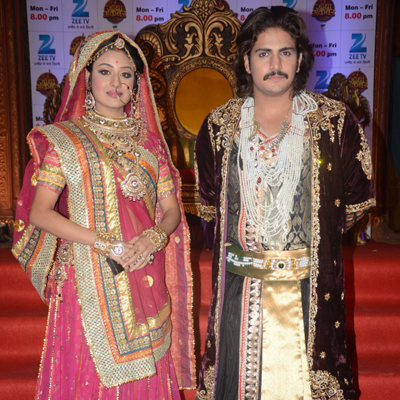
    Being the most widely followed and universally loved historical saga on Indian Television, Zee TV’s No. 1 showJodha Akbar has won the hearts of its viewers across India. With an unparalleled rating of 11019 TVTs last week, the show is the biggest historical ever on Indian television. Now, Zee TV takes the leadership initiative yet again and is all set to make history go digital in making its popular historical saga accessible to viewers and fans as a first-of-its-kind e-book and a mobile game.


    The digital rendition of India’s history opens up an exciting avenue for children who shy away from their History text-books … why just kids? How many of us adults remember the broad chapters of Indian history after having gone through the grind at school? Ensuring that its readers stay glued to it once they start, Jodha Akbar’s e-book titled‘The Zee TV Mughal Empire E-Book’ presents historical facts and figures through vibrant word pictures, an arresting narration and illustrations that entertain while educating. Starting from the times of Babar and spanning across various centuries, the e-book covers the glorious reign of Shehenshah Akbar right up to Prince Shahjahan. This entire saga of the Mughal reign in India is brought alive through this e-book.


    Comprising 6 mini-games, the Jodha-Akbar game has various fun, exciting elements all packed together, making it a must-have app on your phone. Challenge your knowledge about the Mughal Empire through a quiz game – The Grand Entry. Test your reflexes as you race along the battle field combating the enemy in ‘The Ride of your Life’ and ‘The Battle Royale’. ‘Fort Quest’ is a game that gives you a chance to step into the shoes of the great warrior Akbar and conquer the fort. With each threshold crossed in points your rank increases in the Mughal Army from ‘Mansabdar’ to a ‘Wazir’ to a ‘Jawaan’ and finally cross a score of 1 lac points to gain the title of the ‘Mughal Baadshah’ and unlock a secret game ‘The Nine Jewels’!


    Talking about launching the game and e-book, Akash Chawla – Head, Marketing – National Channels , ZEEL said, “Zee TV, has been at the forefront in the GEC space with its initiatives in the digital domain over the past 5 years. At a time when ‘on-demand’ and ‘on the go’ entertainment is the order of the day, we have been successful in providing our viewers with both, on-air as well as digital content that has kept them engrossed and engaged. While the innovative e-book packs in it the entire history of the Mughal Empire through vibrant pictorial depictions and a crisp narration, the game will test your knowledge of the Mughal era, ability to think like a warrior and transport you into the world of Jodha Akbar. While entertaining the masses with our on-air content remains our mainstay, we have gone the edutainment way while creating a digital footprint with Jodha Akbar.”


    Available now on Online at http://www.zeetv.com/jodha-akbar/ and on Android platforms as the ‘Jodha Akbar Game’ and ‘‘The Zee TV Mughal Empire E-Book’, the game and e-book will be available soon on the IOS platform as well. Even as the show’s popularity continues to soar on the tube, the game and e-book will get viewers of the show to experience the world of Jodha Akbar like never before.


    Do not miss Jodha Akbar, Every Monday – Friday at 8:00 PM, Only on Zee TV!