Tag: Ficci

  • Indians as entrepreneurs can turn limitations into opportunities, says Subhash Chandra

    Indians as entrepreneurs can turn limitations into opportunities, says Subhash Chandra

    MUMBAI: Be it business or life challenges, learn how to innovate, overcome obstacles and make your business flourish with some help from the expert — a man of a thousand ideas, Dr. Subhash Chandra.

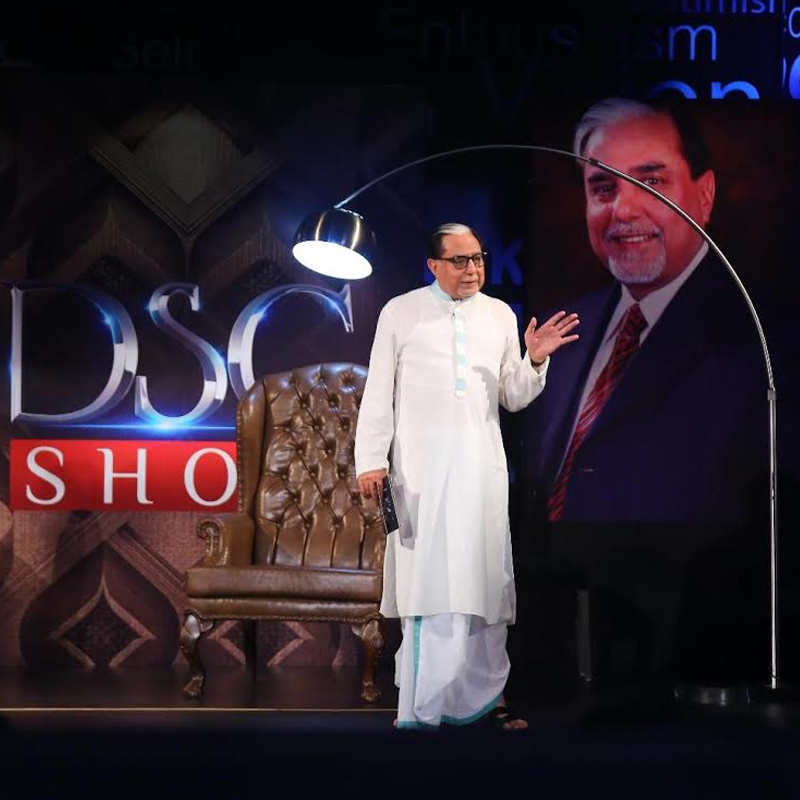
    Fresh episodes of India’s popular youth show, Dr. Subhash Chandra (DSC) Show will go on-air from 6 May. Chandra shared his success mantra with students in Mumbai at Whistling Woods International Institute and Prahlad Kakkar School of Branding & Entrepreneurship (PKSBE) for the next episodes of the show.

    Kakkar, Dr. A. Velumani, Founder & Chairman of Thyrocare, Beena Sheth Lashkari, Director, Door Step School, Kaustubh Dhargalkar, Innovation Consultant and Pratish Nair, Director & Co-founder of PKSBE are the eminent guests for these episodes.

    With a fresh look and format, India’s popular motivational youth show, Dr. Subhash Chandra (DSC) Show is returning to television screens with new episodes that highlight inspirational stories of people from different backgrounds.

    After shooting at New Delhi, the next episodes of the DSC Show were held at Whistling Woods and PKSBE in Mumbai. During these episodes, Dr. Chandra, MP, Rajya Sabha & Chairman, Essel Group & ZEE spoke on topics close to his heart – “MBA versus Entrepreneurs, Job-seeker versus Job-creator” and “How is entrepreneurship in creative industries different? What is required to be a successful media and entertainment entrepreneur in 2017?”

    A successful entrepreneur himself, Dr. Subhash Chandra expounded his views on “MBA versus Entrepreneurs; Job-seeker versus Job-creator” saying, “India is a country of entrepreneurs. Entrepreneurship runs in our blood since we know how to succeed with limited resources, which is the pre-requisite for running a successful business. This behaviour arises in Indians not out of choice but out of requirement; but that is what successful entrepreneurs do, they turn limitations into opportunities.”

    Elaborating further, Dr. Chandra said, “For an economy to flourish and be successful, we need both – Entrepreneurs and MBAs, Job-creators and Job-seekers. Neither is better or worse; each path has its own risks and rewards. However, both are essential parts of the system and it is upto each individual to find his or her calling and to strive for perfection. It is a universal truth that if you aim for excellence, you will be successful in whatever you do.”

    Sharing insights and examples from his own experience in the Media and Entertainment industry, Dr. Chandra spoke on “Entrepreneurship in Creative Industries” saying, “The Indian Media & Entertainment (M & E) industry stood at Rs. 1,26,200 crores in 2016 as per the FICCI-KPMG Media and Entertainment Report 2017 and is expected to almost double its current size by the year 2020. We can therefore see that there is much opportunity for growth in this industry. To become a successful entrepreneur in the M & E industry or for that matter in any industry, you need to have a strong product on offer which is unique from any other existing product or you need to cater to an audience that has not been tapped before. By experimenting with new and creative offerings, you can keep the interest alive for your audiences, your employees and yourself.”

    Catch the curtain-raiser on 6 May followed by the first episode on 13 May on the following channels of Zee Media:

    Name of the Channel

    Saturday

    Sunday

    Zee News

    10:00 pm

    11:00 am

    India 24X7

    7:30 pm

    10:00 am

    Zee Business

    7:00 pm

    11:00 am

    Zee Rajasthan

    8:00 pm

    12:00 pm

    Zee Madhya Pradesh Chhattisgarh

    5:00 pm

    9:00 am

    Zee Haryana Himachal

    7:00 pm

    10:00 am

    24 Ghanta

    11:00 pm

    11:00 am

    Zee Purvaiya

    9:00 pm

    10:00 am

    Zee 24 Taas

    1:00 pm

    10:30 am

    Zee Kalinga

    1:30 pm

    10:00 am

    Also Read:

    Who Am I: Subhash Chandra show comes back in a new avatar

    ‘Chawal’ to channel: Zee’s 24 years of a memorable roller-coaster ride

    Gadkari unveils Marathi edition of Subhash Chandra’s ‘The Z Factor’
  • Govt. measures to reduce patent application time to 18 months under way

    NEW DELHI: Intellectual Property Rights regime in India is undergoing a process of re-engineering with the collaboration of government and industry, Department of Industrial Policy and Promotion (DIPP) Joint Secretary Rajiv Aggarwal said today.

    Speaking at a conference on ‘IP: Innovation to Drive Business and Competitiveness’ , Aggarwal said the tool kit to protect intellectual property (IP) rights which had been launched earlier in association with FICCI has enabled the law enforcement agencies especially police to help strengthen the government machinery to handle IP rights infringement issues.

    The meet was organised by FICCI in association with DIPP, Ministry of Commerce & Industry, to commemorate the World Intellectual Property Day 2017.

    He added that this tool kit has been provided to all state police departments across the nation. He added that there was still a long way to go and with partners like FICCI the government was looking forward to step up its efforts.

    Aggarwal said recently Chandigarh was felicitated with an award for enforcement of IP in the country, which was a proof of government’s earnest intentions of fast-tracking enforcement in IP. He added that the government was taking steps, including hiring manpower, to reduce the patent application examination time to 18 months.

    Alluding to the need of embedding the culture of IP early in life, Aggarwal said a new drive had been initiated where awareness programmes on IP were being run in schools as it would also enable in taking forward the agenda of innovation.

    The conference aimed to capture the essence and increasing IP buzz in the country while providing a useful forum for various IP stakeholders to deliberate on the importance and potential of generating, protecting, enforcing, commercializing, and incorporating IP and innovation in the core of business strategies.

    The deliberations focused on how IP supported innovation by attracting investment, rewarded creators and encouraged them to develop their ideas ensuring, at the same time, that the emergent knowledge was ultimately available for the future innovators to develop further on the existing knowhow. The forum served as a platform for leading IP experts from India and abroad to discuss how to ensure that, in the days to come, IP and Innovation become the driving force for business growth and competitiveness in India as well as globally.

    FICCI IP Committee Chairperson Narendra Sabharwal, formal Deputy General of WIPO, said a baseline survey should be undertaken by the stakeholders to audit the progress in the IP space, which would help in identifying the priorities as well as the gaps in the system. He added that economic impact studies should also be carried.

    He said there was need to strengthen enforcement, especially, in the online arena and focus on appropriate commercialization of IP assets. He added that creation of human capital should be accorded priority. In recent years, Intellectual Property has spawned a new wave of technological innovations, leading to rapid economic growth and development. As businesses grow and attract competition, the need to identify, develop and leverage IP becomes even more important in order to sustain and thrive in the market.

    The industry looks forward to the further strengthening of certain key areas of India’s IP regime. Stronger IPR enforcement and greater connectivity of IP policy with existing legislations and business environments are two such critical needs. These will not only incentivise innovation, but help attract investment that will create new jobs and opportunities. Indian business is confident that as the IPR Policy implementation moves forward, the economy will grow faster towards achieving the desired growth rate. The year 2017 marked a step forward for India in its IP history with the Indian leadership adequately recognizing the crucial role that intellectual property played in fostering innovation, accelerating growth and enhancing business competitiveness.

    Also Read:

    Copyright infringement: Kross awarded injunction against ‘Pushpaka Vimana’, hearing on 12 Apr

    FICCI FRAMES: Legitimate screens, stricter laws, best practices for IPR

    IPR: DIPP allocation increased after copyright shift from HRD

    FICCI Frames ’17: Maharashtra to form IP crime unit to fight online piracy

  • TRAI urges govt. to use digital TV networks for b’band growth

    NEW DELHI: The digitised TV framework, which has come up in the country in a big way, should be upgraded to provide broadband to 100 million homes, the Telecom Regulatory Authority of India has recommended.

    TRAI chairman R S Sharma said that it had also recommended tweaking the licensing framework to enable Wi-Fi hotspots as almost 800,000 such Wi-Fi hotspots were needed to connect India digitally.

    Speaking on ‘India’s Regulatory Priorities for 2017’ on the second day of India Internet Conference (IIC) 2017 here yesterday, he said TRAI had recommended that broadband can become a core utility to citizens if BharatNet is implemented in the PPP mode to connect 250,000 gram panchayats across the country.

    The theme of the conference was ‘Digital India 4 Sustainable Development’ organised by FICCI in association with the Electronics & IT Ministry (MeitY).

    Speaking about the overarching principles, Sharma said TRAI was regulating the sector to ensure consumer protection, quality of service, transparency, growth of the sector and a level playing field for stakeholders. He added that TRAI was regulating the sector to ensure its healthy growth. He also mentioned that TRAI was working towards enhancing ease of doing business and was seeking recommendations from the stakeholders to identify the tricky areas.

    Sharma said there were regulations that have lost their relevance over time and therefore TRAI had formed a committee comprising stakeholders to remove obsolete regulations. He added that TRAI was working towards identifying the important issues while dealing with urgent matters to bring out appropriate consultation papers.

    Broadband proliferation in the country was a priority, he said adding that the focus was on creating infrastructure, governance and services on demand and digital empowerment of citizens digitally connect the country.

    Also Read

    TRAI chief pushes for b’band over cable TV, BharatNet for upping penetration

    TRAI wants reduction of import duty on Wi-fi equipment to help growth

  • Visiting filmmakers’ new visa category will boost industry & tourism, says Uday Shankar

    NEW DELHI: The initiative to introduce a new category of visa for film makers to shoot films in India “will bring in multiple benefits as our young artists and technicians will get opportunities to be part of international projects and M&E verticals like studios and animation will get much needed exposure”, FICCI Media and Entertainment Committee Chairman Uday Shankar has said.

    Welcoming the Government’s decision, he said, “This is a right step taken at the right time as it will simplify the visa process and ease the entry of artists and technicians into India.  I am also happy to note that the Film Visa and the Film Facilitation Offices (FFOs) are going to be set up to handle such applications.”

    “More importantly, when these movies are released internationally, it will put India as a great tourist destination and thus promote India’s tourism potential”, Shankar added.

    Minister of state for information & broadcasting Rajyavardhan Rathore  yesterday said that the new category of visa to foreign filmmakers is a step taken by the Government to ease issues related to their entry into the country for film making and shoots. The step is a positive move to promote  India as an attractive filming  destination to the world.

    Also read

    Film Visa & FFO make India filming destination: Rathore


  • Film piracy: Govt has no ‘losses’ figure, industry estimates Rs 180 bn a yr

    NEW DELHI: Even as the government said that no definite data was available on losses owing to piracy “if any”, the film industry had said in mid-2016 that the Indian film industry was losing $ 2.7 billion (Rs 180 billion) every year.

    Minister of state for information and broadcasting Rajyavardhan Rathore told the Parliament that the government ‘is aware that there are instances of piracy of films but these are subject matters of investigation by concerned investigating agencies of the respective state governments based on complaints by the concerned filmmakers’.

    The Copyright Act 1957 as amended in 2012 provides Civil Remedies [Chapter XII (Section 54-62)] as well as Criminal Remedies [Chapter XIII (Section 63-70)] to the Copyright holder and clause (c) of subsection (1) of Section 52 of the Copyright Act, 1957 read with the Rule 75 of the Copyright Rules, 2013 are the provisions of the Act which deal with piracy of films, he said.

    The loss due to piracy is said to be 35 per cent more than the $2 billion from legitimate sources such as screening at theatres, home videos and TV rights earned by the film industry which is the largest globally with some 1,000 movies produced each year.

    Motion Picture Distributors’ Association (India) MD Uday Singh had said in mid-2016 that content theft or piracy in the film industry originates from ‘camcording’ in cinema halls. Over 90 per cent of new release titles originate from cinemas. He claimed that the Indian film industry loses over 60,000 jobs every year because of piracy.

    The World Intellectual Property Organisation (WIPO) also quoted these figures of loss due to piracy quoting noted filmmaker Anurag Basu. While the Indian film industry is, indeed, flourishing, piracy points toward how much more its stakeholders can make, he said.

    Meanwhile, the KPMG in India-FICCI Report on Media and Entertainment presented at the FICCI FRAMES earlier this month said films grew at a crawling pace of three per cent in 2016.

    The segment was impacted by decline in core revenue streams of domestic theatricals and satellite rights, augmented by poor box office performance of Bollywood and Tamil films.

    Expansion of overseas markets, increase of depth in regional content and rise in acquisitions of digital content byover-the-top platforms are expected to be the future growth drivers that would help the segment bounce back at a forecasted CAGR of 7.7 per cent.

    However, factors such as dwindling screen count and inconsistent content quality could prove to be limiting factors.

  • Need to examine legalising sports betting, says Law Commission chairman

    NEW DELHI: Gaming 360, All India Gaming Federation’s one-stop portal for gaming related news and activities across India and around the globe, was launched here today to bringing the industry together and providing it with a platform where the stakeholders can make their voices heard.

    This was stated by AIGF CEO Roland Landers at the India Gaming Conclave here. He said, “We appreciate the presence of such dignitaries at the inaugural event and are hopeful that in the coming years it will witness more such powerful presence to help us make a difference.”

    Landers said India Gaming Conclave would now be an annual event for the stakeholders to converge and discuss on working towards a legalized and regulated gaming industry in India. The event aimed at educating and creating awareness on all aspects of gaming.

    Law Commission of India chairman Justice Dr. Balbir Singh Chauhan underlined the need to examine legalising sports betting by studying the social, economic and moral implications of any such move specifically under a liberalised regime. The myths and negative opinions on these issues have to be cleared, he emphasised.

    Delivering the keynote address at the Conclave (IGC) organized by FICCI jointly with All India Gaming Federation (AIGF), Justice Chauhan said individual freedom was the basic right “which we all look up to but the vulnerable sections of the society need protection at the same time”. While those in favour of legalising betting believe in the need to protect individual autonomy and minimum state interference, those disfavouring it believe that preserving societal order and morality was also important. Therefore, there was a need for reforms that aim at flexibility while ensuring freedom of choice for the consumers. Hence, there was a need to strike a balance between freedom and choice.

    He said that any attempt at legalising gambling and betting has to be made in the backdrop of this socio-economic reality. There was a grave risk that legalising this activity might adversely affect the social fabric of India. There were chances that people in a bid to earn quick money through gambling might resort to unlawful means. A comprehensive analysis of the socio-economic circumstances in light of the constitutional guidelines was thereby essential before framing an umbrella legislation that legalises gambling.

    There were certainly several adverse effects of gambling. The first problem with gambling was when a person becomes addicted and loses control over his/her gambling activities, resulting in financial losses that have an adverse impact on his/her personal, economic and social life. The second problem relates to the social repercussions that are a direct consequence of gambling. One fallout could be increased crime, loan sharking (taking loans at exorbitant rates for gambling), worsening of the living standards of the poor and lower middle class and changes in behavioural norms and social ethics.

    Justice Chauhan said that it must be kept in mind that these adverse effects arise not from gambling per se, but are a result of excessive gambling which results in addiction. Harm resulting from excess is not something which is limited to gambling alone, as an excess of anything may negate its benefits. A common analogy would be alcohol, which when taken in moderation causes no great harm to the individual or society and may help people to socialise and relax. However, if a person develops a habit or addiction to drunkenness, it will cause health problems for him, as well as adverse consequences for the society at large, such as increased crime, violence. The response of the state in such a situation should be to regulate the activity, not seek to stop it completely. Legalisation would give the government the opportunity to bring gambling out from the dark corners of the society, impose some controls and extract some revenue. Perhaps as importantly, if betting were legal then a huge chunk of money that, at the moment circulates only round the black market, would quickly become available.

    FICCI Director Rahul Chakravarty said sport and gaming were one of the fastest growing sectors in the economy with a lot of money flowing in the sector. Gambling regulation was not new to India with lotteries already being regulated business under state control.

    FICCI launched the debate on regulating online sports betting and lottery in India in 2012. This regulation was not just to restrict the illegal activities but could create a scope of revenue for the government to invest in social sectors apart from sports.

    He said that FICCI and AIGF will take forward the feedback on safety and security pertaining to gaming as well as other relevant issues. He added FICCI believes that this conclave will not only help in exchanging ideas and information but will initiate further policy work.

  • Discovery establishes first-of-its-kind India advisory board

    MUMBAI: In line with its stated ambitions for the India market, Discovery Networks Asia Pacific has appointed a special India Advisory Board comprising of pioneers and experts from corporate, digital media and public policy. This first of its kind board for the company outside the US, will provide counsel and insight to the India leadership team on strategic matters pertaining to business innovation and help Discovery navigate and tap into new growth opportunities in a rapidly evolving media landscape.

    Members of the India Advisory Board include:

    • S Narayan (chairman). Former Economic Advisor to the Prime Minister and former Secretary to Government of India; currently senior public policy advisor and visiting faculty at The University of Delhi and the National University of Singapore.

    • Naina Lal Kidwai. Banker, past president of FICCI (India ‘s apex chamber of commerce and industry) and non- executive director on leading global and Indian company boards, deeply committed to the environment and head of the FICCI Sustainability Council and Global Commissioner for the New Climate Economy amongst others, and an active participant in public policy forums including government committees.

    • Ali Hussein. Award winning digital media evangelist and former Head of Entertainment Partnerships, South Asia at Google/YouTube; currently media tech entrepreneur and board advisor.

    “It is a privilege to chair the first of its kind Advisory Board for Discovery,” said Dr. S Narayan. “The network has been a mainstay in homes in India and around the world for decades and has looked to push the boundaries with new ideas, creative thinking and inspirational content. All of us are looking forward to the opportunity to advise a new leadership team that is energetic, entrepreneurial and innovative on strategic developments that will affect their future growth.”

    Discovery Networks Asia Pacific president & MD Arthur Bastings said, “Discovery is thrilled to have such respected industry leaders advising our India leadership team and myself on matters crucial to the design and execution of our ambitious India strategy. The insights from this eminent group will be invaluable as we look to accelerate the transformation of our business and leverage new growth opportunities across South Asia.”

  • fonePaisa wins ‘e-payment award’ at PICUP-FICCI-Nasscom event

    MUMBAI: fonePaisa, a payments solutions, a universal payments company, was recognised as the best fintech company in the ‘e-payments category’ at the recently held PICUP Fintech Awards 2017’ for their Unified Payment and Reconciliation platform. The ‘PICUP Fintech 2017 awards were held in association with FICCI and Nasscom and aimed at recognising the best innovations from Fintech companies in diverse areas. Fintech companies were given the opportunity to showcase their innovative products and solutions to an eminent jury comprising of senior representatives from the banking fraternity, corporates and leading technology companies.

    The event was graced by FICCI senior VP and Edelweiss chairman and CEO Rashesh Shah, IBA chairman and Central Bank of India CMD Rajeev Rishi, BCG senior partner and MD Nicolas Harle, Reserve Bank of India deputy governor R Gandhi and NASSCOM president R Chandrasekhar.

    fonePaisa offers an omni-channel payment platform that can work on any technology and form factor, for consumers and businesses and can process payments using any mode including cards, wallets, bank accounts, UPI and virtual accounts as well.

    fonePaisa founder – CEO Ritesh Agarwal said, “fonePaisa aims at making payments easier, faster and safer. Being recognised as a winner in payments category is proof that fonePaisa is striving to revolutionise the way businesses and individuals send or receive payments.”

  • 68 per cent SMEs offline; Google plans smartphone-optimised regional websites

    68 per cent SMEs offline; Google plans smartphone-optimised regional websites

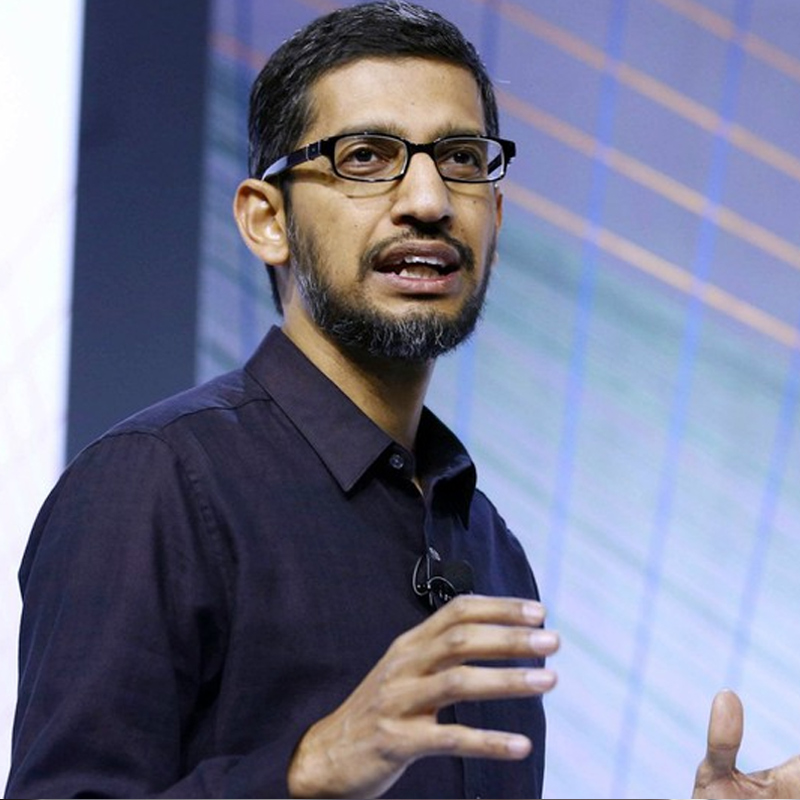
    MUMBAI: Google has announced the launch of Digital Unlocked, a training program to empower thousands of Indian SMBs with essential digital skills that will enable them to get online and start using the power of the internet to grow their business. Google also previewed My Business Websites, an easy-to-use offering to help businesses to have a rich, mobile optimised digital presence that will be launched later this year. Making the announcements at an event held in the city today, Google CEO Sundar Pichai spoke to representatives from hundreds of small and medium business from across the country on the benefits of the web and digital technology.

    My Business Websites will be available in English, Hindi, Bengali, Telugu, Marathi, Tamil, Urdu, Gujarati, Kannada, and Malayalam.

    Google India reaffirmed its commitment to digitally empower India’s 51 million strong small and medium business community.

    During his address, Sundar Pichai said, “The Internet is a powerful equalizer and we are motivated to bring the benefits of information and technology to as many people as possible. Building for everyone and making it available in the hands of as many people is at the heart and core of what we do. And we do this by investing in open ecosystems.”

    Referring specifically to small and medium businesses, Pichai added, “the Internet and digital technology will be an engine of growth for the Indian economy. Today, anyone can become an entrepreneur, a developer, or a creator, but it is important that they have the right tools and skills to digitize. We believe it is important for us to invest in training and equipping these individuals and small businesses to accelerate their journey of growth.”

    Setting the context for the initiative Google unveiled a joint research study with KPMG titled “Impact of internet and digitisation on SMBs in India”. The study reiterates that 68 per cent of the 51m Indian SMBs are offline. Highlighting the macro-economic impact of the internet, the research found that rising penetration and greater uptake for digital by SMBs could help increase their contribution to India’s GDP by 10 percentage points, taking it up to 46-48 per cent by 2020. Ascertaining the benefits of going digital for small businesses, it determined that profits of digitally engaged SMBs grow twice as fast compared to offline SMBs. Likewise digitally engaged businesses are able to grow their customer base significantly with 52 per cent catering to customers beyond their home city versus only 29 per cent offline SMBs. The report cites the lack of understanding of the benefits of digital technologies and technical skills as the essential reasons for being offline.

    With Digital Unlocked, Google is committed to ensuring that every single small business in India that wants to go digital has access to quality training. In keeping with the varied learning needs of the millions of businesses in India, we’ve built this program across online, offline and mobile. The offline training is being conducted in partnership with FICCI and over the next three years, 5,000 workshops will be held across 40 Indian cities. The online training comprises a set of 90 self-paced video tutorials, curated specifically for India and is available free of charge at g.co/digitalunlocked. The tutorials cover a comprehensive set of topics ranging from building a web presence and driving online growth to reaching customers over mobile and video. The trainings are certified by Google, Indian School of Business and FICCI.

    Further, for India’s mobile-first audience, Google also launched Primer, a free mobile app uniquely designed to teach digital marketing skills in a quick, easy and interactive way. It is available for download through the Google Play and iOS app store. Primer also works offline and is currently available in English and Hindi with Tamil, Telugu and Marathi versions coming shortly.

    At the event, Google also previewed My Business Websites, aimed at equipping the vast majority of small businesses with a simple way to start their digital journey by creating a free, mobile optimised website, easily and instantly. Available for Google My Business users later in the year, this new feature will provide simple, templated, editable websites for small businesses created from their data and photos on Google Maps.

    Several small businesses that have leveraged Google’s products and technologies were also present at the event. Three of them – Walnut, Go Co-op and Maganlal Dresswalla – were in conversation with Sundar Pichai and shared their journey to digital using Google offerings including Google My Business, Google AdWords as well as the Google Cloud Platform.

    The announcement today is a continuation of Google’s efforts to support Digital India. Last year Google had launched Google My Business, a program aimed at helping small medium businesses get an online presence on Google Search and Google Maps, without having to invest in a website or domain. Over 8 million Indian SMBs are already on these platforms, with thousands more coming online every month.

  • 68 per cent SMEs offline; Google plans smartphone-optimised regional websites

    68 per cent SMEs offline; Google plans smartphone-optimised regional websites

    MUMBAI: Google has announced the launch of Digital Unlocked, a training program to empower thousands of Indian SMBs with essential digital skills that will enable them to get online and start using the power of the internet to grow their business. Google also previewed My Business Websites, an easy-to-use offering to help businesses to have a rich, mobile optimised digital presence that will be launched later this year. Making the announcements at an event held in the city today, Google CEO Sundar Pichai spoke to representatives from hundreds of small and medium business from across the country on the benefits of the web and digital technology.

    My Business Websites will be available in English, Hindi, Bengali, Telugu, Marathi, Tamil, Urdu, Gujarati, Kannada, and Malayalam.

    Google India reaffirmed its commitment to digitally empower India’s 51 million strong small and medium business community.

    During his address, Sundar Pichai said, “The Internet is a powerful equalizer and we are motivated to bring the benefits of information and technology to as many people as possible. Building for everyone and making it available in the hands of as many people is at the heart and core of what we do. And we do this by investing in open ecosystems.”

    Referring specifically to small and medium businesses, Pichai added, “the Internet and digital technology will be an engine of growth for the Indian economy. Today, anyone can become an entrepreneur, a developer, or a creator, but it is important that they have the right tools and skills to digitize. We believe it is important for us to invest in training and equipping these individuals and small businesses to accelerate their journey of growth.”

    Setting the context for the initiative Google unveiled a joint research study with KPMG titled “Impact of internet and digitisation on SMBs in India”. The study reiterates that 68 per cent of the 51m Indian SMBs are offline. Highlighting the macro-economic impact of the internet, the research found that rising penetration and greater uptake for digital by SMBs could help increase their contribution to India’s GDP by 10 percentage points, taking it up to 46-48 per cent by 2020. Ascertaining the benefits of going digital for small businesses, it determined that profits of digitally engaged SMBs grow twice as fast compared to offline SMBs. Likewise digitally engaged businesses are able to grow their customer base significantly with 52 per cent catering to customers beyond their home city versus only 29 per cent offline SMBs. The report cites the lack of understanding of the benefits of digital technologies and technical skills as the essential reasons for being offline.

    With Digital Unlocked, Google is committed to ensuring that every single small business in India that wants to go digital has access to quality training. In keeping with the varied learning needs of the millions of businesses in India, we’ve built this program across online, offline and mobile. The offline training is being conducted in partnership with FICCI and over the next three years, 5,000 workshops will be held across 40 Indian cities. The online training comprises a set of 90 self-paced video tutorials, curated specifically for India and is available free of charge at g.co/digitalunlocked. The tutorials cover a comprehensive set of topics ranging from building a web presence and driving online growth to reaching customers over mobile and video. The trainings are certified by Google, Indian School of Business and FICCI.

    Further, for India’s mobile-first audience, Google also launched Primer, a free mobile app uniquely designed to teach digital marketing skills in a quick, easy and interactive way. It is available for download through the Google Play and iOS app store. Primer also works offline and is currently available in English and Hindi with Tamil, Telugu and Marathi versions coming shortly.

    At the event, Google also previewed My Business Websites, aimed at equipping the vast majority of small businesses with a simple way to start their digital journey by creating a free, mobile optimised website, easily and instantly. Available for Google My Business users later in the year, this new feature will provide simple, templated, editable websites for small businesses created from their data and photos on Google Maps.

    Several small businesses that have leveraged Google’s products and technologies were also present at the event. Three of them – Walnut, Go Co-op and Maganlal Dresswalla – were in conversation with Sundar Pichai and shared their journey to digital using Google offerings including Google My Business, Google AdWords as well as the Google Cloud Platform.

    The announcement today is a continuation of Google’s efforts to support Digital India. Last year Google had launched Google My Business, a program aimed at helping small medium businesses get an online presence on Google Search and Google Maps, without having to invest in a website or domain. Over 8 million Indian SMBs are already on these platforms, with thousands more coming online every month.