Tag: Ficci

  • Uday Shankar elected FICCI VP for 2018-19

    Uday Shankar elected FICCI VP for 2018-19

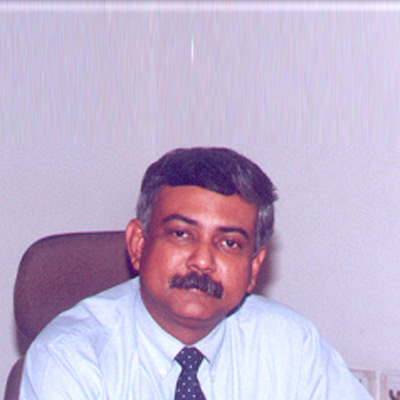
    MUMBAI: Adding another feather to his cap, 21st Century Fox Asia president and Star India chairman and CEO Uday Shankar has been elected as the vice president of the Federation of Indian Chambers of Commerce and Industry (FICCI) for 2018-19.

    He has recently been appointed chairman of Star and Disney India and president of the Walt Disney Company, Asia-Pacific, a role that he will take over after the takeover of 21CF by Disney takes place. He is the first ever Indian media and entertainment executive to assume the leadership position in a national industry chamber like FICCI.

    A trend-setter in the media and entertainment industry for over two decades, he played a leadership role in making Star India one of the largest media & entertainment companies in India, reaching over 720 million viewers a month across the country and more than 100 other countries. 

    He has been a leading voice in the Indian media and broadcasting sector, shaping reforms for the industry and its consumers. As chairman of the FICCI Media & Entertainment Committee and former president of the Indian Broadcasting Federation, he has been at the forefront of landmark changes in self-regulation and pushing access for consumers to the digitised distribution.

  • Indian Foodservice industry to reach Rs 5,52,000 crore by 2022 with a 10% growth

    Indian Foodservice industry to reach Rs 5,52,000 crore by 2022 with a 10% growth

    MUMBAI: Industry leaders of the Indian Food Service Retail sector today highlighted the upcoming golden decade of the growth in the industry driven by the changing consumer behaviours and influx of technologies within the business.

    Speaking at FICCI’s Foodzania 2018 – The Food Service Retail Conference on the theme of ‘Changing Landscape of the Food Service Retail Industry’ here today, Mr Unnat Varma, Chairman – FICCI Task Force on Food Service Retail and MD – Pizza Hut India Sub Continent said that the Indian food service industry is at the cusp of a massive growth. He further added that the changing landscape of the food service retail industry is largely driven by the changing consumer behaviour which can lead the sector for a sustained double digit growth over a decade. “There is a huge consumer market, changing consumer habits, increase in disposable income, and as the industry has evolved, it has become bigger and better,” said Mr Varma.

    Mr Jagbir Singh Sidhu, Chief Operating Officer (North), Diageo India said that the food services industry contributes significantly to the economy by creating millions of jobs. “With the advent of newer technology, the industry has seen a paradigm shift with consumers opting for ‘dining out’ experiences, making it an important partner for the beverage alcohol sector,” he added.

    During the event, ‘FICCI – PwC report on ‘Changing Landscape of the Food Service Retail Industry’ was also released.

    Mr Rahul Singh, President – NRAI and Founder & CEO – The Beer Café highlighted the significant role of food aggregators in increasing the consumption of outside food. He said that they are the creators of behavioral change among consumers that is going to increase propensity of dining out. “Next 10 years are going to be the golden decade from the perspective of consumption,” he added.

    Mr Pravesh Sharma, IAS (Retd.), Former MD, Small Farmers Agri-Business Consortium (SFAC), Department of Agriculture, Cooperation and Farmers Welfare, ministry of Agriculture and Framers Welfare said that today the agriculture sector is more market driven, “For at least a decade-and-a-half, all the major trends in agriculture sector were signaled and driven by the market,” he said.

    As per PwC, the overall food industry has grown by 10 per cent. Organized and unorganized players together are valued at INR 4.50 thousand crores, 25 – 30 percent of which is contributed by organized segment. Mr Varma added that true transformations are happening with use of technology; expectation from food eco-system is changing and food that is at heart of all services is being outsourced thus paving a way for double digit growth.

  • India’s OTT content market expected to touch Rs 1420 cr by 2020

    India’s OTT content market expected to touch Rs 1420 cr by 2020

    MUMBAI: The Indian OTT content market is expected to grow at a CAGR of 26 per cent and touch Rs 1420 crore by 2020, as per the ‘2018 Fast Track India: Reimaging the Content Ecosystem’ forum. In 2017, the market was estimated to be Rs 710 crore.

    The 2018 Fast Track India: Reimaging the Content Ecosystem is a knowledge series forum by the Federation of Indian Chambers of Commerce (FICCI).

    At the inaugural address, Maharashtra government secretary & director general, information & public relations and special inspector general of police, cyber Brijesh Singh said, “India has a rich cultural history and a vibrant content industry. The time is right for digital content players to showcase India’s soft power through homegrown stories that connect with a global audience. Sectoral regulations and policies will create new opportunities for the domestic industry in addition to boosting innovation and growth.”

    Disinformation and integrity of the data ecosystem have raised several questions for the industry and for regulators globally. The heavy dependence on data-based innovation and regulatory responses to privacy challenges, further raise policy questions for India. As governments and market participants seek to devise appropriate accountability and liability frameworks for global media platforms, isolated policy decisions can be detrimental to projected growth outcomes.

    On liability regimes evolving globally for intermediary platforms, MPA VP and regional legal counsel, Asia Pacific Michael Schlesinger said, “India stands on the verge of a bright digital future, one in which creators, consumers and intermediaries all function symbiotically in a healthy internet ecosystem. Still, unique challenges like online piracy must be addressed. Thankfully, India is starting to ensure appropriate rules of the road, including site blocking to reduce piracy traffic, an infringing website list to choke ad revenues, and domain seizures by the Maharashtra cyber unit to keep the internet ecosystem in India more honest. Steps like these should accompany others to ensure all players including internet platforms are more accountable.”

    Speaking in a panel on online content regulation, Eros International Media Ltd group general counsel Aamod Gupte said, “While we have been discussing the need for self regulation of content by OTT players, in a sense we may have missed the bus. With the institution of the Digital Communications Regulator of India (DCRAI), there is possible regulatory oversight for digital content and that is something we need to watch out for. This is not just a name change but clear policy change.” 

    India is on track to becoming the second largest video-viewing audience globally; it is expected to reach 500 million by 2020 from 250 million in 2017.

    On the ‘Video Market: Harnessing Innovations and Partnerships’ panel, Shemaroo Entertainment Ltd COO Kranti Gada said, “As digital video consumption goes mass and the market gets more and more crowded, audiences will compel us to innovate and this may not be just limited to technology and content but also in collaborations and partnerships. While we at Shemaroo sit on premium content and years of consumer insights, we are of the philosophy that collaborations and partnerships eventually make businesses sustainable and scalable.”

    “Viewers have demanded a world of technology innovation where content lives on multiple screens, the exciting task for creators is to now tell innovative stories. We need to weave plots and characters that, as never before, live across traditional media, digital media, and social media,” said TV and virtual reality producer Jonathan Dotan.

  • World IP Day celebration in Delhi and Mumbai

    World IP Day celebration in Delhi and Mumbai

    MUMBAI: A range of stakeholders from the local screen community united to stage a number of events in celebration of World Intellectual Property (IP) Day. This year’s theme campaigns celebrate the brilliance, ingenuity and courage of women who are driving change in the world and shaping our common future.

     The events were supported by the Motion Picture Distributors Association – India, (MPDA), the U.S. Consulate General, Mumbai, the Federation of Indian Chambers of Commerce and Industry (FICCI) – IP division, Confederation of Indian Industry (CII) and the American Center, New Delhi.

    Special Screening of Three Billboards Outside Ebbing, Missouri hosted by the U.S. Consulate General, Mumbai

    On April 26, 2018, the celebrations kicked off with an exclusive screening of Fox Star Studios’ latest film Three Billboards Outside Ebbing, Missouri, hosted by the U.S. Consulate General, Mumbai in association with MPDA, for over one hundred special invitees from the local screen community and Government officials. The event featured a welcome from U.S. Consul General Edgard Kagan and remarks by Christine Haight Farley, U.S. based IPR lawyer and Rucha Pathak, Chief Creative Officer, Fox Star Studios.

    U.S. Consul General Edgard Kagan, said,” We aren’t here today to talk just about the great movies being made in both India and the United States, but also to recognize and honor the intellectual property rights framework that allows cinematic creativity to thrive. IPR protections allow creative talents in almost all industries to reap the rewards of their labor and also spurs and incentivizes innovation. The creative, hardworking women and men who imagine and make this fantastic content deserve the support of strong intellectual property protections.”

    Rucha Pathak, Chief Creative Officer, Fox Star Studios said, “To a large extent, the new level of creativity and innovation in films and film content in India is linked to women taking risks as writers, directors, actors and producers and thereby bringing a welcome change in the landscape of Indian films over the last few years.”  

    Uday Singh, Managing Director, MPDA said, “India is at the forefront of creativity and economic growth. Women leaders and entrepreneurs are an integral part of this growth story. Their contribution continues to power ingenuity in various sectors including ours, across the world.”

    World IP Day Film Festival at the American Center, New Delhi

    Between April 27-28, MPDA in association with the American Center, New Delhi, Disney India and Fox Star Studios will host screenings of Black Panther, Three Billboards Outside Ebbing, Missouri and The Shape of Water. On April 27, the winners of Confederation of Indian Industry (CII) – US Embassy Anti-Piracy Film competition will be announced before the movie screening. The main objective of the competition is to promote the value of Intellectual Property Rights in North India. The jury for the competition comprised senior officials from the government and local industry, including MPDA, India. 

    “India and the United States both have diverse and incredibly vibrant film industries,” said Stewart Davis, North India Program Director at the U.S. Embassy in New Delhi, “And we are proud to work together with CII, MPDA-India and our partners across India to promote intellectual property rights. The creative workers in both countries deserve these protections and consumers must understand the very real negative implications of piracy on the cinema we all love.”

     “CII has been actively engaged in various IPR awareness, training and enforcement programmes in partnership with Government and local industry stakeholders. We are happy with the positive outcome of the anti-piracy filmmaking competition and are committed to strengthen efforts towards building a vibrant IP ecosystem,” said Anjan Das, Executive Director, CII.

  • FICCI BAF Awards 2018 entries now open

    FICCI BAF Awards 2018 entries now open

    FICCI Frames–the three-day global convention covering the entire gamut of India’s media and entertainment industry–is close, bringing with it the Best Animated Frames (BAF) Awards, one of the most coveted animation, visual effects and gaming (AVG) awards. The last date to submit entries for the awards is 15 February 2018.

    The fifteenth edition of the BAF Awards will take place on 5 March 2018 at Hotel Grand Hyatt, Mumbai, for which entries are invited for the animation, visual effects and gaming categories.The BAF Awards at FICCI Frames are an affair of extreme excitement as the entire AVG industry gathers under one roof after a year of arduous work.

    The BAF awards were started in 2004 by the Federation of Indian Chambers of Commerce and Industry (FICCI) to recognise and honour students and professionals in the field of animation. This first-ever animation awards in India have grown over the years to encompass awards not only in animation but also in the VFX and gaming fields.

    The contest now receives top-notch entries from across the globe; the last BAF Awards held on 22 March 2017 received 400 entries from across 12 countries.

    Entries can be sent online.

    For more details and registration, click here.

    public://FICCI-BAF-2018_Poster.jpg

  • Rural India gets e-commerce & TV ready via optic fibre network

    Rural India gets e-commerce & TV ready via optic fibre network

    NEW DELHI: The BharatNet project, which aims to deploy high-speed optical fibre cables across rural areas of the country, has now reached 83,000 gram panchayats, according to Department of Telecommunications Secretary Aruna Sundararajan.

    Speaking at ‘i-Bharat 2017’ on the theme ICT Elucidations for Unserved and Unsolved, organised by FICCI in association with the Ministry of Electronics and Information Technology, Sundararajan said that by December this year the first phase of BharatNet will be complete. This would provide 100,000 gram panchayats with broadband connectivity by laying underground optic fibre cable lines.

    The DoT is aggressively monitoring the prestigious BharatNet initiative that aims to provide Internet connectivity to 2,50,000 gram panchayats or village blocks by March 2019.

    The entire project, when complete, is expected to give a fillip to e-commerce services, including e-governance, education and television services to far flung areas of the country.

    The DoT Secretary said fibre-isation was a national imperative and the government, industry and chambers of commerce needed to work in coalition to achieve the objective of doubling the telecom footprint in the country by 2020.

    Quoting from internet guru Mary Meeker’s 2017 report released in May this year, she said there are over 355 million monthly active internet users in India, while nearly 109 million smartphones were shipped in 2016. Nearly 46 per cent of internet users in India consume content in local languages. In the first quarter of 2017, 27 million smartphones were shipped. Most Indians used the internet on their mobile phones (80 per cent usage was on mobile as compared to the global average of 50 per cent). The most used browser in India was UC Browser, followed by Chrome and Opera. WhatsApp, Facebook Messenger, Shareit, Truecaller and Facebook are the most used apps in India.

    She said these figures threw up challenges in the policy domain, particularly in terms of security; data privacy and protection, data regulation and data monetisation.

    Hewlett-Packard Enterprise MD Som Satsangi said that with the impending large-scale migration of people from the rural areas to the proposed smart cities, the challenge before the industry would be to meet their rising expectations and services on demand. The industry must be ready to provide low-cost, affordable solutions to the aspirational people at the bottom of the pyramid.

    Indian Express Group executive director Anant Goenka said India would soon overtake China as the consumer base for telecom and IT and therefore, if the objective was to shape digital India, there was a need to look beyond the current trends. The Aadhaar database must be leveraged while tackling privacy issues.

    FICCI ICT & Digital Economy Committee Chairman Virat Bhatia said following the government initiatives, the internet landscape of India is about to experience a tectonic-shift. The next millions of users that will come on the internet by 2020 will utilise ICT as a socio-economic tool of development. To fulfil the dream of ‘New India’, “we all have to work towards good governance and streamlining the marginalised section of the society and transforming India into an empowered and inclusive knowledge-based society,” he said.

    FICCI secretary general Sanjaya Baru emphasised the need to have pre-policy consultations between the government and industry rather than resort to post-policy alterations which leads to needless confusion. FICCI, he said, would initiate closed-door consultations for industry so that its representatives can have a free and frank discussion with policy makers in the government.

  • Shatrughan stimulates all against counterfeiting and piracy in FICCI ad

    Shatrughan stimulates all against counterfeiting and piracy in FICCI ad

    MUMBAI: Amidst of festival season this year, the veteran actor and MP, Lok Sabha, Shatrughan Sinha has joined hands with FICCI CASCADE (Committee Against Smuggling and Counterfeiting Activities Destroying the Economy) for an awareness campaign against illicit trade. Sinha has released a video message to create responsiveness amongst the Indian citizens to say ‘no’ to counterfeit products.

    Sinha released the ‘Shapat (Oath)’ where he pledges consumers to be genuine and buy genuine products. The video stars Sinha reciting a poem in Hindi where he deeply touches the importance of protecting original brands and raise voice against smuggled and counterfeit products.

    Moreover, this initiative will not only boost Indian economy but will also create a sustainable socio-cultural ecosystem in the country. The video reminds consumers that, on every purchase of a fake product, somehow, they are indirectly encouraging illicit trade — against the law.

  • Manmohan’s ex-advisor, scribe Baru joins FICCI

    NEW DELHI: Sanjaya Baru, former official spokesman and media advisor to the former prime minister Manmohan Singh, will take over as the secretary-general of the Federation of Indian Chambers of Commerce and Industry (FICCI) from 1 September 2017.

    This follows the completion of the five-year term of Dr A Didar Singh who had joined FICCI after his retirement as secretary in the government.

    A former journalist, Baru – who was attached to PMO from 2004 to 2008 – is a political commentator and policy analyst, currently serving as director for geo-economics and strategy at the International Institute of Strategic Studies in Singapore.

    FICCI president Pankaj Patel said: “Dr Singh, nearing completion of five years as the secretary-general of FICCI, has been for some time been looking for a relatively lighter role within the organisation and in view of this, the FICCI Committee has decided to appoint Baru.”

    FICCI has completed 90 years of its glorious existence growing from strength to strength. With Dr. Singh’s personal efforts, FICCI has shaped up extremely well during the last five years and has been extremely resilient in dealing with domestic and global challenges as well as supporting Indian industry in capitalizing on new emerging opportunities,” Patel added.

    Patel said Dr. Singh would now be holding the position of the principal advisor to FICCI president from 1 September.

    Earlier, he had served as associate editor at The Economic Times and The Times of India, and then as the chief editor of Business Standard. His father B P R Vithal served as the finance and planning secretary during Manmohan Singh’s stint as the secretary of finance in the early nineties.

    In April 2014, his memoir The Accidental Prime Minister, about his time at the Prime Minister’s Office (PMO) alleged that the prime minister was completely subservient to Congress President Sonia Gandhi, who wielded significant influence in the running of the Singh administration, including the PMO itself. The book had sparked off a controversy, with the PMO officially denouncing it as “fiction”. Baru, however, has said he set out to show an empathetic portrait of the prime minister.

  • Govt aiming to reduce ‘copyright process’ time, Star favours reforms to leverage animation & game tech

    MUMBAI: The Indian Government’s priority is to streamline the copyright process and decrease the turnaround time for applications on IPR to less than three months. 

    Star India content studio president Gaurav Banerjee, participating in a discussion, emphasised the need for big-ticket reforms and sustained pace of policy change and control to leverage technological advancements in gaming, animation, design and other creative services.

    Reiterating the need for a well-regulated copyright regime in India, the controller-general of patents, designs and trademark O.P. Gupta said, “DIPP recently assumed the responsibility of (enforcing / implementing)  the Copyright Law.  At present, it takes about 16 to 18 months to close an application or assess discrepancies. We aim at decreasing this pipeline to less than three months.” 

    Gupta was speaking at ‘Copyright and the Creative Economy’ — an interactive session in Mumbai organised by the Federation of Indian Chambers of Commerce and Industries (FICCI), in association with Department of Industrial Policy and Promotion (DIPP).”

    The discussions focused on emerging trends and concerns relating to copyright, the capacity of the Indian creative sector to fuel the economic growth along with the role of regulator in rebuilding India’s creative strengths.

    “While the law is in the right direction,” Gupta said, “it is the mindset of the people that needs to evolve. To address this issue the DIPP is proactively taking steps to create awareness. To amicably change mindsets, we are rolling out programmes with school and college children.”

    The size of the Indian creative economy is expected to reach USD 34.8 billion by 2021 (FICCI EY Report – Digital Inflexion Point: Indian Media and Entertainment, 2017). India’s media and entertainment (M&E) industry is set to expand at a faster pace of 10.55 per cent CAGR, outshining the global average of 4.2 per cent CAGR, according to consulting firm PwC. In its annual sector forecast for 2017-2021, PwC said the Indian M&E sector will touch $45.1 billion by 2021, up from $27.3 billion at the end of 2016. 

    This potential can however, can only be tapped if backed by a conducive regulatory framework which incentivises creativity.

    In 2016, the National IPR Policy brought the administration of copyright under the Department of Industrial Policy and Promotion, and highlighted the intrinsic linkages between commercialization, consumer choice and creativity. Most recently, the Copyright Act was amended by the Finance Act, 2017 to subsume the Copyright Board within the Intellectual Property Appellate Board (IPAB), that also oversees aspects of trademark and patents.

    Banerjee emphasised on the need for building a case for authorship. He said, “A platform like ours has the reach of over 700 million users, and the degree of engagement is for over three hours a day. However, what are we making of this opportunity? Rather than treating television and films as fleeting fancies of youngsters, we must create a stable and lucrative model that will enable ‘power of ideas’ and commercial success that is rewarding and sustainable.”  

    FICCI deputy secretary-general Arun Chawla emphasised the need to strike a balance between the access to creative knowledge and entertainment along with rewards for copyright-holders. This need is recognised as a global challenge which has shaken the business models of pre-digital creative industries.

    The Copyright issue poses different degrees of challenges for various sectors with Media and Entertainment (M&E). The industry which is recession proof, and enables over 7.5 million jobs directly and indirectly, is often seen from the narrow lenses of protection against piracy.

    Necessitating an ecosystem approach towards the creative economy’s growth and regulation, wherein the distinctions between content and carriage are delineated and the intrinsic and positive relationship between them is understood by industry and government alike, is still debatable.

    The internet has also emerged as a new area for the enforcement of copyright. Responses to digital piracy like rights information management and encryption have in turn raised several concerns with regards to privacy, cybersecurity and the freedom of speech and expression.

    Also Read:

    Copyright owners call for competitive pricing over TRAI regulation 

    Kahaani 2 producer free to choose digital distributor, says CCI, K Sera Sera offers ‘no comment’

    Copyright case: Sun TV restrained from using Sony music recording

  • Industry & govt need to jointly tackle risk of info & cyber insecurity

    NEW DELHI: The National Critical Information Infrastructure Protection Centre (NCIIPC) safeguarded 300 establishments in India from the recent worldwide cyberattack by the WannaCry ransomware.

    Giving this information, NTRO chairman Alok Joshi said, “It is becoming difficult for businesses as well as the government to deal with non-state actors located outside India, who are involved in cyber-attacks. Once any business becomes part of internet then it becomes a part of the global network and cannot operate in isolation. In this regard, Industry and Government need to have a collaborative outlook to address the emerging threat of information and cyber insecurity.”

    Delivering his keynote address at the FICCI seminar on New Age Risks 2017, Bharatiya Janata Party national spokesperson for economic issues Gopal Krishna Agarwal said, “Stalled projects, a key reason for a slide in gross fixed capital formation in the past few years, are the biggest challenge which the government is facing. The government has taken adequate measures to revive the investment cycle.” With the intervention of the PMO driven initiative, Pragati’ (Pro-Active Governance and Timely Implementation), he said, several stalled projects had seen the light of day.

    FICCI secretary-general A Didar Singh highlighted that businesses need to strengthen their resilience to ensure continued operation and survival in the face of risks. At the same time, the clear role for collaboration among public and private sector stakeholders becomes evident, for example, to develop better cybercrime prevention methods, to establish cybersecurity norms for both governments and industry, and to align international approaches to enforcement and establish industry norms.

    FICCI Committee on Private Security Industry chairperson and former special DG in the Central Industrial Security Force Manjari Jaruhar and Pinkerton MD India, APAC & EMEA – global screening Rohit Karnatak also spoke on the occasion.

    Cyber-security features high on the agenda of leaders across all sectors, with business, governments and individuals rapidly taking advantage of faster, cheaper digital technologies to deliver an unprecedented array of social and economic benefits. With the benefits of digitizing and connecting comes a range of new challenges, FICCI Committee on Geospatial Technologies Chairman and Advisor, ESRI India Rajesh Mathur said.