Tag: Ficci

  • Industry welcomes I&B ministry’s guidelines to restart Film, TV and OTT production

    Industry welcomes I&B ministry’s guidelines to restart Film, TV and OTT production

    MUMBAI: Yesterday, Information and Broadcasting Minister Prakash Javadekar released a comprehensive set of standard operating procedures (SOPs) aimed at the resumption of production for film, television, and OTT originals. The announcement came in as a sigh of relief for many in the industry. The SOPs are in line with the protocols followed across the globe, which also specifies safe distances on shooting locations, in edit rooms, studios, and others. It includes rules on sanitization, fumigation, face masks, and availability of PPE kits. The SOPs also mention the need for an appointment of an on-set Covid2019 coordinator. Javadekar said, “Today we are laying out standard operating procedures as per the international experience and with the consultation of the health ministry and the home ministry.”

    He further explained that contact minimisation is at the core of the SOPs. It will be ensured by minimal physical contact and sharing of props and PPEs for hairstylists and make-up artists, among others. Javadekar also highlighted that the characters in front of the camera would be exempted from wearing masks. Making this announcement on Doordarshan Javadekar said that formulating SOP measures as part of the overall decision to revive economic activities. He added, “For the last six months, this industry had come to a standstill, and many people had lost their jobs. We hope all States will adopt these SOPs.”

    For a detailed list of the SOPs, click here. In a special interaction with indiantelevision.com film producer, Ramesh Taurani said, “I think it is a very good step from the government. Shoots have already started, but now they can be done in other locations as well, as the new SOPs will benefit everyone. These are practical and manageable SOPs, and the film industry is very happy. Now things will happen at a macro level. As the film shooting has started workers, actors, technicians can start work with full protection. It is a good step towards restarting the economy, as more people will get employment. The announcement came from the central government, and now it is up to the respective state government to take it forward.” Apart from laying down the social distancing norms, the ministry has also asked the production houses to ensure extensive planning. It also states that physical distancing of at least six feet is to be followed as far as feasible at all locations at all times, while sitting, standing in queues, etc. FICCI official spokesperson said, "It is a welcome move and the industry has been looking forward to this. It will help open the industry in a phased manner with all the necessary precautions . We are looking forward to working with the government to ensure we get back to business with all the norms that have been put in place. This move from central government is the umbrella document for state governments to adopt so that there is basic uniformity across the country . This is one plan laid out by the central government for the state government to follow and they can add some important details as per the specific requirement." Aspects such as scenes, sequences, set-ups, camera locations, positions of various crew members, seating arrangements, food and catering arrangements, staggered meal timings, etc. shall be planned while giving due consideration to physical distancing norms. According to the guidelines, measures shall be taken by the production team to involve a minimum number of cast and crew members during the shoot. IFTPC chairman TV wing JD Majethia shares, “It is a very welcome move. We all have been waiting for this for a very long time. It is a relief that the centre has eased out the restrictions. As shooting is now allowed across India, it would be easier for film, television, and OTT shows to shoot in different locations and studios, which was difficult to do earlier. Many people will get their employment back, hopefully in Maharashtra. If trains are allowed from next month onwards, a lot of people will get their jobs back.” He further added that the guidelines laid down by the I&B ministry are more detailed, and they have included a lot of aspects. “The measures are clear in nature. Everyone will know what to do in these circumstances. However, the state government can add or modify policies as per their requirement. States with less number of cases can ease out restrictions, whereas things will be stricter in areas where there are a higher number of cases,” adds Majethia. The Ministry has also advised that no visitors or audiences are to be allowed. In the case of outdoor shootings, necessary coordination has to be done with local police and administration to minimize spectators.

    It is a moment of joy for film and OTT platforms as the Covid2019 halted the shoots at other locations, especially with large crews. "It's great news for the TV and film industry. What's more interesting is that the SOPs suggest some points for the opening of the exhibition. We are now looking forward to the opening of cinemas and getting the whole movie industry back on track," says SVF Entertainment co-founder director Mahendra Soni. Juggernaut Productions chief operating officer OTT-business Samar Khan mentions that the issuance of these SOPSs is a step in the right direction. He adds, “All of us have been eagerly awaiting the resumption of shoots but are also aware that crew safety is of utmost importance, following these guidelines will ensure that we can maintain the highest standards of safety while gradually resuming work.”

    The ministry has also advised the industry to discontinue usage of lapel mics or at least to ensure that these are not shared. It also highlights that costumes, hair wigs, and makeup items for actors should not be shared. The SOPs states that artists should be encouraged to do their hairstyling and make-up remotely with the help of professionals. Panorama Studios run by  Kumar Mangat Pathak and Abhishek Pathak is  a subsidiary of Panorama Studios International. Abhishek Pathak has also directed movies like Ujda Chama and Boond. He thanked the I&B ministry for focussing  on contact minimisation. "We welcome these guidelines. Yes, shooting will be a huge challenge in the Covid2019 era, but I think with vigilance and precautions, we can make a comeback steadily. This decision brings huge relief for industry dwellers whose livelihood depends on the creation of movies, series, and other content." Planet Marathi founder and filmmaker Akshay Bardapurkar who also produced AB Aani CD said that it is great news from the I&B minister himself. “However now with the opening of the shoots it would be great also to see theatres also opening up. He mentions that more than 100 films are stalled, and producers are suffering. I hope that the central government issues SOPs for theatres soon and opens them too,” adds Bardapurkar.

  • Theatres seek govt aid for re-opening; film producers observe global footfall trends

    Theatres seek govt aid for re-opening; film producers observe global footfall trends

    MUMBAI: Social distancing might continue to be the norm even when lockdowns are lifted completely. Theatre owners around the country are in planning mode to resume business as soon as the government gives permission. While Multiplex Association of India (MAI) has expressed displeasure over cinema halls not getting a place in the Unlock 2.0 phase. Producers, theatres owners, distributors and exhibitors are positive that movie theatres will be part of the unlock 3.0 phase which might happen in August.

    In FICCI’s E-Frames virtual event, experts from the cinema industry discussed various topics ranging from how are exhibitors preparing for the new viewing experience? What are the changes and impact on distribution economics by virtue of an anticipated lower occupancy across halls, lack of content and challenges for OTT?

    The panellists included Telugu film producer, distributor, exhibitor and studio owner Sureshbabu Daggubati, Inox Leisure Limited CEO Alok Tandon, Cinepolis India CEO Devang Sampat, Reliance Entertainment content, digital and gaming group CEO and CEO Shibashish Sarkar, Rathi Cinema film exhibitor and distributor Akshaye Rathi. The session was moderated by UFO Moviez joint MD Kapil Agarwal.

    While speaking about the action plan and different planning methods, Sampat mentioned that Cinepolis is rigorously disinfecting auditoriums and washrooms and has completely stopped using paper tickets. Apart from that, it is working on contactless payment methods and QR codes. Cinepolis India has partnered with a company named Vista to create a software for social distancing within the auditorium.

    He added, “Nearly 25 major cities in the world have started operating cinemas. Exhibition space is unlike any other retailer industry. We have different stakeholders with the government. Firstly, we will have to convince the government that we will not do anything that will harm us. We have also presented a detailed SOP document to the government which has been approved by the health ministry itself. We are just waiting for their nod to resume operations. I strongly see that cinema will be part of Unlock 3.0 which might happen in August.”

    Considering the infrastructure of cinema, high cost and zero revenue from sale of ticket, food and beverage, advertising, the question arises that will this impact the liability of cinema industry?

    Tandon said that due to the pandemic, all revenues have come to a grinding halt, whether it is the sale of tickets, food and beverage or even advertising. “The times are difficult, but the short aberration will not change the viability of the cinema business. All the challenges that cinema has faced in 100 years of existence we have come back smarter. It is a battle between apprehension and passion for cinema. I personally see the resurgence happening from Q3 onwards and apprehensions will settle, release dates will be back on track,” he said.

    Another challenge before the exhibition industry is to grapple with the issue of less content. This might not be immediate, but this issue will arise when things resume as new production and postproduction are not happening. While the TV industry has resumed shooting, the film industry hasn’t.

    According to Sureshbabu Daggubatti, both Hyderabad and Telangana government gave permission to resume shooting but full-fledged shoots didn’t happen because the crew and technicians are scared to come back on the set. He said that while the creativity quotient is removed from the films and people are scared about SOP measures it is difficult to come out with creative products. Film shooting involves a lot of conversation and discussion with actors, dancers and crew which will not be possible with the rule of 50 people and social distancing measures. He believes that there is no point in starting a film with just two actors in a scene or not doing a dance sequence or crowd scene. Due to this, the people who have started shooting also stopped it.

    “After all the scenarios, even if I finish the film, when do I take it to the cinema? The government might talk about the reduced capacity in the auditorium. The question arises that will enough people come to the cinema hall? Will producers be able to recover the cost of the film? Will the actors and financiers take a financial cut when the film is released? If I am going to get a hit of 20 or 30 per cent on theatrical revenue, will I be able to take that burden? We are also waiting to see what other films will do when they come in July and August. Will they get 50 per cent of what they expected or where they will stand? All of this will take a lot of courage. We have to see if the curve is going up or down. South Korea is the country where the curve has flattened and people in Japan and Korea are disciplined, but Americans are not that disciplined. America is a very good case study; it is similar to India. So, are the collections going to be good or average that will help me to make the call whether I should release the film or not,” he further explained.

    He also mentioned that the post-production work can only start a few months before people really decide to do the shooting. He is also of the opinion that even if good VFX work and dubbing is happening it will not give the end product. Daggubati suggests waiting for three months so that shooting can happen comfortably. Post this, movie theatres can open when there is good availability of content.

    Daggubati quipped, “More scripts are getting ready, better planning is happening now. In the long run, I am very confident cinema will be back on track. If you go theatrical and then OTT, then the value of OTT falls drastically. So, this economic calculation is there in every producer’s mind. The government also needs to help. Wherever theatres have opened there is a reduction in VAT, GST and benefit from the government. They have to support us, especially in GST and power tariff for at least one year."

    Rathi also said that there are a lot of things that will change post Covid2019 such as vendor-buyer relationships and collaborative work. He said, “To bring things together from talent, production, distribution and exhibitor we will have to demolish the linguistic barrier existing in the cinema.”

    Shibashish concluded, “After South Korea, German cinemas opened up and according to the poll conducted 87 per cent of the people are satisfied by SOP measures. If cinema opens and we are able to strictly adhere to all rules and regulations people will get the confidence to come back to theatres. Because 60 to 70 per cent revenue of films come from theatres.”

  • Multiplex Association of India expresses displeasure over decision to keep cinemas, multiplexes shut in Unlock 2.0

    Multiplex Association of India expresses displeasure over decision to keep cinemas, multiplexes shut in Unlock 2.0

    MUMBAI: On 1 June the government of India entered into unlocking by phases. As per Unlock 2.0 guidelines, offices, high streets, markets and shopping malls, airlines are opened but there is no relief for multiplexes. It continues to be included in the prohibited activities list.

    Today, Multiplex Association of India (MAI), under the aegis of Federation of Indian Chambers of Commerce and Industry (FICCI) issued an official statement expressing their disappointment over central government’s decision to keep cinemas and multiplexes shut even when the other business is opened up.  

    “At a time when a significant part of the economy is being opened up, including domestic travel, offices, high street, markets, shopping complexes, etc., the Multiplex Association of India (MAI) feels dismayed that cinemas and multiplexes continue to remain in the list of prohibited activities under the central government’s Unlock 2.0 guidelines. The association finds it highly demotivating and disheartening when in fact, cinemas and multiplexes can become an example of how social distancing guidelines and crowd control can be best exercised in a safe and planned manner. As compared to the unorganised retail and shops that have been opened up, multiplexes and cinema are part of the organised sector, playing hosts to ‘revenue paying’ customers only and hence, in a better position to limit crowds unlike marketplaces and deploy all the mechanisms and guidelines for crowd control and social distancing,” MAI states in the note.

    The body highlighted that the multiplex industry in India employs more than 200,000 people directly. It also points out that it is the backbone of the Indian film industry accounting nearly 60 per cent of revenues of film business. And directly providing  livelihoods to more than a million people – right from the spot boys to makeup artists, musicians, designers, technicians and engineers to cinema employees to directors and actors.

    The body also said that the lockdown has brought the entire industry to a standstill with losses mounting every passing day. It mentions that an early decision to allow cinemas to open up will only help the mobilisation of resources in the film industry’s ecosystem and would lead to gradual resurrection.

    It said that even after opening up, they anticipate at least three to six months before things return anywhere close to normal.

    It further read, “On one hand where programming of new content will take some time to kick in; movie buffs on the other hand are expected to take a cautious approach before returning to cinemas. These are real challenges that the industry will have to overcome and we believe together, with the support of the government, we will be able to overcome them.”

    Globally, countries like France, Italy, Spain, Netherlands, Austria, Hong Kong, UAE, US, etc. and more recently Belgium and Malaysia have opened cinemas.

    To which the MAI said, “Many countries around the globe have opened up cinema halls and multiplexes to the public with implementation of the highest degree of safety protocols and have seen a warm response by audiences. In effect, more than 20 major cinema markets around the world have started operating. MAI is of the firm belief that, there must be a start and the unlocking of cinemas in non-containment zones across India should be done post haste – there must be a beginning and an opportunity must be given to us, just like some of the other sectors.”

  • How to bring audience back to cinema halls?

    How to bring audience back to cinema halls?

    MUMBAI: The Covid2019 pandemic has ravaged the film and exhibition sectors the most. With the aviation industry and restaurant services opening up soon it would be interesting to see how cinemas in India are prepping. Also, there’s nothing for this sector in the packages announced by prime minister Narendra Modi. There has been some ease in rental and electricity charges but it varies from state to state. These are the pertinent issues that need to be addressed. In a virtual conference hosted by UFO Moviez India Limited under the aegis of FICCI, industry stakeholders discussed the various issues that have been afflicting the film and exhibition segment, the way forward, the precautions to be taken at the cinema halls, etc.  

    The main area of concern is about the standard operating procedures that will be followed by cinema halls once things are back to normalcy.

    Due to panic created by the Covid2019 outbreak, people are not willing to come to theatres. At the same time, there is a severe OTT fatigue among viewers as well. So the question arises: What measures can be taken to regain the confidence of the audiences and restore the trust of the cinema-going audience?

    INOX Leisure Limited CEO Alok Tandon said: “Our first objective is to bring trust among audiences. At INOX, we have divided the entire thing in three buckets. Pre-resumption, post-resumption and lastly the visit of audiences. We are taking various processes and initiatives to ensure they feel safe once they go home. These are the aspects we are currently working on.”

    About the social distancing and hygiene measures, Tandon said that the company is looking at how guests don’t crowd the cinema halls and maintain specific distance. Another important thing is the allocation of seats. They are also working on movie schedules and timings to avoid gathering during entry, intermission, exit points, lobby and rest rooms. Where safety and hygiene measures are concerned Tandon said that a lot of man hours went into ensuring guests are safe; they are encouraging people to use paperless transactions at every counter. They are also using thermal guns to check temperature. There will be dedicated hand sanitiser stations installed at theatres. There are SOPs in place to disinfect counters and surfaces. PPE kits will also be introduced in case people are interested to buy them. As far as food supplies are concerned, multiplex chains will bring single-use disposal bags, to avoid reuse of cutlery and crockery.

    “Cinema halls have many similarities to the hospitality, aviation, restaurant and retail sectors. These are unseen times; nobody has a perfect formula for this. We all can learn a lot from each other in this crisis. In this pandemic we have been closely observing what other sectors are doing so that we can also implement that,” he added.

    The Covid2019 lockdown is choking all the production activities across the nation. UFO Moviez India Limited joint MD Kapil Agarwal raised a question if the film exhibition sector and producer’s guild can work together and learn from each other.

    Answering this question, film producer and president Film and Television Producers Guild of India Siddharth Roy Kapur said: “We are looking at exactly the same measures what other sectors are doing. Unfortunately, shoot resumption is in the same lines with cinema resumption. It is the last thing to be started. The biggest issue for us is if there is going to be some sort of curtailment on the number of people you can congregate at the sets. Especially when it comes to film units it is larger as compared to TV units. But the challenge is you need to have a bare minimum number of people on the set to make it productive.”

    Agarwal feels that the capacity issue is not entirely going to affect the film fraternity as the majority of the people are working from home. The concept of weekend shows faring better than weekdays will not make sense now. He thinks that because of this the negative impact will be neutralised.

    “I think a lot of producers and distributors will get signals from how these films are performing at box-offices. When the first lot of people come to cinemas, it is then important for cinema halls to give an impression that we have got our acts together,” said PVR Pictures Limited CEO and chief business planning & strategy PVR Pictures Kamal Gianchandani.

    There are very few movies ready in different languages. Answering whether there is a strong need of releasing movies in all different languages, Telugu film producer studio owner, exhibitor and distributor Daggubati Suresh Babu says, “This idea of dubbing films across languages from Telugu to Hindi or Hindi to Bengali should be done not only in Covid times but post-Covid era also. A few films like Bahubali or Robot have been working like that. There is a huge scope for a lot of regional movies to reach the Hindi market. Usually, the films that do well in dubbing are the ones that are not provided by local films. Now Vijay’s movie Master will have a very big release. Now, is he willing to wait till theatres open up? It is something we need to look at.”

    Daggubati also mentioned about his meeting with Andhra Pradesh chief minister Chandrababu Naidu. He said that the government is very positive about re-starting the shooting. He also pointed that within a week they will get intimation from the CM’s office about resuming the shoot with restrictions. After that, they will explore the possibility of cinema theatres opening up.

    Follow Tellychakkar for the consumer facing news & entertainment

  • Pocket Aces’ Loco upgrades its product offerings

    Pocket Aces’ Loco upgrades its product offerings

    National, 1st April, 2020: Pocket Aces, India’s leading digital media entertainment company, announces a major product update for its gaming app, Loco. Dedicated to democratizing gaming entertainment, Loco will now allow its users to stream on the app, with a specific focus on gaming. This will make Loco one of the earliest entrants in the game streaming space in India.

    The games that streamers on the platform are streaming include the likes of PUBG, FreeFire, Call of Duty etc. The platform will continue to offer its hypercasual gaming and interactive trivia, where it has hosted over 2,000 quizzes with multiple branded games.

    Commenting on the new version of Loco, Anirudh Pandita and Ashwin Suresh, Founders, Pocket Aces said, "In 2018, we launched Loco with two daily quiz shows and within a year, we expanded our services to include hyper-casual gaming. Today, users spend over 30 minutes per day on the app. As the next step in fulfilling our commitment towards building a long lasting gaming and esports ecosystem in India, we are now adding game streaming to our platform. This major update empowers gamers to entertain India and display their skills in different popular games, right from the comfort of their homes. In the coming months, we will roll-out an exciting array of new features and original gaming content.”

    Loco, in association with Fnatic will exclusively live stream #GamingForGood, a PUBG Mobile charity tournament that will take place from 3rd to 5th April’20 between 3pm-9pm. This is an initiative taken to raise funds and help some of those affected due to the currently ongoing COVID-19 pandemic. Top 20 teams from the South Asian PUBG MOBILE circuit will compete for prizes totalling to INR 3.5 lakh, which will be donated to charities that teams pick.

    According to FICCI and Ernst & Young's report titled, 'The era of consumer A.R.T', India's online gaming segment grew 40% in 2019 to reach INR 65 billion and is expected to reach INR 187 billion by 2022, at a CAGR of 43. There has been a significant increase in the number of online gamers, from 183 million in 2017 to 365 million in 2019.

    Since inception, the platform has seen more than 22 million gaming hours spent by users, 3 million cash prize winners and has successfully rolled out more than 2,000 quizzes. Loco is currently available on Android and iOS platforms, and it has a highly engaged community of 2.2 lakh on Facebook, 1.9 lakh on Instagram and 60k on Twitter.

  • Advertisement on regional channels grew by 13 per cent in 2019

    Advertisement on regional channels grew by 13 per cent in 2019

    MUMBAI: Regional channels are witnessing an astounding growth rate in recent times. In 2019, regional channels received 13 per cent more advertising compared to national channels. As per the recently-released FICCI-EY report 2019, regional channels saw 615 hours of advertisement per year whereas national channels witnessed 542 hours of advertisement during the same period. The ad volumes on regional channels grew by four per cent while national channels saw six per cent fall.

    Consumption of regional content grew across all media. It comprised over 50 per cent of television viewership, 44 per cent of films released in theatres, 43 per cent of newspaper circulation and around 30 per cent of OTT consumption.

    Ad volume share of regional GECs increased in most cases because of better content, formatted shows and new products that entered the market. In 2019, Bengali GECs' ad volume grew to four per cent from two per cent in 2018. The ad volume of Malayalam GEC also grew to three per cent in 2019 from two per cent in 2018.

    The New Tariff Order (NTO) implemented in February 2019 increased end-customer prices for television content, reduced the reach of certain genres of channels and resulted in a 6 per cent reduction in time spent watching television during the second half of calendar 2019. But it was a big gain for the regional channels as it benefited regional languages like Urdu, Punjabi, Bhojpuri, Marathi and Gujarati whose consumption increased over 20 per cent.

    Channel genres most positively impacted by the NTO included DTH home channels (+16 per cent), Bhojpuri movies (+60 per cent), Kannada movies (+58 per cent), Punjabi music (+33 per cent) and sports (+26 per cent).

    Hindi and Tamil, the two largest languages by viewership, saw a fall in their total minutes of viewing. In 2019, the Hindi language witnessed a fall of eight per cent in total minutes of viewing and Tamil saw a fall of 10 per cent. English and dubbed Hindi were amongst the most impacted with a fall of over 20 per cent in total minutes of viewing. But several regional languages like Punjabi witnessed a growth of 48 per cent in total minutes of viewing, Marathi’s total viewing minutes grew by 28 per cent, Bhojpuri saw a growth of 34 per cent while Gujarati gained 12 per cent in total minutes of viewing.

    According to the FICCI report, it is expected that the trend of consuming content in regional languages will keep growing over the next few years, particularly on digital media as growth in internet users continue to be led by non-metro audiences.

    The report also estimates that viewership of regional language channels will continue to grow and reach 55 per cent of total viewership in India as their content quality improves further.

    Even global media companies are investing in the Indian regional content through co-producing, distributing or marketing. The report says: “India’s many regional and local language markets offer exciting growth fundamentals for global and domestic media companies alike. However, to succeed in these regional markets, customisation is critical. Global media companies recognise this imperative and many are already producing their programming in multiple Indian languages to increase reach.”

    It further says, “Along with localising content, international streaming service providers are also exploring various pricing options for price-sensitive consumers. Foreign studios are collaborating with Indian companies to co-produce, distribute and market content geared to appeal to distinct Indian audiences. They are releasing trailers in a variety of languages, hiring Bollywood stars to dub local versions as well as to promote content on social media. We expect localisation and the focus on regional markets to be a significant priority for global media companies in the coming years.”

  • COVID-19 to impact 2020 ad rev estimates: FICCI-EY report

    COVID-19 to impact 2020 ad rev estimates: FICCI-EY report

    MUMBAI: The rapid spread of COVID-19 has fractured the whole world, particularly hitting India’s economy, which could have a drastic impact on the predicted advertising revenues for 2020, says FICCI and EY India’s media and entertainment report 2020.

    According to the report, “the coronavirus’ impact on various segments of M&E could include postponement or cancellation of events, impact on theatrical revenues due to loss of weekends, stoppage of print production or circulation in impacted areas, newsprint import blockage, stoppage or delay of content production and post-production, etc.”

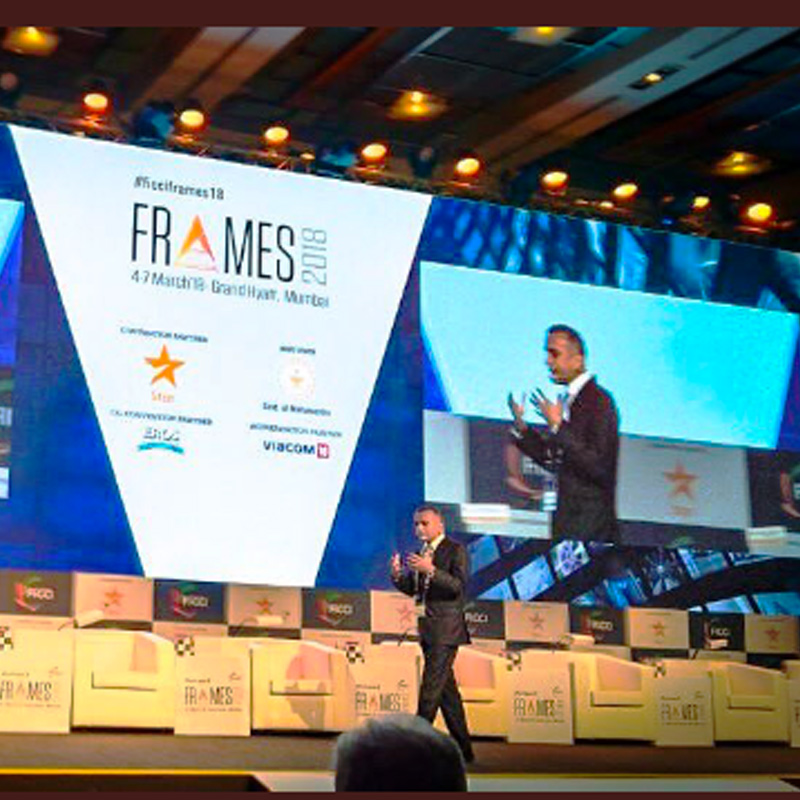
    Already, a majority of sporting events at both international and local levels have been postponed or cancelled, including the first-ever postponement of 2020’s Tokyo Olympics. Even tech seminars and auto events are being scrapped one after another to curb the spread of the virus. FICCI’s own international convention – FICCI Frames – had also been postponed. The event was scheduled to take place between 18-20 March.

    The report estimated that the pandemic will cause disruption across the sector in the world, reducing the global economy by 0.5 per cent in 2020. “Organisation for Economic Co-operation and Development (OECD) reduced its growth forecast for India by 1.1 per cent for 2020, despite it being the fastest-growing major economy in the world,” says the report. The country’s growth was expected to be around five per cent, which is higher than the global average of around 2.5 per cent. India’s expected growth rate is a little higher than that of China.

    Reaffirming a positive stance for India in the future, the report expects that despite a growth slowdown in 2019 and 2020, India is expected to regain its position as a global growth leader. As a glimmer of hope, the report mentions that the positive angle is the increased time that people will spend with media in their homes. This is likely to boost media consumption and sampling.

    Giving a fresh statement on the current economic situation of the world, International Monetary Fund’s chief Kristalina Georgieva in her online press briefing said: “It is now clear that we have entered a recession as bad or worse than in 2009.” Her statement came on the back of unstoppable cases of coronavirus that has created a financial stir across the globe.

    Projecting a recovery in 2021, Georgieva adds: “There may be a sizeable rebound, but only if we succeed with containing the virus everywhere and prevent liquidity problems from becoming a solvency issue. A sudden stop of the world economy could create a wave of bankruptcies and layoffs.”

  • M&E industry grew by almost 9% to reach Rs 1.82 tn in 2019: FICCI – EY report

    M&E industry grew by almost 9% to reach Rs 1.82 tn in 2019: FICCI – EY report

    MUMBAI: The Indian Media and Entertainment (M&E) sector reached RS 1.82 trillion (US$25.7 billion) in 2019, a growth of 9 per cent over 2018 states the FICCI EY report ‘The era of consumer A.R.T. – Acquisition Retention and Transaction,’ launched today. With its current trajectory, the M&E sector in India is expected to cross INR2.4 trillion (US$34 billion) by 2022, at a CAGR of 10 per cent*.

    While television and print retained their positions as the two largest segments, digital media overtook filmed entertainment in 2019 to become the third largest segment of the M&E sector. Digital subscription revenues more than doubled from 2018 levels and digital advertising revenues grew to command 24 per cent of total advertising spend.

    The sector continues to grow at a rate faster than the GDP, driven primarily by growth in subscription-based business models and India’s attractiveness as a content production and post production destination.

    The rapid proliferation of mobile access is enabling on-demand, anytime-anywhere content consumption nationwide. With a population of 1.3 billion, a tele-density approaching 89% of households, 688 million internet subscribers and nearly 400 million smartphone users, India’s telecom industry is poised to become the primary platform for content distribution and consumption. India ranks as one of the fastest-growing app markets globally, where entertainment apps are driving significant consumer engagement.

    Online gaming retained its position as the fastest growing segment on the back of transaction-based games mainly fantasy sports, increased in-app purchases and a 31 per cent growth in the number of online gamers to reach around 365 million.

    Uday Shankar, Senior Vice President FICCI, said, “Riding the wave of exponential progress made towards digital accessibility and adoption, the M&E industry has been a forerunner of a dynamic and aspirational India. New products and business models are being imagined to capitalize on the rise in media consumption. Global players are recognizing the need to build India-centric offerings. The coming years are likely to usher in greater innovation in content formats, means of dissemination, and business models.”

    Ashish Pherwani, Partner and Media & Entertainment Leader, EY India, stated, “The M&E sector witnessed a surge in content consumption as digital infrastructure, quantum of content produced and per-capita income increased in 2019.  Driven by the ability to create direct-to-customer relationships, the sector firmly pivoted towards a B2C operating model, changing the way it measured itself. As entertainment and information options grew and choice increased the era of consumer Acquisition, Retention and Transaction (ART) redefined the media value chain leading to the emergence of many new trends and strategies across content, distribution, consumption and monetization.”

    “The coronavirus outbreak will have a significant adverse impact on the sector, the situation is still evolving both in India and many parts of the world, the scale of the impact cannot be estimated immediately,” he added.

    Key findings

    Television:

    The TV industry grew from Rs 740 billion to INR 788 billion in 2019, a growth of 6.5 per cent. TV advertising grew 5 per cent to Rs 320 billion while subscription grew 7 per cent to Rs 468 billion. Regional channels benefited from the New Tariff Order as their consumption increased by over 20% in certain cases. General entertainment and movie channels led with 74 per cent of viewership. On the back of several key announcements by the central and state governments such as Article 370, the Citizenship Amendment Act, and a general election, the news genre witnessed a growth to almost 9 per cent of total viewership, up from 7.3 per cent in 2018. In sports cricket emerged as the big winner in 2019 as it accounted for over 80 per cent of the sports viewership, up from 70 per cent last year, due to the ICC World Cup.

    Key insights – Television will remain the largest earner of advertising revenues even in 2025, approaching Rs570 billion. Viewership of regional language channels will continue to grow and reach 55 per cent of total viewership in India as their content quality improves further. Content viewed on smart TV sets will begin to reflect that consumed on mobile phones, providing a window for user generated content companies and other non-broadcasters to serve content on the connected television screen.

    Print:

    Despite a 3 per cent revenue degrowth at Rs 296 billion, print continued to retain the second largest share of the Indian M&E sector. Circulation revenues increased by 2 per cent to Rs 90 billion as newspaper companies tactically increased prices in certain markets. Advertising revenues fell 5 per cent to INR 206 billion in 2019 as AdEX volumes fell by 8 per cent. Margins improved as newsprint cost measures were implemented and companies benefited from the reduction of newsprint prices.

    Key insights – 2019 witnessed a significant growth in digital news consumers over 2018 when 300 million Indians consumed news online. Most large print companies had a defined digital business, with two companies crossing Rs 1 billion in digital revenues. Digital subscription, though nascent, has increased as several publications have put digital products behind a paywall.

    ·Digital media:

    In 2019, digital media grew 31 per cent to reach INR 221 billion and is expected to grow at 23 per cent CAGR to reach Rs 414 billion by 2022. Digital advertising grew 24 per cent to Rs 192 billion driven by increased consumption of content on digital platforms and marketeers’ preference to measure performance. SME and long tail advertisers increased their spends on digital media as well.  Pay digital subscribers crossed 10 million for the first time as sports and other premium content were put behind a paywall.  Consequently, subscription revenue grew 106 per cent to Rs 29 billion. Digital consumption grew across platforms where video viewers increased by 16 pe cent, audio streamers by 33% and news consumers by 22 per cent.

    Key insights: By 2020, OTT subscription market will approximate 10 per cent of the total TV subscription market (without, however, considering data charges).  We estimate over 40 million connected TVs by 2025, which will provide a huge opportunity for content creators to reach family consumers.  Better bandwidth will drive large screen consumption. By 2025, 750 million smart phone screens will also increase the demand for regional, UGC and short content, creating a short video ecosystem that can create significant employment.  The battle for content discovery will intensity and move to the unified interface.

    ·Films:

    The Indian film segment grew 10 per cent in 2019 to reach INR 191 billion driven by the growth in domestic theatrical revenues and both rates and volume of digital/ OTT rights sold. Domestic film revenues crossed INR 115 billion with Gross Box Office collections for Hindi films at Rs 49.5 billion – the highest ever for Hindi theatricals. Overseas theatricals revenues fell 10 per cenr to Rs 27 billion despite more films being released abroad primarily as films with superstars didn’t perform as well in 2019. 108 Hollywood films were released in 2019 as compared to 98 in 2018. The gross box office collections of Hollywood films in India (inclusive of all their Indian language dubbed versions) grew 33 per cent to reach Rs 16 billion. As single screens continued to reduce, the total screen count decreased by 74 to 9,527.

    Key Insights: Digital rights continued to grow in 2019 with an increase in revenues from Rs 13.5 billion in 2018 to Rs 19 billion in 2019. Digital release windows shortened with some movies releasing on OTT platforms even before their release on television. In-cinema advertising grew marginally to Rs 7.7 billion in 2019 as multiplexes and advertising aggregators started signing long-term deals with brands. Seventeen hindi films entered the coveted Rs 100 crore club in 2019, which is the highest ever. Interestingly, six movies made it to the rs 200 crore club in 2019, as opposed to three in 2018. The future will be driven by immersive content (technology and VFX rich) experiences to drive theatrical footfalls and some genres of films could migrate to home viewership only.  We can expect to see creation of a segmented Hindi-mass product for the heartland at low ticket prices.

    Mergers and Acquisitions in M&E

    While the number of deals increased to 64 in 2019 from 41 in 2018, the overall deal value was

     much lower at Rs 101 billion as compared to Rs 192 billion in the previous year. This was largely due to the absence of big-ticket deals with only four deals crossing the US$100 million threshold. The highest amount of investment was made in television, followed by digital, radio and gaming. Deal activity was spearheaded by new media such as digital and gaming, which witnessed 54 of the 64 deals in 2019, however, in terms of deal value, the share of traditional media segments such as TV, radio and film exhibition was 63 per cent.

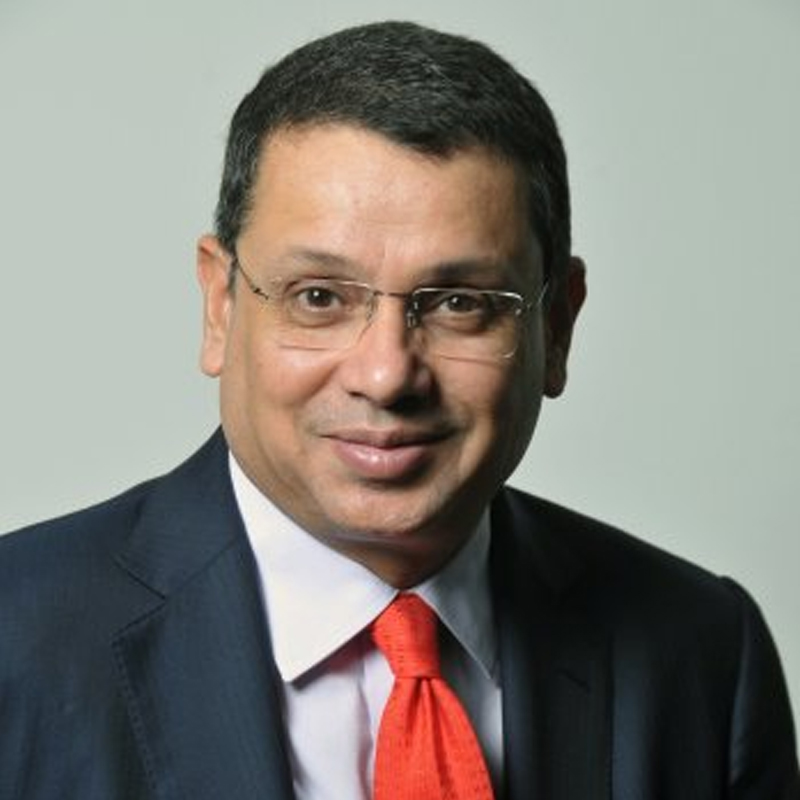
  • Uday Shankar takes charge as senior vice-president of FICCI

    Uday Shankar takes charge as senior vice-president of FICCI

    MUMBAI: Federation of Indian Chambers of Commerce & Industry (FICCI) has elevated Uday Shankar as senior vice president of the apex industry body in the country.

    Shankar had been holding vice-president role at FICCI since 2018 and this is for the first time that Indian media executive would assume the second in command leadership charge of the chamber.

    Shankar is currently chairman and chief executive officer of Star India and president of 21st Century Fox (Asia); he has been given additional charge as chairman of Star and Disney India and president of Walt Disney (Asia), which he will assume charge of new role post takeover of 21st CF by Disney.

    Shankar began his career as a political journalist with The Times of India, and eventually rose to Editor and CEO position at Star News, the first 24-hour news channel in India. He played a prominent role in making Star India one of the largest media & entertainment companies in India.

    He spearheaded the launch of Aaj Tak (2000) and Headlines Today (2003) as Hindi and English news channel respectively while being at the helm of Editor, News Director’s position at TV Today Group.

    Being the chairman of FICCI Media & Entertainment Committee, Shankar has been at the forefront of landmark changes in self-regulation and pushing access for consumers to digitized distribution.

    Shankar holds an M Phil in Economic History from the Jawaharlal Nehru University, Delhi. He is an avid reader and his knowledge domain transcends from literature to politics, economics, and sports.

    Along with Shankar’s elevation, the chamber has also appointed Apollo Hospitals Group managing director Sangita Reddy as president, Hindustan Unilever’s chairman and managing director Sanjiv Mehta as vice president.

  • TRAI tariff order’s impact on regional channels and ad rates

    TRAI tariff order’s impact on regional channels and ad rates

    MUMBAI: India’s regional broadcast sector has taken off in the last few years. With more investment pouring in, the quality of content and production has risen up a notch. While the regional language market has a lot going for it at the moment, the Telecom Regulatory Authority of India's (TRAI) new tariff order seems to have the potential to upset the apple cart. Industry experts believe that paid regional channels are likely to experience a dip in viewership compared to FTA channels with the implementation of the new framework.

    According to BARC India data, regional language viewership has witnessed a massive spike over the last two years. Bhojpuri saw a 134 per cent increase, followed by 125 per cent for Assamese, 89 per cent for Oriya, 81 per cent for Gujarati, 68 per cent for Marathi, 55 per cent for Bengali, 52 per cent for Kannada, 34 per cent for Punjabi, 23 per cent for Hindi, 18 per cent for Telugu and 17 per cent for Tamil. 

    Regional channels of late have been the bastions of growth not only in terms of viewership but also advertising revenue. Not only regional GECs, but regional movies, music and news have experienced growth in terms of ad volumes. However, niche and paid regional channels could be in for a bumpy ride going forward.

    Highlighting the impact of the new regime on these regional channels, Dishum Broadcasting COO Partha Dey said that if the carriage deals are in place with distribution platform operators (DPOs), viewership of regional FTA channels will not be affected. 

    “However, this may not hold true for long tail regional pay channels. Nevertheless, we may notice slight turbulence till the time TRAI guidelines are fully implemented,” he pointed out.

    Stratagem Media founder director Sundeep Nagpal voiced a similar view. Nagpal explained that the new tariff order is likely to adversely impact the penetration of regional channels in genres like music and movies as well as secondary GECs. However, the primary GECs or news channels that are not FTA may not be affected.

    Enterr10 Fakt Marathi MD Shirish Pattanshetty felt that the viewership in the regional cluster is likely to grow. He mentioned that multi system operators (MSOs) and local cable operators (LCOs) that are not educating the customers, and are trying to put together different packs by adding regional channels in it, which is against the new regime. 

    “If they are FTA and are included as part of the base pack, they are bound to grow so the essence of distribution and content will play a good game, but for the pay, they are bound to take a haircut. The customer should be given a choice of what he wants to pick and pay and then educate him on costing and give him options,” he stated.

    Meanwhile, Carat India SVP Mayank Bhatnagar said that the overall viewership and reach will get impacted but broadcasters will play it safe by having their most stable channels in the mix to minimise the risk. According to him, there is also merit to increase focus on digital to mitigate the risk.

    With the new regime, there will be a re-estimation of brand and content value, said HBC founder Harish Bijoor. According to him, consumers will contemplate the value of these channels. If two channels are regionally similar, they are likely to pick one.

    “So, a fair number of people have to take the decision about the entertainment repertoire as it need not include all these channels.” 

    The television industry in India has grown from Rs 58,800 crore in 2016-17 to Rs 66, 0007 crore in 2017-18 as per FICCI-EY Report 2018, thereby registering a growth of 12.24 per cent. The number of SD pay TV channels also saw a rise in the number from 147 in 2010 to 213 in 2018. 

    Dey and Pattanshetty believe that the reach of regional FTA channels is bound to grow subsequently leading to an increase in ad rates, with regional segment advertising rates likely to go up in all regional language markets.

    Nagpal, on the other hand, said that it wouldn’t be significant in the short run. However, it could lead to an increase of up to 25 per cent in some cases, if there’s a shakeup. 

    According to Bhatnagar, this will give an opportunity to the planners to rationalise the rates across channels.

    “Only those channels will be able to hold rates which add significant value and improve the effectiveness of the campaigns. Long tail channels will get impacted the most,” he highlighted.

    Hindi remains the preferred language of consumption for TV audiences in India, but growth is led by regional content. Rural India, at 99 million TV homes is 17 per cent higher than urban India but is only 52 per cent penetrated.

    When asked whether consumers from the rural areas would be willing to pay for the regional channels, Dey said that as per TRAI mandate of 100 FTA channels in base pack a rural or price-conscious consumer will first choose all FTA channels of the region and then go for top two or three regional pay channels and may forgo rest of regional pay channels, as FTA will suffice their consumption. 

    Similarly, Nagpal said, “Relatively speaking, rural penetration is likely to suffer more than the urban penetration, where the monthly subscription packages that will be developed by LCOs and MSOs, are likely to be even more attractive.” 

    Pattanshetty said that the rural audience might buy some of these channels but not all them. They will eliminate the ones that are not relevant to them. Furthermore, according to Bhatnagar, subscription rate will differ from region to region, given varied distribution and broadcast landscapes. Bijoor added that these rural homes are restricted as there is just one person in the whole family to decide as to which channel to watch and hence there will be a major impact on that front too.

    Stakeholders of the broadcast sector are hoping for some clear trends to emerge from the implementation of the new tariff order. While its no longer business as usual for most broadcasters, they will have to pay special focus to the developments in the regional language markets after the dust settles in the next few months.