Tag: Ficci

  • Viacom 18’s Jyoti Deshpande appointed as co-chair of FICCI media & entertainment board

    Viacom 18’s Jyoti Deshpande appointed as co-chair of FICCI media & entertainment board

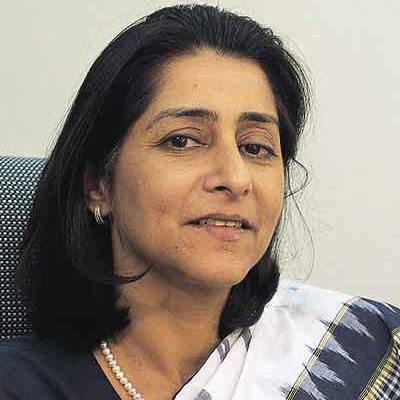
    Mumbai: FICCI on Monday announced the appointment of Viacom 18 Media CEO Jyoti Deshpande as the co-chair of the FICCI media and entertainment board. This is the first time that a woman executive from the media industry has been appointed as one of the office bearers of this very important vertical.  

    Deshpande is an industry veteran with over 29 years of experience across the country’s foremost media and entertainment companies. She pioneered Eros’ early entry into the OTT space (through Eros Now) and established Jio Studios as a key player in the entertainment value chain. She is currently serving as the CEO of Viacom18, making her the first woman to lead a big-four media and entertainment company.

    She has featured among Fortune India as well as Business Today’s 50 Most Powerful Women in Business lists, both of which celebrate the journeys and triumphs of women who not only impact their organisation but are also thought leaders in their industry.

     “FICCI has always been at the forefront of collaborating with various stakeholders across Indian commerce and the government to effect meaningful policy discussions and adoption,” commented FICCI director general Arun Chawla. “Given the very dynamic nature of the media and entertainment industry, this engagement is crucial for the development of the sector and the allied ecosystems. Jyoti’s experience across the value chain of this industry makes her an apt choice to lead the Committee’s holistic advisory agenda. I look forward to working with her.”

    “I feel truly fortunate to be part of an industry that is at the cusp of phenomenal growth, straddling traditional theatres to the metaverse and everything in between like television and OTT,” said Jyoti Deshpande. “I look forward to working with industry captains, custodians of brands that fuel consumption in our economy and the government as we look to leverage the confluence of technology, content and distribution to move the needle rapidly towards the $100 billion industry that we have been aspiring to be for a number of years now.”

    “The M&E industry can very much be a true embodiment of the ‘Make in India and Show the World’ mantra and I thank Sanjiv Mehta and FICCI for offering me this platform to meaningfully collaborate on shaping the future of an industry that I have invested my whole life in and am very passionate about,” she further said.

    FICCI media and entertainment board drives the media and entertainment committee. It counts promoters and CEOs of the media and entertainment industry across verticals like TV and radio broadcast, film production and exhibition, print, animation, visual effects, gaming, comics, AR/VR/MR (AVGC-XR), entertainment events, OOH etc. It remains at the forefront for policy changes towards the growth and development of the media and entertainment industry in India.

  • Sanjiv Mehta named FICCI president for 2021-22

    Sanjiv Mehta named FICCI president for 2021-22

    Mumbai: The Federation of Indian Chambers of Commerce and Industry (FICCI) has announced that Hindustan Unilever Ltd (HUL) chairman and MD Sanjiv Mehta will succeed veteran media executive Uday Shankar as president of the association. The appointment will be effective on 18 December.
     
    Mehta is presently officiating as FICCI senior VP. He will be holding the office as president for the year 2021-22.
     
    “During his eight years at the helm, HUL’s market capitalisation has increased by over $55 billion making it one of the most valuable companies in the country. In this period, HUL has won several awards and recognitions including the prestigious Economic Times ‘Company of the Year’ and ‘Corporate Citizen of the Year’ awards, Business Standard’s ‘Company of the year’ award and the ‘Best Governed Company’ award by the Asian Centre for Corporate Governance and Sustainability,” said the industry body in a press statement.

    Besides leading HUL, Mehta is also a director on the board of the Indian School of Business, a member of the Breach Candy Hospital Trust, and the South Asia Advisory Board of Harvard Business School. He chairs Xynteo’s Vikaasa, a coalition of top Indian and MNC companies.

    Last year, Uday Shankar took over the top position in the industry body from Sangita Reddy who is Apollo Hospitals Group’s joint MD. At the time of his appointment, Shankar was The Walt Disney Company’s APAC president of operations and Star & Disney India chairman. He stepped down from his position at Walt Disney before holding office at FICCI.

  • India’s OCC providers expected to generate $2.6 billion in revenue by 2025

    India’s OCC providers expected to generate $2.6 billion in revenue by 2025

    Mumbai: The revenue generated by India’s online broadcast and video sector increased by 159 per cent between 2012 and 2019.to reach $483 million. This is expected to touch $2.6 billion by 2025, according to a new report.

    A white paper by Frontier Economics in partnership with Creative First, FICCI, Producers Guild of India and Motion Pictures Association Asia Pacific found that online curated content (OCC) providers’ investment in content and production was not only a significant engine of growth within the media and entertainment industry but also the wider economy. According to it, 60 per cent of production costs are spent outside the specific M&E sector in the general economy to support media companies’ investments, for example on catering, hospitality, construction and legal services.

    The proportion of the Indian population using the internet has almost tripled since the entry of OCC providers in 2012, mainly due to the government’s initiative, but in part due to demand for OCC services drawing people to increase their internet usage; 34 per cent of Indians now use the internet (compared to 12.5 per cent in 2012)

    The research found that the geographic distribution of OCC investment in original titles is broadly proportional to each country’s number of global OCC subscribers, and as subscriber numbers continue to grow in India, so will investment in local and regional content.

    Globally, OCC providers are expected to pump $61 billion into original and licensed content by 2024. They collectively invested $24.7 billion in content in 2020. In 2019, The Walt Disney Company, NBCU, WarnerMedia, and ViacomCBS collectively poured $45 billion into content spending and creation globally (excluding sports).

    The study also showed that 56 per cent of hours watched on Indian OCC services was local content. It also found via a survey that 70 per cent of Indians consider it important that their OTT platforms provide local content.

    Investments in content have a disproportionately large contribution to the GDP as it provides skilled, well-paid employment stimulates economic growth, and supports a country’s exports. Since producing top-quality content is costly and content creation is a risky investment, policies like tax rebates or subsidies mitigate the risk and have been found to significantly increase investments in content, according to Frontier Economics.

    According to it, India’s existing policy framework has encouraged investments in the M&E sector and created a virtuous cycle of content creation and skill development. However, it pointed out that policies that discourage or constrain foreign investment and market entry can disrupt this virtuous cycle. “Protectionist policies intended to shield local companies from international competition could result in local industries that are inward-looking, less innovative and less able to produce high-quality content that is in demand internationally,” it said.

    “A light touch regulation has been our intention, the government being an enabler, rather than bring any brakes to the system of decision making, investment and employment opportunities,” said the ministry of information and broadcasting joint secretary Vikram Sahay on Friday.

    He added “Policy is always an evolving process with time, experience, and learnings. The government has always worked with the industry and other stakeholders, and we look forward to your suggestions and views. The industry has taken the Digital Media Ethics Code positively and has incorporated the spirit of the ethics code diligently in its decision-making process. The grievances received by the Government have drastically come down and it shows that the regulatory mechanism with the self-certification process is working well.”

  • Need to integrate the spirit of nation-building in each citizen: I&B minister

    Need to integrate the spirit of nation-building in each citizen: I&B minister

    New Delhi: “India is a pivotal power in Asia and as a member of the BRICS consortium, we would like to play a crucial role to strengthen ties between the member countries” said union minister of Information and broadcasting Anurag Singh Thakur.

    Thakur was addressing the virtual inaugural of ‘BRICS Film Technology Symposium’, being organised by FICCI, jointly with the ministry of I&B and FTII, here on Wednesday. “India takes pride in organising the first-ever BRICS Film Technology Symposium as a part of the special event planned in the run-up to the BRICS summit to be held in India,” he said.

    According to the minister, the focus of the BRICS Film Technology symposium is to acknowledge the service sector and technicians working for the film industry. “I am sure the symposium will create opportunities for the working professionals in the field of film technology of all BRICS nations to explore the world of cinema with a new perspective and vision,” said Thakur, highlighting the need to win the hearts and minds of the people from all BRICS nations. “A film symposium is an event which brings together one and all through the medium of cinema technology.”

    “Organising the first-ever BRICS Film Technology Symposium is a step in this direction to bring the people from all member states together. Through the medium of films, art and culture we have also opened avenues for cooperation which will be supporting development and growth in the film business,” he added.

    The two-day symposium intends to form partnerships and provide a platform for technological companies and organisations promoting films and bring the film community together for better communication, cooperation and collaboration.

    “BRICS countries are significant players in the field of VFX animation, computer-generated imagery, and media outsourcing. There is a great potential for collaborating with each other to enhance the technology in film production and cinematic experiences for the world of entertainment. The BRICS Film Festival which we will be organising along with the 52nd International Film Festival of India will provide us another opportunity to interact and share the best of our Cinemas,” said MIB secretary, Apurva Chandra.

    The event is spread over two days with sessions conducted by eminent speakers from all the BRICS countries. A virtual exhibition is being held as well.

  • Real estate emerges biggest spender on OOH advertising in 2020

    Real estate emerges biggest spender on OOH advertising in 2020

    NEW DELHI: 2020 was a very crucial year for humanity, as the entire world went into sleep mode due to the Covid2019 outbreak. From wearing masks, social distancing, the deadly virus changed the way people have been living for centuries. The pandemic also brought about changes in the out-of-home (OOH) ad segment, as people limited their lives inside their homes. 

    OOH segment de-grew 60 per cent in 2020

    As a majority of people were confined to their homes for the better part of last year, the OOH sector de-grew by 60 per cent in India. Revenue generated by the category was 15.6 billion in 2020, a steep drop I from Rs 39.1 billion in 2019. According to a recent study conducted by FICCI and EY, OOH advertising  will Blake a comeback in 2021, with the revenue rising to Rs 21.6 billion. By the end of 2023, the sector’s revenue will be Rs 31.8 billion, though still less than the 2019 earnings. 

    Traditional OOH comprised 60 per cent of revenues and remained the largest segment, while transit media comprised 35 per cent of the sector. The OOH spends on transit media was 39 per cent in 2019, and it witnessed a drastic fall as rail, metro, and air all witnessed large drops due to the lockdown and restrictions on travel. 

    Findings of the study showed that transit media comprised Rs 5.5 billion in 2020, and it is expected to grow to Rs 10.8 billion by 2023. This will be mainly due to 452 kilometers of metro line projects across the top seven cities that are currently under construction. Moreover, the government also plans to build or widen 60,000 km of roads by 2025. 

    As the vaccine rollout is progressing steadily, the sector is currently on the road to recovery. 

    Real estate dominates the ad sector in OOH

    Real estate and construction, FMCG, financial services, auto, and media are the top five categories that contributed to OOH spends in 2020. With 21 per cent spends, real estate dominated the OOH ad sector. Primarily, the factors that drove the real estate sector in 2020 were revision in home loan interest rates and conducive government policies. 

    However, OOH spends from hospitals, restaurants, educational sector, organised retail, and telecom witnessed a sharp fall in 2020. Moreover, from April to June 2020, most of the OOH sites were dominated by government ads about the pandemic. During this time, several companies refrained from spending on OOH, as Covid cases in the country were on the rise. 

  • Marketers hopeful about consumer spending in 2021, advertising to regain normalcy by 2023

    Marketers hopeful about consumer spending in 2021, advertising to regain normalcy by 2023

    MUMBAI: As the entire world went into sleep mode in 2020 due to the Covid2019 pandemic, the marketing sector faced a drastic setback. According to a recent FICCI-EY report, 2020 was a watershed year for advertising spends, as the industry slowed down by 29 per cent, the highest one-year drop ever witnessed in the history of Indian advertising expenditure. 

    Traditional media faces setback, digital media stays intact

    The Covid pandemic resulted in a drastic shift in the consumption pattern of customers, and being home-stuck with more time on their hands, many people started showing increased dependency on the internet before making any buying decisions. As a result, advertising in traditional media de-grew by 37 per cent in 2020. However, digital media remained flat, and was not badly affected by the new market trend. 

    Print media and radio, which were already on a downwards trajectory, continued to de-grow in 2020 as they lost some consumers due to reverse migration, cost-cutting, and changing habits. According to the FICCI-EY report, most of these lost consumers may eventually return as the market continues to grow, but some portion of the earlier consumer base will turn out to be a permanent loss. 

    Due to the decreased mobility of customers, OOH (out of home) and radio were also impacted. As people started maintaining strict social distancing measures, the experiential industry comprising events and cinemas too declined last year. 

    Marketers optimistic about 2021

    Even though the industry faced an unprecedented setback in 2021, marketers believe that advertising will grow by 27 per cent in 2021, and it will regain its earlier level by 2023. 88 percent of marketers believe that consumer spends will increase in 2021, while 12 per cent claim that it will stay the same. 

    As consumer spends are expected to increase in 2021, marketers believe that ad spends will also witness a rise this year. According to the report, 66 per cent of marketers expect that their ad spends would increase in 2021. However, 10 per cent of the marketers suggest that ad spends will reduce by over 10 per cent in 2021. 

    There are several factors that play their crucial role in determining the increased ad spends, and it includes key sporting events that include the Indian Premier League, Asia Cup, ICC T20 World Cup, and Olympics. Apart from these big-ticket events, several upcoming launches in the automobile sector, elections, growth of OTT, and mobile gaming could also contribute to rising ad spends in 2021. 

    In the meantime, the Covid crisis has accelerated direct-to-customers (d2c) initiatives in 2020. Most marketers enabled e-commerce channels during the lockdown, and even began to spend money to promote the same. Marketers during the lockdown period also experimented with online events, apps, communities, and martech. 74 per cent of the marketers expect to spend over 20 per cent of their spends on digital media, a sharp rise from 45 per cent of marketers last year. 

  • India’s Leading Ed-Tech firm Talentedge Awards its PR mandate to Kaizzen

    India’s Leading Ed-Tech firm Talentedge Awards its PR mandate to Kaizzen

    India: Kaizzen, India’s leading independent Public Relations and Digital Agency has won the PR mandate for the Ed-Tech firm Talentedge, the pioneers of ‘Live & Interactive’ digital learning in India. The mandate encompasses providing strategic communications support to Talentedge, covering corporate reputation management, brand visibility, and crisis management.

    On Kaizzen’s appointment, Aditya Malik, CEO, and MD, Talentedge said, “We are pleased to appoint Kaizzen as our Public Relations Consultancy to communicate our vision and spearhead Talentedge in the arena of online education. We are confident that the team’s experience in managing similar mandates for other industry bodies and clients in the education, start-ups and ed-tech space helps them understand the technicalities of this sector and accordingly customize a communications strategy for us. We look forward to a fruitful association with team Kaizzen.”

    The Ed-Tech firm offers digital courses through live classroom sessions giving students a chance to interact with renowned faculty as well as with each other during the classes. The brand’s distinct interactive technology solutions, cloud campus, world-class learning pedagogy, social collaborative learning, assessment, and analytics allow students to get an unparalleled learning experience, anytime and anywhere. Talentedge also enables working professionals to achieve what they aim for and open up various avenues.

    Commenting on the development, Mr. Vineet Handa, CEO, Kaizzen, added, “We are thankful to the management team at Talentedge for placing their trust in Kaizzen. We are excited about the opportunity to execute innovative, disruptive and high-impact PR campaigns that positively impact the business. Over the past twelve years, Kaizzen has established itself as a leading multi-practice and full-service PR and Digital Media Agency. Education and Ed-Tech is one of our strongest practice areas, and we are confident we will be able to grow the brand further.”

    With the current win with Talentedge, Kaizzen’s diverse portfolio of clients in the education sector has expanded. It already includes brands such as FICCI Arise, Education in Ireland, Sommet Education, Jaipuria Group of Educational Institutions, Heritage Schools, IDP Education, Speech and Debate India, Samarthya Teachers Training Research of Academy (STTAR) among others. Kaizzen has recently been ranked as the 7th Fastest-Growing PR Agency globally in the Provoke Global PR Agency Rankings and awarded ‘Specialist Consultancy of the Year’ at IPRCCA 2019.

  • Fantasy Sports is integral to sports growth in India

    Fantasy Sports is integral to sports growth in India

    New Delhi: During a fireside chat at the 10th Global Sports Summit: FICCI 'TURF' 2020, Harsh Jain, CEO & Co-Founder, Dream11 & Dream Sports, discussed how fantasy sports is a digital sports engagement platform that has a direct impact on sports and Indian economy, both in terms of growth and innovation. 

    On the growth of Indian Fantasy Sports, in his inaugural speech, Shri. Kiren Rijiju, Hon'ble Minister of Youth Affairs and Sports said, “I also see how fantasy sports is fuelling sports consumption. It is very important. Online fantasy sports is very instrumental in revolutionizing the manner in which sports enthusiasts engage with their respective favourite sports.” 

    When asked about the impact of fantasy sports in the sports industry, Harsh Jain, CEO and Co-Founder, Dream11 & Dream Sports said, “India is a pretty big market with a billion sports fans, and so we cannot be a one-sport nation. The problem is that sports as an industry is built as top-down, meaning, it is all about mass and scale. We want to build it bottoms-up, and so, we want to focus on other sports that have pockets of users, and in India, even pockets can be lakhs of people. Fantasy Sports changes the way you consume sports – you don't just follow the top team or the team you like; you follow everyone to see the value picks, research, knowledge, chemistry for every player, and sports consumption goes through the roof. It's based on the actual sports match, and on real-life events and it's not available 24×7.” 

    Talking about the potential of fantasy sports in India, Dr Sangita Reddy, President, FICCI, and Joint MD, Apollo Hospitals Group, said, “Online Fantasy Sports industry is actively working to develop and strengthen, and provide meaningful impetus to the entire sports ecosystem and is committed to creating impact dual partnerships for the government and other organisations to help realise the true potential of sports. The industry is committing a corpus of INR 20 crores in FY 2020-21 and will be deploying an additional INR 50 crores in FY 2021-22 to aid and facilitate the development of sports in the sports ecosystem in the country.” 

    Online Fantasy Sports (OFS) is a digital sports engagement platform that is dependent entirely on real-life sports. It has become one of the primary sources of sports engagement for avid fans and mature users. Sports fans create virtual teams on a fantasy sports platform, for an upcoming live sporting event based on their sports knowledge and skill. They compete against other teams based on the statistics generated by the on-field player's performance. Participating in fantasy sports platforms increases sports consumption as a sports fan follows the matches, teams, players, venue conditions etc. more closely to be able to create a successful fantasy sports team. 

    Some key insights shared by Harsh Jain on OFS during his session: 

         The format of Online Fantasy Sports ensures that sports enthusiasts follow the game more keenly, and this directly results in increased focus and attention towards sports. Fantasy Sports users watch 60% more sports 
         OFS provides sports fans with a transparent, non-addictive form of engagement 
         The majority of time spent by a fantasy sports user is on sports research, analysis and following the underlying real-world match, with fantasy sports participation being only a small and episodic fraction of the time         spent by the user in relation to the activity 
        OFS increases sports viewership, and this symbiotic relationship between OFS and real-life sports ensures that the interest of fans does not waver, especially at a time when physical presence in stadiums is not possible
        The emergence of these services has opened up new avenues for economic growth, investment and employment 
        OFS to contribute INR 13,500 Crores in taxes to the Indian government in the next five years
        Fantasy Sports industry to generate FDI more than INR 10,000 Crores in the next few years
        FS to create 12,000 additional jobs via direct & indirect employment   


  • Uday Shankar gets appointed as FICCI president

    Uday Shankar gets appointed as FICCI president

    MUMBAI: Here’s another stripe he’s adding to the numerous ones he has got during his fascinating career. Disney Star India chairperson and Walt Disney Co Asia Pacific president  Uday Shankar will take over as FICCI president–elect for 2020-21  during the lobbying body’s ninety third AGM on 11, 12, and 14 December 2020. He will succeed Apollo Hospitals managing director Sangeeta Reddy. 

    In the process, he will become the first ever media and entertainment industry executive to lead the national chamber . Prior to this he was chairman of FICCI’s media & entertainment committee, apart from being president of the Indian Broadcasting Foundation. 

    Uday currently leads Disney’s direct-to-consumer business in over 30 countries and has been behind the tremendous success Star India has achieved in entertainment and sports broadcasting, apart from the streaming service Disney +Hotstar. 

    Uday has also been a vociferous advocate of the entertainment and broadcasting sector, speaking out at times against regulation which has slowed down the TV ecosystem. He has been at the forefront of landmark initiatives in television broadcasting, such as self-regulation of content and digitisation of the broadcasting sector. He holds an M. Phil in economic history.

  • upGrad fires on all cylinders; targets explosive growth

    upGrad fires on all cylinders; targets explosive growth

    NEW DELHI: The pandemic has proven to be a boon for the edtech brands helping them clock more downloads and bag new subscribers. Students, across age groups, have adapted to online learning as schools and learning institutions were forcibly shuttered and and moved online.

    Both professional and school-level courses witnessed a spurt in takers. While professional courses are expected to make job search easy in this competitive market, the school courses prevented students from compromising on their learning during this time.

    Experts say that the edtech space has accomplished more in the last 100 days than it did in the past five years. A white paper released by Ficci indicated that 92 per cent of learning leaders have confirmed the adoption of online learning journeys from 68 per cent in the pre-Covid2019 period.

    A testimony to the growth of this sector is that investors are now keenly doling out hundreds of millions of dollars to startups with even edtech as part of their business plans. Media reports quoting Venture Intelligence data state that $998 million from just January 2020 to July 2020 as compared to $310 million a year ago has found its way into edtech startups.

    Read more news on upGrad

    A large part of that cash is going into category building and customer acquisition –  through both digital marketing and promotion and expensive TV air time.  With reason: they are trying to change old habits of physical face to face learning.  And with that out of the question for a while now, it definitely would not harm anyone if they went in for an upskilling course which would give them a shot at getting a better job or designation or fancier increments.

    The Ronnie Screwvala funded edtech venture upGrad has over the past month or so running a print, TV and digital campaign, Sirfnaamkinahin, kaamki degree’ to spread awareness on the importance of getting a degree which will help execs  get kicked upstairs into a better position and role.

    Based in an office, the TVC features a donkey – or an ass in common parlance – whom employees come and lick in the hope of pleasing him.. The donkey symbolises the boss who gives higher priority to smoothness over talent. Towards the end, the protagonist appears who refuses to lick the donkey and ends the film by saying that he needs specialisation, not ass licking to get ahead in his career.

    MOHAN: WE HAVE A
    MARKETING
    BUDGET OF
    RS 175 CR
    FOR THIS YEAR.

    upGrad is clearly pushing its specialised courses and positions them as a tool that can help executives to rise.  The media plan for the campaign includes 50 plus TV channels.

    upGrad CEO Arjun Mohan says, “At upGrad, we have reiterated our age-old principle of ‘life-long learning’ across all our marketing efforts and brand campaigns, making it a new norm for individuals who are looking to upskill and re-skill.  Especially during the current pandemic-induced lockdown period, where concerns like job loss, insolvency, and career ambiguity are looming, this mantra helped us resonate and connect with our audience better.”

    Currently, it is running the TVC across Disney+hotstar and on TV during the Indian Premier League and hopes to grow by 300 per cent by this fiscal year-end.

    Read more news on edtech space in India

    The edtech brand had previously launched a campaign in February 2020 ‘Raho Ambitious.’ The previous campaigns from the online learning brand were mirroring the sentiments of working professionals. “With the changing times, we realised that what they lack is a means to achieve and materialize the ambition. Hence, a brand only claiming to fuel ambition will not serve a definite purpose in their lives, because it isn’t providing a solution that they urgently need now. Hence, we let go of the previous brand propositions and moved to ‘Sirfnaamkinahin, kaamki degree’, with which we promise to provide outcome-oriented specialisations, to help learners achieve the ROI on education; job/profile switch, increment or promotion, thereby supporting employability,” adds Mohan.

    Since the beginning of the pandemic, upGrad has registered a massive upsurge in the traffic. Around 1,00,000 learners are logged in to the platform and over 8500 hours of live sessions have been conducted in the past three months (May – July). Media reports suggest that upGrad has a 500,000 -strong learner base, of which 32,000 are paid users. The company expects to close the current fiscal year with revenues of around Rs 1,200 crore. Small towns and non-metros are playing a key role in fueling the growth of the brand.

    The brand is now ready to scale the number of learners to one million. Mohan says: “Moreover, given the Covid2019 scenario, we are now looking to double our quarterly revenue numbers. (We are considering Q4 – Jan, Feb, March is the pre-COVID-19 quarter and Q1 – April, May, June is post-COVID-19 for the data). While all verticals have grown in Q4 vs Q1, the MBA vertical has grown by 63 per cent in terms of revenue and 82 per cent in terms of learner base, making it the biggest winner.”

    Other programs such as an MSc in data science witnessed a 60 per cent growth and PG certification in digital marketing and communication with Mica witnessed a 70 per cent growth in terms of revenue and learner base.

    He further shares that the brand had to move from quarterly to monthly cohort launches, in order to cope with the increased demand for the online programs that it is experiencing.

    upGrad has gone the whole hog on social media marketing as well, with the #DontBeAChaatuin August to synchronise with the release of the TVC. The campaign connected with the youth as did its funny short film ‘How to impress your boss’ with YoutuberBeYouNick (BYN), shortly thereafter. The sequence of activities triggered pop – culture influencers across platforms, who then contributed to the buzz and shared their personal experiences. Abhiand Niyu, Barkha Singh, AnkushBahuguna, Saloni Gaur, and AyushMehra amongst others joined the bandwagon to promote the idea of upskilling. Twitter heavyweights like Gabbbar, Sagarcasm, Trendulkar, also shared their views on corporate world culture to support the drive.

    Mohan says, “At the beginning of the year, we announced a budget of Rs 175 crore for marketing. We will be largely present on TV and digital. We are strong on social media as well.”

    He further explains that the brand is now expecting an overall surge in the television viewership. “This will increase the co-viewing window. Therefore, keeping the current situation in mind, the idea is to look at more mass media such as TV and accordingly shift our spending towards the same, supplementing it with digital. While we will continue to advertise targeting the metros due to new launches that we have in the pipeline. The consumers and prospective learners will now see upGrad more active in the smaller towns,” adds Mohan.

    upGrad has recently announced a corpus of Rs 500 crore to expand internationally, especially in APAC, Europe and west Asia. Mohan is optimistic about the shift in the education space.  He believes online learning is here to stay and the sector will continue to boom going forward.

    The company has also introduced a wide range of free online programs across the areas of tech, management, and data to encourage users to utilise the extra time at hand, meaningfully. It has introduced ‘upGrad higher’, which is a free platform for all job portals for Covid2019 impacted professionals.

    Screwvala and his teams have honed a special skill which can hopefully be imparted to other execs wanting to turn entrepreneur through upGrad: how to scale up companies from scratch, and in the process build high valuations.