Tag: Ficci

  • ABP Network’s ‘Ideas of India’ Summit 3.0 opens with spectacular focus on people

    ABP Network’s ‘Ideas of India’ Summit 3.0 opens with spectacular focus on people

    Mumbai: In the year of India’s 18th general election, ABP Network’s flagship event ‘Ideas of India’ Summit 3.0 launched to an enthralling opening, celebrating the spirit of democracy and plurality while converging many ideas of India.

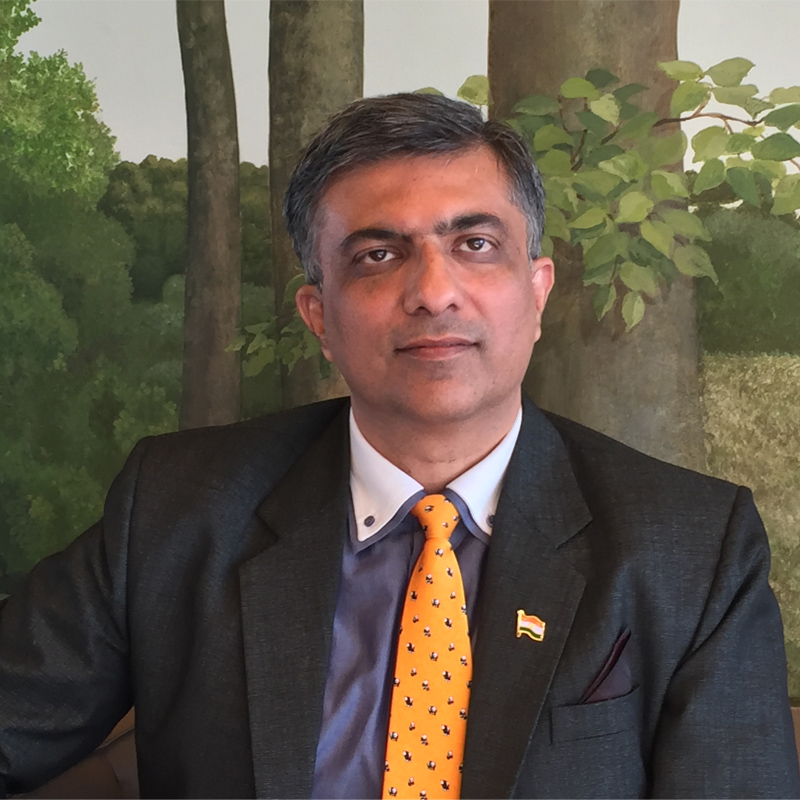
    Representing India’s business world, Mahindra Group group CEO and MD and FICCI president Dr Anish Shah took stage to share his perspective on the pivotal role industries and enterprises will have to play for accelerating national growth and economic prosperity.  

    Dr Anish Shah remarked, “Over the next seven years, Indian GDP will add as much to the global GDP as the entire European Union combined.”

    Deliberating upon the topic ‘Viksit Bharat: The Road to 2047’, Mahindra Group group CEO and MD and FICCI president Dr Anish Shah expressed, “The Union Budget has prioritized economics over politics, adopted fiscal discipline and invested more in capex. The RBI has done a stellar job in containing inflation. Infrastructure is being massively developed to make manufacturing competitive in India. To make this vision a reality, each one of us has to play a role.”

    Setting the goals for the industry, Dr Anish Shah, remarked “India envisions to be a 30 trillion economy by 2047 to be a Viksit Bharat. This means manufacturing should be 25 per cent of GDP. We should be more ambitious and make manufacturing grow 16 times and exports grow 11 times.”

    Setting the spotlight on the people with the Summit theme “The People’s Agenda”, the two-day-long intellectual discourse was set around how India can leverage its population potential to reinforce its leadership position globally on the way to becoming a developed economy.

    The ABP Network’s ‘Ideas of India’ Summit 3.0 spotlighting the ‘The People’s Agenda’ brought a confluence of ideas and ideators to a common platform celebrating the country’s people and its plurality. The two-day summit hosted policymakers, cultural ambassadors, industry experts, celebrities, business leaders, economists, and leading luminaries to delve into the fundamental ideas of liberty, justice, equality, and diversity that define India, its society, culture, and politics. The meaningful deliberations on diverse topics had the brightest minds across sectors providing insights about the nation’s trajectory and its journey to become Viksit Bharat.

  • Interim Budget is a outcome based continuum towards viksit Bharat: Dr Anish Shah

    Interim Budget is a outcome based continuum towards viksit Bharat: Dr Anish Shah

    Mumbai : Commenting on the Interim Union Budget 2024-25 announced by the Finance Minister, FICCI president Dr Anish Shah said, “The Interim Budget is a clear and outcome-based continuum towards Viksit Bharat. It brings together growth, climate, and social empowerment, while maintaining a careful balance between current investment rate and fiscal discipline.”

    “Enabling States to adopt reforms for Viksit Bharat will seize the momentum created from the Centre towards Amrit Kaal. Focus on Blue Economy, expanding and strengthening the EV ecosystem, domestic tourism, and multi-modal logistics will propel India towards the vision of a developed nation by 2047,” Dr Shah added.

    “The Interim Budget recognises Innovation as a key driver for growth through introduction of a significant corpus of Rs 1 lakh crore for offering fifty-year interest free loan to scale up R&D in sunrise domains. The fiscal performance bodes well for the country’s macroeconomic stability and investor confidence,” he concluded.
     

  • FICCI appoints Arjun Nohwar as co-chair of FICCI Media & Entertainment Committee

    FICCI appoints Arjun Nohwar as co-chair of FICCI Media & Entertainment Committee

    Mumbai: The Federation of Indian Chambers of Commerce and Industry (FICCI) has appointed Arjun Nohwar as the co-chair of the FICCI Media & Entertainment Board. Currently the general manager for India & South Asia for Warner Bros Discovery, Nohwar oversees the business in the region, leading operations across a diverse portfolio of global brands and networks in kids, entertainment, sports, and infotainment genres. This includes iconic brands such as Discovery, Animal Planet, Eurosport, Cartoon Network, POGO, Discovery Kids, DC, and the discovery+ streaming service.

    Elaborating on his vision for the industry, Nohwar said, “Accepting the mantle of Co-Chair at FICCI’s Media & Entertainment committee is an honour for me and I look forward to engaging with industry leaders, government stakeholders, and policy makers. Together, with a shared commitment, we aspire to build synergies that not only guide our industry towards unparalleled growth but also solidify its standing as a global leader. In this endeavour, I look forward to working closely with Kevin Vaz ( hair) and Sandhya Devanathan (co-chair), leveraging our collective expertise to chart a visionary course for the industry. FICCI’s steadfast dedication to fostering collaboration and shaping progressive policies is laudable, and I am particularly excited about the prospect of contributing to the dynamic evolution of the Indian Media & Entertainment landscape.”

    Nohwar has a robust background of working across technology and consumer facing sectors. He has worked at Uber, Tata Sons, several Tata companies as a TAS Manager, and at the Planning Commission of India. Prior to his role at Warner Bros Discovery,  Nohwar was the APAC Regional GM for Uber’s SaaS business. Nohwar is on the Advisory Board of AMBA, a social enterprise that works to provide economic independence to the intellectually challenged, he routinely advises startups and lectures at educational institutes.

  • FICCI appointments Kevin Vaz as chairman of FICCI media & entertainment committee

    FICCI appointments Kevin Vaz as chairman of FICCI media & entertainment committee

    Mumbai: The Federation of Indian Chambers of Commerce and Industry (FICCI) announced the appointment of Kevin Vaz, CEO – broadcast entertainment, Viacom18 as the chairman of FICCI media & entertainment committee.

    Vaz, a highly accomplished executive with nearly three decades of experience in the Media & Entertainment industry, joined Viacom18 in July 2023 as CEO – broadcast entertainment. In his current capacity, he oversees the media company’s broadcast business, film studio, merchandising business, live entertainment, and regional entertainment on Viacom18’s digital (OTT) platform. Vaz’s visionary leadership and strategic insight have already begun elevating the company’s television viewership, scaled up revenue realization, and significantly increased the network’s overall market share across genres and geographies.

    FICCI Media and Entertainment Committee for the last 25 years has been the principal force behind major policy changes and working towards fostering growth, advocating for favourable policies, and promoting the overall development of the sector and its allied ecosystems. The committee has been chaired by Yash Chopra, Karan Johar, Uday Shankar, Sanjay Gupta and Jyoti Deshpande in the past.

    FICCI deputy secretary general Leena Jaisani said, “FICCI, as the apex industry association, has consistently led the charge in fostering collaborations with diverse stakeholders within the realms of Indian commerce and government.  In navigating the complexities of this dynamic landscape, FICCI remains steadfast in its commitment to driving meaningful policy discussions and facilitating their effective adoption, thereby shaping a vibrant and progressive future for the media and entertainment sector in India. FICCI is confident that Mr Vaz, with his wealth of experience, will bring fresh perspectives and contribute significantly to the continued growth of the media & entertainment industry.”

    Chairman broadcast entertainment, Viacom18 and FICCI media and entertainment committee & CEO Kevin Vaz  said, “The Indian media and entertainment industry is at an interesting tipping point in time. While the interplay of technology, content and consumer behaviour is reshaping the very definition of the sector, in India there is a clear headroom for growth across categories and a confluence of interests between multiple players in the ecosystem. At a global stage, the soft power inherent to our industry can act as a leverage multiplier to India’s growing cultural influence. I feel honoured to be given the responsibility to lead this committee and look forward to interacting with stakeholders across the board to further our sector’s footprint.”

    The dynamic committee includes promoters and CEOs from various verticals such as TV and radio broadcast, film production & exhibition, print, animation, visual effects, gaming, comics, AR/VR/MR (AVGC-XR), digital entertainment events, OOH, among others.

    Vaz along with the Media and Entertainment committee will be engaging with the industry at FICCI FRAMES 2024 scheduled from 5 to 7 March 2024 in Mumbai.
     

  • Creative Monkey Games wins Best Gaming Startup of the Year Award by FICCI

    Creative Monkey Games wins Best Gaming Startup of the Year Award by FICCI

    Mumbai: Creative Monkey Games, a leading mobile gaming platform, has been honoured with the prestigious ‘Best Gaming Startup of the Year’ Award at the FICCI-Bionic enabled – Future Innovation Reskilling Start-up Transformation (FIRST) 2023 Summit and Awards. This recognition underscores Creative Monkey Games’ exceptional contributions to the gaming industry and its commitment to providing immersive and innovative gaming experiences.

    The FICCI-FIRST Summit and Awards, held in Chennai, celebrated Creative Monkey Games for its remarkable journey in the world of mobile gaming. The Company has gained worldwide acclaim, boasting over 40 million downloads globally and a diverse collection of more than 50 games.

    Creative Monkey Games CEO, co-founder & technology entrepreneur Deepak Aravind, expressed his excitement about receiving the award, stating, “This recognition by FICCI is a testament to the hard work and dedication of our entire team at Creative Monkey Games. Kavitha and Me founded this Company with a vision to offer the best mobile gaming experiences globally, and I am thrilled to see that vision come to life. We are committed to pushing the boundaries of mobile gaming with innovative ideas and captivating content.”

    Creative Monkey Games has emerged as a frontrunner in the cricket gaming category, with titles such as World Cricket Battle 2 and Cricket Gangsta™ gaining immense popularity among players worldwide. These games offer fun-filled gameplay, cutting-edge graphics, intuitive controls, and dynamic features that redefine the mobile gaming experience. Furthermore, Creative Monkey Games is set to revolutionise the e-Sports industry by introducing Gully Cricket, a move that is expected to elevate the gaming industry to new heights.

    Creative Monkey Games operates on a Freemium model, allowing users to download games for free from both the App Store and Google Play Store. The company generates revenue through in-app purchases, subscriptions and advertisements, making it accessible to a wide range of gamers.

  • Ficci Frames 2022:  Experts discuss the evolving trends in M&E across segments

    Ficci Frames 2022: Experts discuss the evolving trends in M&E across segments

    Mumbai: The media and entertainment industries have evolved over the years, and post-pandemic growth has been shared across segments.

    In a recently organised session on ‘M&E Consumption: Evolving Trends Across Segments’ at Ficci Frames 2022 discussed how media has evolved and new emerging trends are helping or affecting business. The panel discussion was moderated by EY LLP media and entertainment advisory services partner Ashish Pherwani.

    The expert panellist included Viacom18 youth, music and English entertainment head Anshul Ailawadi, International Media Acq (IMAC) CEO Shibasish Sarkar, Indian music industry president & CEO Blaise Fernandes, Pocket Aces CEO & co-founder Aditi Shrivastava and Amazon Prime Video head & SVoD business head Sushant Sreeram. 

    Starting the discussion, Anshul Ailawadi shared insights on how MTV has reached every corner of the country and helped youth have an audiovisual experience. 

    “There are two specific needs: the discovery of the channel and an audio-visual experience, and we try to give them to the audience.” He also expressed that each platform has its unique role.

    Shibasish Sarkar shared, “We have seen a substantial amount of growth in digital consumption. This discussion happens whenever there is a new emerging medium, and will it end the cinema? But it has survived, and even after a pandemic, people are watching movies in theatres.” 

    He further added that in these two years, there has been a substantial level of quality content consumption that has happened by the audience across all video platforms.

    “Today, Hindi language consumers have been consuming the best of Korean, Tamil, Telugu, and Spanish language content, so the consumer’s expectation for good quality content is higher,” he said.

    “Storytelling does not necessarily always need to be expensive. He added that it has to be in touch with the audience with the thought, “What will the audience like?”

    Blaise Fernandes expressed that music is not regional anymore and any music can be consumed in any part of the world; creators just need to choose the right platform.

    When talking about user-generated content, Aditi expressed that “audience is a god, content is a king, and distribution is a queen.”

    Audiences are starting to understand the business of content. And that is opening up possibilities for creators and platforms.

    She said, “Earlier, audience creation was restricted to putting something out. They’re trying to become obsessed, and some of them are becoming influencers. Brands are ditching celebrities and collaborating with digital influencers and micro-influencers to promote the product.”

    “UGC is going to move in the direction where people will buy things and make money based on content,” she added.

    She believes 80 per cent of big influencers and 20 per cent of small influencers will be in the ratio. “You will see digital avatars are beginning to participate in metaverse concerts,” she said.

    Anshul, agreeing with Aditi, said, “New monetisation opportunities, new sorts of avenues, and new platforms will emerge in coming years.”

    Sushant Sreeram talked about content on Amazon Prime where he said, “We programme to an extremely heterogeneous customer expectation across languages, across accessibility, across price points, and across an infrastructure and streaming simplicity.”

    He further added, “We absolutely continue to explore all forms of collaboration. In our journey over the last six years, we have explored a variety of models to work with producers, studios, and theatres.”

    While discussing TV vs OTT, Aditi expressed that it’s important to define because TV is just a device now and its content is consumed on mobile phones as well. Anshul talked about how the audience has done demarcation between OTT, TV, social media, and their functions.

    Aditi further talked about how her company is focusing more on short formats and engagement with the audience rather than how many views they have got.

    “We would like to see content increase across platforms. We would like to be a content provider. Now we are working on engagement. Distribution is very important. But it’s also very expensive to build. The way we are building distribution is by having channels across platforms. We have put out content that our marketing spend and we believe in organic growth.”

    While talking about price and content, Shibasish expressed that the audience won’t pay if they don’t like the content. He believes that good content will make audiences pay irrespective of the medium, and that all mediums will co-exist if they serve good quality content.

    Sushant agreed with Shibasish and talked about how international content on Amazon Prime is consumed not only by the Indian diaspora but also by natives of those countries because of quality content.

    Sushant suggested three things to keep in mind: customer delivery, collaboration with creators, and empowering the creative economy. Aditi advised to drop the elitism when it comes to content, Shibasish asked creators to understand the audience, Blaise stressed that only subscriptions could help creators  while Anshul emphasised how audiences can hate or love but can’t ignore creators.

  • “India is amongst the largest content hub”: Ficci DG Arun Chawla

    “India is amongst the largest content hub”: Ficci DG Arun Chawla

    Mumbai: Ficci Frames is back in 2022. The two-day convention kicked off on 27 September at the Westin in Mumbai. The event focused on creating content and its consumption by eminent media and entertainment industry leaders.

    Ficci Frames Fast Track had plenary and parallel sessions along with workshops and master-classes on issues and topics covering the entire gamut of media and entertainment like films, broadcast (TV & radio), digital entertainment, animation, gaming, visual effects, etc. over a period of two days.

    While giving a welcome address, Ficci director general Arun Chawla remarked that the media has shown resilience and will continue to grow. He said, “According to the Ficci report, India’s M&E industry will grow 17 per cent this year (to $25.2 billion) and try to recover its level from the 2019 pre-pandemic level and maintain a CAGR of 11 per cent. The industry is trying to reach $30.9 billion. This indicates a strong growth rate. India is amongst the largest content producers. Approximately 1,50, 000 hours of TV content, 2,500 hours of premium OTT content, and 2,000 hours of filmed content will be produced in 2021.”

    In his opening remarks, Chawla discussed how the media and entertainment industries not only survived but also kept the country’s morale high by providing entertainment while the rest of the world was suffering from the pandemic.

    He said, “India’s media and entertainment market is one of the most vibrant and diverse groups. Media and entertainment industries have come a long way and are contributing to the GDP of this country. We have over 900 TV channels, more than 1,44,000 print publications, and more than 385 private radio stations. Showing immense resilience, the industry is back on its feet but still must overcome its pre-pandemic level.”

    Chawla further added, “We are all aware of India’s digital transformation. It has caused the number and importance of online media platforms to rise dramatically. The government has actively supported the M&E industry, particularly through several initiatives to increase digitization and the creation of digital communication infrastructure.

    The ministry of information & broadcasting secretary Apurva Chandra, said that the media and entertainment industry in India is about $23 billion. He also talked about setting up a film facilitation office and working with Invest India to build a single-window portal for opening theatres. We were also informed about proposed amends to the Cinematograph Act.

    Also Read : We should aim for the M&E industry to grow more than $100 bn by 2030: I&B secretary at Ficci Frames Fast Track’ 22

    Actor Ranveer Singh, who enthralled the audience with his infectious energy, was awarded the ‘Frames Achiever of the Year’ at the event.

    On receiving the award, Singh stated, “Collectively coming out of a very difficult time, I hope that we crack great ideas at Ficci Fast Track in the rapidly changing hyper-dynamic world. I deliberately say the hyper-dynamic landscape of Indian entertainment that we are going to see because it is so.”

    Speaking at the event, West Yorkshire mayor Tracy Brabin said, “We want to work with the talented and creative people to champion sustainability in the creative industries and the film industry, through investment and support. We are open for business. We would like to invite you to get involved in our cultural festivals; to attend, but also to partner in the exciting programmes of activity.”

    “With the strength of the sector in the region, there are huge opportunities for companies from India to partner with our leading companies and invest in the region. The rewards are there for the taking, and we will support you every step of the way. We want to deepen our relationship with creative India, attracting more investment from production companies, studios, post-production houses, and VFX companies,” added Brabin.

    Film director Ramesh Sippy reflected upon the changes that happened during the pandemic. He said, “As much as the pandemic has affected us, it has also brought in some changes. OTT is certainly getting a big boom. Both cinema and small platforms will perform jointly as they used to, but in a much bigger way.”

    The session on the topic “M&E Consumption: Evolving Trends Across Segments” received a good response from the audience where panellists from various TV and OTT platforms explored trends such as short vs. long vs episodic video, the resilience of radio, the rise of regional and vernacular media, etc.

    A parliamentary representative participated in an engaging discussion on the “Role of M&E in Building the Social Fabric of the Nation” and spoke on the importance of the media in fostering critical and proper public awareness of planners’ goals and limitations.

    On the first day, the event saw actor Ranveer Singh, director Ramesh Sippy, MIB secretary Apurva Chandra, West Yorkshire (UK) mayor Tracy Brabin, and members of parliament (MP) like Sumalatha Ambareesh, Priyanka Chaturvedi & Sanjay Seth.

    The two-day convention saw sessions with renowned names of the industry like Nikhil Advani, Divya Dutta, Madhur Bhandarkar, Paresh Rawal, Tannishtha Chatterjee, Adil Hussain, Revathy, Tamanna Bhatia, Raj Nidimoru, Krishna DK, Sohum Shah, Karan Johar, Ayan Mukherjee, Imtiaz Ali, Anees Bazmi, Abhishek Sharma, Nitesh Tiwary, Ashutosh Gowarikar, to name a few, along with studio heads. They talked about the gamut of media & entertainment like films, television, digital entertainment, radio, animation, gaming, visual effects, film tourism, IP rights, and film incentives.

  • GUEST ARTICLE: Connected TV is emerging as an opportunity for entertainment brands in India

    GUEST ARTICLE: Connected TV is emerging as an opportunity for entertainment brands in India

    Mumbai: Connected TV (CTV) viewing has been gaining momentum in the western part of the world and is now on an escalating curve in India with 12–14 million monthly active CTV users, according to the FICCI-EY report of March 2022. The advancing new trends in the media and entertainment (M&E) industry have led to a noticeable change in the TV viewing habits of Indian audiences, leading to connected TV making a strong appearance in India. The exponentially growing CTV, which was earlier incomparable to linear TV, has now loomed out of the shadows and is considered a potent alternative for brands to advertise on. In the current digitally evolving ecosystem, affordable prices of smart televisions, increasing data penetration, and the availability of global content have aided in the medium’s rapid growth, making it a prominent mover and shaker in the M&E space. According to the March 2022 FICCI-EY report, by 2025, this number is expected to hit 40 million, highlighting its explosive growth as a medium in the country.

    A revenue stream within digital:

    For many years, traditional TV was the only platform for media buying. As users move towards connected TV, the medium is creating an opportunity to grow business revenues. In today’s time, content dissemination and consumption are platform-agnostic, giving brands an opportunity to generate visibility for themselves on the big screen. With CTVs ushering in the next big revolution, the ecosystem holds the potential for greater returns. As a new revenue stream within the digital landscape, CTV has grown to become an impactful channel that provides targeting capabilities and measurability. In a digital-forward world, measurement capabilities make the medium a must for any brand to push forth its marketing strategies and capitalise on the same.

    A powerful addition to the marketer’s toolbox:

    Connected TV, which has recorded notable growth in the past few years, is becoming a paradise for advertisers. In today’s data-rich world, consumers are increasingly demanding brands to deliver focused and relevant messaging. With more eyes on the big screen, CTV helps brands reach out to new and hard-to-reach audiences and form deeper connections with them. It has surfaced as a successful growth opportunity for advertisers who want access to a highly engaged, affluent audience. Advertisers, globally and in India, are lapping up the connected TV opportunity as it continues to grow as an exciting medium.

    With the widespread adoption of digital, CTV as a medium appears to be very promising for both consumers and advertisers. The growing adoption of streaming content through connected devices makes the medium an important and new touchpoint for advertisers. According to the IAB 2021 Video Ad Spend & 2022 Outlook report, globally, ad spending on connected TV grew 57 per cent in 2021 to $15.2 billion and will grow another 39 per cent in 2022 to $21.2 billion. In India, while CTV advertising spends are yet to fully catch up with growing smart TV subscriptions and consumers spending more time on these devices, ad spends will eventually move in a positive direction, making connected TV advertising the next big frontier.

    Towards a promising future:

    Presently, growing at a burgeoning pace, the connected TV market seems to have a propitious future. In our approach to reaching out to our digital audiences, CTV acts as a significant contributor. Needless to say, the medium will further prosper as a result of increasing attention from advertisers as they look to leverage the potential of digital advertising to reach their target customers in an innovative and effective manner. The overall ecosystem of connected devices, driven by technological advancements, will provide enormous headroom for growth in the future of media and entertainment. For a progressive future, it will become imperative for all stakeholders to strategically cater to this exponentially rising consumer growth trend.

    The author of this article is QYOU Media India COO Krishna Menon.

  • Ficci Frames makes a comeback with Ficci Frames Fast Track

    Ficci Frames makes a comeback with Ficci Frames Fast Track

    Mumbai: Ficci Frames Fast Track 2022, a pre-cursor to the Ficci Frames which makes a comeback after the pandemic, is slated to be held on 27 & 28 September in Mumbai.

    Ficci Frames, organised by the Federation of Indian Chambers of Commerce & Industry (Ficci), is the country’s biggest international seminar for the media and entertainment industries, which spans across film, television, digital entertainment, animation, gaming and visual effects.

    The theme of Ficci Frames Fast Track is the comeback after the pandemic. The two-day long conference will commemorate the industry which underwent the heat of COVID and has only emerged stronger. It seeks to bring the industry back to its feet and is raring to go.

    Ficci assistant secretary general and head media & entertainment Leena Jaisani brought forth, “The idea is to bring together the industry under one roof and just celebrate the fact that we have not only survived the pandemic that affected people and industries world over, but also came together during that period to help and support people. Many studios and associations took the responsibility of vaccinating employees and their families.”

    As OTT emerged as a very robust player during the pandemic, the focus this year will also be on OTT. The convention would discuss top trends, policies and regulations in the industry with various stakeholders including filmmakers, technicians, actors, heads of the film studios and representatives from exhibition sectors.

    There will be dialogues and exchanges around what kind of a change has the pandemic triggered and what the future looks like for the media and entertainment sector. Conversations will also be around film tourism, IP rights and film incentives.

    Ficci Frames Fast Track will also organise masterclasses and workshops around various aspects of filmmaking. This year, students from various schools and colleges will also get an opportunity to hear and learn from the leaders in the sector.

    The celebrated and much loved actor, Ranveer Singh, would be inaugurating the event and shall be present for the opening session.

  • Post-Covid outlook for India’s creative economy

    Post-Covid outlook for India’s creative economy

    Mumbai: The pandemic has shaken the spine of economies across the world, and the Indian economy was no different. The impact is well analysed and measured by several studies, but ‘Taking the Temperature’ research is a first-of-its-kind, landmark longitudinal report on the impact of the Covid-19 pandemic on India’s creative economy.

    The British Council, FICCI, and Art X Company have jointly launched the third edition of the report at the Jaipur Literature Festival (JLF).

    Released against the backdrop of Asia’s largest literature festival, JLF, the report transcends the literature sector, and for the first time, offers a quantitative mapping of India’s creative economy and culture sector – in the organised and unorganised sectors – across literature, crafts, festivals, performing arts and other art forms. The final edition is a series of three reports, and a culmination of 18 months of mapping the sector.

    The research tracks the longitudinal impact of the pandemic on India’s creative and culture industry and identifies a way ahead in a systematic and sustainable roadmap for recovery. The pioneering research is a first-of-its-kind, the extensive report outlines the monetary size and scale of the creative economy and contribution of the culture industries to the national GDP and wealth creation in India.

    On this, FICCI creative and cultural industries co-chair Sanjoy Roy said, “The TTT report on the creative sector underlies the vital nature and impact of this sector and its potential in creating jobs, contributing to local economies and creating a platform to realise one’s full potential.”

    The British Council works with the Indian stakeholders to strengthen India’s creative economy and create sustained livelihoods for Indian creative professionals. The report, in collaboration with FICCI and The Art X Company, underlines the British Council’s aim to gather credible information and insights that can enable businesses and governments to make effective and well-informed decisions about public and private investment in the creative sector.

     Key findings of the report:

        India’s creative economy reduced to Rs 30,440 crore GDP in 2021 from Rs 50,000 crore GDP in 2020, pre-Covid.

        There was a 39 per cent recession in creative industries to Rs 30,440 crore in 2021.

        50 per cent of creative sectors reported 51 per cent or more loss in annual revenue in the financial year 2020-2021.

        89 per cent of creative sectors in TTT2 and 82 per cent in TTT 3 have confirmed the pandemic impacted their income.

        49 per cent of creative sectors have not been able to keep creative businesses and artistic programmes running in the financial year 2020-2021.

        94 per cent of arts sectors are now operating in ‘digital only’ or ‘hybrid’ models.

        27 per cent of the sector is generating income through digital platforms with only eight per cent running physical programmes.

    In view of the findings and the feedback from the creative industry workforce and stakeholders, the report makes the following recommendations:

        Establish a cross-government creative economy Task Force from the 14 ministries that have a mandate for arts and culture in India.

        Government emergency grant-in-aid for MSMEs.

        A comprehensive national skills campaign across urban and rural geographies for creative MSMEs in digital and technological skills, business development, marketing, and communication capacity.

        Establish sector-specific management, self-help groups and management organisations, and city-wide enterprise zones and clusters.

        Establish arms-length bodies (ALBs) to strengthen and invest in arts and culture through a partnership of public and private investors.

        Embed tax coding of the creative industries in the formal economy through the Goods and Services Tax (GST) council.

    British Council India director – arts Jonathan Kennedy said, “Since the onset of Covid-19, we’ve dedicated our research to understanding the impact of the pandemic on India’s creative and culture economy with FICCI, Art X Company, and Smart Cube.”

    The final report makes practical recommendations for the short and long-term recovery of creative sectors and livelihoods. While our first two reports measured the impact of the pandemic on the incomes of the professionals and culture organisations, the third edition offers a definitive mapping of the scale and significance of the creative economy in India, added Kennedy.

    “There could not have been a better platform than the Jaipur Literature Festival to announce the report and we hope the insights from the report trigger much-needed conversations amongst stakeholders. We hope recommendations for recovery of the creative economy will be implemented through governance, infrastructure development and India’s enduring self-reliance,” he said.

    The Art X Company founder-director Rashmi Dhanwani said, “This final leg of the Taking the Temperature survey underscores the hard journey that the cultural sector in India has been on. Not only has the sector lost more than 50 per cent of its income, its performance has also affected India’s GDP growth. Besides the economic impact, the loss of lives and livelihoods that the pandemic has caused begs an urgent intervention – India’s culture sector needs a voice and demands urgent regulatory frameworks to safeguard this vital part of India’s identity.”