Tag: Ficci

  • FICCI – MEBC 2013 to kick off on 29 October at Bengaluru

    FICCI – MEBC 2013 to kick off on 29 October at Bengaluru

    BENGALURU: The Federation of Indian Chambers of Commerce and Industry (FICCI) annual Media and Entertainment Business Conclave (MEBC) will be held at the Garden City this year on 29 and 30 October. Previous editions of the conclave have been held in Chennai and Hyderabad.


    Some of the key sessions of MEBC 2013 include (1) Formulating and Implementing a viable Media and Entertainment policy for a State: The panel comprising of state government representatives and industry stake holders will discuss various scopes to develop infrastructure, local skills, technology and explore possibilities on how to develop the media & entertainment eco system for a State.


     (2) Emerging Technologies and the impact on Indian Cinema? The Indian film industry enters its next phase of production and distribution where digital technologies are taking very important roles. In this session we bring in experts from the field of creative industry and technology to understand what the future lies for Indian cinema.


    (3) The Broadcasting Ecosystem in the Digital Era: What are the experts thinking after the implementation of Digitization of Cable TV in India? In the era of convergence with integrated Apps, Broadband, wireless, VOD, pay TV and Multiplatform distribution how will the ecosystem look like. Let’s discuss.  


    (4) Session on Visual Effects (5) Emerging Trends of Indian IP in Animation & its exploitation (6) The War for News: Defining No. 1 in The Dizzying Newscape: Are there any winners in the plethora of news be it TV or Print, despite the TAM, NRS/IRS figures? Is it all the same content packaged in different formats which finally just confuses the viewer? What are our news media’s aiming for – Ratings or Pure Journalism? Can we learn anything from the international newsgathering model in content and standards?


    (7)  Reshaping Mobile entertainment in the era of Digital Revolution:  A session on display of the upcoming latest Apps in Mobile Entertainment, the transformation from 3G to 4G redefining mobile entertainment (8) Changing Trends in Regional TV: Ratings, Content, Formats: Regional TV programming are constantly evolving in terms of contents and formats keeping in mind the audience tastes and the cut throat competition with national televisions channels. In this session let’s listen to the stalwarts giving their perspectives from GEC to news following a peek into the state of the much-debated ratings systems.  


    (8) Marketing & Distribution of films in Multiplatform Ecosystem (9) Making movie through Crowd funding – The case study of Lucia:  A case study on the Kannada Film Lucia will be conducted by Film Director Pawan Kumar. Lucia is the first crowd funded film in India. The case study will emphasise on how best new script and ideas can receive funds through social networking sites without depending on producers for fund (11) The Emerging Gaming Industry in southern India.

    Among the speakers  at the concvlave include Kamal Haasan, Chairman, Media & Entertainment Business Conclave, FICCI; Biren Ghose , Convener  MEBC & President ABAI & Country Head- Technicolor India; Srivatsa Krishna , Secretary , Department of IT , Bt and S&T , Govt. Of Karnataka;  Kumud Srinivasan , President , Intel India; Ashish Kulkarni ,Co  Chairman , FICCI AVGC Forum & CEO, Big Animation; Neeraj Roy , CEO , Hungama Digital Media;  Anup Chandrashekar , Business Head , Asianet & Star Suvarna ; Shruthi Naidu , Director TV serials; LV Krishnan , CEO , TAM India; Jawhar Sircar, CEO, Prasar Bharti; Preet Dhupar, COO India , BBC World News; Ravi Hegde , Group Editor, Udayvani among others
     

  • Aamir Khan wins Aaj Tak Care award for his work in films and TV

    Aamir Khan wins Aaj Tak Care award for his work in films and TV

    NEW DELHI: Actor Aamir Khan, who took television viewers by storm with his first series of Satyamev Jayate has received the award in the individual category in the Aaj Tak Care awards held on 28 August here.

    The anthem for the Aaj Tak Care Awards, the first crowd sourced anthem was launched by actor Ajay Devgn and is a unique initiative.

    All the other awards and recognitions were given in the corporate category. Corporate Affairs Minister Sachin Pilot and cricketer Yuvraj Singh were also present in the event.
    All the received entries were evaluated on various parameters by IMRB and then were passed on to FICCI to select six nominees in each category. The final list of these six nominees was submitted to the panel of the jury members.

    The final awardees in various categories were selected by the Jury members comprising Gurcharan Das, Ashok Seth, Sandeep Chachra, Sandeep Pandey, Rajendra Singh, Dipankar Gupta and Arun Kapur.
        
    Yuvraj Singh who was present at the award ceremony addresses the gathering
        
    Ajay Devgn inaugurates the Aaj Tak Care award anthem


    The final list of winners and recognition in various categories is as follows:

    Education: Mahindra and Mahindra Ltd.
    Recognition: Shree Renuka Sugars Limited & SRF Limited
    Healthcare: Amul Dairy – Kaira District
    Environment: None
    Recognition: J K tyres & Royal Bank of Scotland
    Empowerment: The Lemon Tree Hotel company
    Recognition: Dharampal Satyapal Limited
    Individual: Aamir Khan

  • Business chambers welcome hike in FDI in telecom

    Business chambers welcome hike in FDI in telecom

    NEW DELHI: The Federation of Indian Chambers of Commerce and Industry (FICCI) and the Indo – American Chamber of Commerce (IACC) has welcomed the decision of the government to increase the foreign direct investment in the telecom sector to 100 per cent.


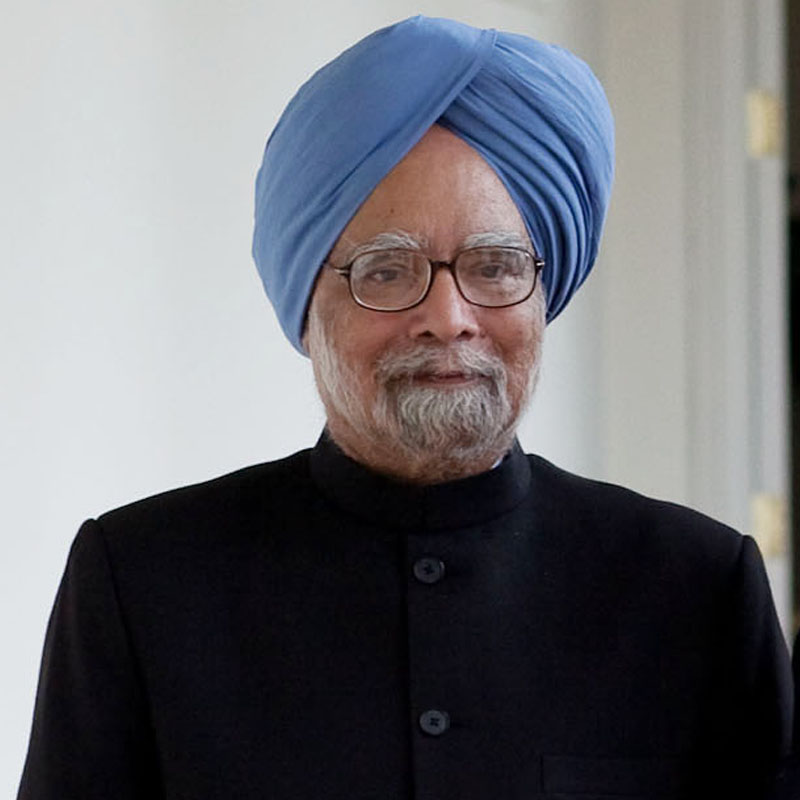
    According to a decision on FDI taken in a meeting chaired by Prime Minister Manmohan Singh, it had been decided to allow up to 49 per cent FDI by the automatic route for basic and cellular services etc., and from 49 per cent to 100 per cent through the Foreign Investments Promotion Board.


    According to FICCI, the decision on enhancement of FDI limit in the Indian telecom sector from 74 per cent to 100 per cent is a positive sign and showcases government’s commitment towards improving the current investment sentiment in the sector and aiding the telecom industry to recuperate from its debt issues. “Along with the National Telecom Policy 2012 and other necessary reforms, this pro-industry announcement will benefit the Indian economy and consumers in the long term,” said FICCI president Naina Lal Kidwai.


    Welcoming the proactive steps taken by the government to ease the foreign direct investment (FDI) norms in the country, primarily to stem the deteriorating current account deficit, Indo-American Chamber of Commerce (IACC) national president Shourya Mandal said, “These measures are inevitable against the backdrop of steep fall in the cross-country capital flows and subsequent heightened competition among the nations to attract the limited capital.”


    In a statement Mandal said, “Undoubtedly, we have to put in place a set of checks and balances to uphold our sovereignty and interest of the domestic industry, while attracting FDI. Our rules and regulations are framed taking cognizance of that factor. Unwarranted polemics on that count should be avoided to chase our goal of transforming ourselves into a developed country from an emerging economy.”


  • Taproot India hooks strategy & biz head Sameer Aasht

    Taproot India hooks strategy & biz head Sameer Aasht

    MUMBAI: Creative hotshop Taproot India has tapped into another talent by roping in Sameer Aasht to come in as its head of strategy & business. Aasht joined the agency, according to his linkedin profile, in March 2013.

    Over the past year of so, Sameer has been been playing entrepreneur, founding loveknits.org (which focuses on empowering designers, artisans and NGOs to leverage professional marketing expertise and a brand-led, digital migration approach to go global with their hand made / eco friendly creations) and Alma Mater PLC (which seeks to offer brand consultancy to start-ups and turnarounds).

    Before turning entrepreneur, Sameer put in workexp across a range of design, communication, brand consulting agencies, and even worked in marketing on the client side at Jet Airways, where he worked with cross functional teams to launch the brand in North America, Europe, west Asia as well south east Asia apart from launching consumer segment focused brand experiences.

    Among the agencies he has worked with include Percept/H (where he headed strategic planning) and Landor Associates’ India office (heading strategy). But his largest stints have been with communication agencies like TBWA, Ambience Publicis, Contract, Ogilvy and Rediffusion Y&R. Among the brands he has been deeply involved with figure: HSBC, Cadbury’s, Asian Paints, Mahindra, Volvo-Eicher, Suzlon, World Gold Council, Visa Monetize (Movida), Unilever’s Elle18, Pantaloons, Kansai Nerolac, Samsonite, Black & Decker, DeWalt, Tata Water (Himalayan), Times of India and FICCI. An MBA from ITM, Sameer is also an IIM-A alumnus.

    Taproot’s chief creative officer & co-founder Agnello Dias says that “Sameer‘s wealth of experience and strategic acumen will add even more muscle to everything that Taproot India brings to the table and look forward to client’s continued cooperation in creating powerful value for their brands.”

    His partner at Taproot Santoh Padhi (who carries the same title as him) adds that Sameer’s experience “working on all four sides of the table – advertising, marketing, design and digital” across a diverse set of categories ranging across tourism and hospitality, FMCG, automotive, financial services, fashion, retail and luxury is a big plus for their agency.”

    Says Sameer: “Taproot is a dream agency for most professionals in the industry today. I absolutely look forward to co-creating the best solutions for the brands we handle.”

    “One of the first things, Aggie and Padhi should put him to work on is getting their website http://www.taprootindia.co.in/ working, apart from working on brands,” says an advertising industry observer. “The site is under construction. And that’s not looking good for a crack creative agency such as Taproot which pushes the envelope on almost everything.”

  • BroadcastAsia2013 returns with an integrated offering for the Indian broadcast industry

    BroadcastAsia2013 returns with an integrated offering for the Indian broadcast industry

    MUMBAI: BroadcastAsia2013, a media and communications event is set to feature “groundbreaking” technologies, and spotlight hottest industry trends for the broadcast and film value chain. It is to be held at the Marina Bay Sands Singapore from 18 – 21 June.

    The Indian Media and Entertainment industry grew from Rs 728 billion in 2011 to Rs 820 billion in 2012, registering an overall growth of 12.6 per cent. Given the impetus introduced by digitisation, continued growth of regional media, upcoming elections, continued strength in the film sector and fast increasing new media businesses, the industry is estimated to achieve a growth of 11.8 per cent in 2013 to Rs 917 billion. Going forward, the sector is projected to grow at a healthy CAGR of 15.2 per cent to Rs 1,661 billion by 2017, according to the FICCI – KPMG Media & Entertainment 2013 report.

    The report also states that although television will continue to be the dominant segment, strong growth is posted by new media sectors, animation/ VFX and a comeback in the Films and Music sectors on the back of strong content and the benefits of digitisation.

    Film digitisation and TV distribution infrastructure, growth in new media like increase in mobile and wireless connections; greater sophistication of and segmentation in content with digitisation and finally encouraging regulatory and policy support has been a key enabler of growth for the Indian media sector. The continued cable DAS rollout, Phase III licensing for Radio and 4G rollout this year will spur growth from the medium term.

    The report further stated that by 2017, newer media segments such as digital advertising, gaming, animation and visual effects will post double-digit growth. While digital advertising at present accounts for Rs 2,170 billion, it is expected to increase to Rs 87.20 billion by 2017. The Indian film industry is also expected to grow from Rs 112.40 billion to Rs 193 billion by 2017.

    BroadcastAsia2013 registers strong Indian participation.

    Speaking at the press conference held in Mumbai Calvin Koh, who is assistant project director for BroadcastAsia from organiser Singapore Exhibition Services (SES) said, “With the advent of innovative technology and the recent large scale digitisation, Indian broadcasters and consumers are both at a threshold of a technology revolution. As demand grows for advanced technology and content for the dynamic Indian audiences, the industry, like never before, is embracing world class practices and formats. BroadcastAsia2013 is an ideal platform for the Indian players to partner with world leaders as well as reach out to clients beyond India.”

    The Indian companies exhibiting at BroadcastAsia2013 include Further Broadcast Automation Systems, Canara Lighting Industries, Diversified Communications India, Essel Shyam Communication, Indiasign, Rudraksha Technology and WASP3D.

    Indian experts including Zeel business head – new media Vishal Malhotra and Shemaroo Entertainment director, owner Jai Maroo will be part of a panel at the BroadcastAsia2013 International Conference.

    With the rise of Smart TVs and the blurring of the boundaries between TV and social networks, consumers will be watching TV within social networks and vice versa, impacting the way they engage with TV. BroadcastAsia2013 will be addressing this latest phenomenon with showcases from leading industry bigwigs, as well as up-to-date conference topics, such as 4K TV, OTT, Multi-Screen Streaming, DVB-T2, Satellite/Terrestrial/Cable Broadcasting, Production and Post-Production Software.

    New and returning top-notch exhibitors, including Axon, Dalet, Canon, Envivo, Evertz, Ericsson TV, GoPro, GrassValley, Harmonic, Harris, Hitachi, Ikegami, Miranda, Orad, Panasonic, PCCW, Playbox Technology, Quantel, Sennheiser, Snell, Sony, Quantel, Wasp3D, Yamaha will demonstrate their competencies in: future tv / ott / cloud broadcasting, multi-platform broadcasting, satellite / terrestrial / cable broadcasting, digital media asset management / file-based production, DVB-T2, digital tv / hbbtv / hdtv / internettv, broadcast automation, infrastructure and facilities, production / post production software, content editing / colouring restoration, pro audio technology, video content delivery network, broadcast it networking and security.

    To complete the entire value chain, ProfessionalAudioTechnology2013 will see professional audio companies showcasing the latest audio products and services for the broadcasting and film ecosystem.

    The highly anticipated Cinematography/Film/Production Zone will once again return this year to provide visitors with comprehensive updates on featured technologies such as Animation and Video Effects, Motion and Film Production, Camera, Lenses and Tripods and beyond.

    As Asia‘s film and TV industry continues to flourish, the BroadcastAsia2013 International Conference progresses to the next level with four new tracks, four specialised sessions and for the first time, a half day workshop. This will focus on the shift in consumer demand for high quality content on-the-go, on multiple platforms and the emerging business opportunities for OTT in Asia. More than 100 speakers from 31 countries/regions will lead the numerous discussions over four days.

    Some of the key confirmed speakers include Peter Hutton (managing director of ESPN Star Sports), Dato Amrin Awaluddin (group managing director of Media Prima Berhad), Graham Kill (CEO of Irdeto), Kurt Hoppe (director of Smart TV Innovation of LG Electronics), Benjamin Grubbs (APAC head of partner marketing of YouTube) and Jay Fulcher (CEO of Ooyala).

    The Creative Content Production Conference, back for its fourth successful year, is themed “Producing and Distributing Successful Content in Asia.” The conference will address the challenge of producing appealing and high-quality content for global audiences. Numerous industry stalwarts – AETN All Asia Network, Fox International Channels, Lucas film Singapore, Sony Pictures Television and Viacom International Media Networks will provide their insights on the future of the industry at the two-day conference. A series of new topics and speakers including a ‘Producers Dialogue‘ have been developed to serve as additional forums for participants to address and anticipate the upcoming trends and demands of the industry.

    CommunicAsia2013 and EnterpriseIT2013, held alongside BroadcastAsia2013 at the Marina Bay Sands, will feature a complete range of key technologies, such as cloud computing, enterprise mobility, mobile broadband and applications, developments in LTE/4G as well as Over-the-Top (OTT) and more. EnterpriseIT2013 will also highlight the latest technology solutions for enterprises from different vertical industries such as banking and finance, education, government, healthcare, hospitality, and logistics and transportation.

    The last edition of BroadcastAsia, together with CommunicAsia, attracted close to 2,000 exhibitors and over 50,000 professional attendees from around the globe.

  • Console gaming dominance to reduce gradually in India

    Console gaming dominance to reduce gradually in India

    MUMBAI: Console continues to be the largest segment of the Indian gaming market. However, the Ficci KPMG report notes that its dominance is expected to reduce gradually as mobile gaming gains significance.

    While growth rates of 28 per cent were forecast over 2011- 2012, actual growth came in at 8 per cent primarily due to overall sluggishness in the economy impacting both unit sales and attach ratios. The growth was also impacted by sluggishness in ad rates and significant inventory overhang in the internet gaming space.

    Growth estimates for the console market have been further moderated going forward. This is primarily due to the fact that Sony‘s PS2 console is expected to be phased out in India this year and upsides from attach growth in PSP, PS3 and Microsoft Xbox 360 sales will only partially offset PS2 sales. A fall in software sales earlier associated with PS2 consoles will also impact the market.

    Consequently, the overall market is likely to grow at a 19 per cent CAGR to reach Rs 19 billion by 2017. For the console segment, a lot will depend on how the PS4 launch fares in India and how quickly the gaming experience on mobiles and tablets comes closer.
    Overall the gaming industry in India grew 16 per cent over last year and is expected to grow at a 22 per cent CAGR to reach Rs 42 bn by 2017.

    Mobile Gaming: This category continued to see sustained growth in smartphone and tablet device penetration, and regular uptake of gaming content.

    IAMAI estimates that nearly 50 per cent of mobile users regularly access gaming content. Although telecom operators such as Vodafone are increasingly recognising the importance of developing a vibrant gaming ecosystem on-deck and are rationalising revenue share terms (now offer 70 per cent revenue shares to several large publishers), the off-deck segment is expected to eclipse the on-deck segment in value terms by 2014.

    Monetisation currently remains a challenge for Indian publishers, as the majority of game downloads are ad-funded. However, given that most Indian smartphone users have access to content published by global content providers and the fact that the gaming universe is highly fragmented, the spend gets spread across a large number of developers and private publishers.

    PC and TV Gaming: The PC gaming market grew nominally over this period consistent with last year‘s report. It is not expected to be a significant contributor to growth over the coming years.

    While the TV gaming is a relatively small market, the segment holds some potential for growth going forward as digital cable operators attempt to offer compelling value added services to curb erosion in subscribers with the onset of mandatory digitisation. This is, however, expected to be largely a lower income audience.

    Set top device functionality, currently a major bottleneck to delivery of quality gaming content, is also expected to improve over time, allowing providers to transmit richer, interactive content.

  • Bangladesh agreeable to resolve problems relating to embargo on Indian Bangla films

    Bangladesh agreeable to resolve problems relating to embargo on Indian Bangla films

    NEW DELHI: The Film Federation of India (FFI) has expressed concern over the embargo on Indian films in some countries.


    The FFI has taken up this issue with the Government of Bangladesh and FFI President Bijay Khemka held a discussion on this issue with Bangladesh Information Minister Hasanula Haq Inu who was in Kolkata for the Media and Entertainment Business Conclave organised by FICCI recently.


    The Minister invited an FFI delegation to Dhaka to discuss the issue, particularly relating to Bangla films.


    Meanwhile, FFI is to organise the Indian Film Tourism Conclave in Chennai, Mumbai and Hyderabad in February to mark 100 years of Indian Cinema.


    A gala event will also be organised to mark the centenary.

  • Expanding teledensity and broadband services major challenges: PM

    Expanding teledensity and broadband services major challenges: PM

    NEW DELHI: Prime Minister Manmohan Singh today flagged off three major challenges for the industry and the Government to take the Telecom revolution to the next level: deepening penetration of basic telecom services, providing affordable and accessible broadband services, and strengthening domestic manufacturing capabilities across the entire value chain in telecom and electronics.

    Addressing the Seventh edition of India Telecom under the theme ‘New Policy Framework: Envisioning the Next Telecom Revolution‘, Dr. Singh said: “The Indian telecom sector has seen phenomenal growth over the past decade or so. With around 965 million telephone connections, India is the second largest telecom market in the world as a whole. The telecom sector has also been the driver of foreign direct investment and FII flows into our country. It has contributed in a major way to the dynamism of our economy.”

    The three-day ‘India Telecom‘ is organised by FICCI in association with the Department of Telecommunications, Communications and Information Technology Ministry. This is the biggest telecom event in the Indian subcontinent and has been the forum for emerging knowledge center, inspiring innovation, technology transfer, exchange of innovative ideas and joint ventures in telecom sector since 2006.

    The Prime Minister said during the last one year, the government had taken a number of initiatives in the telecom sector. “We have announced the New Telecom Policy-2012. We have attempted to clarify the policy positions on a number of complex issues. We have attempted to ensure adequate availability of spectrum and its allocation in a transparent manner through market-related processes. I am confident that the futuristic policy regime that we are now putting in place will address, and address effectively, the concerns that have been worrying investors and will provide a new impetus to the growth of telecommunication industry in our country,” remarked Dr. Singh.

    He listed three broad aspects which should guide the collective efforts in telecommunications in the years to come.

    The first issue is the penetration of basic telecom services in our rural economy. The exponential growth of the telecom sector has been primarily driven by growth in the use of telephones in urban areas. The full potential of telecommunications in enabling higher growth will not be realised until the use of telephones spreads much wider in the rural economy of India as well. While urban India has today reached a teledensity of 169 per cent, the teledensity in rural India stands at only 41 per cent. Not only this, the bulk of the 59 per cent people who do not use phones in rural areas is perhaps from the socially and economically backward sections of our society.

    He added, “We must address this rural-urban divide if we have to achieve our goal of socially inclusive growth. Today, network coverage is there in most parts of our country and the bulk of the population is already covered. It is possible that there are economic or other barriers preventing the spread of telephone usage. There is also an economic case for investing in business at the bottom of the pyramid. I urge industry, which has shown great innovation in the telecom sector, to come up with strategies to expand teledensity in rural areas. I also urge the Department of Telecommunications to think big and think creatively to see how the resources available to it, either through the USO Fund or otherwise, are better used to achieve this purpose. We cannot and we should not have an India where lack of a phone is a hindrance to inclusive growth. The New Telecom Policy-2012 envisages 70 per cent rural penetration by 2017 and 100 per cent by 2020. We should all work together to achieve these targets and in fact do better than what we have promised.”

    On the issue of availability of broadband services,Singh said broadband improves the lives of people by providing affordable access to information and knowledge. Many Information and Communication Technology applications such as e-commerce, e-banking, e-governance, e-education and telemedicine require high speed Internet connectivity. Studies show that there is a direct correlation between an increase in broadband connectivity and growth in a country‘s GDP.

    “The advent of smart phones and tablets at reasonable prices along with wide availability of telecom infrastructure across our country would provide an opportunity for us to ensure an equitable spread of broadband services. We must, therefore, seize this opportunity. Recognizing the significance of broadband connectivity as a tool for empowering our rural masses, our government has launched the National Optical Fibre Network project to provide broadband connectivity to all our Panchayats. This unique project will usher a new era in telecommunications by establishing information highways across the whole length and breadth of our country, particularly in rural areas,” said Singh. In this context, he urged all government departments and the private sector to work creatively to ensure that this infrastructure is efficiently used to make broadband services truly affordable and accessible.

    “I would also like to reflect on the thinning down of our domestic manufacturing capabilities in telecom in particular and in electronics in general over the past two decades. We need to strengthen our domestic manufacturing capabilities across the entire value chain in telecom and electronics. The new Telecom and Electronics Policies lay down the regime for enabling this to happen. Now it is for the captains of our industry, particularly in the private sector that they have to seize this unique initiative. As a major automobile buying country, we have developed a strong automotive sector. I believe this can be and must be replicated in telecom and electronics as well. We need leaders in telecom and electronics manufacturing who can break new ground and create the ecosystems to enable India to be a major producer of hardware,” stated Dr. Singh.

    Telecom Minister Kapil Sibal announced that nationwide Mobile Number Portability (MNP) is expected to be rolled out by February next year, which will allow users to retain their numbers even if they move from one state to another.

    Sibal said, “For the timely implementation of the National Telecom Policy (NTP) 2012, the Department of Telecom has finalised broad agenda for next three months from December 2012 to February 2013.”

    Some of the key initiatives to be completed by February 2013 mentioned by him were approval of spectrum assignment and pricing, unified licensing regime, M&A guidelines, finalisation of guidelines for spectrum sharing, creation of fund for R&D and manufacturing and MNP on a nationwide basis.

    Minister of State for Telecom Milind Deora pointed out that the telecom sector is at a nascent stage and technologies and policies are still evolving. “We need to create a data ecosystem and all Indians must have access to voice services, high-speed internet connection at affordable prices and New Telecom Policy 2012 aims to achieve this target by 2020. Also, unified license which is approved by the Cabinet will further help in penetrating rural India,” Deora explained.

    FICCI President R V Kanoria said the New Telecom Policy 2012 will provide a platform for socially inclusive growth of the telecom sector. “It will help in formulating the next step to sustain this growth and ensure affordable telephony, impact the services, delivery and will empower rural India,” he added.

  • Long tail of film distribution gets boost by digital technology

    Long tail of film distribution gets boost by digital technology

    MUMBAI: The LA India Film Council, in association with the Center for Content Protection (CCP), hosted a panel discussion on The Long Tail Of Film Distribution and The Role Of Technological Protection Measures (TPMS) in conjunction with FICCI’s 4th MEBC in Chennai, India.

    Motion Picture Dist. Association (MPDA) India managing director Uday Singh said, “The long tail is really happening. It‘s facilitated and enabled by digital technology. However it‘s essential that policy makers understand the need to create a proper infrastructure, which includes protection and security, transparent market access, and weeding out content theft.”

    Films make most of their financial returns during the initial weeks of their release. However, theatrical is not the only return-on-investment for films given the emergence of Pay TV and other business models on platforms such as IPTV, mobile, packaged media and internet.

    India’s National Telecom Policy 2011 envisions providing high speed and high quality broadband access to all village panchayats through optical fiber by the year 2014. The government intends to provide affordable and reliable broadband on demand by the year 2015 and to achieve 175 million broadband connections by the year 2017 and 600 million by the year 2020 at minimum 2 Mbps download speed. This paves the way for emerging business models and the need for content protection measures that are critical for the feasibility of these new delivery channels.

    A special Council publication commissioned by Ernst & Young titled ‘Monetizing Your Content In A Digital World’ was unveiled on this occasion. The report focuses on the changing nature of media and entertainment consumption and the impact that these trends are having on Media and Entertainment companies’ digital strategies and how these companies are tailoring their products and service strategies to meet the increasing consumer demands for content anywhere, anytime and in any form.

    “As distribution gets digitised, content choice for the consumer increases manifold leading to fragmented media landscape. Successful digital monetization, in a fragmented landscape, depends on sharp customer targeting, providing enhanced value in entertainment experiences and seamless integration of targeted advertising micropayment mechanisms. Media owners who rework their business models based on these parameters will be valued in the future,” commented Ernst & Young Segment Champion Digital Media Raghav Anand.

    The panel further discussed the role of TPMS in the above scenario and went on to chart the road ahead for India. “There is so much potential for Indian films worldwide. With technologies many more communities worldwide can enjoy Indian movies after their theatrical release. We explored the most current aspects of digital distribution and technologies in our panel,” said Isa Seow, Managing Director, CCP.

    Technology and accompanying digital rights are central in enabling new business models that meet consumer needs. Joining the panel were industry experts such as Krishnan Rajagopalan, Head of Technology, Group Digital Life, Singtel, Ankan Biswas, Chairman, Digital Broadcast Council, Consumer Electronics Appliances Manufacturers Association, Paul Jackson, Chief Engineer, NDS, Dr. Nagendra .S, Head -Sales and Strategy, Ignis Technology Solutions.

  • Ficci to commemorate 100 years of Indian cinema at MEBC

    Ficci to commemorate 100 years of Indian cinema at MEBC

    MUMBAI: The Federation of Indian Chambers of Commerce and Industry (Ficci) will commemorate the glorious and landmark occasion of 100 years of Indian cinema and deliberate upon the crucial and critical road ahead for films, broadcast digitization and content at the fourth edition of the annual Media and Entertainment Business Conclave (MEBC).

    Apart from rapidly evolving into one of the leading platforms for the sector in the country, MEBC has sessions by industry stalwarts on subjects related to the entire canvas of the media and entertainment industry.

    MEBC 2012 will bring about focused sessions on Digitization for the broadcast industry, celebrate 100 years of cinema with stalwarts like Kamal Haasan, Rajnikant, Mohanlal, Dileep, Jairam, Mamoothy and other stalwarts from the Indian industry. Oscar-award winning producer of The Lord of the Rings Trilogy, Barrie Osborne will also grace the occasion with his presence.

    The production part of films will be looked at closely in workshops and masterclasses such “A 360 degree approach to producing a global film by Barrie Osborne.

    A very important discussion on Making films and managing them effectively in the digital era will be discussed by leading filmmakers such as Santosh Sivan, Priyadarshan, film maker Unnikrishnan. And to give the digital perspective to film marketing for the first time they will be joined by the Asia Pacific Director for Content Partnerships in Google, Mr Gautam Anand.

    The other sessions where hand-on approach to the nitty gritties of film-making and screenwriting will be focused upon are : VFX session on Making of Harry Potter and the Deathly Hallows, Master class on post production of Harry Potter and the Deathly Hallows (Part 2) will be conducted by Nicolas Aithadi, Renowned VFX Supervisor from Hollywood and Digital Filmmaking workshop with RED, which focuses on removing the myth of complexity from acquisition to post when shooting with RED through hands-on demos.

    Special session titled on Digital Sound Technology titled ‘Story of Sound‘ will take the attendees through the Story of advancement in audio technology and will get a chance to hear from the Dolby cinema experts on the ‘Story of Sound‘ and the evolution of cinema sound from different sound formats to the new ground breaking Dolby Atmos.

    The session will have sound experts like Resul Pokutty winner of Academy awards Making of Enthiran – The Robot by Srinivas Mohan will see renowned VFX supervisor taking attendees through the journey of the making of the complex graphics and special effects of Enthiran, will also cover the basics of Computer Graphics (CG) and 3D Stereoscopic vision (S3D) along with the history and concepts of 3D stereoscopy and usage areas and how CG is used in industries like Print, Education, Electronic Media (Film, TV, Mobile) etc.

    For those wanting to learn the rudiments of the craft of screenplay writing from the experts in the field, Ficci has planned a 2 -day Screen writing workshop by Dr Kamal Haasan, Singeetam Srinivasa Rao, Rohan Sippy and Saurabh Shukla and Anurag Kashyap.

    For an overall understanding of the sector, there will be exhaustive presentations on the Taxation and regulatory landscapes and an overview of the current state of the sector as detailed in the FICCI Deloitte report which will be released at the conclave.