Tag: Ficci

  • Indian animation needs a global outlook

    Indian animation needs a global outlook

    MUMBAI: Among the key issues addressed by the recently concluded FICCI MEBC (Media and Entertainment Business Conclave) (South) in Bengaluru on 29 and 30 October was the state of the animation industry in India and what can be done to improve its lot.


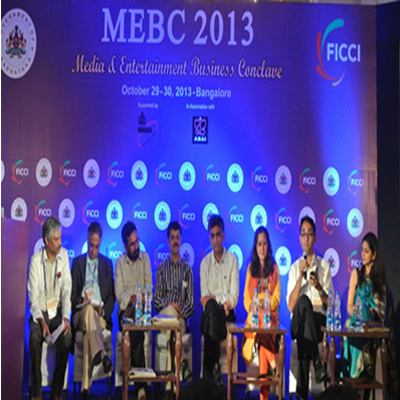
    The second day of the conclave saw a dedicated session titled ‘Emerging trends of Indian IP in animation and their exploitation’ with Turner International India senior director and network head for kids in south Asia Krishna Desai, Graphic India co-founder and CEO Sharad Devarajan, Shemaroo Entertainment director Jai Maroo, Krayon Pictures co-founder Nisith Takia and Greengold Animation founder and MD Rajiv Chilaka and Reliance Animation CEO Ashish Kulkarni as moderator.
    Devarajan began by highlighting the need for a cohesive ecosystem favouring the country’s animation industry.


    “Indian consumers today are used to seeing the best of the world and so, we need to transcend the national market and go to the international market,” he said, stressing the need to create content like that made by Stan Lee or Steven Spielberg. “Multi platform and global is how you have to think of stories today,” he said, pointing out how a version of Mahabharat was launched as 18 days, a re-imaging of the original by Graphic India at the San Diego Comic Con and went straight to Youtube.


    Chilaka made a special reference to Chhota Bheem as a kids’ icon while speaking of Greengold’s huge success in the field of animation. “We have grown from just four to over 300 in 12 years. No one knows which show will work, so we have to just give it a shot. Chhota Bheem started off as just 10 products and now it is available in more than 3000 across 30 country stores. We didn’t realize that it would be a phenomenon but now we are confident about making a movie every year,” he said, pointing out that while IP monetisation was happening, it was equally important to build good infrastructure around it to help harness IP better.


    Maroo said Shemaroo would help in distribution and marketing even though it wasn’t actively involved in the creation of animation. “There are people with great production and artistic capacity for whom we can work on aspects like music, distribution and marketing. The reason why characters like Bal Ganesh and Chhota Bheem work well is because of their sheer stickiness. We should have IP with an Indian soul but an international story. What the west has is sharp screenplay that translates across boundaries. That is what we lack,” he said.


    Desai opined there wasn’t enough investment in animation and pointed out the difficulties in creating animated content. “There is less advertising revenue for a kids channel (Turner), so we also have less money to invest in new content,” he said.


    Kulkarni said, “In India, animation is positioned as a kids’ genre,” to which, Devarajan gave an example of the Japanese, who have moved Anime from kids to a sophisticated audience. “Their characters have elasticity and a soul that appeals to various demographics. Why aren’t we creating any Clash of the Titans or Lord of the Rings?” asked Devarajan.


    Chilaka said they needed to come up with interesting ways of promotion to grab eyeballs, citing the example of Raju. “We timed Raju to release three weeks before the football world cup and on TV, we did a premiere during the semi-final,” he said.


    Maroo pointed out that very few screens were available across the country for animated movies, thereby restricting viewership. “This industry is the best when commerce meets creativity,” he said. Takia felt not many people understood the business even if they were superlative on the creative front. “We can call ourselves successful only when we galvanise the creative population,” added Devarajan. Maroo rounded off saying: “The future will be about how many different revenue platforms you build.”


  • MEBC 2013: Human capital challenges of the radio industry post Phase III

    MEBC 2013: Human capital challenges of the radio industry post Phase III

    BENGALURU: The Digital March-Media and Entertainment in South India – Deloitte-FICCI released a report at the FICCI-MEBC 2013 in Bangalore.


    On the impact of Phase III of licensing on South India, the report says that 229 of the 839 frequencies being auctioned are in 83 cities of the four Southern states. Phase III is expected to result in 294 frequencies (existing plus planned) in South India alone. About 90 per cent of the cities for which frequencies will be auctioned belong to Tier 2 or Tier 3 categories.


    This would help radio expand its reach to the masses.


    Phase III auction of licenses of radio frequencies, is expected to generate substantial employment across the country. Thus, with the launch of new stations in 283 cities across the country, experts in the industry foresee demand for people proficient in regional languages for which regional dialect and diction training may also be required.


    The radio industry will face human capital challenges. The industry believes that the skill gaps are largely owing to a scarcity of educational institutes offering programs for radio. This in turn limits the sources for recruitment. This leaves the industry with either hiring graduates and training them in-house or relying on alternative sources of hiring e.g. walk-in-interviews, theatre etc. The issue is only expected to escalate once Phase III licenses are auctioned across India.Quoting industry sources, the report says that retention is never a challenge for key management / leadership team. It’s the support staff that is a challenge. Currently, the industry relies on on-the-job training to compensate for the lack of training courses.


    External trainers from abroad are also commissioned to train people on creative thinking skills and show conceptualisation. Trainers are often hired to train sound engineers and technicians. Resources are also trained in-house on handling radio transmission equipment and software.

  • MEBC 2013: Radio rocks in South India – Deloitte Report

    MEBC 2013: Radio rocks in South India – Deloitte Report

    BENGALURU: The Digital March-Media and Entertainment in South India, a Deloitte-FICCI report was released at FICCI-MEBC 2013 in Bangalore.


    The report says that the radio industry in India enjoys greater acceptance in the South than in the rest of the country and thus stands out amongst its peers. This is indicated by relatively higher average radio listenership in cities like Bengaluru where people spend about 20 hours /week on radio while those in Delhi and Mumbai spend 13-14 hours/week.


    Radio has become an integral part of the entertainment industry in South India and thus has been used as a tool for promotions like film and TV. The film industry in Tamil Nadu (TN) has tied up with various radio stations with an aim to keep the listeners abreast with the music premiers and activities related to the film. Not just the filmmakers but also the broadcasters use this medium as propping up their new shows says the report.


    It also says that the South Indian Media and Entertainment (SIM&E) industry is slated to grow from its current estimated size for FY-2013 of Rs 23,900 to Rs 43,600 crore in FY-2013 at an CAGR of 16 per cent.


    Radio, which stands third behind new media and television in terms of growth, will rise at a CAGR of 19 per cent in the four southern states of TN, Andhra Pradesh (AP), Karnataka and Kerala, from an estimated present size of Rs 420 to Rs.830 crore by FY-2017.


    The report also goes on to say that the national and local advertisers are increasingly realizing the importance of radio.

  • Niche channels to dominate TV in future

    Niche channels to dominate TV in future

    BENGALURU: At the opening ceremony of the FICCI MEBC (Media and Entertainment Business Conclave) – South, which was held on 29 and 30 October, Ministry of Information and Broadcasting Secretary, Bimal Julka highlighted the fact that digitisation is at a growing trajectory in the country and by the end of the next year we shall all be living in digital homes.


    According to data provided by a FICCI Deloitte report on media and entertainment in south India, television constitutes 56 per cent of the market share with Rs 13,470 crore out of the total of Rs 23,900 crore. Digitisation is going to help the segment grow at a CAGR of 20 per cent in the next four years.


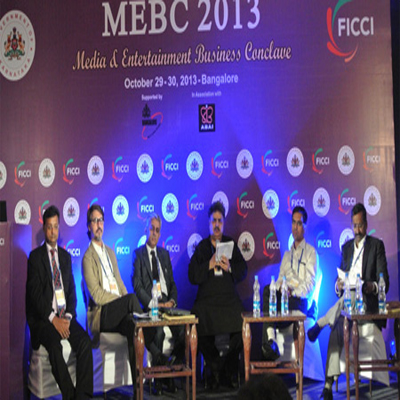
    While the digital world is changing phenomenally, we wonder how the broadcasting industry is adapting to the change. This, and various other points were discussed in a session on “the broadcasting ecosystem in the digital era” which included BECIL chairman K Subramanian, IBM global services head (media and entertainment) and ED Raman Kalra, Deloitte Coimbatore partner-audit C R Rajagopal, Amagi Media Labs co founder Srinivasan K A and Whats on India COO Sugato Banerjee formed the panelists, while MXM India CEO and editor in chief Pradyuman Maheshwari moderated the session.


    The session kick started with Subramaniam highlighting the humongous task that was undertaken in DAS (Digital Addressable System) phase I to install about 75 lakh STBs and led to nearly 95 per cent digitisation in 38 cities. Five out of 38 are in South India, according to the report. He added that in all this DTH had taken a backseat except for Chennai where the DTH penetration is about 40 per cent and digitisation is lagging due to political turmoil.


    Banerjee also supported it by saying that phase I and II saw DTH take a step back and digital penetrate strongly in Mumbai, Delhi and Kolkata.


    Banerjee also highlighted certain issues that popped up during the process of digitisation. “In a city like Mumbai where people live in buildings, having a cable run through the building is easy. With DTH, the dish needs to be facing the satellite. In places where houses are far away from each other, cost of running the cable from home to home is higher and more efforts are needed. If some of these places don’t even get electricity for hours why would they want to pay for STBs?” he remarked.


    There was a time when there was a scarcity of channels but now they are in abundance. According to Banerjee, there are about 700 working channels in the country but it is unrealistic to have so many channels in the digital arena. The rising number of channels has led to narrowing down of viewership. “Five years ago there was no food channel in the country and now there are five. The long tail will give more choice to viewers and fringe channels have benefitted due to digitisation especially in the urban cities,” said Banerjee.


    At the same time, the growing number of channels will put pressure on its visibility. “Now, the issue would be to bring one’s channel to viewers notice,” said Srinivasan.
    Viewership will be segmented leading to an increase in the number of niche channels.  “Broadcast is a term that doesn’t seem to suit the current scenario. Now it is time to ‘narrow-cast’,” said Srinivasan.


    According to Kalra, their IBM global survey on consumer insight has shown that people don’t want to be categorised in demographics. “Consumers want content tailor-made for them. The biggest challenge in the future will be to get direct content for people and then make them spend for it,” he said.


    At the inaugural session of the event, Film Federation of India president Ravi Kottarakara raised the issue of service tax being a big hindrance on the industry. The same was also brought up by Rajagopal at the session. “Not having enough capital is a challenge for the industry to create things. Taxation needs to be looked into as well as interesting financial modules need to open up,” he said.


    At the same time, there is also the issue of paying for individual channels in future as consumers are used to paying a small amount for a big pack of channels. But Kalra pointed out that a person who could pay Rs 300 for a movie now, as compared to Rs 25 a few years ago, will definitely have the capacity to pay more for TV.


    However, Banerjee chose to disagree and said, “There is a difference between making them pay and the willingness to pay.”


    Although carriage fees will disappear in the digitised world, Banerjee said it will reappear in another form of placement fees as to which channel will appear first. According to industry sources, carriage fees range from Rs 3-5 lakhs. The industry also lacks advertising funding as compared to print. “Print has about 2 lakh advertisers but TV has just 12,000,” said Subramaniam.


    TV consumption on multiple screens is also set to grow. As on March 2013, 143 million users in India were mobile internet users (according to the FICCI Deloitte report). Its analysis report also showed that video consumption had increased from two hours to three hours from 2010 to 2012. “There will be monetisation of content as more connected devices emerge. Only then we will know which genre is being seen and its statistics,” said Subramaniam.

  • News should be a paid asset

    News should be a paid asset

    BENGALURU: Whether it’s the political battle that’s unraveling in the country, or it’s a terrorist attack, news always interests people. But is news as interesting as a gossip piece about a celebrity? This and a lot of other points were raised at the first day of the FICCI MEBC (Media and Entertainment Business Conclave) that saw a session that discussed the news genre. The discussion brought up several points including viewership data, content that is being broadcast and the current situation of the genre as a whole.


    The panellists included BBC World News India COO Preet Dhupar, Udayvani group editor Ravi Hegde, Suvarna News editor Anantha Chinivar, Former CNN IBN journalist Veeraraghav, columnist Aakar Patel, NDTV resident editor Maya Sharma and IIM Bangalore dean Dr S Raghunath. The session was moderated by journalist Prakash Belawadi.


    After the entire discussion, the panelists concluded that the genre relies heavily on advertising, thus restricting the kind of content that can be produced. At the same time, viewership data such as TAM (Television Audience Measurement) is needed because advertisers depend on such data to pool their money where they want to. “Producing news is expensive and that is why all channels have panel discussions in their primetime slot. It is cheaper than sending an OB van to some far off place and spend huge amount,” said Sharma.


    Another point brought up during the discussion was about “sensationalising news”. The reason why many times news is sensationalised is because entertainment is more prominent than news. So, news journalists need to adapt to the entertainment form of style in order to grab eyeballs. But at the same time just getting viewers will not help because everyone is also looking for credibility of news, including the people watching it and the ones dispersing the news. Channels keep a close watch on other channels to know what they are reporting.


    However, Hegde differed as he remarked that “media was not entertainment but a serious job”. Hegde, who comes from a print background, said that it’s a newspaper’s job to clear the confusion that channels have created the previous night for the viewers.


    Talking about the revenue generated through advertising, Hegde said that most of the advertisements to newspapers come for the editions in the metros, making it difficult to distribute papers in the rural areas.


    To this, Chinivar pointed that in order to beat entertainment news, the need to sensationalise news comes up.


    Columnist Patel thinks that the standard of journalism in India is poor because of lack of good training and low salaries.


    Veeraghav brought to fore the speculative nature of the Indian viewers that the channels have to continuously face. He remarked how many people question news channels’ nature to delve into the future, but they always want to know the future not what has happened. “If I tell a viewer that elections are going to happen, the first thing he will ask me is can you tell me who is going to win?” he said.


    Although many channels have taken a strong stand against the TAM accusing it of fudging data to benefit advertisers, all the panellists agreed that there needs to be some kind of tracking to know the viewership for channels and newspapers because it is ultimately a business.


    The fact that news is free is what makes it so volatile. “When you have to pay for your news, it will be taken seriously and that’s when the kind of news you get will also become better,” said Sharma. With digitisation coming in, they hope that some system will come in to place to help them get more revenues. News will become a paid asset in the future. “As long as news is free you cannot live without TAM or IRS,” Veerraghav ended.

  • New media to lead growth for south Indian media and entertainment industry

    New media to lead growth for south Indian media and entertainment industry

    BENGALURU: The Digital March-Media and Entertainment in South India, a Deloitte-FICCI report was released on the eve of FICCI-MEBC 2013 in Bengaluru. The two day event commences on 29 October.


    Note: This is for the year ended 31 March 2013.


     The report says that the South Indian Media and Entertainment (SIM&E) industry is slated to grow from its current estimated size for FY-2013 of Rs 23,900 crore to Rs 43,600 crore in FY-2013 at an CAGR of 16 per cent.


    The internet continues to have a profound effect on consumers’ viewing habits and the proliferation of devices is altering their media consumption behavior. With the increasing popularity of mobile broadband (3G) and the impending launch of 4G LTE services, mobile phones are expected to emerge as the preferred platform for consuming content. India already has over 65 million smartphone users currently.


    In south India, new media, with an estimated size of Rs 690 crore in FY-2013 will grow at 23 per cent CAGR to reach Rs 1600 crore in size by FY-2017, followed by television which will grow at a CAGR of 20 per cent from a present estimated size of Rs 13,470 crore to Rs 27,960 crore.


     The television industry in south India is on a transformation path, driven by the government’s digitisation mandate, says the report. It is one of the most flourishing regional media segment in terms of availability of content, reach and distribution. Over the years, it has seen increased action from regional as well as national advertisers. In fact, regional advertisers now contribute almost 40 per cent of the TV industry’s advertisement revenues in states such as Tamil Nadu and Kerala.


     Radio will grow at a CAGR of 19 per cent from an estimated present size of Rs 420 crore to Rs 830 crore by FY-2017. The radio industry enjoys greater acceptance in the south than in the rest of the country and thus stands out amongst its peers. This is indicated by relatively higher average radio listenership in cities like Bengaluru where people spend about 20 hours / week on radio while those in Delhi and Mumbai spend 13-14 hours / week says the report.


    Films with a present estimated size of Rs 2,680 crore will grow at a CAGR of 12 per cent to reach Rs 4,220 crore by FY- 2017.  The report says that the south Indian film industry with 831 films, accounted for over 50 per cent of total films certified across India. The number of films certified increased by 36 per cent over 2011, primarily driven by a spike in cable  and satellite (C&S) rights’ prices. However, the number of films released increased by only eight per cent during the same period as some producers chose not to release their films due to the high marketing costs associated, and as a result of a correction in the C&S rights’ prices in some of the markets.


     Print, a laggard relatively, will grow at eight per cent from the present Rs 6,880 crore to Rs 9,020 crore by FY-2017. South India, driven by a high literacy rate and a sizable vernacular readership base (30 per cent of total readership in India) is one of the strongholds of the Indian print industry. Amongst the four regional states, Tamil Nadu and Andhra Pradesh account for about 58 per cent of the total revenue. Most of the markets in the region are dominated by English print in terms of revenue except Kerala, where vernacular prints accounts for nearly 90 per cent of the revenue. However, the advertising revenue from vernacular print in the region is estimated to grow at twice the pace of that of English, largely driven by local advertisers and increasing focus of national advertiser’s beyond tier I cities.


    Among the four southern states or southern sisters as they are known, Tamil Nadu with a FY-2013 SIM&E estimated size of Rs 8,420 crore will grow at a CAGR of 17 per cent to reach Rs15,850 crore by FY-2017. SIM&E in Andhra Pradesh with a FY-2013 estimated size of Rs 7,140 crore will reach an estimated size of Rs 12,740 crore by FY-2017 at a CAGR of 16 per cent.


    SIM&E in Karnataka with an estimated FY-2013 size of Rs 4,340 crore will grow at a CAGR of 15 per cent to reach Rs 7,710 crore by FY-2017. The smallest in terms of size of SIM&E, Kerala with a FY-2013 estimated size of Rs 3,350 crore will grow to Rs 5,7,30 crore by FY-2017 at a CAGR of 14 per cent.

  • India Sports 2014 to promote sports among youngsters

    India Sports 2014 to promote sports among youngsters

    NEW DELHI: The Youth Affairs & Sports Ministry and the Federation of Indian Chambers of Commerce & Industry today launched the ‘India Sports 2014’ at the 5th Global Sports Summit in the presence Ministry Joint Secretary Dr. G S G Ayyangar.


    India Sports 2014’ would be organised at the iconic National Stadium and Federation House, FICCI. The event would be an umbrella programme, focusing on all aspects of sports and would bring the entire sports fraternity on one platform.


    The first edition would not only serve as a platform for the Indian sports industry to showcase their strength to the Indian and international sports fraternity but would also act as a catalyst in promoting sports among the youth.


    The event would include India Sports Expo 2014, an international exhibition on sports sector at the national stadium; TURF 2014, an international conference on sports sector; reverse buyer-seller meet by sports goods export promotion council; networking dinner and concurrent sports activities and tournaments.


    At the sports summit, Ayyangar spoke about the details of the ‘Scheme for Identifying and Nurturing Sports Talent in the Country’. Under the scheme, which has been taken up on a pilot basis, talents will be scouted and selected from the present Rajeev Gandhi Krida Abhiyan annual competitions; these sportspersons will be called Young Talent (YT) and they will be specially trained by Physical Education Teachers at every District Level Sports Center.


    A District Sports School (DLSS) will be set up in every district in the country in the next ten years. These schools will be set up as public private partnership except in remote and disturbed areas. In such districts, the existing Navodaya Schools are proposed to be upgraded and where it is not possible, new institutions will be set up.


    He said that the Ministry will supervise the training in sports and provide sports scholarships and the recurring expenses. The young talent (YT) will be assigned specific disciplines through a scientific process of determination, through a rigorous training programme and participation YT will be identified for center of excellence and YT who excel will be treated as high performers and given admission to a Centre of Excellence (COX).


    There will be approximately 25 centres for excellence. Twelve existing SAI centres will be upgraded. Thirteen new centres will be developed and funded by SAI. However, land for such centres will be provided by the State Government free of cost. These centers will be run by SAI.


    On the occasion, two reports, ‘Best 25 Ideas’ Sports Start up’s Business in India and ‘Vision 2014: Sector Skills Council, Way Forward’ were released.


    A Memorandum of Understanding (MoU) was also signed and exchanged between FICCI and the Southern Institute of Technology (SIT) in New Zealand to launch the Level 3 course in India under the SIT-John Wright Scholarship programme, which is recognised by NZQA to help athletes not only to harness their existing capability but also to provide an opportunity in getting higher qualification courses and good opportunity in New Zealand.


    FICCI will help SIT in connecting with premiere institutes as a partner for launching this pilot course. This course will be 100% sponsored by the John Wright – SIT Scholarship programme.  The John Wright – SIT Scholarship programme is founded by John Wright, Former New Zealand Cricketer and India Cricket Team Coach (2000-05).


    At the successful completion of this programme, students will have the required competencies to function successfully and effectively at operational levels within the sports training sector. A graduating student could be expected to undertake employment in areas such as coaching/retail sectors, or continue on to further study in Diploma in Spord Recreat antion, Diploma in Sport and Exercise (Level 5), Diploma in Sport and Exercise (Level 6) or Bachelor of Sport and Exercise in New Zealand.


    New Zealand High Commissioner Jan Henderson said the certificate obtained under the John Wright – SIT Scholarship programme will help students gain skills and knowledge for working or for further training in the sports training sector. The content gives athletes and coaches the knowledge to allow themselves and others to achieve their potential. The programme has a strong focus on sport psychology, nutrition and exercise prescription and finding out how the body becomes stronger, fitter and faster when stressed by exercise.


    New Zealand is passionate about sports and was happy to partner with India in the field of sports. Sports was a key pillar for strengthening bilateral relations between the two countries. She added that early next year, New Zealand will host the Indian Cricket Team and will co-host the Cricket World Cup in 2015, she said.


    FICCI President Naina Lal Kidwai represented to the Ministry the need to grant industry status to sports, and said that a committee under the chairmanship of Director General, Sports Authority of India (SAI) and FICCI prepared a report on ‘Granting infrastructure Status to Sports Sector’.


    She said, “It is a proud moment for FICCI to note that under new Companies Act 2013, sports infrastructure is part of ‘infrastructure facilities’ and ‘infrastructure projects’. Besides, there is a specific mention of sports related businesses to be registered as a type of ‘limited company’. FICCI is also closely coordinating with National Skills Development Corporation for setting up Sector Skills Council in Sports, Physical Education, Fitness and Leisure sector. According to our latest study, this sector will require more than 43 lakhs support personnel in various roles in sports by 2022.”


    FICCI Sports Committee Chairman and Managing Director, Tata Metaliks, Sanjiv Paul said that the sports sector is marching ahead as one of the fastest growing sector of the economy. The size of the sports industry is increasing, employment avenues are opening and money is coming in from all quarters. The exchange of ideas TURF 2013 should lead to the flourishing of sports business in India.


    He said that this year an SME-Academia-Investors Forum in Sports (SAI-FIS) is planned during TURF 2013 a collaborative effort amongst between FICCI, Indian Venture Capitalists Association (IVCA) and All India Council of Physical Education (AICPE). The objective is to stimulate SME-Academia-Investor partnership as it is critical for growth of sports sector in general and the stakeholders in particular.


     FICCI Sports Committee co-chairman Abhijit Sarkar and head-corporate communications, Sahara India Pariwar, said that the start-ups have added significant value in creating a sports culture across the country. They are the next generation of big corporations, who are supporting the growth of the sports industry in their own unique way. They are not only creating a brilliant ecosystem for budding talent to hone their talent and showcase their skills but are also creating employment opportunities for many others who want to develop career in sports.


    FICCI, director general, Arbind Prasad said, “FICCI welcomes The Prevention of Sporting Fraud Bill, 2013 to combat frauds in relation to domestic national and international sporting event developed after extensive consultation between Sports and Law Ministry. To aid the Ministry’s efforts in this direction, FICCI had organised a conference on ‘Regulating Sports Betting and Sports Law’. In this conference, experts suggested that the government should set up an Independent Regulatory Commission to study the various aspects of betting in-depth and come out with solutions to eliminate bookies and make sports betting fair.”

  • Should sports betting be made legal?

    Should sports betting be made legal?

    NEW DELHI: This year’s Indian Premier League proved to be an expose of the kind of rot that has set into what was once touted as the gentleman’s game. With the who’s who of cricket and entertainment dragged into the murky world of betting and spot-fixing, not to mention two cricketers banned for life, the focus has shifted to the possibility of legalising and regulating sports betting.

    At the two-day ‘Conference on Regulating Sports Betting and Sports Law’ organised by FICCI recently, experts from different walks of life, through a consensus resolution, called for stringent laws to curb fraud and doping in sports.

    Inaugurating the meet, former Punjab and Haryana Chief Justice and Chairman of the Supreme Court Probe Panel into the IPL 2013 Betting and Spot Fixing Scandal, Mukul Mudgal, said the time had come to stop debating whether there was a need to regulate sports betting or not. Justice Mudgal said that besides doping, one of the biggest threats to the integrity of sports was sporting fraud, which includes match fixing, spot fixing, tanking and point shaving among others.

    His reasons for favouring regulation included: the government would earn substantial revenue from taxing sports betting, the unauthorised manner in which betting was currently taking place was a threat to the integrity of sports and sportspersons, some grass root sports programs could very well use the money generated, unauthorised betting was a source of revenue for hardened criminals, and law-abiding citizens were getting unnecessarily exposed to such anti-social elements.

    Justice Mudgal opined that the rate at which winnings from betting were to be taxed could be decided by the government and that 20 per cent would not be high, considering that in some jurisdictions like Austria and UK, the taxation rate is up to 28 per cent and 25 per cent, respectively.

    olicitor General of India N Viswanathan added: “There are pros and cons involved in legalising and regulating betting but before that, the Government should set up an Independent Regulatory Commission to study the various aspects in depth and come out with a solution, keeping in mind the elimination of book makers.”

    Alex Ward, Vice President Commonwealth Lawyers Association said: “The concern in Australia about the results of gambling and betting isn’t as much as the concern about corruption, doping and match fixing. India should legalise and regulate rather than prevent betting. By regulating like in Australia, the central and state government can get more revenue for development of sports. In India, there are some social and ethical problems unlike in Australia.”

    Carl Rohsler, Partner in Squire Sanders (UK), LLP, and International Gambling Laws Expert said that India had a choice about whether to regulate certain forms of gambling or not. “One thing that I would like to see is a survey of gambling in India – to try to gain some understanding of the numbers involved. I would also recommend the creation of some kind of committee to formally address issues related to gambling – in order to be a repository of information and knowledge not only about gambling in India but gambling all around the world. FICCI has done a great deal to start the debate – but it cannot be expected to shoulder the whole burden. The time has come for more formal support. I stress that this is not support of gambling, but support of finding out about gambling,” he said. Among the reasons he gave for regulating gambling: the first was to protect society from harm; second to facilitate movement of money from the illegitimate to legitimate sector; third, the government was responsible for operating gambling in an honest, appropriate and transparent manner; fourth, match fixers and money launderers would find it difficult to operate in a regulated market; and finally, illegitimate operators would be kept out of such a market.

    Dr A Didar Singh, Secretary General, FICCI, pointed out that with an estimated $600 million betting market in India and a possible 20 per cent tax rate on profit from betting, it would rake in revenue to the tune of $ 120-190 million for the exchequer. He said the moot question of course was whether sports betting could be regulated in India like in other countries in order to aid sports development. Singh gave the example of lottery as a regulated business in India. “While there are no authentic figures about all the states in India because of the different methods adopted for accounting of lottery receipts, it is reliably learnt that a state like Kerala is getting net revenue of Rs 682 crores (FY 2012-13) through the medium of lotteries. It has been estimated that the potential revenue for all the states from lotteries would not be less than Rs10000 to Rs12000 crore a year,” he said.

    Meanwhile, Solicitor General of India Mohan Parasaran, in his key note speech during the session on ‘Threat to Integrity of Sports: Match Fixing and Doping’ said there had been extensive discussions between the ministries of sports, and law and youth affairs, regarding drafting modern laws on sports betting with a proposal to bring in stand-alone legislation on the subject. He said ‘The Prevention of Sporting Fraud Bill 2013’ was a step in that direction and had been drafted only after studying the laws of different countries including Denmark, Finland and Germany among others.

    Senior criminal advocate K T S Tulsi, in his key note address during the session on International efforts to curb sporting fraud:  Information gathering, Regulatory structure, Criminal Law and Courts said: “After the Indian Premier League fiasco, there is a big hue and cry regarding the amendments in sports law and inclusion of issues such as criminalization of sports, invoking criminal law for match fixing and betting, and strengthening of anti-doping laws but, in an effort to clean up sports, sportsmen should not be made scapegoats. Criminal law should be invoked only where a guilty intent is proved and players should not be liable of match fixing and doping on mere presumption. There should be strong evidence to prove a player’s involvement as once an allegation is made in the media, it has a tendency to stick even in the absence of any proof and the player becomes victim to a media trial even before being declared guilty by the courts. At the same time, legalizing betting would be a step in the right direction as this will ensure transparency and lead to removal of corruption from sports, which is the need of the hour.”

    Former Attorney General of India Soli Sorabjee said during the same session: “Betting is a natural human instinct, which is inherent to human beings – it should not be denied and time demands that it should be discussed seriously to come out with the solutions to match fixing.”

    Expectedly, former Sri Lankan Cricket Team Captain Arjuna Ranatunga, spoke on behalf of players: “There is a need for creating awareness and sensitising players on the consequences of doping and other sports frauds,” he said.  

    According to him, match fixers often do not catch top players but look out for smaller fish in top teams. On the subject of doping, he said that players coming from rural areas are not aware about the ill effects of doping and are innocent. So they need to be sensitised about various drugs and their consequences.

  • ICANN & CDAC to establish Center of Excellence to thwart cyber attacks

    ICANN & CDAC to establish Center of Excellence to thwart cyber attacks

    NEW DELHI: Coordination plans for the creation of a Center of Excellence in Domain Name System Security in India are to be put together by the Internet Corporation for Assigned Names and Numbers (ICANN) in partnership with the Center for Development of Advanced Computing (CDAC).


    The Center of Excellence is expected to work alongside ICANN security staff to design research projects intended to solve critical Domain Name System (DNS) security issues, such as thwarting cyber attacks. The center is also envisioned to be home to a state-of-the-art research laboratory to evaluate and test security solutions.


    In the presence of Communications and Information Technology Minister Kapil Sibal, ICANN president and CEO Fadi Chehadé and CDAC DG Dr. Rajat Moona today signed a letter of intent regarding the building of the center during a signing ceremony at the ‘Internet, Mobile & Digital Economy Conference’ (IMDEC) organised by FICCI in association with the Ministry. The theme of the conference was ‘Internet to Equinet: Empowering A Billion Online’.


    Sibal said India is fully committed to freedom of expression to work towards creating equality of opportunity, and there is a need to create systems for encouraging free flow of information, moving away from the traditional idea that knowledge is a personal asset.


    He said that the way forward is to take the consensual approach where all the stakeholders including the government will have an equal say while deciding the institutional framework. Creating an inter-governmental group is not a solution because governments will have their differences. Besides, the industry forms the crux of cyber space and without them feasible policy cannot be conceived.


    Sibal said the spread of internet and technology is creating awareness among people; they now know of the public services that are available to them, and this was leading to the development of a transparent society.


    Speaking about the relevance of the centre, Chehadé, said, “This center will play a central role in ensuring the security and stability of the Domain Name System. The Internet has become one of the world’s most valued resources and it is deserves nothing less than full global cooperation and collaboration in developing concrete solutions to combat threats to the DNS.”


    Nehchal Sandhu, Deputy National Security Advisor to the Government, said equal, unrestricted, affordable and sustainable access to ICT are needed to give equal opportunity to the people of India. Equal opportunity means democratic, transparent, collaborative and participatory way of knowledge sharing.


    M F Farooqui, Secretary in the Department of Telecommunications, said internet and telephony are interconnected and people at the bottom of the pyramid can be empowered by granting them access to these tools. The National Optical Fibre Network tends to provide connectivity to 600 million people by 2020, which would open new choices for people.


    J Satyanarayana, Secretary, Department of Electronics & IT, Ministry of Communications & IT, Government of India, said, “We are always in doubt when accessing the internet whether whatever is being shared is visible to someone else far off. We need to dispel this fear, which is associated to the internet.”


    He said, “Last week, the Union Cabinet approved the National Policy on Universal Electronic Accessibility that recognizes the need to eliminate discrimination on the basis of disabilities as well as to facilitate equal access to electronics and Information and Communication Technologies (ICTs). It is a step towards shifting emphasis from internet to equinet.” He added that the policy will facilitate equal and unhindered access to electronics and ICT products and services by differently-abled persons (both physically and mentally challenged) and to facilitate local language support.

  • NEW DELHI: This year’s Indian Premier League proved to be an expose of the kind of rot that has set into what was once touted as the gentleman’s game. With the who’s who of cricket and entertainment dragged into the murky world of betting and spot-fixing,

    NEW DELHI: This year’s Indian Premier League proved to be an expose of the kind of rot that has set into what was once touted as the gentleman’s game. With the who’s who of cricket and entertainment dragged into the murky world of betting and spot-fixing,

    NEW DELHI: This year’s Indian Premier League proved to be an expose of the kind of rot that has set into what was once touted as the gentleman’s game. With the who’s who of cricket and entertainment dragged into the murky world of betting and spot-fixing, not to mention two cricketers banned for life, the focus has shifted to the possibility of legalising and regulating sports betting.


    At the two-day ‘Conference on Regulating Sports Betting and Sports Law’ organised by FICCI recently, experts from different walks of life, through a consensus resolution, called for stringent laws to curb fraud and doping in sports.


    Inaugurating the meet, former Punjab and Haryana Chief Justice and Chairman of the Supreme Court Probe Panel into the IPL 2013 Betting and Spot Fixing Scandal, Mukul Mudgal, said the time had come to stop debating whether there was a need to regulate sports betting or not. Justice Mudgal said that besides doping, one of the biggest threats to the integrity of sports was sporting fraud, which includes match fixing, spot fixing, tanking and point shaving among others.


    His reasons for favouring regulation included: the government would earn substantial revenue from taxing sports betting, the unauthorised manner in which betting was currently taking place was a threat to the integrity of sports and sportspersons, some grass root sports programs could very well use the money generated, unauthorised betting was a source of revenue for hardened criminals, and law-abiding citizens were getting unnecessarily exposed to such anti-social elements.


    Justice Mudgal opined that the rate at which winnings from betting were to be taxed could be decided by the government and that 20 per cent would not be high, considering that in some jurisdictions like Austria and UK, the taxation rate is up to 28 per cent and 25 per cent, respectively.


    olicitor General of India N Viswanathan added: “There are pros and cons involved in legalising and regulating betting but before that, the Government should set up an Independent Regulatory Commission to study the various aspects in depth and come out with a solution, keeping in mind the elimination of book makers.”


    Alex Ward, Vice President Commonwealth Lawyers Association said: “The concern in Australia about the results of gambling and betting isn’t as much as the concern about corruption, doping and match fixing. India should legalise and regulate rather than prevent betting. By regulating like in Australia, the central and state government can get more revenue for development of sports. In India, there are some social and ethical problems unlike in Australia.”


    Carl Rohsler, Partner in Squire Sanders (UK), LLP, and International Gambling Laws Expert said that India had a choice about whether to regulate certain forms of gambling or not. “One thing that I would like to see is a survey of gambling in India – to try to gain some understanding of the numbers involved. I would also recommend the creation of some kind of committee to formally address issues related to gambling – in order to be a repository of information and knowledge not only about gambling in India but gambling all around the world. FICCI has done a great deal to start the debate – but it cannot be expected to shoulder the whole burden. The time has come for more formal support. I stress that this is not support of gambling, but support of finding out about gambling,” he said. Among the reasons he gave for regulating gambling: the first was to protect society from harm; second to facilitate movement of money from the illegitimate to legitimate sector; third, the government was responsible for operating gambling in an honest, appropriate and transparent manner; fourth, match fixers and money launderers would find it difficult to operate in a regulated market; and finally, illegitimate operators would be kept out of such a market.


    Dr A Didar Singh, Secretary General, FICCI, pointed out that with an estimated $600 million betting market in India and a possible 20 per cent tax rate on profit from betting, it would rake in revenue to the tune of $ 120-190 million for the exchequer. He said the moot question of course was whether sports betting could be regulated in India like in other countries in order to aid sports development. Singh gave the example of lottery as a regulated business in India. “While there are no authentic figures about all the states in India because of the different methods adopted for accounting of lottery receipts, it is reliably learnt that a state like Kerala is getting net revenue of Rs 682 crores (FY 2012-13) through the medium of lotteries. It has been estimated that the potential revenue for all the states from lotteries would not be less than Rs10000 to Rs12000 crore a year,” he said.


    Meanwhile, Solicitor General of India Mohan Parasaran, in his key note speech during the session on ‘Threat to Integrity of Sports: Match Fixing and Doping’ said there had been extensive discussions between the ministries of sports, and law and youth affairs, regarding drafting modern laws on sports betting with a proposal to bring in stand-alone legislation on the subject. He said ‘The Prevention of Sporting Fraud Bill 2013’ was a step in that direction and had been drafted only after studying the laws of different countries including Denmark, Finland and Germany among others.


    Senior criminal advocate K T S Tulsi, in his key note address during the session on International efforts to curb sporting fraud:  Information gathering, Regulatory structure, Criminal Law and Courts said: “After the Indian Premier League fiasco, there is a big hue and cry regarding the amendments in sports law and inclusion of issues such as criminalization of sports, invoking criminal law for match fixing and betting, and strengthening of anti-doping laws but, in an effort to clean up sports, sportsmen should not be made scapegoats. Criminal law should be invoked only where a guilty intent is proved and players should not be liable of match fixing and doping on mere presumption. There should be strong evidence to prove a player’s involvement as once an allegation is made in the media, it has a tendency to stick even in the absence of any proof and the player becomes victim to a media trial even before being declared guilty by the courts. At the same time, legalizing betting would be a step in the right direction as this will ensure transparency and lead to removal of corruption from sports, which is the need of the hour.”


    Former Attorney General of India Soli Sorabjee said during the same session: “Betting is a natural human instinct, which is inherent to human beings – it should not be denied and time demands that it should be discussed seriously to come out with the solutions to match fixing.”


    Expectedly, former Sri Lankan Cricket Team Captain Arjuna Ranatunga, spoke on behalf of players: “There is a need for creating awareness and sensitising players on the consequences of doping and other sports frauds,” he said.  


    According to him, match fixers often do not catch top players but look out for smaller fish in top teams. On the subject of doping, he said that players coming from rural areas are not aware about the ill effects of doping and are innocent. So they need to be sensitised about various drugs and their consequences.