Tag: Ficci

  • Private sector should partner with the government to encourage sports

    Private sector should partner with the government to encourage sports

    NEW DELHI: Sports secretary Ajit M Sharan of the Youth Affairs and Sports Ministry has urged the private sector to participate and partner with the government and the apex chamber to promote sports in the country.

     
    The stakeholders need to actively engage at all levels to improve India’s ranking as a sporting nation.

     
    He said the government is launching a National Talent Search Scheme to scout for sports talent in various schools and institutions across the country. The National Institute of Sports Sciences and Medicine (NISSM), is already in place to support high performance of sports persons and integrate sciences and medicine into the training of elite sports persons and the curriculum of sport coaching in the country.

                                          
    Sharan was inaugurating ‘India Sports 2014’at Major Dhyan Chand National Stadium. He released a knowledge paper ‘Business of Sports – Aiming Higher….. Reaching Further!’ The paper looks at the sports industry and makes predictions for the upcoming decade. The paper provides information about the state of play and trends in the market for sports business in India.

     
    The three-day sports event on the theme ‘Making India as a Sporting Nation’ is organised by FICCI in association with Sports Authority of India. This focus is on strategic dialogues to bring together senior decision makers and renowned Indian and international sports industry players to deliberate on profitable promotion and grassroots development of sports in the country.

     
    Sharan also said that the setting up of Sector Skills Council in Sports is a big step towards making India a sporting nation in future. The council will devise ways to reduce skills gap and shortage improve productivity, hone the skills of the sector work force and improve learning.

     
    He said sports in India has witnessed stagnation in the last few decades. The challenges in the sector are numerous but some of which call for immediate attention such as development of a structured system at the grass root level to engage young boys and girls in the age group of 8-10 years in various sports; identifying and nurturing young talent based on their performance, talent and calibre; providing professional training, sporting equipment and wholesome nourishment to the identified sports persons; organizing regular competitions of international standard at the domestic level to measure the performance of local sports persons; setting up sports science and sports medicine centres to support the sports fraternity and providing alternative viable vocational career options to players to ensure their livelihood.

     
    FICCI Sports Committee chairman and Tata Metaliks MD Sanjiv Paul said with the support of MYAS, FICCI has finally received the approval for setting up Sector Skills Council in Sports, Physical Education, Fitness and Leisure sector. According to a latest study, this sector will require more than 4.3 million support personnel in various roles in sports in the coming 10 years.

     
    Paul thanked the Ministry for guiding FICCI on the issue of ‘demand of Industry Status to Sports Sector’. After FICCI’s representation on industry status to sports, there was a committee setup under the chairmanship of Director General, Sports Authority of India, where FICCI prepared a report on ‘granting infrastructure status to Sports Sector’.

     
    Deloitte LLP UK sports business group consultant Richard battle,said that there were numerous ways to promote sports. One of the most commercially successful models in India has been the Indian Premier League in cricket, which has phenomenally thrived. India now faces the challenge of replicating this model for other sports.

     
    Sahara India Pariwa publich affairs and communication VP Abhijit Sarka said that India has the talent to be amongst the top sporting countries in the world. It is also recognized that a lot more needs to be done, especially in the development of sports at the grassroots level where states have an important role to play if India has to reap the advantage of the positive momentum and claim its rightful place amongst the top sporting countries. The private sector should come forward and participate more proactively.

     
    FICCI Sports Committee co-chairman and Coca-Cola India public affair and corporate communication head Deepak Jolly said that there was both hope and optimism to make India a sporting nation. There is a long way to go but efforts are being made and India is moving in the right direction to achieve its goal. He added that India has done well in games and sports such as chess, which are primarily mind games. Sports requiring physical strength and stamina still need to be encouraged adequately for India to perform well at the international level.
     

  • TRAI recommendation on media and ownership including cross-media issues expected next month

    TRAI recommendation on media and ownership including cross-media issues expected next month

    NEW DELHI: More than 15 months after its second consultation paper on media ownership, the Telecom Regulatory Authority of India (TRAI) is expected to come out with its recommendations on media control and ownership including the tricky issue of cross-media ownership next month.


    TRAI chairman Rahul Khullar has said that he hopes the final recommendation will be out in early August but says that at the latest it would be available before the end of the month.


    TRAI had in 2008 and in its consultation paper in February 2013 given its view on the matter in which it ruled out state and government ownership leading to a furore since states like Tamil Nadu and West Bengal have applied for state ownership of either television channels or TV signal distribution. After issuing the paper, TRAI had also organised several Open House meets with stakeholders in different parts of the country. Open Houses were in Ahmadabad, Hyderabad, Delhi, Bhubaneswar and Indore.

    It has gained urgency with Tamil Nadu once again raising the issue of Arasu licensing for Digital Access Systems.

    While bodies like the Delhi Union of Journalists have suggested dismantling of existing monopolies and cross media empires, Times Television Network wants a ban on entry of lobbyists having association with public relations or political parties, religious bodies, urban and local administrative bodies, central government ministries and departments, and central government owned companies undertakings.


    However, the Indian Newspaper Society feels TRAI should stay out of this as this will mean placing restrictions on the print media with which TRAI is not authorised to deal.

     
    Besides media companies, industry bodies including Cable Operators Association of India, CII, CASBAA, FICCI and IAMAI also participated in consultation process.


    In its paper issued in February last year, TRAI had sought comments on devising ownership rules for vertical integration between broadcasting and distribution entities.

     
    The paper was expected to devise rules/restrictions in case of mergers and acquisitions in the media sector, and media ownership rules within and across media segments.


    Methodology to measure ownership or control of an entity over a media outlet, identification of genres to be considered while framing media ownership rules and prescribing norms for mandatory disclosures by media entities are some other issues.

     
    TRAI also discussed in its paper issues relating to identification of media segments wherein media ownership rules are to be prescribed, and identification of relevant markets for evaluating various parameters to be used for devising ownership rules and the methodology for measuring these parameters.

     
    At the outset, TRAI said the paper had been issued at the request of the Information and Broadcasting Ministry earlier last year following a report of the Administrative Staff College of India, in Hyderabad.


    TRAI said that it was felt that reasonable restrictions may need to be put in place on ownership in the media sector, to ensure media pluralism and to counter the ills of monopolies. It pointed out that such restrictions do exist in many international markets.


    In the Open Houses, a majority of the participants in the fifth Open House on Media Ownership in Indore today alleged that the media in the country was in the hands of just a handful of large corporate houses.

  • FICCI welcomes MIB’s assurance of stable policy regime

    FICCI welcomes MIB’s assurance of stable policy regime

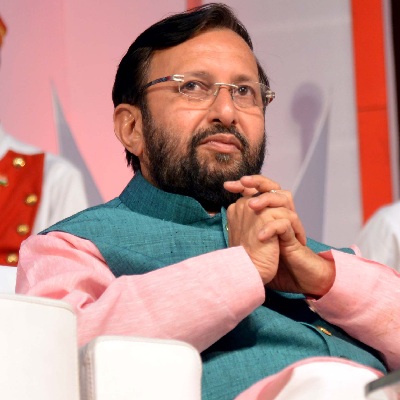
    NEW DELHI: The Federation of Indian Chambers of Commerce and Industry (FICCI) has applauded the statement of Information and Broadcasting Minister Prakash Javadekar that the new government would follow a stable policy regime and time-bound speedy mechanism with transparency.

    FICCI also expressed satisfaction on the assurance of the Minister that providing information, entertainment and knowledge to the citizens would be the priority of his Ministry.


    “Opening 1000 community radio stations is a good move. This will help in spreading knowledge and information among the common citizens of the country and also will help in generating employment,” FICCI said.

    FICCI had earlier met the Minister and shared with him FICCI’s ‘Policy Roadmap for the Media and Entertainment Sector in India,’ comprising key recommendations for the television, film, print, radio, AVGC and live events sectors.


    FICCI expressed confidence that the implementation of these recommendations will provide the much-needed boost to the media and entertainment sector, which has tremendous potential for dynamic growth and multiplier effect on employment generation without much spending from the public exchequer. 


  • FICCI proposes a road map for M&E to Prakash Javadekar

    FICCI proposes a road map for M&E to Prakash Javadekar

    NEW DELHI: The Federation of Indian Chambers of Commerce and Industry (FICCI) has called for constitution of a task force for improving screen density in India. This is also to ensure that entertainment tax is fully subsumed in the GST without creating a window for its levy at the local level.


    In a road map presented to Information and Broadcasting Minister Prakash Javadekar, FICCI expressed confidence that this would provide the much-needed boost to the Media and Entertainment (M&E) sector.


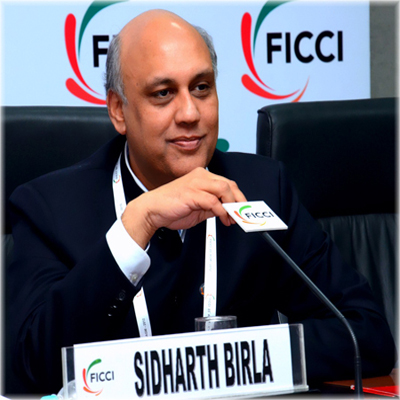
    A delegation led by FICCI president Sidharth Birla stated that the M&E sector had tremendous potential for dynamic growth and multiplier effect on employment generation without much spending from the public exchequer.


    The ‘Policy Roadmap for the Media and Entertainment Sector in India’ comprises key recommendations for the television, film, print, radio, Animation, Visual Effects, Gaming & Comics (AVGC) and live events sectors.


    In a move that will cause a lot of consternation among working journalists, the industry body has called for abolition of the Wage Board Act for the print sector and for  urgent announcement of fiscal relief measures for newspapers.


    The roadmap calls for early enactment of the amended Cinematograph Bill so that the rights of all stakeholders can be protected.


    In the television broadcast sector, FICCI wants relaxation in FDI limits in news broadcasting and infrastructure status to the cable sector, apart from smooth and orderly implementation of digitisation.

     
    The body urged the government to ensure that the process of auctions under FM Radio Phase III rolls out smoothly without any further delays. The auctions should be completed by September or October this year and Phase II licenses which expire from April 2015 are extended well before the end-date.


    Referring to reduction in channel separation, the government must immediately accept Telecom Regulatory Authority of India’s recommendations so that an FM revolution can be brought about. A larger number of radio stations will also mean more job creation and a much wider programming variety for the people of each city. The chamber has also called for allowing news in an unrestrained manner and increasing FDI in FM radio to 49 per cent.


    For the AVGC Sector, it has recommended creation of an investment fund, incubation and market development fund, tax relief, skills and talent development, co-production treaties and focus on kids’ channel in terrestrial broadcasting space.


    FICCI expressed its gratitude to the Minister on his announcement regarding the launch of a dedicated channel for kids and animation content on the national broadcaster Doordarshan.


    Given the vast and intensive reach of Doordarshan across the country, this initiative will – by popularising kids and animation content – create a demand for original intellectual properties in the sector provide an enormous boost to its growth. Indian kids’ and animation content has long been battling the challenge of outpacing global competitors – and a dedicated forum for distribution such as an exclusive channel from the national public broadcaster will act as a boon for the sector.


    FICCI expressed the hope that appropriate steps will be taken soon by Prasar Bharati and Doordarshan to make the vision of a kids and animation channel in the public broadcasting space a reality in the very near future.


    It has been asking for creation of a dedicated kids and animation channel from Doordarshan for several years, and has been lobbying this initiative at various levels in the Ministry, as well as with Prasar Bharati and Doordarshan. FICCI had even taken a delegation of industry stakeholders to the Prasar Bharati CEO, a couple of years earlier and made a presentation for a dedicated kids channel by Doordarshan.

    The benefits of a ‘DD Kids’ Channel’ would be manifold: not only would it be instrumental in catalysing original IP creation for animation and kids’ content in the country but also serve as a medium for the dissemination of content that is uniquely Indian in its cultural ethos.


    While Indian myths and tales continue to be of interest to children in India today, broadcast content for children and animated shows continue to be largely dominated by foreign-made IPs.


    Thus, the launch of a kids and animation channel by the national public broadcaster would ensure greater exposure for Indian-made content, which would in turn give a new lease of life to diverse value-based indigenous stories and allow for their packaging in attractive formats that appeal to today’s children.


    The initiative will serve as a reinvigoration of our country’s rich cultural heritage and help inculcate quintessentially Indian mores and ethics in the young minds of India – compensating in some measure for the lost art of storytelling in today’s nuclear-family-dominant society. 

  • Self-regulation is fine, but there is a need for govt backing: Parida

    Self-regulation is fine, but there is a need for govt backing: Parida

    NEW DELHI: Even as it acknowledges the role of self-regulation in curbing misleading advertisements, the government feels there is a role for powerful execution backed by a government authority.


    Consumer Affairs Ministry joint secretary Manoj Parida said that the Advertising Standards Council of India (ASCI) should have ex-officio members as part of its consumer complaint council meetings.


    At the outset, Parida said an advertisement is one that ‘gives casual leave to human intelligence’. Addressing a round-table on the subject of misleading advertisements organised by the Federation of Indian Chambers of Commerce and Industry (FICCI), he said the biggest problem in India was the low rate of literacy which resulted in the average consumer falling for any promises made through advertisements.


    While he acknowledged the role of the ASCI, he said it was a ‘friendly organisation’ of a few business houses. He said this was why self-regulation had not worked very well. There is a need to create an army of ‘ad monitors’.


    Even the courts have suggested setting up of an inter-ministerial committee for the purpose of checking misleading advertisements, he noted. He said the newly-formed inter-ministerial monitoring committee which is being constituted with the sole aim of monitoring misleading advertisements for protecting consumers could serve as the missing executive arm to ASCI. The committee will monitor misleading advertisement and unfair trade practices and suggest steps accordingly, he added.


    He noted that one major lacuna in the Consumer Act was that it only gave judicial remedy and therefore many consumers did not complain as court processes take much longer and there is no consumer protection agency.


    He also said there was need to put more money into creating consumer awareness.


    Elaborating on the role of ASCI and its future plans, ASCI Chairman Partha Rakshit said the council had been working since 1985. Since the Information and Broadcasting Ministry had given it recognition for hearing complaints, any direction given by it through the ministry’s IMC also applied to non-members. The ASCI worked on the three principles of honesty, decency and fairness.


    It was also incorrect to say that it only worked through friends since its Consumer Complaint Committees (CCC) had members of the civil society as well and the complaints were therefore heard by laymen. There were two CCC meets every week, each having around 14 members.


    In any case, two-thirds of the advertisements that appeared in the media were given out by ASCI members, though he admitted that this may work out to just around ten per cent of the companies in the country. He claimed that there was 85 per cent compliance with ASCI directions. He stressed that ASCI does not always wait for complaints and also takes suo motu action and some ads are suspended even before telecast.


    He said the bulk of countries around the world worked through self-regulation and India was no exception. Its 350 members included advertisers, advertising agencies, media and consultants.


    He said there was need to obtain legal authority for enforcing compliance of ASCI decisions by the print media, since the Cable TV Networks Regulation Act 1995 took care of TV.


    ASCI plans to cover print and social media (in internet) more extensively and Google and Yahoo had already come on board. It is also launching an online training programme on ASCI regulations targeted at young copywriters, agency executives and product managers in manufacturing/service companies.


    Speaking on consumer rights and remedies with regard to misleading advertisements, Germany’s GIZ consumer policy & protection Ruth Anna Buettner said that misleading and unfair practices were a global phenomenon. She added that the purpose of regulation should be proper functioning of markets and protection of individual consumer, mainly his contractual rights. Worldwide there are two ways of enforcement, one via public authority the other via courts, both accompanied by self-regulation institutions.


    Deliberating on the regulatory framework for misleading advertisements, Aazmeen Kasad and Law Practice Consultant owner Aazeen Kasad  said that to keep a vigil on the increasing incidents of misleading advertisements, the Central Consumer Protection Council (CCPC), apex body for consumer protection in India, has recently decided to draft guidelines to safeguard consumer interest from false advertisements in the country and set up a sub-committee to suggest strategies to deal with celebrity endorsements.


    FICCI FMCG Committee chairman & ITC ED Kurush Grant said all stakeholders – the NGOs and consumer forums, industry, self-regulatory body and the government – had unanimously agreed to work towards similar solution of empowering self-regulation. FICCI would work closely with ASCI and the Ministry of Consumer Affairs to tackle the menace caused by misleading advertisements.

  • Indian copyright law is one of the strongest in the world: USTR report

    Indian copyright law is one of the strongest in the world: USTR report

    NEW DELHI: Despite vehement and exhaustive submissions arraying the strength of the Indian IP regime, India continues to be on the watch list in the United States Trade Representative (USTR) 2014 Special 301 Report.


    Others in the list are China, Russia, Algeria, Argentina, Chile, Indonesia, Pakistan, Thailand and Venezuela.


    The report, however, commends India for its achievements like digitisation and upgradation of IP offices and active copyright enforcement by the Delhi High Court through injunctive relief, to name a few. In the report, the US has also recognised the role of bilateral engagements between US and India to resolve concerns relating to Intellectual Property.


    “FICCI in its response to Hearing Testimony of India before USTR had strongly asserted that India has a well-established legislative, administrative and judicial framework to safeguard IPRs which meets its obligations under TRIPS, and has withheld the test of severe international scrutiny. We are glad to note that India has not been given the Priority Country status as this could have had serious ramification on economic, political and trade sanctions”, according to FICCI secretary general Dr A Didar Singh.


    “Indian IP law is TRIPS Compliant and more. Indian copyright law is one of the strongest and best in the world. India protected computer programmes by copyright much earlier than the US. The Indian Copyright Act 2012 law is in full conformity with international treaties of WIPO. The legislative and statutory measures are supplemented by appropriate administrative measures by the Governments both at the Centre and in the States for enforcement of IPRs; this includes Inter-Ministerial Committee on Enforcement of IPR laws, Copyright Enforcement Advisory Council (CEAC), Enforcement Cells, Intellectual Property Appellate Board (IPAB) and Automated Recording and Targeting System (ARTS) portal of Central Board of Excise and Customs (CBEC).”


     The national IP strategy gives utmost importance to IPR Portfolios. Recent upgradation of the Intellectual Property Offices in accordance with the international standards has been one of the significant steps taken by the Indian government to make it more service oriented and user friendly.


    With effect from 15 October 2013, Intellectual Property Office (IPO) has also started functioning as International Search Authority (ISA) and International Preliminary Examining Authority under PCT.

  • 2-day Global Business Forum to coincide with IIFA weekend

    2-day Global Business Forum to coincide with IIFA weekend

    NEW DELHI: A ‘FICCI-IIFA Global Business Forum’ (GBF) is being organised on 24 and 25 April at Tampa Bay in Florida to coincide with the International Indian Film Academy Awards (IIFA).


    The meet is being organised by the Federation of Indian Chambers of Commerce and Industry (FICCI) in partnership with Wizcraft and international business development agencies such as Enterprise Florida, Visit Tampa Bay and the Tampa Hillsborough Economic Development Corporation.


    The meet is aimed at coinciding with the IIFA weekend from 23 to 26 April.

    FICCI vice president Harshavaradhan Neotia will be leading a 20-member CEOs delegation to the US for the GBF which covers the economic and intellectual component of IIFA. The objective of the delegation is to focus on enhancing business between the two countries and pave way for resolution of trade and investment issues that have cropped up in the recent times.

    The theme of the GBF is ‘Indo-U.S. Partnership: A Catalyst for Economic Growth’. The first day of the event will focus on Indo-US commercial relations, with panels deliberating on the challenges and opportunities in Indo-US Commerce, Resource Efficiency and India-US Collaboration in Life Sciences – Safe & Affordable Healthcare.

    The second day of the event will comprise sessions focusing on Opportunities in Tourism, Education and Skills Development, US-India Collaboration in the Services Sector, Opportunities in Sports Management, Girl Rising Project, Women Leaders – Shaping Tomorrow, Media and Entertainment. Leading business leaders from India and the US, along with eminent Indian-Americans, have been invited to participate as speakers in various sessions.

    Globally acclaimed visionaries such as Dr. R K Pachauri, who spearheads the Nobel prize winning UN Intergovernmental Panel on Climate Change; N R Narayanmurthy, co-founder and executive chairman of Infosys; Ajit Kumar, consul general of India, Atlanta and Congressman Gus Bilirakis, will be addressing the GBF this year.

    Some of the prominent women leaders such as Nisha Desai Biswal, US assistant secretary of State for South and Central Asian Affairs; actor Priyanka Chopra, Shabana Azmi, and Renu Khator, president of University of Houston, will also address the forum.

    Business leaders from global multinational corporations such as Syntel, Accenture India, Microsoft IT India, TATA Motors and L&T InfoTech, will share their perspectives on India-US economic engagement. These discussions are expected to help in taking forward the business agenda between India and the US by adding depth to the existing areas of cooperation and defining new emerging opportunities.

    According to a FICCI spokesperson, the timing of this forum is apt as the new Indian government will be looking forward to greater cooperation with the US. The US-India strategic partnership has always been a priority for both the countries and FICCI has been playing its role in enhancing the engagement between the two nations with initiatives such as the GBF.

  • DDB MudraMax elevates Rohit Samarth as head, experiential

    DDB MudraMax elevates Rohit Samarth as head, experiential

    MUMBAI: There’s some movement in the DDB MudraMax office. Rohit Samarth has now been elevated to head DDB MudraMax, Experiential. Samarth will report to DDB MudraMax president Mandeep Malhotra and will be the incharge of the agency’s experiential campaigns, nationally.


    Samarth joined the agency’s rural marketing branch, Terra, as senior vice president in April 2012.


    Alvin D’souza, Subhashish Sarkar and Amit Singh, who have been elevated to Head, Experiential, West, North and East, respectively, will be working under the guidance of Rohit.


    About his new role, Rohit said, “I have a vision and some strategic thoughts for my new role. Development of strong teams and setting new standards in the experiential business are high on the agenda. It is my sincere belief that DDB Mudra Max’s experiential division, which is already a great force to reckon with in the experiential business, will grow to be one of the most competent and respected experiential communication solutions agencies over the next two years.”


    Samarth joined DDB MudraMax from Percept Out of Home, where he was the business head of its rural vertical responsible for all its communication and marketing strategies. With more than 25 years of experience in the industry, Samarth started his career with Nestle India, and later worked with various other companies like Media Workshop India, Amar Ujala Prakashan, India Infrastructure Publishing, UCP Integrated Marketing Solutions, and Federation of Indian Chambers of Commerce and Industry (FICCI) and Linterland.


    Commenting on the new appointment, Malhotra said, “Rohit has shown passion, hunger and discipline in his current role. Will be looking forward for him making all three infectious in his extended team.”

  • Kamal Haasan roots for Bengaluru to hold FICCI MEBC in future

    Kamal Haasan roots for Bengaluru to hold FICCI MEBC in future

    BENGALURU: The fifth edition of the FICCI MEBC (Media and Entertainment Business Conclave) came to a new location this year to IT City Bengaluru. MEBC president and actor Kamal Haasan rooted for Bengaluru to be a recurring location for the conclave to be held.

    Among the people present at the inaugural function were Karnataka chief minister Siddaramaiah, Information and Broadcasting secretary Bimal Julka, Film Federation of India president Ravi Kottarakara, Karnataka Film Chamber of Commerce president H D Gangaraju, Karnataka government IT BT and S&T secretary Srivatsa Krishna and Association of Bangalore Animation Industry president and technicolor India head Biren Ghose.

    “Bengaluru is the second largest IT hub in the world after Silicon Valley and in the years to come we want to surpass even Silicon Valley to become the hub of innovation and convergence of media and entertainment,” said Krishna.

    Kamal Haasan said that Bengaluru has all the things needed to make it an IT hub as well as keep FICCI MEBC going in the city. “We will give a push to the digital medium,” he added.


    Siddaramaiah emphasised the need for building qualitative online content that will give advertisers innovative ways to reach out to people. “The industry should look at remaking old movies with good value and rich in vernacular content,” he said. He also urged the need for creating programming and growth friendly policies for industry.

    Issues that were concerning the film industry were also raised by Kottarakara such as service tax and lack of support from banks for movie funding. “Film making is put in the ‘sinful’ industry along with gambling, drinking and smoking. It is not so,” he said.

    The sessions for the two day event included ‘formulating and implementing a viable media and entertainment policy for a state’, ‘reshaping mobile entertainment in the era of digital revolution’, ‘the challenge of news: defining number one in the dizzying newscape’, ‘the broadcasting ecosystem in the digital era’, ‘customising global VFX for Indian cinema’, ‘emerging trends of Indian IP in animation and their exploitation’, ‘the emerging gaming industry in southern India’, ‘emerging technologies and the impact on media and entertainment industry’ and ‘changing trends in regional TV: ratings, content and formats’.

  • Sidharth Birla elected as FICCI president

    Sidharth Birla elected as FICCI president

    NEW DELHI: Entrepreneur Sidharth Birla is the new Federation of Indian Chambers of Commerce & Industry (FICCI) president for the year 2014.


    Birla will assume office in his new role at the conclusion of the 86th Annual General Meeting of FICCI slated to be held on 21 December in New Delhi.


    Welcoming the announcement, current FICCI president Naina Lal Kidwai said, “I have worked closely with Sid over the past two years and have no doubt that FICCI will benefit enormously from his leadership and continuing engagement at FICCI.”


    Aged 56 years, Birla holds an MBA Degree from IMEDE (now IMD), Switzerland and a Science Degree (Honors in Physics) from Calcutta University. He is also an alumnus of the Harvard Business School.


    He is a company director and entrepreneur with core business interests in manufacturing. He is chairman of Xpro India – a polymers processing company where he is also the founder, and of Digjam, manufacturer of woollen worsted suiting fabrics. He has financial sector interests and links in private buess,sin and an enduring connect with corporate laws, having chaired FICCI’s Corporate Laws Committee for an extended period. He is a government nominee on the Central Council of the Institute of Chartered Accountants of India (now in his third such term).


    Birla is a trustee on some family educational and philanthropic bodies, and a member of the Board of Governors of the Birla Institute of Technology & Science (BITS), Pilani.