Tag: Ficci

  • India’s IPR Policy to fully protect patents, GIs and copyrights: Nirmala Sitharaman

    India’s IPR Policy to fully protect patents, GIs and copyrights: Nirmala Sitharaman

    NEW DELHI: Commerce and Industry Minister Nirmala Sitharaman, today said that the final draft of the National Intellectual Property Rights (IPR) Policy has been arrived at through a transparent process with inputs from all stakeholders and has been circulated for inter-ministerial consultation before being posed to the Union Cabinet for approval.


    She also sought to allay apprehensions in the minds of foreign investors about the strength of the Indian IPR regime.


    Sitharaman was speaking here while inaugurating a seminar on ‘Protecting Brands Abroad with the Madrid System’ organized by FICCI in association with World Intellectual Property Organization (WIPO) and DIPP.


    The draft policy, she said, focuses on stronger enforcement of IPR by increasing the manpower strength in IP offices and reducing the pendency of IPR filings. Most of the offices have done away with manual interface as all applications, queries and decisions are made online. 


    Speaking on the Madrid Protocol on registering and managing Trade Marks worldwide, the Minister said that the system allows an applicant to file one application, in one language and pay one set of fees to protect the Trademark in all WIPO member countries.


    For SMEs and start-ups, the Madrid Protocol is a cost-effective and time-saving way of having rights protected worldwide, she said, adding that the system would go a long way in reducing processes and provide ease of doing business.


    Department of Industrial Policy and Promotion secretary Amitabh Kant said that the government’s thrust is on creating a world-class IPR regime along with bringing down the pendency of IPR filings to global levels, he said and added that there is an imperative need to build Indian brands that can effectively penetrate the global markets.


    The remarks were made during a seminar on Protecting Brands Abroad with the Madrid System whereby experts from World Intellectual Property Organization, Indian IP Office and industry discussed the advantages and incentives to business from international trademark registration.


  • Chinese fond of Indian films and television, says Chinese Minister

    Chinese fond of Indian films and television, says Chinese Minister

    NEW DELHI: Chinese Assistant Minister of Culture Liu Yuzhu has said he looks forward to laying a strong foundation of cultural partnership with India as “the Chinese are great lovers of Indian films and television, art and crafts, and cuisine.”


    He said Indian culture has had a very strong influence on China. “Given the fact that both countries have over a billion mobile phone users it is only natural that both cultures should connect through mutual synergies.”


    Yuzhu, who was heading a large delegation from his country, was speaking at a reception given by the Federation of Indian Chambers of Commerce and Industry here.


    He invited Indian cultural stakeholders to China and also mentioned that Chinese cultural enterprises would welcome Indian markets opening up to them.


    FICCI DG Arbind Prasad said, “Our two nations are both in possession of a vibrant and rich cultural heritage – we are buoyed by our indigenous wealth of visual arts, exquisite crafts, tapestries of colourful regional events based on ancient traditions of history and folklore. For FICCI, it would be of utmost importance if our two countries can come together and mutually add to our heritage and make commerce through culture first on our partnership agenda.”


    The session was moderated by Teamwork Arts founder Sanjoy Roy who is also an important cultural stakeholder. He said that India and China will go furthest if they travel together. He said India is the country of focus at the forthcoming Shanghai Arts Festival.

  • Content theft negatively impacts profitability, thus resulting in less investment capital: Uday Singh

    Content theft negatively impacts profitability, thus resulting in less investment capital: Uday Singh

    For every one individual, Indian theaters lose 100 because of cheaply available pirated DVDs and illegal streaming. While creative minds are traveling that extra mile to exhibit quality, illegal infiltration of camcorders and hall prints are creating holes in creators’ pocket. Descending footfalls, and shutting down of theatres are not good signs for the film industry and experts don’t see the phenomenon changing unless and until piracy is strictly addressed, the abysmally low growth rate poses enormous challenges in front Indian Film Industry.


    Motion Pictures Distribution Association (MPDA) India under the leadership of managing director Uday Singh is associating with various organization of national and international magnitude to come up with a solution and create a scenario that helps creator getting his due recognition.


    From educative measures to penalizations in a conversation with Indiantelevision.com’s Anirban Roy Choudhury, Singh discusses the strategies and plans MPDA is roping in to counter serious issues like piracy and content theft.


    Excerpts:


    Do you feel it is important to change the behavior of consumer and make them understand the value of content, which may result in them saying no to piracy? If yes, then how can it be executed?


    Our goal is to help and support industry growth through the creation of a sustainable ecosystem for creative industries and educating consumers on the need to protect creative industries is therefore very important through industry initiatives.


    One such initiative was our launch of a website: www.findanymovie.in, in association with the Film and Television Producers Guild of India (FTPGI), which serves as a resource for online audiences to access movies and television shows legally. The launch of Comicorner at the 2014 Comic Con held in Hyderabad was amongst the others. Comicorner presented us with an opportunity promote copyright and content protection through interactive activities.


    The FICCI report indicates very low rate of growth in the cinema industry. Do think piracy is one of the major reasons behind that?


    Content theft negatively impacts profitability, thereby resulting in less investment capital. Less capital pegs down the number of films that can be financed, thereby creating fewer jobs, and reducing the range of film and television productions made for audiences to enjoy.


    In 2014, the MPDA partnered with FTPGI, the Film Federation of India (FFI) and the Federation of Indian Chambers of Commerce and Industry (FICCI) to launch a report entitled ‘Economic Contribution of the Indian Motion Picture and Television Industry’ by leading financial services firm Deloitte Touche Tohmatsu India. The report estimated that the Indian Motion Picture and Television industry contributes $8.1 billion (Rs50,000 crores) to India’s economy and supports 1.8 million jobs. Through this report, it is evident that the industry has the potential to contribute on a much larger scale if content was better protected and the complex taxation of the industry is reviewed.


    What is the main source of piracy in India?


    Piracy in the film industry originates from ‘camcording’ in cinema halls. Over 90 per cent of new release titles originate from cinemas. These infringing copies appear online within few hours of a film’s release. This affects the performance of the film, the distribution cycle and jobs.


    The rising threat of Internet piracy via Illegal or “rogue websites” contribute to, facilitate, and induce the illegal distribution of copyrighted works, such as movies and television programming. In 2014 alone, 30 camcords from India were synced to 54 additional audio resources in 15 different languages.


    What in your opinion should be the strategy to counter piracy?


    We need to recognize that in the next two years, India will have the fastest Internet traffic growth (348 million Internet users) and is already the second largest mobile user base in the world, after China, which has over a billion users. The growth in mobile penetration and more users having access to faster Internet speeds, signal the growing need for adequate legal protection and enforcement measures to combat piracy through cyberlocker, BitTorrent, web based file hosting, wireless access control (WAP), blogs and online radio sites services, which stunt India’s creative industries.


    Illegal camcording of feature films in theatres remains a major threat to the sustainability of the movie industry. Once an illegal camcord copy of a film is uploaded to the Internet, it can significantly impact on the amount of revenue the producers can recoup from the theatrical release. We therefore encourage the Government to implement specific anti-camcording provisions in the upcoming Draft Cinematograph Bill, 2013 and make adequate provisions for ‘Technology Protection Measures’ in India’s IT Act, in light of the roll out of the Digital India initiative and the upcoming National IPR Policy, which will help in protecting IP across creative industries including films as a category.


    Do you think proper credentials of intellectual property can help the industry to grow further?


    Promoting and protecting Intellectual Property in creative industries will enable India’s creative industries to enforce their IP rights and achieve their full potential in a rapidly changing marketplace. We applaud the Government of India (Department of Industrial Policy and Promotion, Ministry of Commerce and Industry) for pushing forward the much-needed National IPR Policy that envisages IP as an integral part of India’s overall development policy.


    What are the initiatives that MPDA is taking for IPR in India?


    MPDA India works closely with the local industry, Government, law enforcement authorities and educational institutions to promote and protect the film and television industry in India. The MPDA over the years has formed strategic alliances with the local film industry in India to launch campaigns to promote legitimate access to content, prevent content theft, share global best practices and promote industry growth.


    Initiatives include, our strategic alliance in 2012 with the Andhra Pradesh Film Chamber of Commerce (APFCC) to pool resources and jointly tackle issues such as camcording, cable theft and to promote public awareness and education campaigns on the importance of content protection.


    Since2012, the MPDA and the APFCC have carried out four successful enforcement operations that resulted in the arrest of members of criminal camcording syndicates and taking down of infringing websites. We’ve launched a mobile application – Indian Movie Cop – that serves as an online and mobile copyright information and awareness tool in eight Indian languages to reach out to wider audiences and industry stakeholders across India. The app was also designed as an interactive tool to help educate law enforcement officers about relevant laws that are applicable during ‘an arrest’.


    Through our partnership with FICCI and the U.S. Patent and Trademark Office (USPTO), we have conducted several training programs for multiplex operators across the country, especially in regions where content theft/ piracy is rampant. Further, we have supported several sensitization programs for law enforcement officers and the Judiciary across major cities in India. Through co-operation from our member studios producing local language films, we launched outreach initiatives targeting online audiences through ‘content protection’ messaging from over 30 Indian celebrities. The cumulative reach of these videos has been over 50,000 over the past two years.


    MPDA’s multi-pronged approach to increase public education on the value of the local screencommunity provides an insight into the industry and benefits that come from accessing only legal content has been well received by local screen communities in India.


    What technological protective measures need to be taken in order to create safe ecosystems for content to be distributed freely?


    With the arrival of the digital age, it is possible for consumers to make numerous copies ofcopyrighted materials, without a discernable loss of quality, unlike analog. This leads to the possibility that copyright protection could be overridden by uncontrolled copying, especially since such illegal actions are often difficult to trace.


    Technological Protection Measures, or TPMs, are defined as being any technology, component or device designed to prevent or restrict acts with respect to works or other subject matter that are not authorized by the rights holder of any copyright-related right.


    Today, technology enables copyright owners to control access to and the duplication of copyrighted works through encryption software and copy-controlling mechanisms, which are relevant to copyright holders in the digital age. TPMs maybe software or hardware based and can be implemented for broadcast content, packaged media content and interoperability.


    What are the policing mechanisms that we can see going forward to prevent piracy or breach of intellectual property act?


    Enforcement of copyright continues to remain a challenge as ‘IP Issues’ remain low priority amongst law enforcement officials. Further,law enforcement officialsacross various levels need a deeper understanding of the Internet, advances in technologyand how online content theft and the widespread distribution of infringing content is facilitated.


    Currently, while enforcement of IP is considered as low priority, there is also no systematic and active coordination and collaboration between enforcement agencies to tackle organized copyright or content theft.


    We therefore recommend the setup of a National IP Enforcement Task Force, which will work in a coordinated, systematic and efficient manner not restricted by jurisdictional issues, have a clear view of inter-state operations of organized crime units engaged in piracy and will ensure protection of intellectual property rights – both at source and online.


    There is also a need to establish clear guidelines/standard operating procedures for enforcement of IP related issues at a national level and adequately train enforcement agencies to carry out their responsibilities through systematic processes and sharing of international best practices and developments through timely sensitization programs. Training programs should address offences relating to IP laws including online and off-line piracy through statutes such as the Copyright Act, 1957/ IT Act, 2000 for IP violations.


    What are the penalties and penalizations shortlisted, which will be imposed in case of a breach?


    Penalties for copyright infringement include:


    ·Section 63 of the Copyright Act, 1957 which mandates copyright infringement as a criminal offence implicating prison terms, on conviction, of up to three years with a minimum terms of six months and or a fine of Rs50,000 up to Rs2,00,000.


    ·Penalty for second conviction- According to Section 63A of the Copyright Act, 1957, a second conviction for copyright infringement implicates prison terms of not less than one year and up to three years and fine not less than Rs 1,00,000 and up to Rs2,00,000.


    ·Penalty for possession of plates for purpose of making infringing copies:Section 65 of the Copyright Act, 1957 mandates the possession of plates for the purpose of making infringing copies as an offence and also implicates prison term of up to two years and a fine. Thus even the possession of duplicating equipment for the purposes of making infringing copies of works is an offence under the Copyright Act, 1957.


    ·Penalty for circumvention of DRMs:Section 65A of the Copyright Act mandates prison terms of up to two years in case of the circumvention of technological protection measures, that isDRMs, with the intention of infringing copyrights.

  • Spectrum auctions to be done in timely, fair & transparent way: Ravi Shankar Prasad

    Spectrum auctions to be done in timely, fair & transparent way: Ravi Shankar Prasad

    NEW DELHI: Communications and Information Technology Minister Ravi Shankar Prasad has assured the industry that the auction of spectrum in the future too would be conducted in a timely, fair and transparent manner.


    The hallmark will be good governance and “the road map will be fully disclosed in advance so that industry can put its act together in a planned manner,” he said.


    Inaugurating ‘Digital Bharat 2015,’ the first edition of FICCI’s platform for having transformative exchanges and deliberations, organized jointly with the Department of Telecommunications, Ministry of Communications & IT, Prasad said that the ‘Digital India’ programme was party-neutral, ideology-neutral and Centre-State-neutral. “It aims at bridging the urban-rural divide and is committed to ensure digital inclusion. I would like to see every mason and carpenter in the country using his smart phone to enhance his business and income,” he added.


    The last spectrum auction, the biggest so far, that ended in March this year fetched about Rs 1.10 lakh crore to the government. 


    The Minister also launched the FICCI-EY report titled ‘Speeding Ahead on the Telecom and Digital Economy Highway.’ 


    Telecom secretary Rakesh Garg said that the three ambitious and visionary programmes – Make in India, Digital India and Smart Cities – have opened up huge opportunities for the industry. The economy, he said, would stand to benefit immensely through higher productivity that the vast number of talented Indians will usher in. 


    He said that the government was committed to doing everything possible to make the environment conducive for industry and the consumer, the success of which will depend upon industry and government working together.


    The Indian Express whole-time director and head, new media Anant Goenka pointed out that the importance of digital technology could be gleaned from the success stories of the young multi-billionaires who have used digital platforms innovatively. “The question that remains is how ‘Digital Bharat’ is achieved in a fair and sustainable way,” he said.


    USIBC Digital Economy Industry Group chairman Joseph Alhadeff spoke of the need to achieve global standards in manufacturing and integration into the global supply chains. He also called for more enhanced cooperation amongst the stakeholders so that there was no duplication of effort. 


    FICCI president Jyotsna Suri, in her welcome address, said that it was encouraging that the Indian government is prioritizing technology as an enabler for the transformation and development of the country. “However, to reach the desired goals, it is extremely important to develop an environment, which nurtures Government-Industry dialogue and partnerships,” she emphasized and added, “We need to understand the nature of the opportunities being offered by the government programs like Digital India and Make in India and therefore FICCI has initiated the Digital Bharat series as a platform for having transformative exchanges and deliberations.”


    FICCI communications and digital economy committee chairman Virat Bhatia, who moderated the inaugural session and delivered a vote of thanks, stated, “The digital revolution now stands at the cusp of a transformation, with the government having laid out its vision of a digitally enabled India over the last one year. The success of both “Digital India” and “Make in India”, will ride on the back of strong telecom ecosystem, digital infrastructure and industry’s link in the value chain. Some important issues on policy and regulatory front will need continued attention.”


    EY global telecommunications leader Prashant Singhal presented the highlights and recommendations of the FICCI-EY report.


    The key takeaways of the report are as follows:


    ·Recommends to bring handsets under provisions of “Goods of Special Importance” under the Central Excise Tax Act, 1956; thus, capping the maximum VAT levied by states at five per cent.


    ·Endorses a ten-year tax holiday on a block of 15 years on all profits and gains for manufacturing in the mobile phone industry.


    ·Endorses to incorporate the DoT guidelines on installation of mobile tower in the statutory framework and rules in line with the 53rd Parliamentary Committee report.


    ·Recommends to have minimum interest subsidy of five per cent on all fixed capital investments for entire Electronic System Design and Manufacturing sector in the lines of benefits given under Technology Upgradation Fund Scheme.


    ·Recommends to eliminate or reduce Universal Service Obligation Fund (USOF) to one – three per cent.


    Commenting on these findings, Singhal said, “A favourable and stable regulatory environment, coupled with increased transparency, is critical for attracting investments to the sector. An empathetic perspective of challenges faced by service providers is also important for restoring its vitality. Our report highlights that the country will speed ahead on the Digital Highway only with the provision of a clear spectrum roadmap, reducing USOF levy, rationalizing taxes and providing a policy push to boost manufacturing ecosystem. The resultant benefits transcend sectors. Moreover, telecom should be considered a critical infrastructure sector and its financing needs should be addressed accordingly.”

  • Rajyavardhan Singh Rathore to inaugurate India Pavilion at Cannes

    Rajyavardhan Singh Rathore to inaugurate India Pavilion at Cannes

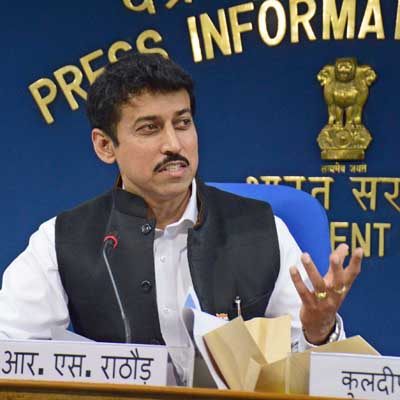
    NEW DELHI: The India Pavilion at 111 Village International Riviera (Cannes, France) will be inaugurated by Minister of State for Information and Broadcasting Rajyavardhan Rathore on 14 May, 2015.


    Eminent people including Indian Ambassador to France Mohan Kumar, Marche Du Film Director Jerome Paillard, producers Rakeysh Om Prakash Mehra and Bobby Bedi will also be present at official opening of the Pavilion. Marche Du Film is one of the most important film markets in the industry.


    Two Indian films, Chauthi Koot by Gurvinder Singh and Masaan by Neeraj Ghaywan have been chosen under the Un Certain Regard category.


    A session on journey to Cannes of the film Chauthi Koot will take place on the first day. A post screening reception for the film has also been organized.


    FICCI is coordinating the India Pavilion at Cannes Film Festival with the Ministry for the second consecutive year.


    The India Pavilion will showcase Indian cinema’s linguistic, cultural and regional diversity by showcasing trailers, displaying literature and brochures on varied aspects. The primary focus would of course be boosting co-production opportunities with countries India has signed treaty with, attracting international studios to shoot in the country and exploring new international partnerships in the realms of distribution, production, filming in India, script development and technology, and promoting film sales and syndication.


    Also, the fourth edition of the ‘Indian Film Guide’ will be placed at the Pavilion for the delegates. The ‘Indian Film Guide’ is a comprehensive booklet with information on policy initiatives by the government pertaining to film sector, the listing of Indian companies at Cannes Film Market, Indian Films at Cannes and contacts of important people in the business of filmmaking.


    FICCI along with the Ministry will be holding sessions on the sidelines of the festival. The sessions would focus on important aspects like co production agreements, international distribution – challenges and way forward and how to make films reach out to worldwide audience amidst a wider range of issues faced by the sector.


    The sessions would have speakers with wide ranging experience in their fields and the likes of Film France COO Frank Priot, Telefilm Canada director international promotion Shiela de La Varende, Film London senior inward investment manager David Shepheard, CNC France director Pierre Emmanuel, ASAP Films producer Marc Baschet, Australia India Film Fund head Anupam Sharma, Special Treats CEO Colin Burrows, Indian filmmakers Nandita Das and Rishi Mehta, PVR Pictures president Kamal Gianchandani, Mongrel Media distributer Charlotte Mickie, Westend Films’ Eve Schoukroun, Dragongate CEO William Pfeiffer, Film London CEO Adrian Wooton and Cinestaan founder Rohit Khattar.


    The Government is proactively supporting the sector and has even listed it among the 25 focus sectors under the ‘Make in India’ campaign.


    Punjabi film ChauthiKoot (The Fourth Direction) is based on two short stories by Punjabi writer Waryam Singh Sandhu, titled Chauthi Koot and Hunn Main Theek Haan. The story is set in Punjab against the backdrop of the Sikh separatist movement in the ‘80s. It catches the mood of Punjab during the turbulent period.


    Masaanset in Varanasi revolves around four key characters, that of a young orphan, a low-caste teenage boy, a girl and her father as they attempt to fight against the morality and traditions typical of the small town they live in. Their lives intersect tangentially when the low-caste boy, played by Vicky Kaushal, falls in love with an upper-caste girl and Richa Chadha’s character finds herself in a sex scandal. Her father Sanjay Mishra finds himself fighting the taboo but in him, the young orphan, played by Nikhil Sahni, finds a father figure.

  • Film industry gears up for Cannes Film Fest; FICCI to set up India Pavilion

    Film industry gears up for Cannes Film Fest; FICCI to set up India Pavilion

    NEW DELHI: The India Pavilion at the forthcoming Cannes Film Festival will be set up once again by the Federation of Indian Chambers of Commerce and Industry (FICCI) in coordinating and on behalf of the Information and Broadcasting Ministry.


    The 68th Cannes Film Festival is being held at the coastal city of Cannes in France from 13 to 24 May.


    An India Film Guide featuring details of registered participants will also be brought out for distribution during this international fete at the Pavilion.


    A major film delegation led by officials of the Ministry is expected to attend the meet.


    The India Pavilion will be showcasing Indian cinema across linguistic, cultural and regional diversity with the aim of forging an increasing number of international partnerships in the realms of distribution, production, script development and technology, and promoting film sales and syndication.


    Promoting India as a film destination will be a major emphasis this year and details will be given about the advantages of filming in India. FICCI will help book structured B2B meetings with foreign participants; and organize networking events.


    In addition, it will display trailers of films even from those who are not going to Cannes for showing at the Pavilion. Brochures and other literature about films and film festivals in India will also be displayed at the Pavilion.


    Apart from this, the National Film Development Corporation (NFDC) will put up a separate stall in the Cannes Film Market.


  • IPL is the largest reached sports event in 2014: FICCI KPMG Report

    IPL is the largest reached sports event in 2014: FICCI KPMG Report

    The global sports industry is estimated be worth of $600 – $700 billion. Revenue generated from the industry is estimated at $80 billion globally and is growing at Compound Annual Growth Rate (CAGR) of 6.5 per cent over 2009 to 2014, which includes revenues from media rights, sponsorships and ticketing.

    The market for advertising in sports in India was estimated at Rs 41 billion in 2013 growing at a CAGR of 14 per cent from Rs 21 billion in 2008. It consists of on ground advertising, team sponsorship, athlete sponsorship and media ad spends on sports. Licensing and merchandising contribute Rs 2 billion to the industry in India. Gate revenues make up another revenue stream but its contribution to the sports market in India is relatively low compared to media ad spends and sponsorship.

    Sporting events have been popular throughout history, and have gained greater viewership with bigger stadiums and TV broadcasting of domestic and global events. Annual sports viewership in India reached 276 million in 2014. But the sports genre accounts for only 2.4 per cent of total TV viewership and 4.3 per cent of AdEx (Advertisement Expenditure) revenue in the Indian TV industry, much smaller than the general entertainment genre.

    The median age in India is around 27 years and around 64 per cent of the population is expected to be in the working age group by 2020. This provides a large and growing target segment for sports in India. Moreover, an increase in percentage of middle class and rich households (households with annual income greater than Rs 2,00,000) from 6.1 per cent in 2001-02 to 14.5 per cent in 2009 -10 has increased the number of people with an appetite for sports consumption. The middle class alone is expected to increase to 41 per cent of the population by 2025. There has also been an increase in the average share of educational and recreational activities in the annual household consumption and it is estimated to increase from five per cent in 2005 to nine per cent by 2025.

    A good start to non cricket sports is one interesting to look at the growth of sports other than cricket in India. Many sports have grown well over the last half decade. A survey on the popularity of sports in the Indian online community reports that while 85 per cent of respondents followed cricket in some manner, an estimated 44 per cent followed tennis, 41 per cent followed football (soccer) and 32 per cent followed badminton. With economic development, sports viewership in a country usually moves from single sport to multi sport. Africa and the Indian subcontinent have been traditionally dominated by football and cricket respectively. However, with greater economic development, India is seeing a growth in other sports as well. 

    League formats have helped in increasing popularity of sports Globally

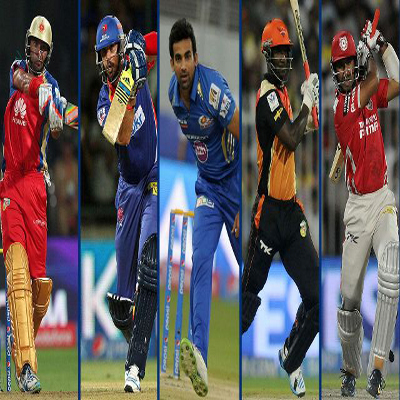
    The leagues system has served as an important way for companies to enter the sports sector. A sports league creates several opportunities for private companies in domains such as league management, franchisee, broadcasting and sports videos production houses, advertising, sports infrastructure such as multipurpose venues, player management, licensing and merchandising. One of India’s most successful leagues in terms of viewership and revenues has been the Indian Premier League (IPL), which is based on the English Premier League (EPL) format. The league was launched in 2008 by the Board of Control for Cricket in India (BCCI) with eight city franchisees. Though it is still small in comparison to some of the biggest leagues of the world, it has been able to achieve success in a short span of time, which other mature leagues could not manage to do. The evolution of IPL as a brand is an example of successful product innovation, which effectively combined entertainment and sports. The Twenty20 (T20) format of IPL has made the sport more popular and convenient to watch for cricket enthusiasts. The success of the IPL, which is estimated to have had a viewership of 191 million people and ad revenue of Rs 8 billion in 2014 has led to the creation of several other league-format sporting events, such as the Indian Badminton League, Hockey India League and the recently launched Pro-Kabaddi League. The inaugural season of football’s Indian Super League has been fairly successful as well. Cumulative reach of Pro Kabaddi League was 435 million compared to 560 million for IPL in 2014. Football’s Indian Super League was close with 410 million cumulative reach. The new domestic sports leagues however require significant management efforts over a period of time to get established and be successful. 

    Viewership refers to sum of weekly GVTs, which is a factor of number of viewers and frequency.

    IPL leads the cumulative reach chart amongst sporting events held in 2014
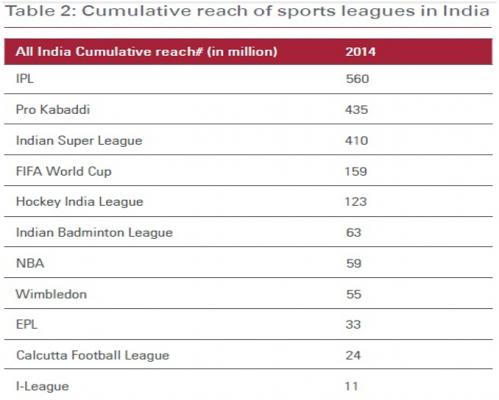
    Cumulative reach refers to the number of individuals within the target group who viewed the tournament over a certain period of time, including duplication.

    Ecosystem to support sports development in India

    However, in order to sustain the growth in sports and sports-related businesses, a flexible regulatory and policy framework that is able to realise synergies between various segments of sports needs to be developed. This in turn requires the sports ecosystem and its stakeholders to be recognised under the purview of a dedicated industry of sports which can provide impetus to an organised and professional business environment for sports in India.

    Sports Broadcasting in India

    There has been a surge in the number of sporting events broadcast in the past few years. These events include tournaments and leagues played at state, national and international levels. Several international tournaments and leagues played at the regional or global level are now telecast in India bringing in a larger and much diverse audience. Males form around 60 to 65 per cent of viewers and are expected to continue to be the main target segment. However, the number of female viewers has been increasing. About 57 per cent of the viewership of ISL and 53 per cent of the viewership of Pro – Kabaddi League was made up of women and children. Broadcasters are supplementing the sports with other entertaining and informative pieces to make the program more inclusive.

    Getting to the right content mix

    With the rise in number of sporting events, sports channels are covering several sporting events in their annual calendar. It consists of a mix of marquee events from domestic and international leagues, major tournaments along with minor domestic leagues and tournaments.

    Star Sports has revamped itself with uniformly branded eight channels to showcase a variety of domestic and international sports both cricket and non – cricket and in English as well as Hindi. While international cricket matches featuring India will make up 65 per cent of Star Sports 1, Ranji matches, university and women’s cricket and international cricket matches not featuring India will form 50 to 60 per cent of content on Star Sports 2. This will enable Star to nearly double its cricket content, which is the major revenue driver for sports channels in India. Star Sports 4 will feature other sports, which include international football (soccer), European soccer leagues, badminton, tennis and Formula-1 racing.

    The new Indian leagues, which include hockey, badminton and soccer, will be telecast on Star Sports 1 to 3 to reach a larger audience. Such a strategy enables Star Sports to increase its cricket content as well as broadcast non – cricket sports, which are seeing increasing traction. There is also an increasing trend towards multi-sports channels, as the viewership of different sports are increasing and sports channels are vying for TV rights across sports. Star has seen a shift from having a cricket specific channel in its cluster to multi-sports channels. It enables Star to broadcast both international and domestic cricket content simultaneously as well as gives it flexibility to show different sports across different channels. This can be attributed to the large investments made by Star to purchase rights for domestic and international cricket, football, tennis, badminton etc.

    On the other hand, Neo has rebranded its cricket specific Neo Cricket to Neo Prime on account of reduced live cricket properties and surge in volume of several sports.

    Ten however, has sports specific channels with Ten Cricket for cricket, Ten Action for football and Ten Golf for Golf broadcasting. Availability of sufficient single sport media rights and a definite viewership base for that particular sport drives the presence of sports specific channels. This helps advertisers to target a specific audience, for example luxury products have tied up with Ten Golf. Although, digitization and lower costs of distribution make single – sport channels more viable than before, it can take some time to evolve in India and reach the popularity of golf and tennis channels in some developed countries.

    Regional language boost to broadcasting

    Another strategy to target a specific audience is the language of telecast. Hindi and other regional languages increase the audience reach for sports as English has a limited audience. Star Sports 3 replicates Star Sports 1 in Hindi. In 2014, it telecast the domestic football league – Indian Super League in five languages. Its regional TV channels were used to telecast the league in Bengali, Kannada and Malayalam apart from English and Hindi broadcasts. During FIFA World Cup 2014, Bengal accounted for half the country’s viewership mainly because of regional language feed by Multi Screen Media (MSM) on its Bengali general entertainment and film channel Sony Aath. Hindi broadcast of the Pro Kabaddi League on Star Gold also helped take the cumulative reach to 435 million for the event. Other than using regional sister channels for feed in local languages, sports channels may spin off separate regional language sports channels if the demand picks up.

    Revenue and Profitability model

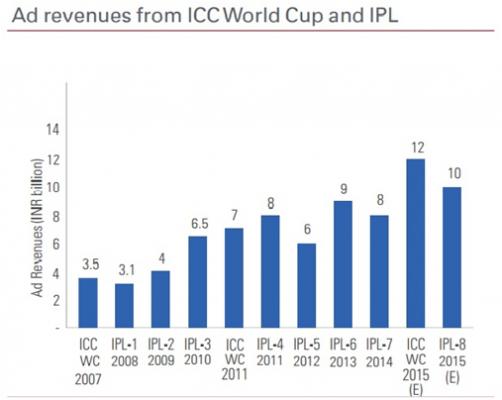
    Sports industry is still an ad driven revenue model. Media spends on sports, most of which is on TV, increased from Rs 11.5 billion to Rs 22.5 billion over 2008 to 2013 at a CAGR of 14 per cent. In mature markets, subscription is the main revenue driver for sports channels, contributing nearly 60 to 90 per cent of the revenues. However in India, advertisements still account for nearly 60 per cent of the revenues of sports channels, mainly driven by cricket, which is the largest revenue spinner and accounts for nearly 80 to 85 per cent of the total television sports media revenue. Non-cricket sports provide live sports content around the year, which gives advertisers a regular touch-point to their target segments. Revenues from advertisements in any year vary depending on the tournaments and series held during the year. Cricket mostly forms the peaks whereas the troughs are being evened out with non–cricket sports and non-live cricket content. In 2011, ad spends on TV for cricket was estimated to have crossed Rs 20 billion. In 2015, ad spends from the ICC World Cup and IPL 8 alone are expected to be around Rs 22 – 25 billion. Ad revenues for non-cricket sports are only a small fraction of cricket revenues. In 2013, ad revenues from Indian Badminton League and Hockey India League were Rs 0.9 billion and Rs 0.7 billion respectively.
    Key challenges facing the spurt of non-cricket leagues in India includes:

    • Poor investor confidence

    For instance the Indian Badminton League (IBL) suffered a loss of Rs 25 crore in the opening season in 2013 owing to investors pulling out casting doubt on the return of IBL with its second season. However, despite no play in 2014, the IBL is set to return in 2015.

    • Lack of industry status

    Provision of industry status could lead to an organized sports industry leading to higher available capital, newer sports businesses, additional revenue streams for stakeholders making leagues commercially viable ventures.

    • Lack of a culture for sports

    Sporting leagues in India are designed to last just a couple months every year. However, many major sporting league seasons in the world last for longer durations every year. Sporting leagues need to become year round (or at least three – four months a year) ventures. Apart from the benefit of a longer engagement with viewers (allowing the building of a larger fan base and culture for the game), this also touts the idea of sport becoming a year round profession furthering the advent of sports businesses.

    Revenue model in leagues

    Major sources of revenue for any league come from media rights, sponsorships and revenue from franchisees. Share of franchisee consideration in IPL has increased from 30 per cent in 2010 -11 to 37 per cent in 2012- 13 with a corresponding decrease in the revenues from sponsorship rights. Income from media rights and other sources have nearly the same share in 2012-13 as in 2010- 11.

    Major Sources of revenue for a League Franchisee

    Major sources of revenue for any league franchisee are share of the central revenues, local revenue and performance revenue.

    • Share of central revenue

    This includes a percentage of the revenue to the league from media rights and central sponsors like Pepsi in the IPL. In India, media rights are a major revenue sources both for the league and the franchisees. Channels are expected to further increase the subscription revenue for sports channels.

    • Local revenue

    Local revenue for a franchise entails revenue from match day ticket sales (gate revenue) and commercial revenue that includes funds from franchise sponsors, merchandise sales and revenue generated from membership with the franchise club if any. However, revenue from franchise sponsors makes for a majority of the commercial revenue. Sports merchandise sales is a fast growing segment with Rs 2 billion in retail sales in 2013. Moreover, contribution of gate revenue to overall revenue of franchises is low due to inexpensive ticket pricing, especially in non-cricket leagues. This is in contrast to leagues abroad where gate revenues are a significant contributor to a franchisee’s revenue.

    How can leagues be further popularised/ monetized?

    Some of the critical success factors of a league in India are identified below:

    • Players

    Involvement of top players of the world creates interest in the viewers and increases the quality of the game. The IPL is a successful example of the same. On the other hand, I-League is struggling to attract top players resulting in poor viewership.

    • Marketing

    An effective marketing campaign is another critical factor in making the league popular. Again, the involvement of various celebrities as brand ambassadors or owners in the IPL contributed to generating larger viewer interest in the league. In fact, the marriage of the Indian entertainment industry and cricket has aided in making IPL a commercial success.

    • Governance framework

     It is seen that leagues, which are run with the support of the approved federation have been able to sustain. The ICL failed due to lack of support from BCCI and World Series Hockey (WSH) is facing similar troubles due to non-recognition of the founding federation as the official national sports federation of hockey itself.

    • Stadium Infrastructure

    Quality of stadium infrastructure improves the viewing experience, hence increases the level of interest in the sport. It is important to create supporting infrastructure like restaurants, bars, fast-food chains, merchandise, stores, books and music stores, etc. to develop stadiums into popular entertainment spots for the family. Hike in ticket prices subsequent to rise in viewership, organizing multiple sporting events and entertainment shows wherever possible can help monetise stadium infrastructure.

    • Fan base

    An effective strategy to increase a franchisee fan base is engagement of respective franchises with local community. This helps generate greater TV viewership, increase attendance of matches and sale of merchandise. Performance of national team or players at international level increases the interest in the game, hence the league.

    League timing

    The tournament should be held at a time when there is no clash with international tournaments that could divert a significant section of the viewers, many players are available and weather is suitable for holding matches. The length of games and timing of matches (conducive for family viewing) are also important factors to consider, both having further helped significant viewership of the IPL. Other factors may include spectator friendly broadcasting such as better viewing angles and broadcasting in Hindi and English.

  • FICCI pushes for 10-year tax holiday for AVGC industry

    FICCI pushes for 10-year tax holiday for AVGC industry

    NEW DELHI: With the nation waiting for the maiden Narendra Modi government’s Budget 2015, every sector is speaking its heart out with regards to their expectation from the Union Budget.


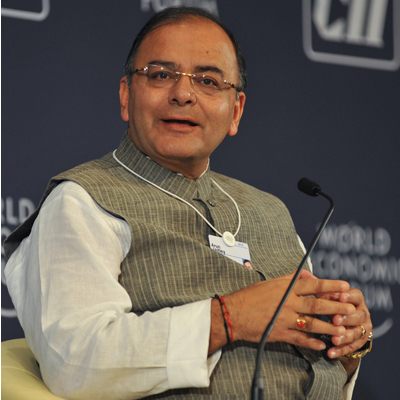
     The entertainment wing of the Federation of Indian Chambers of Commerce and Industry (FICCI) in its wish-list submitted to the Finance Minister Arun Jaitley- who also holds the Information and Broadcasting portfolio, addressed the issues faced by not just broadcast, cable and radio sectors, but also pointed out the changes needed in the cinema and animation sectors.


    Cinema


    Referring to the film sector, FICCI wants Digital Cinema Services to be included under the Negative List for Service Tax exemption, as this will help the industry, which is struggling against piracy. Digital Cinema service distributors were exempted from Service Tax vide notification of March but with the introduction of the Negative List in Service Tax, this circular got rescinded.


    It wants the Government to exempt performing artists from levy of Service Tax, which will help the industry that already suffers from very high rate of indirect taxes in India. Levy of service tax on artists increases the cost of the film producers and distributors, which ultimately gets passed on to the consumer.


    On-screen advertising in cinemas and multiplexes may be exempted from levy of service tax as the on-screen advertising within cinemas caters to advertisers with small businesses, with limited resources. The on-screen advertising forms an important source of revenue for the exhibitors, which are already reeling under the pressure of multiple taxes. Until recently, on-screen advertising within cinemas and multiplexes was subject to service tax till 30 June 2012. Since 1 October 2014, the negative list of services has been amended whereby on-screen advertising within cinemas shall be liable to service tax.


    There should be a clarificatory instruction on the on applicability of service tax on revenue sharing arrangements for exhibition of films. At present, service tax is levied on revenue of such sharing arrangements for exhibition of films between producers, distributors, sub-distributors, and exhibitors. But the exhibitions of films are carried out on a principal to principal basis and neither party renders any service to another.


    Furthermore, Rule 4(a) of the Service Rules 2012 should be amended suitably to include post-production services, as this will provide parity with goods imported for re-export and will promote growth of such services. At present, services performed on the goods temporarily imported for re-export are not liable to Service Tax due to specific provision in POPS Rule. But in case of post-production services such as dubbing, editing, title printing etc. the above rule is not applicable and Service Tax is payable.


    FICCI wants reversal of the increased withholding tax to eliminate the differentiation for the transactions with entities in nations having treaties and other entities. This withholding tax rate has a significant impact on payments to be made for acquisition of content. There is a direct impact on companies distributing foreign films in India and Indian films distributed outside India with non-residents with no treaty jurisdictions such as Croatia, Fiji, and Monaco etc. While the withholding rate for transactions with major treaty nations such as UK and US is in the range of 10 per cent to 15 per cent, the rate of 25 per cent is punitive for the same transactions which do not originate from treaty nations. (It pointed out that the Tax on royalty and fees for technical services earned by non-resident taxpayers has been increased from 10 per cent to 25 per cent in the cases where India does not have a Double Tax Avoidance Agreement (‘Treaty’) with the country of service provider.


    FICCI also wants a suitable reduction in the existing period of 90 days before end of the financial year (under Rule 9A and 9B of IT Rules) as this will grant relief to assesses whose feature films have incurred losses and have been released for exhibition in the last quarter of the financial year. It said that in certain cases where not all rights of exhibition of a feature film are sold and it is released for exhibition on a commercial basis within 90 days before end of the financial year, the feature film performs poorly and it is exhibited only for a short duration.


    Consequently, the film producer may not recover costs. In such cases in view of the prevailing IT Rules, the film producers are unable to claim a deduction of entire production cost and the loss is to be carried forward to the next financial year. Accordingly, such film producers are unable to claim losses in the year the feature film is released for exhibition despite no further scope of income. A similar situation exists in the case of expenditure of distribution rights in view of Rule 9B of IT Rules.


    Animation and Special Effects


    Referring to animation, special effects (VFX), gaming and comics (AVGC), FICCI wanted a 10-year Tax Holiday for the AVGC industry and lifting of service tax on studios developing original content. It wanted restoration of STPI advantage scheme for AVGC or ITES for another 10 to 20 years and cover/encourage exports as well as IP creation.


    It wants animation as one of the priority sectors and said the Minimum Alternate Tax (MAT) applicability for units undertaking Animation work in SEZ should be withdrawn to encourage export of animated contents.


    Encouragement should be given to entities through reduced tax rates/incentives for exploitation of self-developed content in overseas markets. Exemptions should be granted to overseas payments to foreign artists stationed overseas from withholding taxes. A 50 per cent reimbursable MDA (Market Development Assistance) should be given for travel and registration fees to international market events and withholding tax on revenues accruing from sales of mobile games in non-India markets as well as removal of withholding tax on the development contracts given to mobile game developers outside India should be removed. Also, there should be removal of withholding tax paid by expats working in India for Indian mobile game development companies. This was because of long gestation period, potential to generate IPs, and potential to generate future stream of incomes.


    The Government should consider setting up of co-production fund for a minimum of five years with Rs 110 crore each year with the Children’s Film Society, India, for AVGC. This will help the industry immensely and in the next five years India can boast of over 100 successfully implemented co-productions and shows, which will be extremely strong original intellectual property out of India, one of the strongest libraries establishing and restoring forms of art, culture and creative styles and designs which will be known throughout the globe. India would emerge a true leader in the digital content economy and it will ensure jobs for over 400,000 to 500,000 creative, techno creative and artistic youth of the country in the next five to seven years.


    The industry body says the excise duty on local manufacture should be brought down from 12.5 per cent to zero per cent (similar to film and music industry). This will enable CVD to be brought to zero. In addition, the Import duty on consoles (Gaming hardware) should be brought down to zero per cent. This will increase the installed base of gaming consoles to enable the local developer ecosystem to flourish.

  • ‘Digital India Conclave 2014’ to intensify the ‘Digital India’ initiative

    ‘Digital India Conclave 2014’ to intensify the ‘Digital India’ initiative

    MUMBAI: The Narendra Modi led Indian government officially clicked through the ambitious ‘Digital India’ programme a few months ago. The vision is simple: to usher India into the digital age where each and every citizen can experience the impact. But this simple vision will require a lot of hard graft and investment towards the right kind of infrastructure.

    As a bridge between this vision and reality, India Inc. along with FICCI, Invest India and Chase India is organising a ‘Digital India programme’, a series of online and offline activities pivoting around two roundtables in New Delhi and Washington DC.

    India Inc. has created its own ‘Digital India’ initiative which ties in with the India-US Partnership Hub to bring in a series of online and offline programmes. It will explore the ‘Digital India’ vision and trigger dialogue to plug into this bold new programme.

    This online-offline integrated programme brings in perspectives and participation from senior policy decision makers within government and industry around a discourse to achieve the following objectives:

     • Identify the challenges and opportunities in the ‘Digital India’ initiative
    • Identify synergies that can be created between industries and the government to successfully implement the initiative
    • Explore how the India US collaboration could help achieve the ‘Digital India’ vision
    • Involve key stakeholders in defining a roadmap that will lead to a truly ‘Digital India’
    • Produce a series of online and offline activities to facilitate discourse culminating in a bespoke online publication
    • India is finally coming of digital age and we aim to provide an incisive new digital hub for this new age.

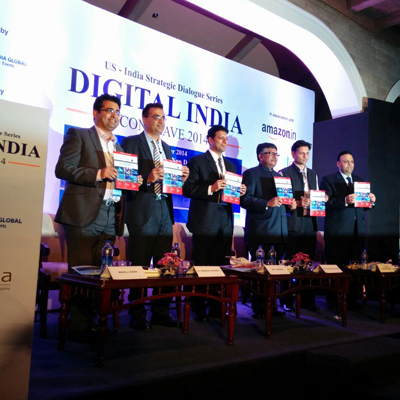
     Commenting on the initiative, Avian Media CEO and Chase India director Nitin Mantri said, “We are proud of this association with India Inc and a key aspect of this initiative is our first Digital India Conclave to be held in New Delhi on 5 December 2014. The sessions will focus on the prominence of the digital advancement across sectors and the requirement to streamline digital with the core business in order to initiate the Digital India initiative.”

    The conclave is in association with Amazon.in, Google and Qualcomm is supported by TCIL and NIXI and is the first phase of the programme which will bring together around 100 -150 key stakeholders across government/public sector, the private sector as well as other influencers such as think tanks, media and specialist experts.

    The first conclave of the ‘Digital India’ Programme is on 5 December 2014 in Delhi while the second conclave will be held in Washington in January 2015.


  • Upcoming leagues have helped unleash potential for Sports Business: FICCI report

    Upcoming leagues have helped unleash potential for Sports Business: FICCI report

    MUMBAI: While a number of sports leagues have been launched in India recently, the sports industry is still in its infancy stage which can be exploited not only by commercially viable large leagues but also other businesses of sports like events, academies, elite and other coaching institutes, niche sports science backup services and so on according to FICCI’s recent report on the sports business titled – Business of Sports Aiming Higher Reaching Further. The main purpose according to the body for coming up with report was to look briefly at the sports industry and make some predictions in the upcoming decade.


    According to FICCI president Sidharth Birla, the business of sports worldwide has not just been restricted to the playing of sports but it now encompasses a variety of firms covering a wide spectrum of domains. 


    “Although it is still in a nascent stage in India, its potential has truly been unleashed by the growing number of innovate start-ups in this field. The need of the hour is to increase individual’s interest and rope in private investments in the sports industry, which is almost immaterial” he added.


    The paper was released by Sports secretary Ajit M Sharan of the Youth Affairs and Sports Ministry who opined that the private sector would have to  participate and partner with the government and the apex chamber to promote sports in the country.


    The report says that the Indian Sports Industry runs parallel with the growth of the country’s economy and 4.3 million people would be required in the Indian Sports Industry as workforce by 2025.


    FICCI Sports committee chairman and Tata Metaliks MD Sanjeev Paul, speaking about the report, said, “FICCI has taken up the responsibilities to bridge the knowledge gap to aid the Sports Business development in India and to share the real time and up to date information about ongoing initiatives in sports.”


    While elaborating on the ongoing Hero Indian Super League (ISL), the paper says the league will provide Indian football fans the opportunity to witness some of the world’s best on home soil, inject much needed energy into the domestic game, improve football infrastructure and raise the commercial value of the sport in the country. 


    For the ISL, each franchise has been bought for a period of ten years at a cost ranging from Rs 130 crore to Rs 160 crore. Although financials are confidential, the central pool of the ISL is expected to be in the $ 10million to $ 15 million per year range. To further boost and increase revenue franchises have the right to independently procure team sponsors, and the rights to merchandising.


    The report also mentions about the investment by four different broadcasters in India for various different sports properties. It says that MSM’s Sony Six has currently invested $ 3.2 billion in broadcast rights for properties such as The Pepsi IPL, UEFA EURO 2016, qualifiers

    for EURO-2016, European qualifier for 2018 FIFA World Cup, 2018 FIFA World Cup, TNA, Australian Open Tennis Championships, The NBA and The Ultimate Fighting Championships (UFC).


    Star Sports India has currently invested $ 242 million for ICC Events, International Premier Tennis League, FIH Event, Summer Olympic Games, Formula one, FIFA Confederation Cup, FIFA World Cup Qualifiers (AFC), AFC Champion Leagues, La Liga, Premier League, Seria A, FA Cup, ISL, Wimbledon etc.


    Taj Television’s Ten Sports will invest a little over $ 100 million (Rs 600 crore) in the Indian sporting-related entertainment market, according to sources. Some of its properties include US Open, The Commonwealth Games, Moto GP, UEFA Champions League, UEFA Super Cup, Federation Cup, German Cup, Major League Soccer and Golf, Chennai Open among others.


    Nimbus Communications’ Neo Prime and Neo Sports has invested $ 2 million for International Cricket in Bangladesh, Sultan Azlan Shah Cup, Copa America, Rugby World Cup, Bundesliga, UEFA Women’s Championship and Davis Cup.


    Highlighting the role played by the government, it says that the Government of India will be opening 70 sports academies in coming ten years in 18 sports disciplines. It is estimated that the Government of India will spend Rs 90 crore per academy. The allocation for the sports and youth affairs ministry for 2014-2015 saw a rise of Rs 561.24 crore, a 46.5 per cent hike from the last fiscal with the government.


    In its concluding remarks the report notes that the future seems bright for Indian Sports as it is set to become one of the largest economies of the world by the year 2025 as per projections made by internationally consultants and IMF. Many investors and corporate companies around the world have stepped up in order to take advantage of the growth opportunities offered by Indian markets and many others are keeping a close eye on the subcontinent for investments in coming years.