Tag: Ficci

  • ‘Digital India’ working towards empowered Digital Village: Prasad

    ‘Digital India’ working towards empowered Digital Village: Prasad

    NEW DELHI: The transformative and ambitious ‘Digital India’ programme of the Government of India has started bearing fruits after six months of its inception and e-services have begun to pick up momentum and reaching the bottom of the pyramid, which is digitally empowering the people of the country.

     
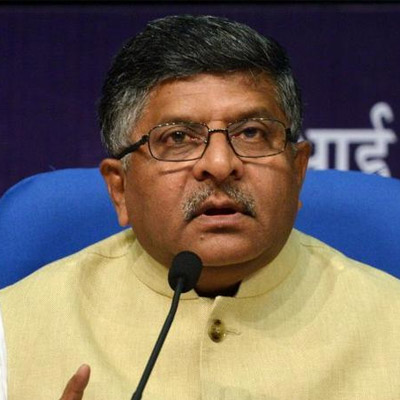
    Making this claim, Communications and Information and Technology Minister Ravi Shankar Prasad said today that the governments at the Central and state levels, industry and academia need to work in tandem to accelerate the pace of digitisation.
     

    He was addressing the second edition of the international conference ‘i-Bharat’ organised by FICCI in partnership with the Department of Electronics & IT (DeitY) of the Ministry.
     

    Highlighting the progress of Digital India, Prasad said more than 12,000 rural post office branches had been linked digitally and soon payment banking would also become a reality for the post offices. As part of Digital India, the government had also planned to make Digital Village across the country by linking all schemes with technology. The digital village would be powered by LED lighting, solar energy, skill development centres, e-services like e-education and e-health. To make this programme a success, District Collectors will have to play an important role.
     

    Speaking about e-Taal, Prasad said the web portal disseminates real time statistics of the e-transactions taking place at the national and state level e-Governance Projects. He added that the National e-Governance Plan of the Government sought to provide impetus for long-term growth of e-Governance within the country.
     

    On promoting electronic manufacturing in India, Prasad said the progressive policies and aggressive focus on ‘Make in India’ initiative have played a significant part in the resurgence of the electronics manufacturing sector. Investment in the electronics manufacturing has increased, giving a quantum jump to the sector.
     

    Elaborating on the headway made in connecting gram panchayats of the country with the optical fibre network, Prasad said 18 states were on board and the work was on at a rapid pace. To script a success story with ‘Digital India,’ the government and industry had to look for innovative ways to expedite the process of connecting India digitally, he added.
     

    FICCI President Harshavardhan Neotia said the Government has embarked on a reforms programme focused on making India an easy place to do business. The emphasis has been on simplification and rationalisation of the existing rules and introduction of information technology to make governance more efficient and effective. Jan Dhan Yojana, Aadhaar and Mobile number (JAM) trinity is acting as a game changing reform that is allowing transfer of benefits in a leakage-proof, well-targeted and cashless manner.


    FICCI-IT Committee chairperson Debjani Ghosh said technology was changing the world and its transformative powers were evidently visible in India. New technologies were deeply impacting governance, society, and security and this year’s i-Bharat conference aimed to bring together leaders from all segments of industry and government to explore and demystify the complex technology trends and reach at solutions and execution techniques of the programs to connect India digitally. She added that the government and industry needed to figure out new solutions to speed up the process of making India digital. 
  • Manufacturing slows in Q3-2016 despite Digital India & Make in India campaigns

    Manufacturing slows in Q3-2016 despite Digital India & Make in India campaigns

    NEW DELHI: Despite the emphasis on Digital India and Make In India campaigns and perhaps largely due to expectations of the Goods and Service Tax (GST) that never came through, manufacturing of electrical and electronic goods failed to pick up much during 2015.

    What’s more, the outlook the third quarter of 2015-16 predicts a slowdown due to various factors, according to the quarterly Manufacturing Survey conducted by FICCI.

    Considering that the Digital Addressable System (DAS) Phase III becomes a reality from New Year’s Day and the countdown begins for the final phase, and with auction for FM Radio Phase III having commenced, the slowdown in manufacture of electronic goods is not good news for the electronic media industry, which depends largely on set top boxes (STBs) and other electronic equipment.

    The FICCI survey says the outlook for Indian manufacturing sector in Q3 of 2015-16 looks to be weakening, as lesser percentage of respondents expect high growth to continue in Q-3 (October-December 2015-16). The percentage of respondents expecting higher growth in Q3 has gone down to 55 per cent as compared to 63 per cent for Q2 (July-September 2015-16), according to the survey.

    The survey had earlier indicated revival in the manufacturing activity in Q2 of 2015-16, which seems to be slowing down a little bit in Q3 now. The outlook on the basis of FICCI Manufacturing Survey for Q2 of 2015-16 was more optimistic than in the current quarter. Exports are primarily responsible for this less optimistic outlook besides domestic factors like poor demand conditions, high interest cost etc.

    The quarterly survey gauges the expectations of manufacturers for Q3 2015-16 for 12 major sectors namely textiles, capital goods, metals, chemicals, cement and ceramics, electronics, auto, leather & footwear, machine tools, food, tyre, and textiles machinery. Responses have been drawn from 336 manufacturing units from both large and SME segments with a combined annual turnover of over Rs 3.94 trillion.

    The survey had earlier indicated revival in the manufacturing activity in Q2 2015-16, which seems to be slowing down little bit in Q3 now. The percentage of respondents expecting higher growth in Q3 has gone down to 55 per cent as compared to 63 per cent for Q2 2015-16.

    Exports are primarily responsible for this less optimistic outlook besides domestic factors like poor demand conditions, high interest cost etc.

    In terms of investment, for Q3 2015-16, 68 per cent respondents as against 73-75 per cent respondents in earlier quarters reported that they don’t have any plans for capacity additions for the next six months implying slack in the private sector investments in manufacturing to continue, even though there is a fall in the percentage of respondents not looking at fresh investments. Poor demand conditions, high cost of borrowing, delayed clearances and cost escalation are some of the major constraints, which are affecting the expansion plans of the respondents.

    In Electronics and Electrical, the survey shows that average capacity utilisation in the second quarter was 65 per cent, which was only higher than one (textiles) of the 12 sectors surveyed. In fact, it had fallen by five per cent over the same period last fiscal.

    At a glance, the quarterly outlook for the sector shows moderate outlook for production, no capacity addition expected in the next six months, and a bleak outlook for both hiring and exports.

    Implementation of GST and keeping the sector at the lowest tax slab; imposing anti-dumping duty on imports of Dry Batteries; support of the tier 2 supplier by schemes (reward, recognition or subsidies), which can encourage them to improve their product quality; and reduction of interest rate are some of the suggestions from the respondents.

    The Electronics and Electrical sector for the October-December 2015 quarter witnessed 63 per cent respondents reporting higher levels of production on year-on-year basis though the level of growth itself may not be high.

    On the other hand, only 30 per cent of the respondents reported a higher level of orders for the October-December quarter as compared to the previous quarter while 50 per cent reported no improvement in their order books.

    Current capacity utilisation in the industry is around 65 per cent. Primarily owing to the lower current utilisation, 81 per cent respondents reportedly don’t have any plans to add any fresh capacity in next few months.

    A third of the respondents reported negative growth in exports in the October-December 2015 quarter as compared to the same quarter of last year. Also, 56 per cent reported no change in exports during the same period.

    Sixty per cent respondents maintained average inventory levels during October-December 2015 whereas only about a third maintained a higher inventory level. Almost all respondents were reluctant when asked about their plans of hiring additional work force in next three months.

    The Electronics industry respondents are availing credit at an average rate of 12 per cent. Around 40 per cent respondents in the sector expect the manufacturing sector to revive in the next six months while another 40 per cent expect no significant growth.

    About 30 per cent respondents reported that their production cost has increased than that of last year while costs remained same for 40 per cent respondents. Rising labour wages and rupee devaluation have been cited as the key reasons towards this end. Prices of raw materials, uncertainty of economic environment, lack of domestic and export demand, deficiency of power and competition faced from imports are significantly affecting the growth of this sector.

  • Regulation & development of telecom sector must be blended, Prasad tells TRAI

    Regulation & development of telecom sector must be blended, Prasad tells TRAI

    NEW DELHI: Communications and IT Minister Ravi Shankar Prasad said that the telecom regulator Telecom Regulatory Authority of India (TRAI) needs to understand that regulation and development of the telecom sector must be blended and the regulator should be made accountable to the Parliament.


    He said digital power, accelerated by smart phones in the hands of young people, has enormous potential to drive ‘Digital India’ and achieve the dreams of aspirational India.


    While the programme currently focuses on digital delivery of health, education, grocery and tourism services, “there is a need to promote e-health, e-education, e-internet, e-tourism and e-commerce,” he said while addressing the 88th Annual General Meeting of FICCI  over the weekend. 


    Prasad said, “‘Digital India’ should be empowered by private sector participation as it will provide a roadmap where good service and good productivity will also give good returns.”


    He also stressed on the importance of quick and fair decision making. Initiatives undertaken include strengthening the e-highway, expanding the optical fibre network and opening of BPOs centres in smaller cities and towns. 


    The Minister mentioned about measures being taken to improve the Indian postal service. He said that the massive postal network in the rural areas should be converted into community service centres and the postal department should be scaled up to provide e-commerce services and should be aggressively persuaded to enter into baking segment.

  • FICCI elects Harshavardhan Neotia as president

    FICCI elects Harshavardhan Neotia as president

    NEW DELHI: Ambuja Neotia Group chairman Harshavardhan Neotia took over as the president of the Federation of Indian Chambers of Commerce & Industry (FICCI) at the conclusion of the Chamber’s 88th Annual General Meeting.


    Neotia was conferred with the Padma Shri by the President of India in 1999 for his outstanding initiative in social housing.


    Additionally, Zydus Cadila – Cadila Healthcare chairman and managing director Pankaj R. Patel has been elected as senior vice president, whereas Edelweiss Group chairman and CEO Rashesh Shah has been elected as vice president.

  • India’s direct selling industry has Rs 645 billion potential by 2025: FICCI-KPMG report

    India’s direct selling industry has Rs 645 billion potential by 2025: FICCI-KPMG report

    NEW DELHI: Secretary in the Department of Industrial Policy and Promotion of the Commerce Ministry Amitabh Kant said that direct selling will have to be given a greater thrust as it empowers women, MSMEs and promotes manufacturing in India.


    Speaking at FICCI DIRECT 2015, an annual flagship event for the Direct Selling (DS) industry, Kant said the industry has a potential to grow to Rs 1000 billion by 2025 much beyond the FICCI-KMPG report projection of Rs 645 billion.


    Acknowledging the need for clarity in definition of direct selling and a separate regulatory framework for the industry, Kant said his department had already submitted the draft guidelines to the Ministry for Consumer Affairs for the direct selling industry and was hopeful for its implementation by various states.


    He urged the industry to embrace technology as the industry can deliver better and even faster once technology becomes its strength.


    The FICCI-KPMG report on ‘Direct selling- Mapping the industry across Indian states’ released by Kant showed that direct selling is today a successful industry operating in over 100 countries with a market size of $ 180 billion.


    In India, the market was estimated at Rs 75 billion (2013-14), and formed around 0.4 per cent of the total retail sales in the country.  To showcase the potential and highlight the opportunities and challenges faced by the DS industry, FICCI organizes its annual event on Direct Selling ‘DIRECT’ every year.


    FICCI Secretary General A Didar Singh said “Indian Direct Selling Industry” is an important component of the Indian economy and acknowledging this, we at FICCI through our focused task force on direct selling is working dedicatedly towards the growth of this industry and seeking regulatory clarity for this new industry. FICCI is working closely with the Central and State Governments on the same and today’s conference is a step in that direction. Today, we have launched the FICCI-KPMG report on the current state and contribution of Direct Selling industry in various states. This would be a reservoir of information on how this industry is contributing towards the development of various parts of India. During the event, he assured Kant that FICCI would deliver a white paper on “Technology for Direct Selling”.


    The Report ‘Direct 2015 – Direct selling- Mapping the industry across Indian states’ by FICCI-KPMG in India highlights the current challenges faced by the industry and the potential that the industry holds in select Indian states.


    According to the report, the industry has recorded high double digit growth of about 16 per cent over the past four to five years. The market has grown to become a key channel for distribution of goods and services in the country, especially for health and wellness products, cosmetics, consumer durables, water purifiers and vacuum cleaners.


    The report attempts to analyse the region-wise direct selling market comparing and contrasting growth patterns. In the last five years, the industry has recorded strong growth rates especially in the states of Assam, Delhi, Punjab and West Bengal. North India has emerged as the largest region by market size and accounted for Rs 22 billion in 2013-14; South India which holds the second highest share of the direct selling market was pegged at Rs 19 billion in terms of revenue in 2013-14. While the north east is currently the smallest market, it has recorded the highest growth rate of 14 per cent in India with revenues of Rs 9 billion. The growth has primarily been driven by rising income levels, high rate of urbanization and growing consumerism in the states.


    The report also lists the challenges faced by the direct selling industry, one of the biggest being the lack of regulatory clarity.


    The direct selling industry has significantly contributed to women empowerment, skill development, technology percolation and the growth of the SMEs sector in the states, besides contributing to the state exchequer. Total indirect tax contribution by direct selling industry to the government in FY14 alone is estimated at Rs 740-790 million. In addition, the industry also provides a viable means of alternative income, which promotes self-employment. Going ahead, the industry is expected to be driven by factors such as growth in consumer markets and increase in the penetration to globally comparable levels.

  • No kidding! Kid’s TV channels get serious about Diwali

    No kidding! Kid’s TV channels get serious about Diwali

    MUMBAI: It’s that time of the year again when television channels in the kids’ genre go full throttle to appease their tiny tot viewers.


    With a viewership of 7.3 percent of the total television audience in India, kids’ channels enjoy advertising revenue of 3.8 per cent, which is predicted to hit Rs 6650 crore as per FICCI’s Industry report 2015, which expects the total ad spends on television to be Rs 17,500 crore in 2015. A major chunk of this revenue is generated during the third quarter, thanks to a sudden increase in viewership.


    “During Diwali northern states and the western parts of India have holidays so naturally viewership on kids’ channels goes up. Therefore there is a spurt in investment in kids genre as well,” says a veteran media planner, who adds that though there is a definite increase in viewership from last year, it is hard to put that into figures as TAM and BARC ratings use different mechanisms of viewership measurements.


    Kids channels’ look forward to the third quarter as it generates the highest viewership for them after the April May June time which is usually when schools have summer vacation. With this surge in viewership, advertisers too plan in advance to make the most of their television spends through these kids channels.


    It is needless to say that channels heavily invest to promote their existing shows and also grab eye balls with new exciting content, and 2015 is no exception.


    From new show launches to extensive on ground activities, kids channels have pulled out all stops on whatever services they have at their disposal, be it on the marketing front or content. Keeping in mind the excitement surrounding Children’s day, some are conducting city wise on ground promotions, while others have brought in fresh local content to appeal to urban as well as rural viewers.


    For the same reason, Turner International India’s kids’ channels Cartoon Network and Pogo planned week-long celebrations with new movies, specials and contests to make the most of the holidays.


    Cartoon Network has celebrated the birthday of one the network’s most popular character Kris from the Roll No. 21 series with a week-long stunt in a special program titled Kris ka Dhamakedar Birthday from 9 to 14 November at 10.30 am.  Following which the channel airs Lights Camera Roll No. 21: Kris in Bollywood, a brand new movie featuring Kris making his Bollywood debut, on 14 November 2015 at 10:30am.


    The channel has also organized a special promotional contest to win an invite to Kris’s birthday party.


    Pogo’s Diwali week ending in 13 November saw back to back Chhota Bheem movies and specials that aired throughout the week from 9am onwards and a brand new movie titled Chhota Bheem: Dinosaur World at 12pm on 11 November.


    The genre’s leader Nickelodeon hasn’t been complacent with its number one rank and has invested heavily in on ground promotions for this year’s Children’s day. The Viacom 18 owned network will bring down their toon stars to interact with children in Delhi and Kolkata on D Day, with Shivaji and Ninha making special appearances on the venue.


    “In Delhi, there will be dedicated games that would be played at the set-up, including a Squap integration with toons giving them away to lucky winners over and above Nickelodeon merchandise that would be distributed,” reveals Viacom18 EVP and business head – kids cluster Nina Elavia Jaipuria.


    “Kids in Kolkata get a chance to not only meet Motu Patlu but also engage at the carnival with loads of games. The entire City Centre mall will get the look of Furfurinagar and kids will get a chance to win super cool Motu Patlu merchandise as well. This has been promoted though ads, TV astons, radio and online,” she explains, adding that the initiative is a joint venture between ABP and Viacom 18, with TeleKids as partners in the event.


    The channel also plans to take these promotions digital in order to reach out to as many kids and mothers as possible. At the same time it will reinforce their merchandising stronghold in the market.


    “This Children’s Day we’re unveiling the new look of Squap, that is, Squap 2,” shares Jaipuria excitedly, “The wittiest and the funniest comment on the new Squap will be a cool way to Squap,” she adds.


    Commenting on the importance of this quarter in terms of ad revenues, Jaipuria further adds, “October November and December is as busy as April, May and June for us. This is the time when kids’ channels see a lot of traction both in terms of viewership as well as ad revenue. Our viewership as well as ad spends increase by 29 to 30 per cent during this time.” She also adds that there has been considerable increase in ad rates this year.


    In terms of programming, Sonic will air a movie special featuring Pakdam Pakdai Doggy Don Vs Billiman at 7:30pm on 14 November, while Nick will celebrate children’s day with Motu Patlu Kung Fu King Returns at 11.30 am.


    The network’s biggest offering to their little viewers this season is undoubtedly Shiva, their third home grown animated series which went on air on 9 November, and has already garnered positive reviews.


    Another channel which is out to win new audiences and treat old viewers with fresh content is Discovery Kids with their brand new show Luv Kushh that also went on air on 9 November.


     “Discovery Kids continues to entertain kids with its variety of programmes and genres, endearing characters and exciting storylines. The new series, Luv Kushh will take kids back to the era of gurukuls and recreate the age-old traditions of the student-teacher relationship,” said Discovery Networks Asia-Pacific EVP and GM, Rahul Johri on their new show.


    Given the timing for the launch one can wonder if the move was deliberate on the part of the channels to go head to head to competition for viewership. Either way, this quarter looks busy, exciting, and content heavy for the kids’ entertainment channels.

  • Festive season: TV ad spend estimated to touch Rs 70 billion

    Festive season: TV ad spend estimated to touch Rs 70 billion

    Seasonaliity in ad spends is a phenomenon that most Indian marketers are familiar with. Whether you have the rash of heat countering products which pop up on your TV screens during the summer months. Or whether it is the gaggle of brands that roll out the red carpet and bring out their tooting horns during the festive season of Diwali every year. They conserve their ad rupees for these periods when the consumer is willing to spend but wants to be guided or lured in the right direction through messaging.


    As per indiantelevision.com’s analysis, this festive season (September, October, mid-November) , advertisers are expected to spend close to Rs 70 billion on television commercials alone.


    “Last year, the festive quarter saw television channels garnering nearly 35 to 40 per cent of their annual total ad revenue. One would expect the same from this year, as it is as high as it can get,” says media planning and buying expert Karthik Lakshminarayan.


    KPMG’s entertainment industry report for Ficci in 2015 predicted that television would account for Rs 175 billion in ad spending. Going by that yardstick, then TV advertising during the festive season would touch Rs 7,000 crore this year.


    When it comes he big spenders, FMCG seem to be stealing the show. “FMCG ad spending rules the the roost, and e commerce are the new kids on the block. FMCGs command 50 per cent of the ad spends while E-Commerce offer another 10 per cent,“ says Lakshminarayan. That would mean FMCG spending is likely to scale Rs 3500 crore on television ads.


    Although market analysts admit that E-Commerce players have emerged as big advertisers this season and have raised the bar for the rest of the ad-spenders over all, their contribution to television ad revenue is lesser than last year.


    Even as their total ad spend for this festive season has risen to Rs 2000 crore, only Rs 700 crore of that is going to TVCs on channels.


    Last year, e Commerce players had according to estimates spent close to Rs 1300 crores on television in the festive quarter. This year only 35 per cent of their total festival spends has been allocated to television, as compared to 60 per cent last year, shares a veteran media planner with indiantelevision.com.

    Having said that, the big players in E-Commerce continue to be strong on the top  television properties.

    “If you look at the slots, all the top properties in television are blocked with ecommerce brands. Given the festive season, the ad slots are going at a premium rates and the ecommerce brands are lapping them up at the higher rates,” says Havas Media Group-India and South Asia, CEO, Anita Nayyar, adding that thanks to these brands the ad rates continue to stay up even with the shrinking ad inventory.

    “While the increase in ad spends is mainly due to E-Commerce, the contribution from the other section of the advertisers like automobiles is expected to pick up as well. The revenue from traditional spenders for this season like jewellers and retailers is almost stable,” informs media analyst and IIM Calcutta professor  Chandradeep (CD) Mitra.


    In terms of channel genres, Hindi GECs maintain their lead as advertiser’s favourite with an approximate share of 27.5 per cent of the total spends, with regional channels following.


    An order that is directly proportional to the channels’ viewership ratings. According to the FICCI Industry report 2015, Hindi GECs command over 31 percent of the total viewership pie chart followed by regional channels at 15.9 per cent.


    Amongst the regional channels, Marathi ad slots are the most expensive to buy, says Lakshminarayan. “Maharashtra rates are higher indexed than other regional markets, and their rate of increase is seemingly more than other markets.”


    With the new BARC ratings inclusive of rural data, one can expect an even further increase in their ad spends, market analysts predict.


    The news channels too grabbed eyeballs thanks to the Bihar elections coinciding with the festive week, and therefore have gotten due attention from advertisers as well. “News was there in the limelight due to Bihar, that worked well for the retail advertisers looking to put their name out during the festive season as well,” says Nayyar.

  • Geetanjali Kirloskar joins Videocon d2h board as independent director

    Geetanjali Kirloskar joins Videocon d2h board as independent director

    MUMBAI: DTH company Videocon d2h’s shareholders have approved the appointment of Geetanjali Kirloskar as an independent director, subject to the approval of the Ministry of Information and Broadcasting (I&B).


    Kirloskar is an entrepreneur and the chairperson of Sakra World Hospital. She is also a director in Kirloskar Systems Limited and chairs several committees of trade associations such as Federation of Indian Chamber of Commerce and Industry (FICCI). 


    Kirloskar has also been a successful and reputed advertising professional. She ran her own advertising agency – Pratibha Advertising until 1998, when she entered into a joint venture with InterPublic Group Worldwide (IPG Worldwide). She set up the first non-profit venture for cultural integration between two countries, India and Japan, called the India-Japan Initiative (IJI). Kirloskar is also an Honorary Consul for Finland at Bangalore.


    “We are delighted to have Mrs. Geetanjali Kirloskar on our board. She brings a wealth of knowledge and experience in the fields of advertising, branding and media. She is a multifaceted and multi-dimensional personality, her dynamism and creative pursuits across various industries are well known. I believe that the vast experience that she brings to the table will be of great value in terms of creative aspects for our brand,” said Videocon d2h executive chairman Saurabh Dhoot.


    Kirloskar added, “I am an avid user of Videocon d2h services and have tremendous respect for the company’s ability to innovate and grow. I am delighted to join the Videocon d2h board and with my experience in advertising and branding, I look forward to contributing to its continued success.”


    A multi-faceted personality, she has also anchored the first reality show of its kind in India – Life’s Like That for Times Now.

  • Toronto and FICCI to increase collaboration in films, VFX & animation

    Toronto and FICCI to increase collaboration in films, VFX & animation

    NEW DELHI: An agreement has been signed between Toronto and India to engage in mutual co-operation and advance their common interests in the creative screen industries to foster business partnerships, linkages and exchanges.


    The Memorandum of Understanding between the Federation of Indian Chambers of Commerce and Industry (FICCI) and the City of Toronto will act as a catalyst for new investment and knowledge sharing opportunities.


    Both parties have also agreed to provide assistance or any facilities necessary for trade missions, summits, seminars, festivals and other similar activities.


    Toronto mayor John Tory, Consul General of India in Toronto Akhilesh Mishra, and FICCI-Animation, Visual Effects, Gaming, & Comics Forum chairman Dr Ashish Kulkarni signed the document.


    “This agreement will help Toronto to access and collaborate with the Indian film industry, the largest producer of films in the world,” said Tory. “This agreement will stimulate economic trade and investment in both countries. Toronto’s film industry does better each and every year – this will help us continue that trend and keep us on top.”


    “I would like to applaud the visionary and dynamic leadership of Mayor John Tory, Councillor Thompson and Zaib Shaikh, the City’s Film Commissioner and Director of Entertainment Industries, for their efforts to initiate the MoU with FICCI for co-operation in the fields of film, television, visual effects and gaming,” said Mishra.


    “This is a significant development in the spirit of the India-Canada audio-visual co-production agreement signed in February 2014. I believe the MoU signed today will catalyze co-operation not only between our film industries, but also strengthen ties of culture, tourism and friendship between peoples of India and Canada,” added Dr. Kulkarni.


    The creative screen industries include location and studio production, post-production, visual effects, animation and interactive/digital media. Toronto is the first municipality in Canada to sign an agreement stemming from an audio-visual, co-production treaty established in 2014 between the governments of India and Canada.


    FICCI took a 20-member delegation from Film, Animation, and Visual Effects industry to Toronto from 8 – 13 September to promote audio-visual co-production activities between India and Canada post signing of co-production treaty between the two countries. This was the first such delegation from India after signing of the co-production agreement between the two countries.

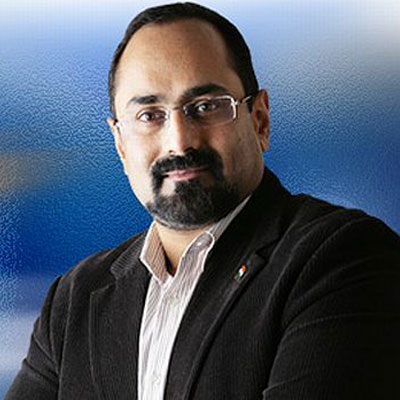
  • “Private sector needs to own network to connect India seamlessly via wireless broadband:” Rajeev Chandrasekhar

    “Private sector needs to own network to connect India seamlessly via wireless broadband:” Rajeev Chandrasekhar

    NEW DELHI: Member of Parliament and technology entrepreneur Rajeev Chandrasekhar today underlined the need for making high quality Wi-Fi available and accessible across the country. He said that it was imperative for the Government to partner with States and private service providers in the space. 


    Chandrasekhar also recommended that while the government could own the fundamental policy making but the network owner should be from the private sector to make the initiative a success.  


    While delivering the inaugural address on ‘India, Wi-Fi and Smart City Development’ at the Wireless Broadband Vision Forum, Chandrasekhar said that it would be appropriate to provide Wi-Fi access free of cost to a selected faction who deserves it rather than making it free for all. He added that any programme started with the aim of providing free service suffers from suboptimal facilities and poor quality.


    The forum was organised by FICCI in collaboration with Global Wi-Fi Broadband Alliance to advance the policy objectives of the Digital India programme. 


    Chandrasekhar said Digital India has tangible benefits and can have a multiplier effect on the country’s productivity and GDP. He added that India’s internet penetration stands at a low level today, hence it provides a huge opportunity for the government and private sector to make India connected via internet.


    Delhi Government’s Delhi Dialogue Commission vice chairman Ashish Khetan, who gave his keynote on ‘Delhi Wi-Fi – A Smart City Perspective from India’, said it was one of the biggest challenges for the city Government to draft a policy for providing seamless access and quality service of Wi-Fi at an affordable cost. 


    He added that within a few weeks the Request for Proposal (RFP) would be finalised and placed in the public domain.


    Khetan also said that the government proposes to provide speed of 1 Mbps and 1GB data download free for the citizens of Delhi. In the first phase of the programme, all Delhi colleges, including government and private, would be enabled with public Wi-Fi. Subsequently, in the second phase, all villages in Delhi would have Wi-Fi facility and in the third phase the focus would be on connecting unauthorized colonies of Delhi. 


    Wireless Broadband Alliance (WBA) CEO Shrikant Shenwai said these were exciting times for Wi-Fi operators, Wi-Fi equipment vendors and above all Wi-Fi users. The potential of Wi-Fi worldwide is vast and growing. The WBA was committed to helping Wi-Fi fulfill that potential.


    He said end-user focus for next generation Wi-Fi experience means making it easier for users to find and access hotspot service locations; offering a user experience that is simple and consistently better; and allowing seamless interoperability, across devices, operators & networks and WBA aims to achieve this by bringing the stakeholders on the same platform.


    FICCI Communications & Digital Economy Committee chairman Virat Bhatia said that to advance the policy objectives of the Digital India programme, the Wireless Broadband Vision Forum facilitated a thought-provoking dialogue that explored the opportunities and challenges associated with delivering transformational connectivity for the Government of India’s 100 Smart Cities Program. The forum presented an opportunity to meet with global experts from Singapore, San Jose and Seoul and leading Indian policy makers, government officials, operators and ecosystem players in this space.


    FICCI DG Arbind Prasad said that the Wireless Broadband Vision Forum is an initiative to promote the Government of India’s programs of Digital India, Make in India and Smart City. He added that FICCI is partnering with WBA to promote Wi-Fi connectivity throughout the country as wireless is the future of internet and India deserves a revolution in this sector as well on the lines of the one witnessed in the telecom space.