Tag: FICCI-KPMG

  • 11% TV & 7% digital ad growth in ’16, says Smriti Irani

    11% TV & 7% digital ad growth in ’16, says Smriti Irani

    NEW DELHI: The ministry of information and broadcasting received a total of 280 complaints on misleading advertisements during the period 2015 to 2017 as on 30 June, the Parliament has been told.

    Information and broadcasting minister Smriti Irani said an advisory had been issued by the ministry on 21 August 2014 advising all TV channels not to telecast advertisements, which were found to be violating provisions of Cable Television Networks Rules, 1994, the Advertising Standards Council of India Code and also Drugs & Magic Remedies (Objectionable Advertisement) Act 1954.

    Irani said the report of Indian media and entertainment industry 2017 released by Federation of Indian Chambers of Commerce and Industry (FICCI-KPMG) showed that there was a total growth of 11.2 per cent in 2016 as compared to 2015 in advertising in the industry. Of this, there was a growth of 11 per cent in television and seven per cent in digital advertising in 2016 over 2015.

    The Department of Consumer Affairs has established a ‘Grievances against Misleading Advertisement’ (GAMA) portal, through which a common man can lodge a complaint against misleading advertisements. These complaints are processed by Advertising Standards Council of India (ASCI) under an MoU with the department of consumer affairs.

    The total number of incidents/complaints received by department of consumers during the 2015-16 to 2016-17 is 3368.

    The ASCI self-regulates advertising content to monitor and decide on complaints against advertisements making misleading, false and unsubstantiated claims.

    Also Read:

    Smriti Irani gets additional charge as MIB minister

    Guest Column: M&E industry in India: 5 not-to-be-missed trends


  • Centre and states have gained from TV digitization, viewers to get better viewing experience: Economic Survey

    Centre and states have gained from TV digitization, viewers to get better viewing experience: Economic Survey

    New Delhi: The Government has claimed that preliminary data shows that central and state governments have gained significantly because of digitization of cable television, as transparency in the subscriber base through digitization has led to increase in tax collections.

    While stating this, the Economic Survey for 2015-16 did not give any figures specifically relating to increase in revenues because of digitization. But it said digitization achieved by December-end 2016 would usher a new era in broadcasting, as it would enhance the viewing experience of the users and upgrade the service, the survey said.

    The survey tabled by Finance Minister Arun Jaitley who also holds the Information and Broadcasting Ministry portfolio, said in order to achieve universal digitalization by 2017, the government is implementing the Broadcasting Infrastructure Network Development Scheme for modernization and upgradation of Prasar Bharati.

    He said India has been experiencing higher volume of content consumption due to increasing per capita consumption, media penetration and use of 3G devices.

    It was noted that India is the world’s second largest TV market after China with 168 million (16.8 crore) TV households, implying a TV penetration of 61 per cent.

    There are about 847 satellite television channels, 243 FM radio channels and 190 community radio stations operating in India.

    India’s broadcasting distribution network comprises 6,000 multi system operators (MSO) and seven direct to home (DTH) operators.

    At the outset, the survey said the Indian media and entertainment industry has recorded unprecedented growth over the last two decades, making it one of the fastest growing industries in India.

    According to a report by FICCI-KPMG, the Indian media and entertainment industry grew by 11.7 per cent to Rs 1026 billion(Rs 1,02,600 crore) in 2014 from Rs 918 billion  (Rs 91,800 crore) in 2013 and it is projected to grow at a CAGR of 13.9 per cent to reach Rs 1964 billion (1,96,400 crore) by 2019.

    DTH in India is also growing at a rate of about one million (10 lakh) subscribers per year. HITS (headend in the sky) technology will play a key role in achieving the goal of 100 per cent digital distribution in India. At present two HITS operators have been permitted by the Government to operate their set up.

  • Centre and states have gained from TV digitization, viewers to get better viewing experience: Economic Survey

    Centre and states have gained from TV digitization, viewers to get better viewing experience: Economic Survey

    New Delhi: The Government has claimed that preliminary data shows that central and state governments have gained significantly because of digitization of cable television, as transparency in the subscriber base through digitization has led to increase in tax collections.

    While stating this, the Economic Survey for 2015-16 did not give any figures specifically relating to increase in revenues because of digitization. But it said digitization achieved by December-end 2016 would usher a new era in broadcasting, as it would enhance the viewing experience of the users and upgrade the service, the survey said.

    The survey tabled by Finance Minister Arun Jaitley who also holds the Information and Broadcasting Ministry portfolio, said in order to achieve universal digitalization by 2017, the government is implementing the Broadcasting Infrastructure Network Development Scheme for modernization and upgradation of Prasar Bharati.

    He said India has been experiencing higher volume of content consumption due to increasing per capita consumption, media penetration and use of 3G devices.

    It was noted that India is the world’s second largest TV market after China with 168 million (16.8 crore) TV households, implying a TV penetration of 61 per cent.

    There are about 847 satellite television channels, 243 FM radio channels and 190 community radio stations operating in India.

    India’s broadcasting distribution network comprises 6,000 multi system operators (MSO) and seven direct to home (DTH) operators.

    At the outset, the survey said the Indian media and entertainment industry has recorded unprecedented growth over the last two decades, making it one of the fastest growing industries in India.

    According to a report by FICCI-KPMG, the Indian media and entertainment industry grew by 11.7 per cent to Rs 1026 billion(Rs 1,02,600 crore) in 2014 from Rs 918 billion  (Rs 91,800 crore) in 2013 and it is projected to grow at a CAGR of 13.9 per cent to reach Rs 1964 billion (1,96,400 crore) by 2019.

    DTH in India is also growing at a rate of about one million (10 lakh) subscribers per year. HITS (headend in the sky) technology will play a key role in achieving the goal of 100 per cent digital distribution in India. At present two HITS operators have been permitted by the Government to operate their set up.

  • India’s direct selling industry has Rs 645 billion potential by 2025: FICCI-KPMG report

    India’s direct selling industry has Rs 645 billion potential by 2025: FICCI-KPMG report

    NEW DELHI: Secretary in the Department of Industrial Policy and Promotion of the Commerce Ministry Amitabh Kant said that direct selling will have to be given a greater thrust as it empowers women, MSMEs and promotes manufacturing in India.


    Speaking at FICCI DIRECT 2015, an annual flagship event for the Direct Selling (DS) industry, Kant said the industry has a potential to grow to Rs 1000 billion by 2025 much beyond the FICCI-KMPG report projection of Rs 645 billion.


    Acknowledging the need for clarity in definition of direct selling and a separate regulatory framework for the industry, Kant said his department had already submitted the draft guidelines to the Ministry for Consumer Affairs for the direct selling industry and was hopeful for its implementation by various states.


    He urged the industry to embrace technology as the industry can deliver better and even faster once technology becomes its strength.


    The FICCI-KPMG report on ‘Direct selling- Mapping the industry across Indian states’ released by Kant showed that direct selling is today a successful industry operating in over 100 countries with a market size of $ 180 billion.


    In India, the market was estimated at Rs 75 billion (2013-14), and formed around 0.4 per cent of the total retail sales in the country.  To showcase the potential and highlight the opportunities and challenges faced by the DS industry, FICCI organizes its annual event on Direct Selling ‘DIRECT’ every year.


    FICCI Secretary General A Didar Singh said “Indian Direct Selling Industry” is an important component of the Indian economy and acknowledging this, we at FICCI through our focused task force on direct selling is working dedicatedly towards the growth of this industry and seeking regulatory clarity for this new industry. FICCI is working closely with the Central and State Governments on the same and today’s conference is a step in that direction. Today, we have launched the FICCI-KPMG report on the current state and contribution of Direct Selling industry in various states. This would be a reservoir of information on how this industry is contributing towards the development of various parts of India. During the event, he assured Kant that FICCI would deliver a white paper on “Technology for Direct Selling”.


    The Report ‘Direct 2015 – Direct selling- Mapping the industry across Indian states’ by FICCI-KPMG in India highlights the current challenges faced by the industry and the potential that the industry holds in select Indian states.


    According to the report, the industry has recorded high double digit growth of about 16 per cent over the past four to five years. The market has grown to become a key channel for distribution of goods and services in the country, especially for health and wellness products, cosmetics, consumer durables, water purifiers and vacuum cleaners.


    The report attempts to analyse the region-wise direct selling market comparing and contrasting growth patterns. In the last five years, the industry has recorded strong growth rates especially in the states of Assam, Delhi, Punjab and West Bengal. North India has emerged as the largest region by market size and accounted for Rs 22 billion in 2013-14; South India which holds the second highest share of the direct selling market was pegged at Rs 19 billion in terms of revenue in 2013-14. While the north east is currently the smallest market, it has recorded the highest growth rate of 14 per cent in India with revenues of Rs 9 billion. The growth has primarily been driven by rising income levels, high rate of urbanization and growing consumerism in the states.


    The report also lists the challenges faced by the direct selling industry, one of the biggest being the lack of regulatory clarity.


    The direct selling industry has significantly contributed to women empowerment, skill development, technology percolation and the growth of the SMEs sector in the states, besides contributing to the state exchequer. Total indirect tax contribution by direct selling industry to the government in FY14 alone is estimated at Rs 740-790 million. In addition, the industry also provides a viable means of alternative income, which promotes self-employment. Going ahead, the industry is expected to be driven by factors such as growth in consumer markets and increase in the penetration to globally comparable levels.

  • Piracy notwithstanding, English Entertainment genre charts growth story

    Piracy notwithstanding, English Entertainment genre charts growth story

    MUMBAI: That there are as many as 20 English entertainment channels in India today is alone testament to the fact that there is a chunk of audience out there who are happily lapping up English shows and movies on television. In a country where Hindi and regional general entertainment channels (GECs) account for almost 49 per cent of the total viewership pie, the English GECs and movie channels genre survive on a measly 0.9 per cent.


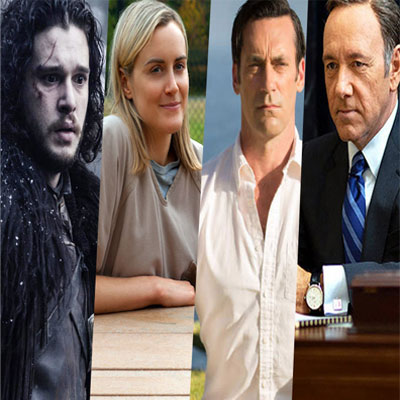
    Notwithstanding, overhear snatches of conversation of today’s youngsters and you’re most likely to hear show names such as Orange is the New Black, Homeland, House of Cards and Game of Thrones. However, a couple of pertinent questions to ask here are: Where are they consuming this content from and whether there is much scope for a genre like this to grow in a country as diverse as India?


    Even as piracy is rampant specially for English entertainment content, Indian broadcasters are going around with a fine-tooth comb in order to offer viewers the best content in order to feed their insatiable demand.


    The English Entertainment Growth Story


    According to the FICCI-KPMG 2015 report, English entertainment genre, which includes both English GECs and English movie channels, accounted for 0.9 per cent viewership in 2014 as compared to the 1.1 per cent in 2013.


    With the recent addition of Viacom18’s Colors Infinity and Colors Infinity HD, the number of English entertainment channels in India today has touched 20, as per TAM Media Research data. Of these, there are seven HD channels with the first half of 2015 alone seeing as many as five HD launches.


    Speaking to Indiantelevision.com, Times Network CEO and managing director MK Anand says, “With DAS phase I and II complete, as we go to phase III and IV, the potential to launch more and more niche channels and to reach out to specific people has become better and cheaper. With analog one could reach 100 channels through a network, whereas with digital we can technically and theoretically reach 500 channels.”


    While the niche English entertainment genre has seen content acquisition cost rising almost three-fold in the last couple of years, the fact remains that the advertising rates are nothing to write home about. Even as media planners suggest that there has been close to 43 per cent jump in the commercial time sold on English entertainment channels, the ad rate for the genre ranges from Rs 500 to Rs 2,500, which is considerably below the rates that Hindi GECs command. In a scenario like this, the question that looms large is whether it is even profitable to enter the space?  


    Viacom18 EVP head – English Entertainment Ferzad Palia says that close to 250 million Indians now are English literates, which was anywhere between 25-30 million, 10 years ago. Not just this, English entertainment genre currently reaches to 200 million consumers, with close to 60 per cent of English entertainment consumption coming from non-metros. While currently, the genre has only 4.6 per cent AdEx share of the whole television pie, Palia feels that the genre is lucrative from an advertiser’s perspective, as English entertainment consumers have 35 per cent higher disposable income.


    While the above figures and the liking for high quality content by youngsters justifies the many new launches in the English entertainment space, what is interesting to note is that networks today are investing not just on an English entertainment channel, but are also looking at catering to their HD audiences, by simultaneously launching the HD feed of the channel or only coming up with an HD channel.


    The HD Push


    GroupM head – trading & partnerships Jai Lala believes that there is scope for more HD channels in the market as the viewing pattern is changing. “With better TVs, and better availability of content, people want to watch the content in HD. The way we had SD, over a period of time, people would want to move to HD and that is where the opportunity exists,” he says.


    Digitisation and the growing emphasis of direct to home (DTH) players on HD is another reason for broadcasters concentrating on strengthening their HD bouquet. “The HD part is extremely small right now and at a very nascent stage. With an increase in the seeding of HD set top boxes, things will change. While currently HD penetration is mainly in SEC A cities, over a period of time, it will become mass,” opines Lala.


    Increasing penetration of premium, ad free channels like HBO Hits, HBO Defined and Star World Premier has given a major fillip to subscription revenues significantly for the English entertainment genre. Premium HD channels last year recorded 10X topline growth with DTH accounting over 95 per cent of the premium channel subscriber base.    


    The advertising revenue from HD channels, according to media experts is approximately Rs 250 crore. Lala estimates the English general entertainment HD market to be in the tune of Rs 100 crore.  


    Agreeing that the genre currently is not profitable, Madison Media Omega chief operating officer Dinesh Rathore says, “There is so much content available internationally and it is quite popular. Thanks to digitisation and digital penetration that people are watching this content through different avenues. This gives an impression that there is a demand for such content, but this is specialized content meant for a niche audience.”


    Giving examples of channels like Big Thrill and CBS, Rathore says that these did not work because they were not viable monetarily. “Today, every network wants to be available in every genre and with better quality. It is like building a portfolio in order to cater to your clients in every niche,” he opines.


    The Road Ahead


    While the English entertainment channels genre currently is a small player in the vast broadcast game, it has a chance to pick up with growing digital homes. Once a strong pipe is created, broadcaster will have to concentrate on bringing good quality content to viewers, preferably at the same time as its US release. They will also have to create enough room for sampling of content by viewers.    


    The key area of concern for English entertainment genre in India still remains that of piracy. According to Palia, the habit of ‘torent’ing amongst viewers has been inculcated by broadcasters themselves. “We have forced consumers to go and download. Research shows that people do not download just because they want to watch content immediately after the US launch. The real reason is that they aren’t getting enough content that they should be. There is a plethora of content that is not even brought to the country,” Palia had earlier said. 


    Media analysts are of the opinion that the English entertainment genre in the country should pick up in the next two-three years. Moreover, the huge time gap between the US and India release of a show is what eventually leads to downloading. If broadcasters can deal with this issue and develop appointment viewing amongst customers, the genre, which has immense potential given India’s high youth and English speaking population, stands to bloom.

  • Cable digitisation to increase tax collection: Economic Survey

    Cable digitisation to increase tax collection: Economic Survey

    MUMBAI: The Economic Survey for 2013-14 that was tabled by the Finance Minister Arun Jaitley shows that both the centre and the state governments will benefit from the digitisation of the cable TV industry in India because of the increase in tax collection from it.


    Jaitley in Parliament said, “Preliminary data from the state governments show that there is already two to three fold increase in entertainment tax collections.” The transparency in the subscriber base is set to add to the manifold increase in tax collection.


    Due to digitisation, opportunities are being created for the domestic manufacturers to delve into more set top box (STB) production. It stated that over three crore STBs have already been installed in the eight metros and 36 cities of the phase I and II of digitisation. The deadline for complete digitisation (phase III and IV) has been set to 31 December 2014.


    India has nearly 16 crore TV households with nearly 800 channels. Also there are 88 teleports. However, the benefits of digitisation are yet to kick in even in the phase I and phase II markets with only a few cities being billed as per the rules. Uneven and high entertainment tax is an issue that all the stakeholders including DTH, MSOs and broadcasters are standing up to and urging the government to look into and provide them relief. DTH operators are double taxed as they also have to pay a service tax apart from the entertainment tax.


    While DTH operators are adding 10 lakh customers each year, the government has also allowed two more operators to provide services through headend-in-the-sky (HITS) system. Effects of digitisation are already visible on film exhibition where 95 of the big screens are now digitised and the sector is ‘poised for buoyant growth in the long run.’


    The survey also stated that the media and entertainment industry has had tremendous growth and according to a FICCI-KPMG report, it is expected to touch Rs 1,78,600 crore by 2018. However, piracy remains a big challenge for the film industry and the government has approved an anti-piracy plan to combat it through legal methods.

  • Maya Digital Studios launches its 2D animation department

    Maya Digital Studios launches its 2D animation department

    MUMBAI: One of the pioneers in the art and technology of animation and visual effects in India – Maya Digital Studios – has announced its entry into 2D animation. The studio has launched its new 2D animation department with advance technology and facilities. After the huge success of its IPRs, Motu Patlu and Vir in 3D, Maya is now aiming to create a benchmark in 2D segment of domestic television.


    Maya Digital Studios chairman and MD Ketan Mehta said in a press statement: “India’s animation sector is growing at a rapid pace. Also there is an increased use of animation in TV advertisements creating a need for good animation studios with 2D and 3D specialisation. As per FICCI KPMG report 2014, the Indian TV advertisement industry size is expected to increase from Rs 136 billion in 2013 to Rs 253 billion in 2017 at a CAGR of 13 per cent. As the advertising industry grows it is expected that the share of animation driven advertisements will also grow, given that animated advertisements usually strike a better chord with the target group of children and young adults. Hence it was a very strategic move to introduce 2D animation at Maya Digital studios.”


    Marking the launch of its new 2D animation department, Maya Digital Studios is also hiring professionals for the position of concept artists, storyboard artists and story screenplay artists for their new department.


    Commenting on the expansion of animation industry, Mehta further added: “The current size of the industry is estimated at US$ 247 million and expected to grow at 15-20 per cent per annum. Indian animation companies and studios have been moving up the value chain to create their own intellectual property rights. 2D animation software is a fun way to create amazing scenes from one’s imagination; hence our new 2D animation segment allows us to build more IPR’s.  We are already in talks with broadcasters for two new IPR’s and are extensively looking at tapping the domestic television industry in coming years.”


    Maya Digital Studios has specialised in stereoscopic 3D and offers services for S3D visual effects, S3D CG rendered animation and with the new 2D animation department is all set to capture the growing Indian market.

  • Digitisation worked wonders for TV industry, FICCI-KPMG report

    Digitisation worked wonders for TV industry, FICCI-KPMG report

    MUMBAI: The Indian media and entertainment industry grew by about 12 per cent in 2013 amid overall muted growth due to economic slowdown, but digitization of cable TV worked wonders for the television industry, according to a FICCI-KPMG report released ahead of FICCI Frames 2014.


    The three-day trade event for the entertainment industry will be held from 12 March, and is expected to be attended by over 2,000 Indian and 600 foreign delegates.


    The FICCI-KPMG report said due to the economic slowdown, advertising revenue dependent sectors such as TV and print were impacted on a large scale. The depreciation in the rupee also affected print, cable and DTH companies adversely but helped export oriented sectors such as animation and VFX to some degree. At the same time, this was countered by the impact of continued digitisation of media products and services, and growth in regional media.


    Digitisation was moving in the right direction, with the mandatory Digital Access System (DAS) rollout almost complete in Phase II cities. The impact was felt to the extent that carriage fees saw a reduction of 15-20 per cent overall, however the anticipated increase in ARPUs and subscription revenues for broadcasters and MSOs (Multi System Operators) is expected to be realized only over the next 2-3 years.


    Other key highlights in 2013 were the inclusion of LC1 (less than class I) markets in TV ratings, the 12 minute advertising cap ruling and the shift from TRP to TVT ratings.


    What gained was the film industry by recording a double digit growth, albeit slower than in 2012, thanks to the multiple movies scoring big at the box office collections. Approximately 90-95 per cent movie screens are now digitised in the country, with a shift in focus to tier II and III cities. Going forward, multiplex growth is expected to slow down, in line with the overall delays and future expectations for retail sector and commercial real estate development, impacting box office growth in the short term.


    The Print sector continued to buck the global slowdown trend. The sector grew at a CAGR of 8.5 per cent this year to reach INR 243 billion. Regional markets performed exceedingly well on the back of steady advertiser spends, state election impact and new launches. However, with the validity of IRS data called into question by the industry majors, the sector in the short term suffers from the lack of a robust measurement system, critical for decisions on media planning and allocations.


    The total internet user base in India grew to approximately 214 million by end of the year with almost 130 million going online using mobile devices. Mobile Internet users dominated the total internet user base capturing an overall share of 61 per cent.


    Digital media advertising in India grew faster than any other advertising category. Streaming and download services continued to see growth in the music industry, with the growth in mobiles, in particular smartphones, contributing significantly to increased consumption of music ‘on-the-go’. However, with the continued decline in physical sales, compounded by the significant fall in ringback tone revenues (following the backlash of TRAI guidelines issues in 2012), the sector saw an overall fall in size by 10 per cent in 2013.


    Going forward, digital revenues are expected to drive growth in the sector. Further, the vibrant live events sector is expected to continue its role as a catalyst for driving growth in artists’ fan-base, and public performance royalties.


    FICCI M&E committee chairman Uday Shankar said 2013 was a challenging year for the media and entertainment sector. He opines: “2013 has been an important year for the media and entertainment sector. It was a year of challenges and significant change. The industry dealt with a host of issues that will lay the foundation for robust growth in the years to come.”


    Television saw the implementation of the 10+2 advertising cap, seeding of set top boxes in DAS 1 and II phases was largely completed – setting the stage of revenue growth and expansion in genres. The film sector continued to mature on the back of multiplex expansion and a wide range of content succeeding.


    Radio and print continue to defy global trends and await positive regulatory intervention that will take these sectors to greater heights. I am certain that the insights and findings from this report will provide a comprehensive and useful lens for all of us in the industry.


    KPMG head of M&E Jehil Thakkar states: “2013 was a year in which many parts of the M&E industry paused and took stock. Focus shifted from top line growth to bottom line growth with companies focusing on operations and efficiency. Inspite of a very challenging macro environment, the industry grew 12 per cent, a far better performance than many other industries. The structural changes taking place in the industry – especially in television and digital, continued to take the industry down the path of fulfilling its potential.”


    This year, the report also highlights opportunities that could come from tapping international markets such as the US and Middle East, with a special feature on opportunities in South Africa and Nigeria.


    Going forward, there is need for continued positive regulatory intervention, such as implementation of Phase III for the radio sector. In an increasingly digitised media world, the ability to create compelling and targeted content across multiple channels, will be the bedrock for creating differentiation in a cluttered market.

  • Post production segment moves focus to digital processes

    Post production segment moves focus to digital processes

    MUMBAI: The post production segment has moved focus from analogue to new age digital processes.

    The Ficci KPMG report notes that the post production segment is poised for stupendous growth as Indian filmmakers discover the magic of digitisation. Technology has revolutionised the very process of filmmaking, especially at the post-production stage. This has given rise to a plethora of digital labs and studios in India catering to new age editing, Digital Intermediate (DI) and other digital processes.

    The sector is currently estimated at Rs 15.5 billion and is expected to grow at a CAGR of 16 per cent by 2017. Key contributors to growth are established segments such as DI and also newer ones such as Restoration and Conversion. Additionally, the digital revolution has made the video editing work flow process quicker, from time-consuming (tape to tape) linear video editing to online editing suites and to computer hardware and video editing software such as Adobe Premier, Final Cut Pro, as well as the incorporation of Cloud technologies for storage and technology/software access.

    Colour correction via telecine on tapes for edit has replaced the traditional rushes printing process in the processing lab. The Steen beck method of editing analogue rush prints in a linear manner has given way to film editing on non-linear software-based systems such Avid/FCP. DI processes have moved up from 2K resolution to 4K resolution for greater detail and quality. The final deliverables for film outputs have increased from only analogue 35mm prints to Digital DCPs.

    Meanwhile, the VFX industry, a rapidly evolving segment in India, is estimated at approximately Rs. 7.77 billion and can be broadly classified into the following verticals – movies, TV shows and advertisements. As the segment is still at a nascent stage and domestic consumption remains limited, with mainly low-end work being carried out in India, there is considerable dependence on outsourced projects from the US and the UK.

    However, the domestic market is now witnessing bigger budget film releases and ad campaigns, for which players have increased spending on VFX so as to provide an enhanced visual experience for viewers. The segment registered 35 per cent growth over 2008-2012 and is expected to grow approx 20 per cent CAGR to reach Rs 19 billion in 2017.

    Technicolor India country head Biren Ghose notes that India has ascended to the top of the pyramid when it comes to CG animation/VFX productions. “MPC‘s ‘Life of Pi‘, ‘Prometheus‘ and ‘Skyfall‘; DreamWorks Dedicated Unit‘s – ‘Madagascar 3‘ and ‘Rise of the Guardians‘; Technicolor Animation‘s services in Mattel‘s ‘ Barbie And the Pink Shoes‘ and award winning episodic work for Nick on ‘Kung Fu Panda‘ and ‘Teenage Mutant Ninja Turtles‘ – is proof enough.”

    On an average, Indian movies have limited budgets for visual / special effects. In India VFX budgets are considerably below international benchmarks, even as a percentage of production costs. The VFX budgets for Hollywood movies range from $ 3 million to $ 9 million, which could cover the cost of an average Indian movie. However, VFX budgets for Indian movies, including regional cinema, are showing an increasing trend and are expected to boost the segment. Also, spends by the ad industry on VFX have been increasing.

    To create a 3D film, film-makers can either shoot films in 3D or shoot in 2D and later convert to 3D at the post-production stage. The latter approach is preferred as shooting in 3D is expensive, time-consuming and has limited flexibility and greater complexity in editing and adding VFX at the post-production stage.

    In 2012, ‘Star Wars I‘ and ‘Titanic‘ were re-released in 3D, generating box-office collections of $ 45 million and $ 54 million respectively. This indicates that there is a potential for 3D re-releases of older hits, especially given the relatively low conversion costs involved. After the release of ‘Avatar‘ in 2009, the number of 3D digital screens exploded worldwide from 3,800 in 2008 to approximately 43,000 in 2012. Also, in 2012 a deal was signed between China and US allowing 14 foreign made movies into China every year which is a 70 per cent increase in the current quota of 20 films. However, to qualify for the list the movies have to be in 3D or Imax technology. Ficci KPMG report has given the examples of companies like Prime focus which did 2D to 3D conversions for films like ‘Green Lantern‘ and ‘Clash of the Titans‘.