Tag: FICCI Frames

  • M&E industry can grow much more than it is right now: Sanjay Gupta

    M&E industry can grow much more than it is right now: Sanjay Gupta

    MUMBAI: Star India CEO Sanjay Gupta while talking during the final session of day one at the 15th edition of FICCI Frames 2014 — “Talking Numbers: Hard Facts about M &E’s Economic Contribution” — said that it seems that “as the media and entertainment (M&E) industry we have really forgotten how big we truly are, we are not just about showbiz. I believe we are undervaluing ourselves and instead of being a $15 billion industry we should be somewhere around $ 60 billion (that is, four times).”


    Gupta thinks that the industry has a potential to grow at the rate of 15 per cent, but it is rather doing just a shade below five per cent. “The industry, comprising of the stakeholders and the regulators, is having a very myopic view on how can we all come together to serve the consumer with what they want,” he remarked.


    He also brought to the fore the hurdles that a new player in the market can come across. “If I want to introduce a product which is of superior quality than what other products are offering, I have regulatory restrictions on the pricing not to mention the pressing taxation on the content,” he said.


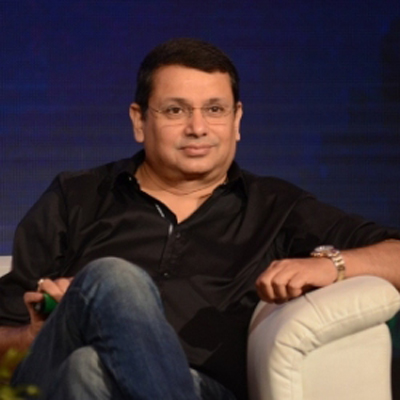
    The session, which was anchored by Motion Picture Association (MPA) India MD Uday Singh, brought up many major points about the contribution of the M&E Industry in the country’s economy and the hurdles that need to be overcome to improve the numbers.


    Besides Gupta, the panel comprised Viacom 18 Media group CEO Sudhanshu Vats, Disney India MD Siddharth Roy Kapur and Aditya Birla Group chief economist Dr Ajit Ranade who underlined the improvements that need to be brought in regulations, infrastructure, cutting down on piracy and much more.


    It was Viacom 18 Media group CEO Sudhanshu Vats, who called attention to the issues associated to digitization. He said: “With an expected growth of 21 per cent in subscription revenues and 15 per cent in advertising revenue by the end of phase three and four of the digitisation, the future for the M&E industry looks bright. But the pressing issue that needs to be addressed is though 40 odd cities have been seeded with boxes are they also addressable?”


    However, he thinks the future is bright for subscription driven markets with the oncoming of 100 per cent ad free channels like HBO Hits and HBO Defined.


    The panelists also discussed the contribution of the three major players in the Indian movie business — Hindi, Tamil and Telugu cinema — that contribute nearly 43 per cent, 19 per cent and 14 per cent respectively to the total revenue generation from the film industry. Singh remarked that with nearly 1.8 million people working in this industry, it is certainly one of the important contributors to the GDP of the country.


    Disney India MD Siddharth Roy Kapur said: “As far as the film industry is concerned, the three major areas of concern are creativity, infrastructure and piracy. Once we as a community get together and address these perils, I am sure the world will become a much happier place.”


    According to Kapur, the top 10 box-office hits contribute to nearly 50 per cent or more to the overall collections from the film sector alone, and the top seven male stars contribute to 45 per cent of the year’s overall box-office collections.


    Singh also brought up the topic of distribution and ARPUs (Average Revenue Per User), stating that with better addressability and packaging the ARPU will witness a substantial rise.


    Aditya Birla Group chief economist Dr. Ajit Ranade concluded the discussion with some mind-numbing numbers and facts. “The industry is currently going through a rapid transformation and the contribution to the overall GDP will see improvement in coming time but we need to take into account that the government is always struggling with a fiscal deficit, thus reducing taxation is not the final resolution.”


    “The right way forward is to move towards a micro payment format where the consumer pays for all the facilities he/she uses this will reduce a lot of disparities and only go onto strengthen the growth of the market and further contribute to the economy,” he concluded.
  • Industry leaders foretell the future

    Industry leaders foretell the future

    MUMBAI: The 15th edition of FICCI FRAMES witnessed a panel on ‘Television 3.1 Era’, where thought leaders discussed the future of the broadcast industry in terms of content, marketing and distribution in an era of convergence and multi-platform delivery mechanisms.  


    The panel was constituted by Celestial Tiger Entertainment CEO Todd Miller, Reliance Broadcast CEO Tarun Katial, NDTV Group CEO Vikram Chandra, MSO Alliance president Ashok Mansukhani, TV France International executive director Mathieu Bejot and Zee Entertainment chief content and creative officer Bharat Kumar Ranga.


    Having been there in the cable industry for nearly two decades, Mansukhani said there was a need for the industry to start providing content at a time of the viewer’s choice, at a price of the viewer’s choice, and in a manner of the viewer’s choice. “The young generation watches television on the iPhone or iPad. There is one big change that needs to come in the entire industry, which is to start addressing the young consumer in terms of his/her technological needs, content needs and legal rights to access content in whichever way they want to,” he said.


    Chandra said, “Years ago, we used to say that TV as we knew it will be gone forever. That trend is going to accelerate and linked to that is the crashing of price point of smart phone devices. We have to be prepared to change the way we are viewing our own models.”


    He said monetization is a challenge because online in India is still not at a stage it is in say the US though it will get there.


    According to Ranga, “We must not remain an India-based multi-national company, but we need to become a meta-national company. Every market in India, whether it is Tamil Nadu or Karnataka, we have to look at each market individually, closely, and work on it. The moment we do that, we will be able to call ourselves a meta-national company. That is a big change.”


    Ranga further said that the understanding between the network and the consumer is all important. “Finally, consumer-ish understanding is important as compared to market-ish understanding,” he said and added that the first two things would add up to the value of off-screen talent going up and that would take India ahead.


    Miller opined that while multi-screen content viewing would become fundamental in India in the next ten to fifteen years, it was a long road ahead. “TV viewing will still be the primary medium. So in India, HD is the thing and has a lot of room to grow,” he said.


    On his part, Katial said, “India has to see content as the central issue. In this area, India is very much ahead of some other countries where companies are providing content specifically for digital or TV. India however does broadcast quality content for digital.”


    Mansukhani drew attention to the fact that the youth will probably want to view more niche television. “There is a lot of international content that has to be made available. Also, regional content has to be customized. The value of local content cannot be ignored. A little more money for a little more valuable content can lead to better changes in the way we watch television,” he concluded.

  • “Broadcasters still haven’t got the benefit of digitisation”

    “Broadcasters still haven’t got the benefit of digitisation”

    MUMBAI: It’s been a chaotic couple of years for the media and entertainment industry marked by a lack of clarity – be it digitisation, ad cap or other regulations.


    Not surprisingly, this was the subject of a panel discussion on day one of FICCI FRAMES 2014, the 15th chapter of the annual convention.


    The panel – comprising Star India CEO Uday Shankar; Viacom18 Group CEO Sudhanshu Vats; FCC commissioner Ajit Pai; MIB secretary Bimal Julka; and Discovery Networks Asia-Pacific senior VP and general manager South Asia and head of revenue, pan-regional ad sales and South East Asia Rahul Johri and moderated by NDTV Group CEO Vikram Chandra – discussed ways and means by which the industry can overcome regulatory hurdles.


    The panel felt there should be clarity as to why regulations are needed in the first place and stressed on long-term solutions vis-a-vis short-term remedies. “The regulators need to know that there are certain ailments but immediate fixing is not a solution without knowing what the consequences will be,” said Shankar.


    Adding to this, Vats spoke about finding the purpose of regulations. “Media is in the consumer business and needs to run by what the consumer wants. Apart from this, there has to be transparency of data, accountability as well,” he said.


    Julka expressed the view that the media has come a long way from ‘license raj’ and is now moving towards partnerships and collaborations. “We must not forget that for us, our core target group is our viewers and listeners and we have to keep them in mind. So, whatever regulations we come up with, they have to benefit them. We don’t want to get into the revenue model or the business model. That’s TRAI’s jurisdiction and I think it is doing a fair job,” he said.


    Completing phases I and II of digitisation was a huge challenge considering the country’s demographics, he informed. “Thirty million set top boxes (STBs) have been installed and 110 million are yet to be seeded. It is a huge challenge for the industry as a whole. The government is just a facilitator.”


    However, Shankar countered Julka and said, “What is the objective of digitisation? When we started with the process, we all thought that it will increase the bandwidth, giving more space for channels and increase transparency as well. The only thing that has happened is that MSOs have placed boxes in certain households. The broadcasters still haven’t got the benefit of it.”


    Pointing out that the carriage fee is too high and the subscription rate too low, Shankar recalled the time he was heading Aaj Tak, “When I was heading AajTak, the carriage fee was zero but today, to run a channel, especially a news channel, one has to pay a huge carriage fee, which in turn harms the content on television.”


    Vats seconded Shankar and said, “The fundamental reason is addressability and that is far from over.”


    Johri drew attention to the fact that several developments were taking place, all at the same time, which should not be the case. “Digitisation needs to be completed first before other things are looked into,” he said. Readers may recall that indiantelevision.com had earlier reported how several people from the industry had said that matters like ad cap needed to be looked into after completion of the digitisation process by December 2014.


    While complimenting the government for pushing hard on finishing phases I and II of digitisation, moderator Chandra asked the panel for suggestions on how the industry can better overcome regulatory hurdles.


    To this, Vats suggested looking into the licensing issue first that would help get newer and better content players into the market. Secondly, he said digitisation needs to be completed at the earliest to settle the issue of addressability. Thirdly, he said the industry needs to give a second look to carriage fee. “There has to be transparency regarding the carriage fee and the amount needs to be open,” he said.


    Johri highlighted the need for an ecosystem that will nurture innovation. “Once digitisation is over, everything will fall in place,” he assured.

  • ‘New government should lay foundation for improving relationship with media industry’

    ‘New government should lay foundation for improving relationship with media industry’

    MUMBAI: The relationship between the media and entertainment industry and the government has “broken”. The industry and the new government that would be formed after the general elections should lay a new foundation for improving the relationship.


    That was the clarion call by Star India CEO and FICCI Media and Entertainment Committee Chairman Uday Shankar in his opening remarks at the 15th FICCI-Frames in Mumbai.


    Unless all the stakeholders get together for the betterment of the industry, the vibrancy of the media and entertainment sector will be at stake and the biggest victim will be free expression, said Shankar.


    He asked, “Why not nourish an industry that has huge potential? Why not support an industry that needs policy support and nor resources support?”


    The media and entertainment industry needs recognition that it is a potential economic growth engine and a force multiplier, he stated.


    He said the media and entertainment industry grew by 12 per cent in 2013 despite economic headwinds and added “it is a testament to the tenacity of the industry.”


    There is now tension between the media and entertainment industry and the government with the successive governments limiting free speech, he said.


    Surprisingly, irrespective of the party, the media has been at the receiving end. “Whether you trumpet youth leaders or the state leaders, media is asked to be accountable,” Shankar said.


    He also pointed out that the media created a political party out of thin air and put it in power, but eventually the same outfit has started making accusations against the media the moment accountability was sought.


    The government has not been able to harness the potential of the media and before the elections kick starts there needs to be a new “contract” between the media industry and the government, Shankar said.

  • Higher import duty on STBs will help local manufacturers: Manish Tewari

    Higher import duty on STBs will help local manufacturers: Manish Tewari

    NEW DELHI: Information and Broadcasting Minister Manish Tewari feels the higher import duty levied on set top boxes (STBs) announced in the Union Budget will give an opportunity for domestic manufacturers to benefit and not set back the digitisation process.

    “It is important that when such a huge exercise is undertaken, which involves a revenue of about $4 to $5 billion, essentially paid by the people of India and the multi-system operators, there should be certain tangible benefits which must accrue to Indian manufacturers.” he added while addressing the delegates of Ficci Frames in Mumbai via video-link from New Delhi.
     
    He has said digitisation is a major project that will ensure transparency and bring benefits to all in the long run. While the digitisation process has been set in motion following a legal remit, “there is also a social contract which calls upon all stakeholders in this, whether they are broadcasters, MSOs or cable operators to sort out the issues inter-se, because eventually, it needs to be a win-win situation for the broadcasters and the consumers.”

    He added that “If any section within this large family feels short changed, then obviously there‘s a cause of concern.”
     
    Tewari reiterated the firm backing of the government for the growth of the media and entertainment industry and said “this industry is not only a huge economic multiplier, but it also has the potential of absorbing creative intellect of young people. It is therefore incumbent upon government to put in place appropriate mechanisms which try and play the role of a facilitator and an enabler.”

    Digitisation was a dominant topic of discussion at the media and entertainment industry‘s mega event Ficci Frames 2013 held in Mumbai from 12 to 14 March, with policy makers, industry leaders and experts deliberating on various aspects of the process.

  • Govt firm on Phase 2 deadline, claims 60% digitisation in 38 cities

    Govt firm on Phase 2 deadline, claims 60% digitisation in 38 cities

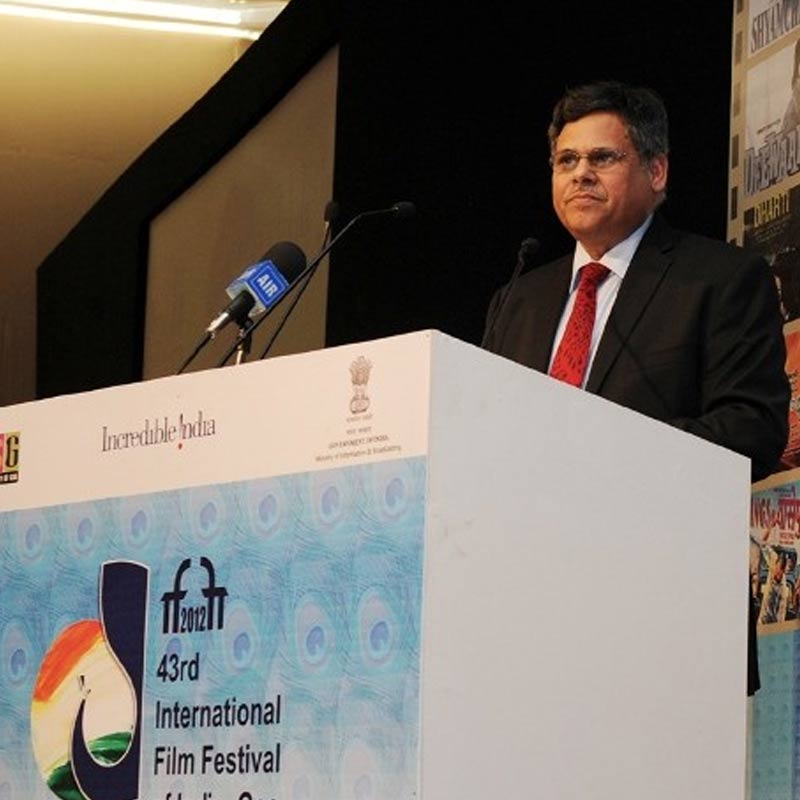
    MUMBAI: The Information & Broadcasting secretary Uday Kumar Varma has asserted that the government is firm on 31 March deadline.

    Giving a keynote at the Valedictory session of Ficci Frames, Varma said that the second phase of digitisation is on track with 60 per cent of households already going digital.

    "Digitisation is happening smoothly. We have achieved 60 per cent digitisation in the second phase. Subsequent to 31 March, the process will be irreversible," Varma said.

    Out of the 38 cities that are going digital in the second phase, as many as 10 cities have achieved 75 per cent digitisation.

    Four cities have been slow in implementing digitisation, Varma added. These include Ranchi, Srinagar and one in Tamil Nadu, where the state government is vehemently opposed to digitisation.

    "Out of 16 million STBs that are to be installed, 10 million have already been installed while six million are yet to be installed. However, we are confident that these will be installed within the deadline period," Varma asserted.

    Varma also said that the industry needs to keep the spirit of alignment to take the digitisation to its logical conclusion. However, he hastened to add that digitisation is still an incomplete task as even in phase 1 only set-top box (STB) has been installed and other aspects like Subscriber Management System (SMS) and billing are yet to be put in place.

    Digitisation, Varma said, will correct the aberrations of business model in the broadcasting industry and usher in an era of transparency.

    He also said that the role of state government is important for effective implementation of digitisation.

    He reiterated that the government can step in to provide guidelines for an independent television audience measurement system should the industry ask for it.

    "We need a robust and healthy ratings measurement agency," he said.

  • India  needs  to build a second sport

    India needs to build a second sport

    MUMBAI: In a single sport country like India, it is important for all the stakeholders in sports industry to come together and build other sports besides cricket through a right model and create an ecosystem that works for everyone in the value chain – federations, broadcasters and fans.

    That, the experts believe, will reduce the dependency of sports broadcasters on cricket, which is becoming financially unviable due to steep rise in acquisition of properties
    Television is one of the most important components of popularising sports. It is broadcast rights fee that helps sporting bodies world over to fund the development of sports – whether it be creating infrastructure, developing talent or attracting talent.

    World Sport Group South Asia CEO Venu Nair believes the right model for any sports federation in India is to grow their sport by reaching out to as many people as possible. He also cautioned sports federations against blindly following the Indian Premier League (IPL) model.

    "Every other day you see an IPL-styled league with a new logo pasted on it. IPL became the success that it is because there was a thriving ecosystem in place before it launched. Other sports won‘t taste success by just emulating the IPL model," Nair said, while speaking at Ficci-Frames 2013.

    His suggestion to federations: Forge strategic partnerships with broadcasters where both rights owner and rights holder are equitable partners. He also suggested that the role of a public broadcaster should not be undermined in popularising a sport.

    "A sport like Football can become popular if it works with a public broadcaster. That will help a sport to be sampled by more people and then make it a habit for viewers to watch that sport," he averred.

    The credit for making cricket a huge success on television goes to Doordarshan, feels Nair.

    "There were lots of triggers that made Cricket popular. One of those was Doordarshan. People started following the sport because of Doordarshan. It played a large part in driving traction for cricket," said Nair during a panel discussion on ‘Sports: Economic viability and the crisis within‘.

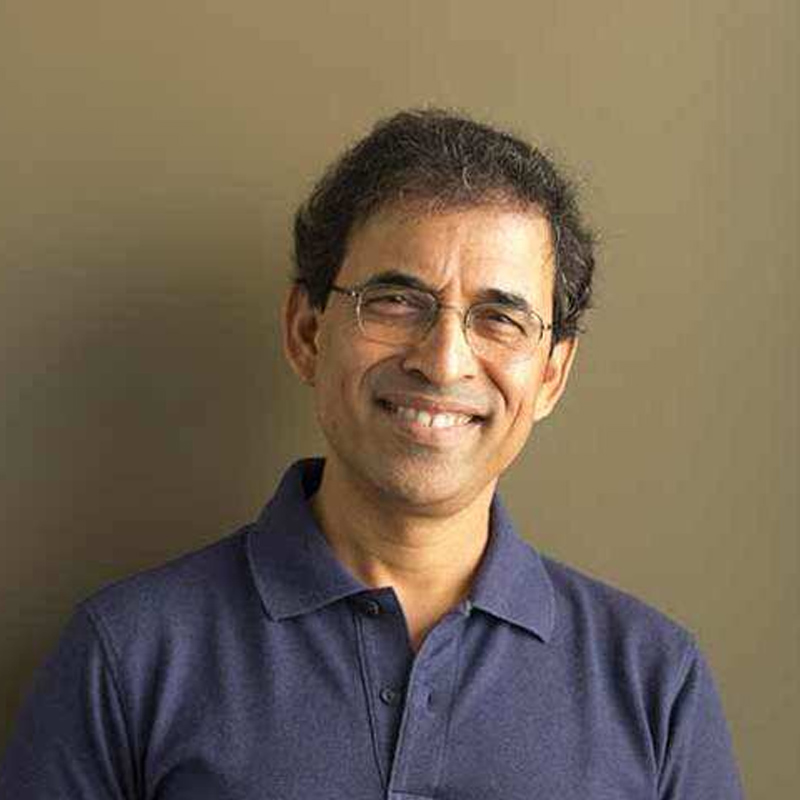
    Cricket commentator Harsha Bhogle, who was moderating the session, pointed out how BSkyB built EPL into a powerhouse in UK.

    All India Football Federation (AIFF) General Secretary Kushal Das feels the quality of Indian football has to be on par with international football.

    "The problem with Indian football is not so much cricket as it is football itself. Today, football fans have access to the best of Football leagues whether it is EPL, La Liga or Bundesliga. When you compare Indian football with these top leagues, we don‘t match up," Das said.
     
    Indian football, he feels, suffers a double whammy of almost non-existent infrastructure and lack of talented players. Unless these issues are dealt with, Indian football will continue to suffer.

    Das said a partnership between a pubcaster and federation will only work if both the partners work in tandem towards the same goal. In the Indian context, he said the bad quality of production and commentary on DD can put off viewers who are exposed to international quality football.

    Another critical factor hampering the growth of non-cricket sports is the lack of clarity on scheduling. An annual calendar that lays down the schedule is important, not just from broadcasters point of view but also for a fan.

    Indian Football, in particular, suffers from scheduling problem that has been giving nightmares to AIFF‘s broadcast partner Ten Action+.

    Addressability & price cap de-regulation

    Sports broadcasters at the session batted for de-regulation of price cap on cricket which hasn‘t changed much since 2003 while the cost of cricket rights have gone North in the subsequent years. Cost is a structural issue which can only be addressed by ramping up subscription revenues.

    Star India Head of Sports Nitin Kureja said the government has to relax price regulation and let the market forces decide the price. "The revenue side has been a huge challenge. In fact, it has been a challenge to exploit all revenue streams. While the cost of cricket rights have gone up, the subscription revenue has not kept pace," Kukreja stated.

    "Regulation should have differential treatment for different sports," he added. Star India had bagged the BCCI media rights for Rs 38.51 billion till 2018.

    Neo Sports Broadcast COO Prasanna Krishnan opined that addressability was a bigger issue than price cap.

    "You can charge 1,000 rupees but if you don‘t know how many subscribers you have, it won‘t make much of a difference. So in my opinion, addressability is a bigger issue. Digitisation in that sense will be a game changer," Krishnan contended.

    He also felt that the mandatory sharing of feeds with the pubcaster has robbed the broadcasters of exclusivity. Pilferage of signals only worsens the situation for a sports broadcaster who has committed millions of dollars.

    "The public broadcaster in our country is too cricket-centric. That has to change if the intention is to air events of national importance. Why doesn‘t public broadcaster telecast I-League?," Krishnan questioned.

    He said the pubcaster is choosing events that are commercially viable.

    WSG‘s Nair, however, put the blame squarely on broadcasters for the broadcast rights going through the roof. "I am sure the broadcasters themselves know that they won‘t be able to recoup their investments when they bid for cricket rights. That is something that we should address. There are certain rights that have some value," he said.

    Concurring with Krishnan‘s view, IPL CEO Sundar Raman said sports broadcasting is driven by subscription income globally unlike India which is dependent on ad revenue that keeps fluctuating depending on seasons.

    "When you are dependent on ad revenue to recover your investments, you are at the mercy of media agencies. Across the globe, sports is driven by subscription. The amount of money that broadcasters get in India as subscription revenue is pittance," Raman explained.

    Raman said the addressability of audience is the single biggest challenge for the sports industry.

    Apart from addressability, the key to growing sports is to market it well, micro-targetting audience by going regional and exploiting other revenue streams, said Raman.

    On marketing front, Raman said the Hockey India League (HIL) did a good job which sports bodies can emulate. The marketing will help build a habit of strong viewing among viewers.

    Commentary, he said, is also an important aspect of growing a sport that will help viewers to understand sport better. Broadcasters, he said, should approach different markets by launching regional feeds that will build an instant connect.

    "The problem is we tend to treat India as one big mass. There is a big opportunity in regional markets. We should have regional feeds with commentary in regional language," Raman said.

    He further stated that rights holders should start exploiting other revenue streams like digital media which will increase the reach of the event. "Consumption of sports on digital medium is increasing, we should tap into this segment but broadcasters are focusing on internet fearing loss of viewers."

  • All films of YRF to be released at IMAX theatres

    All films of YRF to be released at IMAX theatres

    MUMBAI: IMAX Corporation and India’s largest film studio Yash Raj Films Pvt. Ltd. today announced an expansion of their partnership to release Paani as well as all upcoming Yash Raj Films in IMAX theatres across India and other key markets.

    Paani is based in a future world where wars have broken out over water which is owned by International Corporations who use thirst as a weapon of control. In one such futuristic city, a young love story breaks all the rules and in the ensuing war, water flows back to its people.

    The film will have a strong Indian and Western star cast, headed by a young leading actor from India and a young leading actress from the West. Produced by Aditya Chopra, it is being directed by Shekhar Kapur and will be shot in India and overseas.

    The film will be digitally re-mastered into the image and sound quality of the IMAX Experience with proprietary IMAX DMR (Digital Re-mastering) technology for presentation in IMAX. The crystal-clear images coupled with IMAX‘s customized theatre geometry and powerful digital audio create a unique immersive environment that will make audiences feel as if they are in the movie.
    The agreement announced at the ongoing FICCI FRAMES brings the total number of films included under the expanded partnership to three, the first one being the upcoming action thriller Dhoom:3 which will open in IMAX theatres this winter.

    “Since announcing the IMAX release of Dhoom:3, we’ve seen tremendous anticipation building among Indian moviegoers around this first-ever IMAX release of a Hindi feature film, and we’re excited to add to this excitement with two more of our highly anticipated films, including our most ambitious one, Paani,” said Yash Raj Films Chairman Aditya Chopra.

    “We believe that together with IMAX, we will usher in a new era in Indian movie-going that will immerse fans into the drama, action and grandeur of Hindi movies like nothing they have experienced before,” he added.

  • LAIFC presenting global best practices at Ficci Frames

    LAIFC presenting global best practices at Ficci Frames

    NEW DELHI: The Los Angeles India Film Council are in Mumbai to share global best practice on the topics of co-productions, tax incentives, building talent skills in media and entertainment and encouraging knowledge exchange as a session co-partner at the ongoing FICCI FRAMES 2013.

    Set up in 2010 by a Joint Declaration between the City of Los Angeles and the Indian Film Industry, the Council has made significant progress forging partnerships between key stakeholders in the United States and India media and entertainment industries.

    The Council is supporting key panel discussions at FICCI FRAMES: ‘Indian Studio Infrastructure – Are We Ready For The Next Century?’, `Skills in M & E – The Next Big Leap Towards Creating Greater Talent’, `Single Window Clearance: Making India Easier For Filmmakers’, and key policy roundtables.

    Council members speaking at the key sessions include Frank Rittman – Senior Vice President, Regional Policy Officer and Deputy Managing Director, Asia-Pacific, Motion Picture Association (MPA), Catherine McDonnell – Head of Business and Legal Affairs, Fox Studios Australia, Uday Singh – Managing Director, Motion Picture Dist. Association (MPDA), India, Teri Schwartz – Dean, UCLA School of Theater, Film and Television, D.J.Narain – Director, Film and Television Institute of India and MPA’s member studio executives: Vijay Singh – Fox Star Studios, India and Vikram Malhotra – Viacom 18 Motion Pictures.

    “The global media and entertainment industry today is faced with a number of significant challenges as it works to meet consumer expectations in the digital age,” said Frank Rittman – Senior Vice President, Regional Policy Officer and Deputy Managing Director, Asia-Pacific – MPA. “Our partnership with FRAMES 2013 provides an ideal platform to discuss world’s best practices across a range of policy and commercial areas, which I hope prove to be beneficial to the local industry here in India.”

    Uday Singh, Managing Director, MPDA India, said, “The Council sessions are extremely pertinent for the cross pollination of ideas, best practices and talent between the film communities in India and Los Angeles. We are privileged to be associated with FICCI FRAMES, a global convention that continues to remain a leader in promoting the growth of the media and entertainment industry in India.”

    Vijay Singh, CEO – Fox Star Studios India, said, “It is inevitable that film studios in India will need to evolve their infrastructure in order to be globally on par with the best in technology, creativity and talent. I encourage the LA India Film Council to continue playing a vital role in promoting knowledge exchange in this area which is the need of the hour.”

    Added Vikram Malhotra, COO, Viacom 18 Motion Pictures, “The Council is making commendable efforts in sharing knowledge among the film communities of the two countries; India and USA. We look forward to a future where film making will transgress national boundaries and enrich the cultural quotient of the world.”

    The Council is also participating in ‘Shoot At Site’, a one-day focused and interactive conclave and B2B platform on Film Tourism on 15 March 2013. Shoot at Site aims to bring together the entertainment and tourism industries under the same platform to promote commerce between these two vibrant sectors. The Council will participate in key panel discussions during the above event to help stakeholders discover the benefits of co-productions, film incentives and how these have a positive impact on tourism and the economy of a country. The Council will also release a special report by Ernst & Young at this event.

    “If you want to create a successful local production industry, it is essential that you are in a position to compete with some of the very attractive tax incentives that are on offer around the world. FICCI FRAMES is the perfect forum for constructive discussion on tax incentives and co-productions, and I look forward to participating thanks to the LA India Film Council,” said Catherine McDonnell, Head of Business and Legal Affairs, Fox Studios Australia.

    Added Teri Schwartz, Dean – UCLA School of Theater, Film & Television, “I am honored to participate at the 2013 FICCI FRAMES Conference, and applaud this great initiative by the Council. I believe the development of talent and skill sets in the media and entertainment industry should embrace global diversity and be welcoming of talent from all all walks of life. I hope the Council’s continuing efforts will help with the free exchange of talent not only between our two countries, but across the globe.”

    In 2012, LAIFC undertook several initiatives to engage with key custodians and stakeholders of the two filmmaking communities in the United States and India, including the establishment of discussions on content protection in the digital era, stimulating film co-productions, launching a short film festival, and participating in film festivals and the release of two reports on film incentives and monetising digital content.

  • India must act strongly against piracy if cinema is to thrive: Dodd

    India must act strongly against piracy if cinema is to thrive: Dodd

    MUMBAI: Even though the Indian cinema is thriving and poised to become a $ five billion industry in the next two years, the government must act strongly against piracy if this growth has to be sustained.

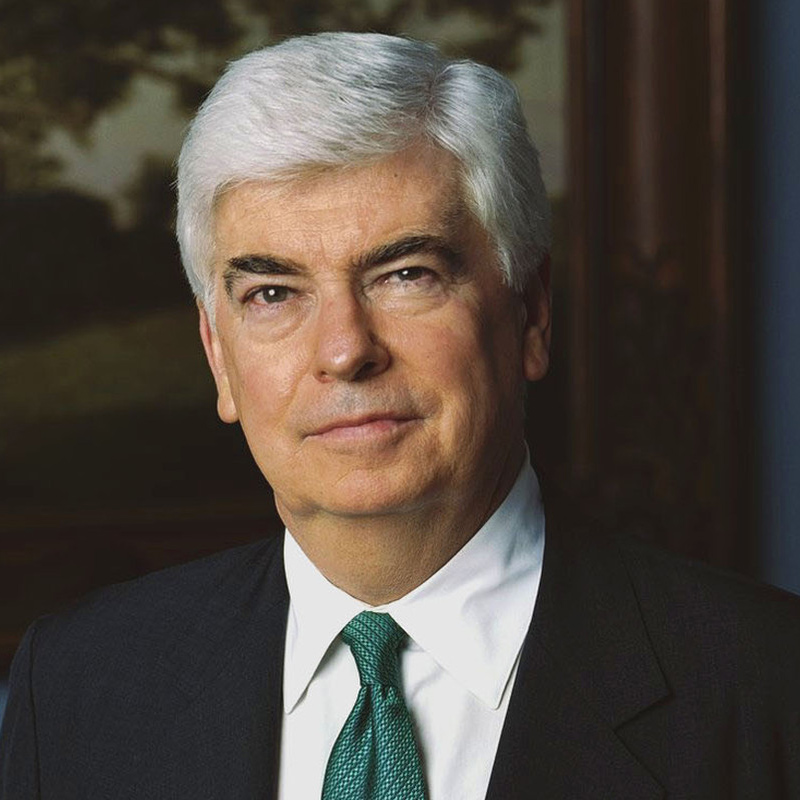
    Motion Picture Association of America CEO Chris Dodd said during his keynote address at Ficci Frames on the opening day that movies contributed about $ 640 million to the Indian economy annually. “India is the biggest movie ticket market in the world, with 3.3 billion tickets sold every year. India‘s movie industry is in transition from being a $ 3.2 billion industry until two years ago, towards becoming a $ five billion industry in the next two years,” he added.

    But he regretted that India was among the top 10 markets when it comes to copyright infringement online. He called for joint efforts between the industries to end theft of content as it is a major threat.

    Dodd quoted an Ernst & Young report which said the Indian movie industry loses around $ one billion due to content theft every year.

    He said the notion that one cannot be pro technology and pro copyright at the same time is false. It is important to build relationships between content and technology. The Indian government must act to protect against online theft, he said, adding the government should pass anti-camcorder laws since camcorders are used in cinema halls to pirate films which are then made available on Indian streets within a few days of a film‘s launch.

    He noted that it was important to end piracy in India as money is lost not just by the faces seen on the screen but also by other people like truck drivers, dry cleaners etc. who contribute to the film industry by working in it. He mentioned Creative America which is a grassroots coalition in the United States aimed at protecting intellectual property and commercial interests of Hollywood.

    He noted that in 2010, the Los Angeles India Film Council was formed to facilitate the exchange of ideas, talent and investment. This will lead to more activities, he said. The aim of the council is to also break down barriers in production and distribution. The Council will also look at harnessing the power of emerging technologies and bring artistes to collaborate on new ideas. “Film remains a key growth driver despite economic uncertainties,” he said.

    Hollywood will release around 36 films this year, he said, and the India market was a huge opportunity that the US motion picture industry is keen on tapping.

    Stating that collaboration between the Indian and the US movie industries is expected to increase, Dodd said “barriers that prevent production and distribution of content must be brought down.”