Tag: FICCI Frames

  • KPMG-FICCI: TV industry to touch Rs 1,09,700 crore by 2020

    KPMG-FICCI: TV industry to touch Rs 1,09,700 crore by 2020

    MUMBAI: If 2015 was a good year for media and entertainment industry with a growth rate of 12.8 per cent taking it to Rs 1157 billion,(RS 1,15,700 crore) with advertising revenues touching Rs 475 billion (Rs 47,500 crore), 2016 promises to be even better. Estimates show that the industry is to touch  Rs 1315 billion by this year end, with television alone commanding Rs 617 billion (Rs 61,700 crore). And the industry stalwarts project even rosier tidings for 2020.

    As per KPMG- FICCI Indian Media and Entertainment Industry Report 2016 that was released on 30 March at FICCI Frames 2016, the sector is projected to grow at a CAGR of 14.3 percent to be valued at Rs 2260 billion (Rs 2,26,000 crore) by 2020, with advertising revenue touching a whooping Rs 994 billion (Rs 99400 crore) at a CAGR growth of 15.9 per cent.

    Television continues to thrive:

    While 2015 saw the growing stress on the need to transport from traditional media to digital options, the current report reassures the continued importance and relevance of television as a medium, which is projected to grow at a rate of 15.1 CAGR between 2015- 2020, and touch Rs 1,09,760 crore by 2020, out of which Rs 364.5 billion (Rs 36,450 crore) will be contributed by advertising revenue. TV ad revenue is expected to touch Rs 210.3 billion (Rs 21,030 crore) by the end of 2016. On the other hand, subscription revenue for broadcasters is expected to grow at a CAGR of 15 per cent between 2015- 2020, to Rs 733 billion (Rs 73,300 crore). Subscription revenues for TV is estimated to have grown at 13 per cent to reach Rs 361 billion (Rs 36,100 crore). While the figures show a positive growth in advertising revenues, a delayed digitisation process would slow down the subscription growth.

    Digital, the fastest growing medium:

    Digital Advertising will continue to grow at a high CAGR of 33.5 per cent, the highest growing medium of all. The evident shift would be towards mobile and video advertising backed by the opening up of bandwidth in the country by 2020. The report estimates that by 2020 digital advertising will touch Rs 255.2 billion  (Rs 25,520 crore) and contribute 25.7 percent of the total advertising revenue.

    Impact of BARC India ratings on Television:

    There are no two opinions about the fact that roll out of BARC ratings was a major event that changed the face of the industry, and perhaps its rules as well.  The implementation of BARC was a major theme in 2015. While inclusion of rural markets and increase in sample size led to a reshuffle of rankings in the ratings of TV channels, particularly highlighting the viewership of FTA channels, there was no immediate impact on ad budget allocations among channels or genres. Going forward, sustained trends in ratings could lead to advertisers re-thinking their ad spend mix and broadcasters their content strategy.

    Paid C&S penetration of TV:

    The number of TV households in India has increased to 175 million (17.5 crore), at 62 percent growth rate. The figures are estimated to touch 200 million (20 crore) by 2020, with paid cable and satellite subscriber base growing to 174 million (17.5 crore) and command a lion share of 87 per cent of total TV households. However, when considering distribution, challenges in improving addressability, increasing monetisation continues to plague the industry, the report foretells. Meanwhile, competition in the TV distribution space is expected to intensify with Reliance Jio coming in the cable TV business.

    ARPU continues to back DTH growth:

    As per industry observations shared in the report, DTH has seen an ARPU growth of 10 per cent in 2015, driven by price hikes,  and increased HD feed penetration which constitutes 15 percent of the total subscriber base in the sector. This trend is expected to rule the sector in the upcoming years as well, with average ARPU of HD subscriber estimated to grow to 1.5 to 2 times that of a non HD subscriber. The report also hints at a growth in demand and adoption of 4K STBs, though lack of enough 4K content could be a disadvantage to this growth.
  • Research imperative to exploit big sports leagues

    Research imperative to exploit big sports leagues

    MUMBAI: The year 2014 witnessed the emergence of sports as it rekindled the nation’s hope and sports channels played a huge role in creating buzz in the arena of sports.


    The successful league models in Kabaddi, Cricket, Hockey, Football, Badminton and Tennis paved the way to create viable career options for young Indians. However, the key to success remains in monetization and return of investment for stakeholders and the sustainability of their business models.


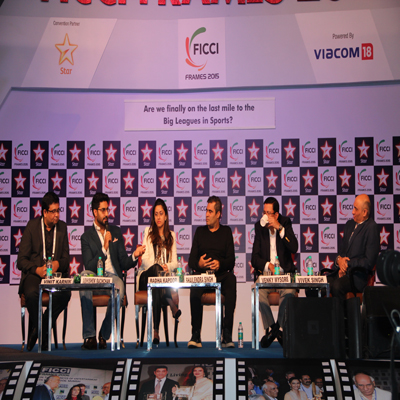
    In a session of FICCI Frames moderated by Group M national director sports and entertainment Vinit Karnik, which had Percept joint MD Shailendra Singh, DOIT media founder Radha Kapoor, KKR CEO Venky Mysore and various sports franchise owner Abhishek Bachchan, panelists spoke on the issues relating to a national policy on sports.


    Infrastructure status to build stadiums and facilities, challenges before rights holders to monetise sports content, franchisees business models and a national curriculum on sports were some of the topics that were touched upon.


    The panel spoke aggressively against federation becoming a regulatory body and intruding into business strategies of a privately owned entity. Speaking on the same Singh said, “The growth is determined by demand and supply, you can make money of something you go for it. India has a large youth population desperately waiting for an opportunity to make a career out of sports but what’s stopping them is poor infrastructure and that is where Narendra Modi is going wrong. The federations are unwanted obstacles headed by corrupts. They make things difficult and people walk off from doing a business. I organised a similar tournament like IPL in 1999 but Dalmiya called it Masala and asked me to stop it immediately. Today BCCI cherishes the IPL.”


    While Venky Mysore, who closely works with the BCCI being the CEO of Kolkata Knight Riders (KKR), emphasised on the commercial sector saying, “While it’s easier to work with the BCCI considering the fact that one has to deal with less number of people compared to the sports ministry, their intrusion in the business and strategic affairs of the franchisee is a bit irrational. KKR has made money out of IPL and we are a debt free franchisee – a fact that I am proud of. For any brand to work in India you need fans and the ratings show that KKR matches always bag the pole position. So every new sport has room but it should not be rushed as the loss is immense.”


    While non-cricketing sports are also emerging in the major sporting league category, making money out of them is difficult for broadcasters, addressing the issue Bachchan said, “When Charu came to me with the Pro Kabaddi concept, I was shocked. But after seeing the ground reality my perception changed. There are more than 1500 Kabaddi clubs in Mumbai desperately looking for an opportunity and a platform to showcase their talent and Star and Pro Kabbadi League opened it up for them. The Indian Super League (ISL) is another example of broadcasters and corporates coming together to put up an exquisite event. Due to the ISL deal that ensures ground level improvement of the sport, more kids are getting the infrastructure they deserve, which will show its relevance 10 years down the line.”


    DOIT Media founder served for more women participation and declared new platforms for women in India. “We are launching a new kabaddi league dedicated to women, which will ensure their participation and it’s just the beginning. Every sport in future may have a female version too because the talent exists but gets rusted due to lack of use.”


    Every major sport now has two leagues but all of them are not profitable for the broadcaster. Kabbaddi changed rules to rope in more revenue generating opportunities and the federation supported it, cricket also did the same with innovations like strategic time out. While it is very important not to lose the authenticity of the sport, generating revenue is a big necessity in order to ensure longitivity.     

  • FICCI FRAMES: Prasar Bharati CEO Jawhar Sircar to speak on pubcaster & revenue

    FICCI FRAMES: Prasar Bharati CEO Jawhar Sircar to speak on pubcaster & revenue

    NEW DELHI: Prasar Bharati chief executive officer Jawhar Sircar will be addressing the annual FICCI FRAMES convention commencing in Mumbai on how a public broadcaster can still earn revenue.


    Sircar’s talk is on “India 2015: Role of the Public Service Broadcaster and Lessons from the World.”


    The three day convention from 25 – 27 March will extensively cover discussions on various issues related to the media sector centred around the theme – how to make India a Global Entertainment Superpower.


    Sircar said, “There is no nation in the world that does not have a decent public broadcaster and some of them like BBC or NHK Japan or the Korean Broadcasting System are legends, mainly because their nations, people and their governments wanted them to be so and help them succeed. India cannot be an exception as it is the only public broadcaster, which operates from the icy peaks of Kargil to our lonely borders in Arunachal, right down to Andaman and every possible corner of India: without ever looking at short-term commercial gains.”


    This panel discussion is scheduled on the second day of the entertainment and media conclave and will be moderated by business journalist Pranjal Sharma featuring BBC Global News CEO Jim Egan and Russia’s largest media corporation and public broadcaster – VGTRK deputy CEO Ayuna Badmaeva.


    The other key participant is Asia Pacific Broadcasting Union (ABU) secretary general Javad Mottaghi, who is a special invitee at FICCI FRAMES 2015.


    FICCI secretary general Dr A Didar Singh said, “The discussion would provide greater clarity on how to maximise the efforts of public service broadcasting, and also how institutions like Prasar Bharati can balance their programming mandate with effective revenue generation, and remain relevant in the digital era.”


    The session will explore the relevance, importance and space for Public Service Broadcasting in today’s ‘always connected’ world which offers a multitude of choices by way of content, delivery platforms and engagement channels.


  • Election 2014: The rise of social media

    Election 2014: The rise of social media

    MUMBAI: India is witnessing an election with several firsts to its credit. Not only is it the first time that a million youth are voting, it is also the first time the campaign spends of political parties are second only to the USA, the first time channels are jostling to show which one is more unique and it is also the very first time that social media is so actively involved in elections.

    IBN network managing editor Vinay Tewari puts it as:  “Today for any big event, social media communication is big. No news channel can survive without social media.” The 2009 Lok Sabha elections did not see as much mobile and social media penetration. So much so, the FICCI FRAMES annual report did not have a ‘new media’ section till 2011. 

    According to the report, the total number of internet users in India is 214 million, out of which 130 million access it through their mobile phones. This is just 17 per cent of the total population of the country!

    “It took a decade for the country to grow from a 10 million to 100 million internet user base and only three years to double (2011 to 2013) that number to 100 million.” says the report.

    According to India Today Group COO Digital Salil Kumar, “The age group of 18 to 24 years and then those above 24 years are the most vocal in the metros but maximum growth is being witnessed from tier two and three towns.”

    The FICCI FRAMES 2014 report says that by the end of 2013 there were nearly 72 million rural Indians who had accessed internet at least once in their lives and 49 million were active internet users. The primary reason that holds them back is unavailability of content in their local languages, which is something channels and mediums are trying to slowly bridge.

    Naturally, channels are pulling out all stops to get viewers hooked onto the second screen. CNN-IBN has a tie up with Microsoft and Google; ABP News and Aaj Tak are using their intense social media following; Times Now and CNBC-TV18 have tie ups with Twitter; while NDTV depends on its own proprietary material such as second screen and its app which has six million downloads.

    Aaj Tak had come up with an innovative campaign last year called E-Election (E-Chunav) where users were asked to virtually vote for their state parties in Delhi, Madhya Pradesh, Rajasthan and Chattisgarh, in order to gauge the mood of netizens. “With a dedicated team in place, we have been leveraging the medium to disseminate news, listen to feedback, hear views of the community and share  them back with audiences on TV, including the panelists on programmes,” says Kumar.

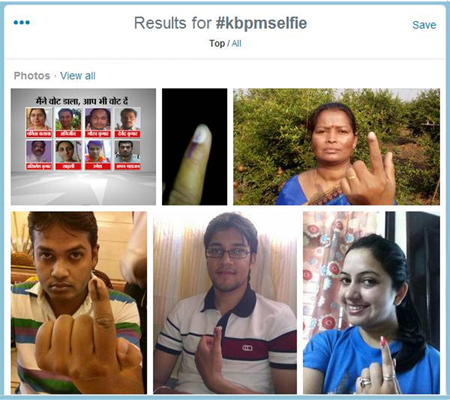
    ABP News started the trend #KBPMSelfie that encouraged voters to send selfies of their inked fingers through Twitter, Facebook and mail, leveraging its popular show Kaun Banega Pradhan Mantri (KBPM). It claimed to have received more than one lakh pictures. "We use social media actively throughout the year and we only see this activity increasing as news consumption on this platform is growing," says MCCS marketing manager Vikas Singh, the company that runs ABP News.

    An important medium for feedback, social media can no longer afford to be clubbed together with TV.  In fact, intensification on social media is not just for the elections but also post elections to retain people.  While Aaj Tak wants to improve its engagement with viewers as well as build brand loyalty among them, ABP News' Singh maintains, "From a channel perspective, it helps us communicate much better with our audience. Earlier if it used to be a one way communication, social media now helps it to become a two way channel. News travels faster and a lot of consumption of news happens through referrals, sharing and comments."

    According to Tewari, “The current focus is only elections. Post that, the interest in politics may decline but creating stickiness is something everyone is doing.”

    Word of mouth has become the biggest marketing tool today. The fact that news travels and gets consumed faster through social media means that it is effectively used for content dissemination and to provide breaking news. ‘Viral’ and ‘trends’ are the new operative words.

    Twitter claims that the buzz around the 2014 election on its platform in the last year has increased 600 per cent while the mention of political parties and candidates since the beginning of 2014 has gone up 10 times.


    Facebook has come up with an ‘I’m a Voter’ campaign urging voters to click the button and tell everyone about their moment of pride.

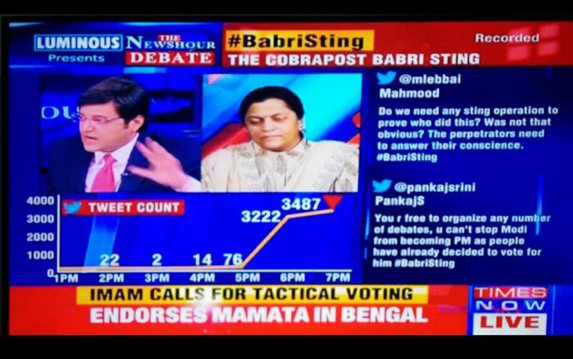
    This also brings us to the question as to how much of this information can actually be termed dependable? Times Now is doing live sentiment analysis of Twitter feeds while Network 18’s news channels are analysing election data through Microsoft’s technology. However, NDTV group CEO Vikram Chandra feels that these data are not very conclusive. “Though social media is an important factor, it is not necessarily the single factor that will dominate voting decisions. You have to also keep in mind that only a particular segment of the population has access to the internet or twitter. So mood gauging is fine but I am a bit wary of how far you can take it,” he says.

    With ABP News focusing on Facebook (3.9 million), Twitter (5.05 lakh) and G+ respectively while Aaj Tak on Facebook (6.5 million), Twitter (30,000), G+, YouTube, Flickr and Pinterest, CNN-IBN and IBN7 on their own websites first and NDTV depending on the second screen with its own application having 3.2 million followers on Facebook and 1.92 million on Twitter, how much of this information can be relied upon becomes a pertinent question.

    “In the last election, social media was considered a medium of a few. Internet penetration was not so deep. In the current environment, it is considered a major influencer and a lot of recourses have also been deployed by all political parties to influence the voter,” points out Kumar. Online data says that in 2009, the number of Facebook users was 1.6 million which has now crossed 100 million,  while Twitter which had about 0.6 million subscribers, hasn’t really caught up and currently has approximately 40 million visitors. However, it seems to now be making the most buzz.

    “Voting for Lok Sabha #Election2014 in India begins today in what has truly been the country’s first Twitter election” said a Twitter statement on the first day of elections. Even then, the social media user penetration in the country stands at 10.5 per cent of the total population, which is expected to grow to 17.2 per cent by 2017. So, although channels are vehemently focusing on communication through digital media, it still remains a small but actively growing part of the population.

    Quite possible that by then the meaning, use or method of ‘social media’ might change. However, channels are keenly tracking the number of followers, likes, people talking about it and the growth level. As India’s mobile and internet penetration sharpens and connections become better and cheaper, the social media landscape for news will totally change.

  • ‘Social Tracker’ to track LS elections

    ‘Social Tracker’ to track LS elections

    MUMBAI: With elections just a couple of days away, the debate over the role social media will play in these Lok Sabha elections has just got intensified.


    A plethora of politicians, political parties and their supporters have taken over the social media to reach out to the urban youngsters. The common man too has taken on to the digital world to express their views on various issues related to the general elections. The reason is simple: social media is free and democratic. One has the freedom to voice their opinion as well as get others involved in the information.


    This year’s FICCI Frames too explored the medium when it left the forum open for discussion on ‘Internet and Democracy: Interloper or Catalyst.’ The panelists during this forum discussed how Obama’s election campaign exploited the power of the social media to spread the word, garner support and get people engaged and how Indian politicians can also take a cue from it.


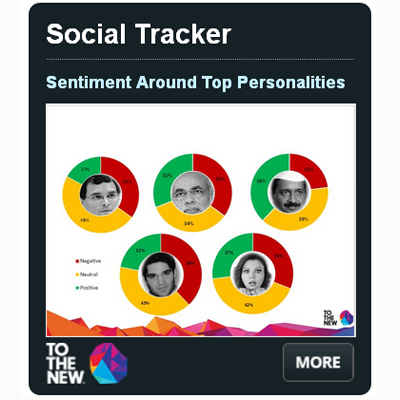
    To monetise on the trend, ‘To The New’, a social and mobile first digital service provider has launched a real-time tracker that evaluates digital conversations. The free-to-all ‘Social Tracker’ currently available on IBN Live gives people an insight on what conversations are happening on the general elections.


    “Thanks to mobile penetration and the free nature of social media, a lot of youngsters are on the medium apart from others who are following the elections closely. This tool will help not only the news portals, but also common man to know what is everyone talking about,” says Thoughtbuzz COO Ashok Patro.


    He adds, “Political parties and politicians too have realized the importance social media has and that is the reason why they are so active in the virtual world this time around.”


    The digital agency uses its expertise to track what is happening across social media platforms – blogs, forums, twitter, facebook etc. And this is what separates them from the likes of Google trends or twitter trends, boasts Patro.


    Currently, ‘Social Tracker’ works on a dashboard, Omnio and has three panelists analysing these trends 24*7.  “While currently we are available on IBN Live, we have also been approached by other news portals and the discussion for the same is on,” says Patro when asked where all will it be available in the future. However, he clarifies that each portal will get something different because like various polls and surveys conducted by channels and research firms, they all want something different to offer to their viewers.


    Parties, personalities/politicians, in general conversations and trends on LS elections is what the tracker focuses on.   “The conversations keep changing, but we always focus on top five parties. Out of this, Congress, BJP and AAP (in no particular order) form the top three while the other two vary on issues discussed on a particular day,” informs Patro.


    Apart from daily analysis, there is a weekly analysis done as well for the weekends.

  • Media’s love-hate relation with politicians won’t change

    Media’s love-hate relation with politicians won’t change

    MUMBAI: Earlier in the day the comment about the “media being sold” by Aam Aadmi Party chief Arvind Kejriwal hit the headlines. And it was just apt for NDTV editor Vishnu Som to kick off the session – Media as Opinion-Maker – which he was anchoring at the recently concluded FICCI Frames 2014 by posing the first question to the AAP representative Shazia Ilmi, who was in the panel along with Minister of state, IT and communications and shipping, government of India Milind Deora, BJP Maharashtra state unit president Devendra Phadnavis, Reliance entertainment chairman and FICCI convergence committee chairman Amit Khanna and All India Trinamool Congress representative and member of parliament Derek O’Brien.


    So, Ilmi was asked if it was right on Kejriwal’s part to shun the media as it was the media who made AAP. While she agreed that the media had been friendly to AAP, she also pointed out that it was left with no choice than to cover AAP as many others were doing it and the interest also lied there.


    Deora, however, presented quite a friendly take about media as he remarked, “When someone chooses to be a politician you are placing yourself under scrutiny. It is extremely immature to talk about media being fair or unfair.”


    As the discussion continued, many topics from the importance of “social media” in the general elections to the issue of BJP Prime Ministerial candidate avoiding an “one-on-one” talk with media came up.


    In fact Modi took a fair share of the time during the discussion. From his style of promoting himself to his recently devised campaign “Chai Pe Charcha” formed a major part of the conversation.


    “Modi believes in one way communication,” was the remark made by O’Brien to which Phadnavis retaliated by stating that Modi may not be talking to media but he is talking to the people through ‘Chai pe Charcha’.


    O’Brien didn’t miss an opportunity to take a potshot at the Congress also when he wittily remarked to Deora that it was the Congress’ Mani Shankar Aiyer, who gave Modi the lollypop by calling him a ‘chaiwala’.


    Even Ilmi thinks that Modi must come out and answer crucial questions as to what are his views on important policy decisions that need to be taken rather than just show his ‘model of Gujarat’.


    The discussion turned towards censorship when Khanna said that our country lacked a concrete form of a regulator such as the Federal Communications Commission (FCC) in the US. “We have the Telecom Regulatory Authority of India (TRAI) which does not actually have the mandate to regulate broadcast or content,” he said.


    We are standing at the brink of a media convergence occurring right in front of eyes but O’Brien says that it won’t be just social media that will be impactful in the future. “The mobile will be an important tool in the hands of every person in this country,” he said while also highlighting the fact that the real action was happening in regional media.


    Media in the country is no longer a form of public service. It is a combination of that and a business, which Som admitted himself. “If one is looking to the media as the sole repository of honest investigation of truth then unfortunately it does not exist currently,” he said.


    The one point that all politicians agreed was that they needed the media as much as media needed them and both the media as well as politicians were seeking to increase the level of engagement.

  • Should creative content be barred from widespread dissemination?

    Should creative content be barred from widespread dissemination?

    MUMBAI: Companies and people logger heading over Intellectual Property (IP) is nothing new in India. Over decade, we have seen people taking each other to court for “stealing” their ideas and this has raise the question: should the intellectual property or creative content be barred from widespread dissemination to protect the hard work of producers, or should it be freely spread around the world in a global economic era that often doesn’t have boundaries?


    To find a solution to these and similar questions, a panel anchored by NDTV editor and senior anchor Vishnu Som highlighted issues around intellectual property and the dynamics of its ownership in an industry that is rapidly becoming characterised by multiple content distributors over multiple delivery platforms discussion on “Intellectual Property, Piracy and the Creative Industries” on the third and final day of the FICCI FRAMES convention being held in Mumbai.


    Present on the panel was Government of India registrar of copyrights Dr G Raghavender. He spoke about the Copyright Amendment Act, 2012. The amendments were designed to extend copyright protection to the digital environment in harmony with the World Intellectual Property Organisation (WIPO) Copyright Treaty and the WIPO Phonograms Treaty, 1996. The bill introduced exclusive economic rights for performance, and, for the first time, moral rights for performers.


    But Star India president and general counsel Deepak Jacob differed in his view about the bill. He said that it had a fundamental problem: Of the five key stakeholders that come under copyright, viz. the print , film, television, radio and animation and gaming sectors, not a single one was consulted when these amendments were proposed. They were proposed at the behest of certain vested interests, primarily authors of literary and musical works, and certain performers. The amendments have actually created an impasse in the film and television industry, where authors have become trade unions holding film and television producers and content creators to ransom by demanding exorbitant royalties.


    Saikrishna & Associates partner Ameet Datta, felt that the statutory requirement that when government evolves policy, it will focus on multiple stakeholders, is a positive development. Yet, there was bound to be friction between the expanding numbers of stakeholders and levels of dissemination; he suggested that involuntary licensing could provide industry with seamless access to works.  He also flagged up the issue about the biggest brands being advertised on pirate websites.


    “The dumber you act, the less responsibility you will have,” is what the law is suggesting, said Copyright Integrity International Nandan Kamath. The laws need to take responsibility for content on networks. He felt that the issue of digital piracy is not just legal but has ripple effects into the monetisation of content. Piracy itself is not well defined, and has lots of grey areas.


    World Economic Forum Entertainment and Information Industries media director Annie Luo, discussed about her work on intellectual property in the digital context, that identified cultural differences as an element affecting how people related to the digital media.


    FIAPF director general Beniot Ginisty felt that it was important for producers to enjoy full contractual freedom to produce films and robust operate in a high risk financial environment.


    Questions from the audience revolved around who in a team would be the “owner” of a script, how young people could be educated about piracy, and when permissions were needed to use content.

  • “TV news has changed and it won’t change back”

    “TV news has changed and it won’t change back”

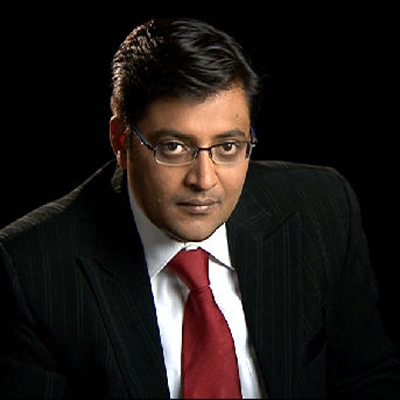
    MUMBAI:  “It’s ironical that a journalist who has been labelled as ‘self opinionated’ has been called for the session on ‘The electronic news media: on fine balance?’” began television’s most vociferous anchor and Times Now editor-in-chief, who has often faced criticism for his in-your-face brand of journalism.


    Arnab Goswami was just being himself when he wondered aloud why he had been invited to deliver the keynote at the ongoing FICCI Frames 2014.


    Taking centre stage, he proceeded to narrate the incident that made Times Now a household name and the six mantras that he bears in mind at all times.


    “To all my critics I say that TV news has changed, and it won’t change back,” Goswami said to a loud applause from the audience.


    He recalled how Times Now had relentlessly pursued the story of a small child called Prince who fell into a borewell in 2006 to get people to take the channel seriously. At the time, the channel had become the butt of jokes for the political class. “In 2006, we were mocked by politicians who termed us as ‘Times When’ rather than ‘Times Now’ and I then found my voice through Prince,” said the presenter notorious for his irreverent style.


    Goswami went on to explain that the reason behind making Prince the talking point for days on end was to highlight the preferential treatment meted out to children of politicians and corporates vis-a-vis the common man of India.


    With the same passion (some call it aggression) that he displays while moderating his much viewed debates, Goswami revealed the six rules he keeps close to his heart. “The old media is dead or it is dying”; “Politicians will always be touchy to criticism; you don’t be touchy about their touchiness”; “Opinion is important; I believe in opinion without prejudice”; “TV story telling has changed”; “News is a form of social content” and “We make people talk and think”.


    The man who repeatedly drowns out all other voices on his show had to face a volley of questions at the session anchored by BBC senior correspondent Jon Sopel.


    When asked why he didn’t think of becoming a politician, Goswami quipped that he wanted to enter people’s ‘mindspace’.


    In reply to a question about the forthcoming elections, he said he would be unhappy if he didn’t get to interview Gujarat Chief Minister and BJP prime ministerial candidate Narendra Modi before the polls. He also said he wished the interview with Congress’ Rahul Gandhi had turned out better.


    Goswami revealed that from the beginning of April, Times Now would embark on a series aimed at unearthing the skeletons in people’s closets, in a bid to make them accountable for their actions or words.


    On the subject of journalism, he said there was a dearth of talent in the profession as the new generation was hungry for more assertive media. “Let me tell you that 2014 to 2025 is going to be the most amazing time for TV news to come,” he concluded.

  • Regional audiences are not second class

    Regional audiences are not second class

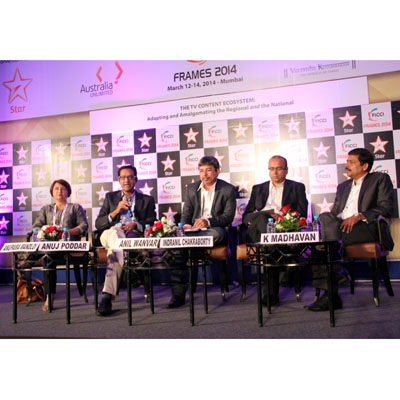
    MUMBAI: Two big regional broadcasters and two big production houses got together to discuss ‘TV content ecosystem: Adapting and amalgamating the regional and the national’ at FICCI Frames 2014. The session started with a keynote by Asianet Managing director K Madhavan and was followed by a discussion among panelists that included Viacom18 regional channels EVP Anuj Poddar, Fremantle India MD Anupama Mandloi and BIG Synergy COO Indranil Chakraborty on the opportunities in the regional entertainment space. The discussion was anchored by indiantelevision.com Founder, CEO and editor-in-chief Anil Wanvari.


    Madhavan started off by predicting that in three years, the ad revenue coming from regional channels will be equal to that of the national channels. He also highlighted that the biggest problem for regional broadcasters is carriage fees.


    “The regional market is about Rs 5,000 crore in terms of advertising revenue and we are the second largest in ad revenue as well as viewership after the Hindi GEC genre,” said Poddar. He also stated that there is a misconception that regional means language while it actually is a reflection of the culture. “Even Hindi television has its stories based on regions – for instance Ballika Vadhu was based in Rajasthan but adapted for national Hindi television.”


    Chakraborty said BIG Synergy entered the regional space five years ago and found that the regional audience was considered as second class as against the Hindi GEC audience. But that mindset is changing. “The word ‘adaptation’ is wrong. You need to redefine content to make it relevant to that audience,” he said. 


    He said he was happy that regional viewership that TV channels generate is getting its due in terms of ad rupees. “Earlier, regional TV channels had higher share of the overall  national viewership but the advertising expenditure on them was much less than that share. In 2013, ad expenditure on regional has gone up and and share of viewership is matching with share of advertising if you check out the latest Ficci report.”


    Added Poddar:  “This change clearly shows that advertisers and media agencies have understood the value of regional television and are willing to pay more for air time as they get targeted viewers. Even the coming elections are seeing a large amount of political advertising expenditure being shifted towards regional TV.”


    Regional channels seem to have taken the 12 minute ad cap very happily. “Sun raised its ad rates by 60 per cent and we (Asianet) raised it by about 20 per cent,” said Madhavan. He revealed that while earlier the ad rates of regional channels were one tenth of a national (read Hindi GEC) player, today they are up to about  25 per cent.


    The good part about regional television is that budgets for shows are rising, explained Chakraborty. An example of this is the regional adaptation of Kaun Banega Crorepati, which saw its budget going up 10 times as compared to what was being invested in other regional non-fiction shows.  This happened at a time when the Hindi version was being subject to budget cuts.


    As far as regional contributing to national and vice-versa in terms of show concepts, formats and storylines is concerned, Wanvari cited several instances where this has taken place in the Indian context.


    Said he: “Dance India Dance that super franchise from the Zee Entertainment stable began from Dance Bangla Dance produced for Bengali audiences. Today it has spawned several sub-franchises – Dance India Dance Lil Champs, Dance India Dance Super Moms, Dance Maharashtra Dance. Similarly with Big Boss which began on Colors and has since then been produced on its sister ETV channels in  Bengali and Kannda. KBC gave birth to editions on Tamil, Telugu, Malayalam on the Star network even as it aired in Hindi on Sony Entertainment TV and in Marathi on ETV Marathi. Ballika Vadhu was remade by the Network 18 group in Tamil, Telugu and Kannada, even as Uttaran has been remade in Marathi.”


    Wanvari pointed out that the reverse has also happened with shows from regional television being adapted to Hindi TV. “The Telugu soap Shravanti came on air as Dil Se Di Dua Saubhagayvati Bhava; Tami serial Kolangal was remade as Maayke Se Bandhi Dor; Tamil soap Thirumathi Selvam gave birth to the long running Pavitra Rishta; Idhayam turned into Dil Se Diya Vachan; Telugu show Ratha Samptamai  resurfaced as Rakht Sambandh; Bengali series Khela as Badalte Rishtey Ki Dastaan and then of course  the Ravi Ojha produced super successful show Sasural Genda Phool which emerged from the Bengali series Ogo Bodho Sundari,” highlighted Wanvari.


    He went on to further state that Star India has been working on reaching out its Hindi productions  to regional audiences, by dubbing shows such as Satyamev Jayate, Mahabharat and Mahadev in other languages such as Tamil, Telugu, Bengali, Marathi, and Malayalam and airing them on its regional language channels under the Asianet group and Star Pravah.


    “Taking a national product to regional is called revenue optimisation,” said Chakraborty talking about dubbing of national shows to regional languages.”For an adapted  show to work it needs to be locally adapted to suit the culture. “


    Poddar emphasised that it is not enough to dub regional shows, regional adaptations of Hindi national shows requires a lot of research and localisation to suit  cultural tastes and emotions. “When we had to remake Ballika Vadhu which is about a child bride for our Kannada channel, we looked around for a district in Karnataka where child marriage is prevalent and based our story there as the rest of the state does not have it as a practice as it is in Rajasthan. Also the pacing of the storyline in the Kannada version was faster.  Similarly, for the Marathi adaptation of KBC we went for a couple participant concept in the show and had Sachin Khedakar host it. “


    Chakraborty highlighted that there are benefits which accrue from Hindi show adaptations to regional languages and the other way around too. “Initially, we had to instill best practices and skillsets we had picked up while producing the Hindi version when we decided to go regional. Now the best practices and skillsets we got while producing the regional shows are being brought to Mumbai and  instilled in our crew while producing the Hindi version.”


    Fremantle Media India MD Anupama Mandloi confessed that her production house – which produces the successful formats Indian Idol and India’s Got Talent – has not yet taken the plunge into regional television but it is something which would be of great interest to her. “We have the experience of producing an international format and localising it in several countries, languages, cultures,” she said. “And we have done it successfully. We would like to  make some further inroads in regional television soon.”


    Madhavan added that Star Plus’ show Satyamev Jayate had realised the potential of regional which is why it was dubbed in so many languages and regional stars were roped in to promote it. He pointed out that Mahabharat dubbed in different languages has not proved as popular as Mahadev. But he revealed that even then the show has been a profit generator for his network. 


    “Simulcast is driven by commercial imperatives as a business model,” said Poddar.


    When prompted by Wanvari as to why don’t regional channels add subtitles to their shows, he said it is an option he is willing to consider.

  • Television…. will remain eternal

    Television…. will remain eternal

    MUMBAI: Television will continue to be a dominant medium notwithstanding the emergence of new means of consuming content. New mediums of content delivery are likely to change viewing habits, but more importantly are likely to increase the time spent on watching the stories that are delivered and also provide more opportunities to content creators.


    Rather than fragment television viewership, new mediums of content delivery would open up new opportunities for content creators as well as platform providers.


    To drive home this message, India’s largest broadcaster Star India COO Sanjay Gupta pointed out that 10 years ago the topic of discussion was that newspapers are dead. The fact is that in the last 10 years the size of the newspaper industry has doubled.


    The topic now is ‘Television is Dead’ but like the newspaper industry television will continue to grow, said Gupta, participating in a panel discussion on “Television is Dead – Long Live Television” on the second day of FICCI Frames 2014.


    Fundamentally, new mediums provide new avenues to carry content and to tell stories, Gupta said underlining that there will be greater opportunities with the digital medium opening up.


    IndiaCast Media Distribution Group CEO Anuj Gandhi said, “Fundamentally, we as a nation are a daily soap market. In India daily soaps sell.”


    IndiaCast distributes a multitude of content but in the global markets it has found demand for its serial 24, based on an American thriller series in a real-time format, and not for the Indian staple daily soaps. IndiaCast is mandated to drive domestic and international channel distribution, placement services and content syndication for TV18 Broadcast, Viacom18 and A+E Networks I TV18.


    Celestial Tiger Entertainment CEO Todd Miller echoed the prevalent view. He said, “It is still the living room that is the bulk of our business.” Celestial Tiger is a Hong Kong-based diversified media company that focuses on Asian consumers.


    TELEVISION TO TRANSFORM


    Television as a medium is expected to undergo a transformation from being a linear gadget to a multi-functional smart device. The reinvention of television will allow it to not only survive but blossom despite the onslaught of new mediums of content delivery.


    Effective use of the mobile as a means of content delivery is still a distant given the bandwidth constraints. “For me the biggest challenge is bandwidth. 3G and 4G will change consuming patterns. It will still be sports and news that will be largely consumed on mobiles,” said IndiaCast’s Gandhi.


    There have been so far no serious efforts at making differentiated content. With 3G and 4G, there would be real efforts at making meaningful content.


    Star India’s Gupta said Star Sports’ tie-up with Vodafone has shown there is deep desire among consumers to view content on mobile, even though not at huge costs but by spending smaller amounts.


     “Millions are coming in to check content on Vodafone. They may not want to spend in small amounts,” Gupta said.


    Consumers will seek more and more stories, different stories with the rise of the digital medium of content delivery.  The broadcasters as they now exist and the new means of content delivery and the new content creators would be collaborating rather than working at cross-purposes.


    IndiCast’s Gandhi reiterated that TV Everywhere in the digital era will still remain largely confined to shorter duration content.


    CHANGING DYNAMICS


    Almost 50 per cent of Olympics was watched on mobile. This suggests there is great opportunity to deliver what the consumer wants.


    “We can’t wish it away. Dynamics are changing fast. The distinction between the content creators and platforms is blurring,” said Gupta.


    Industry players expect disruptions to happen but are wary as history shows an outsider has most of the time been the disruptive force.


    New mediums will provide new platforms for content. The broadcasters may go downstream to business to consumer model and the distributors may move up the chain to be the content producers.


    In the US, the average time spent watching television is six hours. In India the average time spent is three hours and the new mediums are seeing an increase in the time spent watching television content.


    Celestial Tiger’s Miller said, “Most of the innovation that comes is from Telcos and DTH.”


    Media Partners Asia executive director Vivek Couto, anchoring the panel discussion, said, “Precedents have already been set for digital deals in the US.”


    Gupta, however, said the cap on prices of television content is hindering creation of quality content. “People are willing to spend. We have 2.5 million HD customers, which is likely to rise to 8 million by the end of this year,” he said.


    The whole ecosystem of story-telling is set for a transformation aided by improved delivery platforms and more creative content creation, and a dominant part of the viewership would still be on television.