Tag: FICCI Frames

  • The rationale behind Star India’s reorganization

    The rationale behind Star India’s reorganization

    MUMBAI: The buzz had been gathering pace since Ficci Frames in Mumbai at the beginning of this month. Change is  afoot at India’s leading media and entertainment major the 21st Century Fox owned Star India. But nobody was willing to say what. The company’s executives murmured that its businesses had developed octopus like and CEO Uday Shankar along with 21st Century Fox CEO James Murdoch was planning a managerial rejig.

    Management firm The Boston Consulting Group had been given the mandate of coming up with an organizational structure that would empower Star India’s senior executive team, unleash their expertise to execute and monetise the business strategy that Uday has put in place for the group to the fullest.

    The reorganization would allow Uday, who has been leading Star India at a frenetic pace over  the past few years to have some breathing space to further evolve the business plans that the Murdochs have for their Asian jewel and also get a helicopter view of the goings-on.

    And today’s announcement at a town hall within Star India seems to be a master stroke of sorts, according to several Star observers. A former Star India executive went as far as to say that it is a stroke of genius.  According to him, the entire burden of steering the company into the behemoth that it has become had fallen on Uday.

    When he was handpicked out of nowhere by the then News Corp COO Peter Chernin and Star group boss Paul Aiello to run Star India as its COO – a terrain he was not really familiar with – it was a market leader which had lost its way and was a much smaller operation: focused on simple general entertainment with a small interest in regional languages and sport. There was very little strength in senior management. Uday first went about tweaking the programming and took the network gradually to the No 1 spot. He simultaneously brought in senior professionals from the best companies to strengthen his core team. Over the years, he offloaded  investments Star India had made in other ventures, pumped in money into acquiring other regional networks,  made big bets on  sports and sports television, steered the media and entertainment major into the digital VOD ecosystem. And he roped in even more professionals to incubate these forays.

    The Star India of today is a very different beast from the one it was when he first stepped into its offices.

    Observers say that by elevating  himself  as chairman and CEO he has taken the load off his shoulders and is sharing the burden with his fellow professionals.  “He’s done the hard work with the various executive teams putting together all these verticals,” says a management consultant. “Now he’s empowering them allowing them to function like intrapreneurs. Which is the best thing he could do.”

    Thus Sanjay Gupta, the current COO has been elevated to managing director-Star India and K. Madhavan to managing director-South. Both Gupta and Madhavan will continue to report to Uday Shankar. Madhavan will have Kevin Vaz reporting to him as his CEO and looking after all of Star India’s southern interests.

    Sanjay on his part has a clutch of CEOs reporting into him responsible for key silos:

    empowered business units each with its own CEO reporting to Sanjay Gupta:

    · Amit Chopra, CEO of Entertainment, which spans drama and movie channels across national and regional channels in Hindi, English, Bengali and Marathi

    · Nitin Kukreja, CEO of Sports, which includes a leading portfolio of channels under the Star Sports banner

    · Ajit Mohan, CEO of Digital, which oversees Hotstar.  

    · Vijay Singh, CEO of Fox STAR Studios, which produces and distributes Bollywood and regional films

    * A Pan Indian content studio headed by Gaurav Banerjee to produce cutting edge innovation in programming.

    “This is a world class team that has powered Star  to the No. 1 position in the Media and Entertainment industry in India,” said Uday in a press release issued today on the reorganization. “We have set ourselves a bold growth agenda and these changes will deepen the leadership bench, unlock entrepreneurial energy and position Star better to deliver on its ambitions.”

    Top of that ambition heap is the target to attain an operating profit of $1 billion plus by  from 21st Century Fox’s Indian offshoot by 2020. With that rock solid team in place, Uday and James  will have more energetic legs to race to the finishing post.
  • FICCI Frames 2016: Live Updates: Sports gets serious what’s next?

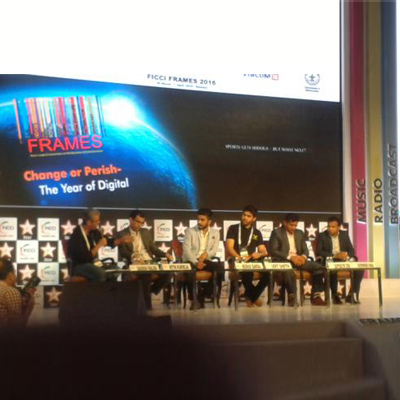
    FICCI Frames 2016: Live Updates: Sports gets serious what’s next?

    MUMBAI: The sports ecosystem has seen a see of development in recent past. Non-cricket as a whole graduated from a flying bubble to a serious entity. Pro Kabaddi, from an un-orthodox experiment has become a case study. Cricket is a serious business for the broadcast ecosystem and has been from a long period of time, but now Sports as a whole has become serious business: But What’s next? and that is what the next session of FICCI Frames 2016 is all about.

    Indiantelevision.com will bring to you the updates of the session live and exclusive.

    The panelists will be quizzed by ESPN Cricinfo, Senior Editor: Gaurav Kalra
    Star Sports, President, Nitin Kukreja 
    Owner Gujrat Lions IPL franchise: Keshav Bansal
    USports CEO Supratik Sen
    SE TransStadia MD and CEO: Udit Sheth
    FC Goa CEO Sukhwinder Singh

    Kalra throws the ball at Nitin’s court. Asks him for his initial comment.

    “This Country is in verge of witnessing something special,” Nitin gets the ball rolling.

    “I still remember the morning we launched Kabaddi. We were still unsure. From there to now, we have learned a lot.” “We have learned that all stakeholders need to work together. Some stake holders need more convincing,” ‘collaboration is the key’ the biggest outcome from Nitin’s initial remarks. “Judging our success, it has come at the back of all our stake holders,” he gives credit to all the stake holders.

    Now Kalra goes to the CEO of the most successful PKL team, Supratik Sen narrates how the interest on PKL came. “Ronnie came and said we are going to invest on Kabaddi and that’s where it all started. It was quite a challenge, in the initial days we heard ab gilly danda kyun nhi khel lete, but when we spoke to the 40 plus age group, the women and men have played it in their lives, the answer became easier.”

    He further talks about the challenges, “Our challenge was to take it to the masses, so we reached out to them and got our talent, the we transformed these athheletes, into stars as we could mould them.

    Nitin now asked about the perception ‘Kabaddi won’t work’ He terms it ‘Outsiders view’ “The second season has completely changed the face of the game, the stakes are higher now. You need to go to Ranchi to know how big Hockey is, go to Hyderabad to see how popular Kabaddi is” he remarks.

    “Sporting has become even more local, even when it comes to sporrt revenuee. We were used to ccheer for team Inddia, but now there is a team Goa and team Kolkata” Nitin now talks about the paradigm shift.

    “We don’t expect to make profit from our IPL investment. This investemt is more about marking and building a brand that will reach to millions,” realistic Keshav narrates.

    Kalra quizzes on how to build interest on football to FC goa?

    Singh now has the mic, “While cricket remains the religion, but if we manage to package well and make it more and more engaging for the fans, and allow financial partneers to come forward and be a part pf the process, there is a way to sustain it.”

    “We are not sitting idle when the games are done. We are investing in the grassroots and keeping the aspiration about the game alive in the nine months when there is no league” Singh adds.

    Is there an area we need to pay urgent attention, which has been neglected, to develoe a culture around sport? — kalra

    Udit: Sport infrastructure wasnt thought of as a montisisng asset in our country. India has about 80 stadiums, but none of them are designed for television broadcast. When I was in talks with the Gujarat government, we told them we werent there to build a stadium, but to buld a sporting culture,” infrastructure is too a key, its not about getting them there but keeping them there and provide them quality experience……. great thoughts from Singh.

    What role can broadcasters play in developing a sports culture? A heavyweight question and there can be no one better than Nitin to answer this.

    Ratings are important,  from an advervenue perspective. But we realise that sport is not just a television product. We realise that grassroots play an important role too,” he is not done yet now he sheds light on the fact that the clubs too need to take a lot of responsibilities we can do it to a certain extent, but the clubs will have to take it upon themselves to build the culture foreward”

    Keshav now has the mic, “The success of any team worldwide largely depennds on how they perform, Brand building is important, and its a gradual process. The teams who have been in the league from thhe staart have an advantage. They had the time to build their legacy, and meerchandisisng followed. We are also working on building a brand, ut it will take time. Ultimately performance will speak.”

    Are you monetisisng kabaddi enough? shoots a delegate sitting in the ballroom……Well can there be enough monetising ever? ……… Karla diverts the question to Nitin, “As long as you are dong the right thing for the sport, as long as you are investing in the right areas, the money will follow. Its a question whether its in one year two year or three years,”…….. answers Nitin

    Karla now follows the ticker and wraps the session……

    It was Indiantelevision.com Reporter Papri Das sending all the live updates from the venue…

    Hope you liked the coverage….

    Please give us your feedback…. tweet us @ITVNewz…

    This is Anirban Roy Choudhury signing off for today……. 

  • FICCI Frames 2016: Live Updates: Sports gets serious what’s next?

    FICCI Frames 2016: Live Updates: Sports gets serious what’s next?

    MUMBAI: The sports ecosystem has seen a see of development in recent past. Non-cricket as a whole graduated from a flying bubble to a serious entity. Pro Kabaddi, from an un-orthodox experiment has become a case study. Cricket is a serious business for the broadcast ecosystem and has been from a long period of time, but now Sports as a whole has become serious business: But What’s next? and that is what the next session of FICCI Frames 2016 is all about.

    Indiantelevision.com will bring to you the updates of the session live and exclusive.

    The panelists will be quizzed by ESPN Cricinfo, Senior Editor: Gaurav Kalra
    Star Sports, President, Nitin Kukreja 
    Owner Gujrat Lions IPL franchise: Keshav Bansal
    USports CEO Supratik Sen
    SE TransStadia MD and CEO: Udit Sheth
    FC Goa CEO Sukhwinder Singh

    Kalra throws the ball at Nitin’s court. Asks him for his initial comment.

    “This Country is in verge of witnessing something special,” Nitin gets the ball rolling.

    “I still remember the morning we launched Kabaddi. We were still unsure. From there to now, we have learned a lot.” “We have learned that all stakeholders need to work together. Some stake holders need more convincing,” ‘collaboration is the key’ the biggest outcome from Nitin’s initial remarks. “Judging our success, it has come at the back of all our stake holders,” he gives credit to all the stake holders.

    Now Kalra goes to the CEO of the most successful PKL team, Supratik Sen narrates how the interest on PKL came. “Ronnie came and said we are going to invest on Kabaddi and that’s where it all started. It was quite a challenge, in the initial days we heard ab gilly danda kyun nhi khel lete, but when we spoke to the 40 plus age group, the women and men have played it in their lives, the answer became easier.”

    He further talks about the challenges, “Our challenge was to take it to the masses, so we reached out to them and got our talent, the we transformed these athheletes, into stars as we could mould them.

    Nitin now asked about the perception ‘Kabaddi won’t work’ He terms it ‘Outsiders view’ “The second season has completely changed the face of the game, the stakes are higher now. You need to go to Ranchi to know how big Hockey is, go to Hyderabad to see how popular Kabaddi is” he remarks.

    “Sporting has become even more local, even when it comes to sporrt revenuee. We were used to ccheer for team Inddia, but now there is a team Goa and team Kolkata” Nitin now talks about the paradigm shift.

    “We don’t expect to make profit from our IPL investment. This investemt is more about marking and building a brand that will reach to millions,” realistic Keshav narrates.

    Kalra quizzes on how to build interest on football to FC goa?

    Singh now has the mic, “While cricket remains the religion, but if we manage to package well and make it more and more engaging for the fans, and allow financial partneers to come forward and be a part pf the process, there is a way to sustain it.”

    “We are not sitting idle when the games are done. We are investing in the grassroots and keeping the aspiration about the game alive in the nine months when there is no league” Singh adds.

    Is there an area we need to pay urgent attention, which has been neglected, to develoe a culture around sport? — kalra

    Udit: Sport infrastructure wasnt thought of as a montisisng asset in our country. India has about 80 stadiums, but none of them are designed for television broadcast. When I was in talks with the Gujarat government, we told them we werent there to build a stadium, but to buld a sporting culture,” infrastructure is too a key, its not about getting them there but keeping them there and provide them quality experience……. great thoughts from Singh.

    What role can broadcasters play in developing a sports culture? A heavyweight question and there can be no one better than Nitin to answer this.

    Ratings are important,  from an advervenue perspective. But we realise that sport is not just a television product. We realise that grassroots play an important role too,” he is not done yet now he sheds light on the fact that the clubs too need to take a lot of responsibilities we can do it to a certain extent, but the clubs will have to take it upon themselves to build the culture foreward”

    Keshav now has the mic, “The success of any team worldwide largely depennds on how they perform, Brand building is important, and its a gradual process. The teams who have been in the league from thhe staart have an advantage. They had the time to build their legacy, and meerchandisisng followed. We are also working on building a brand, ut it will take time. Ultimately performance will speak.”

    Are you monetisisng kabaddi enough? shoots a delegate sitting in the ballroom……Well can there be enough monetising ever? ……… Karla diverts the question to Nitin, “As long as you are dong the right thing for the sport, as long as you are investing in the right areas, the money will follow. Its a question whether its in one year two year or three years,”…….. answers Nitin

    Karla now follows the ticker and wraps the session……

    It was Indiantelevision.com Reporter Papri Das sending all the live updates from the venue…

    Hope you liked the coverage….

    Please give us your feedback…. tweet us @ITVNewz…

    This is Anirban Roy Choudhury signing off for today……. 

  • Turkey’s state broadcaster TRT to sign an MOU with Doordarshan for content collaboration

    Turkey’s state broadcaster TRT to sign an MOU with Doordarshan for content collaboration

    MUMBAI: For the  first time, a large  official delegation of Turkish companies led by the Istanbul Chamber of Commerce Tourism attended FICCI Frames 2016 in Mumbai which started on 30 March and will conclude on April 1 to promote collaboration in the cinema and television sector between India and Turkey. To mark the event, Turkey’s state broadcaster TRT had a meeting with Doordarshan and both state owned companies are set to sign an MOU for future content collaboration.

    The ambassador of Turkey to India,  Burak Akçapar announced, “TheTurkish delegation is very encouraged with the initial response at the 3-day conclave and Turkey is predicting content exports of USD 20 million to India by 2018.”

    The Istanbul Chamber of Commerce brought together Turkey’s leading content industry representatives to meet the Indian media and entertainment industry at the “Turkey Home of Content” booth at FICCI FRAMES 2016 with the valuable support of the Turkish Republic’s Ministry of Economy, Ministry of Culture and Tourism and with the precious collaboration of the Turkish Embassy in New Delhi and Turkish Consul General in Mumbai.Founded in 1882, The Istanbul Chamber of Commerce today is the third largest Chamber in the world.
     
    With a high powered delegation, and wholehearted support from the Government, Turkey is actively seeking collaborations with Indian media and entertainment companies in the areas of filmed and television content.The leading Turkish companies participating in the delegation were Ayyapim, Kadraj, Kanal 7, Outline Ajans, Pana Film, Tac Medya, TRT (Turkish Radio and Television Corporation), ULKE TV.

    In an effort to further strengthen its ties with the city of Mumbai and Bollywood, Turkish delegations had a meeting with the Mumbai Academy of the Moving Image (MAMI). Turkey is in talk with the organisers of MAMI film festival to showcase Turkish cinema at the festival in October this year.

    Turkey’s first television export to India, Feriha on Zee – Zindagi has been well received by the Indian audiences and an average of 36 million viewers in India each week. Encouraged by its success, many Indian networks including the leading GEC’s are in talks with Turkish content providers to roll out more Turkish serials on Indian television says an official release.

  • Turkey’s state broadcaster TRT to sign an MOU with Doordarshan for content collaboration

    Turkey’s state broadcaster TRT to sign an MOU with Doordarshan for content collaboration

    MUMBAI: For the  first time, a large  official delegation of Turkish companies led by the Istanbul Chamber of Commerce Tourism attended FICCI Frames 2016 in Mumbai which started on 30 March and will conclude on April 1 to promote collaboration in the cinema and television sector between India and Turkey. To mark the event, Turkey’s state broadcaster TRT had a meeting with Doordarshan and both state owned companies are set to sign an MOU for future content collaboration.

    The ambassador of Turkey to India,  Burak Akçapar announced, “TheTurkish delegation is very encouraged with the initial response at the 3-day conclave and Turkey is predicting content exports of USD 20 million to India by 2018.”

    The Istanbul Chamber of Commerce brought together Turkey’s leading content industry representatives to meet the Indian media and entertainment industry at the “Turkey Home of Content” booth at FICCI FRAMES 2016 with the valuable support of the Turkish Republic’s Ministry of Economy, Ministry of Culture and Tourism and with the precious collaboration of the Turkish Embassy in New Delhi and Turkish Consul General in Mumbai.Founded in 1882, The Istanbul Chamber of Commerce today is the third largest Chamber in the world.
     
    With a high powered delegation, and wholehearted support from the Government, Turkey is actively seeking collaborations with Indian media and entertainment companies in the areas of filmed and television content.The leading Turkish companies participating in the delegation were Ayyapim, Kadraj, Kanal 7, Outline Ajans, Pana Film, Tac Medya, TRT (Turkish Radio and Television Corporation), ULKE TV.

    In an effort to further strengthen its ties with the city of Mumbai and Bollywood, Turkish delegations had a meeting with the Mumbai Academy of the Moving Image (MAMI). Turkey is in talk with the organisers of MAMI film festival to showcase Turkish cinema at the festival in October this year.

    Turkey’s first television export to India, Feriha on Zee – Zindagi has been well received by the Indian audiences and an average of 36 million viewers in India each week. Encouraged by its success, many Indian networks including the leading GEC’s are in talks with Turkish content providers to roll out more Turkish serials on Indian television says an official release.

  • FICCI FRAMES 2016: Updates: Lord of the Ratings- The BARC order

    FICCI FRAMES 2016: Updates: Lord of the Ratings- The BARC order

    Stay tuned: Indiantelevision.com brings live realtime updates from FICCI Frames; power-packed session Lord of the Ratings- The BARC Order.
     
    The session features industry leaders from the Broadcasting and Advertising sectors who will share their experience of using the new ratings system, and also debate ways to make more intelligent reading of this vast data. 
     
    Moderator: Paritosh Joshi, CEO, India TV
    Panelists: Partho Dasgupta, CEO, BARC
    Raj Nayak, CEO, Colors
    Shashi Sinha, CEO, IPG Mediabrands
    Hitesh Chawla


    Paritosh gets the session up and rolling. 
     
     
    Nowhere in the world an effort like BARC has been put off Shashi Sinha makes the initital remarks..
     
    Paritosh shoots a question on volatilty…… In response to Paritosh’s questions of BARC data being volatile, Partho says, “Things are rapidly changing and in this scenario, things are meant to be volatile.”
     
    Raj as always with smiles on his face yes and no to Partho’s answer, “The volatility comes not from GECs but mostly from the niche channels.”  
     

    Discussion heats up, Paritosh asks Partho if he acknowledges the fact that the data is erroneous: he says in reply: “Relative errors are a part of statistics and this is sampling which has cost implications.”


    Raj cuts in: “We are measuring content not viewership. There is no dichotomy. You may not mix and match every platform but the measurement is there.”

    Raj bats for Partho, jokes and says, “Partho’s position is the most amiable one. He is like the Election Commissioner of India.”

    Paritosh now throws one more googly towards Partho and he being a batsman with supreme temperament bats it with cool, calm and content. What happens when tempering is attempted?

    You can monetise what you can measure Paritosh’s question on the relationship between measurement and monetisation spurs up a new debate. Seperate rural and urban monetisation, “Digital can be monetised, we launched VOOT two days back. We are content creator and we will bundle ourselves and rake as much as possible. I am even of the opinion that rural and urban should be sold separately why should we have same selling if there are different measurement available” says Raj.


    Shashi Sinha has the mike: “Our game plan is to get all guys aligned and for user everything will be integrated.”

    Hitesh shares his experience and mentions that the “economics does make a sense” in his line of business, which is solely data oriented.

    “Around the world, in terms of scale, we have the larger sample in the world. We also have the least advertising revenue”, Partho.

    Shashi cuts in, ”Don’t walk into the trap. Technology has been an issue. Globally technology is cheaper. We have to ramp up. The idea is to enter the home and capture data.”

    Finally the wait is over Shashi Sinha goes to the remark made by the Minister of Telecom Ravi Shankar Prasad. Just to remind readers the Minister said “India needs a better rating system.” Shashi’ finds the statement ‘intriguing’ “They are not happy with data. Government was involved in the process from the very begining. Hence we were a little intrigued with the comments made.” 


    After seperate rural-urban selling proposition Raj now hits another nail with a valid point, “BARC’s work is to roll out data, now to say which channel is number one or two. I strongly feel FTA channels and pay channels should be rated seperately.” 


    Such exquisite measurement body but is it really helping you monetise better Raj asks Paritosh, “Measurement system for that, broadcasters need to be blamed for this. But I think as media evolves the ad revenue will also increase. For  me what is the most important avenue for revenue and that is separate rural and urban separate monetisation,” “though Shashi may not happy with that but that’s what I feel” replies Raj

    Paritosh thanks the packed house, round of applause and the sessions marks its conclusion.

    Thanks a lot stay tuned for more live updates.

    Let us know your feedback with a tweet @ITVNewz  

    “What we do is we see the data in the backend, first we check if there is a content reason for the change in behaviour, but if content is not the reason we with our three vigilance to check the ground issues and once we get a clear scenario get the hard evidence we quarantine the houses.”


  • FICCI FRAMES 2016: Updates: Lord of the Ratings- The BARC order

    FICCI FRAMES 2016: Updates: Lord of the Ratings- The BARC order

    Stay tuned: Indiantelevision.com brings live realtime updates from FICCI Frames; power-packed session Lord of the Ratings- The BARC Order.
     
    The session features industry leaders from the Broadcasting and Advertising sectors who will share their experience of using the new ratings system, and also debate ways to make more intelligent reading of this vast data. 
     
    Moderator: Paritosh Joshi, CEO, India TV
    Panelists: Partho Dasgupta, CEO, BARC
    Raj Nayak, CEO, Colors
    Shashi Sinha, CEO, IPG Mediabrands
    Hitesh Chawla


    Paritosh gets the session up and rolling. 
     
     
    Nowhere in the world an effort like BARC has been put off Shashi Sinha makes the initital remarks..
     
    Paritosh shoots a question on volatilty…… In response to Paritosh’s questions of BARC data being volatile, Partho says, “Things are rapidly changing and in this scenario, things are meant to be volatile.”
     
    Raj as always with smiles on his face yes and no to Partho’s answer, “The volatility comes not from GECs but mostly from the niche channels.”  
     

    Discussion heats up, Paritosh asks Partho if he acknowledges the fact that the data is erroneous: he says in reply: “Relative errors are a part of statistics and this is sampling which has cost implications.”


    Raj cuts in: “We are measuring content not viewership. There is no dichotomy. You may not mix and match every platform but the measurement is there.”

    Raj bats for Partho, jokes and says, “Partho’s position is the most amiable one. He is like the Election Commissioner of India.”

    Paritosh now throws one more googly towards Partho and he being a batsman with supreme temperament bats it with cool, calm and content. What happens when tempering is attempted?

    You can monetise what you can measure Paritosh’s question on the relationship between measurement and monetisation spurs up a new debate. Seperate rural and urban monetisation, “Digital can be monetised, we launched VOOT two days back. We are content creator and we will bundle ourselves and rake as much as possible. I am even of the opinion that rural and urban should be sold separately why should we have same selling if there are different measurement available” says Raj.


    Shashi Sinha has the mike: “Our game plan is to get all guys aligned and for user everything will be integrated.”

    Hitesh shares his experience and mentions that the “economics does make a sense” in his line of business, which is solely data oriented.

    “Around the world, in terms of scale, we have the larger sample in the world. We also have the least advertising revenue”, Partho.

    Shashi cuts in, ”Don’t walk into the trap. Technology has been an issue. Globally technology is cheaper. We have to ramp up. The idea is to enter the home and capture data.”

    Finally the wait is over Shashi Sinha goes to the remark made by the Minister of Telecom Ravi Shankar Prasad. Just to remind readers the Minister said “India needs a better rating system.” Shashi’ finds the statement ‘intriguing’ “They are not happy with data. Government was involved in the process from the very begining. Hence we were a little intrigued with the comments made.” 


    After seperate rural-urban selling proposition Raj now hits another nail with a valid point, “BARC’s work is to roll out data, now to say which channel is number one or two. I strongly feel FTA channels and pay channels should be rated seperately.” 


    Such exquisite measurement body but is it really helping you monetise better Raj asks Paritosh, “Measurement system for that, broadcasters need to be blamed for this. But I think as media evolves the ad revenue will also increase. For  me what is the most important avenue for revenue and that is separate rural and urban separate monetisation,” “though Shashi may not happy with that but that’s what I feel” replies Raj

    Paritosh thanks the packed house, round of applause and the sessions marks its conclusion.

    Thanks a lot stay tuned for more live updates.

    Let us know your feedback with a tweet @ITVNewz  

    “What we do is we see the data in the backend, first we check if there is a content reason for the change in behaviour, but if content is not the reason we with our three vigilance to check the ground issues and once we get a clear scenario get the hard evidence we quarantine the houses.”


  • Strong regulatory ecosystem vital for safeguarding IPR if M and E industry has to grow in the international market

    Strong regulatory ecosystem vital for safeguarding IPR if M and E industry has to grow in the international market

    MUMBAI: The subject of intellectual property rights and piracy keep coming up at the FICCI FRAMES year after year and appeals are made by creative artistes for stringent measures to check this.

    With digitization and if India is to become a media and entertainment hub, this gains urgency and is even more imperative that steps are taken for a strong legal and regulatory ecosystem safeguarding intellectual properties.

    Saving intellectual Property in a world without boundaries saw panelists and legal experts referring to global practices and emphasizing on the importance of IPR for the growth of the Indian media and entertainment sector.

    In fact, World Intellectual Property Organization Director General Francis Gurry stressed the need for stringent laws in an upcoming market like India where creativity was growing at such a speed. He also referred to how WIPO was helping member countries to deal with these problems.

    The session was moderated by Saikrishna & Associates partner Ameet Dutta. The panelists were Motion Picture Association of America Asia Pacific VP regional legal counsel Michael Schlesinger, Star India senior VP legal and regulatory Pulak Bagchi and Zee Network president legal and regulatory affairs Avnindra Mohan.

    Dutta said the focus of the context in digital India has shifted from copyrights to user rights. This underlines the challenges that intellectual property faces. The question that he posed before the panelists was where India stood on the world map in terms of economics.

    Schlesinger said: “India is a mine of creativity. This is evident with the number of features films, television channels or other platforms available in India. Our existence will depend on a surge of creativity and invention. India is maximizing its potential but has to find a place on the global map. For example, India showed total box office collection of $2.5 million in 2015 while China had $6.5 million and US had $11.1 million. These figures clearly show that just making products or content in India will not help until India can acquire international content as well. India has to maximize a lot of things like job creations, movie screenings etc.”

    Mohan shared the scenario about the regulatory environment in India. “For the broadcasting sector, there is no copyright at all since 2003. It is always user rights. In India, the content producers and broadcasters are same to the extent of 90 per cent unlike US. If a distributor comes to you, you have to provide content on non-discriminatory basis with equal prices irrespective of the size. This is the only sector where a broadcaster is asked to provide its content with prices frozen in 2003. I am forced to give my content to the distributors at a frozen price.”

    Bagchi generally agreed with Mohan and said with the challenges faced by the entire sector, the impact of regulatory laws on channels and the challenges faced by broadcasters cannot be neglected. “Consumers are our kings. I agree with Mohan about the prices being frozen since 2003. Imagine what would happen if the Indian government asks Bill Gates to sell all the Microsoft versions and its tools today on the prices that were relevant in 2003,” said Bagchi. He stressed that this was one reason why international parties hesitate on investing in Indian IPs, and the archaic guidelines and regulations prevent the growth of intellectual property.

    For a session that was aimed at how one can survive the digital divide, it ended with the panelists agreeing on the importance of having sectoral regulations in sync with the copyright laws. This will also retain the India IPR regime with the best practices in the field of intellectual property rights.

  • Strong regulatory ecosystem vital for safeguarding IPR if M and E industry has to grow in the international market

    Strong regulatory ecosystem vital for safeguarding IPR if M and E industry has to grow in the international market

    MUMBAI: The subject of intellectual property rights and piracy keep coming up at the FICCI FRAMES year after year and appeals are made by creative artistes for stringent measures to check this.

    With digitization and if India is to become a media and entertainment hub, this gains urgency and is even more imperative that steps are taken for a strong legal and regulatory ecosystem safeguarding intellectual properties.

    Saving intellectual Property in a world without boundaries saw panelists and legal experts referring to global practices and emphasizing on the importance of IPR for the growth of the Indian media and entertainment sector.

    In fact, World Intellectual Property Organization Director General Francis Gurry stressed the need for stringent laws in an upcoming market like India where creativity was growing at such a speed. He also referred to how WIPO was helping member countries to deal with these problems.

    The session was moderated by Saikrishna & Associates partner Ameet Dutta. The panelists were Motion Picture Association of America Asia Pacific VP regional legal counsel Michael Schlesinger, Star India senior VP legal and regulatory Pulak Bagchi and Zee Network president legal and regulatory affairs Avnindra Mohan.

    Dutta said the focus of the context in digital India has shifted from copyrights to user rights. This underlines the challenges that intellectual property faces. The question that he posed before the panelists was where India stood on the world map in terms of economics.

    Schlesinger said: “India is a mine of creativity. This is evident with the number of features films, television channels or other platforms available in India. Our existence will depend on a surge of creativity and invention. India is maximizing its potential but has to find a place on the global map. For example, India showed total box office collection of $2.5 million in 2015 while China had $6.5 million and US had $11.1 million. These figures clearly show that just making products or content in India will not help until India can acquire international content as well. India has to maximize a lot of things like job creations, movie screenings etc.”

    Mohan shared the scenario about the regulatory environment in India. “For the broadcasting sector, there is no copyright at all since 2003. It is always user rights. In India, the content producers and broadcasters are same to the extent of 90 per cent unlike US. If a distributor comes to you, you have to provide content on non-discriminatory basis with equal prices irrespective of the size. This is the only sector where a broadcaster is asked to provide its content with prices frozen in 2003. I am forced to give my content to the distributors at a frozen price.”

    Bagchi generally agreed with Mohan and said with the challenges faced by the entire sector, the impact of regulatory laws on channels and the challenges faced by broadcasters cannot be neglected. “Consumers are our kings. I agree with Mohan about the prices being frozen since 2003. Imagine what would happen if the Indian government asks Bill Gates to sell all the Microsoft versions and its tools today on the prices that were relevant in 2003,” said Bagchi. He stressed that this was one reason why international parties hesitate on investing in Indian IPs, and the archaic guidelines and regulations prevent the growth of intellectual property.

    For a session that was aimed at how one can survive the digital divide, it ended with the panelists agreeing on the importance of having sectoral regulations in sync with the copyright laws. This will also retain the India IPR regime with the best practices in the field of intellectual property rights.

  • KPMG-FICCI: TV industry to touch Rs 1,09,700 crore by 2020

    KPMG-FICCI: TV industry to touch Rs 1,09,700 crore by 2020

    MUMBAI: If 2015 was a good year for media and entertainment industry with a growth rate of 12.8 per cent taking it to Rs 1157 billion,(RS 1,15,700 crore) with advertising revenues touching Rs 475 billion (Rs 47,500 crore), 2016 promises to be even better. Estimates show that the industry is to touch  Rs 1315 billion by this year end, with television alone commanding Rs 617 billion (Rs 61,700 crore). And the industry stalwarts project even rosier tidings for 2020.

    As per KPMG- FICCI Indian Media and Entertainment Industry Report 2016 that was released on 30 March at FICCI Frames 2016, the sector is projected to grow at a CAGR of 14.3 percent to be valued at Rs 2260 billion (Rs 2,26,000 crore) by 2020, with advertising revenue touching a whooping Rs 994 billion (Rs 99400 crore) at a CAGR growth of 15.9 per cent.

    Television continues to thrive:

    While 2015 saw the growing stress on the need to transport from traditional media to digital options, the current report reassures the continued importance and relevance of television as a medium, which is projected to grow at a rate of 15.1 CAGR between 2015- 2020, and touch Rs 1,09,760 crore by 2020, out of which Rs 364.5 billion (Rs 36,450 crore) will be contributed by advertising revenue. TV ad revenue is expected to touch Rs 210.3 billion (Rs 21,030 crore) by the end of 2016. On the other hand, subscription revenue for broadcasters is expected to grow at a CAGR of 15 per cent between 2015- 2020, to Rs 733 billion (Rs 73,300 crore). Subscription revenues for TV is estimated to have grown at 13 per cent to reach Rs 361 billion (Rs 36,100 crore). While the figures show a positive growth in advertising revenues, a delayed digitisation process would slow down the subscription growth.

    Digital, the fastest growing medium:

    Digital Advertising will continue to grow at a high CAGR of 33.5 per cent, the highest growing medium of all. The evident shift would be towards mobile and video advertising backed by the opening up of bandwidth in the country by 2020. The report estimates that by 2020 digital advertising will touch Rs 255.2 billion  (Rs 25,520 crore) and contribute 25.7 percent of the total advertising revenue.

    Impact of BARC India ratings on Television:

    There are no two opinions about the fact that roll out of BARC ratings was a major event that changed the face of the industry, and perhaps its rules as well.  The implementation of BARC was a major theme in 2015. While inclusion of rural markets and increase in sample size led to a reshuffle of rankings in the ratings of TV channels, particularly highlighting the viewership of FTA channels, there was no immediate impact on ad budget allocations among channels or genres. Going forward, sustained trends in ratings could lead to advertisers re-thinking their ad spend mix and broadcasters their content strategy.

    Paid C&S penetration of TV:

    The number of TV households in India has increased to 175 million (17.5 crore), at 62 percent growth rate. The figures are estimated to touch 200 million (20 crore) by 2020, with paid cable and satellite subscriber base growing to 174 million (17.5 crore) and command a lion share of 87 per cent of total TV households. However, when considering distribution, challenges in improving addressability, increasing monetisation continues to plague the industry, the report foretells. Meanwhile, competition in the TV distribution space is expected to intensify with Reliance Jio coming in the cable TV business.

    ARPU continues to back DTH growth:

    As per industry observations shared in the report, DTH has seen an ARPU growth of 10 per cent in 2015, driven by price hikes,  and increased HD feed penetration which constitutes 15 percent of the total subscriber base in the sector. This trend is expected to rule the sector in the upcoming years as well, with average ARPU of HD subscriber estimated to grow to 1.5 to 2 times that of a non HD subscriber. The report also hints at a growth in demand and adoption of 4K STBs, though lack of enough 4K content could be a disadvantage to this growth.