Tag: FICCI Frames

  • Doordarshan D-G Supriya Sahu says studying tie-ups & models as kids channel launch nearing

    NEW DELHI: Doordarshan is actively working on an exclusive channel for entertainment for the young ones, and is currently preparing a detailed note in this connection.

    Doordarshan director-general Supriya Sahu said the pubcaster had earlier in the year sent a concept note to the Information and Broadcasting Ministry which had now asked it to work out details.

    Consequently, Sahu told indiantelevision.com that the pubcaster was presently studying possible partnerships and various models, apart from studying the availability of content. She said that she was confident that this would “materialise soon”.

    Sahu also pointed out that the direct-to-home platform of Doordarshan, FreeDish, had all kinds of programming but nothing for the kids. It was therefore considered important to launch such a channel.

    In fact, she said the issue had also been discussed at FICCI Frames in March this year. It was pointed out that kids’ channels in India were roughly about three per cent of the total number of channels with limited Indian content. Programming for children for television is a responsible job; sensible children’s programming has the objective of making youngsters imbibe a sense of responsibility and morality.

    To strengthen the kids’ content industry and bring about sustainability, stability and growth to the artist community and other stakeholders in the industry, there was consensus that India needs a Free-to-Air Terrestrial Kids Channel. There was general agreement that, since Doordarshan is the only channel to have such a wide reach, it is the only capable broadcast channel to make kids content available on a wide scale nationally.

    Sahu had given the example of a Doordarshan team which travelled extensively to villages to talk to people. Almost every house had a connection of FreeDish except for one. Sahu was told by the elders in the house that this was because there was no channel for kids. “So, it makes not only a good business sense for DD to launch a kids channel but also important from the Indian context,” Sahu had said.

    She had said that at DD, they were working hard to create a dedicated Content Think Tank of experienced personalities to rope in the best content and mentor progression. Earlier in 2015, the wishlist of the Federation of Indian Chambers of Commerce and Industry included a plea to the pubcaster to launch DD Kids.

  • ‘Make piracy an economic offence, good cos ‘badvertise’ too’

    MUMBAI: Protection and enforcement of copyright continues to remain a challenge for the Media and Entertainment industry. According to estimates, rogue or pirate sites earned 35 per cent more revenues than the Indian Film Industry in 2016.

    The need of the hour is to form enforcement models and effective strategies to counter the underground pirate economy. Taking the war against online piracy in India one notch higher, A session called ‘Decoding the pirate economy in interconnected world: from Noise to Action’ on online copyright infringement that has facilitated the emergence of pirate economy, was held at FICCI Frames on the first day of the three day conference on the Media and Entertainment industry.

    The panel moderated by MPA India MD Uday Singh was attended by DIPP joint secretary Rajiv Aggarwal, IAS, Inspector General of Maharashtra Police (Cyber) Brijesh Singh, Telugu Film Chamber of Commerce Anti Video Piracy Cell chairman Raj Kumar Akella, Star India legal VP Surender Mann, Strategic IP Information CEO Bharat Dube, Viacom18 group general counsel Sujeet Jain, and The Film and Television Producers Guild of India CEO Kulmeet Makkar.

    According to Singh, the Indian film industry’s attitude about the seven days window to make money at box office should change and one should look at piracy as a threat in a longer run. Public and private partnership is needed to deal with intellectual property violations. Hence, to curb online piracy in India, Maharashtra state is all set to get Maharashtra Intellectual Property Crime Unit, which may be called MIPCU.

    Though, Dube believes that advertising revenue is the primary driver for the content theft industry. The best way to deter advertising revenue from going to pirate networks would be to build comprehensive risk management frameworks in ad agencies, ad networks and advertisers to address this risk proactively. ISPs need to proactively build block lists and adhere to site blocking orders issued by the courts to limit access to pirate sites.

    “The problem is also with mindset where people do not see immorality or illegality in pirating movies,” he added.

    In one of his studies, Dube tracked 1,143 popular pirate sites in India and found that 73 per cent of the sites were ad-supported and had the potential of generating millions of dollars for pirates. It is estimated that large pirate networks can generate between $2-4 million while medium and smaller sites can generate up to $2 million annually. The low levels of industry awareness have resulted in advertisements of legitimate businesses appearing on pirate sites. This study found 425 legitimate advertisers advertising on pirate sites.

    Pirate networks also attract advertising from several High-Risk Advertisers such as, adult dating, pornography, malware, gambling and other unregulated products. This study found 361 advertisers in the high-risk category.

    “Piracy should be made an economic offence. Search engines should take responsibilities and advertising on illegal websites should stop. We have coined a word called ‘Badvertising’ for advertisements on such websites,” added Dube.

    Resonating with Dube’s thoughts, Jain also stated that the search engines have to behave more responsibly an that the bad advertising on rogue websites has to reduce. “Trinity of legislative, executive and judicial authorities need to fight piracy together. We need court orders to block websites completely to curb online piracy,” said Jain. He also pointed out that piracy should be classified as an economical issue for which measures are essential to improve civic sense. According to the IT act, there are intermediary guidelines which have a greater role to play. The responsibility on intermediaries has to increase to win this war against online piracy.

    Sharing similar thoughts, Mann happily agreed to help and support Maharashtra government against online piracy. Jain too accepted the opportunity to become a unit with the Maharashtra state to curb piracy.

    Makkar expressed their support for MIPCU and hope to see the end of piracy in India very soon. He also stated the importance of an awarenesss program. “We are working on some campaigns to spread awareness about the odds that come with piracy across cinema halls, TV channels, etc. ”

    Akella also resonated with the idea of collaborating industry and the state government. “India needs to take responsibility. Piracy is just not the loss of revenues. It affects us in a much larger way,” concluded Akella.

  • Star India exVP Vivek Bhutyani launches ‘Lattu Kids’, partners Thought Cloud to co-produce ‘Trigo’

    MUMBAI: India has many successful animation IPs but most of them haven’t travelled to international markets. The country is known for its animation services but there’s no big success story of India in the animation industry. Keeping that in mind, there’s a new studio in town which is set to fill this gap and have a development in the international markets.

    This studio is formed by none other than the ex-Star India vice-president and head of content syndication, Vivek Bhutyani. He had mentioned in November that he planned to venture into the OTT sector and seems like his vision is still in place. For the past few months, the man has been in the process of launching India’s first learning and development focused content streaming platform for kids – Lattu Kids.

    Lattu Kids is a fully integrated kid’s entertainment firm which is based out of Singapore and India. It aims to produce and showcase the best International content in India and Southeast Asia. Lattu Kids, founder and CEO, Vivek Bhutyani says, “I have been passionate about kids’ content as I have a five-year-old son and while watching the various content available for kids these days, it made me realise that there’s hardly any content which impart values to kids. Seeing this gap, I decided to venture into the kids segment as this space has a lot of things which can be explored.”

    Read the full story here:

  • Censorship and extremism worry content creator even as tech helps: Uday Shankar

    MUMBAI: Star India chief Uday Shankar today said while the distance that India has travelled in just one year in adopting internet based behavior is nothing short of remarkable, he was sad that ‘our censor authorities seem to be getting more and more conservative’ as the world gets bolder.

    Speaking at the inauguration of the three-day FICCI FRAMES, Shankar said that “the openness of the internet was supposed to lead to greater plurality of opinions, instead it has created a violent polarity” and a “forced extremism on every matter that has made gray the least acceptable colour in all discourse. As a society we have raised the stakes of every argument to narrowly legal and brutally physical consequences. There seems to be no room left to have civil debates and no place for those who disagree.”

    Clearly expressing a viewpoint that pained the creator of content, he asked: “But can we lay all the blame on the Censor Board itself? In my view the Board generally reflects the dominant consensus of our society and there are increasingly more bodies, mostly self-appointed, who have taken upon themselves the task of censoring media content. The refrain seems to be – I don’t like the legend or the myth on which your story is based, so I will burn down your sets. I don’t like a character, so I will not let you release your film. If you say you are going to do a show of busting fake godmen and gangsters, there is pre-emptive action. And what is becoming alarming now is that sometimes even the forums that you would seek redressal at are more inclined to bless the streetside censorship than speak for the freedom of expression.”

    Extending his argument, he said: “Punishment for disagreement seems to have become the norm. The institutions tasked with protecting expression and plurality, seem to be at loggerheads with the objective itself. By creating elaborate formal ceremonies around it, are we taking the joy out of one of the most loved and celebrated lyrics in our country i.e. our National Anthem? What’s frightening is that the court order has just become yet another weapon in the hands of any goon who is keen to stamp his authority. We are rapidly descending into a mindset where the most critical objective of a work of art is to make sure that it offends nobody no matter how many thematic or creative compromises it has to make.”

    He regretted that the “most worrying part” was that creative minds have begun to self-censor their thoughts and have started killing ideas before they germinate so as to avoid any conflict. “And that is really frightening. The advocates of this vandalism claim that unique measures must be taken to protect our unique culture.”

    However, Shankar said India appeared to be moving fast towards a digital dividend rather than a digital divide. “Personally I find predicting the future to be a tricky business -especially when it involves adoption of new technology. Just a year ago, at this very venue, there was a lively discussion on digital adoption. In less than a year, we are past that tipping point in this country. The distance that India has travelled in adopting internet based behaviour is nothing short of remarkable.”

    From buying goods and services to ordering in, India is now one of the largest markets for mobile applications – be it by volumes of downloads, consumption of video or e-commerce, for which it has already emerged as the next frontier.

    On the other hand, he said the conversation last year was about how many more unicorn start-ups will we see; this year it is about how many lame horses will have to be put down. “Fortunately, the digital story for the M&E sector continues to look exciting and it is already the next big destination for the global digital giants like Netflix and Amazon Prime. The stories of bottomless war-chests may or may not be hyperbole, but, it does give us a sense of the competition that they see from home-grown digital enterprises like Hotstar, Voot and the others.”

    He was confident that there will be a lot more lively activity on this front. The technology that has been introduced in this country is as good if not better than the best in the world. Combined with the reset in costs and quality benchmarks led by Reliance Jio, this has driven the adoption by the Indian consumer at a breathtaking pace.

    But while we celebrate this rapid growth, he said that in 2015-16 the Central Board of Film Certification refused certification to 77 movies. This number was 47 in 2014-15 and only 23 in the year before.

    As an example, he said the movie ‘Jolly LLB – 2’ had to be screened for a group of lawyers and medical professionals who were to decide whether the scenes were appropriate or whether they insulted any profession or institution. “This was despite the fact that the movie had been certified for universal release by the censor board.”

    He said there was a long list of instances “where the creative community has been bullied into changing its output to suit the needs of someone or the other in India. It seems that there are always people lurking in the shadows. Their sole job is to stretch and explore every piece of content that could be potentially offensive to someone.”

    He said the openness of the internet was supposed to lead to greater plurality of opinions, instead it has created a violent polarity.

    Referring to extremist reactions to creative works, he said: “We seem to be following the script that Hollywood had written almost 100 years ago. In the early part of the 20th century, Hollywood had decided to self-regulate itself. It adopted a production code and insisted on its enforcement for almost 25 years. The code covered the use of profanity like hell and damn, any suggestive nudity, wilful offense of any nation, race or creed and any ridicule of the clergy among other things. Doesn’t it sound familiar? The similarity with our own moral code is striking to say the least. Interestingly, television that was just arriving in American homes then, emerged as the challenger to this regime. Along with European cinema that came into the US, television buried this regressive moral code. The question today is – will digital play the same role for our generation and our country? The role of a progressive challenger, the role of providing a bigger canvas to creativity and creating a space for dissenting points of view. This new medium has the ability to truly democratize broadcasting. It offers the creative community the rare opportunity to rethink from scratch their art and how it is communicated. Only when modern technology and contemporary creativity truly come together, will we create a compelling and powerful media and entertainment offering.

    Those present included High Commissioner Nadir Patel and Mayor John Tory, Information and Broadcasting Secretary Ajay Mittal, and Department of Commerce Joint Secretary Sudhanshu Pandey,

  • FICCI Frames: Bridging the gap between story-tellers & industry veterans

    MUMBAI: An initiative started in 2015, to bridge the gap between the media and entertainment industry experts and the storytellers, Frame Your Idea (FYI) is back once again for its third edition. It will be taking place simultaneously with FICCI FRAMES 2017, from 21 March to 23 March 2017 at  Renaissance Powai, Mumbai.

    At the aforementioned event, anyone with a content idea, story or screenplay for a film / TV / digital web series / show / animation / documentary can register, turn up and pitch it within 10 minutes, to the right people in the business. If one has finished content that may be under post-production or seeking distribution, that can be pitched too.

    The 2017 edition of FYI is also empowered by the Screenwriters Association, Mumbai.

    Previous credits to this event are quite a few as well. Anurag Kashyap’s next (unannounced) is a script written by journalist turned writer Nihit Bhave which Phantom Films found at FYI 2015. Rakyesh Omprakash Mehra’s ROMP and Disney India found scripts at FYI 2015. Eros Trinity pictures found writers to hire for its writers’ room at FYI 2016.

    Read detailed story here

    “Frame Your Idea is a unique platform that interfaces young talent and bright idea with producers, broadcasters and content buyers on an unprecedented scale. I would urge all the  creators, illustrators, writers and storytellers to come and pitch your next big idea at Frame Your Idea at FICCI FRAMES 2017,” said FICCI AVGC Forum, co-chairman, Munjal Shroff.

    FYI 2016 witnessed the attendance of over 70 production houses, studios, broadcasters, content commissioners. Over 300 participants pitched in the categories of film, tv, nished content, digital, animation and documentary. Over 3000 meetings took place over the course of three days, between content creators and content idea owners.

    Here are the categories of content at FYI 2017 that one can pitch for:

    – Film TV
    – Digital/web series
    – Animation
    – Documentary
    – Finished Content

    FYI lists commissioners / broadcasters / producers on its webpage and calls for entries (cci-frames.com/fyi). Applicants who register, provide their producer preference list and get allotted meetings by an automated system on a first-come-first served basis.

    On the day of the event, participants are handed a schedule sheet for their meetings based on which they meet the producers for 10 minutes each; that they have opted for during registration.


  • FCC gets Indian origin Ajit Pai as its chairman

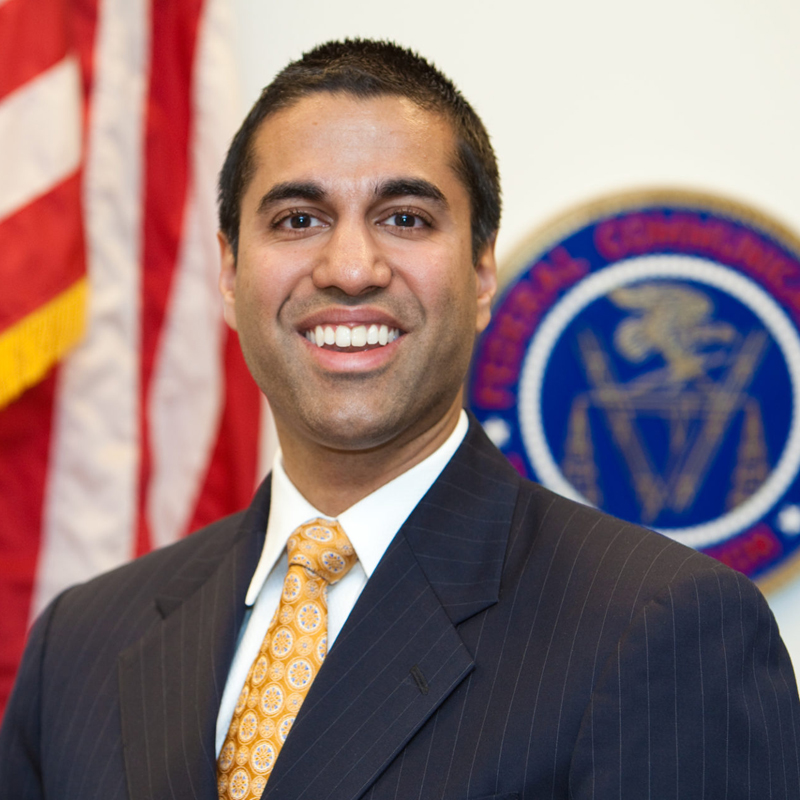
    FCC gets Indian origin Ajit Pai as its chairman

    MUMBAI: Indians are familiar with Ajit Pai who addressed Ficci Frames as a keynote speaker just three years ago. But Pai is the point man designated by US president Donald Trump as the 34th chairman of the Federal Communications Commission (FCC) who will be drawing up communications policy in one of the most highly networked and communications heavy nations on earth.

    Pai, a senior republican on the FCC, was appointed as a commissioner in 2012 by the then President Barack Obama and later confirmed by the senate. He replaces outgoing chairman Tom Wheeler.

    “I look forward to working with the new administration, my colleagues at the Commission, members of Congress and the American public to bring the benefits of the digital age to all Americans,” Pai said in a statement.

    Ajit Pai had credited his family for his successful rise as communications regulator during his Ficci Frames speech: Said he: “I was born and brought up in the United States, but my family’s roots are here in India. My mother grew up in Bangalore, and my father was raised in Hyderabad. In 1971, they came to the United States with just a radio and ten dollars in their pockets. Now, forty-three years later, here I am, in the country of my forefathers, speaking to you as the first Indian-American to serve on the FCC. The credit for this goes to my parents, who, like many immigrants, sacrificed to give me opportunities not available to them as children. It goes to my grandparents, who instilled in my parents the value of hard work and the vision to dream big.”

    According to the FCC website Pai’s rules on communication regulations are as follows:

    * Consumers benefit most from competition, not preemptive regulation. Free markets have delivered more value to American consumers than highly regulated ones.

    * No regulatory system should indulge arbitrage; regulators should be skeptical of pleas to regulate rivals, dispense favors, or otherwise afford special treatment.

    * Particularly given how rapidly the communications sector is changing, the FCC should do everything it can to ensure that its rules reflect the realities of the current marketplace and basic principles of economics.

    * As a creature of Congress, the FCC must respect the law as set forth by the legislature.

    * The FCC is at its best when it proceeds on the basis of consensus; good communications policy knows no partisan affiliation.

    Pai as the commissioner had proposed a:

    * Comprehensive plan to promote broadband deployment to all Americans. The federal government must make it easier to for broadband providers to retire increasingly obsolete copper lines in favor of next-generation technologies like fiber.”

    • It must enable rural residents to have the same choice for stand-alone broadband typically found in cities.

    • It must create a roadmap for state and local governments so that companies that want to compete in the broadband market don’t have to jump through unnecessary regulatory hoops in order to lay fiber to consumers.

    • It must promote common-sense policies like “Dig Once” and reform pole attachment rules to reduce the costs of building digital networks.

    • It must streamline the process for deploying wireless infrastructure, from big towers to small cells.

    • It must free up more licensed spectrum for use by wireless carriers and more unlicensed spectrum for things like Wi-Fi.

    • And it must preserve Internet freedom here and abroad, so that the online world can flourish free from heavy-handed government intervention.

    Additionally, Pai ai was the first member of the FCC in over two decades to call for revitalizing the AM radio band; the basic reforms he proposed were adopted in 2015. He also urged the FCC to create a task force to study the “Internet Protocol Transition” and report on obsolete rules that could be repealed; that task force was created.

    He is likely to undo the net neutrality regime that the FCC had been pursuing under outgoing chairman Wheeler.

  • FCC gets Indian origin Ajit Pai as its chairman

    FCC gets Indian origin Ajit Pai as its chairman

    MUMBAI: Indians are familiar with Ajit Pai who addressed Ficci Frames as a keynote speaker just three years ago. But Pai is the point man designated by US president Donald Trump as the 34th chairman of the Federal Communications Commission (FCC) who will be drawing up communications policy in one of the most highly networked and communications heavy nations on earth.

    Pai, a senior republican on the FCC, was appointed as a commissioner in 2012 by the then President Barack Obama and later confirmed by the senate. He replaces outgoing chairman Tom Wheeler.

    “I look forward to working with the new administration, my colleagues at the Commission, members of Congress and the American public to bring the benefits of the digital age to all Americans,” Pai said in a statement.

    Ajit Pai had credited his family for his successful rise as communications regulator during his Ficci Frames speech: Said he: “I was born and brought up in the United States, but my family’s roots are here in India. My mother grew up in Bangalore, and my father was raised in Hyderabad. In 1971, they came to the United States with just a radio and ten dollars in their pockets. Now, forty-three years later, here I am, in the country of my forefathers, speaking to you as the first Indian-American to serve on the FCC. The credit for this goes to my parents, who, like many immigrants, sacrificed to give me opportunities not available to them as children. It goes to my grandparents, who instilled in my parents the value of hard work and the vision to dream big.”

    According to the FCC website Pai’s rules on communication regulations are as follows:

    * Consumers benefit most from competition, not preemptive regulation. Free markets have delivered more value to American consumers than highly regulated ones.

    * No regulatory system should indulge arbitrage; regulators should be skeptical of pleas to regulate rivals, dispense favors, or otherwise afford special treatment.

    * Particularly given how rapidly the communications sector is changing, the FCC should do everything it can to ensure that its rules reflect the realities of the current marketplace and basic principles of economics.

    * As a creature of Congress, the FCC must respect the law as set forth by the legislature.

    * The FCC is at its best when it proceeds on the basis of consensus; good communications policy knows no partisan affiliation.

    Pai as the commissioner had proposed a:

    * Comprehensive plan to promote broadband deployment to all Americans. The federal government must make it easier to for broadband providers to retire increasingly obsolete copper lines in favor of next-generation technologies like fiber.”

    • It must enable rural residents to have the same choice for stand-alone broadband typically found in cities.

    • It must create a roadmap for state and local governments so that companies that want to compete in the broadband market don’t have to jump through unnecessary regulatory hoops in order to lay fiber to consumers.

    • It must promote common-sense policies like “Dig Once” and reform pole attachment rules to reduce the costs of building digital networks.

    • It must streamline the process for deploying wireless infrastructure, from big towers to small cells.

    • It must free up more licensed spectrum for use by wireless carriers and more unlicensed spectrum for things like Wi-Fi.

    • And it must preserve Internet freedom here and abroad, so that the online world can flourish free from heavy-handed government intervention.

    Additionally, Pai ai was the first member of the FCC in over two decades to call for revitalizing the AM radio band; the basic reforms he proposed were adopted in 2015. He also urged the FCC to create a task force to study the “Internet Protocol Transition” and report on obsolete rules that could be repealed; that task force was created.

    He is likely to undo the net neutrality regime that the FCC had been pursuing under outgoing chairman Wheeler.

  • Hotstar targets billion minutes watch time daily

    Hotstar targets billion minutes watch time daily

    MUMBAI: The new mantra at the Twenty First Century Fox-owned Star India subsidiary Novi Digital’s Hotstar is the figure of a billion. Yes, a billion. Not a billion subscribers, but a billion minutes. Speaking at a conference in China yesterday, its senior vice-president and head of product Varun Narang stated that the OTT service’s target is to get to a billion minutes of watch time daily.

    “Once you get to a billion minutes a day, you’re talking about a real, real business,” stated Narang at the conference.

    Narang was roped in to Hotstar from Whipclip last year and has had more than half a decade’s product experience with top-notch services such as Hulu and Amazon in the US. He was recruited to lead the team which is helping build mobile solutions for the app and help innovate content discovery, quality of video playbacks as well as build native advertising platforms for the app.

    Speaking at the Bank of America Merrill Lynch Media and entertainment conference earlier this month Twenty First Century Fox executive chairman Lachlan Murdoch had stated that Hotstar had gone from streaming 750 million minutes to 2.5 billion minutes between July and August 2016. That means it has some distance to travel before it gets to that billion minutes a day figure.

    Responding to a question from ace analyst Jessica Jean Reif Cohen on the media powerhouse’s plans for India, Lachlan had elaborated that Hotstar is expected “to grow significantly with the launch of Reliance Jio’s mobile 4G service, which Hotstar is the exclusive (sic) program provider for. So, on the Reliance Jio phones — the biggest launch of consumer product in many many years – Hotstar is the exclusive television provider on the platform. And so we think where every single single consumer will have access to Hotstar premium which is a $3 service. And, they’ll have it provided by Reliance for free. So, it’s a very exciting time in India for us. Just to have this in perspective, those streaming numbers for Hotstar is about, if you compare with Netflix in India, Netflix is about six per cent the size of Hotstar”.

    Among the initiatives, Hotstar is looking to scale up the product quickly is rolling it out globally in the near future, targeting the south Asian diaspora, Narang revealed at the conference. This was something that even Star India chairman Uday Shankar had stated at the Ficci Frames conference in Mumbai earlier this year.

    Narang admitted that what was helping Hotstar is the fact that “content rights are a lot easier for us in India than they are in the US.”

    Other things that could aid it get there is its catalogue of around 35,000 hours of entertainment content. At its investor call conference during the announcement of its annual results Twenty First Century Fox CFO John Nallen had pointed out that “in the beginning, we saw pretty severe sort of volatility and spike, largely around sports viewership on the Hotstar platform to when there was a big cricket tournament or something like that. But, gradually over the last year, what’s really built and gotten much more momentum is scripted programming, it’s Indian-scripted programming in multiple languages, and that’s really driving, that’s been the most gratifying and to see more consistent viewership of that and that’s really a big, big part of the volume now, and it’s the fastest way growing part of the volume on a consistent basis, local Indian-scripted programming at very high volumes.”

    Currently, Hotstar has an estimated 72 million downloads with around 50 million active users.

  • Hotstar targets billion minutes watch time daily

    Hotstar targets billion minutes watch time daily

    MUMBAI: The new mantra at the Twenty First Century Fox-owned Star India subsidiary Novi Digital’s Hotstar is the figure of a billion. Yes, a billion. Not a billion subscribers, but a billion minutes. Speaking at a conference in China yesterday, its senior vice-president and head of product Varun Narang stated that the OTT service’s target is to get to a billion minutes of watch time daily.

    “Once you get to a billion minutes a day, you’re talking about a real, real business,” stated Narang at the conference.

    Narang was roped in to Hotstar from Whipclip last year and has had more than half a decade’s product experience with top-notch services such as Hulu and Amazon in the US. He was recruited to lead the team which is helping build mobile solutions for the app and help innovate content discovery, quality of video playbacks as well as build native advertising platforms for the app.

    Speaking at the Bank of America Merrill Lynch Media and entertainment conference earlier this month Twenty First Century Fox executive chairman Lachlan Murdoch had stated that Hotstar had gone from streaming 750 million minutes to 2.5 billion minutes between July and August 2016. That means it has some distance to travel before it gets to that billion minutes a day figure.

    Responding to a question from ace analyst Jessica Jean Reif Cohen on the media powerhouse’s plans for India, Lachlan had elaborated that Hotstar is expected “to grow significantly with the launch of Reliance Jio’s mobile 4G service, which Hotstar is the exclusive (sic) program provider for. So, on the Reliance Jio phones — the biggest launch of consumer product in many many years – Hotstar is the exclusive television provider on the platform. And so we think where every single single consumer will have access to Hotstar premium which is a $3 service. And, they’ll have it provided by Reliance for free. So, it’s a very exciting time in India for us. Just to have this in perspective, those streaming numbers for Hotstar is about, if you compare with Netflix in India, Netflix is about six per cent the size of Hotstar”.

    Among the initiatives, Hotstar is looking to scale up the product quickly is rolling it out globally in the near future, targeting the south Asian diaspora, Narang revealed at the conference. This was something that even Star India chairman Uday Shankar had stated at the Ficci Frames conference in Mumbai earlier this year.

    Narang admitted that what was helping Hotstar is the fact that “content rights are a lot easier for us in India than they are in the US.”

    Other things that could aid it get there is its catalogue of around 35,000 hours of entertainment content. At its investor call conference during the announcement of its annual results Twenty First Century Fox CFO John Nallen had pointed out that “in the beginning, we saw pretty severe sort of volatility and spike, largely around sports viewership on the Hotstar platform to when there was a big cricket tournament or something like that. But, gradually over the last year, what’s really built and gotten much more momentum is scripted programming, it’s Indian-scripted programming in multiple languages, and that’s really driving, that’s been the most gratifying and to see more consistent viewership of that and that’s really a big, big part of the volume now, and it’s the fastest way growing part of the volume on a consistent basis, local Indian-scripted programming at very high volumes.”

    Currently, Hotstar has an estimated 72 million downloads with around 50 million active users.

  • The rationale behind Star India’s reorganization

    The rationale behind Star India’s reorganization

    MUMBAI: The buzz had been gathering pace since Ficci Frames in Mumbai at the beginning of this month. Change is  afoot at India’s leading media and entertainment major the 21st Century Fox owned Star India. But nobody was willing to say what. The company’s executives murmured that its businesses had developed octopus like and CEO Uday Shankar along with 21st Century Fox CEO James Murdoch was planning a managerial rejig.

    Management firm The Boston Consulting Group had been given the mandate of coming up with an organizational structure that would empower Star India’s senior executive team, unleash their expertise to execute and monetise the business strategy that Uday has put in place for the group to the fullest.

    The reorganization would allow Uday, who has been leading Star India at a frenetic pace over  the past few years to have some breathing space to further evolve the business plans that the Murdochs have for their Asian jewel and also get a helicopter view of the goings-on.

    And today’s announcement at a town hall within Star India seems to be a master stroke of sorts, according to several Star observers. A former Star India executive went as far as to say that it is a stroke of genius.  According to him, the entire burden of steering the company into the behemoth that it has become had fallen on Uday.

    When he was handpicked out of nowhere by the then News Corp COO Peter Chernin and Star group boss Paul Aiello to run Star India as its COO – a terrain he was not really familiar with – it was a market leader which had lost its way and was a much smaller operation: focused on simple general entertainment with a small interest in regional languages and sport. There was very little strength in senior management. Uday first went about tweaking the programming and took the network gradually to the No 1 spot. He simultaneously brought in senior professionals from the best companies to strengthen his core team. Over the years, he offloaded  investments Star India had made in other ventures, pumped in money into acquiring other regional networks,  made big bets on  sports and sports television, steered the media and entertainment major into the digital VOD ecosystem. And he roped in even more professionals to incubate these forays.

    The Star India of today is a very different beast from the one it was when he first stepped into its offices.

    Observers say that by elevating  himself  as chairman and CEO he has taken the load off his shoulders and is sharing the burden with his fellow professionals.  “He’s done the hard work with the various executive teams putting together all these verticals,” says a management consultant. “Now he’s empowering them allowing them to function like intrapreneurs. Which is the best thing he could do.”

    Thus Sanjay Gupta, the current COO has been elevated to managing director-Star India and K. Madhavan to managing director-South. Both Gupta and Madhavan will continue to report to Uday Shankar. Madhavan will have Kevin Vaz reporting to him as his CEO and looking after all of Star India’s southern interests.

    Sanjay on his part has a clutch of CEOs reporting into him responsible for key silos:

    empowered business units each with its own CEO reporting to Sanjay Gupta:

    · Amit Chopra, CEO of Entertainment, which spans drama and movie channels across national and regional channels in Hindi, English, Bengali and Marathi

    · Nitin Kukreja, CEO of Sports, which includes a leading portfolio of channels under the Star Sports banner

    · Ajit Mohan, CEO of Digital, which oversees Hotstar.  

    · Vijay Singh, CEO of Fox STAR Studios, which produces and distributes Bollywood and regional films

    * A Pan Indian content studio headed by Gaurav Banerjee to produce cutting edge innovation in programming.

    “This is a world class team that has powered Star  to the No. 1 position in the Media and Entertainment industry in India,” said Uday in a press release issued today on the reorganization. “We have set ourselves a bold growth agenda and these changes will deepen the leadership bench, unlock entrepreneurial energy and position Star better to deliver on its ambitions.”

    Top of that ambition heap is the target to attain an operating profit of $1 billion plus by  from 21st Century Fox’s Indian offshoot by 2020. With that rock solid team in place, Uday and James  will have more energetic legs to race to the finishing post.