Tag: FICCI Frames

  • ITV Network readies Punjabi music channel

    ITV Network readies Punjabi music channel

    MUMBAI: All the Punjabi music lovers have a new destination to groove to the bhangra. ITV Network is launching a new music channel P Tunes.

    A source close to the development confirmed the news and revealed that the channel will be launched next month. “There will be two channels, HD which will be a paid channel and SD will be a free-to-air channel,” said the source.

    Considering the Punjabi space not as crowded as the other markets, 9X Tashan, MH1 and PTC music channels only being the three players in the space, ITV Network will be the fourth entrant and the first to launch in HD. “The Punjabi music channels’ space is growing exponentially and it is the fastest growing music genre other than Hindi, so it’s quite logical to enter the Punjabi music genre,” he added.

    The source also disclosed that they have not yet opened up the inventory slots. “We have not even opened up the inventories; the commercial advertisements will go on air after the first twelve-week period.”

    The network has started the test transmission service from GSAT 17 satellite at 93.0 degree east. The channel will play Punjabi albums and Hindi movie songs.

    According to FICCI Frames report 2018, the regional music continues to grow. The music industry is split in three streams: Hindi genre, which accounts for 60 per cent of the consumption, and international and regional genres constitute 20 per cent each.  As far as the consumption of music is concerned, 93 per cent of people were reported using mobile devices for music consumption in 2017, a rise from 85 per cent in 2016. Falling data rates, coupled with growth in streaming music options are further expected to boost the digital music industry. 

    Will a music channel, that too a regional one, be able to sustain itself against the smartphone?

    Also Read :

    Is it the end of the road for anime in India?

    ‘Bigg Boss’ holds appeal across languages: Viacom18’s Ravish Kumar

    Will launch two OTTs before end of this year: Discovery India’s Karan Bajaj

  • OTT platforms boost appeal of English entertainment

    OTT platforms boost appeal of English entertainment

    MUMBAI: The over-the-top (OTT) space in India is exploding with broadcasters and new players taking the plunge to entertain the country. In such a scenario, even English entertainment content players aren’t far behind.

    With over a dozen channels in the genre and now even direct-to-home players contributing with value-added services (VAS), the market is likely to witness a significant jump in the number of consumers, hours of content consumed and revenue. Excluding VAS, the ad sales revenue for the English entertainment and movies market is Rs 600-700 crore.

    “Proliferation of OTT players has aided the appeal of English content in India, be it Hollywood or general entertainment. This is visible in the growth numbers for the English category, which has seen a growth in viewership in FY 18 as compared to FY 17,” says Sony Pictures Networks India EVP English channels Tushar Shah.

    Tata Sky has recently launched Tata Sky World Screen – a handpicked bouquet of international entertainment content. The VAS will not only feature Hollywood movies, but also prime content from across geographies and multiple languages like Arabic, Russian, Spanish, French and many more. The ad-free service will allow subscribers to view select series and movies from across the world round the clock. It is priced at Rs 75 a month and Tata Sky aims to drive up average revenue per user (ARPU) with international content.

    Tata Sky chief content officer Arun Unni says that the service targets a segment in which the genre is popular and is open to consume new content. “This kind of an offering doesn’t exist in the market. It is an alternative for those who are either already exposed or would not want to go on the purely digital option and even for those who do, they might find interesting and compelling content,” he adds.

    Critics claim that OTT is eating into traditional media. In an earlier interaction, Shah said, “There is always a churn between different platforms around the world. But this hasn’t led to viewership shrinking. Instead, it has grown by 54 per cent for the SPN English category between 2016 and 2017. The English movies genre overall has grown by 67 per cent in 2017.”

    Videocon d2h started a VAS named ‘Hollywood’ and ‘Hollywood HD’ long time back. The service was earlier priced at Rs 45 per month but now it has been reduced to Rs 38 per month excluding tax. The content is being sourced from seven top studios in Hollywood – Disney, Warner Bros, NBC Universal, Fox, Sony Pictures, Lionsgate and Paramount.

    According to FICCI Frames report, in 2017, English entertainment and other genres saw a reduction in their viewership because of rural panel weightage enhanced by the Broadcast Audience Research Council.

    OTT platforms in India have reached scale and now provide something for a vast array of audiences. Be it Eros Now with its huge library of Indian films, Zee5 with its wide regional offerings, Sony Liv and Hotstar with their TV content and premium sports while Hollywood rules the English entertainment offering.


  • Ficci Frames and market concludes on grand note

    Ficci Frames and market concludes on grand note

    MUMBAI: The FICCI Frames and the newly launched content market as part of FICCI Frames 2018 concluded on a grand note.

    The three-day conference and adjoining market saw the who’s who in the entertainment business attend and part take in the conference, in addition to buyers and sellers from across the globe and country engage in active meetings regarding a diver range of content.

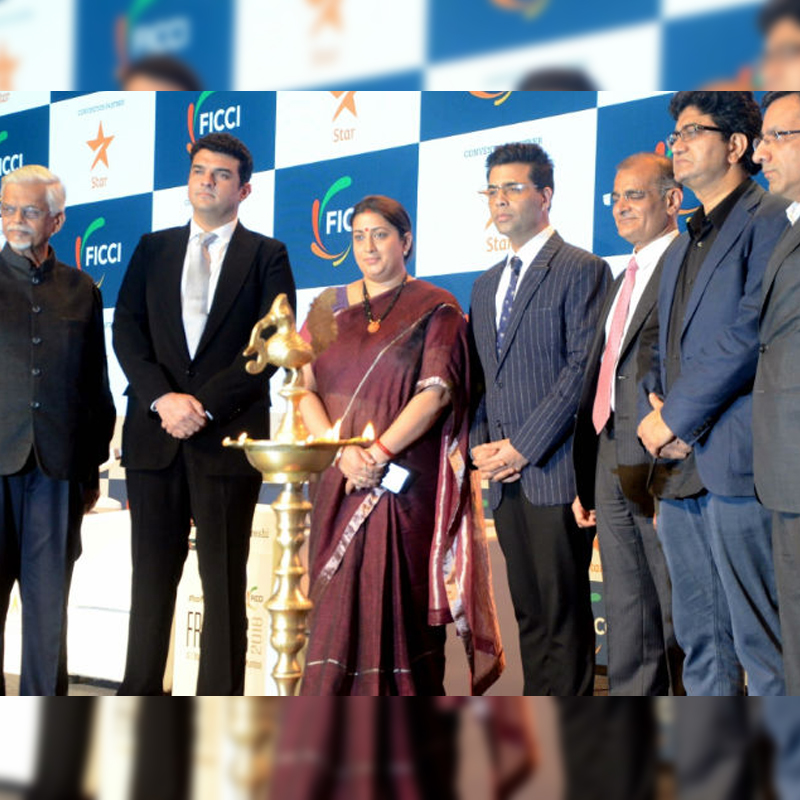
    The conference  saw I & B and Textiles minister Smriti Zubin Irani launch the three-day conference and market and engage in a riveting discussion with noted Filmmaker Karan Johar. This was followed by a range of conference panel discussions that saw the likes of Siddharth Roy Kapur, Nandita Das, Madhu Chopra, Rima Das, Sanjay Gupta (MD, Star India), Ajit Andhare, Vani Tripathi Tikoo, Megha Tata among many others take part.

    The first year of the content market was also a grand success, with the participation of over 100 buyers and festival programmers of Indian content and content sellers from across many countries..  With active meetings held across the three days, the international companies such as 102 distribution, Alpha Violet, Karma Films, Wild Bunch were also present.

    “In two days I had about 35 meetings with investors from all around the world. I was successful in raising interest of a total of 5 million dollars which we will now move forward to close with the help of my producers George Merkert and Academy Award winning Tim McGovern from LA Based Whisper Pictures…The Market was so well organized…”  said Reena NeGandhi an attendee of the market.

    “…This content market will help to unite the production houses with best content creators and will change the phase of Indian entertainment ecosystem.” said Satish Narayanan, Founder, Design Media and Edutainment Solutions.

    Furthermore 9 films including new Indian films such as Mudita by Swaroop Kanchi, Once again by Kanwal Sethi, Oh Shit! by Kamakhya Narayan Singh, Hamid by Aiijaz Khan, Ee Ma yau by Lijo Jose Pellissary and Rana Dugabbati presented C/O Kancharapalem among others were showcased to leading festival programmers from Venice, London, Edinburgh and Italy among others as a first of it’s kind initiative to fuel the discovery of Indian films internationally.

    The three-day event also saw a special installation of the mobile theatres by Picturetime digiplex where the films were screened. 

  • Screen Density: Lessons from the world & Exploring new business models

    Screen Density: Lessons from the world & Exploring new business models

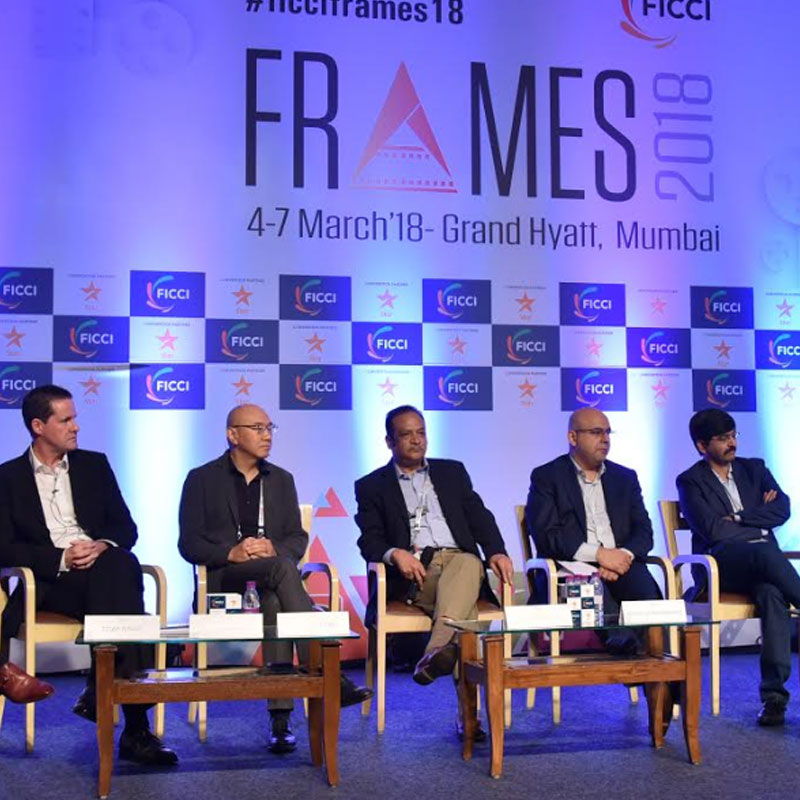
    MUMBAI: On Day 2 of FICCI FRAMES happening in Mumbai, there was a session on Screen Density in India attended by some eminent panelists consisting of Mr. William Feng, VP, Greater China, MPA, Kurt Rieder, Head-Theatrical Asia, 20th Century Fox, Kapil Agarwal, Joint MD, UFO, Kamal Gianchandani, Chief of Stratergy, PVR Ltd,  Rajkumar Akella, Managing Director – Theatrical, India, ComScore and Mr. Kulmeet Makkar, Chief Executive Officer, The Film & Television Producers Guild of India Ltd. and Sushil Chaudhary, Founder and CEO, Picturetime Digiplex moderated by Uday Singh, Managing Director, MPDA.

    The Panelists discussed the existing scenario of screen density in India and how lessons from other countries can help India explore new business models to improve the screen count.

    Addressing the problem of screen density faced in India, Mr. Kurt Rieder, Head – Theatrical, Asia, 20th Century Fox Said “We would like to see more number of screens in tier 2 and tier 3. There are not enough screens per multiplex in tier 1 and 2 because once they build these things, nobody realizes that regional films are going to explode and suddenly the average multiplex probably requires twelve screens.”

    William Feng, VP- Greater China, MPA gave a presentation on screen density: China Market Development while 

    Sushil Chaudhary, Founder and CEO, Picturetime spoke about the new business module on screen density that aims at targeting audiences of rural areas.

    The DigiPlex mobile theatre vans, run by Picturetime, offer their audiences high-quality movie-viewing experience in the rural areas and is an economical option for the audiences in remote areas to catch up with newly released films.  

    Charging between Rs 30 from to Rs. 70 each viewer, the DigiPlex first pitches a collapsible all-weather canopy that can accommodate at least 120 viewers.  

    This can help put up more screens at very low cost as compared to building multiplexes in remote and even urban areas.

    “With this module, we are also looking at helping regional cinema and campaigns issued in pubic interest.” concluded Chaudhary.

  • Women contribute significantly to Hindi news viewership: BARC

    Women contribute significantly to Hindi news viewership: BARC

    MUMBAI:  The ongoing FICCI Frames 2018 saw a session titled ‘The Future of TV’ wherein Broadcast Audience Research Council (BARC) CEO Partho Dasgupta laid down numbers and research to indicate that the future of television is bright. Contrary to general perception, BARC research shows that women made a significant contribution to the Hindi news genre in 2017.

    During the time of demonetisation in 2016 and during week 45, the viewership ratings grew by 56 per cent with the overall 52 per cent male viewership and 62 per cent female viewership. Meanwhile, on 31 December when the news Rastra Ke Naam Sandesh was being aired, the viewership grew by 3.5 times.

    The viewership also grew by 3.2 times during the UP elections, whereas the Gujarat/Himachal Pradesh elections garnered fewer eyeballs. Dasgupta states that Hindi content rules television. Hindi general entertainment channels (GEC) had reached 499 million in a week in 2017. Hindi movies, music, news and kids among others garnered positions reaching up to 471 million, 319 million, 309 million and 255 million viewers each week respectively in 2017.

    The catch as to why Hindi content is highly watched is because viewers are dazzled by the lavish and ‘feel good’ settings. Mahasangams grab more eyeballs than marriages and jail tracks in GECs. Such topics boost viewership by 20 per cent over the previous one. Marriage and jail tracks lead to 13 per cent and 15 per cent hike in the ratings respectively.

    An interesting aspect was that total viewership during festival holidays saw higher spike in the Southern market while the Hindi market maintains stability. On public holidays, viewership shoots up in both regions.

    He also drove out misconceptions about who is responsible for the low depths low depths to which news TV in India has sunk. Journalists drive ratings with 25 per cent contribution, business heads or owners with 33 per cent and the viewers with 42 per cent. It clearly indicates that the viewers are the driving force for the decrease in viewership.

    Also Read :

    Broadcasters see positive future for TV in India

    M&E stakeholders need to collaborate for growth: Sudhanshu Vats

  • Broadcasters see positive future for TV in India

    Broadcasters see positive future for TV in India

    MUMBAI: The threat of OTT and integrated platform ecosystems like Android TV is at the peak. Its increasing penetration across all age groups may be a threat to the broadcasters in the coming time. But, it isn’t the case yet in India with 64 per cent TV home penetration and much room for growth. Data also shows that 86 per cent of Indian homes still watch TV on CRT sets and only 3 per cent are multi-TV homes. TV viewing in India has grown from 3 hr 14 min (2015) to 3 hr 36 min (2017) but it is still lower than US, which boasts of an ATS of 3 hr 54 min. This gives a clear indication that there is immense scope for TV and it will further rise.

    The FICCI Frames 2018 saw a session on ‘The future of TV in India’ with panellists Novi Digital CEO Ajit Mohan, Viacom18 COO Raj Nayak, Times Network MD & CEO MK Anand, Indiacast CEO Anuj Gandhi, EY Partner Ashish Pherwani, BARC CEO Partho Dasgupta and industry veteran Amit Khanna. The panel was moderated by Provocateur Advisory principal Paritosh Joshi.

    Gandhi highlighted that we have the pulse of what audience wants which today is reality. Whether it’s a long form or short form content, people watch it, regardless of screen size or type. He said that people will consume TV content anywhere they can.

    Nayak believes that the future of TV is bright. He said that if distribution is king, content is queen. “The myth has been broken that the youth don’t watch TV and people watch short formats. Even in the US, people above 90 years of age watch TV content,” he said. He further added that linear watching on Jio TV is exploding with 3 crore viewers per month.

    According to Khanna, the average time spent on digital has grown with an hour and twenty minutes on phone especially in urban cities. When it comes to television, more that 70 per cent of viewership comes from movies and general entertainment. Pherwani said that 40 per cent of the time spent is on the mobile phone.

    Anand said that better technology, bandwidth and campaigning had eased the worry of broadcasters. He added that it was much easier to start a video stream but monetisation had not been easy.

    Broadcasters seem optimistic about the future of television, despite the onslaught posed by digital media. At least in India, the television will reign houses and minds of people for some time to come.

    Also Read:

    Ficci Frames 2018: Smriti Irani for highlighting M&E’s economic importance

    New initiatives at FICCI Frames 2018

  • Ficci Frames 2018: Smriti Irani for highlighting M&E’s economic importance

    Ficci Frames 2018: Smriti Irani for highlighting M&E’s economic importance

    MUMBAI: Even as the Indian media and entertainment (M&E) sector is projected to cross $31 billion by 2020, Minister for Information and Broadcasting (MIB) Smriti Irani said yesterday it is imperative that the country as a whole projected the economic value that the industry lends to the country’s economy.

    Speaking at the FICCI-Frames 2018 inaugural ceremony here, Irani said the Indian M&E industry is much more than just naach-gana (song and dance) and it was high time that the industry came forward to articulate the economic value and contribution that it gave to the Indian economy and exhorted the industry to use modern data analytics and technology to arrive at conclusions at the type of content the consumer desired.

    Referring to artificial intelligence or AI and other technologies, she said, “Technology is looked upon as a disruptor, but have we looked at technology from a creative point of view?”

    The Indian M&E sector hit nearly Rs 1.5 trillion ($22.7 billion) in 2017, growth of around 13 per cent over 2016. With its current trajectory, it is expected to cross Rs 2 trillion ($31 billion) by 2020, at a CAGR of 11.6 per cent. The digital segment-led growth demonstrates that advertising budgets are in line with the changing content consumption patterns, according to the FICCI-EY report ‘Re-imagining India’s M&E sector.’

    Launched on Sunday in the presence of the minister and other industry stalwarts such as Star India MD Sanjay Gupta, Siddharth Roy Kapoor and filmmaker Karna Johar, the FICCI-EY report highlighted that the M&E sector continues to grow at a rate faster than the GDP growth rate, reflecting the growing disposable income led by stable economic growth and changing demographics.

    The report states that the subscription growth outpaced advertising growth in 2017, but advertising would continue to grow till 2020 led by digital advertising.

    The report estimates that 1.5 million consumers in India today are digital-only and would not normally use traditional media. It is expected that this customer base will to grow to 4 million by 2020, generating significant digital subscription revenue of approximately Rs 20 billion. Going forward, micropayments, enabled through the Unified Payment Interface (UPI) and Bharat Interface for Money (BHIM) platforms, developed by the National Payments Corporation of India (NPCI), will further accelerate subscription revenue for entertainment content.

    EY partner and M&E leader Farokh Balsara stated, “The Indian M&E sector reached INR1.5 trillion in 2017 led by digital. With digital subscribers expected to reach 20 million by 2020, has Indian M&E reached its digital tipping point? We now need to reimagine the future of Indian M&E sector.”

    Said Gupta, “These are truly exciting times for our industry. It is amongst the fastest growing sectors in the country and has crossed the Rs 147 thousand crore mark. There is a revolution happening all around us, one that promises to, and in fact, has already started to redefine the future of media and entertainment.”

    “To compete well with the world, we need to set new standards of storytelling, we need to reimagine our stories. We cannot allow our legacy to shape our creativity. With digital, we have the license to break away from all the trappings of traditional media. We need to challenge where we release our films first, in a theatre or on a mobile screen. We need to challenge the constraints of 8 pm prime time, daily and hourly news formats and 22-minute episode lengths,” he added.

  • New initiatives at FICCI Frames 2018

    New initiatives at FICCI Frames 2018

    MUMBAI: The 19th edition of FICCI Frames to be inaugurated by the I&B and Textiles minister Smriti Irani on March 4 is all set to be a grand event.

    There are a lot of interesting sessions lined up with few new initiatives this year.

    The annual media and entertainment global convention will kick-start on the 4th evening with the launch event, which will be followed by the CEOs round-table addressed by Maharashtra Chief Minister Devendra Fadnavis.

    The 4-day event that will commence from the 4th and conclude on the 7th will see the who’s who from the media and entertainment industry attend, including the likes of Karan Johar, Shabana Azmi, Siddharth Roy Kapur, Nandita Das among many others.

    One of the major attractions will be the launch of a content market, which is expected to bring over 70 buyers and sellers of content from across the world to this platform.

    FICCI FRAMES CONTENT MARKET – A CONTENT BUYER AND SELLER PARADISE

    The 1st edition of the Content Market is aimed at facilitating the business of Content. Over 70 buyers from across the globe have been invited for the bazaar, including the likes of 102 Distribution, Edko Films, Shoreline Entertainment, Spuul, Top Entertainment, Aurora Global Media Capital, Front Row entertainment, Alpha Violet Sarl and Indian companies like Zee enterprises, Star, Eros Now, Reliance entertainment among others.

    In the first edition of the market, a special screening facility has also been set up to introduce festival programmers and key buyers to a highly curated slate of new Indian films. Festival programmers from International film festivals such as London, Venice, Edinburgh among others will also be in attendance.

    With over 100 sellers and over 70 buyers of content expected to be part of the 1st content market organized by FICCI, this sets the ball rolling for greater content exchange.

    Speaking about the 1st content market Leena Jaisani, FICCI said “This is being organized with the support and advise from the media and entertainment industry professionals. There was a dearth for such a market and with this first step, we hope to move ahead towards filling this void and facilitating more business for content.”

    International Women’s Day Celebrations with Women Leaders at FICCI FRAMES

    On 5th March, few women leader will get together to discuss women empowerment in the digital era, the rise of women movements, and how the community can support the development of more women leaders in the future.

    Led by Maya Hari, Managing Director of Asia Pacific at Twitter, who will be moderating the session, the panel will feature Director of Lipstick under my burkha Alankrita Shrivastava Actor Gul Panag, Author of Face at the window Kiran Manral; Deputy Editor of Rolling Stones India, Nirmika Singh and film producer and founder of IconicBot, Vishakha Singh

    Other Important sessions
    Few of the other important sessions would include discussions on Film Tourism, The future of TV in India, Box Office Collections of films, Biopics made in India, Women Power in Films, Screen density in India, Digital Revolution, Investments in Sports, Fake News, Low budget content heavy films, Regional Films going beyond regions, Films making money internationally, GST in Entertainment sector and Cyber security.

    There will also be a masterclass with Director Anand L Rai, a case study on web series Breathe along with a workshop on Facebook.

    Annual Media and Entertainment reports to be launched

    The annual media and entertainment report on figures related to entertainment industry and an Economic Contribution Report (ECR) for 2018 will also be launched.

  • Twitter to stream women leaders panel live at FICCI Frames

    Twitter to stream women leaders panel live at FICCI Frames

    MUMBAI: Twitter is the best reflection of “What’s Happening” in India and across the world, and where powerful voices and movements come together to speak up for women’s rights. In celebration of International Women’s Day,  Twitter will host and live stream the women leaders panel at FICCI Frames to discuss the state of women empowerment in the digital era.

    Twitter is hosting a panel of women leaders at FICCI Frames (@FICCI_India) on 5 March to discuss women empowerment in the digital era, the rise of women movements, and how the community can support the development of more women leaders in the future.

    Led by Maya Hari (@maya_hari), Managing Director of Asia Pacific at Twitter, who will be moderating the session, the panel will feature Director of Lipstick under my burkha Alankrita Shrivastava (@Alankrita601); Actor and media owner Gul Panag (@GulPanag); Author of Face at the window Kiran Manral (@KiranManral); Deputy Editor of Rolling Stones India, Nirmika Singh (@nirmika); and film producer and founder of IconicBot, Vishakha Singh (@vishakhasingh55).

    Twitter will live broadcast the session from @TwitterIndia and @FICCI_India. The live stream will be available for free to logged-in and logged-out users on Twitter and connected devices globally. People will be able to watch the panel discussion and join the conversation to celebrate women empowerment with the hashtag #SheInspiresMe.

    “Twitter is the best place to see what’s happening around the world and to talk about it. In celebration of International Women’s Day, Twitter is launching a month-long celebration to recognize inspirational women on and off Twitter, starting with FICCI Frames in India,” said Twitter MD Asia Pacific  Maya Hari. She added, “We are excited to amplify the stories of these women who are strong, powerful, and inspirational to all and share them around the world with live streaming on Twitter.”
     
    FICCI secretary general Dr Sanjaya Baru sais, “FICCI FRAMES, Asia’s largest convention on the business of Media & Entertainment, is proud to be associated with Twitter in its campaign on women’s day. FICCI has always been an active supporter of initiatives taken for women leadership. Issues faced by women in Media & Entertainment industry have been a center stage topic of discussion in Frames over the years. With Twitter & FICCI Frames coming together in this edition of FICCI Frames, it would help further delving deep into & highlighting the issues of women leadership in this digital era.” 

    In the past year, Twitter has developed several initiatives in support of women movements in India and globally, including #PositionOfStrength. The #PositionOfStrength initiative which started first in India, is a movement to engage and empower women online while educating them on how to use Twitter as a platform to build a profile, have a voice, and create their own unique and influential personal brands. The initiative began in March 2015 for women to learn how to use the platform safely with confidence, and to network with other career-minded women.

  • PKL sponsors and partners cross 100-mark

    PKL sponsors and partners cross 100-mark

    MUMBAI: Star India chairman & CEO Uday Shankar has this uncanny ability to see  opportunity where many do not. For many years, TV broadcasters had only one sport which could be monetised: cricket. Which was a major limiting factor to developing  the overall Indian sports and sports broadcasting ecosystem. Hence, he and team Star India looked around for indigenous sport that could be developed around six years ago.

    One of the properties that popped up was kabaddi, a highy underdeveloped sport, which was being pushed by a company called Mashal Sports and industrialist Anand Mahindra. Shankar saw a lot of promise in the venture and today he can be rightfully be pleased with what has been achieved.

    “When we started out, it was difficult to get corporations to own franchises,” says Shankar. “Anand used his personal charm to get folks on board. But this year, when we added four teams, a large number of top corporates and individuals were very keen. We had a problem of plenty. “

    Not just owners. Even brands have been hopping on board to back the Vivo Pro-Kabaddi League (PKL)  as it has been gaining viewership from the first season to the ongoing fifth season. 

    The need for looking at the commercial aspect of sports and supporting it for the sake of business and branding, packaging and cultivating viewership were some of the ideas which have been proven on the ground — by Star India and the Kabaddi franchises.

    In Season 1, PKL hardly had any sponsor and partner, but, with the traction it has got for the past couple of seasons, it has managed to cross 100-mark in Season 5 including individual teams sponsors and partners.

    Talking to Indiantelevision.com, Unilazer Sports CEO Supratik Sen said, “All the sponsors including jersey sponsors, on-ground, and title sponsor for UMumba has a range of Rs 8 million to Rs 20 million which is generally applicable for all the other teams.”

    Vivo PKL Season 5 has seen many late-entrant brands as sponsors and partners. Brands are aware that PKL is the only major non-cricketing event dominating in the present times.

    Corporates, of course, support events for the sake of building their brands. Given the demographics in India, advertising was done for more visibility. “For the sake of going the whole hog into sports promotion,” an analyst says, “the complete supply chain would need to be looked at – from scouting for talent to sports good manufacturing etc. to CSR.”

    Remarked Sen: “The team performance helps to get the brands on board. From Season 2, we were pretty much close to breaking even, but it was notional. But now, the reach of sports has become more important instead of breaking even (and profits),” Sen said.

    The recently added sponsors and partners for PKL as well as the teams are: Title sponsor Vivo signed a Rs 3 billion ($ 45 million) deal for five years with the league a couple of months ago.

    The associate sponsors are — Gillette, TVS Motors, Mutual Funds, Bajaj Electricals, Nissin, Royal Challenge and RR Kabel are the partners. Recently, Ultratech Cement has been roped in as an associate sponsor.

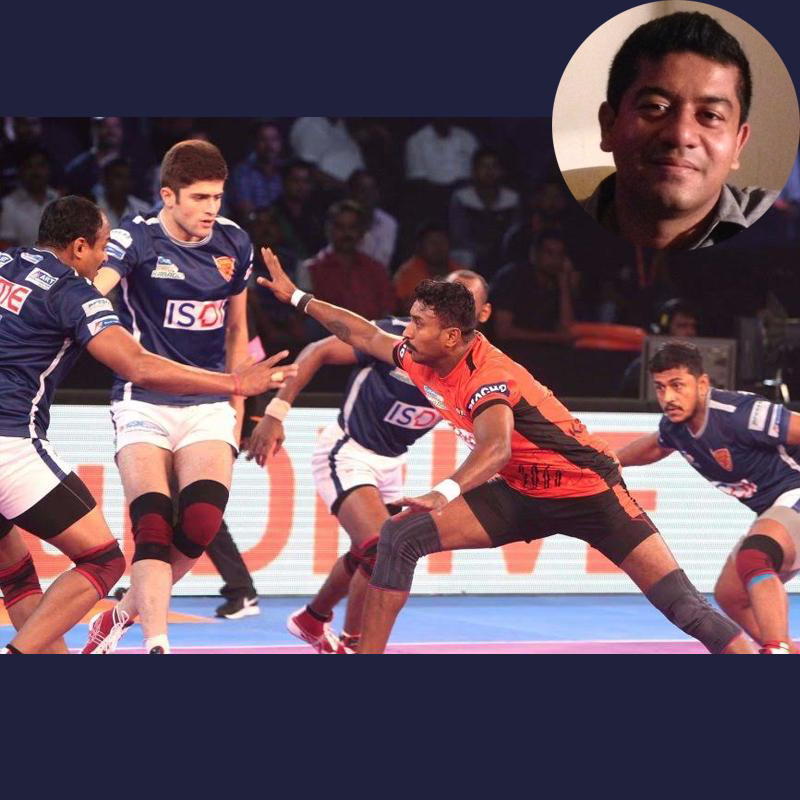
    Dabang Delhi has roped in ISME (Indian School of Management and Entrepreneurship) and ISDI (Indian school of Design and Innovation) as its jersey sponsors and the new partners are Gold gym’s, zoom car and Insidesports.

    UMumba has shifted its title sponsor from Nise Gel to Zandu Gel. The team is powered by Manforce. Bangaluru Bulls has roped in Karbonn Smartphones as the title sponsor and Kent RO and Gem Paints as the principal sponsor.

    Puneri Paltan has got Force Motors as the principal partner and Syska as the new associate partner. Jaipur Pink Panthars has pocketed Muthoot Finance and Performax Activewears as the new associate sponsors.

    Tamil Thalaivas  was the only team with no sponsor in the beginning of Season 5 but it has now attracted Muthoot Fincorp as the title sponsor, powered by Maha Cement and associate sponsors are — Agni Steels, Nippon Paint, Smartron and Admiral.

    Telugu Titans has Greenko as its title sponsor and UP Yoddhas has roped in Karbonn Smartphones as its jersey sponsors.

    The sports sponsorship market in India witnessed a healthy growth trend in the last couple of years from Rs 51.9 billion in 2015 to Rs 61-65 billion in 2016 as per KPMG FICCI Frames 2017 report.

    The fifth season is touted to become one of the biggest league tournaments as one sees traction from several brands as sponsors and partners.

    Also Read :

    PKL 5 advertisers grow three-fold, sponsorships rise 320%

    How brands are reaching out to wide PKL audience


    PKL: sponsors adding up even as matches start