Tag: FICCI Frames

  • We should aim for the M&E industry to grow more than $100 bn by 2030: I&B secretary at Ficci Frames Fast Track’ 22

    We should aim for the M&E industry to grow more than $100 bn by 2030: I&B secretary at Ficci Frames Fast Track’ 22

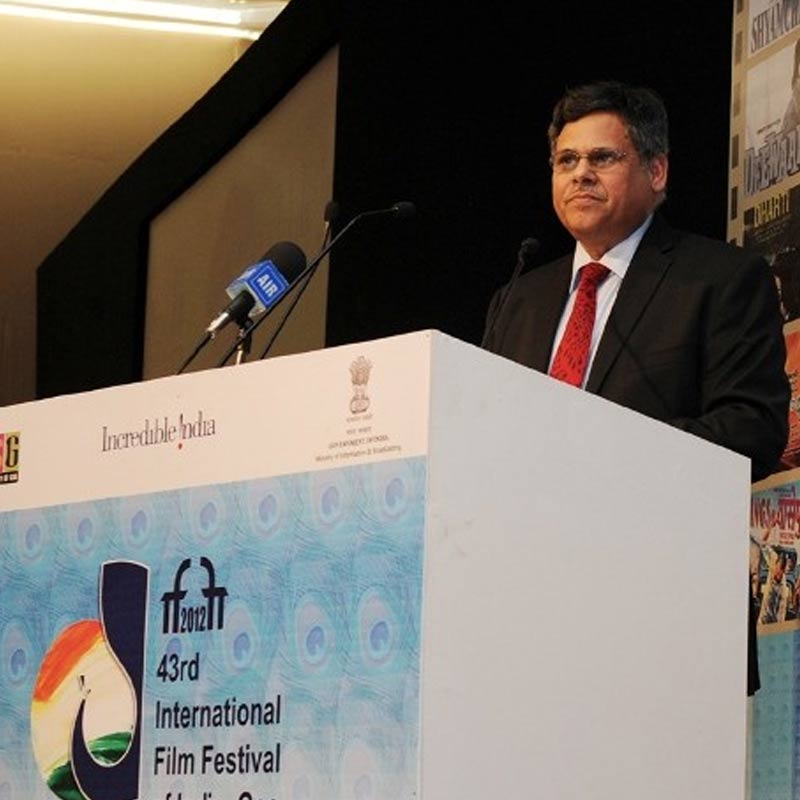
    Mumbai: The union secretary for information and broadcasting Apurva Chandra has exhorted the media and entertainment industry to set a target of growing the industry to more than $100 billion by the year 2030. “India will be a $10 trillion economy in the next ten years. We should aim for a media and entertainment industry worth more than $100 billion by 2030. The ministry of information and broadcasting will do whatever it takes to support the M&E industry and help it grow.” The secretary was addressing the inaugural session of Ficci Frames Fast Track 2022 in Mumbai on Tuesday, 27 September 2022.

    The secretary announced that Invest India is going to be leveraged in order to bring in higher foreign investment into India in the film sector. “The ministry has merged various film units under one; NFDC, based in Mumbai, is going to be the hub of the cinematic arm of the government. With this, we want to revamp the Film Facilitation Office. We are going to hand this over to Invest India, the main investment arm created by the government under the leadership of prime minister Narendra Modi to attract industry to India. More than $100 billion of FDI is coming to India this year. We want to leverage Invest India to bring in foreign investment. We will reach out to foreign filmmakers to come to India.”

    The secretary informed that the government will work with states to facilitate and promote film shooting in India. “We recently announced an Incentive Scheme for Audio-Visual Co-production and an Incentive Scheme for the Shooting of Foreign Films in India at the Cannes Film Festival. With incentives given by states too, it becomes a viable and attractive package for filmmakers.”

    The secretary announced that the government of India will work with the states and formulate a ‘Model Theatre Policy.’ “Over the past five-six years, the number of theatres has been on a decline. We need to reverse this trend. We will assign the Film Facilitation Office to work with Invest India to come up with a single-window portal for opening theatres, so that more and more theatres can come up and the public can get more avenues to watch the magic of films in theatres. We will also work with the states to create a ‘Model Theatre Policy,’ so that the states can adopt and work on the same.”

    Observing that viewing habits of people have changed due to the Covid-19 pandemic, the secretary noted that when ticket prices were brought down to Rs 75 three days ago, all shows were full. “This shows that if price points are right, people can afford theatres. The craving to go to the theatre is there, so we need to work on how we can bring people back to theatres.”

    The secretary said that he had a fruitful meeting with some stalwarts of the film industry on Monday, on the proposed amendments to the Cinematograph Act. “All stakeholders present supported the proposed amendments for the introduction of anti-piracy provisions and age classification with the UA category.” With the support of the film industry, we hope to table the amended bill in the winter session of parliament, he added.

  • Prasar Bharti collaborates with IIT Kanpur for direct-to-mobile broadcasting project

    Prasar Bharti collaborates with IIT Kanpur for direct-to-mobile broadcasting project

    Mumbai: Today, there is a shift in viewing habits from linear television to OTT and from theatres to OTT. The rise in content creation is leading to more and more jobs for people. With the arrival of 5G, there is the possibility of direct-to-mobile broadcasting. In a collaboration, Prasar Bharti and IIT Kanpur have come up with a proof of concept whereby, with a small attachment, there can be a direct-to-mobile broadcast. So, without purchasing data, there can be 100-200 channels streamed direct to mobile.

    Speaking at Ficci Frames Fasttrack 2022, I&B secretary Apurva Chandra said, “Without data and high-quality internet, users will be able to see high-resolution movies and listen to digital radio on their mobile phones. This change is coming. It will happen.”

    He also announced that a report on the creation of an AVGC task force will be submitted soon. He noted that there were reports on skills, gaming, education, incentives, and other policy aspects within the task force. They are all being combined and will be submitted to the authorities. He added that the report will be adopted during the course of the year.

    “AVGC is the future of this country. The best Hollywood films are being created in Bangalore and other places. AVGC will be the next great revolution like IT was 30 years ago,” he stated. Furthermore, he mentioned changing the cinematography act to include anti-piracy provisions. Also, there will be an age classification within the U/A category. The aim is to bring in amendments to the Act and put it before Parliament during the winter session.

    He further added that the AVGC centre of excellence, which has not seen the light of day over the past six years, aims to do this only in collaboration with the private sector. An in-principle decision has been taken in this regard. A total of 26 per cent of the task force will be owned by the Confederation of Indian Industry (CII), 48 per cent by the ministry of information and broadcasting (I&B), and 26 per cent by the Federation of Indian Chambers of Commerce & Industry (Ficci).

    He also said that the media and entertainment industries should target a combined size of $100 billion by 2030. He noted that during National Cinema Day, theatres were full even in the morning. That, he said, shows that you can get people to view movies in theatres as long as the ticket pricing is right. National Film Development Corporation of India (NFDC) will be the cinematic arm of the I&B ministry. The four film units will be merged into one. The film facilitation office will be revamped, he concluded.

  • Ficci Frames makes a comeback with Ficci Frames Fast Track

    Ficci Frames makes a comeback with Ficci Frames Fast Track

    Mumbai: Ficci Frames Fast Track 2022, a pre-cursor to the Ficci Frames which makes a comeback after the pandemic, is slated to be held on 27 & 28 September in Mumbai.

    Ficci Frames, organised by the Federation of Indian Chambers of Commerce & Industry (Ficci), is the country’s biggest international seminar for the media and entertainment industries, which spans across film, television, digital entertainment, animation, gaming and visual effects.

    The theme of Ficci Frames Fast Track is the comeback after the pandemic. The two-day long conference will commemorate the industry which underwent the heat of COVID and has only emerged stronger. It seeks to bring the industry back to its feet and is raring to go.

    Ficci assistant secretary general and head media & entertainment Leena Jaisani brought forth, “The idea is to bring together the industry under one roof and just celebrate the fact that we have not only survived the pandemic that affected people and industries world over, but also came together during that period to help and support people. Many studios and associations took the responsibility of vaccinating employees and their families.”

    As OTT emerged as a very robust player during the pandemic, the focus this year will also be on OTT. The convention would discuss top trends, policies and regulations in the industry with various stakeholders including filmmakers, technicians, actors, heads of the film studios and representatives from exhibition sectors.

    There will be dialogues and exchanges around what kind of a change has the pandemic triggered and what the future looks like for the media and entertainment sector. Conversations will also be around film tourism, IP rights and film incentives.

    Ficci Frames Fast Track will also organise masterclasses and workshops around various aspects of filmmaking. This year, students from various schools and colleges will also get an opportunity to hear and learn from the leaders in the sector.

    The celebrated and much loved actor, Ranveer Singh, would be inaugurating the event and shall be present for the opening session.

  • Indian film, TV, online video services garnered $49.8 billion in 2019

    Indian film, TV, online video services garnered $49.8 billion in 2019

    KOLKATA: The film, television and online video services industry in India generated a total economic contribution of $49.8 billion (Rs 348,972 crore) in 2019, indicating a total growth of 61 per cent from a similar report in 2017, according to new research by Deloitte. The report also found that the industry supported a total of 2.6 million jobs. 

    Commissioned by the Motion Picture Association (MPA), with the support of FICCI, the Producers Guild of India (PGI) and Creative First, the report was launched on 10 July, during FICCI’s E-Frames virtual event, Future Tech or Future Tense.

    PGI president Siddharth Roy Kapur said, “Our dynamic industry not only provides high-quality jobs and powers the creative digital economy, but is also a huge proponent of India’s soft power around the world. This research highlights how film, television online video production and distribution directly stimulates a range of other industries and businesses, wielding an impact far beyond the direct economic activities of the sector. For that reason, it is crucially important that all stakeholders from the industry and the government play their part in creating an ecosystem that incentivises growth, encourages creativity and rewards innovation. This industry has a tremendous amount to offer, both in economic activity to help us regain a solid footing in response to Covid2019 and to telling the stories of India around the world.”

    FICCI Media and Entertainment chairman Sanjay Gupta said, “M&E is designated by the government as a champion service sector. The Covid2019 pandemic is a setback for the M&E industry – and it will require a huge effort from both industry and government to put the foot to the accelerator, incentivise production and all forms of distribution and transport our industry to the heights we all know it can achieve. The creativity and will are there; let’s hope the policymakers and regulators match our entrepreneurial drive.”

    Deloitte India Media and Entertainment partner and leader Jehil Thakkar said, “The report illuminates for us the broader trends of the film, television, and online video services sectors. Unsurprisingly, online video services made a statement, generating a total economic contribution of $2.1 billion (Rs 15,374 crore) in 2019, up from $230 million (Rs 1,612 crore) in 2017 – an increase of 854 per cent in local currency. India has developed a dynamic video on-demand ecosystem that is satisfying the huge appetite for quality content, especially during the Covid2019 pandemic. Perhaps the biggest threats to continued growth and more job opportunities is rampant piracy and the imposition of artificial barriers that impact on the quality of a customer’s experience. Addressing these challenges is the task of the day.”

    PVR Pictures CEO and PVR Ltd chief business planning and strategy Kamal Gianchandani said, “Exhibition is a beloved form of entertainment for Indian audiences, and will continue to offer an essential means of social engagement and enjoyment for hundreds of millions of people. Right now, movie-going is an entertainment experience that is greatly missed. Once it is safe to do so, I am confident that audiences will return to patronise theatres with a passion and in greater numbers than before. That said, India’s screen density of 6.5 screens per one million remains too low. Just think of the positive effect on the industry and economy if we could double it?” 

    MPA APAC president and managing director Belinda Lui said, “India’s film, television and video on demand market is fuelled by talent, innovation and unrivalled entrepreneurship. Industry stakeholders have developed a reputation for working with the government to identify challenges and find effective solutions. This creative, indomitable spirit is likely to be called upon in the current times to overcome a range of hurdles and ultimately, continue to deliver great quality content through a variety of channels to audiences both at home and across the globe.” 

  • Digital is pushing other mediums towards accountability

    Digital is pushing other mediums towards accountability

    NEW DELHI: In the post-Covid2019 world, measuring the efficacy of advertising spends will become even more critical for companies as they navigate their recovery given the significant pressure of their cash flows and liquidity positions. How can the various M&E segments respond to these enhanced requirements on attribution? How can measurement become timelier and more precise for brands? Addressing these questions at the 21st edition of FICCI Frames, industry members discussed the ‘Attribution at the forefront of the conversation.’

    GroupM South Asia president growth and transformation Tushar Vyas asserted, “We always say that half of the advertising is wasted but we don’t know which half, it’s a problem which keeps resurfacing in a new avatar even in the digital area. One of the reasons is because of the complexities associated with this area. There are issues like brand safety, ad frauds and many markets don’t have a set of common measurement across the various channel of mediums, even tonnes of data are making it more complex."

    This year’s FICCI report released in March stated that in 2019, advertising grew by Rs 4000 crore but Rs 3700 crore were spent on digital and new media while the growth in traditional media was only Rs 300 crore.

    BARC CEO Sunil Lulla shared that the pandemic has shifted the consumption pattern of content across mediums. He said, “I don’t think ROI has always been less important perhaps but what we have today is better measurability than ten years ago. We are still not there where a market has a unified independent measure, like on TV there is an independent measure, on digital, there are many digital providers.”

    “There used to be conversation on digital vs television but the consumer is shifting from one screen to another. In the pandemic, we have seen a steep rise in TV consumption in certain categories such as kids, news and movies. As there was no original content, people started watching repeated content and Doordarshan became the no.1 channel after 1986, and digital was moving in parallel. TV is equally important that’s why July has the same volume as in January. TV is good for building brands, it’s good for targetting an entire family and digital is good for sharp targetting,” he added.

    Due to Covid2019 print and radio took a much bigger hit. “I believe when the economy opens up fully, we could see all these mediums working in a better partnership that can be a big outcome from this period,” Lulla opined.

    The panellists echoed that due to Covid2019 there are higher chances of brands shifting their spends to the digital landscape.

    Vyas said, “Advertisers are going to follow where the consumers are going. It’s all about building an entire connected environment where you’re linking the consumer to commerce.  The focus is shifted more from output to outcome now. Earlier the conversation was about reach and frequency which is now moving to a different level. The conversation today is more about what it is going to do to my business or brand. That’s the change which digital is bringing, which is resulting in that kind of accountability from other mediums as well.”

    Vyas stressed that it’s important to build a first-party data ecosystem and knowing the consumer in-depth from their perspective.

    “As an industry, we need to work together on how we report and agree on the metrics. We need some common practices to build these measurements, and then agree to the standardisation of data, and as time goes by, AI and MI can supplement these data,” he said.

    He also said that agencies will always require the TV medium. Said Vyas: “Parties can’t do without TV because it’s the entertainment and information medium of the household and digital is for the individual.”

  • Uday Shankar stresses lowering dependence on ad rev

    Uday Shankar stresses lowering dependence on ad rev

    NEW DELHI: FICCI Frames, for the first time, conducted a digital virtual conference on the media and entertainment industry. Discussing the role of the creative economy to revitalise economic growth were The Walt Disney Asia Pacific chairman and Star and Disney India president and FICCI senior VP Uday Shankar, Google India country manager and vice president and FICCI committee chairman Sanjay Gupta, ambassador of Italy to India HE Vincenzo De Luca, minister of state for finance and corporate affairs Anurag Thakur and minister of information and broadcasting Prakash Javadekar.

    Shankar touched upon important aspects on how to tackle the challenges due to pandemic and make the industry more vibrant. He said, “When FICCI frame was launched the total size of the media industry at that time was very low across the print, TV, radio but today it is a 20-25-billion-dollar industry. From about 100 channels in the year 2000 today we have 900 channels in the country. The size of the print industry which was about $1 billion is now at $4 billion.  India remains one of the few countries where the print business is reasonably healthy. The emergence of the digital industry has already become the nucleus of the media and entertainment sector.”

    He added, “Despite all the setbacks and hurdles, what we are facing is temporary. We can easily overcome them and make a big leap. As the industry has grown, its dependence on advertising has grown and it has helped all participants. But it has been a source of distraction also. If the industry has to grow to the next level, one thing that must be fixed is our ability and desire to get people to pay for what they consume and the only way the industry can grow."

    Shankar asserted that this year the industry is going to be hurt very badly due to Covid2019 and primarily due to the dependence on advertisers.

    “The content business has gone truly global and the opportunity to scale it up is much bigger. We have not been able to invest in content and take our ambition to the global domain. The industry needs to grow its content ambition. We need to think beyond weekly ratings and aim for Indian content to travel globally,” he said.

    Gupta said, “In 2019, the industry had a revenue of $20 billion and digital media accounted for 20 per cent but in 2020, the sector has shrunk to $15 billion. It is estimated that around 20 per cent may lose their jobs in the M&E industry. We need collective efforts within the industry and from government.”

    He also mentioned a point that despite years of applause for Bollywood, it has still not managed to create a truly global market. Gupta shared, “India gets less than seven per cent revenue from overseas market. Hollywood, in contrast earns more than 70 per cent from the global markets. We can be a $100 billion global industry by 2030 if we adopt significant policies and support to accelerate films and games."

    He gave some ideas to expedite some of the policy decisions which can help in the sector recoveries.

    “We need to possibly resolve some of the critical issues like tax burden on DTH and radio. Theatres can be allowed for multiple activities i.e. showing sports games and educational activities to maximise capital utilisation. The broadcasting sector will benefit by ensuring light-touch regulation to enabling the industry to continue on the recovery path with speed," shared Gupta.

    Thakur shared that in the last three years there has been a sea change in the entertainment industry as far as digital media is concerned. 

    “The creative economy is an interplay between human creative ideas, intellectual property, knowledge and technology. If we look at the global market of the creative goods it has doubled from $208 billion in 2002 to $509 billion in 2015. India needs to have a bigger chunk of this pie. While we create volumes, we also must create value and set our goals higher. From simply made in India, we must also aim to be designed and conceptualised in India," he said.

    Follow Tellychakkar for the consumer facing news & entertainment

  • FICCI – Cyril Amarchand Mangaldas releases FICCI Frames ‘Entertainment Law Book 2020’ Report

    FICCI – Cyril Amarchand Mangaldas releases FICCI Frames ‘Entertainment Law Book 2020’ Report

    Federation of Indian Chambers of Commerce and Industry (FICCI) and Cyril Amarchand Mangaldas, today released ‘Entertainment Law Book 2020’ report. The report highlights regulatory developments in the field of TV broadcasting and distribution, music, radio, filmed entertainment, and other segments in the Media & Entertainment space. It also includes several thought provoking articles on diverse topics, dealing with the issues in the Media & Entertainment sector. The report was scheduled for launch at FICCI Frames 2020, however due the given COVID -19 situation, the conference has been postponed to a later date this year.

    Mr Dilip Chenoy, Secretary General, FICCI said, “The report touches upon some vital aspects that are playing an influential role in charting the way for the future of the Media & Entertainment industry. The issues lay strong foundations of the possible framework and solutions to developing the laws that will in time, govern the Media & Entertainment industry, in our country. On behalf of FICCI, I express our appreciation to Cyril Amarchand Mangaldas and the members of the FICCI Media & Entertainment Committee for working with us on the 2020 edition of this Report.”

    Mr Cyril Shroff, Managing Partner, Cyril Amarchand Mangaldas said, “It is an honour and a privilege to present this report on the legal and regulatory issues impacting the Media and Entertainment sector. This report gives a bird’s eye view of all important and relevant developments in the past year, encompassing the entire gamut of the Media & Entertainment sector. I would like to thank FICCI and members of its Media & Entertainment Committee  for choosing us as a knowledge partner for the second consecutive year and all those who have contributed their time and valuable insights in making this report a possibility.”

    Mr Bharat Vasani, Partner (Head – Media & Entertainment), Cyril Amarchand Mangaldas said, “I am very delighted at the release of FICCI Frames Entertainment Law Report 2020. It was great experience to meet the key players in this industry and get their practical insight into the future of different verticals of this industry and the impact of digital revolution.”

  • Gazing into the Crystal Ball – Sustaining Growth in Uncertain Times

    Gazing into the Crystal Ball – Sustaining Growth in Uncertain Times

    MUMBAI: In an interesting session titled “Gazing into the Crystal Ball – Sustaining Growth in Uncertain Times, that was held on day 3 of at the 20th edition of Ficci Frames, Shri Sanjeev Sanyal, Principal Economic Advisor, Ministry of Finance, Goverment of India gave a keynote address.  

    While in conversation with Mr. Ashish Pherwani, Partner, Advisory, EY, Mr. Sanyal spoke about how Indian content has found resonance globally. 

    “Few of the successful writers like Amish Tripathi and Chetan Bhagat are writing in the languages that are Indian but are relatable to the audiences internationally. Similarly filmmakers are making films that have indian stories but are attract audiences globally. Dangal for example was not written with an international audience in mind but the story was true to our roots and we succeeded”

    “We have a lot of talent in our country and India has great stories. The time is to reinvent those stories and tell them with top class technologies. We definitely have ability to create global content.” He concluded.

  • Content makes social media influencers popular

    Content makes social media influencers popular

    MUMBAI: A session on young media influencers was held on day 2 of FICCI FRAMES,the global media and entertainment conclave. These media influencers are being used by brands to promote their brands through social media. These infleuncers have a huge following on their social media platforms.

    "I think earlier it was about the fact that if you are a celebrity, there should be a mystery around it. Now your celebrity status has everything to do with your relatability to the people." Said Rohan Joshi.

    "I think when it comes to sponsorship and collaboration, brands come to us depending on the age group of our audience and if that matches up to their brand value." Srishti

    Actor Gaurav Gera, popular on social media for his characters like Chutki and Shopkeeper, said: "I think we are like TV channels. You know where we have subscribers and steady audience like the way TV channels have. We are primarily making videos to entertain and to engage with people." 

    Talking about maintaining consistency of the content, Prajakta Koli, a YouTuber known as MostlySane, said: "It has to be a full-time job. We have to be in search of content and there is no day off for us. Especially, in our initial days, when we are doing everything — writing, performing, editing. But then, once you get a strong connection with the audience, you just go on."

    Have the digital influencers got their dues?

    "I was having a conversation with someone who was saying how much budget is allotted for digital marketing, and the amount was massive. It tells us how the whole ballgame of marketing has changed. Whereas they want a Bollywood star for his/her reach, they also want a social media influencer for its relatability factor."

  • Broadcasting rights are the fuel for any sport to grow” Matthew Kurlanzik

    Broadcasting rights are the fuel for any sport to grow” Matthew Kurlanzik

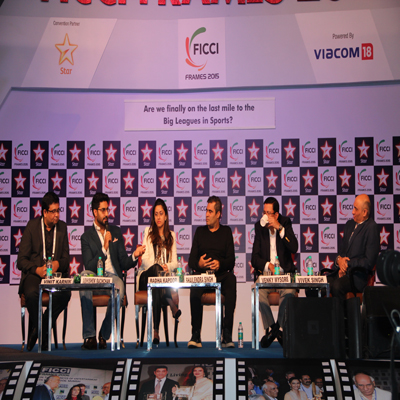
    MUMBAI: Day 3 of the 20th edition of FICCI FRAMES started with an interesting session on Sports. Titled ‘Sportsonomics: Driving Indian Sports Forward, On And Off The Field’, the session saw coming together of sportspersons, regulators, administrators and industry leaders to analyze business models and policies that will launch next decade of growth for Indian sports.

    Moderated by Indian Sports Journalist Ms. Mayanti Langer, the panelists included Mr. Atul Pandey, Chairman, Sports Live Entertainment , Mr. John Medeiros, Chief Policy Officer, AVIA, Mr. Chintamani Rao, Renowned media expert, Mr. Vinit Karnik, Business Head – Entertainment, Sports & Live Events, GroupM, Mr. Nitin Kukreja, Chief Executive Officer, IQuest Enterprises Private. Limited and Mr.Matthew Kurlanzik , Director, Government Relations, Asia, 21St Century Fox.

    With Khelo India, sports is being promoted as an important tool not only for physical growth but also for mental strength. The panelists spoke about the importance of creating sports environment on ground level to make India more prominent on international platforms.

    While Mr. Atul Pandey spoke about challenges from policy makers perspective, he also mentioned how the opportunities in our country are very high.

    Speaking about popularity of Indian Sports outside India Mr. John Medeiros said, “I live in Honk Kong, the cultural sphere is much different but and now I see a lot more Indian sports in our media there then say ten years before. There is a dynamism in India which is flowing out into the rest of the world.”

    “The IPL league has created a momentum around sports economic in India and that’s been pretty much driven by private players. The responsibility is not only of the broadcasters but we need to create a holistic environment around sports”. Mr. Nitin Kukreja.

    Speaking about taking sports to international platforms, he further added, “We have seen mushrooming of leagues and exposures but at international level sports is a competition. Our medal tally at international level has come down.  We need to take measures to correct and take Indian sports forward at an international level because the recognition, fan attention and money comes from there.”

    Mr.Matthew Kurlanzik spoke about how abroad the sports competitions at school and university levels are being broadcast. “It doesn’t only give you a player that has already garnered fan following but also helps creating an environment around that sport.”

    “Broadcasting rights are the fuel for any sport to grow.” He added.

    “We need to have many more leagues at school level, international coaches come here to coach our students, we need to nurture talent, give him or her right competition exposure, we need to have more international teams come here and play and we need to have that comprehensive piece from sporting side and from marketing point of view. “ concluded Mr. Nitin Kukreja.