Tag: FICCI Frames 2018

  • Regional to be at the forefront of content

    Regional to be at the forefront of content

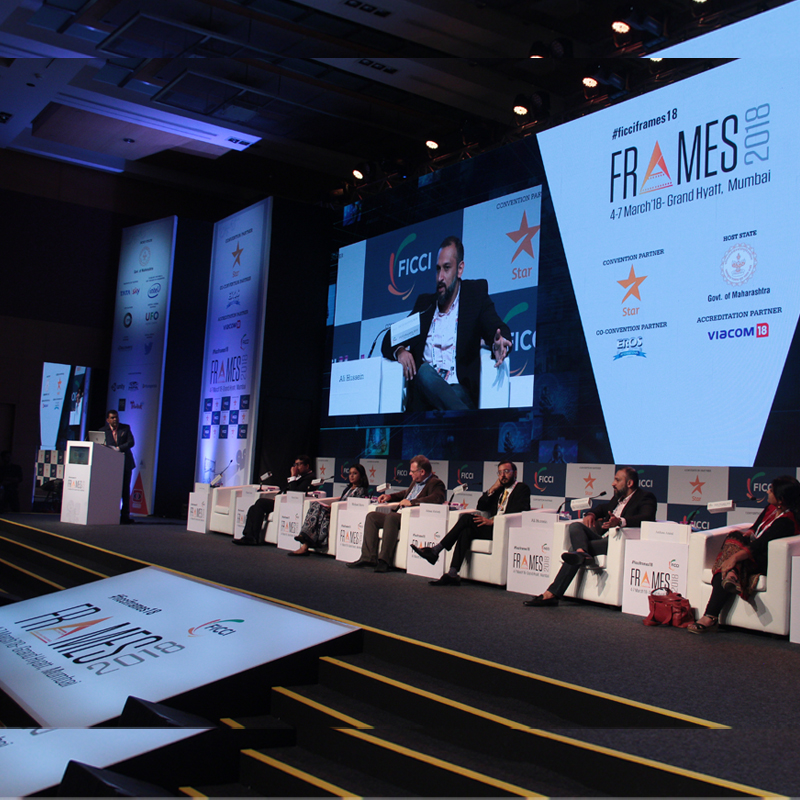
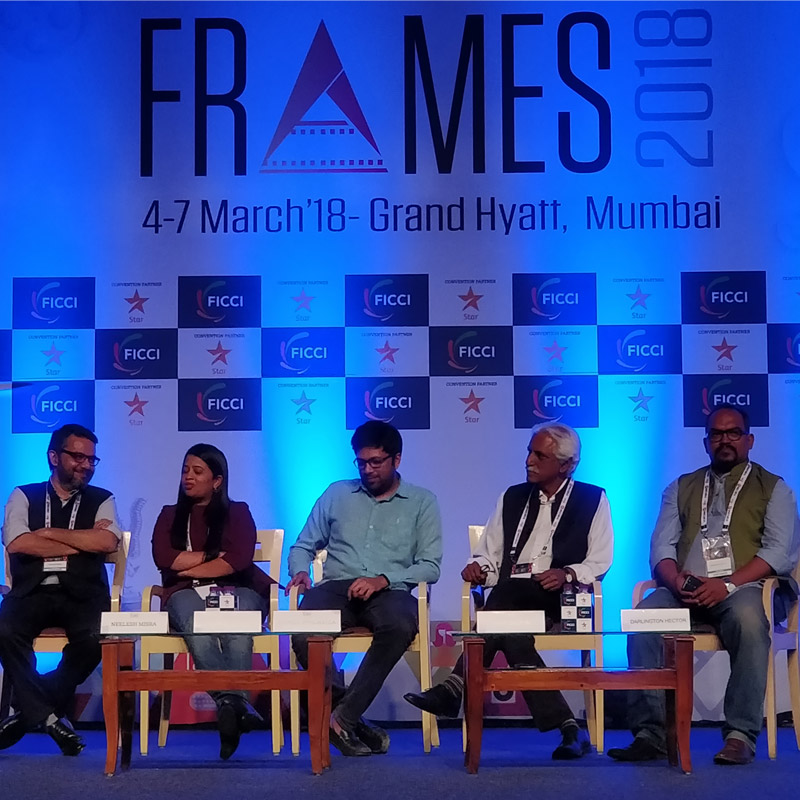
    MUMBAI: The regional space in India is the new target for everyone. But what exactly is it that pulls content creators to divide themselves into India’s varied languages and will this fad stay in the future, too? The question was discussed in a FICCI Frames 2018 session titled ‘regional is the new mass media.’

    The News Minute managing editor Dhanya Rajendran said that any market outside of Mumbai and Delhi is considered regional, which the national media has ignored for a long time while underestimating its potential. “In the last two years, with the advent of digital media, more and more media houses have started realising that there is a lot of readership not because of good journalism, but because they know that there are consumers in places such as Bengaluru, Vijayawada, Madurai and Vishakhapatnam consuming all kinds of content,” he said adding that he hoped that more digital spaces would spring up in Goa, Maharashtra, Gujarat and Bihar in the next two to three years. “Our mainstream media will be forced to follow-up news stories that they were keeping in the backburner and looked down upon as regional stories,” he said.

    Eminent sports columnist and journalist Ayaz Memon pointed out that sports was the classic example of a mass media product. “Football is the biggest sport in Europe, but there is a difference between the French, the Dutch and the English viewing the same match. Look at the regional newspapers like Manorama, Matrabhumi and Anand Bazaar Patrika. At one time, they were larger selling newspapers than the English ones. The easiest to penetrate has been sports because the language of sports is universal. The language of consumption of sports may differ from Tamil, Telugu and Kannada and consumers enjoy consuming the content in the language they easily understand.”  

    Network18 has been prominent in venturing into the digital space. Its group president Avinash Kaul said, “Regional is dominating the entire space, the regional wave is here to stay and will continue to grow. We have around 270 regional channels out of 500 channels overall in BARC. The regional viewership is higher than the Hindi viewership and has a market share of 47 per cent. General entertainment channels (GEC) being the biggest attraction, regional GECs have 30 per cent more viewership than Hindi GECs. If we take a look at the advertisers, the regional market has seen an increase of 20 per cent in the last two years and around 3500 advertisers are exclusive to the regional market.”

    Your Story managing editor Darlington Hector said that the news platform decided to branch out into the regional market in 2012-13 with Hindi, Tamil and Bangla. He said that in the late 90s, the English content consumption was around 80 per cent globally and the next decade around 2007-08 it dropped to about 27 per cent. English as a preferred language of consumption has been dropping in importance every decade and he sees that happening in the future as well. “The reason for this is the loss of credibility in the last few years and a good opportunity now for online digital platforms to express better. People do connect emotionally with the regional media today, which I am not seeing with the national media today. The television anchor has played a big role in destroying the credibility. The next 25 years will be the golden period for the regional languages of India, especially online,” he concluded.

    Both broadcast and online platforms are vehemently marching into the country’s various languages. Hindi and English, which till now were the holders of the mediums, will slowly see viewership shift to people’s language of choice.

    Also Read :

    Stakeholders highlight need for sports education

    OTT platforms discuss need for regulation

  • Vice Media to launch Vice India on April 2

    Vice Media to launch Vice India on April 2

    MUMBAI: New York-based millennial-targeted media brand Vice Media is all set to mark its presence in the Indian entertainment industry with Vice India on 2 April 2018.

    Hosi Simon, the CEO of Vice Media Asia Pacific, announced the launch date in Mumbai on the third day of FICCI Frames 2018.

    Vice Media has been around for 24 years. In June 2016, Vice Media and The Times Group collaborated for an ‘expansive partnership.’ The joint venture by Vice Media is done to bring its youth-focused content to many more territories, mixing local and international news, culture and lifestyle programming to young viewers across online, television and mobile. The content on Vice India will be an equal half split between local content and content from abroad.

    The launch of Vice Media’s TV service ‘Viceland’ with the name ‘Vice Now’ in India as a pay channel is also a part of the joint venture.

    Vice India will open up their offices in Mumbai and Delhi. Recently, Chanpreet Arora was appointed as the chief executive officer (CEO) of Vice India. Earlier, Vice India had appointed Pragya Tiwari as the editor-in-chief and Samira Kanwar as the head of video. Since then, Tiwari has left Vice India citing personal reasons and Kanwar has been designated as content head of the firm.

    For India, according to Simon, the goal is to be a deeply local, relevant company.

    Simon said that Vice would adopt a studio approach and the focus will be on the story, no matter from where and whomsoever it comes

    The company will have a production hub that will create different kinds of content including long form, short form and documentaries.

    Also Read:

    Localised content the way forward for Netflix in India

    2017: The year OTTs went regional in India

    Regional OTT content more than just catch-up TV    

    Indians among top commute streamers for Netflix

  • OTT platforms discuss need for regulation

    OTT platforms discuss need for regulation

    MUMBAI: At FICCI Frames 2018, stakeholders once again debated the need to bring over-the-top (OTT) platforms under a regulatory system. In a session on digital revolution, panellists discussed how India stood a genuine chance of becoming the digital content hub of the world but the threat of regulation from the content, data and economic perspectives loomed large.

    The session ‘Rise in Platforms: Digital Revolution in India and Impact M&E Industry’ was discussed with panellists Media Partners Asia ED Vivek Couto, Frost and Sullivan director Vidya S Nath, Verizon Digital Media VP – strategic alliances & channel management Michael Sturm, PLR Law Partner Suhaan Mukherji, Eros Now COO Ali Hussein and Z5 business EVP & head of digital – India Archana Anand. The panel was moderated by Castle Media ED Vynsley Fernandes.

    According to Mukherji, the concern is that which authority will regulate OTT as it comes under the ambit of the IT Act. “OTT was defined by the Telecom Regulatory Authority of India and it brought out the information papers on net neutrality,” he said.

    Anand said that OTT needs more freedom than traditional media that can differentiate it as being a little more edgy, cheesy and brave. Nath pointed out that the word ‘regulation’ is often interchanged with ‘censorship.’ “In the broadcasting industry, there are regulations like not showing the ads in the day time or show few ads after 10 pm. But the industry does practice self-regulation too,” she said.

    Agreeing with her, Anand said that Z5 also practices self-regulation and that every platform follows certain fundamentals wherein everyone steers clear of things such as porn. She favoured having a debate between platforms and regulators to come up with a regulation after mutual consensus.

    However, Mukherji cautioned saying, “We should be very careful that we just don’t treat OTT or kids movies or IP networks the same way we treated everything else.”

    Describing the nature of digital platforms, Anand said, “We are always on OTT while traveling or even while waiting. It’s really about us consuming way more than we ever did before.”

    Nath opined that looking at the current business model, India was primarily an AVoD market. She said that by 2020, Indian OTT market has the potential to grow to 500 million. It was 180 million in 2017. She further added, “OTT is not competing with pay TV or FTA channels, it is competing with other digital platforms.”

    The fight is essential for viewer time. Since people don’t pay up easily for content, most platforms adopt a freemium model.

    According to Couto, countries like Australia and Japan are largely based on subscription video on demand. In Australia, TV industry has been demolished and the entertainment is largely driven by Netflix. But India is a country with huge potential market. He said, “India is still slow and the most interesting thing about India is that it has a strong online market and online is the subset.”

    Japan and China are liberating the OTT space. “They are creating their digital ecosystems with games, videos, e-commerce and many things in it,” added Couto. He also said that the average watch time for any OTT platform including Netflix in Indonesia is 15 minutes but in India, it comes to 3 hours a day.

    Sturm believes that Indian markets produce the most content across the globe but looking at the scale, everything falls to AVoD, SVoD and TVoD models. He said, “When you need to reach the mass, then you need to opt for AVoD model. In one or two years, we will be able to run profitable AVoD models.”

    While praising the diversity of India and its content creation Sturm said, “India is not just about English and Hindi speaking consumers, it has consumers consuming content in many more languages.” Anand also added that there is a big regional market in India that is waiting to be captured.

    Whether global or local, whatever the niche or genre, OTT services have become the centre of attention in the entertainment space and they must become sustainable businesses at some point. OTT players are certain that TV won’t die so soon and their fight is on a different level altogether.

    Also Read:

    Localised content the way forward for Netflix in India

    2017: The year OTTs went regional in India

    Regional OTT content more than just catch-up TV    

    Indians among top commute streamers for Netflix

  • M&E stakeholders need to collaborate for growth: Sudhanshu Vats

    M&E stakeholders need to collaborate for growth: Sudhanshu Vats

    MUMBAI: If the Indian media and entertainment (M&E) sector, poised to be Rs 2 trillion industry by 2020, is to be a force multiplier and up the present growth trajectory, then all the stakeholders, including the government, need to collaborate sinking differences, according to Viacom18 Group CEO Sudhanshu Vats

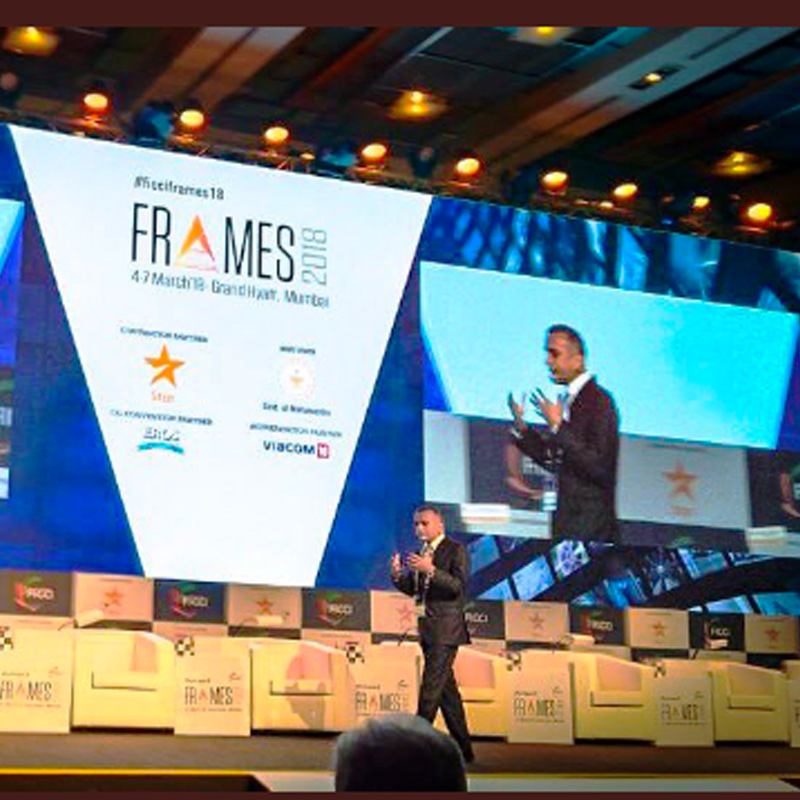
    “We need to learn to collaborate as an industry. We need to collaborate with competitors at times so collaboration and competition can coexist. The scale of industry is such that innovation and disruption is bigger than what any single one of us can achieve. It is only when we form partnerships [and] collaborate that we can achieve greater heights,” Vats on Monday said delivering a keynote address, themed ‘Media and Entertainment: The Force Multiplier At The Heart Of Society’, at the ongoing FICCI-Frames 2018 here.

    Pointing out that the M&E sector has deep links with other sectors of the economy, Vats asked and answered, “Where is it that you first heard about the mobile phone in your hands? Why do you even use it? How did you come across the shampoo you used this morning? What did you do in the car while driving to this conference? Well for most of you, the answer will be some form of media, be it print, or digital or electronic.”

    Deconstructing his observations in terms of numbers, Vats explained that the M&E sector has added over Rs 50,000 crore in output in the last five years, has a revenue size of Rs 130,000-135,000 crore and the direct or indirect induced benefits to the economy of the total industry size is Rs 450,000 crore with a contribution of 2.8 per cent to the country’s GDP. This apart, the industry also employed, across both formal and informal sectors, 1-1.2 million people, contributing significantly to India’s job creation.

    Having excited the audience with some hard data, Vats added, “Did you know that by several estimates, video streaming accounts for over 50 per cent of total mobile internet usage in India? This is expected to touch 75 per cent over the next three years. Today itself, the contribution of data to telco revenue stands at 20-25 per cent. Imagine what will happen when virtual reality (VR) becomes a commonplace phenomenon?”

    According to Vats, while presently the media sector employed around 1.5 million people directly and indirectly, it has the potential to add another million over the next five years, which might seem a small number —  given the total workforce of 460 million — but these are jobs that were non-routine, least likely to be automated and, more importantly, most of these jobs will need ‘on-the-job training’ — meaning that these jobs don’t need to wait for the country’s education infrastructure to catch up.

    But, given the M&E industry’s role as a force multiplier, how much steam is left? Because if the engine starts to weaken, it is obvious that its role as a force too will reduce. Vats thinks the answer to the question need not be a pessimistic one. Why?

    Vats listed the reasons for growth opportunities: (i) M&E industry’s ad-spend to GDP ratio was still 0.4 per cent compared to 1 per cent in developed economies (ii) the total sector is one per cent of GDP compared to 2.5 per cent or so in developed economies and (iii) while Indian TV audience (780 million) is bigger than that of the total population of Europe (745 million), India has only 64 per cent penetration with 183 million TV households. “With electrification progressing at a blistering pace, imagine future growth,” he reasoned.

    Though the opportunities are there, can the M&E industry pull it off? Certainly yes, if all the stakeholders sunk their differences and learnt to collaborate without being skeptical of newer techs and data-driven findings instead of always asking the government and regulator for help, which they must provide being facilitators and further adding to ease of doing business, Vats said exhorting the industry to rise to the challenges as one.

    “We need to become comfortable with data because we need to bring in more transparency, authenticity and objectivity to our data. If a new-age entrepreneur comes to us, we are skeptical of his idea or technology. If someone approaches us with a new way of measuring, say, our audiences, we are dismissive. We need to change this attitude. We need to change this mindset,” Vats reasoned, adding that Viacom18 was doing its own little bits, including starting a pan-network engagement programme with startups where the company partners with validation. The initiative is called Vstep or the Viacom18 Startup Engagement Programme.

    Urging the Indian society to loosen up a bit — learning to “laugh at ourselves” — Vats signed off saying: “Let us, the media and entertainment industry, be the force multiplier for growth, the force multiplier for change, the force multiplier for jobs and, above all, the force multiplier for the good of society.”

    Also Read :

    M&E to cross Rs 2 trillion by 2020: FICCI-EY reportFicci

    Frames 2018: Smriti Irani for highlighting M&E’s economic importance