Tag: FICCI Frames 2016

  • Kids content growth is fastest in digital, and monetizing models need to keep up

    Kids content growth is fastest in digital, and monetizing models need to keep up

    MUMBAI: ‘Kids content has already gone digital, catering to its target audience,’ was the unanimous consensus at a session on ‘Kids Go Digital’ at the ongoing FICCI Frames 2016

    Unlike most discussions on digital media, there were no “if’s, ‘but’s and ‘maybe’s” and panelists — Chuchu TV CEO Vinoth Chander, Godimensions’ founders Shravan and Sanjay Kumaran, Nazara Technologies CEO Manish Agarwal  and Viacom 18 Digital Ventures COO Gaurav Gandhi – discussed how to take digital kids content to the next level, expand its market in India and make the most of the resources and eyeballs at disposal. Whizkidz Media founder Amit Agarwal, moderated the panel discussion.

    “Kids content growth is fastest in digital as its consumers are native to the medium. While you and I are adapting to the medium, they are born in the digital world and hence take naturally to it,” said Gandhi, adding that over the years the demography of kids born in the digital world will only grow.

    Currently kids’ content on digital platform is mostly on YouTube which has a few issues. Firstly, there is hardly any premium kids content available in India, then there is a lack of character driven shows, and most of the content for children is targeted at preschoolers leaving out a huge chunk of the audience. Moreover, most of the viewership comes from foreign markets, and the market in India still needs to be developed.

    Reflecting on how one markets kids content, Gandhi had a cryptic answer: “In their own language”. “You need to think like them and market your content on their own terms.”

    Speaking from personal experience, Gandhi added that using TV as a medium is a good start, as a huge chunk of the audience is still on TV. “Sampling videos on YouTube, TV and even reaching out to them through schools and play schools is also a good way to understand them and share your content.”

    As far as Chander was concerned, organic reach has worked wonders for him and his company ChuChu TV and he would vouch for strategically placed promotion within their own YouTube content. “We want to concentrate on quality content, rather than marketing as the former does the latter for us,” Chander said categorically. He also stressed that kids usually take more to visual content, and therefore propagating the message through videos and pictures would work better.

    “Kids are smart,” said Agarwal on the topic of edutainment. “Do not trick them into consuming content that you sell as entertainment, which is actually educational and is meant for learning. You need to separate your own consumers from their parents.” To back his argument Agarwal narrated about his own failed experiment with a gaming app that was intended to teach mathematics to kids. “A minute into the game they figured that this was no game but a trick to teach them, and immediately they got disinterested. For them games is entertainment, and just that.”

    The young entrepreneurs in the panel however differed. The Kumaran brothers said “Kids do like content that mirrors the teachings of their parents. Moreover, content that has an educational value that teaches a skill set like a programming code, or their everyday school syllabus with diagrams and videos, will work immensely well.”
     
    Expectedly monetizing models came up when discussing content production and business opportunity. “Time spent on content is what advertisers swear by. If that is so, as per market insight, kids will spend more and more time on digital or second screens than on TV, it is already happening,” said Agarwal hinting that ad revenue on kids content on digital platform will only grow.
     
    Gandhi shared another statistic from a BCG study: “Out of top 200 YouTube channels that garnered 10 billion views, 5 percent had kids content while 26 percent of the viewership came from children. It indicates that kids watch repeatedly, and they get obsessive over characters,” Gandhi said. Pointing out the simple demand supply ratio in economics, he added, “money will follow.”

  • Kids content growth is fastest in digital, and monetizing models need to keep up

    Kids content growth is fastest in digital, and monetizing models need to keep up

    MUMBAI: ‘Kids content has already gone digital, catering to its target audience,’ was the unanimous consensus at a session on ‘Kids Go Digital’ at the ongoing FICCI Frames 2016

    Unlike most discussions on digital media, there were no “if’s, ‘but’s and ‘maybe’s” and panelists — Chuchu TV CEO Vinoth Chander, Godimensions’ founders Shravan and Sanjay Kumaran, Nazara Technologies CEO Manish Agarwal  and Viacom 18 Digital Ventures COO Gaurav Gandhi – discussed how to take digital kids content to the next level, expand its market in India and make the most of the resources and eyeballs at disposal. Whizkidz Media founder Amit Agarwal, moderated the panel discussion.

    “Kids content growth is fastest in digital as its consumers are native to the medium. While you and I are adapting to the medium, they are born in the digital world and hence take naturally to it,” said Gandhi, adding that over the years the demography of kids born in the digital world will only grow.

    Currently kids’ content on digital platform is mostly on YouTube which has a few issues. Firstly, there is hardly any premium kids content available in India, then there is a lack of character driven shows, and most of the content for children is targeted at preschoolers leaving out a huge chunk of the audience. Moreover, most of the viewership comes from foreign markets, and the market in India still needs to be developed.

    Reflecting on how one markets kids content, Gandhi had a cryptic answer: “In their own language”. “You need to think like them and market your content on their own terms.”

    Speaking from personal experience, Gandhi added that using TV as a medium is a good start, as a huge chunk of the audience is still on TV. “Sampling videos on YouTube, TV and even reaching out to them through schools and play schools is also a good way to understand them and share your content.”

    As far as Chander was concerned, organic reach has worked wonders for him and his company ChuChu TV and he would vouch for strategically placed promotion within their own YouTube content. “We want to concentrate on quality content, rather than marketing as the former does the latter for us,” Chander said categorically. He also stressed that kids usually take more to visual content, and therefore propagating the message through videos and pictures would work better.

    “Kids are smart,” said Agarwal on the topic of edutainment. “Do not trick them into consuming content that you sell as entertainment, which is actually educational and is meant for learning. You need to separate your own consumers from their parents.” To back his argument Agarwal narrated about his own failed experiment with a gaming app that was intended to teach mathematics to kids. “A minute into the game they figured that this was no game but a trick to teach them, and immediately they got disinterested. For them games is entertainment, and just that.”

    The young entrepreneurs in the panel however differed. The Kumaran brothers said “Kids do like content that mirrors the teachings of their parents. Moreover, content that has an educational value that teaches a skill set like a programming code, or their everyday school syllabus with diagrams and videos, will work immensely well.”
     
    Expectedly monetizing models came up when discussing content production and business opportunity. “Time spent on content is what advertisers swear by. If that is so, as per market insight, kids will spend more and more time on digital or second screens than on TV, it is already happening,” said Agarwal hinting that ad revenue on kids content on digital platform will only grow.
     
    Gandhi shared another statistic from a BCG study: “Out of top 200 YouTube channels that garnered 10 billion views, 5 percent had kids content while 26 percent of the viewership came from children. It indicates that kids watch repeatedly, and they get obsessive over characters,” Gandhi said. Pointing out the simple demand supply ratio in economics, he added, “money will follow.”

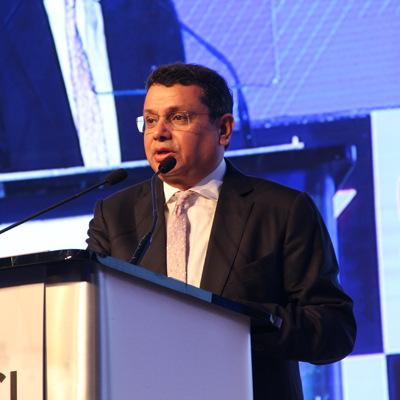
  • Uday Shankar@FICCI Frames 2016: The real digital challenge

    Uday Shankar@FICCI Frames 2016: The real digital challenge

    Good morning.

    Honorable Minister of Communications and Information Technology, Ravi Shankar Prasad Ji, Chairman TRAI R.S. Sharma, Mr. Mukesh Ambani, Ramesh Ji, friends from the world of media and entertainment.

    As co-chair of FICCI’s M&E committee, I have had the opportunity to address you for a few years now. I take this as a rare privilege and hence spend some time thinking through what I should say. A few weeks ago, as I was discussing the theme with some of my colleagues, a young assistant of mine – cocky on youth and his recent admission to Harvard Business School stated rather dismissively that there wasn’t anything new to be said as there wasn’t anything new happening in the M&E sector. While it sounded like a cynical assessment at that time it did set me thinking if there was indeed a grain of truth in what he said. On the surface, it does seem that not much has changed in the last several years except for some incremental growth or decline depending on which vertical you are talking about. Cable TV continues to struggle – struggling to improve its business case, struggling to improve its talent & technology quotient and above all to stay relevant in a rapidly changing world.  DTH, that set out to revolutionize distribution, increasingly seems to be intent on locking its destiny inside an isolated box in a networked world. Even the story of digitalization that started 6 years ago remains incomplete. The advertising revolution of the 90’s when a large number of international and Indian brands were built on television screens, doesn’t seem to be breaking new ground in terms of what I call brand revolution 2.0. Content creators, a community that I belong to, generally seem to be caught in a time warp with the same themes playing in a loop again and again –cursed destinies, rebirth and revenge and deference to elders in public while bickering in private, pretty much sums up what rules national entertainment. The quality of news of course, seems to cause only national consternation, with now even our friendly neighbor taking a pot-shot at our news channels!Over all, it seems the more things change the more they remain the same.  So maybe my colleague was right after all.  

    But then is the picture really as gloomy as this? Because beneath the surface ofentrenched stagnation, quietly – almost stealthily -there is a gigantic disruption playing out. A disruption that’s shifting the ground from beneath our feet.  

    My friends, allow me to recap the year for you.  The creative group to make the most waves last year were 4 youngsters, irreverent enough to take on our entire film industry and then build on that success by putting the entire country under a scanner.  This is a group who has the audacity to have a name so offensive that our news media calls them by their acronym AIB.  Yes, I am talking about All India Bakchod, who are perceived as comedians although this is not a group of people who make imbecile jokes while dressed in a funny manner.  More than once they have set the news agenda for the nation.  They have the gall to take on the combined might of big telcos and Mark Zuckerberg’sFacebook when they felt that the freedom of the internet was being parceled away.  They have used humour to put a spotlight on the state of fire stations in India or for that matter the behavior of the police force. As a group, these four youngsters made more headlines last year than probably all of the creative community put together.

    Very recently one of the pioneers of television entertainment told me that she was so frustrated by the frozen state of traditional media that she was going to create a digital enterprise to tell the stories that traditional media has been too scared to tell.  Of course, I am talking about the totally adorable – Ekta Kapoor.  Think about that for a moment – the person who created the archetype of saas and bahu feels the need to break away from these stifling constraints of the medium that she herself created.  Why?  When that happens, we all need to think hard.

    Friends, the most talked about launch in Indian M&E last year was not a new channel, or a new newspaper or a new production house – actually it was a mobile app that had the gall to ask consumers to go solo.  A call fundamentally at odds with the concept of content consumption in this country, that believes that the entire family watches TV together in the living room. Well, I am talking about the launch of our very own hotstar.  In just about a year, hotstar has been downloaded over 50 million or 5 crore times.  What is the implication of this?  Consider this – more people have watched the English Premier league on hotstar last year than on television.  Yes, EPL was watched by more people on hotstar than on television.  Even for a mass sport like cricket, in the larger cities, hotstar’s watch time is now starting to reach 50% of television.  I urge you to reflect on the potential of that statistic.   This infant service is already becoming a product of habit in India and now this year, my friends, we have set our sight on creating the first global Media & Entertainment product born out of India, when we take hotstar to the rest of the world in a few months.  The numerous and affluent south Asian diaspora which for the longest time has been frustrated by the lack of access to its favourite content will be able to watch cricket, movies and drama through hotstar.  While I am indeed happy for hotstar to be the pioneer, we are very aware that this is a trend that will get replicated again and again, very quickly.

    This colossal shift by no means is limited to television.  At the risk of earning her disapproval, let me share the story of my daughter – she is a serious academic whose job is to analyze the social sector and legislation for a living.  She is always on top of news and opinion articles and yet I have never seen her hold a physical newspaper in her hand.  Her daily dose comes exclusively from the digital universe. Her intake ranges from headlines under 140 characters to ebooks over 14 million characters long. She is a voracious consumer of movies and drama; yet goes to theatres morefor fun than for creative consumption.  Fixed schedule programming sounds as bizarre to her as silent movies to us.  She is obsessed with music but doesn’t own a single CD.  Her near infinite library rests entirely on her iPhone – the same goes for her friends and colleagues who use android devices.

    The world has changed.  There is a tectonic shift happening in our industry right in front of us.And yet, what we see in the world of traditional television is just stagnation. And this stagnation has been made worse by the funny denial that all of us seem to be living in. Even though this change is happening faster than anything we have ever seen, our approach towards it seems to be one of incrementalism.

    I see an even more obsessive desire to protect the antiquated business models that we have painstakingly built over the years and that technology and the youth are decimating like a bull-dozer rolling over glass bottles.  It reminds me of the story of a Japanese soldier who was left stranded and forgotten on a small island in the Pacific. Many years after Japan had lost the war and the world had returned to normal that lone soldier kept guarding that isolated island thinking he was still protecting the Japanese empire.  Herein probably lies the explanation why print companies found it difficult to make the transition to TV and why almost all the digital successes generally come from companies that did not exist even a decade ago.  This is because these are companies and people who are not chained by their legacy businesses.  Just imagine where businesses like Netflix, Twitter and Facebook were a decade ago and what global empires they have created in this short span of time.

    It is pretty clear to me that we are in a battle.  In this battle there are only two options that we have – we can either continue living in denial, hide back in our artificial walled gardens, watching as the bricks crumble down one by one or we can arm ourselves with the sameweapons that our challengers possess, and venture forth into battle, sometimes even against the same businesses that we have created. Change or Perish.

    There is one thing however that will continue to be the same: the power of stories. For those of us who had imagined a world where the so called user generated stories would unseat high quality creativity, the answer comes from the Netflix strategy.  Netflix – the most successful content provider in the US, the challenger to the media behemoths of the west has done so on the back of extremely high quality content, so much so that Netflix’s catalogue today represents the absolute best of American television.

    However there is a twist in the tale here.  No longer is the story enough, within the commoditized consistency of experience.  Technology and creativity are coming together to enhance the experience literally, almost daily.  Indians long used to a life of having to start all over again if the power went for a minute are rapidly getting used to being asked if we want to resume where we left off?

    The new screens have once again highlighted the importance of the story but they have introduced the centrality of the experience at the same time.  Design and engineering can no longer be divorced from the story – this is a radical departure from everything that we were taught all these years.  We learnt this the hard way through hotstar – how small changes even in the browsing experience could lead to dramatic shifts in consumption.  Today I am happy to remark that we at Star probably have more engineers in our team than any other media and entertainment company.  Equally we have more designers and more story tellers than anyone else because those are the three pillars on which we see future M&E companies getting built.  

    Clearly, we need to change the lens with which we look at talent.  In this new world neither technology nor talent will be limited by geographical boundaries.  The best engineers are as likely to be in Berlin as in Bangalore.  We already know that best designers and animators for Hollywood no longer need to be there – because they are already in Goregaon and let’s not forget our very own Priyanka Chopra who is the first home grown star of a truly global show.  We are looking at a truly global world.  But this global world has no patience for traditional forms of reverence.  At Star, we are grappling with this everyday – when we inducted culturally diverse talent we had to create space for that cultural diversity to exist. But that’s easier said than done.  Technology going global, talent going global also means adoption of a new tradition.

    Recently, I just saw amazon.in selling cow dung cakes online.  This humblest of the humble, the most traditional of fuels, being sold at 350 bucks for a small packet.  To me, that is the real power of the world that we are going into.  Power of the idea that someone actually thought that there is a market out there for cow dung cakes and the fact that that market is willing to a pay huge premium for it.  And the fact that the internet has created a market place where ideas and creativity are the only constraints.

    In this context let me draw your attention to the illustrious gathering on this podium today because if India has to make that leap into the new world where everybody can create value for himself or herself by sheer innovation then this group here must deliver.  Minister Ravi Shankar Prasad is not just a senior minister of the Union Cabinet – he holds the key to India’s transition into this digital world.  Chairman R.S.Sharma will have to decide how much can he accelerate that leap, and finally the whole country is looking at Mr. Ambani’s initiative called Reliance Jio to unshackle that truly global, truly democratic dream of 125 crore Indians.  Let’s all hope that they do the right thing, for it is in the best interest of this country they all must succeed.
     

  • Uday Shankar@FICCI Frames 2016: The real digital challenge

    Uday Shankar@FICCI Frames 2016: The real digital challenge

    Good morning.

    Honorable Minister of Communications and Information Technology, Ravi Shankar Prasad Ji, Chairman TRAI R.S. Sharma, Mr. Mukesh Ambani, Ramesh Ji, friends from the world of media and entertainment.

    As co-chair of FICCI’s M&E committee, I have had the opportunity to address you for a few years now. I take this as a rare privilege and hence spend some time thinking through what I should say. A few weeks ago, as I was discussing the theme with some of my colleagues, a young assistant of mine – cocky on youth and his recent admission to Harvard Business School stated rather dismissively that there wasn’t anything new to be said as there wasn’t anything new happening in the M&E sector. While it sounded like a cynical assessment at that time it did set me thinking if there was indeed a grain of truth in what he said. On the surface, it does seem that not much has changed in the last several years except for some incremental growth or decline depending on which vertical you are talking about. Cable TV continues to struggle – struggling to improve its business case, struggling to improve its talent & technology quotient and above all to stay relevant in a rapidly changing world.  DTH, that set out to revolutionize distribution, increasingly seems to be intent on locking its destiny inside an isolated box in a networked world. Even the story of digitalization that started 6 years ago remains incomplete. The advertising revolution of the 90’s when a large number of international and Indian brands were built on television screens, doesn’t seem to be breaking new ground in terms of what I call brand revolution 2.0. Content creators, a community that I belong to, generally seem to be caught in a time warp with the same themes playing in a loop again and again –cursed destinies, rebirth and revenge and deference to elders in public while bickering in private, pretty much sums up what rules national entertainment. The quality of news of course, seems to cause only national consternation, with now even our friendly neighbor taking a pot-shot at our news channels!Over all, it seems the more things change the more they remain the same.  So maybe my colleague was right after all.  

    But then is the picture really as gloomy as this? Because beneath the surface ofentrenched stagnation, quietly – almost stealthily -there is a gigantic disruption playing out. A disruption that’s shifting the ground from beneath our feet.  

    My friends, allow me to recap the year for you.  The creative group to make the most waves last year were 4 youngsters, irreverent enough to take on our entire film industry and then build on that success by putting the entire country under a scanner.  This is a group who has the audacity to have a name so offensive that our news media calls them by their acronym AIB.  Yes, I am talking about All India Bakchod, who are perceived as comedians although this is not a group of people who make imbecile jokes while dressed in a funny manner.  More than once they have set the news agenda for the nation.  They have the gall to take on the combined might of big telcos and Mark Zuckerberg’sFacebook when they felt that the freedom of the internet was being parceled away.  They have used humour to put a spotlight on the state of fire stations in India or for that matter the behavior of the police force. As a group, these four youngsters made more headlines last year than probably all of the creative community put together.

    Very recently one of the pioneers of television entertainment told me that she was so frustrated by the frozen state of traditional media that she was going to create a digital enterprise to tell the stories that traditional media has been too scared to tell.  Of course, I am talking about the totally adorable – Ekta Kapoor.  Think about that for a moment – the person who created the archetype of saas and bahu feels the need to break away from these stifling constraints of the medium that she herself created.  Why?  When that happens, we all need to think hard.

    Friends, the most talked about launch in Indian M&E last year was not a new channel, or a new newspaper or a new production house – actually it was a mobile app that had the gall to ask consumers to go solo.  A call fundamentally at odds with the concept of content consumption in this country, that believes that the entire family watches TV together in the living room. Well, I am talking about the launch of our very own hotstar.  In just about a year, hotstar has been downloaded over 50 million or 5 crore times.  What is the implication of this?  Consider this – more people have watched the English Premier league on hotstar last year than on television.  Yes, EPL was watched by more people on hotstar than on television.  Even for a mass sport like cricket, in the larger cities, hotstar’s watch time is now starting to reach 50% of television.  I urge you to reflect on the potential of that statistic.   This infant service is already becoming a product of habit in India and now this year, my friends, we have set our sight on creating the first global Media & Entertainment product born out of India, when we take hotstar to the rest of the world in a few months.  The numerous and affluent south Asian diaspora which for the longest time has been frustrated by the lack of access to its favourite content will be able to watch cricket, movies and drama through hotstar.  While I am indeed happy for hotstar to be the pioneer, we are very aware that this is a trend that will get replicated again and again, very quickly.

    This colossal shift by no means is limited to television.  At the risk of earning her disapproval, let me share the story of my daughter – she is a serious academic whose job is to analyze the social sector and legislation for a living.  She is always on top of news and opinion articles and yet I have never seen her hold a physical newspaper in her hand.  Her daily dose comes exclusively from the digital universe. Her intake ranges from headlines under 140 characters to ebooks over 14 million characters long. She is a voracious consumer of movies and drama; yet goes to theatres morefor fun than for creative consumption.  Fixed schedule programming sounds as bizarre to her as silent movies to us.  She is obsessed with music but doesn’t own a single CD.  Her near infinite library rests entirely on her iPhone – the same goes for her friends and colleagues who use android devices.

    The world has changed.  There is a tectonic shift happening in our industry right in front of us.And yet, what we see in the world of traditional television is just stagnation. And this stagnation has been made worse by the funny denial that all of us seem to be living in. Even though this change is happening faster than anything we have ever seen, our approach towards it seems to be one of incrementalism.

    I see an even more obsessive desire to protect the antiquated business models that we have painstakingly built over the years and that technology and the youth are decimating like a bull-dozer rolling over glass bottles.  It reminds me of the story of a Japanese soldier who was left stranded and forgotten on a small island in the Pacific. Many years after Japan had lost the war and the world had returned to normal that lone soldier kept guarding that isolated island thinking he was still protecting the Japanese empire.  Herein probably lies the explanation why print companies found it difficult to make the transition to TV and why almost all the digital successes generally come from companies that did not exist even a decade ago.  This is because these are companies and people who are not chained by their legacy businesses.  Just imagine where businesses like Netflix, Twitter and Facebook were a decade ago and what global empires they have created in this short span of time.

    It is pretty clear to me that we are in a battle.  In this battle there are only two options that we have – we can either continue living in denial, hide back in our artificial walled gardens, watching as the bricks crumble down one by one or we can arm ourselves with the sameweapons that our challengers possess, and venture forth into battle, sometimes even against the same businesses that we have created. Change or Perish.

    There is one thing however that will continue to be the same: the power of stories. For those of us who had imagined a world where the so called user generated stories would unseat high quality creativity, the answer comes from the Netflix strategy.  Netflix – the most successful content provider in the US, the challenger to the media behemoths of the west has done so on the back of extremely high quality content, so much so that Netflix’s catalogue today represents the absolute best of American television.

    However there is a twist in the tale here.  No longer is the story enough, within the commoditized consistency of experience.  Technology and creativity are coming together to enhance the experience literally, almost daily.  Indians long used to a life of having to start all over again if the power went for a minute are rapidly getting used to being asked if we want to resume where we left off?

    The new screens have once again highlighted the importance of the story but they have introduced the centrality of the experience at the same time.  Design and engineering can no longer be divorced from the story – this is a radical departure from everything that we were taught all these years.  We learnt this the hard way through hotstar – how small changes even in the browsing experience could lead to dramatic shifts in consumption.  Today I am happy to remark that we at Star probably have more engineers in our team than any other media and entertainment company.  Equally we have more designers and more story tellers than anyone else because those are the three pillars on which we see future M&E companies getting built.  

    Clearly, we need to change the lens with which we look at talent.  In this new world neither technology nor talent will be limited by geographical boundaries.  The best engineers are as likely to be in Berlin as in Bangalore.  We already know that best designers and animators for Hollywood no longer need to be there – because they are already in Goregaon and let’s not forget our very own Priyanka Chopra who is the first home grown star of a truly global show.  We are looking at a truly global world.  But this global world has no patience for traditional forms of reverence.  At Star, we are grappling with this everyday – when we inducted culturally diverse talent we had to create space for that cultural diversity to exist. But that’s easier said than done.  Technology going global, talent going global also means adoption of a new tradition.

    Recently, I just saw amazon.in selling cow dung cakes online.  This humblest of the humble, the most traditional of fuels, being sold at 350 bucks for a small packet.  To me, that is the real power of the world that we are going into.  Power of the idea that someone actually thought that there is a market out there for cow dung cakes and the fact that that market is willing to a pay huge premium for it.  And the fact that the internet has created a market place where ideas and creativity are the only constraints.

    In this context let me draw your attention to the illustrious gathering on this podium today because if India has to make that leap into the new world where everybody can create value for himself or herself by sheer innovation then this group here must deliver.  Minister Ravi Shankar Prasad is not just a senior minister of the Union Cabinet – he holds the key to India’s transition into this digital world.  Chairman R.S.Sharma will have to decide how much can he accelerate that leap, and finally the whole country is looking at Mr. Ambani’s initiative called Reliance Jio to unshackle that truly global, truly democratic dream of 125 crore Indians.  Let’s all hope that they do the right thing, for it is in the best interest of this country they all must succeed.


  • Uday Shankar, Mukesh Ambani set the tone for FICCI FRAMES

    Uday Shankar, Mukesh Ambani set the tone for FICCI FRAMES

    MUMBAI: For a meet that is perhaps the largest in the country covering all all media and entertainment platforms, it was heartening to see the the universe of M & E industry gthered under one roof.

    FICCI Frames 2016 is up and rolling. ‘Change or Perish’ says the LED backdrop and that’s the theme of the 17th edition.

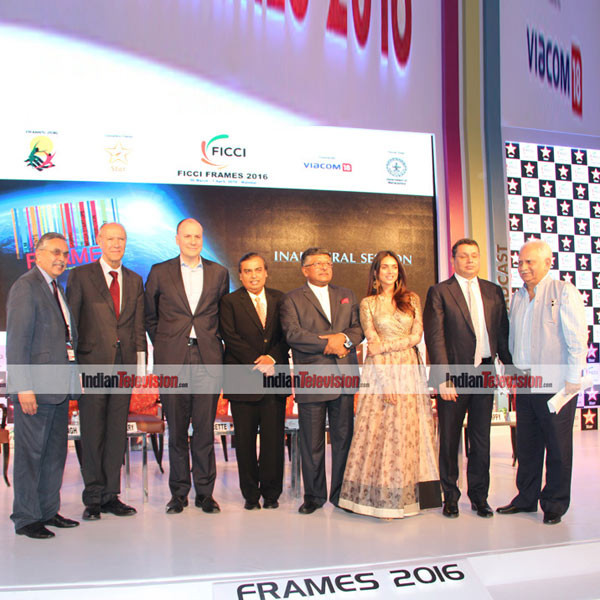
    And Communication and Information Technology Minister Ravi Shankar Prasad, Star India CEO Uday Shankar, Reliance Industries Ltd Chairman and MD Mukesh Ambani FICCI Entertainment wing Chairman Ramesh Sippy, Discovery President J B Perrete, and FICCI Secretary General Deedar Singh showed the way forward.  

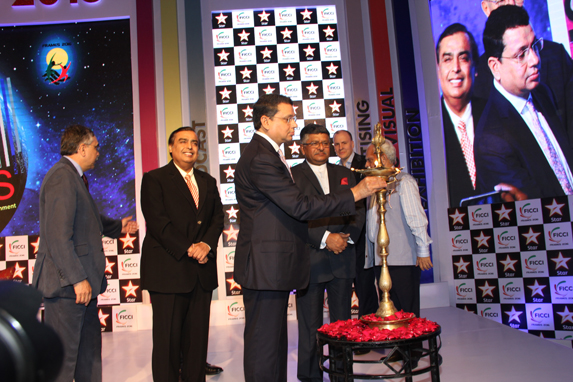
    Star India CEO Uday Shankar, FICCI Chairman Ramesh Sippy, Minister of Telecom and Information Teachnology, Discovery President JB Perrete, and  Deedar Singh secretary general FICCI were among the dignataries who lit the lamp to mark the beginning of the edition.

    “Cable TV continues to struggle, struggling to be relevant in the ever changing scenario. Digitization is still to taste success; and the content is becoming more and more redundant. Overall the M&E sector is the same as it was while the timelines have changed and changed again,”

    Those opening lines by Star India CEO Uday Shankar touched many raw nerves, welcomes by loud claps at the inaugural session of the FICCI FRAMES 2016.

    But he added that even as there are certain teething issues that the industry is facing, there are great happenings to talk about too. In his un-orthodox manner, he touched on these. “But at the same time there is a disruption happening, there are four young boys who made more headlines than any other content creators. They took on the biggest of the players be it Mark Zukkerberg’s Facebook when their friendly internet’s neutrality came under threat. They had the guts to keep a name that the news channels in India chose not to pronounce wholly. They call them AIB.”

    Uday Shankar Mukesh Ambani and Shri Ravishankar Prasad at Ficci Frames 2016

    Talking about his own network, he said “the biggest launch in the media and entertainment industry was not a newspaper, nor a TV channel  but an app. Hotstar drove the wave, 5crore times the app was downloaded, more people watched EPL on Hotstar than on TV and this is how India is changing.”

    He also spoke about the global success story: “Imagine where Netflix Facebook were 10 years back and see the empire they have made in such a short span. Also remember the best animators are no longer sitting in California, they can now be spotted in Goregaon. Priyanka Chopra is now a global star and now India needs to be a global leader.”

    Concluding his remarks, he said: “The whole country today is looking at what Mukesh Ambani is busy with, there is a wave of expectation and the expectation is from Ravi Shankar Prasad (C and IT Minister) too. They are the two stakeholders on whom the digital wave depends. Hope they do the best as that will be the best of media and the entertainment Industry.”

    Reliance Industries  Chairman and MD Mukesh Ambani said: “I was here in 2004 when the industry was 2 billion dollars strong, and today it is 18 billion dollars strong. It is a great success and but there are miles to go. I believe the industry will be a 100 billion dollar one in the next decade, which means we have a major task in our hands.”

    Referring to the theme of the annual meet, he said: “There could not be a better theme than Change or Perish. To my mind digitization is the key to the industry’s success and that’s why we have JIO which can be called as the world’s largest startup.”

    He was confident that with the launch of Jio, India will be among the top ten in the next few years from the current rank of 155 among the top countries using mobile data. “Jio will provide coverage, and wherever you are you will be able to access. Quality will be 40 to 80 times faster than at present. Quantity and capacity currently is 0.15 GB per annum, with capacity of over 10 GB per user per annum  We will be affordable to consumers, and I believe affordability is the key “

    India, he said, will leapfrog and be a leader in the digital world. The world is moving from "orality to visuality. Images and videos will rule the digital world. Human beings and our thinking are linear.  Technology is an exponential idea. Exponential changes will create large opportunities," he said.

    Sharing his analysis he said, “The world is graduating to a telemedia world. The focus will be on all from all. The telco will focus on content, the broadcaster will invest on technology and producers will have  new delivery platforms. We are all part of a telemedia world. Downloading has now become streaming, linear has become interactive.”

    Ambani drew light on the way forward. “Abundance will be a global trend. Data is the new oil of this industry, and intelligent data is the petrol. It is not about technology – it is about humanity, the true power of technology is in the evolution of humanity. All our efforts need to be to make India the leader in 21st century. Together we can make India the leader with more than one-sixth of humanity residing in India.”


  • Uday Shankar, Mukesh Ambani set the tone for FICCI FRAMES

    Uday Shankar, Mukesh Ambani set the tone for FICCI FRAMES

    MUMBAI: For a meet that is perhaps the largest in the country covering all all media and entertainment platforms, it was heartening to see the the universe of M & E industry gthered under one roof.

    FICCI Frames 2016 is up and rolling. ‘Change or Perish’ says the LED backdrop and that’s the theme of the 17th edition.

    And Communication and Information Technology Minister Ravi Shankar Prasad, Star India CEO Uday Shankar, Reliance Industries Ltd Chairman and MD Mukesh Ambani FICCI Entertainment wing Chairman Ramesh Sippy, Discovery President J B Perrete, and FICCI Secretary General Deedar Singh showed the way forward.  

    Star India CEO Uday Shankar, FICCI Chairman Ramesh Sippy, Minister of Telecom and Information Teachnology, Discovery President JB Perrete, and  Deedar Singh secretary general FICCI were among the dignataries who lit the lamp to mark the beginning of the edition.

    “Cable TV continues to struggle, struggling to be relevant in the ever changing scenario. Digitization is still to taste success; and the content is becoming more and more redundant. Overall the M&E sector is the same as it was while the timelines have changed and changed again,”

    Those opening lines by Star India CEO Uday Shankar touched many raw nerves, welcomes by loud claps at the inaugural session of the FICCI FRAMES 2016.

    But he added that even as there are certain teething issues that the industry is facing, there are great happenings to talk about too. In his un-orthodox manner, he touched on these. “But at the same time there is a disruption happening, there are four young boys who made more headlines than any other content creators. They took on the biggest of the players be it Mark Zukkerberg’s Facebook when their friendly internet’s neutrality came under threat. They had the guts to keep a name that the news channels in India chose not to pronounce wholly. They call them AIB.”

    Uday Shankar Mukesh Ambani and Shri Ravishankar Prasad at Ficci Frames 2016

    Talking about his own network, he said “the biggest launch in the media and entertainment industry was not a newspaper, nor a TV channel  but an app. Hotstar drove the wave, 5crore times the app was downloaded, more people watched EPL on Hotstar than on TV and this is how India is changing.”

    He also spoke about the global success story: “Imagine where Netflix Facebook were 10 years back and see the empire they have made in such a short span. Also remember the best animators are no longer sitting in California, they can now be spotted in Goregaon. Priyanka Chopra is now a global star and now India needs to be a global leader.”

    Concluding his remarks, he said: “The whole country today is looking at what Mukesh Ambani is busy with, there is a wave of expectation and the expectation is from Ravi Shankar Prasad (C and IT Minister) too. They are the two stakeholders on whom the digital wave depends. Hope they do the best as that will be the best of media and the entertainment Industry.”

    Reliance Industries  Chairman and MD Mukesh Ambani said: “I was here in 2004 when the industry was 2 billion dollars strong, and today it is 18 billion dollars strong. It is a great success and but there are miles to go. I believe the industry will be a 100 billion dollar one in the next decade, which means we have a major task in our hands.”

    Referring to the theme of the annual meet, he said: “There could not be a better theme than Change or Perish. To my mind digitization is the key to the industry’s success and that’s why we have JIO which can be called as the world’s largest startup.”

    He was confident that with the launch of Jio, India will be among the top ten in the next few years from the current rank of 155 among the top countries using mobile data. “Jio will provide coverage, and wherever you are you will be able to access. Quality will be 40 to 80 times faster than at present. Quantity and capacity currently is 0.15 GB per annum, with capacity of over 10 GB per user per annum  We will be affordable to consumers, and I believe affordability is the key “

    India, he said, will leapfrog and be a leader in the digital world. The world is moving from "orality to visuality. Images and videos will rule the digital world. Human beings and our thinking are linear.  Technology is an exponential idea. Exponential changes will create large opportunities," he said.

    Sharing his analysis he said, “The world is graduating to a telemedia world. The focus will be on all from all. The telco will focus on content, the broadcaster will invest on technology and producers will have  new delivery platforms. We are all part of a telemedia world. Downloading has now become streaming, linear has become interactive.”

    Ambani drew light on the way forward. “Abundance will be a global trend. Data is the new oil of this industry, and intelligent data is the petrol. It is not about technology – it is about humanity, the true power of technology is in the evolution of humanity. All our efforts need to be to make India the leader in 21st century. Together we can make India the leader with more than one-sixth of humanity residing in India.”


  • FICCI FRAMES: Prasad says -Indian broadcast industry needs an improved rating system

    FICCI FRAMES: Prasad says -Indian broadcast industry needs an improved rating system

    Mumbai, 30 March: Communication & IT Minister Ravi Shankar Prasad today said the Digital India initiative of the Government is a $ 1 trillion business opportunity across IT and IT enabled services, telecom and electronics manufacturing.

    Speaking at the inauguration of the 17th edition of FICCI Frames Media & Entertainment Industry Conclave, Prasad said Digital India is aimed at empowering the citizens of India digitally.

    He said nearly $400 billion will be added from the electronics manufacturing including mobile phones, solar panels etc, while a $ 350 billion opportunity will be presented by the IT and ITES sector. The Communication services will provide business opportunities of $ 250 billion.

    The Minister said: “the aspirational urge of Indians is driving the digital world in a phenomenal way. And the Government’s job is to create an enabling eco-system for its growth.”

    Speaking about the Media & Entertainment Industry, Prasad who had been the Information Minister under Mr Atal Behari Vajpayee said Indian content has a global reach and “we must utilize its strength to depict virtues of our rich cultural heritage”. Prasad suggested that the epic stories of Ramayana and Mahabharata should be taken to the world via quality film making.

    Prasad said the Government recognized the importance and relevance of promoting media and entertainment industry. Hence, visa processes were being eased for film shootings.

    A National Centre of Excellence was coming up for the media and entertainment industry and a new film facilitation office was also being set up.

    He added that a new category in the National Film Awards – Most Film Friendly State – had been introduced to felicitate the state that provides greater access to the film industry.

    He said with the spread of internet new platforms were emerging which would lead to change in business models.

    The Minister asserted at the same time that Internet should remain democratic, plural and inclusive. “Internet is the finest creation of human mind, it should not be abused by few,” he said.

    Stressing that the television rating system must improve, Prasad said he was not impressed with TAM’s alternative – BARC – either.

    It was imperative for the television rating data to be more fair and reasonable. “I was not impressed by the TAM, and I am not impressed by the alternative too. How can a few thousand boxes determine what India is watching?” he asked. He said there was a need for a structured, fair and reasonable system to allow creation of quality content.

    He said several of his government initiatives like Skill India, Stand Up India, Aadhar roll out, Make in India, and Smart Cities involve enormous use of digital technology.

    “If the industry needs more policy initiatives, the government is open to it,” the Minister asserted.

    Prasad said with 250,000 gram panchayats being connected through Optic Fiber Network, the entire country was being brought under the broadband regime.

    He claimed that India is now the second largest mobile phone market. The internet penetration had reached 400 million, with 60% of it being mobile internet. He also said that India with one billion mobile phone connections had overtaken the United States to becomethe second largest mobile phone market in the world behind China.

    He asserted that with successful Aadhar enrolment, the government has been able to save Rs 15,000 crore through direct delivery of subsidies.

    Driving home the importance of Digital India and the opportunities it was offering, the Minister cited examples of a mathematics teacher-cum-App maker from Rajasthan, and a 68 year old person from Telangana who became digitally literate in order to communicate with her grandson in Dubai through skype. He said “Indians first watch, then adopt, enjoy and become empowered”.

     India’s talent combined with the power of Information Technology would act as a springboard to launch India into the big league, said Prasad.
    He ended by expressing his unhappiness towards the rating system in India, “I was never happy with TAM and I am not very happy with BARC either, I request Uday and the industry to have an improved rating system” he concluded


  • FICCI FRAMES: Prasad says -Indian broadcast industry needs an improved rating system

    FICCI FRAMES: Prasad says -Indian broadcast industry needs an improved rating system

    Mumbai, 30 March: Communication & IT Minister Ravi Shankar Prasad today said the Digital India initiative of the Government is a $ 1 trillion business opportunity across IT and IT enabled services, telecom and electronics manufacturing.

    Speaking at the inauguration of the 17th edition of FICCI Frames Media & Entertainment Industry Conclave, Prasad said Digital India is aimed at empowering the citizens of India digitally.

    He said nearly $400 billion will be added from the electronics manufacturing including mobile phones, solar panels etc, while a $ 350 billion opportunity will be presented by the IT and ITES sector. The Communication services will provide business opportunities of $ 250 billion.

    The Minister said: “the aspirational urge of Indians is driving the digital world in a phenomenal way. And the Government’s job is to create an enabling eco-system for its growth.”

    Speaking about the Media & Entertainment Industry, Prasad who had been the Information Minister under Mr Atal Behari Vajpayee said Indian content has a global reach and “we must utilize its strength to depict virtues of our rich cultural heritage”. Prasad suggested that the epic stories of Ramayana and Mahabharata should be taken to the world via quality film making.

    Prasad said the Government recognized the importance and relevance of promoting media and entertainment industry. Hence, visa processes were being eased for film shootings.

    A National Centre of Excellence was coming up for the media and entertainment industry and a new film facilitation office was also being set up.

    He added that a new category in the National Film Awards – Most Film Friendly State – had been introduced to felicitate the state that provides greater access to the film industry.

    He said with the spread of internet new platforms were emerging which would lead to change in business models.

    The Minister asserted at the same time that Internet should remain democratic, plural and inclusive. “Internet is the finest creation of human mind, it should not be abused by few,” he said.

    Stressing that the television rating system must improve, Prasad said he was not impressed with TAM’s alternative – BARC – either.

    It was imperative for the television rating data to be more fair and reasonable. “I was not impressed by the TAM, and I am not impressed by the alternative too. How can a few thousand boxes determine what India is watching?” he asked. He said there was a need for a structured, fair and reasonable system to allow creation of quality content.

    He said several of his government initiatives like Skill India, Stand Up India, Aadhar roll out, Make in India, and Smart Cities involve enormous use of digital technology.

    “If the industry needs more policy initiatives, the government is open to it,” the Minister asserted.

    Prasad said with 250,000 gram panchayats being connected through Optic Fiber Network, the entire country was being brought under the broadband regime.

    He claimed that India is now the second largest mobile phone market. The internet penetration had reached 400 million, with 60% of it being mobile internet. He also said that India with one billion mobile phone connections had overtaken the United States to becomethe second largest mobile phone market in the world behind China.

    He asserted that with successful Aadhar enrolment, the government has been able to save Rs 15,000 crore through direct delivery of subsidies.

    Driving home the importance of Digital India and the opportunities it was offering, the Minister cited examples of a mathematics teacher-cum-App maker from Rajasthan, and a 68 year old person from Telangana who became digitally literate in order to communicate with her grandson in Dubai through skype. He said “Indians first watch, then adopt, enjoy and become empowered”.

     India’s talent combined with the power of Information Technology would act as a springboard to launch India into the big league, said Prasad.
    He ended by expressing his unhappiness towards the rating system in India, “I was never happy with TAM and I am not very happy with BARC either, I request Uday and the industry to have an improved rating system” he concluded