Tag: FICCI FRAMES 2015

  • OTT, video apps can work progressively with cable & satellite platforms

    OTT, video apps can work progressively with cable & satellite platforms

    MUMBAI: The market for Over The Top (OTT) services has been rapidly growing in the United States. However, can the same model be adopted for the Indian market? That was the key question asked at a discussion at FICCI Frames 2015 on the topic – ‘Clash of the Walled Gardens: OTT and Video apps versus cable and satellite.’


    Joining the panel were Zenga TV founder and CEO Shabbir Momin, DGive director and CEO GD Singh, IndiaCast group COO Gaurav Gandhi, Videocon d2h CEO Anil Khera, Eros Digital COO Karan Bedi, Hungama.com CEO and Hungama Digital COO Siddhartha Roy and Hinduja Ventures whole time director Ashok Mansukhani. The session was moderated by Whats ON chief executive officer Atul Phadnis.


    Sharing some insights from the US market, Gracenote general manager – video Richard Cusick said that according to a study conducted by the company, nearly 50 per cent of the US broadband households used OTT video services. Young viewers were particularly driving the change as 18 to 24 year olds watched less than half as much traditional TV as 50 to 64 year olds. “Netflix for example has 57 million subscribers worldwide and is a top OTT service provider,” he said.


    Cusick said the study increasingly found that networks and studios were resorting to unbundling to single channels as well as live TV bundles. “In such a scenario, consumers benefit the most as great content is served to them,” he said.


    The question posed to panelists was whether the US implications were similar to that of India and if cable and DTH operators were changing the landscape? Gandhi felt that the implications were not similar to the Indian market because channel specific models like HBO were not available in India. “As a content broadcaster or distributor, the US markets are very clear that they will follow a proper pay model. Here it is still very disruptive,” he opined.


    Moving to the experience of launching an OTT in India, DGive’s Singh said that while they still struggled to generate the right revenues, they did in fact receive 25 million downloads. He said when his company approached someone from the US for guidance for the company’s growth charter in India, the executive told him, “If you’re buying content, you cannot give it for free to audiences.” That was a major learning from the US market.


    On the content front, Singh said that currently the company had 30 per cent of its content set under the pay wall, which was premium content. “We sell our service for $1 per month per subscriber. We have a million users paying us since we are screen, operator and consumer agnostic. We are looking at breaking even in the next seven to 10 months.”


    Sharing his experience, Momin said that Zenga TV had started in 2009 and he was happy with the response from users. “What was surprising in the initial stages was that we saw response patterns coming in from Tier II cities. We now have 20 to 22 million active users per month and have been profitable for the last three years,” he informed. The company also launched a show called India’s Digital Super Star on its platform, which sold sponsorship slots.


    Bedi opined that Eros Digital had 14 million active users, wherein the company followed a transactional as well free model that catered to Indian audiences as well as NRIs. “Some key points for our industry is that we will take a leap; a steroid growth will be seen. Two, revenue models like ad dependent, subscription based, free as well as paid will have to work in tandem,” he said.


    The true value of the customer in the coming years will move towards mobile screen consumption, informed Roy.


    Speaking from the perspective of a direct to home (DTH) operator, Khera was of the opinion that while OTT players may have a million plus subscribers, the content from OTT was for second screen consumption. Technology like 4K is only for television. On a lighter note, he added, “India gets entertained heads up and not heads down.”


    Mansukhani too had a similar opinion. According to him, being an old cable company didn’t mean being out of date. He said that they too provided pay channels on a pre-paid model. “Most Indian homes today use multiple screens. It doesn’t matter who wins. There is space for all as content is being consumed via tablets, mobiles as well as television.”


    Mansukhani went on to compliment Star India’s Hotstar app saying that it was a fantastic proposition.


    “As a businessman, I am interested in exploring various opportunities but I’m worried about providing free content as high content cost is not justified in providing the content without a price tag. I am against giving free content on OTT,” Khera opined. He also hinted at Videocon d2h entering the OTT space but refused to give any details.


    Speaking on the challenges of the OTT space, Roy said that for them to benefit from the digital advertising pie, the pie itself should grow in order for profits to trickle in.


    The notion that OTT platforms are for free should be broken. “OTT is about the bundle and there is no choice if one has to pay or not. Cable companies are our allies as they provide us pipes for distribution,” Bedi said.


    Having the last word, Mansukhani said that all stakeholders should come together and ask customers on the kind of content and pricing for platforms. The profits could then be shared, he suggested.


    In conclusion, the panelists agreed that the three key challenges were cash flow, content windowing and specific business models.

  • Relativity Media upbeat on Make In India; could shoot ‘Immortals’ in India

    Relativity Media upbeat on Make In India; could shoot ‘Immortals’ in India

    MUMBAI: Prime Minister’s Narendra Modi’s ‘Make In India’ dream has made a headway in the entertainment space. Relativity Media in association with B4U is looking at the possibility to shoot the sequel of the blockbuster movie Immortals in India. The entire movie will be shot across the country and will be distributed globally. The association will back the initiative by offering significant roles to Indian actors to attract Indian audience in theatres.


    The Relativity – B4U joint venture, which was inked last year, is also set to remake global hits like The Best of Me3 Days To Kill,Masterminds, and horror thriller Oculus in India for the Indian market, which also complements the ‘Make In India’ campaign and Make For India concept of RBI governor Raghuram Rajan. The Best of Me is already in the production stage and overseen by Balaji Telefilms, where as Zahak the Bollywood version of Oculus has been already shot featuring Huma Qureshi and Hawa Hawai star Saquib Saleem and is in the post production stage. 


    While delivering a keynote on FICCI Frames 2015 Relativity CEO Ryan Kavanaugh said, “We associated with B4U in order to understand the Indian market, which is one of the biggest in the world. We have 120 partnerships with B4U where they educate us about India and we use our distributing muscles to promote Indian movies. Content plays the biggest role in success, but the content has to be created after detailed research, which includes segmentation, targetting and positioning.”


    B4U CEO Ishan Saksena added, “The association with Relativity is huge as it breaks many barriers and opens up new possibilities for us. B4U with the help of the distribution muscle of Relativity took Queen to areas where Indian movies have never reached before and that’s the beauty of this partnership. We will, in future, ensure that Indian content is distributed abroad and Hollywood movies reach Indian theatre with ease. As a result of this association, soon we will see Indian actors working in Hollywood movies and American superstars featuring in Bollywood films.”


    The association will also launch a new online content platform B4U online. “The number of hits Hotstar got in recent time shows us how digital is going to be the next big thing in India and that brings us to our new venture. Unlike other American companies, I don’t want to change the culture. I want to suit myself in it and hence I think Relativity has a future,” concludes Kavanaugh.


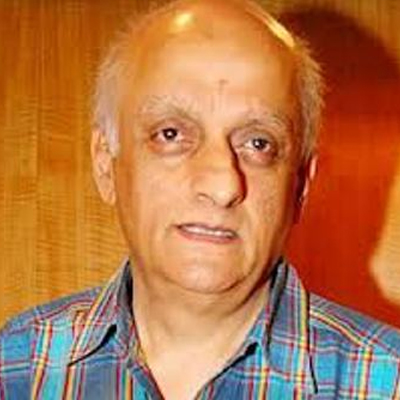
  • “The Rs 100 crore Bollywood film club is bullshit:” Mukesh Bhatt

    “The Rs 100 crore Bollywood film club is bullshit:” Mukesh Bhatt

    MUMBAI: The year 2014 will go down in history as one of the worst years for Indian cinema in recent times with poor box office collections. Movie economics were also adversely affected by dramatic reduction in demand for satellite rights by broadcasters.


    In an endeavour to produce bigger and larger movies, is the emphasis on quality declining? Are studios misreading audience tastes? Are movie budgets bloated beyond control? These questions were raised in a session of FICCI Frames 2015 moderated by Sikhya Entertainment founder Guneet Mongia with Viacom 18 Motion Pictures CEO Ajit Andhare, Eros International MD and group CEO Jyoti Deshpande, film distributer Anil Thadani, PVR Pictures president Kamal Gianchandani, Fox Star CEO Vijay Singh and Film and TV Producer Guild president Mukesh Bhatt.


    With a mere growth of 0.9 per cent, the film industry has reached its abysmal low. The panelists citied the major reason behind that as filmmakers getting carried away by big names and not sticking to the budget drawn.


    Deshpande opened up the discussion by aggressively protesting over budgeting. “We should immediately stop chasing big names and stick to quality content in order to make the industry prosper. Before green lighting content, we need to tackle a number of issues and better research can help the industry grow. Simultaneously, we also need to ensure that the number of screens increases as more screens mean more money.”


    Speaking on the shrinking number of screens, Gianchandani said, “While we are growing in some parts of the country, the fact is that there is stagnancy in some areas. The growth of multiplex depends on numerous factors, government and content being the two vital ones. We need to ensure that we have content that rejuvenates consumers and they reach the theatres.”


    It should be noted that in China a new screen starts in every three days and the industry is growing bigger and faster, whereas India is witnessing the exact opposite. Addressing the issue, veteran producer Mukesh Bhatt asserted, “In this business, if you don’t have the temperament to take a risk then you are on the wrong ship and you will certainly drown. Playing safe is not possible in the film industry and the perception that only the Khans can earn you money is ruining the industry. The Khans are good but they are 50 now and people won’t accept them singing romantic songs anymore. We have to discover new stars and new directors. All studios need to back raw and new talent. Moreover, multiplexes should have different pricing for movies that star newcomers. My father advised me that all my spending should reflect in the frame. However, nowadays our spends hardly reflects in the frame but satisfies the ego and arrogance of big names. The media given Rs 100 crore club is absolute bullshit and make no sense. I thank Viacom for green-lighting films like Mary Kom and Bhag Milkha Bhag and hope they keep it up.”


    Viacom CEO Ajit Andhare added, “I don’t recall when the film industry made profit or grew larger. The biggest challenge is to make people believe that spending more is not the key to success and one has to pay more attention to content and not green-light a movie going by the actor or director’s name.”


    Great content like Aankhon Dekhi, Dr Prakash Baba Amte and Chatuskone find it difficult to stay in theatres where glamour and big names keep knocking. Similarly, the scenario where a common man finds it difficult to afford a ticket needs to change in order to ensure growth of the film industry.

  • Tata Sky awaits MIB approval for Rs 250 crore investment

    Tata Sky awaits MIB approval for Rs 250 crore investment

    MUMBAI: Direct to home (DTH) operator Tata Sky has been applying a wait and watch policy not only for transponder space, but also for an approval from the Information and Broadcasting Ministry (I&B), for an additional Rs 250 crore investment.


    “The money for the project has already come. But, if the approval doesn’t come in the next 48 hours, I will have to return that money to the foreign investors,” said Tata Sky MD & CEO Harit Nagpal, while addressing the inaugural session at FICCI FRAMES 2015.


    Responding to this, I&B Ministry additional secretary JS Mathur said, “Well, we had granted the approval a month back, and then Tata Sky realized that for the route it wanted to take with the investment, it had to reapply and this is the reason it is taking time.”


    Taking cue from Prime Minister Narendra Modi’s ‘Digital India’ campaign, Nagpal said, “The enabler of connectivity is broadband.”


    As per Nagpal, with low Average Revenue Per User (ARPU), putting fresh wires in the country would not give any return on investment. “Otherwise, there are enough hungry entrepreneurs, who would have used the opportunity. And if they haven’t, means that conditions are not viable in the country,” opined Nagpal.


    The country, though has hundreds miles of wires all over, which can carry broadband, and all it’s waiting for is an enabling and uniform environment, to use this infrastructure and deliver broadband to the consumer. “The rest as has happened in telecom, will happen,” he added.


    According to Nagpal, the industry lacks new thinking. “If anybody finds a successful format, 20 others follow and copy. I have seen general entertainment channels (GECs) being launched as pay TV, churning out the same content, and then either vanishing or becoming free to air (FTA). They lose viewership and distribution and then they are forced to carry 20-22 minutes of advertisement, which the regulator starts questioning and they are then seen sitting in courts,” he said.


    The problem, as per Nagpal, is not the producers, but the economics of the business, the restrictions and the permissions needed to do business. “All this restricts the producer from taking risks and choosing a safe and successful path,” he said.


    Nagpal, further went on to say, “I don’t think there is room for more Stars, Zees and Sonys. Also there is one Arnab and one Barkha, you can’t have too many of them. It is the niche, which will take us forward, and they are low investment and high return product.”


    Flair of creativity and new ideas is the key ingredient in the media and entertainment sector. “The deeper I travel, the more gems I see, but the production centres in the country are all located in the big cities. There is need to take production centres in smaller towns, where the talent is and create more self employed professionals in those areas,” he added.


    According to Nagpal, while the rules for setting up, funding and running the business are in place, one still needs to follow rules and ask for permission at every step. “Things have improved in the past few months and the government is keen to clear files, faster than ever before,” he said.


    The only way the industry can grow, as per Nagpal, is by allowing the businesses to inform and not seek approvals and also by self regulation. “In case we violate the law, issue penalties, cancel the licence,” he announced.


    Touching upon the movie business, Nagpal said that while we make the highest number of films, the industry is still not making money. “We have reached a choking point in terms of adding screens and it is marred by either high cost of real estate or the long list of approvals,” he said.


    According to Nagpal, the increasing number of digitized homes will help more producers to monetize their production. “This has already started, a lot of films are breaking even only on the basis of selling their rights to cable and satellite,” he said.


    The country has seen digitisation of 42 cities. Touching upon the condition in the digitized cities, Nagpal said, “The local cable operators are running the digitised area and the multi system operators (MSOs) are watching. Customers are not getting packages they want and neither are they getting value added services. The customers are willing to pay, unlike what is being projected by LCOs.”


    Digitisation is equal to automation. “The new role of the LCO is to be of a service provider to the MSO and not a partner. I think this needs to be thought about,” concluded Nagpal.