Tag: FICCI FRAMES 2014

  • Entertainment industry needs a reality check in terms of economics: Venkatesh Roddam

    Entertainment industry needs a reality check in terms of economics: Venkatesh Roddam

    MUMBAI: Media and entertainment firm (known for its post production and VFX capabilities)  Reliance MediaWorks (RMW) CEO Venkatesh Roddam met us at the recently concluded FICCI Frames 2014. The man, who exuded a lot of positivity in his conversation infused with humour, seemed to be quite upbeat about the feat the company has just achieved of providing post production services to 400 Indian films so far.


    By the end of 2011, the number was 110. Roddam doesn’t think the meteoric rise is because of him. Roddam, who became RMW CEO in 2011, feels its growth is a result of the inclusive structure that it has in place. With enough humility, he confesses that while he takes all the money and business related decisions, it’s the team that keeps RMWL ticking.  “If you ask me specific questions, you will normally find me at a loss for answers,” he professes as he introduces Nishit Shetty, the company’s vice-president, operations who has a handle on what’s going on day to day.


    However, taking the conversation forward, he says, “In the entertainment business, creativity is just one part; it has to be backed by economics.” He puts forward an interesting example of Life of Pi. “Even as Rhythm & Hues the company was bagging a visual effects Oscar for it, its founders had decided to go ahead with a bankruptcy filing,” he says.  “That is not something that should happen. And at the end of the day the purpose of the business is to make money. The industry globally needs to have a reality check about the economics. ”


    Nishit decides to dive into the conversation as he talks about the VFX studio’s initial foray into post-production in 2008 with the film Sarkar Raj. “It was a gradual process. We were taking up projects slowly,” says Nishit. RMW has worked on visual effects for several international and domestic films. Transformers 3 – The dark of the Moon, Conan the Barbarian, Expendables 2, GI Joe Retaliation, Chennai Express, Queen, and many southern and Bengali films figure on its slate. In fact, in the time to come the company is looking to tap the regional film industry even more.


    Also, now Nishit says that RMW is reaching out to a new constituency: that of smaller film production houses and independent filmmakers. “There’s a lot of business potential in that segment as a lot of new filmmakers are coming up with great ideas and need better presentation,” he reveals.


    “At RMW we have always believed in adding value to the film making process by keeping up to date with the latest technology and techniques which has worked in our favour,” highlights Roddam.


    RMW is looking at expanding its Big Cinemas theatrical exhibition chain.  “So say, if right now we have 260 total screens, we may increase that by around 50 more in the next 12 to 18 months,” he says.


    “Our operating margins have continuously increased over the years. We have a distinct advantage of having a presence of screens both in semi-urban and semi-rural areas. We will continue to expand this year to offer an experience like none other to our patrons while at the same time keeping an eye for growth coupled with good profits,” remarks Roddam, adding that it doesn’t want to offer just a good cinema viewing experience to its patrons “but a holistic one with a strong focus on retail, food and beverage, gaming amongst others”.


    Another big development is the building up of studios (shooting floors) at the Film City in Mumbai. The company already has two fully functional studios there since the last two years, now Roddam informs that a major studio was commissioned this month which is positioned as the “largest studio in Asia” and four other stages are to be commissioned by the end of May.


    The company is also looking to expand its TV production wing – Big Synergy which is headed by the legendary Siddharth Basu – with path-breaking non-fiction programming. However, Roddam wants to keep the details for another conversation.

  • BARC could consider different ratings frequencies for different genres

    BARC could consider different ratings frequencies for different genres

    MUMBAI: The long tail gets an unfair deal – be it in television viewership ratings, print media readership surveys or radio audience research.  The long tail, in marketing, refers to the large number of products and services that are not consumed by the masses, like niche television channels and specialised publications.


    The small number of television channels or print publications that are consumed on a large scale always get more than their fair share in the audience or readership measurement systems.


    This was the general consensus at a panel discussion on “Measurement Miasma, TVTs, Readerships, Clicks and Such: The Great Love/Hate Epic” on the concluding day of the FICCI Frames 2014 on Friday.


    Not all measurement currencies can have the same frequencies, said Provocateur Advisory Principal Paritosh Joshi, who anchored the discussion. The results of measurement currencies are just data points.


    The need for different frequencies for measurement currencies was felt as different products have different consumption patterns.


    This prompted Entertainment Network India’s  Executive Director & CEO Prashant Panday suggest that the Broadcast Audience Research Council (BARC) consider different frequencies for different genres of television channels.


    Broadcast Audience Research Council CEO Partho Dasgupta responded by saying that BARC may look at having different frequencies for different genres.


    So, when BARC launches its television ratings service towards the end of 2014, we could see only the ratings for larger genres like the general entertainment channels (GECs) being released on a weekly basis and for the niche television channels less frequently.


    “We are trying to go beyond” (what the TAM Media Research provides). We will have different kinds of products and different slices,” elaborated Dasgupta.


    HDFC Life Sr Executive VP Sanjay Tripathy said there was a problem with TAM ratings because the sample size was not appropriate.


    He said research may not always give the right results and the advertisers need to tell the broadcasters that the measurement data is just a reference point.


    Pandey told the audience that they had two researches on radio audience in Delhi and the audience size put out by the two researches was hugely divergent. One research said the audience in Delhi is forty lakh and the other said it is over one crore.


    He said in television, 95 per cent of the channels are small and not captured correctly and that advertisers should be demanding better currencies.


    Google India  Director, Agency Business, Punitha Arumugam said there is a need for external validation of the result of any measurement currency.


    The discussion veered around the futility of validating the process of a measurement currency and that the validation should be of the result of the measurement currency. The result of a measurement currency should be explainable with external data.


    One of the panelists said when BARC issues its first ratings, and Star Plus, the undisputed number one channel under the current ratings currency, does not turn out to be the number one, there could be criticism of the ratings results. Star which is a member of BARC may decide  to disagree.


    HDFC Life’s Tripathy said advertisers need some data to justicy. “We spend so much.”


    In early days of television there was just Doordarshan and then came Zee. It was easy to choose the channel to advertise on. Today there are more than 200 channels.


    Tripathy said, “Media habits have now fragmented. We will have to chop… We will try to reach the target audience in the cheapest way.”


    There is also the issue of who will invest in a measurement system that will give the best measurement results. Partho said the cost of a television currency is mainly split between the broadcasters and advertisers.


    The need for a measurement currency is felt by everyone in the entire value chain across television, print and radio. Everyone in the value chains need to share the costs of robust measurement systems.

  • Arnab Goswami’s brand of journalism is infotainment, says NDTV’s Vishnu Som

    Arnab Goswami’s brand of journalism is infotainment, says NDTV’s Vishnu Som

    MUMBAI: Sensationalism vs old style journalism: The debate on highly opinionated journalism vs plain reporting of events as a journalist can be unending. But when it comes to highly capital intensive television journalism, the debate boils down to viewership and its monetisation.
     
     
    Times Now Editor-in-Chief Arnab Goswami’s brand of aggressive journalism, some call it sensationalism while the man himself describes it as passionate journalism, was the subject of a panel discussion on ‘The Big Fight For Primetime’ at FICCI Frames 2014.
     
     
    NDTV Editor Vishnu Som, when prodded by BBC Global News Senior Anchor Jon Sopel, said “An editor’s job is to provide news. I believe Arnab does infotainment.”
     
     
    Som though admitted that the issues taken up by Goswami are valid but his style and way of presenting is different. “We cannot be aggressive beyond a point. I don’t think it is for journalists to define news. You just report it,” said Som.
     
     
    News that does not get the eyeballs is not good enough content from the monetisation point of view. “If it does not get good ratings, it is not good content. It is all about viewers. That connect has to be there. If not, it cannot be monetised,” said Zee Media group CEO Bhaskar Das, claiming Goswami’s primetime show advertisement slots sell for Rs 25,000 per 10 seconds, while it could be Rs 20,000 for NDTV and is barely Rs 2,000 for Zee News.
     
     
    Arnab has made himself a brand and he has been rewarded for it, said Das, who was with the Times of India group when Times Now was launched.


    MCCS India CEO Ashok Venkataramani said brand building is equal to the charge of your slots and once you have built a brand, the ad slot charge can be higher than what the ratings demand. “The best way to get advertising revenue is by stopping TRPs. My Hindi and Marathi and Bangla channels don’t get high revenue because of ratings but because they are premium channels.” MCSS owns ABP group of news channels.


    NDTV’s Som said, “We dont believe in TAM. We have done five studies to know that we are the number one channel and people may disagree. What the advertisers are looking at right now is corrupted data  (in the form of TAM ratings).”
     
     
    The news television industry is heavily dependent on advertising revenues and the quality of journalism is directly impacted by the revenue flow. “If advertisers cut rates, we can’t do good journalism,” Som said.
  • Can social media be a useful tool this election?

    Can social media be a useful tool this election?

    MUMBAI: The largest democracy of the world is set for the “big fight”. The General Elections are just a month away. The biggest challenge in front of the parties: to woo the public/voters who have have grown in more ways than one, thanks to the social media and the availability of information on the finger tips.


    The requirements of the political parties to win the voters confidence: more than just promises. And thus, they are doing everything possible to grab the voters’ attention – from being present on news channels and spending big moolahs on advertising, the political parties are doing everything to be actively involved with the voters on the social media.


    And if elections and social media both have become so big, the FICCI Frames 2014 could not have missed having a session on the raging topic. Thus, “Internet and Democracy: Interloper or Catalyst?” – a session that discussed if internet is a mere communication tool and an intruder into our privacy or is it an unparalleled minefield of education, community-building and a catalyst for social and economic change.


    Anchored by BBC Global News senior anchorperson Jon Sopel, the session saw panelists President Obama’s campaign PR expert Roger Fisk, Google India public policy and govt relations head Chetan Krishnaswamy, NDTV.com managing editor and NDTV director of strategy Suparna Singh, NowFloats.com founder Ronak Samantray, Harvard University Berkman center for internet & society Mike Best.


    Sopel brought to the fore the examples of Egypt and Libya because of which established social media as a tool for gaining freedom and ending the misery.


    Fisk elaborated on Obama’s election campaign, which is termed by many as the first political campaign in history to truly exploit the power of the social media to spread the word, garner support and engage people. “My experience in social media is that it helps amplify human nature. It lets people have dialogue with each other. Social media opened up the political campaign to people and gave them a chance to be part of the campaign – up, close and personal.”


    But cut to homeland and Singh didn’t sound optimistic about social media and politics, at least not in the present edition of the elections. She thinks it can become a catalyst of change, but we are one election away from it. “There is only limited exchange of opinion of social media today and is mostly crowd-based anger,” she remarked as she spoke of the recent incidents in Delhi between AAP and BJP supporters. “The #ViolentBJP and #NaxalAAP trended a week ago but if we take a closer look into such trends we will see how we are losing on an opportunity of using the social media well. People on twitter don’t want to listen to others but only want others to hear what they want to say. There is just too much noise.”


    Nonetheless, no one can deny the fact that the internet has become an important part of people’s lives today and social media is also a major part of it. On the growth of the internet, Krishnaswamy says that since 2000, internet has seen a tremendous growth in India. He predicts that by the end of this year, there will be 250 million users and believes that by the 2020 there will be half a billion internet users. “The most interesting part of it is that the next 100 million users will come from non-English speaking sections of our society,” he says while adding that language content has increased by 57 per cent in the recent past and hence, it shows how center of gravity is shifting.


    “The urban voter is using a lot of time online and looking at choices. And if a politician has an online presence, he/she is seen as more dynamic than others by these voters,” points out Krishnaswamy.


    Taking a cue from here, Singh adds, “Social media is also helping new political parties like AAP and independent candidates, who don’t have huge advertising or PR expenditure, to spread their word among people as well as interact with them.”


    The discussion concluded with the thought that social media is more than a communication tool but it hasn’t been exploited completely. Changes are needed before it can be used as an important tool, especially during elections.

  • Dolby brings home cinema quality sound

    Dolby brings home cinema quality sound

     MUMBAI: Like all previous editions of the annual convention, FICCI FRAMES 2014 too is as much about the progress of the industry as it is about the success stories of individual companies that set up booths during the event.


    Indiantelevision.com stumbled upon one such booth by Dolby Digital, which has been participating in FICCI FRAMES for the past four years. “We have been coming down to FICCI Frames for the past four years with a booth, and it has certainly worked well for us and helped us meet our current partners, key decision makers and stakeholders. It’s a great place to network,” said Dolby Laboratories head of marketing Ashim Mathur.


     Not so long ago, Dolby Digital collaborated with HBO’s two niche offerings – HBO Hits and HBO Defined – to provide them with the best in sound technology.


    “The association with HBO is great for us as their two new channels are really gaining some traction among viewers for their offering of 100 per cent ad-free content. Dolby traditionally has been known for cinema and the collaboration fits perfectly into our scheme of things,” said Mathur about their association.


    Currently, Dolby is the go-to surround sound experience for nearly 20 channels and caters to all possible genres of content, including movies, music, general entertainment and sports.


     It all started with Star Plus, recalled Mathur and added, “We came on board the whole HD and surround sound bandwagon with Star Plus nearly four years back, which was our first asli HD channel with Dolby surround sound.”


    Dolby has been associated with television shows as well, the most recent being the high-octane thriller 24 on Colors. “The mode of communication from our side was simple; we had to showcase it to people. We did a lot of on-ground activation with Colors at cinema theatres, by playing a visual inside and we gave the demonstration to explain the difference in surround sound experience with Dolby,” said Mathur. For Colors HD, 24 was the first show with Dolby surround sound.


     The company has also collaborated with brands the likes of LG during the last ICC World Cup, where it had its products on display at nearly 200 LG-branded stores across the country. “The campaign that we had was simply to bring the in-stadia cricket experience home and it was a grand success,” beamed Mathur.


    The secret behind Dolby’s success is that it believes in providing the best experience to its customers and partners alike. Thus, the home of surround sound technology associates with retailers and ensures that customers get to experience its products before bringing them home. Dolby uses experiential marketing by giving demonstrations in malls and retail stores to attract customers’ attention.


     “The idea is to give customers the experience and explain the difference between mono and surround sound, and also the difference between standard definition (SD) and high definition (HD),” said Mathur.


     Currently, Dolby has its 5.1 surround, 7.1 surround and the Dolby Atmos – which is used in cinema theatres. The company continues to strive for better technology coupled with the core marketing strategy of bringing the best cinematic experience home.

  • “Grow sports first, before thinking of monetizing from it”

    “Grow sports first, before thinking of monetizing from it”

    MUMBAI: Looking at its entertainment quotient, cricket is the sport that comes closest to Hindi movies. However, not just cricket but the entire gamut of sports and how to better monetise this ecosystem formed the subject of a panel discussion on day two of FICCI FRAMES 2014, the 15th edition of the annual convention.


    The panel was constituted by NBA India MD Yannick Colaco, Star India president sports Nitin Kukreja, Dempo Group chairman Srinivas Dempo and cricket presenter Gautam Bhimani.


    “If I had Rs 10 lakh, I would put nearly Rs 9.3 lakh in cricket and the remaining amount in other sports,” said Bhimani, at his quirkiest best. He began by drawing attention to two things – the fight for visibility between cricket and other sports and how to take the million dollar baby i.e. cricket, to an even higher level.


    Colaco expressed the view that before monetizing any sport, it had to be built from the ground up. “There are a lot of opportunities but we need to build and grow a sport before actually thinking of monetizing from it,” he said. Once the sport was popularized, money would follow in time.


    Echoing similar thoughts, Dempo said, “Football in India is an approximately Rs 150 crore market. Even the I-League, which has around 14 teams, is only about Rs 10 crore in size and these are all operating expenses without any returns.”


    According to recent statistics by TAM, the reach of a Barclays Premiere League is nearly 27 million as compared to that of the I-League at 6.5 million. “There is a lot of cash burn that takes place and football is currently running in the nation only because the people running it are passionate about the game, but this needs to change,” said Dempo.


    Kukreja brought in the business angle and said, “We also need to look at numbers and return of investment (ROI), which is the most important proposition for a sports broadcaster. The existence of the price cap regulation is a hurdle and with foreign exchange soaring by 50 per cent in recent history, there is only so much that a broadcaster can do.”


    Not only is money not flowing to broadcasters and federations as it is supposed to but complete monetization is not possible due to the existence of the public broadcaster. “Earlier, the idea was to reach homes which were not lucky enough to have cable and satellite and only had terrestrial TV sets, but things have changed now, and yet, we have to continue sharing rights with the public broadcaster, which deters us from monetizing to the best of our ability,” said Kukreja.


    While there are opportunities to invest in other sports, there is a need for proactive participation from sporting federations as well.


    According to Colaco, “A regulatory framework needs to be put in place to make things work more smoothly. India is still developing as a sports market and there are limitless possibilities.” Citing the example of NBA, he said, “The kind of coverage and following that the sport there is incredible. There is a great following and coverage across school, college, and finally, the national teams.” Reason being the sport is promoted at the grassroots level and people are encouraged to inculcate the spirit of sportsmanship from a very young age.


    “I really can’t understand the rat race to start various leagues in India, to the extent there is even a Kabbadi league that is on the cards. I have no problems with leagues, it’s only great for the game, but the problem is to sustain the noise and hype created for such events with ample amount of content to follow as well. That is something that the federations need to ponder upon,” said Colaco.


    Adding to this, Kukrjea said, “IPL works because it’s an experience, it brings families together, it is packaged very slickly and this is how various leagues work around the globe. The point that Colaco made rightly is the number of days that a sport is on – there is 300 days of cricket, but there are only 70 days of hockey and maybe 100-odd days of badminton. So the real question is do we have the required content that can keep fans engaged like we have in cricket?”


    Thanks to the kind of ad revenues that cricket generates, it ends up receiving a lot of flak. For instance, a mega cricket event like the World Cup earns anywhere close to Rs 8-9 lakh for a 10 second spot as compared to a big-ticket NBA event which sells for a meager Rs 2,500 for the same 10 second spot.


    Elaborating on this, Kukreja said, “Sports is ideally a distribution revenue-driven market but cricket, for reasons best known to the stakeholders, is ad-driven. And a marquee event like the World Cup can’t be compared to any other event in India, where, if there are 10 channels to choose from, numbers one to nine will have live cricket and number ten will have highlights of some live match.”


    Speaking of the lack of excitement around the U-17 football world cup coming to India in 2017, Dempo said, “I really can’t believe that there is no buzz around such a big event and that the buzz will start only a year prior to the live action. The media needs to come together and ensure this gets proper coverage. I am sure it will work as a catalyst for the sport of football in the nation, but the national side really needs to pull up its socks, because I have seen Mexico and Brazil play and I fear we stand nowhere unless we really push ourselves against the wall.”


    In a similar vein, Kukreja spoke of the premature death of Formula One in India. “The sport has a lot of potential and is the pinnacle for the sport of driving, but the entire buzz that was created around the Buddh International Circuit died down after just one race,” he said.


    Colaco pointed out that there was ample infrastructure available for sports like basketball and football but the problem was lack of participation in these sports.


    On the subject of how the popularity of a certain sport is sometimes higher than that of the other simply because of the buzz around it, Colaco said, “Basketball is a hugely popular sport in the US but pales in comparison to NFL in terms of viewership. However, the social media buzz created by basketball is twice that of NFL.”


    With nearly 3,000 basketball matches every season, they see a huge turnout with ticket sales higher than 90 per cent. “The most important thing for the game of basketball is the experience and the way the game is played; this sport is very fast and is played in small quarters with loads of action, along with mid-session performances and celebrities often seen at the matches,” said Colaco.


    Speaking on behalf of the broadcasters, Kukreja said, “We will continue doing our bit to help promote and get the right exposure for other sports apart from just cricket, but it’s also important that the different federations along with the government come together to help push and cultivate a sporting culture in the country.”


    Bhimani reiterated Kukreja’s views by drawing a parallel with cinema. Just like there are independent film makers and art house directors vying for screens, sports other than cricket too deserve the right push and visibility in the market.

  • I&B in talks with ISRO to resolve transponder issue: Bimal Julka

    I&B in talks with ISRO to resolve transponder issue: Bimal Julka

    MUMBAI: Day one of FICCI FRAMES 2014, the 15th chapter of the annual convention, witnessed a couple of significant announcements by Information & Broadcasting Secretary Bimal Julka.


    “DTH operators have complained that the limited transponder capacity has led them to completely depend on the Ku band. We are engaged in discussions with ISRO (Indian Space Research Organization) and the Department of Space to ensure this problem is resolved at the earliest,” said Julka in an assurance that the I&B Ministry was seriously looking at DTH operators’ demand for more transponders.


    With taxes levied on DTH platforms currently including an average of 10 per cent of entertainment tax, licence fees, additional customs duty on set top boxes (STBs), service tax and spectrum charges, Julka touched upon DTH players’ demand for rationalizing taxes so as to help them boost investment in infrastructure development and customers’ activation. “We are in talks with the Ministry of Finance and a consultation on this is on its way. We should be able to resolve the issue soon,” he said.


    On the subject of applications for launching new channels pending with the Ministry, Julka said, “An inter-ministerial committee has been set up under the I&B Ministry to look at granting permissions. There are around 800-odd channels currently, while 245 applications are pending for grant of permission. On one side, we get complaints that there are not enough revenues for broadcasters, while on the other side, we are flooded with applications for grant of permission for channels.” He said that in times to come, there would be a large number of mergers and acquisitions among broadcasters. The I&B Ministry is also in talks with the Ministries of Home Affairs, Corporate Affairs and External Affairs to ensure a more smooth process for granting permissions. “At least now, the Ministry of Home Affairs has granted permission and security clearance for channels-to-be for a period of 10 years,” he said.


    During his speech, Julka highlighted the strong partnership the Ministry shares with various stakeholders. “We have come out with policies that bring in a paradigm shift in the Media and Entertainment (M&E) industry. We are at the cusp of a major change with digitization, and this will help India put its best foot forward. The change has to be supported by liberal progressive policies that will encourage investment and ensure sustainable business models, promote entrepreneurship and create innovations,” he said. India has 77 million cable TV homes, of which 29 per cent are serviced by DTH operators while Doordarshan’s Free Dish reaches out to nearly 9 million homes. There are roughly 396 non-news channels and 60,000 cable TV operators, 6000 multi system operators (MSOs) and approximately 360 broadcasters; he informed, pointing out that the first two phases of cable TV digitization had been completed in about 42 cities with over 30 million STBs installed. “This was a mammoth task which has been undertaken with the coordination of all stakeholders,” Julka said. “About 110 million STBs are required to be installed in phases III and IV of DAS. Unless these phases are completed, we will not be able to fully harness the fruits of digitization. This is an excellent industry for employment generation.” Lavishing praise on digitization, he said, “It will change the way television is consumed. It will put India in the league of advanced countries.”


    On entertainment tax, he informed that preliminary data from state governments reveals a two to three-fold increase in collection of entertainment tax. “The data from news broadcasters shows approximately 30 per cent reduction in carriage fees in phase I cities and data from MSOs shows increase in subscription fees of about 35 per cent to broadcasters,” he said. Stressing on the need to fill in consumer application forms (CAFs), he said, “This is an ongoing exercise. I hope that the MSOs and LCOs are engaged in this exercise and will soon finish it.”


    While digitization would bring in transparency which in turn would bring in foreign direct investment (FDI) in broadcasting, Julka didn’t shy away from acknowledging the challenges. “Filling of CAFs, choice of a la carte channels, computerized billing to consumers, and the revenue sharing module between MSOs, LCOs and broadcasters is taking some time, but I am sure it will be resolved soon,” he assured, adding that the government would step in at any time it deems fit. On the ongoing issue of credible ratings, he said, “We are glad that the BARC has been set up. I will request BARC to speed up its process so that we can generate ratings without any delay.”

    Julka stressed the importance of digitization. “We need to see complete digitization throughout the country. Also, there are issues of registration of MSOs, monopoly restriction on MSOs and LCOs, and content monitoring. While vertical monopoly and cross media holding is a big issue, it is also engaging the MIB. We will consult the stakeholders before taking a decision on this,” he said on a concluding note.

  • Good biopics can be made with good actors: Rakeysh Mehra

    Good biopics can be made with good actors: Rakeysh Mehra

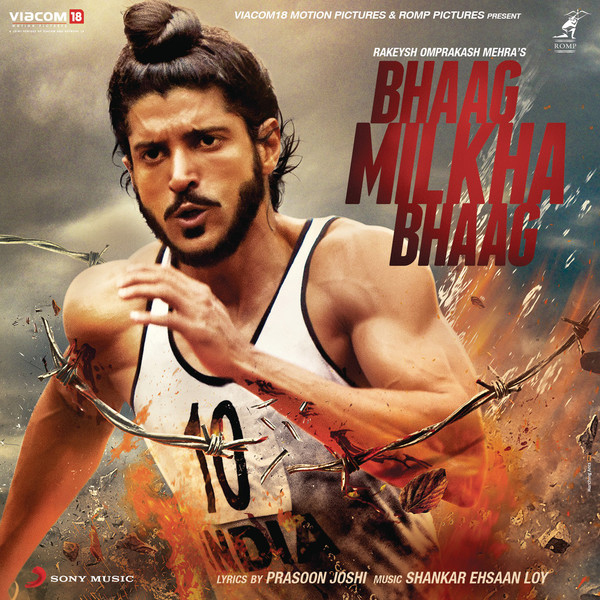
    MUMBAI: He may be getting entirely positive response for the “biopic” he made on sprinter Milkha Singh’s life but filmmaker Rakeysh Omprkash Mehra believes that a film can’t be a biopic. He says that a film can always be an “inspired by a true life piece” which he believes even Bhaag Milkha Bhaag is as it isn’t telling the story of Singh from starting to end. “It’s rather telling the stories of his life that led him to become Milkha Singh,” said Mehra while talking during the session – “From Real Life Heroes to Reel Life Heroes: Biopics Inspiring Generations” on the first day of FICCI Frames 2014.


    Also present at the session was Farhan Akhtar who has received rave reviews for his performance as Milkha Singh, while it was being anchored by CNN-IBN Entertainment Editor Rajeev Masand.


    Mehra, when quizzed if filmmakers take certain liberties and tweak the life story while filming a biopic, he remarked: “When you tell a story, you have your own interpretation. Like in BMB, we didn’t follow Singh’s life in chronological order rather we started the story from an incident that would transform his life.” Mehra believes that storytellers have to be “morally” correct while telling stories.


    While talking about the most important aspect of making a film on a person’s life, Farhan said that it is very important to come down to that one lesson of the person’s life from which the audiences can draw an inspiration. “The writing is another important aspect,” says Farhan.


    In the same vein, Mehra says that it’s the actors, especially the one playing the title role who can put across the story in the best possible way. “It is important for the actors to get the feelings correct and the essence of the movie out,” he said.


    Mehra, now wants to make a movie on the life of Guru Dutt and for the research he thinks that more than studying the life of the person, it is important to understand the situation in which that person lived and grew to become who he was. “It’s very important to understand the time in which the person lived,” said Mehra, adding that he is even studying the life of Sahir Ludhianvi.

  • FICCI FRAMES 2014’s theme is “Media and Entertainment: Transforming Lives”

    FICCI FRAMES 2014’s theme is “Media and Entertainment: Transforming Lives”

    MUMBAI: FICCI FRAMES 2014 (March 12 -14, 2014, Mumbai) will be a landmark event marking the 15th chapter of the convention which has always been an unparalleled platform for the exchange of ideas and knowledge between individuals, countries, conglomerates.

    As in previous years, the world’s media & entertainment industry will be in full attendance at FRAMES 2014 with nearly 2000 Indian and 600 foreign delegates, encompassing the entire sector. FRAMES 2014 will have plenary and parallel sessions on a broad spectrum of issues covering the entire gamut of media & entertainment like Films, Broadcast (TV & Radio), Digital Entertainment, Animation, Gaming, Visual Effects, etc. over a period of three days.

    The theme of FRAMES 2014 will be “Media and Entertainment: Transforming Lives” with the aim being highlighting the role of media and entertainment as a vehicle for social change.

    The convention will discuss reforms and regulatory endeavours along with working on ideas on socially meaningful and quality content. The inaugural keynote will be by FCC Commissioner, Mr Ajit Pai who will touch upon content in the regulatory landscape in the US. Mr Raghav Bahl, Controlling Shareholder and Managing Director of the TV 18 Group will make the theme keynote address on Media and Entertainment as  a Vehicle for Social and Economic Change. Mr. Aroon Purie , Chairman India Today Group,  to give a Keynote on The Print Industry: Surviving All Odds in the digital era . Justin Osofsky, VP – Media Partnerships, Facebook will talk on Establishing Social Networks as the Primary Online Forum for Public Conversations .

    Apart from the core theme, FRAMES 2014 will focus on the key avenues for monetising the sector such as Talking Numbers: Hard Facts about M &E’s Economic Contribution; TV 3.1: Content, Strategies and the Future of Broadcast; De-bottlenecking the Regulatory Hurdles, The Changing Dynamics of the Film Exhibition Landscape.

     Stakeholders and thought leaders such as Uday Shankar , CEO , Star India Pvt. Ltd & Chairman FICCI Entertainment committee , Mr. Karan Johar , Chairman , FICCI FRAMES , Mr. Punit Goenka , MD& CEO , Zee entertainment Enterprises Ltd. , Mr. Sudhanshu Vats , Group CEO Viacom 18 Pvt. Ltd. , Mathieu Bejot Executive Director , TV France International , Roger Fisk, Presidential PR Guru from President Obama’s electoral campaign; Jim Egan, CEO, BBC Global News, Andrew Lack, Chairman, the Bloomberg Group; Bill Livek , CEO Rentrak ,  Kim Dalton, Chairman, Asian Animation Summit; Hiromichi Masuda, Vice Chairman Business Committee, The Association of Japanese Animations,Todd Miller, the CEO of Celestial Tiger Entertainment (A Lionsgate joint venture) and former head of Sony Pictures Television, are slated to speak at FRAMES 2014.

    FRAMES  2014 has been planned with a some off-the-cuff sessions to broaden the conventional boundaries of the summit. Sessions such as “Internet & Democracy: Interloper or Catalyst? ” ., “The Film that Changed My Life”; The Indian Electronic News Media: On Fine Balance?” promise to be intellectually stimulating and thought-provoking.

    A discussion specific to attracting the influx of private equity for the sector has been planned and film funding is a subject which will be deliberated upon. A Producers’ Masterclass wherein acclaimed producers like Andy Paterson and Guneet Monga will discuss the overarching role of a producer in taking a film from start to finish. Masterclasses with acclaimed Hollywood VFX supervisors such as George Murphy , Oscar winner and Chief Creative Officer, Reliance Media works , Jon Cowley and Ben Murray  of Prime focus world are also in the offing. The cinema exhibition sector will be dealt with at a very interesting session Cinema Advertising & Alternative Models: The Changing Dynamics of the Film Exhibition Landscape. Creative sessions on “The Past Present and Future of Good Cinema: Film-making for a Cause” and “Cuts so Deep: Are we Sacrificing Creativity at the Altar of Morality” will focus on meaningful cinematic content.

    Australia to be the partner country and Karnataka is the “Partner State” at FICCI FRAMES 2014 . Mr. Srivatsa Krishna , Secretary Deptartment of IT , BT & S and T , Govt. Of Karnataka will touch upon how Karnataka has been doing much to promote growth and development of its M&E industry

    An innovative feature of FRAMES 2014 will be the FICCI-INK Salon, an exclusive by-invite only daily hour-long session with speakers from the Indian part of TED talks. The BAF award show and networking evenings will as usual be the hallmarks of the after-hours.

    Media and entertainment’s role in public consciousness as an umbrella which shapes and sustains opinion and juxtaposes fact with utopia is an objective which FRAMES 2014 intends to reinforce.