Tag: FICCI Frames

  • Applause’s Sameer Nair spills the secret sauce for hit storytelling

    Applause’s Sameer Nair spills the secret sauce for hit storytelling

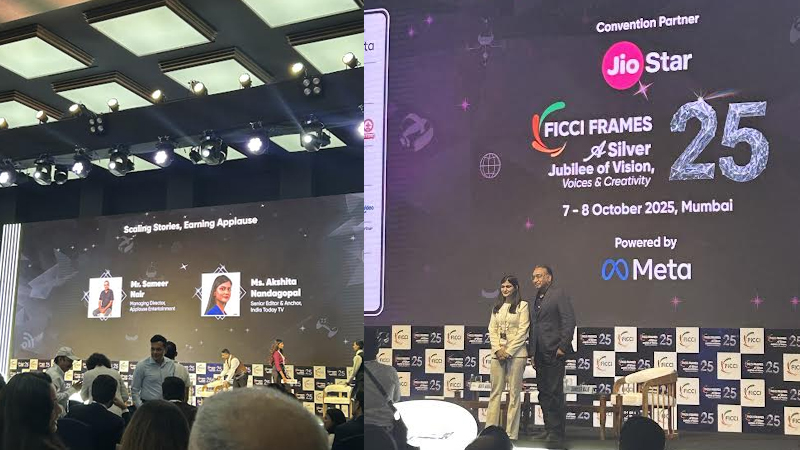
    MUMBAI: At Ficci Frames’ silver jubilee edition, a candid panel discussion between Applause Entertainment managing director Sameer Nair and India Today senior editor and anchor Akshita Nandagopal, brought the house down with humour, insight and a healthy dose of industry nostalgia.

    Moderating the fireside chat ‘Scaling stories, earning applause,’ Nandagopal kicked off by asking if Applause Entertainment had cracked the “OTT code,” given its slate of acclaimed shows like Criminal Justice (2019-present), The Hunt (2025) and Black Warrant (2025).

    Nair brushed off the idea of any secret formula. “Storytelling is a difficult enterprise,” he said. “You put in all the hard work and finally show it to an audience, sometimes they love it, sometimes they don’t. What we try to do is tell stories that feel real, even if they entertain first.”

    Citing his fondness for contemporary history, Nair explained how Applause often draws inspiration from real people and events, and banks on the entertainment factor. Black Warrant, he pointed out, isn’t about the dark underbelly of the Tihar Jail and the inmates as much as it is about “three young people on their first day at work; only, their workplace happens to be the Tihar Jail.” The company’s celebrated Criminal Justice series, meanwhile, has gone far beyond its British and American counterparts. “By the fourth season, we weren’t adapting anymore. We were living in the world of Madhav Mishra,” he said with a grin.

    Continuing the conversation on creativity in Indian storytelling, Nandagopal asked Nair, “Creativity is always a buzzword, but sometimes it feels boxed in a certain way. You can’t talk about uncomfortable topics; you have to be mindful of controversy and what entertains an Indian audience. Do you think creativity is constrained like that?”

    Amusedly, Nair interjected, noting that this isn’t unique to India. “In the eight years we’ve been doing this, we haven’t really got into much trouble, so we must be doing something right. We don’t have an agenda; we’re telling stories that make you think, but not what to think. We find compelling characters, research their worlds, and present their stories as balanced and entertaining as possible. They are people like you and me.”

    He brought up The Hunt as an example, which begins with the assassination of Rajiv Gandhi but quickly transitions into a police procedural. “It’s not about politics; it’s about crime and justice… In the process, you get to know the characters. There’s one scene where Sivarasan, the one-eyed LTTE mastermind, sits in a theater watching a Rajnikanth film. We loved putting that in, it humanises him without glorifying anything.”

    When Nandagopal brought up the theme of change, both broadly and through the lens of content, Nair noted how some formats have stood the test of time. “KBC is a classic because it has a great format and Mr. Bachchan,” he said, crediting both star power and familiarity for its relic appeal. “Audiences talk about change all the time, but they also love familiarity. Sometimes you don’t want a murder mystery; you just want to relax.” To which, Nandagopal nodded and said, ‘It’s a comfort watch. A lot of us do that. We’ve been watching a lot of the classics that we’ve seen before. Knowing that that’s something that’s predictable. We know what we’re expecting there. And yet we love to watch it.

    Looking back at the first Ficci Frames two decades ago, Nair painted a vivid picture of how dramatically the industry had evolved. “In 2005, television ruled everything. There was no Facebook, Twitter or Youtube, even the iphone didn’t exist. By 2015, digital platforms had become the barbarians at the gate. Now, in 2025, we’re minor players compared to Netflix, Youtube and social media. And just as we adjusted to that, AI arrived.”

    The conversation soon turned to the elephant in every creator’s room: will AI replace creativity or enhance it? Nair’s reply was measured. “AI will be a great tool if it can create that suspension of disbelief,” he said. “When you see a dinosaur chasing you in Jurassic Park, you believe it. If AI can make you believe without breaking the illusion, it’s magic. But if it looks fake, we might as well be watching animation.”

    He added that AI, much like earlier leaps in filmmaking, from special effects to computer graphics, would revolutionise the process but not erase human creativity. “Even an AI actor needs direction, a script and a story,” he said. “If machines create everything end to end, without human emotion, we’ll just be watching something intelligent but soulless. We must use it wisely.”

    As the conversation veered back to Applause’s future, Nair revealed that the company has recently acquired the rights to Jeffrey Archer’s books and has a robust slate of upcoming projects. Upcoming projects include new seasons of Criminal Justice and Black Warrant, the next installment of the Scam franchise, and a Tamil feature Bison directed by Tamil director and screenwriter Mari Selvaraj. He also teased Gandhi, a three-season epic inspired by Indian historian and author Ramachandra Guha’s books. “It’s not about Gandhi,” Nair chuckled and said, “it’s about Mohandas before he became the Mahatma: an 18-year-old who goes to college in London, and does all the standard things that rebellious teenagers do.”

    For Nair, storytelling remains deeply human: an approach that has shaped Applause Entertainment’s diverse slate, from thrillers rooted in true events to expansive biographical dramas.

    In a world where algorithms and art are learning to coexist, it’s a fitting reminder that great storytelling, no matter the medium, will always find its audience.

  • Star Plus puts dads in the parenting picture

    Star Plus puts dads in the parenting picture

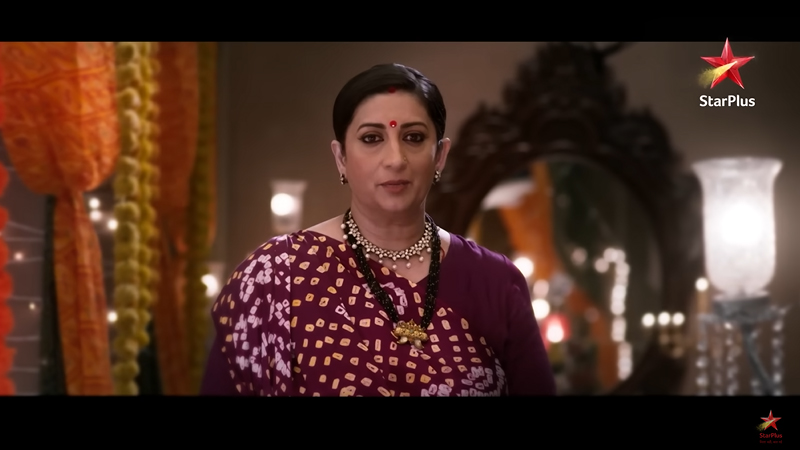
    MUMBAI: Who says only mums can multitask? Star Plus has just served a reality check on that stereotype with its new brand film Not Just Moms, launched at FICCI Frames 2025.

    The film champions equal parenting, reminding viewers that raising a child isn’t a one-woman show but a team effort involving fathers, families, and society.

    At the heart of the campaign is a familiar face, Tulsi, the beloved matriarch from Kyunki Saas Bhi Kabhi Bahu Thi. Her return in a refreshed avatar adds a nostalgic twist to a modern message, underscoring that shared responsibility at home is the ultimate family value.

    A Star Plus spokesperson said, “With Not Just Moms, we want to challenge the age-old idea that mothers alone carry the burden of parenting. Stories have the power to change mindsets, and Tulsi’s comeback embodies that change.”

    The campaign’s unveiling set the tone for a lively discussion between Ekta Kapoor and Smriti Irani at FICCI Frames on Revolutionising Content: Women, Television, and 25 Years of Kyunki…

    Known for blending cultural resonance with mass entertainment, Star Plus continues to use storytelling as a mirror to society. With Not Just Moms, the channel reminds India that when it comes to parenting, teamwork truly makes the dream work.

  • Theatre’s role in cinema, where stage meets screen

    Theatre’s role in cinema, where stage meets screen

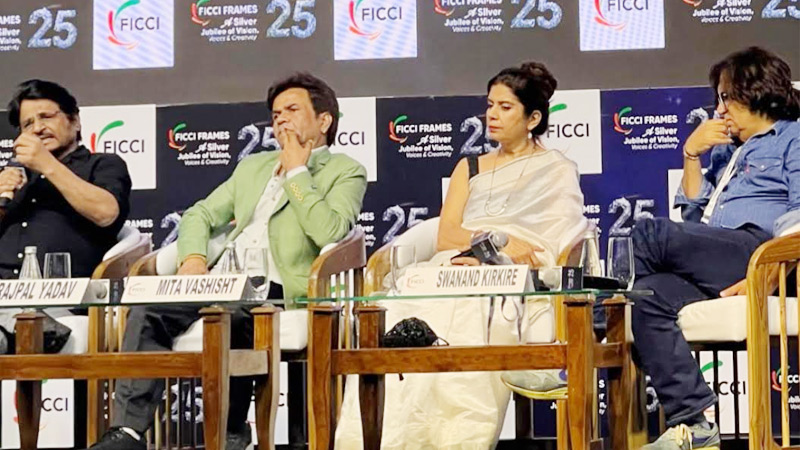
    MUMBAI: Curtains up, lights on, and action, but the roots of cinema lie on the stage. At a lively session on “The Power of Theatre in Cinema’s DNA,” celebrated actors and creators revealed how the world of theatre continues to shape the Indian screen.

    Moderated by National School of Drama director Chittaranjan Tripathy, the panel featured Swanand Kirkire, Raghubir Yadav, Rajpal Yadav, and Mita Vashisht. The discussion explored how theatrical training provides actors with depth, discipline, and authenticity that resonate on screen.

    Swanand Kirkire, a multi-talented lyricist, actor, and singer, called cinema an extension of theatre. “Drama happens in one space and one time on stage. Cinema takes the same drama and expands it across spaces and moments,” he said. He highlighted that every great film begins with understanding drama, the conflict between forces, and the forward motion of storytelling.

    Raghubir Yadav stressed theatre’s irreplaceable role in building a performer. “You can do a play without cinema, but you cannot do a film without a play. Theatre gives you everything: emotion, nuance, life. Cinema may teach dialogue memorisation, but theatre teaches you living on stage,” he explained.

    Rajpal Yadav reflected on theatre as a teacher of life itself. “The collaborative essence of stagecraft and how understanding every role, from actors to carpenters, enriches cinema. Theatre teaches zero, cinema teaches hero. When theatre and cinema come together, every element of performance becomes alive,” he said.

    Mita Vashisht discussed the technical interplay between theatre and film. While theatre delivers a live connection with audiences, cinema requires technology to capture and convey the same energy. She also pointed out that concepts like framing, positioning of actors, and set design in cinema are borrowed directly from theatre, referencing techniques like Mise en Scène.

    The session celebrated theatre as the backbone of cinema, emphasising that even with all the technology in modern filmmaking, the foundational lessons of stagecraft: discipline, collaboration, and emotional truth, remain essential. As Kirkire summarised, “Theatre gives cinema its DNA. Without it, the soul of performance is incomplete.”

    From the intricacies of acting to the careful orchestration of a set, the discussion made it clear, the spotlight may have shifted from stage to screen, but the heart of storytelling continues to beat in the theatre.

  • Punjab’s cinema makes waves worldwide

    Punjab’s cinema makes waves worldwide

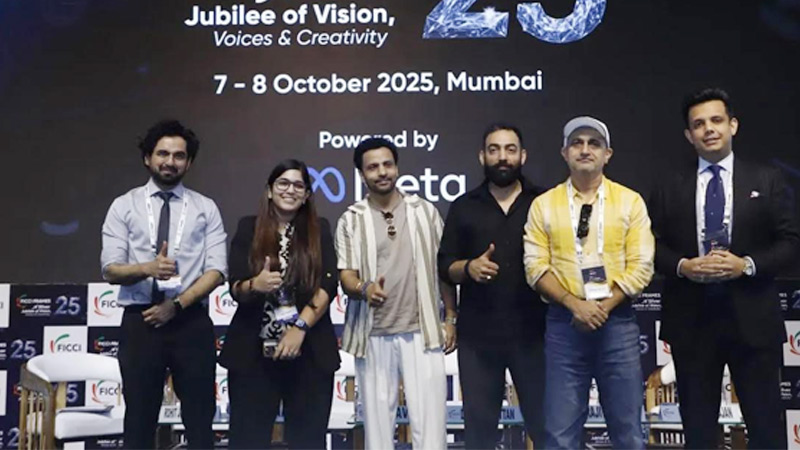
    MUMBAI: Punjab is not just about bhangra and beats anymore. At the FICCI Frames 2025, a lively panel explored how Punjabi cinema is evolving beyond comedy and song-and-dance routines into micro-dramas, socially rooted stories, and web series that resonate both at home and with the global diaspora.

    Moderated by filmmaker Rohit Jugraj Chauhan, the session featured actors and creators like Manav Vij, Rajiv Thakur, Dheeraj Ratan, Rhea Arora, and Ujjwal Mahajan of Chaupal OTT. The panel delved into how streaming platforms and social media are giving Punjabi stories unprecedented reach.

    Chaupal OTT co-founder Ujjwal Mahajan explained the digital revolution behind Punjabi storytelling. “Chaupal is not just a platform; it’s a digital chowpal. Wherever Punjabis are, they can reconnect with home through our content. Every three days we add a new movie, and the momentum is only increasing.” He emphasised the distinction between “Punjab-based content” and true “Punjabi content,” pointing to titles like Satpanchi that resonate with cultural roots.

    Comedian-turned-actor Rajiv Thakur reflected on the diaspora’s influence and talent in Bollywood. “Punjabis have always contributed massively, whether in comedy, music, or film. Our language, our stories, our culture matter. There’s power in Punjabiyat,” he said, noting the balancing act actors face between Mumbai and Punjab audiences.

    Screenwriter and director Dheeraj Ratan traced the evolution of Punjabi cinema. “There was a time when you had to go to Bombay to make films. Now high-standard storytelling has returned to Punjab. Our films are visually strong and culturally rooted, and the market is responding,” he explained. He urged creators to establish local infrastructure to unleash the region’s vast talent and tell stories the world can watch.

    Manav Vij described how Punjabi cinema is reshaping itself for a global audience. “Cinema has its own language of empathy. We need pathways to run freely, to make films the way we want. Punjabi culture has a value that deserves to be seen and heard globally.”

    Rhea Arora, who has been pivotal in developing Punjab’s AVGC and animation ecosystem, highlighted how local talent is being nurtured. “We’ve brought art from Punjab to Mumbai and back. Creative talents are thriving, and the industry is evolving thanks to associations and government support.”

    The panel concluded with a clear takeaway: Punjabi cinema is no longer just regional flair. From micro-dramas to mainstream hits, the state is staking a claim on global storytelling, powered by culture, community, and creativity.
     

  • Beyond the reel, India’s tech dreams take shape

    Beyond the reel, India’s tech dreams take shape

    MUMBAI: Lights, camera, revolution! The silver screen is turning digital, and India’s film industry is ready for its next big act, one fuelled by technology, imagination and a dash of innovation.

    At FICCI Frames 2025, the session “Beyond Imagination: The Future of Filmmaking” brought together industry leaders to explore how new-age tools like AI, VFX and virtual production are transforming storytelling. The discussion came in the wake of the Maharashtra government’s Rs 3,268 crore AVGC-XR Policy 2025, an ambitious plan to make the state a global powerhouse for animation, gaming and extended reality.

    DNEG co-founder and president Merzin Tavaria set the tone for the session. “Content is still king,” he said. “Technology should help us tell better stories, not distract from them. AI is here to stay as a tool, but it must never replace the individual.” He added that India’s post-pandemic film resurgence has proven the world-class calibre of its creators.

    Phantomfx founder and CEO Bejoy Arputharaj urged filmmakers to evolve with technology. “Filmmakers must embrace the changing landscape,” he said. “Virtual production and AI aren’t here to take over, they’re here to help us imagine what was once impossible.”

    From Japan, Dwarf Studios CEO Shuhei Harada emphasised originality over imitation. “The world doesn’t need more copies,” he said. “India should focus on creating authentic, original entertainment. Bringing international talent here can help local creators learn new methods and grow faster.”

    Moscow Film Cluster deputy director Georgy Prokopov called for international collaboration. “Russia and India can build a technology bridge,” he suggested. “Shared virtual production infrastructure can reduce costs and accelerate creative exchange.”

    Meanwhile, FICCI AVGC-XR Forum chair and Graphiti Studios co-founder Munjal Shroff stressed the need for India to sharpen its technical edge. “We already have the talent and the tools,” he said. “Now it’s about mastery, using technology not as a crutch but as a canvas.”

    As the session wrapped, the takeaway was clear: the next blockbuster might not just be shot in India, it could be built here, pixel by pixel. Because in the cinema of tomorrow, the script won’t just be written. It will be rendered.
     

  • Stories from the heartland go global

    Stories from the heartland go global

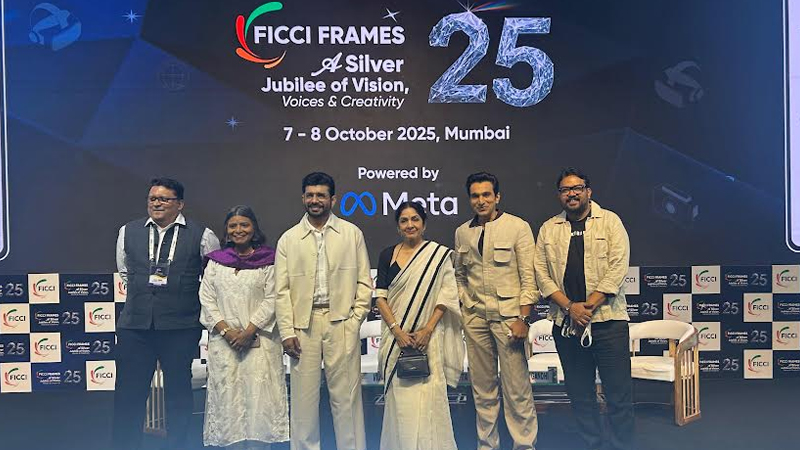
    MUMBAI: Stories that stay rooted, yet take flight, that’s the new India calling. At FICCI Frames 2025, a star-studded panel on “Local Roots, Global Reach: Indian Storytelling from the Heartland” turned into a masterclass on why stories told with heart are now travelling the farthest.

    Moderated by broadcast journalist Anuradha Sengupta, the session featured The Viral Fever president Vijay Koshy, actors Neena Gupta, Pratik Gandhi, Faisal Malik, and Vineet Kumar Singh, voices that have lived and shaped India’s storytelling renaissance.

    “Anything that comes from the heart will touch the heart,” said Neena Gupta, drawing applause as she spoke of how authenticity, not algorithms, drives real connection.

    Pratik Gandhi reflected on his own journey after Scam 1992, “Stories can come from anywhere, but emotions are universal,” he added, noting how success opened creative doors rather than data dashboards.

    Vijay Koshy traced this evolution from Youtube freedom to OTT patronage. “We learnt the hard way in the digital world. Platforms are the new patrons, much like kings once funded artists,” he said, recalling how Panchayat, a show rejected by many, went on to become a cultural phenomenon precisely because “nothing was happening” in it.

    For Vineet Kumar Singh, heartland tales are India’s timeless truth. “Whether it’s Mother India or Panchayat, every story that mirrors real life finds its way to people’s hearts,” he said, reflecting on how viewers discover themselves in the stories of small towns and forgotten bylanes.

    Neena Gupta, ever candid, summed it up, “I think we should always try to go to the resources you have,” underlining how creators can draw on their own experiences and surroundings to tell authentic stories.

    The discussion also delved into the shifting sands of streaming. Sengupta reminded the panel that subscription models are giving way to ad-led formats. Koshy, however, remained optimistic. “We are not afraid. Authenticity will always survive,” he said with quiet conviction.

    As the session wrapped, Vineet shared a moving anecdote about Supermen of Malegaon, a small-town film that won hearts globally. “When it ended at the Toronto International Film Festival, the applause didn’t stop. That’s the power of stories from our soil,” he smiled.

    From villages to viral screens, India’s storytellers seem to have found their sweet spot: telling tales that are homegrown, heartfelt, and now, truly world-bound.

  • Hindi cinema stars light up Ficci Frames’ silver jubilee

    Hindi cinema stars light up Ficci Frames’ silver jubilee

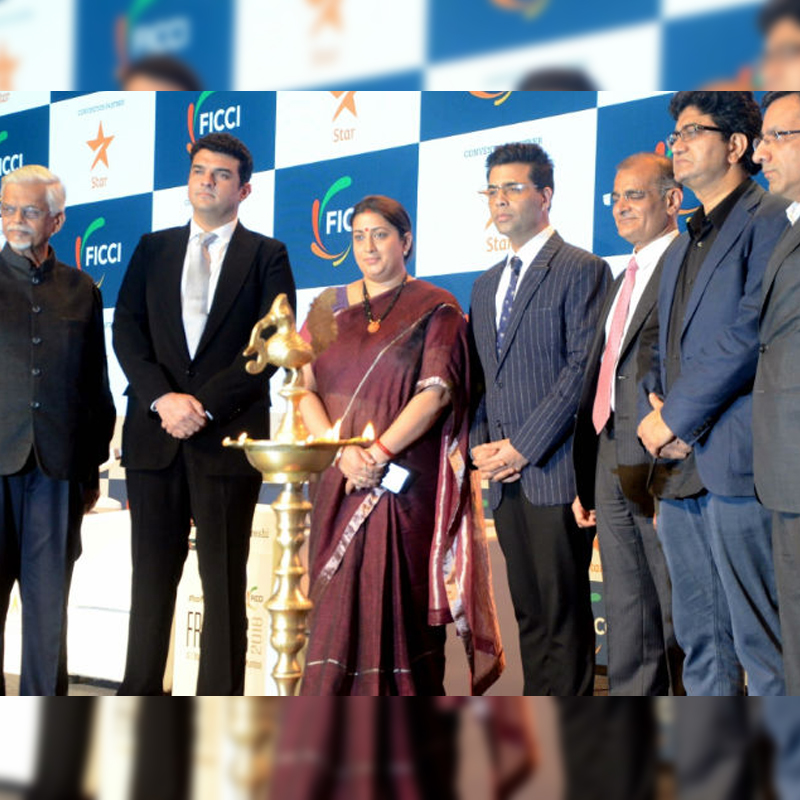
    MUMBAI: Lights, camera, silver jubilee! Ficci Frames, Asia’s leading media and entertainment conclave, is rolling out the red carpet for its 25th edition in Mumbai on 7–8 October 2025.

    The milestone gathering, themed “A silver jubilee of vision, voices & creativity”, will be inaugurated by minister of state for information & broadcasting L Murugan and Maharashtra chief minister Devendra Fadnavis.

    Hindi cinema icons Anil Kapoor, Akshay Kumar, Smriti Irani and Ayushmann Khurrana will headline the two-day event, joining an impressive line-up of industry leaders including Aroon Purie, Sam Balsara, Sameer Nair, Ekta Kapoor, Siddharth Roy Kapur, and filmmakers Hansal Mehta, Shoojit Sircar and Kiran Rao.

    The conclave will host fireside chats, policy sessions and showcases, with global heavyweights such as Netflix’s Monika Shergill, Amazon Prime Video’s Gaurav Gandhi and Warner Bros Discovery’s Arjun Nohwar adding international clout.

    Adding a global spark, a Russian delegation led by Moskino and the Moscow export center will participate, opening new doors for co-productions and cultural partnerships.

    With states like Madhya Pradesh, Maharashtra, Delhi and Jharkhand pitching in through policy and showcase sessions, this silver jubilee promises not just glitz but game-changing ideas for the next chapter of India’s media and entertainment story.
     

  • How storytelling paints a profitable picture for brands: Ficci Frames

    How storytelling paints a profitable picture for brands: Ficci Frames

    MUMBAI: Once upon a brand… In a world flooded with content, the magic of storytelling remains the ultimate spell to captivate audiences and cash in on consumer loyalty. 

    At the launch of the M&E report Ficci Frames 2025, industry titans came together to discuss the growing influence of curated storytelling in advertising, proving that a well-told narrative isn’t just about selling a product, it’s about building a brand that lives in people’s hearts and minds.

    With television and OTT platforms continuing to dominate audience engagement, storytelling has evolved into a strategic art form, transforming advertisements from mere promotions into cultural touchpoints. Whether in entertainment, sports, or news, audiences forge deep emotional bonds with stories, elevating characters into household names and making brands an intrinsic part of their daily lives.

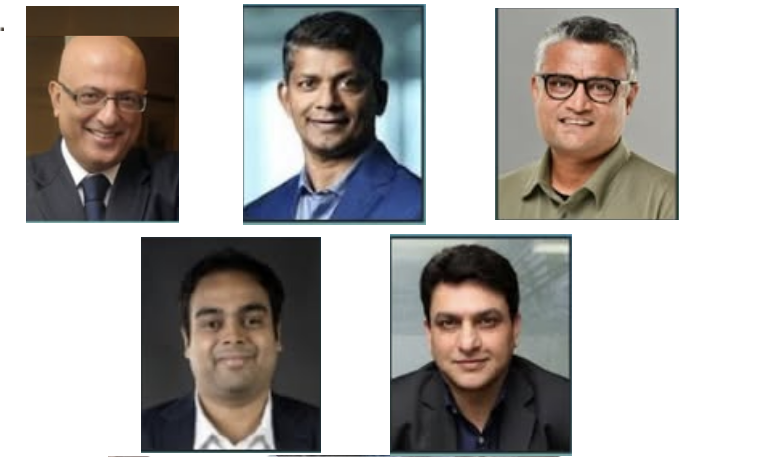
    Moderated by Madison Media & OOH group CEO Vikram Sakhuja, the panel featured industry leaders: Ajit Varghese (JioStar), Prasanth Kumar (GroupM), Ashwin Moorthy (Godrej Consumer Products Ltd ), and Ashish Sehgal (Zee Entertainment Enterprise Ltd.). Together, they dissected how brands can maximise the power of storytelling to boost engagement, drive conversions, and optimise their return on media investments.

    The panelists agreed on one fundamental truth: storytelling isn’t just about visibility, it’s about relatability. In today’s digital landscape, where consumers are bombarded with advertisements, the challenge isn’t just to be seen but to be remembered. The secret? Emotionally resonant narratives that seamlessly integrate brand messaging into content that audiences already love.

    “The most impactful ads don’t feel like ads at all,” said Ajit Varghese. “They are stories that resonate, narratives that connect, and moments that become part of popular culture.”

    Prasanth Kumar echoed this sentiment, explaining that consumer trust is no longer built on frequency alone but on emotional relatability. “You can buy eyeballs, but you have to earn loyalty,” he pointed out, emphasising the importance of crafting stories that entertain rather than interrupt.

    With digital fatigue setting in and audiences gaining more control over what they watch and how they engage, traditional advertising tactics are losing effectiveness. This is where professionally curated storytelling steps in, offering brands a way to naturally embed themselves into content without disrupting the viewing experience.
    It’s no coincidence that brands that invest heavily in storytelling are also the ones driving stronger consumer recall and, ultimately, better business. With OTT platforms enabling hyper-personalised targeting, advertisers are no longer casting a wide net but rather crafting messages that resonate with specific audience segments.

    “The beauty of curated storytelling is that it allows for a seamless blend of brand messaging within content that audiences already love,” said Ashwin Moorthy. “It’s not about pushing a product; it’s about making it an organic part of the consumer’s experience.”

    This shift is evident in the way brands are reimagining their advertising strategies. Instead of simply placing an ad between episodes, brands are now becoming part of the narrative itself. From cleverly placed product integrations in OTT series to brand-led storytelling that feels like high-quality entertainment rather than a sales pitch, advertisers are realising that the most effective marketing doesn’t feel like marketing at all.

    And the numbers back it up. A well-executed brand story doesn’t just build awareness, it drives action. Whether it’s increased purchase intent, higher engagement, or stronger customer retention, storytelling delivers tangible returns. As ad spends increasingly tilt towards premium content collaborations, brands are moving away from traditional formats and investing in innovative, immersive narratives that blur the lines between content and commerce.

    Looking ahead, the advertising industry is undergoing a seismic shift. Gone are the days when commercials were an unwelcome interruption. Today’s audiences demand content that is engaging, relevant, and seamlessly integrated into their viewing experience. The most successful brands will be those that adapt to this new reality, using storytelling to create experiences rather than just advertisements.

    Ashish Sehgal summed it up perfectly: “Tomorrow’s best ads will not feel like ads. They will be experiences, seamless, engaging, and deeply personal.”

    The panel also touched on the growing importance of trust and credibility in advertising. With misinformation and ad fatigue on the rise, consumers are becoming more discerning about the content they engage with. This places a greater responsibility on brands to ensure that their storytelling is not just compelling but also ethical and authentic.

    For advertisers, the message is clear: investing in storytelling is no longer optional, it’s essential. In an era where consumers can skip, mute, and scroll past traditional ads, the brands that win will be the ones that weave themselves into the narratives people love.

    As the session wrapped up, one thing was certain, whether on TV, OTT, or digital platforms, the future of advertising belongs to those who tell the best stories. Because at the end of the day, great marketing isn’t just about selling a product. It’s about making people believe in a story and wanting to be part of it.

  • Ficci Frames 2022:  Experts discuss the evolving trends in M&E across segments

    Ficci Frames 2022: Experts discuss the evolving trends in M&E across segments

    Mumbai: The media and entertainment industries have evolved over the years, and post-pandemic growth has been shared across segments.

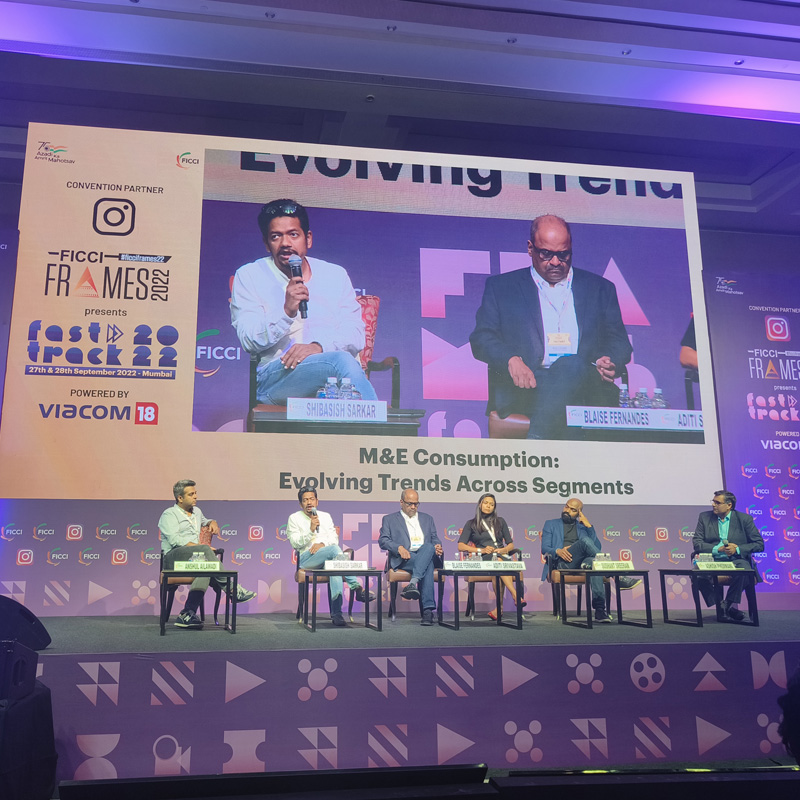
    In a recently organised session on ‘M&E Consumption: Evolving Trends Across Segments’ at Ficci Frames 2022 discussed how media has evolved and new emerging trends are helping or affecting business. The panel discussion was moderated by EY LLP media and entertainment advisory services partner Ashish Pherwani.

    The expert panellist included Viacom18 youth, music and English entertainment head Anshul Ailawadi, International Media Acq (IMAC) CEO Shibasish Sarkar, Indian music industry president & CEO Blaise Fernandes, Pocket Aces CEO & co-founder Aditi Shrivastava and Amazon Prime Video head & SVoD business head Sushant Sreeram. 

    Starting the discussion, Anshul Ailawadi shared insights on how MTV has reached every corner of the country and helped youth have an audiovisual experience. 

    “There are two specific needs: the discovery of the channel and an audio-visual experience, and we try to give them to the audience.” He also expressed that each platform has its unique role.

    Shibasish Sarkar shared, “We have seen a substantial amount of growth in digital consumption. This discussion happens whenever there is a new emerging medium, and will it end the cinema? But it has survived, and even after a pandemic, people are watching movies in theatres.” 

    He further added that in these two years, there has been a substantial level of quality content consumption that has happened by the audience across all video platforms.

    “Today, Hindi language consumers have been consuming the best of Korean, Tamil, Telugu, and Spanish language content, so the consumer’s expectation for good quality content is higher,” he said.

    “Storytelling does not necessarily always need to be expensive. He added that it has to be in touch with the audience with the thought, “What will the audience like?”

    Blaise Fernandes expressed that music is not regional anymore and any music can be consumed in any part of the world; creators just need to choose the right platform.

    When talking about user-generated content, Aditi expressed that “audience is a god, content is a king, and distribution is a queen.”

    Audiences are starting to understand the business of content. And that is opening up possibilities for creators and platforms.

    She said, “Earlier, audience creation was restricted to putting something out. They’re trying to become obsessed, and some of them are becoming influencers. Brands are ditching celebrities and collaborating with digital influencers and micro-influencers to promote the product.”

    “UGC is going to move in the direction where people will buy things and make money based on content,” she added.

    She believes 80 per cent of big influencers and 20 per cent of small influencers will be in the ratio. “You will see digital avatars are beginning to participate in metaverse concerts,” she said.

    Anshul, agreeing with Aditi, said, “New monetisation opportunities, new sorts of avenues, and new platforms will emerge in coming years.”

    Sushant Sreeram talked about content on Amazon Prime where he said, “We programme to an extremely heterogeneous customer expectation across languages, across accessibility, across price points, and across an infrastructure and streaming simplicity.”

    He further added, “We absolutely continue to explore all forms of collaboration. In our journey over the last six years, we have explored a variety of models to work with producers, studios, and theatres.”

    While discussing TV vs OTT, Aditi expressed that it’s important to define because TV is just a device now and its content is consumed on mobile phones as well. Anshul talked about how the audience has done demarcation between OTT, TV, social media, and their functions.

    Aditi further talked about how her company is focusing more on short formats and engagement with the audience rather than how many views they have got.

    “We would like to see content increase across platforms. We would like to be a content provider. Now we are working on engagement. Distribution is very important. But it’s also very expensive to build. The way we are building distribution is by having channels across platforms. We have put out content that our marketing spend and we believe in organic growth.”

    While talking about price and content, Shibasish expressed that the audience won’t pay if they don’t like the content. He believes that good content will make audiences pay irrespective of the medium, and that all mediums will co-exist if they serve good quality content.

    Sushant agreed with Shibasish and talked about how international content on Amazon Prime is consumed not only by the Indian diaspora but also by natives of those countries because of quality content.

    Sushant suggested three things to keep in mind: customer delivery, collaboration with creators, and empowering the creative economy. Aditi advised to drop the elitism when it comes to content, Shibasish asked creators to understand the audience, Blaise stressed that only subscriptions could help creators  while Anshul emphasised how audiences can hate or love but can’t ignore creators.

  • Trai has to play a balancing role: advisor of broadcasting & TCSR DG Anil Bhardwaj

    Trai has to play a balancing role: advisor of broadcasting & TCSR DG Anil Bhardwaj

    Mumbai: In an interaction with independent consultant Anuj Gandhi at Ficci Frames Fasttrack 2022, Trai advisor (broadcasting) and TCSR DG Anil Bhardwaj said that the regulator has to play a balancing role. He compared it to making a decision about what to do with a screw. One either loosens or tightens it, he said.

    In addition, he also mentions that a consultation process is going on regarding NTO 2.0. One side wants everything controlled, while the other does not want the regulator to control anything at all. The industry, he said, needs a regulator because they cannot sort out their issues. The aim is to have as light a touch of regulation as possible. That is Trai’s ethos.

    While saying that Trai has done some good things, he admitted that some bad things may have been done. But Trai is willing to review, consult, and come back. He also noted that while content is king, distribution remains extremely important. For the linear TV ecosystem to sustain, the stakeholders have to nurture and support each other. There are 1,00,000 LCOs in the country. Each has two to three people on the ground. That is the kind of distribution power available. “Ignore them at your own peril. Everybody is at a crossroads with everybody else. A linear TV channel needs a content creator, an aggregator, or a broadcaster. You need an integrator and then the last mile operators. If someone is dying and someone else is making money as a result, ultimately, who will suffer? Linear will be dead if one arm starts killing the other. Linear TV will grow if people are willing to nurture and sustain each other,” he noted.

    He said that regulation does not put a cap on pricing. One can charge Rs 100 for a channel. What he is against is the mirage of pricing that happens with bundling. That results in consumers being misled, which is what Trai is completely against. Certain channels, he said, are sold at Rs 6 through reverse deals and have fixed the MRP (maximum retail price) at Rs 19. Privately, he has asked them why this is being done. As a regulator, data is obtained and almost everything comes to Trai. The reason given is that the channel level will go down if it is not priced at that rate. “This is the mentality of the distribution head of one of the largest broadcasters in our country. In that situation, you need a regulator. We have not asked a niche English channel not to price themselves at Rs 50 or Rs 100. They have shut down because they could not sustain their model. They were showing ads and they also wanted to charge a certain fee. Previously, this was being driven through deals done with the distributor, which today is not possible because there is transparency in the system. For bundling, we said a mirage of price was created. So we will have some semblance. We tried Rs 19. We thought of Rs 12. The purpose is not to tell the industry what to fix. It is to avoid misleading the consumer. We are again reviewing that in the consultation. We have kept postponing the implementation of NTO 2.0 till we are through with this consultation process. We want to know if the price of Rs 12 is okay or not.”

    He further said, “We have done certain good things. Maybe we have done some bad things. That is why nothing is cast in stone. We are willing to come back and consult. We are willing to forego regulation provided the market matures. If we reduce or remove regulation, we will find that the market is not functioning as it should.” He noted that in the current consultation, one side says control everything and the other side says do not control anything. One side desires a minimum level of assurance regarding distribution effort. So a balancing role has to be played by Trai. The market is not mature. There are issues, he noted, with broadcasting, with channels shutting down. He also noted that channels are sometimes shut down by distribution as a certain show or content might cause a problem for some people. “This is the kind of country that we live in.”

    He said that as a regulator, Trai has to act strongly, but it cannot be done tomorrow or people will complain of high-handedness. The market has to mature to a level where certain things are known and numbers and facts are known. He gave the example of hundreds of MSOs getting audits done themselves by one of the 52 auditors chosen by Trai. That is, until you reach a certain place. “Without distribution, no ecosystem can survive.” On the content front, he said that Arpu is Rs 273. The ecosystem decides this, not the regulator. “If the industry is dying, please raise prices. Content is king, which is why digital media is paying five times more for content production compared to linear broadcast. So, if broadcasters need more revenue for content investment, then please review your models. Trai has never said not to invest in content. Broadcasters should make models in such a way that the money invested comes back. We will not stop you. Please make good content.”

    He added that numbers for the broadcasting industry are coming down, which could be due to a combination of factors, including OTT, DD Freedish, and Covid. Today, there are 900 or so TV channels. There are 1,000 odd MSOs. DTH is 70 million homes, and cable is not at 70 million. The balance is DD Freedish, which is growing. “Linear TV is finding its own new paradigm, new place. The punch is with OTT. It is important to understand why. Content is king, but distribution remains extremely important,” he said.

    He stated that some consumers believe that content is better on digital or OTT apps. That is why some have cut the cord. A broadcaster should allow a user to have five screens at the same cost or at a much lower cost than what is charged for linear TV. Then users will not go elsewhere. There are millions of smart connected TVs today.

    He also noted that India is unique in many ways. He gave the example of the mandatory content sharing bill for events of national importance. That applies to some sports events, even if the acquisition price is high. The aim is to have the events seen by the masses, and it goes beyond the ambit of commercial deals done. This is something that the Supreme Court has agreed with. “We are a very different country. It is an evolution. I am not saying that we are 100 per cent correct or that the US is correct,” he concluded.