Tag: fibre

  • Globecast unveils content-sharing platform for sports rights holders

    Globecast unveils content-sharing platform for sports rights holders

    MONACO: Sports broadcasters are getting a new weapon in the battle for eyeballs. Globecast will showcase Content Exchange, its latest media platform solution, at Sportel 2025 in Monaco from 20 to 22 October.

    The platform, designed for rights holders and sports federations, offers a unified, all-IP infrastructure combining satellite, fibre and hybrid cloud technologies. It enables seamless acquisition, processing and delivery of both live and on-demand content, creating a secure hub that connects content owners with broadcasters and unlocks new monetisation opportunities.

    “With the launch of Globecast Content Exchange, we’re transforming the way sports content is delivered and shared,” said Globecast head of digital media development Steve MacMurray. “It gives rights holders unmatched flexibility and control to distribute highlights, live feeds and on-demand content to partners and fans worldwide, all through a simplified, scalable and secure platform.”

    Visitors to stand G.05 can experience the technology first-hand. The solution promises scalable transmission and processing for demanding media applications, offering rightsholders greater control over distribution in today’s hybrid media landscape.

    Globecast will also spotlight its recent sports collaborations. Racer  Network, which will broadcast over 300 live motorsport events in 2025, has partnered with the company to enhance quality and streamline delivery using advanced graphics and cloud playout. Meanwhile, Globecast’s extended partnership with Premier Padel as global delivery partner for the 2025 and 2026 seasons supports the sport’s international expansion through a fully IP- and cloud-based distribution model.

  • Cable TV, broadband services impacted, as Cyclone Tauktae slams into west coast

    Cable TV, broadband services impacted, as Cyclone Tauktae slams into west coast

    KOLKATA: Cable TV services and broadband services were impacted across various places in Maharashtra and Gujarat, as Cyclone Tauktae left a trail of destruction along the west coast. Many users took to Twitter complaining about the long hours of network outage. However, both video and broadband services were restored within 12 hours, say cable operators

    NXTDigital MD & CEO Vynsley Fernandes said there were evident impacts on services especially in areas with overhead fibres and overhead wires. But timely weather warnings helped in making arrangements in advance. MSOs had placed teams in strategic locations to address issues and respond. “In most places, the network was restored in the shortest possible time. It did not take more than 12-14 hours,” Fernandes said.

    “There were damages but we were able to mobilise the staff and the workforce immediately. Major lines both for cable and broadband were down,” said Maharashtra Cable Operators Foundation (MCOF) president Arvind Prabhu. “There may still be some minor problems in certain households and we are in the process of addressing those as well.”

    The Konkan region was among the most-affected, as it witnessed the devastating impact of one of the most intense storms to hit the west coast. “Some independent control rooms reported problems in the Konkan region. In Mumbai city, there were issues mostly with fibre cables and overhead cables,” Prabhu added.

    GTPL Hathway cable TV head and chief strategy officer Piyush Pankaj said, the services were disrupted for around 3-4 hours in most areas. “But we were well-prepared this time. Even materials like wires were ready in advance to immediately address damages like a wire being cut or washed up,” he added.

    According to MSOs, cable TV was less impacted than broadband services as the latter not only faced connectivity issues but stress on speed as well. The impact on speed persisted for a longer time.

    Most importantly, the operators say, they learnt from two cyclones of 2020- Nisarg and Amphan after which they incurred huge infrastructural losses, especially in West Bengal. The staff had to invest more than a month to normalise the connections with damage of lakhs of set-top boxes, fibres of few crores.

  • Airtel, Jio have bid for assets of Aircel

    Airtel, Jio have bid for assets of Aircel

    MUMBAI: Leading telecom players Bharti Airtel and Reliance Jio both have bid to separately purchase assets of bankrupt telecom operator Aircel. According to a Mint report, lenders to Aircel are keener on a lump sum sale to a single party which could get better value of the assets.
    The telecom operator Aircel Cellular Ltd and Dishnet Wireless Ltd, together known as Aircel, owe about Rs 50,000 crore to creditors which includes Rs15,545 crore debt to financial creditors and about Rs 35,000 crore to operational creditors.
    Several factors worked as the catalyst to the telecom operator’s downfall. At a time when it was already trying to take a breath in the highly competitive sector after entry of Reliance Jio, the latter called off its plan to merge its wireless business with Aircel, citing legal and regulatory uncertainties. The move made the situation worse.
    According to the report, Airtel is the sole bidder for Aircel’s spectrum assets and Jio is the sole bidder for the telecom towers. Jio is also in the race for Aircel’s fibre assets, along with Sterlite Industries, private equity firm I Squared Capital, and distressed asset fund Aion Capital.
    Deloitte is reportedly happy with the outcome. Four weeks will be taken to know the final result while bids for the asset closed on Monday.

  • RCom sells Rs 3000 cr fibre assets to Jio

    RCom sells Rs 3000 cr fibre assets to Jio

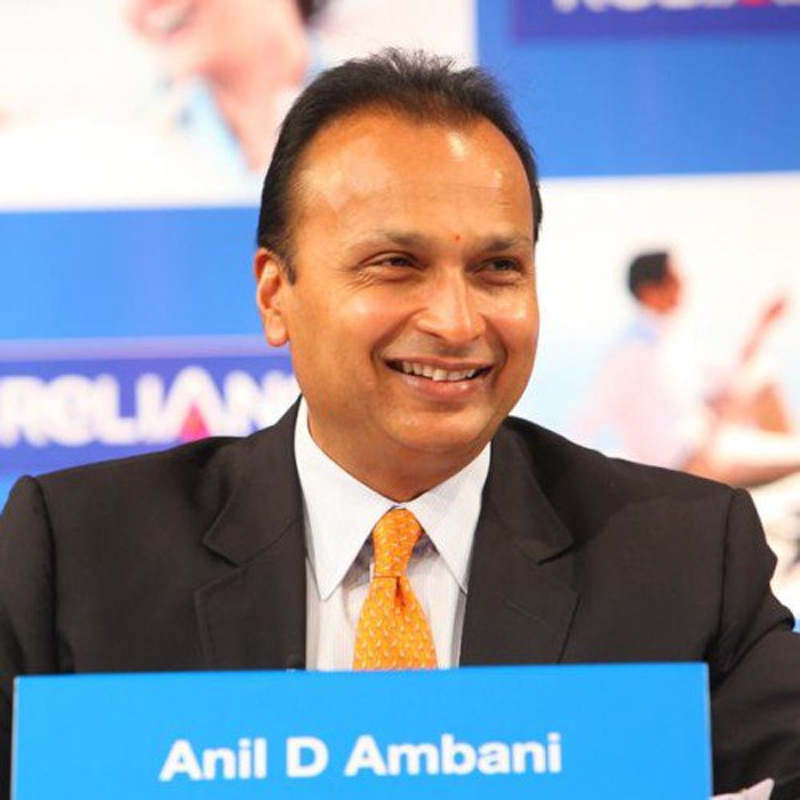
    MUMBAI: Reliance Communications has completed the sale of its fibre assets worth Rs 3000 crore to Reliance Jio Infocomm on Monday. After the completion of the fibre monetisation transaction, 178,000 kilometres of fibre stand transferred to Reliance Jio, RCom said in a statement to the Bombay Stock Exchange.

    RCom had last week completed the sale of its media convergence nodes(http://www.indiantelevision.com/iworld/telecom/rcom-sells-assets-worth-rs-2000-crore-to-reliance-jio-180823) and related infrastructure assets worth Rs 2,000 crore to Reliance Jio. The company said 248 MCNs covering about 5 million square feet of area used for hosting the telecom infrastructure were transferred to Reliance Jio.

    In December 2017, as part of its debt resolution plan, RCom had struck a Rs 25,000-crore deal with the Mukesh Ambani-led Reliance Jio for the sale of its assets mortgaged with different banks, to avoid insolvency proceedings. RCom’s assets are expected to contribute significantly to the large-scale roll out of wireless and fiber-to-home and enterprise services by Reliance Jio.

    The debt-laden company expects to raise about Rs 18,000 crore by selling the wireless assets to Jio and real estate assets to Canada’s Brookfield. The company also said that it would sell an additional 65 MHz spectrum in the 800 MHz band to Jio for Rs 3,500-3,700 crore. Last year, the company shut down its wireless services.

  • BT to invest billions more on Fibre, 4G and customer Service

    BT to invest billions more on Fibre, 4G and customer Service

    MUMBAI: BT announced a further wave of investment to help the UK remain the leading digital nation in the G20. Its Openreach and EE businesses will between them spend around six billion pounds in capital expenditure over the next three years in the first phase of a plan to extend superfast broadband and 4G coverage beyond 95 per cent of the country by 2020.

    Ultrafast broadband will be deployed to a minimum of ten million homes and businesses in the same period, subject to regulatory support, with an ambition to reach twelve million. There will be an increased focus on Fibre to the Premises (FTTP) technology within this plan with the aim being to reach two million premises with the technology, mainly in new housing developments, high streets and business parks.

    Customer service will be another area of focus with the company revealing a series of new initiatives to better meet the evolving needs of its customers.

    BT Group Chief Executive Gavin Patterson said: “The UK is a digital leader today and it is vital that it remains one in the future. That is why we are announcing a further six billion pounds of investment in our UK networks, subject to regulatory certainty. 

    “Networks require money and a lot of it. Virgin and BT have both pledged to invest and we will now see if others follow our lead. Infrastructure competition is good for the UK and so is the current Openreach model whereby others can piggyback on our investment should they want to.

    “G.fast is an important technology that will enable us to deploy ultrafast broadband at pace and to as many homes as possible. Customers want their broadband to be affordable as well as fast and we will be able to do that using G.fast. FTTP will also play a bigger role going forward and I believe it is particularly well suited to those businesses who may need speeds of up to 1Gbps. My ambition is to roll it out to two million premises and our trials give me confidence we will.

    “Customer expectations are increasing all the time and we need to work hard to meet those new demands. That is why contact centre work is being returned to the UK and why Openreach is aiming to halve the number of missed appointments within a year. Customers want higher standards of service and we are determined to provide them with just that.”

    Better Service

    The internet has become increasingly central to people’s lives and BT today said it would respond with further investment in customer service across the company. A range of new initiatives were unveiled today with BT Consumer set to reduce the standard time to fix line faults by 24 hours as well as pledging to handle 90 per cent of its customers’ calls in the UK by March 2017. These new commitments follow the recent announcement that EE will handle 100 per cent of its customers’ calls in the UK by the end of this year.

    Openreach also gave new service commitments with CEO Clive Selley telling his communication provider customers it will deliver ‘better service, broader coverage and faster speeds’. The business will hire 1,000 new engineers this year and provide further multi skill training for engineers so there is more flexibility in the work they can do for customers.

    Openreach is also aiming to halve missed appointments to two and a half per cent within a year with an ambition to reduce them even further after that. A case management service team is also being established to step in and resolve problems for customers who have experienced two or more missed or unsuccessful appointments. The provision of dedicated business lines known as Ethernet will also increase by 20 per cent year on year.

    Broader Coverage

    The UK is the leading digital economy in the G20  with the highest superfast broadband coverage and take up in the EU ‘big five’. More than ninety per cent of UK premises can access superfast broadband across all fixed networks and that is set to rise to 95 per cent by the end of 2017. Meanwhile, more than 15 million people are using 4G via the EE network, the highest number for any operator in Europe.

    BT’s next wave of investment will help Openreach take UK superfast broadband coverage beyond 95 per cent and the business also stands ready to address slow speeds in the final few per cent of the country should there be regulatory support for its plans. Long Reach VDSL has been identified as a potential solution and Open reach is set to run technical trials in the coming months.

    EE meanwhile has said that it will extend its geographic 4G footprint from around 60 per cent today to 95 per cent by 2020. These parallel plans will ensure the UK is one of the best served countries in the world when it comes to superfast fixed and mobile services.

    Faster Speeds

    Ultrafast broadband will be a major area of focus for Open reach which today said it has an ambition to reach twelve million premises with ultrafast services by 2020, two million more than previously announced. The business has the largest FTTP network in the UK and it has been conducting further trials of this technology to prove it can reduce the cost of deployment, improve the customer experience and make it quicker to install. The trials are going well and the business believes it may be able to pass two million premises with this technology by 2020 helping to take overall ultrafast availability to twelve million.

    FTTP is likely to be deployed to hundreds of thousands of SMEs in high streets and business parks – should there be demand – providing them with a service that offers speeds of up to 1Gbps without the need for a dedicated business grade line. The updated service will be developed by Openreach in the coming months taking the views of its communication provider customers into account.

    FTTP will also be deployed to consumers in new property developments with Openreach announcing it would deploy the service for free at sites where there are more than 100 homes. It may also play a role in serving apartment blocks and some rural areas where it may provide the most appropriate solution.

    Whilst some consumers will receive their ultrafast broadband via FTTP, most will receive it via G.fast, a technology which transforms the speeds customers can receive over a mix of fibre and copper. Customers taking part in the trials are currently receiving speeds of up to 300Mbps and these will reach up to 500Mbps in the next few years as the technology is deployed. Laboratory tests of XG-FAST, a future variant, have also shown that speeds of more than 5Gbps are possible over short copper lines demonstrating that copper has a role to play for many years yet.

  • BT to invest billions more on Fibre, 4G and customer Service

    BT to invest billions more on Fibre, 4G and customer Service

    MUMBAI: BT announced a further wave of investment to help the UK remain the leading digital nation in the G20. Its Openreach and EE businesses will between them spend around six billion pounds in capital expenditure over the next three years in the first phase of a plan to extend superfast broadband and 4G coverage beyond 95 per cent of the country by 2020.

    Ultrafast broadband will be deployed to a minimum of ten million homes and businesses in the same period, subject to regulatory support, with an ambition to reach twelve million. There will be an increased focus on Fibre to the Premises (FTTP) technology within this plan with the aim being to reach two million premises with the technology, mainly in new housing developments, high streets and business parks.

    Customer service will be another area of focus with the company revealing a series of new initiatives to better meet the evolving needs of its customers.

    BT Group Chief Executive Gavin Patterson said: “The UK is a digital leader today and it is vital that it remains one in the future. That is why we are announcing a further six billion pounds of investment in our UK networks, subject to regulatory certainty. 

    “Networks require money and a lot of it. Virgin and BT have both pledged to invest and we will now see if others follow our lead. Infrastructure competition is good for the UK and so is the current Openreach model whereby others can piggyback on our investment should they want to.

    “G.fast is an important technology that will enable us to deploy ultrafast broadband at pace and to as many homes as possible. Customers want their broadband to be affordable as well as fast and we will be able to do that using G.fast. FTTP will also play a bigger role going forward and I believe it is particularly well suited to those businesses who may need speeds of up to 1Gbps. My ambition is to roll it out to two million premises and our trials give me confidence we will.

    “Customer expectations are increasing all the time and we need to work hard to meet those new demands. That is why contact centre work is being returned to the UK and why Openreach is aiming to halve the number of missed appointments within a year. Customers want higher standards of service and we are determined to provide them with just that.”

    Better Service

    The internet has become increasingly central to people’s lives and BT today said it would respond with further investment in customer service across the company. A range of new initiatives were unveiled today with BT Consumer set to reduce the standard time to fix line faults by 24 hours as well as pledging to handle 90 per cent of its customers’ calls in the UK by March 2017. These new commitments follow the recent announcement that EE will handle 100 per cent of its customers’ calls in the UK by the end of this year.

    Openreach also gave new service commitments with CEO Clive Selley telling his communication provider customers it will deliver ‘better service, broader coverage and faster speeds’. The business will hire 1,000 new engineers this year and provide further multi skill training for engineers so there is more flexibility in the work they can do for customers.

    Openreach is also aiming to halve missed appointments to two and a half per cent within a year with an ambition to reduce them even further after that. A case management service team is also being established to step in and resolve problems for customers who have experienced two or more missed or unsuccessful appointments. The provision of dedicated business lines known as Ethernet will also increase by 20 per cent year on year.

    Broader Coverage

    The UK is the leading digital economy in the G20  with the highest superfast broadband coverage and take up in the EU ‘big five’. More than ninety per cent of UK premises can access superfast broadband across all fixed networks and that is set to rise to 95 per cent by the end of 2017. Meanwhile, more than 15 million people are using 4G via the EE network, the highest number for any operator in Europe.

    BT’s next wave of investment will help Openreach take UK superfast broadband coverage beyond 95 per cent and the business also stands ready to address slow speeds in the final few per cent of the country should there be regulatory support for its plans. Long Reach VDSL has been identified as a potential solution and Open reach is set to run technical trials in the coming months.

    EE meanwhile has said that it will extend its geographic 4G footprint from around 60 per cent today to 95 per cent by 2020. These parallel plans will ensure the UK is one of the best served countries in the world when it comes to superfast fixed and mobile services.

    Faster Speeds

    Ultrafast broadband will be a major area of focus for Open reach which today said it has an ambition to reach twelve million premises with ultrafast services by 2020, two million more than previously announced. The business has the largest FTTP network in the UK and it has been conducting further trials of this technology to prove it can reduce the cost of deployment, improve the customer experience and make it quicker to install. The trials are going well and the business believes it may be able to pass two million premises with this technology by 2020 helping to take overall ultrafast availability to twelve million.

    FTTP is likely to be deployed to hundreds of thousands of SMEs in high streets and business parks – should there be demand – providing them with a service that offers speeds of up to 1Gbps without the need for a dedicated business grade line. The updated service will be developed by Openreach in the coming months taking the views of its communication provider customers into account.

    FTTP will also be deployed to consumers in new property developments with Openreach announcing it would deploy the service for free at sites where there are more than 100 homes. It may also play a role in serving apartment blocks and some rural areas where it may provide the most appropriate solution.

    Whilst some consumers will receive their ultrafast broadband via FTTP, most will receive it via G.fast, a technology which transforms the speeds customers can receive over a mix of fibre and copper. Customers taking part in the trials are currently receiving speeds of up to 300Mbps and these will reach up to 500Mbps in the next few years as the technology is deployed. Laboratory tests of XG-FAST, a future variant, have also shown that speeds of more than 5Gbps are possible over short copper lines demonstrating that copper has a role to play for many years yet.

  • Horse & Country TV partners with Amagi for signal delivery in India

    Horse & Country TV partners with Amagi for signal delivery in India

    NEW DELHI: Horse & Country TV, the specialist equestrian sports and lifestyle network, has tied up with Amagi Media Labs to deliver its signal to cable, satellite and IPTV operators as part of its international expansion plans.

    Amagi offers a next generation cloud-based broadcast distribution and play out infrastructure for television networks. The Bangalore-based company runs India’s largest local advertising network playing more than one million local ad seconds every month on more than ten TV networks ranging from sports and news to entertainment and lifestyle. The company also has international deployments of its broadcast infrastructure in Singapore and Africa.

    Horse & Country will leverage Amagi’s cloudport infrastructure platform to deliver localised channel feeds to current and future markets where the channel is distributed.

    The cloudport platform is designed as a full-featured alternative to traditional channel play-out options (like satellite, fibre). TV networks can deliver feeds with rich channel branding, diverse language versions and subtitles using cloudport.

    The platform can incorporate local advertising and local programme insertion and will shortly also allow for the insertion of live programming. Unlike earlier iterations of remote play-out technologies, the platform allows for full monitoring of programme play-out and health of the play-out servers at the headends. The play-out servers are fully redundant which ensures seamless and fail-safe operation.

    H&C TV conducted an extensive review of technology options for international delivery and play-out of localised content including satellite, fibre and IP delivery, working with John Wallace of Wallace Broadcast, before selecting Amagi cloudport as the best solution for its specific needs for international expansion.

    H&C TV CEO and chairman Heather Killen said, “Future-proofing our channel for multi-platform international distribution has been a key strategic goal for H&C as we expand our presence in new markets. We are confident that we have found in Amagi a partner that will support our development in an extremely flexible and targeted way.”

    Amagi co-founder strategy investments and R&D Baskar Subramanian said, “We believe that cloud-based models are the future of broadcast. Cloudport holistically addresses all the needs of broadcasters for channel play-out and is set to become the standard for multi-platform channel delivery, replacing expensive satellite and fibre-based content delivery. We are delighted to announce Horse & Country TV as Amagi’s first Europe-based, international channel and look forward to a long and successful partnership as they continue their international roll-out.”

    Horse & Country TV broadcasts in the UK and Ireland, the Netherlands, Sweden and Malta. The Channel carries exclusive sports event coverage, news, documentary and personality-led programming to the passionate audience for horse sports and country living.