Tag: FIAPF

  • From Bhojpuri  to global bigwig: Abhay Sinha’s star turn at FIAPF

    From Bhojpuri to global bigwig: Abhay Sinha’s star turn at FIAPF

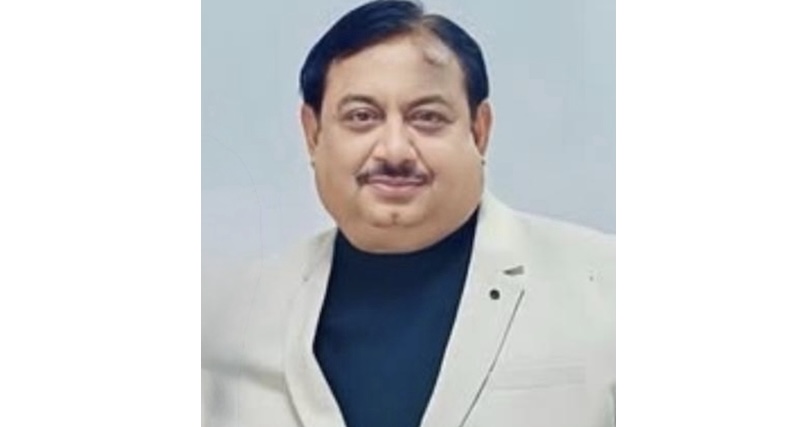
    MUMBAI: Abhay Sinha, the Indian Motion Picture Producers’ Association (Imppa) president, has sashayed his way into a starring role on the global stage. He’s been unanimously elected vice-president of FIAPF (International Federation of Film Producers Associations), the apex body of  of film producers from over 30 countries. The vote took place on 17 May, 2025, at the FIAPF Annual General Assembly in Cannes, France,

    This isn’t just a proud moment for Immpa, which has been in the game since 1937, but for the entire Indian film industry. Under Sinha’s leadership, Imppa has become a veritable dynamo, championing Indian producers and filmmakers both at home and abroad. He’s been working tirelessly to ensure Indian content creators get the recognition they deserve.

    One of Sinha’s greatest hits has been leading Imppa’s  presence at the Cannes Film Festival for two years running. In 2025, over 40 Indian films and a legion of delegates graced the festival, putting India’s diverse cinema firmly in the global spotlight. He even graced the Bharat Pavilion with his wisdom, speaking on a panel about the Changing Paradigm of Film Screening: Theatres to OTT, Digital Platforms and Beyond. He’s truly got his finger on the pulse of where film viewing is headed.

    But Sinha isn’t just about the glitz and glamour of international festivals. He’s been a driving force behind shaping better film policies across India. Think improved subsidy systems in Maharashtra, Bihar, Gujarat, Uttar Pradesh, Madhya Pradesh, and Uttarakhand. He’s also pushed for easier film certification and greater industry representation in national film bodies.

    Ever the industry advocate, Sinha has tackled critical concerns like vrtual print fees (VPF), exhibition hurdles, and taxation reforms, aiming to lighten the financial load on producers and distributors. And he’s not one to shy away from a fight, having actively voiced concerns about the proposed 100 per cent tariff by the US on foreign entertainment content. He argues such tariffs are a real cliff hanger for cultural exchange and the global reach of Indian cinema, calling for fair trade policies to protect the creative and economic interests of Indian filmmakers.

    Beyond his leadership roles, Sinha is also the founder of Yashi Films, a production powerhouse with over 150 feature films in various languages and more than 5,000 TV episodes under its belt. He’s also the mastermind behind the International Bhojpuri Film Awards (IBFA), the only global award platform for Bhojpuri cinema, which has travelled to multiple countries with the backing of Indian tourism bodies. These events have truly given regional Indian cinema and Bhojpuri artists a global stage.

    Sinha’s election as FIAPF vice-president is a landmark moment, giving Indian producers a much stronger voice on the world stage and opening up a treasure trove of new opportunities for collaboration and growth. It seems the reel world just got a whole lot more exciting for India.

  • FICCI FRAMES: Legitimate screens, stricter laws, best practices for IPR

    MUMBAI: A National Intellectual Property Rights policy is a healthy prescription for the creative industry that seeks to provide an enabling framework for monetisation, protection and enforcement of copyright, but this can only succeed if there is robust law enforcement in addition to more punitive provisions.

    This was the gist of “Own, Convert and Protect Intellectual Property as a Driver of Innovation and Growth” at the FICCI FRAMES 2017.

    It is equally necessary for creative minds to understand their intellectual property rights globally, and constant amendment of relevant laws, apart from better co-ordination among all stakeholders in the media ecosystem.

    Solstrat Solution advisor S Rama Rao in his special address that set the tone of the discussion explained the difference between tangible and intangible assets such as intellectual property, which, he said was a human right with legal entitlement. He quoted Article 27 Para 3 of the United Nations Charter which underlined the significance of IP.

    However practically, the creative industry’s on lack of understanding of the value of IPR combined with inadequate enforcement mechanism and an inconsistent regulatory framework that stands in the way of the industry’s growth aspirations.

    Saikrishna & Associates senior partner Ameet Datta moderated a discussion where four participants gave their views on different aspects of IPR in India and globally.

    Among the leading lights of the industry who elucidated on the blueprint for translating policy into practice, the Paris-based International Federation of Film Producers Associations (FIAPF) chief representative Benoit Ginistry said a robust law-enforcement system needed to be in place to ensure intellectual property rights are protected.

    Lauding the Indian IPR laws, he said it was a positive step. Globally, he said, IP laws needed to be updated. Ratification and implementation of the laws was important, and technical performance measures (TPM) needed to be secured, he said.

    Ginistry suggested that one needed to protect investments and licences, and one needs to go beyond the copyright laws. India must join anti-piracy groups and campaigns in Europe, Japan and South Korea.

    Whether administrative measure or enforcement was vital to control IPR violation because of proliferation of streaming sites, MPA V-P Asia-Pacific Hank Baker half-jokingly commented that the world today does not allow the creator the leisure of creating and sharing creativity at will. “People are inclined to steal somebody else’s work,” Baker regretted.

    Appreciating the Indian government efforts and laws to protect IP, Baker said that around 42 countries were following “Best Practices” (also including site blocking and watermarking) in the creation and protection of IP. “The shelf life of a movie is a few weeks, but as soon as it is released, a cat and mouse game begins,” Baker complained. Decrying the existence of a transnational pirate network, he said that the ecosystem and the legal framework must be prepared to deal with any IP infringement.

    Baker was sad that the industry had never been as vulnerable as it was now. Censorship and limited number of screens to showcase new films were the other impediments. “People want to see when they want to see – no matter what,” Baker said matter-of-factly. There needs to be wider approach to support the industry.

    Reiterating the United States’s US$ 250 billion annual loss owing to violations, US consul-general to Mumbai Thomas L Vajda said IPR was a huge priority as the world was moving to a knowledge economy. Giving information about the formation of an IP working group two years ago, Vajda said US government was working with a number of state governments in India including Maharashtra towards protection of IPs. For the sake of IP protection, he said co-operation of different sectors was needed. “It’s not just the role of police to help protect IPs, different ministries must be involved in protect original content,” Vajda said.

    Vajda supported the ideas of spurring more innovation, protecting ideas and promoting more investments, but “a genuine intent is important.”

    Speaking about the protection of music IPs, Sony Music Entertainment president – India and Middle East Shridhar Subramaniam said IP laws had been gradually tweaked and a lot of finesse achieved. Although happy about the national policy and amendment to copyright laws in the last couple of years, Subramaniam said he was unhappy about the (monetary) value loss owing to violations by hiding behind safe harbour laws. The primary intent of the laws was to protect the interest of the creator, he added.

    Effectively checking piracy was a court-driven process, he said. Other measures that were being taken were blocking pirate sites and taking down rogue apps, Subramaniam said.

    The Sony Music executive recommended expanding the scope of licencing vis-à-vis radio, broadcasting and internet. He suggested trying and passing on benefits of innovation to the users. National registry and documentation help grow businesses, he felt, but lamented that there was no control over piracy originating from neighbouring markets.

    Music was tech-enabled consumption, Subramanian said, adding that there was a need to foster an environment of licencing. “Our input cost is not regulated,” he said. Although music legitimately belongs to the rights holders, some were using methods disguised as innovation. While ranking the federal states, Subramaniam opined, one could consider IP-friendliness as one of the primary criteria for selection.

  • Top 24 films of 2014-15 to be showcased at Montreal World Film Fest

    Top 24 films of 2014-15 to be showcased at Montreal World Film Fest

    NEW DELHI: Twenty-four features from a score of countries are being shown in the World Greats (out of competition) section of the Montreal World Film Festival commencing tomorrow.


    The Festival, which is the only film festival in North America recognised by the Paris-based International Federation of Film Producers Federations (FIAPF), will conclude on 7 September.


    Dedicated to experienced filmmakers, this selection offers the latest works by some of the best known directors from around the world.


    Notable among the cineastes included are Majid Majidi whose Muhammad will be getting its world premiere and is the opening film. Belgian Rhapsody by Vincent Bal (Belgium – Luxembourg) will be the closing film of the Festival.


    The filmmakers who will be showcasing their films are Jean-Jacques Annaud (North-American premiere of Wolf Totem), Cristina Commencini (Latin Lover), Ventura Pons (The Virus of Fear), Ermanno Olmi (Greenery Will Bloom Again), Vincent Bal (Belgian Rhapsody), Ken Kwapis (A Walk in the Woods, with Robert Redford) and Sergio Castellitto (You Can’t Save Yourself Alone) among others.


    The American films are: A Walk in the Woods and Silver Skies by Rosemary Rodriguez. The Italian films are An Italian Name by Francesca Archibugi, Greenery Will Bloom Again by Ermanno Olmi, Latin Lover by Cristina Comencini, The Secret Of Italia by Antonello Belluco and You Can’t Save Yourself Alone by Sergio Castellitto.


    The South Korean films are: It’s Really Kind Of You by So Jae-ick along with My Sister and The Pig Lady by Jan Moon-il.


    The Japanese films are Blood Bead by Banmei Takahashi and The Next Generation – Tokyo War by Mamoru Oshii, Neckan by Gonzalo Tapia and Virus Of Fear by Ventura Pons are both from Spain.


    The other films are: Before Spring by Ahmed Atef of Egypt; Chrieg by Simon Jacquemet from Switzerland; Corpse Collector by Dimitar Dimitrov from Bulgaria; Eisenstein In Guanajuato by Peter Greenaway from the Netherlands – Mexico – Finland – Belgium; Gitel by Robert Mullan from United Kingdom – Lithuania; Muhammad by Majid Majidi of Iran; Simon by Éric Martin and Emmanuel Causse from France; Siska Deluxe by Ian Cvitkovic from Slovenia – Czech Republic – Macedonia; Winter by Heidi Greensmith from the United Kingdom; and Wolf Totemby Jean-Jacques Annaud from France – China.


  • Ritesh Batra’s ‘Lunchbox’ awarded at APSA

    Ritesh Batra’s ‘Lunchbox’ awarded at APSA

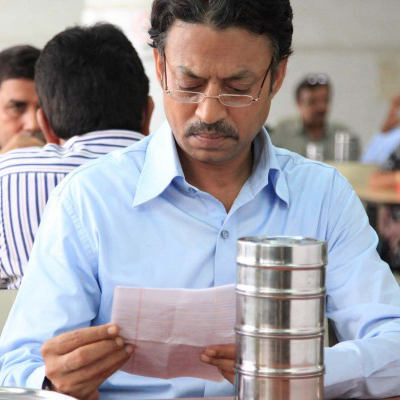
    NEW DELHI: Director Ritesh Batra won the best award for Screenplay in Lunchbox and also the Grand Jury Prize at the Asia Pacific Screen Awards in Brisbane recently.


    The film – which has already won a large number of laurels worldwide – had recently also won three awards at the 56th Asia-Pacific Film Festival award ceremony held in Macau.


    Renowned filmmaker Shyam Benegal was chairman of the jury for the annual Asia Pacific Screen Awards where Anurag Kashyap’s film Ugly had also been entered in competition. Other jury members were Korean screenwriter and director Kim Tae-yong, “Queen of Sri Lankan Cinema” actress of stage and screen Hon Dr Malani Fonseka, Turkish actor Tamer Levent, Swiss director Christoph Schaub and Hong Kong producer Albert Lee. The preview committee included film critic Meenakshi Shedde from India.


    The Asia Pacific Screen Awards (APSA) is an international cultural initiative of the State Government of Queensland, Australia, through Events Queensland, to honour and promote the films, actors, directors, and cultures of Asia-Pacific to a global audience and to realise the objectives of UNESCO to promote and preserve the respective cultures through the influential medium of film.


    Staged for the first time in 2007, APSA collaborates with UNESCO and FIAPF – the International Federation of Film Producers Associations, which is the body that recognises international film festivals. Winners are determined by an international jury and films are judged on cinematic excellence and the way in which they attest to their cultural origins. APSA takes the works of filmmakers across more than 70 countries and areas in the Asia-Pacific region to new international audiences.

    The FIAPF Award for Outstanding Achievement in Film was given to Korean film producer Lee Choon-yun by FIAPF Executive Member and Film Federation of India Secretary General Supran Sen. This award celebrates a filmmaker from the region whose career and actions strongly contribute to the development of the film industry.


    The awards are the Asia Pacific region’s highest accolade in film, recognising and promoting cinematic excellence and cultural diversity of the world’s fastest growing film region: comprising 70 countries and areas, 4.5 billion people, and responsible for half of the world’s film output.


    There were a total of over 230 films from 41 countries and areas, including Academy Award Best Foreign Language Film submissions from an unprecedented 19 countries.