Tag: Fernando Machado

  • Burger King revamps logo for the first time in 20 years

    Burger King revamps logo for the first time in 20 years

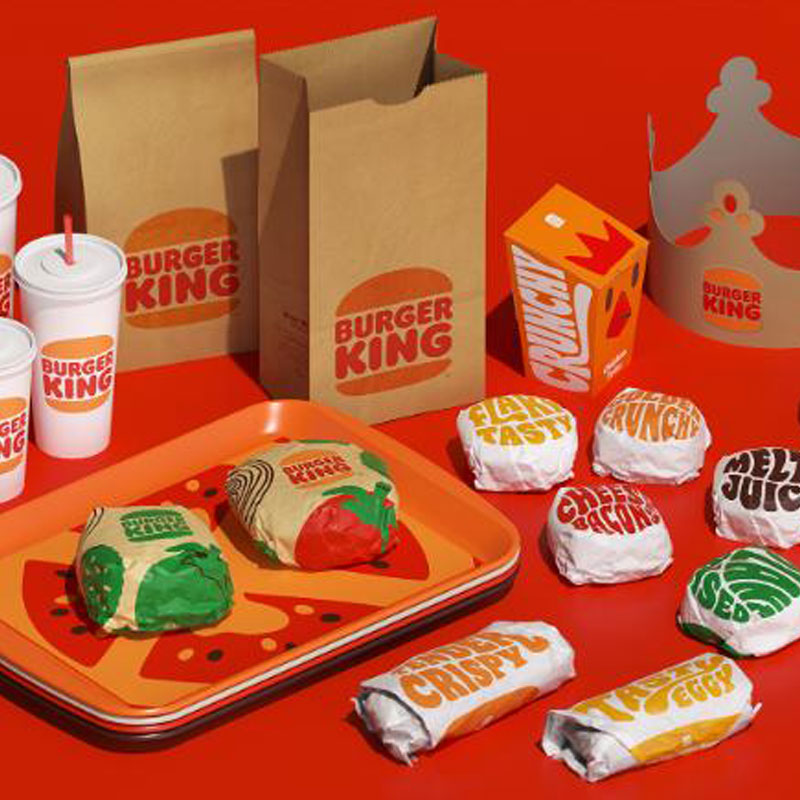
    NEW DELHI: Global fast-food giant Burger King has unveiled a revamped brand identity with refreshed logo designs reflecting its removal of conservatives. The redesign is the first in over 20 years. 

    Restaurant Brands International (which owns Burger King) CMO Fernando Machado said, “We've been doing a lot in terms of food quality and experience. We felt that putting a wrap around all that with an upgrade of our visual identity would help signal to our consumers that this is a brand that's evolving.”

    The new logo includes an internally developed font called ‘flames’ with rounded edges in motif shades of brown, red and green. The retro-influenced identity is reflective of the brands “rounded, bold and yummy” food offerings, which will no longer have preservatives and colourings. The change will soon be visible on food packaging, employee uniforms, and soon-to-be remodelled restaurants. The fast food chain will also offer healthier grub options.

    In September, Burger King introduced new restaurant designs fit for the Coronavirus era with triple drive-thrus, burger pick-up lockers and takeout counters. The designs will be tweaked to highlight the revamped visual identity. It will take some time for the rebranding to cover all its outlets across the globe. 

  • Burger Kings’ strategy to hit the sweet spot in India

    Burger Kings’ strategy to hit the sweet spot in India

    MUMBAI: It wasn’t long back that fast food penetration in India was seriously low. It was only metros and mini metros that had access to burgers, pizza and french fries. But with increasing globalisation and digitisation, multinational fast food players have forayed into the remotest areas of India as well.

    According to a report published by Technopak, India’s fast food industry is expected to grow to $4.61 billion by 2020, more than double its value of $2.11 billion in 2014,. As Indians start to spend more, competition is heating up, with foreign chains like Burger King, Wendy’s, Carl’s Jr. and Johnny Rockets setting up shop in the last year.

    American global chain of hamburgers and fast food, Burger King entered India in 2014 and has since rapidly grown its presence and reach in the country. Today, over 15 million customers sink their teeth into the burger chain’s menu everyday. Although Burger King has outlets in over 100 countries across the globe, it has not resorted to duplicating the same menu and strategy for India and rather believes in having a tailor-made menu to fit the Indian market and consumers.

    Although India is predominantly considered a vegetarian market, multinational fast food chains have an interesting mix of veg and non-veg items on the menu for Indians. Interestingly, for Burger King, most of its products sold in India in terms of quantity are veg.

    While United States of America continues to be a primary market for Burger King, the company has a mission to become India’s leading fast food restaurant. For this, Burger King has upped its supply chain, distribution and invests a fair amount on R&D. Burger King global chief marketing officer Fernando Machado says, “We have been growing faster outside US for the last 5-6 years not only due to the number of outlets but because lately we have been paying more attention to advertising and marketing in all the markets.”

    India is an iconic and important market for Burger King due to strong franchise partners here. For the company, it was quite a test to create and curate a menu for the Indian audience. Now that they have achieved it, the company want to concentrate on scaling up operations.

    Machado says that he is happy with the scale of growth in India. However, he is not ready to rest on his laurels just yet. The Indian market is among the most important ones for the company and Machado sees scope for greater growth.

    Where major brands including Dominos, McDonald’s and KFC are aggressively marketing themselves in India, Burger King has always steered away from advertising heavily in India, The reason? The amount of adverting is a function of the size of the account for Burger King. However, as India business scales up, the fast food company will increase its ad spend in the country. “Since we have a master franchise in the west, our marketing budget is a per centre of the sales of the company. It is not like FMCG, where even if you are making loss, you have to advertise.”

    Today, every brand wants to connect with the consumer at as many touch points as possible. They tap the audience on social media, print, outdoor and traditionally. Digital however takes the largest pie as the millennials are constantly attached to their mobile devices. Yet, for Burger King, traditional medium still offers a great ROI (return on investment). The digital promotions are restricted to huge campaigns only. They believe that the primary role of traditional medium is to drive short term sales and traffic, whereas digital is more about connecting with people.

    Additionally, there’s never been a better time for fitness brands with the younger generation becoming more and more health conscious. With almost sedentary lifestyles, people are opting for healthier eating and exercise options to stay fit. Brands are ensuring their communication shows their commitment to health. However, brands that have stuck to high sugar and salt content for decades are now finding it difficult to change that perception.

    This problem can be solved by either promoting the product for its taste and goodness or altering its key ingredient to make it more appealing for the health conscious consumer.

    We have all grown up hearing from our elders how consuming fast food can be really unhealthy due to the high amount of sugar and salt in these products. To address the issue, major F&B (Food and Beverage) brands internationally have decided to cut down on the amount of sugar, salt and saturated fats in their products to improve the image of packaged foods.

    Certain fast food chains like McDonald’s, KFC and Burger King now have a government-enforced ‘calorie cap’ placed on their heads, in an attempt to make their meals healthier.

    F&B majors including Nestle, Mondelez, Jubilant Foods, McDonalds among others are under pressure from a shift in consumer preferences towards healthier food and away from processed products such as instant noodles and frozen pizza. Nestle chief executive Mark Schneider remarked, “The trend towards healthier foods is to be observed worldwide. Combining the convenience of packaged foods with healthy good nutrition, that is where our sweet spot is.”

    At such a time, the challenge for Burger King lies in improving the food quality and taste while cutting down on sugar and salt content. For this, the company has dedicated half its team towards cutting down the sugar and salt in all its products while maintaining the taste. “It’s not about what will be our next sandwich but how can we clean all the ingredients in the existing menu so we don’t use preservatives. That’s not because it is a trend but because it’s the right thing to do”, says Machado.