
Tag: femvertising

  • Guest Article: Is Fem-vertising really working to sell products

    Guest Article: Is Fem-vertising really working to sell products

    Mumbai: It’s an established fact that advertising has a larger role than simply selling products. Advertising mirrors society and also encourages people to embrace change. But this change is only visible in recent times. Observe how women were portrayed in advertising a few years ago. Mostly as housewives, doing chores at home, cooking for their families and finding happiness in being appreciated for the same. Or objectified as sex symbols to gain instant attention. It’s only in recent times that advertising has taken it upon itself to change the narrative and show women in a different light. Building an inclusive world is the responsibility of everyone, and advertising plays a clear role in encouraging society to look at the world through a better set of eyes.

    Femvertising is the kind of advertising strategy that employs women in a different light. Using an empowering tone of voice, these ads are breaking the norm and displaying a more progressive and gender-free world. In India specifically, these campaigns are breaking conventional ideas around gender equality, patriarchal mindsets, and other commonly held notions. A lot of these campaigns have won awards and been applauded on social media. “BreaktheBias” by Titan, “#ShareTheLoad” by Ariel, and “#MyChoice” by Vogue are just a few of the notable efforts made by advertisers. These advertisements are pitched like beacons. They fuel the conversation about how women should really be portrayed. The current wave of femvertising is riding on a woke generation’s mindset to call out societal fallacies. It is also built on the premise of wanting to promote a more authentic and real image of women and their lives.

    And while these campaigns definitely get their fair share of attention, I wonder if they have a larger impact than the buzz that they create. Is this simply a brand-building tactic that creates a positive aura around the brand, or is there a real intent to change society? How do these campaigns impact the primary objective of advertising? Do they really lead to short-term and long-term sales? Or is the message too far removed from the product?

    Research has shown that a lot of people who see these advertisements find them engaging and interesting. They appreciate the message being conveyed but do not necessarily support or purchase the product being advertised. Which takes one back to the basic theory of advertising. Advertising is meant to inspire and cultivate a certain kind of lifestyle. It is meant to reflect an ideal. One that everyone secretly wants. At a subconscious level, advertising generates desire. It fulfils a need or a pain that people have. In its bid to be hyper realistic, does femvertising lose out on the appeal and aspiration that advertising has traditionally been hinged on? Watching a curvaceous real body instead of an airbrushed and photoshopped one is surely endearing, but is it aspirational? Does it make me want to buy the brand to fulfil a deeper desire to become something other than myself?

    Also, what about sales? I was recently caught by surprise when I saw a steel brand advertising the concept of “Nari Shakti.” While the ad was interesting and engaging, I wonder if it had any relevance to the target audience of the category? The ad was successful in building credibility for the brand, but I doubt it led to any jump in sales at all.

    A lot of brands have jumped onto the bandwagon of femvertising without understanding the basics. It has become a fad that wins awards and gets viral on social media. Today it is femvertising, and tomorrow it may be another trend that advertisers will pick up on to create a buzz. However, this cannot be said for all brands. There are some noteworthy campaigns that have cleverly woven together the product and brand characteristics with the narrative of the ad. Vim’s “Nazariya Badlo, Dekho Bartano se Aage” has cleverly used the product in its storyline when a man tries to ‘help’ his prospective bride in the kitchen, while she offers to ‘help’ him back with cleaning the dishes. It’s a clear message of a balance of roles and responsibilities while also incorporating the product into the story.

    Views on femvertising are mixed. A lot of critics reprimand advertising agencies for promoting this kind of advertising to win awards and to increase visibility on special days like Women’s Day or Mother’s Day. While there are several brands that use femvertising in interesting ways. I wonder if femvertising is here to stay, or is it a passing wave? Is it truly having an impact on society and changing how women are perceived, or is it simply a shallow tactic to generate more likes, shares, and buzz in the media? I’m hoping that there are more brands that create relatable and inspiring content that reflects society and also encourages change in more authentic ways.

    The author of this article is Jigsaw Brand Consultants founder Rutu Mody Kamdar.
  • Brands need to move away from femvertising: Sakshi Choudhary, Ogilvy India

    Brands need to move away from femvertising: Sakshi Choudhary, Ogilvy India

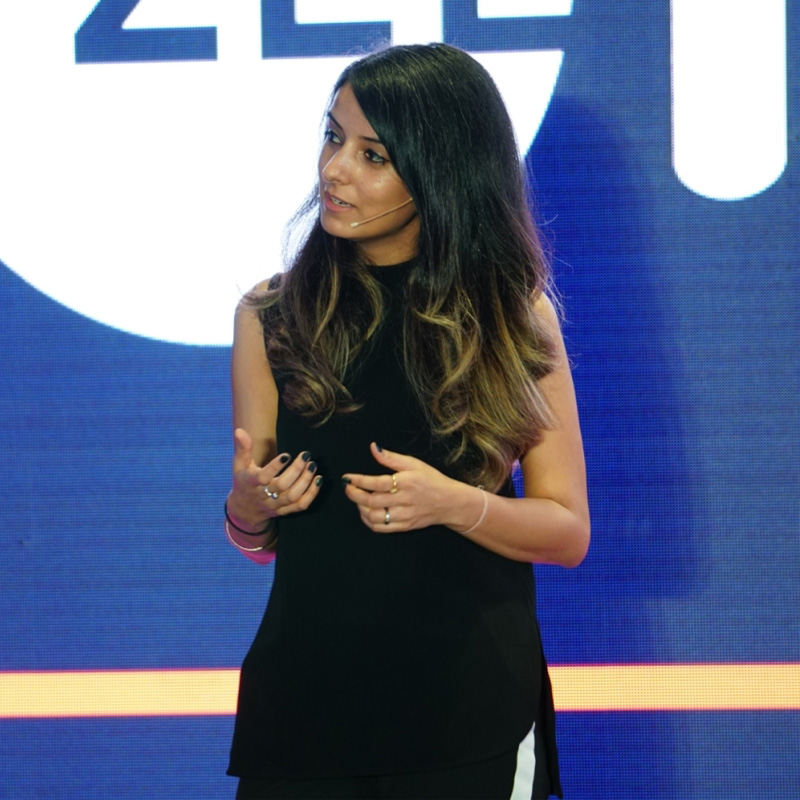
    MUMBAI: The 28-year-old lady, who rose to fame pretty early in her career, proudly sits as the creative controller at Ogilvy India’s office. An avid feminist that she herself is, Sakshi Choudhary spoke eloquently on day one of Zee Melt, on how brands must make a better portrayal of women in ads.

    The young creative head began her session with a rant on the patriarchal ad industry. “Dear ad industry, you don’t talk to me. At 21, I finally fell in love with my body, I rigged myself of the low self-esteem and I roared like a lioness. But you compare me to the kitten and chicken that will lick and bite when the oh-so masculine half-naked man sprays his oh-so masculine deodorant. Dear ad industry you don’t talk to me. At 24, I got my first big promotion and a pay-check which was a result of years of passion, handwork and persistence that has finally paid off. But you think it’s the perfect time to tell my male colleagues that it’s time for me to be picked up and carried home. Dear ad industry, why do you not talk to me? Why does the dreamer in you not connect to the dreamer in me?”

    After the intense rant, Sakshi Choudhary remarked, “If you think that as an industry we have come a long way, well think again.” She spoke about how women in India are increasingly getting into the purchasing power in categories that were predominantly considered a male dominant segment. Women today spend 2X times more time on mobile devices and 74 per cent of purchasing decision today is being made by women which includes decisions about automobile (60 per cent), vacation (90 per cent) and consumer electronics (50 per cent).

    Brands including Honda motorcycles, Bacardi Weekender, Nykaa, UrbanClap and Hotstar have recognised these opportunities to connect with women.

    Choudhary said that brands need to change the portrayal of women as an object, a homemaker or an instantly empowered woman. While creating a campaign, brands and agencies need to follow Badger & Winters test that calls out for sexism in advertising. Badger & Winters is a New Your based agency that leads with a female perspective that helps brands grow loyal and lasting relationships with women. Brands should ask themselves these four questions before they crack an advertisement or final creative:

    – No Prop: Agencies need to ask themselves whether the woman in the ad is a prop? Does she have a voice or a choice?

    – No Plastic: Is she air brushed to a point where she looks like a plastic doll?

    – No Part: Is any part of her being shown? Is it a sexually provocative ad?

    – No Stranger: would you see your mother, daughter or sister in the ad where the women is right now. If the answer to all the above points is no, do not proceed with the campaign idea.

    She then pointed out about how brands stereotype women in ads and they are given less airtime, fewer dialogues and are expected to look young and enthusiastic homemakers whereas men are always shown to have an occupation and get four times as much screen time as women.

    She also touched upon the recent trend in adverting, which is femvertising and suggested that brands should not come up with a piece of work which only speaks to women on women’s day or mother’s day. “Clients need to have an equal and empowered portrayal through the year. Brands should have realistic beauty standards and actively work for social change,” she challenges.

    She ended her session by quoting Tain Wei, “Any society that fails to harness the energy and creativity of its women is at a huge disadvantage in the modern world.”

    Indiantelevision.com got talking to Sakshi Choudhary about her views on the female economy, what the ad industry needs to do to address the issue and more. Excerpts:

    How do you ensure your agency Ogilvy does not create ads that stereotype women?

    At an individual level, I ensure that every piece of work that’s proposed or released from my team is free of stereotypes, and portrays women to be equal as men. As an agency, Ogilvy has constantly strived to create work that doesn’t just beat stereotypes (Komfort, Tata Salt), but also empowers women through effective campaigns like #MakeLoveNotScars, #NotMusicTomyEars, Vodafone Sakhi or #LforLove.

    Which platform woks the best for promoting and advertising women centric  products that promote women empowerment or women safety? Is it digital since you mentioned that women today spend 2X more time on mobile devices. Will digital change the wave?

    It doesn’t really matter which platform you place your work on as long as you reach women effectively, and the right way.

    Does creating campaign and products designed specifically for women safety or empowerment) lead to a jump in sales? Does it help in improving the brand perception?

    Yes, if done right, gender equality campaigns not only lead to increased brand love and loyalty but also sales. However, as mentioned in my talk, lately, Femvertising has become a fad. The problem arises when brands want to hop on the empowerment bandwagon just for the sake of it, or to enjoy a share of voice without any concrete on-ground results in mind.

    This happens more often on digital as brands are often in a rush to jump on a trend or an occasion. Women’s Day campaigns are a classic example.

    Gender pay is still a pressing issue in the industry. What do we need to do as an industry to address the issue?

    Gender pay gap is an issue that exists in every industry.

    While paying equally seems to be the first solution that comes to everyone’s minds, the issue is far deeper than that. Women don’t ask for their worth as often or as assertively as they should. They constantly undermine themselves and feel that they aren’t good enough. This self-doubt keeps them in a weaker position throughout their careers.

    As an industry, for starters, we women need to come together through a forum. And then address our needs through formal training workshops or mentorship by senior women leaders.

    How challenging is it to create a campaign that impacts culture?

    Extremely. Anything to do with culture, and it runs the risk of offending sensibilities. The consumers are now online, and analyzing and scrutinizing every inch of your creative online. The intent of the brand may be right, but if the execution isn’t done well and is misinterpreted, it can lead to massive brand fails.

    The risk is huge. But it’s an interesting challenge. These are also the pieces of work that come with the most fulfilment and make you feel good about being in the industry.

    Is it a major responsibility on agencies and brands to create the societal change?

    Nope, we are in the business of selling products.

    Having said that, we need to be more mindful of the undercurrents shaping our country right now.

    Whether it’s recognizing the societal advancement of women in the last 10 years, or embracing our younger population that’s judging marketing efforts and only trusting brands with a purpose.

    One piece of advice to creative heads that are at the helm of ad industry that create/want to create ads about women empowerment while not demeaning them?

    Nurture and celebrate your women.

    Retain the ones you have, and hire more to make every team in your agency gender equal.

    And nope, don’t do this to produce work only on ‘ women empowerment’.

    Do this because the current Indian woman wants to see campaigns that she can relate to. Connect with the dreamer in her.

  • The ins and outs of femvertising

    The ins and outs of femvertising

    MUMBAI: How many times have you come across ads that seek to empower women and ask them to take on the world (at times by using their product)? The general tendency of advertising in the seventies and the eighties was to objectify women in order to fascinate the ‘male audience’ to buy their product as traditionally, the man of the house was considered to be the only (buying) decision maker. But that has changed over the years and advertising has evolved along with our society. 

    Today, an increasing number of brands are creating pro-female ads in keeping with an increasing number of women finding their voice in society and the workplace – basically with the emergence of feministic values. The advertising industry that once relied actively on objectification of women to promote brands is now starting to attract the attention of female consumers and make them feel understood and valued.

    While it may not be in listed in the Oxford dictionary yet, but femvertising is today de rigeur. It may be defined as advertising that employs pro-female talent, messages, and imagery to empower women and girls. Brands around the world are jumping on the bandwagon to empower women by integrating feministic messaging their ads.

    public://adds.jpg

    But it might not be the best decision for all  brands to take the femvertising route as  one size does not fit all. Take the case of CEAT, a company majorly known for manufacturing tyres. It has introduced CEAT Safety Grip that is a customised scooter handle grip which seamlessly conceals a pepper spray in the accelerator throttle for quick and easy access at time of distress.

    It’s aimed at instilling confidence among women riders and empowers them to take charge of their own safety.

    A tyre manufacturer creating a line of product for women safety, strange is it not?

    Brand-Building.com founder and brand guru Ambi Parameswaran points out that any brand which jumps on to a cause just because it is new is doing a singular disservice to the practice of marketing and branding. However it makes sense if the brand is in someway connected with women empowerment and has a long-term goal around this promise and premise.

    Concern over women’s safety has become a prominent issue now than ever before as women vehicle (scooter) ownership is on the rise and an increasing number of ladies are now joining the workforce. But creating a separate line of products targeted only for women may incur extra cost to the company as a lot of time and money goes behind R&D and perfecting the product.

    CEAT senior vice president of marketing Nitish Bajaj mentioned that the company works with external partners to design and test such products while it also has an exclusive authorised manufacturing and packaging partner which has invested in this product while CEAT will be extending support in pushing it to the target audience.

    Women empowerment and safety find a resonance in every kind of product and service. A condom ad for instance speaks about women’s empowerment and safety in equal measure as a safety app that tracks where one is going. Harish Bijoor Consults founder and brand strategy specialist Harish Bijoor believes that using the empowerment theme to a greater degree of value will be the trend in the years ahead in India, as India wakes up to  women’s empowerment and safety themes. 

    Creating campaigns and products designed specifically for women safety or empowerment sure does lead to a jump in sales and helps in improving the brand perception. Mindshare principal partner of strategy Preeti Mascarenhas recalls one of their biggest wins this year in strategy, the Nayi Soch campaign for Star as it not only got the audience pull but also helped in bringing change in Indian society.

    Havas Media Group CEO of India and South Asia Anita Nayyar notes that it certainly does help in improving brand perception and is seen as a specific effort to create, keeping women safety and empowerment top of mind. It positively pre-disposes the audience to buy hence, leading to sales and being created and designed specifically for the ‘Women in Me’ helps.

    Affirming that not all brands can pull this off, Ambi Parameswaran notes that if not enough thought is put into the process, it may end up confusing the consumer and cause damage to its long term prospects. Companies that manage to do this need to make sure that it is part of a long-term goal and not a ‘hire a cause of the month’ campaign.

    Traditionally, it was believed that if a brand wants to target women, it needs to advertise on television alone as a majority of women in India are still hooked on to their TV sets as compared to digital. Our media experts seem to believe that it still holds true and not much has changed. The general consensus is still that television is the prime medium of attraction for this audience segment, followed by digital and then print. CEAT on the other hand believes that digital platforms help in creating awareness and hence will be showcasing  its  new film on social media. Tanishq in the past has maintained that the jewellery brand’s core focus to connect with consumers via digital and it will continue to invest heavily on it. 

    Whether femvertising here to stay or not is debatable. While Anita Nayyar and Preeti Mascarenhas believe that it is here to stay and we will continue to see the momentum growing over time, Harish Bijoor opines that it is just a passing phase. “When every brand around uses femvertising, and when everyone gets tired of it as a cliche, brands will nudge their way to Malevertising (Male Advertising) and this will be a yo-yo process for sure,” he concludes.

    The balance swings between the ying and the yang. Even in advertising.