Tag: FEMA

  • Zee Media financial resolutions put to e-voting by shareholders

    Zee Media financial resolutions put to e-voting by shareholders

    MUMBAI:  It’s got clout in the right places. Now the Subhash Chandra-founded Zee Media is beefing itself financially. At  a recent board meeting, Zee Media announced two significant financial resolutions aimed at enhancing its capital structure and investor participation.

    The company has put the resolutions to vote by its shareholders through postal ballot or e-voting from 23 January 2025.

    The company has approved the issuance of securities amounting to a maximum of Rs 400 crore, or its equivalent in foreign currencies. This move is in compliance with the Companies Act of 2013 and applicable regulations including those of the Securities and Exchange Board of India (SEBI). The board is authorised to raise funds through equity shares, preference shares, and other eligible securities via several methods such as private placements and qualified institutional placements. The issuance may be conducted in multiple tranches and will not exceed the specified limit.

    Additionally, the board has been empowered to determine the terms of issuance, including pricing, timing, and the class of investors targeted for the securities.

    Zee Media also resolved to increase the aggregate limit for investments by foreign portfolio investors (FPIs) to 49 per cent of the paid-up equity share capital, on a fully diluted basis. This increase is part of a broader strategy to attract foreign investments and enhance liquidity in the company’s shares, while adhering to the Foreign Exchange Management Act (FEMA) regulations.

    The board will be responsible for executing necessary acts, deeds, and documents to implement this resolution and ensure compliance with all regulatory requirements.

    These resolutions signify Zee Media’s commitment to strengthen its financial framework while potentially boosting growth through increased foreign investments and capital raise initiatives.
     

  • NDTV, Reliance’s Rafale case to be heard on 22 November

    NDTV, Reliance’s Rafale case to be heard on 22 November

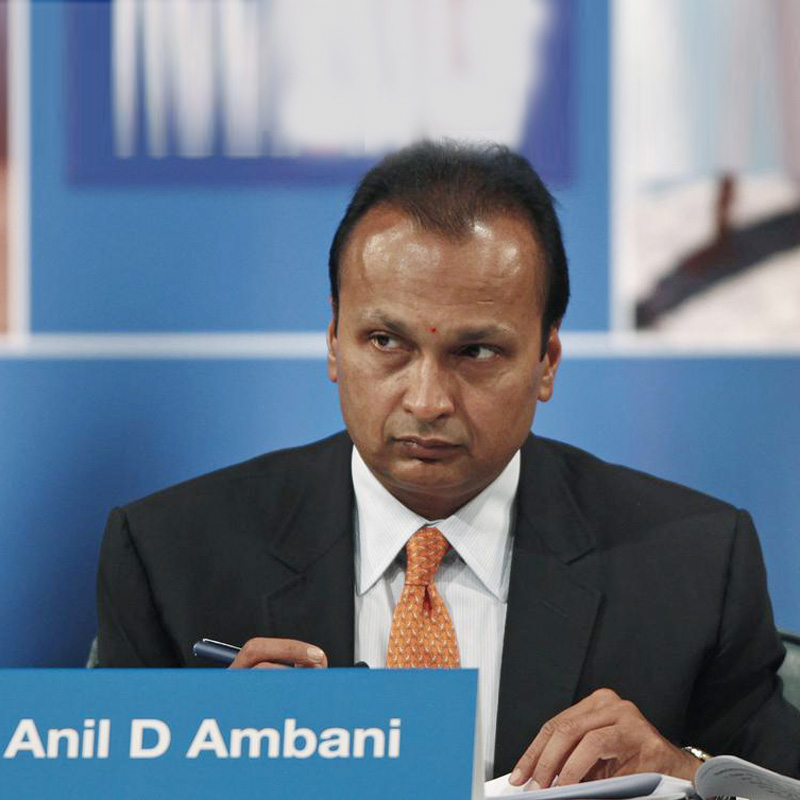
    MUMBAI: NDTV has challenged the jurisdiction of the Ahmedabad court where Anil Ambani’s Reliance Group sued the news broadcaster for Rs 10,000 crores over the Rafale fighter jet deal and the next hearing will be on 22 November 2018. The first hearing was on 26 October. The lawsuit is filed against NDTV's weekly show, Truth vs Hype, which aired on 29 September.

    According to NDTV, “The role of Reliance appeared to have been questioned by none other than Francois Hollande, who was the president of France when the deal was struck. The NDTV show reported all sides of the story including Dassault's denial that it had been under any pressure to select Reliance. The panellists, in a balanced discussion, examined whether issues like Reliance's vast debt and record in defence manufacturing made it a suitable choice for Dassault in India.”

    NDTV Group CEO Suparna Singh tweeted on 26 October, “NDTV challenges jurisdiction of Ahmedabad court where Anil Ambani’s Reliance group sued us for Rs 10,000 crores over our Rafale deal coverage, next hearing on Nov 22.”

    Anil Ambani’s Reliance Group has filed a defamation suit of Rs 7,000 crore against founder and editor of ‘The Citizen’, Seema Mustafa, for its reportage on the defence deal and Rs 5,000 crore against National Herald in September, saying that one of its published articles on the Rafale deal was “libellous and derogatory”.

    Also, the Enforcement Directorate (ED) had issued a show cause notice to NDTV in connection with a case of forex violation it is probing against the media company on 17 October 2018. The notice has been issued for violations of the Foreign Exchange Management Act (FEMA) to the tune of Rs 4,000 crore.

  • Anil Ambani’s Reliance sues NDTV for Rs 10,000 cr

    Anil Ambani’s Reliance sues NDTV for Rs 10,000 cr

    MUMBAI: NDTV has been sued for Rs 10,000 crore by Anil Ambani's Reliance Group in an Ahmedabad court for its reportage on the Rafale fighter jet deal. The lawsuit is filed against NDTV's weekly show, Truth vs Hype, which aired on 29 September.

    The hearing has been listed for 26 October. NDTV Group CEO Suparna Singh tweeted on 18 October, “We will fight this brazen attempt to harassment and intimidation.”

    NDTV also mentioned that the top executives of Reliance ignored repeated, multiple and written requests to appear on the show or comment on what is being widely discussed not just in India but in France as well – whether Anil Ambani's Reliance was transparently chosen as the partner for Dassault in a deal that saw India buying 36 fighter jets.

    According to NDTV, “As the Rafale deal has become a larger news story in India, the Reliance group has been on a notice-serving spree; to sue a news company for Rs 10,000 crore in a court in Gujarat on false and frivolous charges, ignoring facts that are widely reported everywhere and not just by NDTV, can only be interpreted as an unsophisticated warning to the media to stop doing its job.”

    Also, the Enforcement Directorate (ED) has issued a show cause notice to NDTV in connection with a case of forex violation it is probing against the media company on Wednesday. The notice has been issued for violations of the Foreign Exchange Management Act (FEMA) to the tune of Rs 4,000 crore.

    NDTV rejected any allegations of violating FEMA regulations. NDTV said that it is being targeted for its fair and independent journalism and that its persecution is intended to signal to other media that unless they fall in line, they will face similar consequences.

  • Transponder rentals: Prior MIB approval not needed for EEFC forex payments

    MUMBAI: India’s ministry of information & broadcasting (MIB) has eased rules for broadcasters and teleport owners making foreign currency payments for transponder rentals for uplinking to foreign satellites. It has issued a notice that allows them to make payments from their Exchange Earners’ Foreign Currency (EEFC) accounts to them without approaching it for approval.

    The notice reiterates that “all broadcast companies and teleport operators, as per MIB’s advisory dated 25 June 2014, are advised to strictly follow the guidelines under provisions of the FEMA Act 1999 read with Master Circular No. 6/2014-15 dated 1 July 2014 along with Schedule II thereof issued by RBI. Proposals seeking prior approval would require to be sent to this Ministry only if the proposed remittance is from other than EEFC accounts.”

    According to the provisions, it requires prior approval of the MIB for making remittance of foreign exchange towards availing transponder services on foreign satellite for up-linking of TV Channels/Teleport services/DSNG Operations/Temporary events. Rule 4 of Master Circular provides that, “No person shall draw foreign exchange for a transaction included in the Schedule II without prior approval of the Government of India.

    However, a specific exemption is provided for EEFC account holders. Rule 6 (l) of Master Circular states that, “Nothing contained in the Rule 4 or Rule 5 shall ‘apply to drawl made out’ of funds held in Exchange Earners’ Foreign Currency (EEFC) account of the remitter,” according to the notice signed by under-secretary to the government of India Manmeet Kaur.

    In the past, the ministry had been entertaining such cases where payments (usually, part payments) were being made from this account, and then issuing approval for remittances proposed to be made from other than EEFC Account.

  • Govt claims it invoked security considerations, says it is studying PCA order against Antrix in Davos case

    Govt claims it invoked security considerations, says it is studying PCA order against Antrix in Davos case

    NEW DELHI: The Permanent Court of Arbitration (PCA) in The Hague has said that the annulment of the agreement between Devas and Indian Space Research Organization’s commercial arm Antrix in 2011 which resulted in denying Devas commercial use of S-band spectrum constituted an expropriation.

    PCA administers cases under the arbitration rules of the United Nations Commission on International Trade Law (UNCITRAL).

    In a reaction, the Government of India reiterated that it had invoked the essential security interests through a well reasoned, valid and proper CCS decision. The award of the Tribunal is being examined and legal recourse, as deemed fit, will be taken.” We also remain committed to pursue our larger national interests including sovereign strategic security interests in this matter”, it said.

    This ongoing case with Mauritius-based Devas Corporation over sharing of spectrum on satellites may result in huge payments as compensation to Devas.

    The order said by this action, the Indian Government expropriated the investments of Devas’s foreign shareholders and also acted unfairly and inequitably, thus making it liable to pay financial compensation.

    (In a statement, the Government of India said The Tribunal had said it’s essential security interest provisions of the Treaty do apply in this case to an extent. The limited liability of compensation shall be limited to 40% of the value of the investment. The precise quantum has not been determined as yet. The Tribunal has dismissed the Claims as regards violation of other provisions of the Treaty viz., (i) unreasonable or discriminatory measures; as also (ii) Most Favoured Nation treatment, it said.

    In 2005 Antrix and Devas entered into an agreement for the long-term lease of two ISRO satellites operating in the S-band. The deal was for 70 MHz of S-Band frequency used to provide multimedia services by leasing most of the transponders on the GSAT-6 and GSAT-6A satellites for 12 years. Devas was to pay $300 million over the said period.

    However, the government annulled the contract after reports of unilateral process and presumptive loss to exchequer due to the deal. Following this the US investors in Devas moved a case against Antrix.

    In 2015 the International Chamber of Commerce (ICC) tribunal ruled that the Antrix’s annulation was unlawful and awarded Devas damages and pre-award interest of approximately $672 million, plus post-award annual interest accruing at 18 per cent until the award is paid in full.

    Devas Multimedia, based in Bangalore, was set up by former ISRO scientists and some U.S. investors. According to Devas website investors included Deutsche Telekom AG, Columbia Capital LLC, and Telcom Ventures LLC.

    Meanwhile, the Enforcement Directorate, has issued a show cause notice to Devas for violation of Foreign Exchange Management Act 1999 and are further investigating the case under Prevention of Money Laundering Act 2002. The Directorate has issued show cause notice to Devas for contravention to the provisions of FEMA 1999.

    The CBI has filed an FIR against, inter-alia, M/s Devas Multimedia Pvt. Ltd, Bangalore; and other unknown public servants of M/s Antrix/ISRO/DOS. This case is presently under investigation.

  • Govt claims it invoked security considerations, says it is studying PCA order against Antrix in Davos case

    Govt claims it invoked security considerations, says it is studying PCA order against Antrix in Davos case

    NEW DELHI: The Permanent Court of Arbitration (PCA) in The Hague has said that the annulment of the agreement between Devas and Indian Space Research Organization’s commercial arm Antrix in 2011 which resulted in denying Devas commercial use of S-band spectrum constituted an expropriation.

    PCA administers cases under the arbitration rules of the United Nations Commission on International Trade Law (UNCITRAL).

    In a reaction, the Government of India reiterated that it had invoked the essential security interests through a well reasoned, valid and proper CCS decision. The award of the Tribunal is being examined and legal recourse, as deemed fit, will be taken.” We also remain committed to pursue our larger national interests including sovereign strategic security interests in this matter”, it said.

    This ongoing case with Mauritius-based Devas Corporation over sharing of spectrum on satellites may result in huge payments as compensation to Devas.

    The order said by this action, the Indian Government expropriated the investments of Devas’s foreign shareholders and also acted unfairly and inequitably, thus making it liable to pay financial compensation.

    (In a statement, the Government of India said The Tribunal had said it’s essential security interest provisions of the Treaty do apply in this case to an extent. The limited liability of compensation shall be limited to 40% of the value of the investment. The precise quantum has not been determined as yet. The Tribunal has dismissed the Claims as regards violation of other provisions of the Treaty viz., (i) unreasonable or discriminatory measures; as also (ii) Most Favoured Nation treatment, it said.

    In 2005 Antrix and Devas entered into an agreement for the long-term lease of two ISRO satellites operating in the S-band. The deal was for 70 MHz of S-Band frequency used to provide multimedia services by leasing most of the transponders on the GSAT-6 and GSAT-6A satellites for 12 years. Devas was to pay $300 million over the said period.

    However, the government annulled the contract after reports of unilateral process and presumptive loss to exchequer due to the deal. Following this the US investors in Devas moved a case against Antrix.

    In 2015 the International Chamber of Commerce (ICC) tribunal ruled that the Antrix’s annulation was unlawful and awarded Devas damages and pre-award interest of approximately $672 million, plus post-award annual interest accruing at 18 per cent until the award is paid in full.

    Devas Multimedia, based in Bangalore, was set up by former ISRO scientists and some U.S. investors. According to Devas website investors included Deutsche Telekom AG, Columbia Capital LLC, and Telcom Ventures LLC.

    Meanwhile, the Enforcement Directorate, has issued a show cause notice to Devas for violation of Foreign Exchange Management Act 1999 and are further investigating the case under Prevention of Money Laundering Act 2002. The Directorate has issued show cause notice to Devas for contravention to the provisions of FEMA 1999.

    The CBI has filed an FIR against, inter-alia, M/s Devas Multimedia Pvt. Ltd, Bangalore; and other unknown public servants of M/s Antrix/ISRO/DOS. This case is presently under investigation.

  • Den Network gets RBI nod for increase in FDI to 74%

    Den Network gets RBI nod for increase in FDI to 74%

    BENGALURU: After receiving Foreign Investment Promotion Board’s (FIPB) permission to increase its foreign direct investment (FDI) limit from the existing 49 per cent to 74 per cent a few months ago, Den Network Limited has now received approval for the same from the Reserve Bank of India (RBI).


    A letter from Den Network’s company secretary Jatin Mahajan to the Bombay Stock Exchange (BSE) and the National Stock Exchange (NSE) says that the company has received approval from the RBI for increase in FDI limit beyond 49 per cent and up-to 74 per cent by Foreign Institutional Investors (FII), Non Resident Indians (NRI), Foreign Portfolio Investors (FPI) and other eligible foreign investors.


    The approval is subject to compliance Regulation 5(2) of FEMA Notification No 20/2000 RBI dated 3 May, 2000 (as amended time to time) issued under FEMA 1999 and conditions specified in FDI Policy circular dated 12 May, 2015.


    As was reported earlier by Indiantelevision.com, with this, the company which is currently building its broadband base and also working towards digitisation in phase III and IV areas, is looking at attracting overseas capital into the company.


    It can be noted that Den Networks had sought for increase in FDI limit beyond 49 per cent and up to 74 per cent by FIIs, NRIs, FPIs, and other eligible foreign investors through route of secondary market and / or open market purchase.


    Earlier in March this year, the Board of Directors of Den Networks had approved this proposal to increase foreign investment limit. The decision was subject to shareholder approval (through postal ballot), FIPB nod and adherence to all other statutory requirements.


    Currently, FIIs hold 22.79 per cent stake in Den Networks.

  • IOL Broadband to hike share capital

    IOL Broadband to hike share capital

    MUMBAI: IOL Broadband has decided to increase the authorised share capital of the company from Rs 500 million divided into 50 million equity shares of Rs 10 each to Rs 700 million divided into 70 million equity shares of Rs 10 each.

    The board has agreed to issue and allot, on a preferential basis, upto 7 million equity share warrants (warrants), carrying an entitlement to subscribe to an equivalent number of equity shares of Rs 10 each at Rs 95 to Maula Trading Company, asserts an official release.

    The members will increase the investment limit for Foreign Institutional Investors upto 49 per cent, including their sub- accounts (FIIs), in the shares or bonds convertible into shares of the company, by purchase or acquisition from the market under the portfolio investment scheme under FEMA, subject to necessary provisions and approvals.

    An extra ordinary general meeting (EGM) of the members of the company will be held on 11 December to discuss the aforesaid matters, adds the release.

  • US public TV stations association is testing an alert system

    US public TV stations association is testing an alert system

    MUMBAI: The Association of Public Television Stations (APTS) in the US and the Department of Homeland Security’s Federal Emergency Management Agency (Fema) have tested the second phase of its Digital Emergency Alert System (DEAS).

    This project demonstrates how the Department of Homeland Security can improve and disseminate public alerts and warnings during times of national crisis through the use of local public television’s digital television broadcasts.

    APTS president and CEO John Lawson said, “This project demonstrates how the capabilities of America’s public broadcasters can be utilised to dramatically enhance the ability of the President of the United States to communicate with the American public during a national crisis.

    “The partnership between APTS and the Department of Homeland Security and FEMA is a major step forward in laying the foundation for a new generation alert and warning system. The current EAS has it roots in the Cold War, and still relies on technology from that era. You had to be watching one of the major networks or listening to a radio station to have a chance of receiving the alert.

    Fema director David Paulison says, “What we are announcing is an alert system for the mobile, networked, and digital America of the 21st Century. Digital capabilities will improve the reliability, flexibility and security of the emergency alert system.

    “This more efficient system will better serve first responders and government officials, as well as provide the American public timely information so they can safeguard themselves and loved ones in times of emergencies.”

    APTS demonstrated the capabilities of digital broadcasting through a two- year project in the National Capital Region. The initial phases of this project included PBS, Wetas, 25 other public television stations across the US and the FCC.

    APTS and Fema were also joined by partners in the commercial television, cable, cellular, paging and radio industries. SpectraRep, a professional services firm, provides technology and anagement consulting services to the television stations.

    Lawson adds, “Public television is dedicated to public service. Our stations and the communities that support them, as well as state legislatures, foundations and the federal government, have raised over one billion for digital conversion. Our stations are using the powerful digital technology to bring new services to those they serve, including HDTV, new standard definition channels and rich media content delivered directly to PC’s.

    “Now we take a major step forward in using this same digital infrastructure to enhance public safety. The public will be safer because of this project. Public service is in the DNA of public television. Digital television is allowing us to roll out a new generation of content and services for the American people. We have always been about enhancing lives. Now we can help save lives as well.”