Tag: FDI

  • TRAI recommendations on accreditation of rating agencies accepted: Tewari

    TRAI recommendations on accreditation of rating agencies accepted: Tewari

    NEW DELHI: Even as the industry body Broadcast Audience Research Council (BARC) is struggling with its teething problems, the Information and Broadcasting Ministry (I &B) has accepted view of the Telecom Regulatory of India (TRAI) that the minimum number of homes that a rating agency should measure should be 20,000 within six months of the guidelines coming into force, after which the number should be increased by 10,000 every year to reach 50,000.


    Minister Manish Tewari has said that his Ministry would place these guidelines before the union cabinet, a note for which has already been circulated. The Ministry had earlier asked the regulator to provide its guidelines on the issue, after which TRAI had in September released its recommendations including a condition that they be notified within two months.


    He said most recommendations had been “more or less accepted.” “Once we have the cabinet approval, we will notify the guidelines,” he added. Interestingly, Tewari, during his speech, also touched upon the dispute on whether the foreign direct investment should be raised for the print media.  While the Press Council of India (PCI) had submitted its recommendations that the current levels of FDI in print media should be maintained, the Indian Newspaper Society (INS) had favoured raising the limit to 49 per cent. “We are trying to build a political consensus after all media is a sensitive area,” Tewari said.


    The TV audience measurement mechanism has been a subject of controversy in the past with many channels expressing dissatisfaction with TAM ratings.


    Tewari said the amendments to the Press and Registration Books Act were already on the Ministry website and stakeholders’ had sought fresh consultations on issues including ‘paid news’, which had been slated for Tuesday.


    Replying to a question related to setting up of a National Gaming and Animation Centre in Mohali in Punjab, Tewari said there was a problem as it was intended to be a Public-Private Partnership (PPP) but the private sector had not responded.


    He said government was considering a plan to set up the institute with Japanese assistance. Tewari said bills to give special status to Film and Television Institute of India (FTII) and Satyajit Ray Film and TV Institute had been sent to the Law Ministry. He said another proposal to give the status of ‘institute of national importance’ to the Indian Institute of Mass Communication was by and large ready.

  • Finance Ministry defers three proposals related to FDI in broadcasting sector

    Finance Ministry defers three proposals related to FDI in broadcasting sector

    New Delhi: The Finance Ministry today deferred decision on a proposal by non-resident company P5 Asia Holding Investments, Mauritius, to purchase 50 per cent of the shares in an existing broadcasting company with 100 per cent FDI, from another existing NR investor.

    On the advice of the Foreign Investments Promotion Board, the ministry also deferred decision on a proposal by HBO India, New Delhi, to engage in the activities of down-linking non-news and current affairs television channels.

    A proposal by INX Music, Mumbai, was also deferred.

    INX Music, a company which aggregates and distributes music content for TV channels, having 70.85 per cent indirect foreign investment proposes to undertake the additional activity of broadcasting of non-news and current affairs channels.

  • DDB MudraMax wins digital media mandate for Experion Group

    DDB MudraMax wins digital media mandate for Experion Group

    MUMBAI: DDB MudraMax has won the digital media mandate for Experion Group. The client will be handled out of the DDB MudraMax office in Delhi.

    Experion is a 100 per cent FDI funded real estate developer backed by Experion Holding (Singapore), the real estate investing arm of the $2.5 billion AT Holdings Group of Companies. Other businesses of AT Holdings include Construction, Oil & Gas, Renewable Energy and Asset Management.

    Commenting on choosing DDB MudraMax, Marketing Experion Developers senior manager Rishi Raj Sethi said, “We met some of the top agencies before we chose DDB MudraMax. We liked their creative inputs and media strategy.  Having found the category to be highly competitive, we found it to be one where a lot is possible with the digital medium and DDB MudraMax provided us with insights that showcased their expertise in this segment.”

    On winning the account, DDB MudraMax Sr. VP and head-media, Delhi Anwesh Bose said, “It is always delightful to be recognised and rewarded, especially when our approach of business driven solutions for clients is finding resonance in this win. It’s a challenging responsibility that we have of creating value in a very busy category & we look forward to make a favourable and tangible difference for Experion.”

  • Indian retail market to grow at 6% CAGR to USD 865 bn by 2023, says Technopak at ET Edge International Retail Leaders Summit

    Indian retail market to grow at 6% CAGR to USD 865 bn by 2023, says Technopak at ET Edge International Retail Leaders Summit

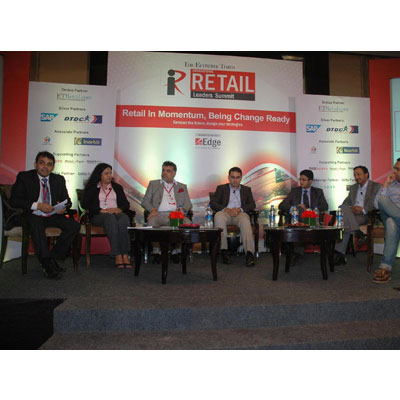
    Mumbai, August 23, 2013: The Indian retail market, currently estimated at USD 490 billion, is project to grow at a CAGR of 6% to reach USD 865 billion by 2023. E-tailing will emerge as a key retail channel, which will drive the growth of corporatized retail. The size of e-tailing is estimated to grow from the current USD 1 billion at 0.2% of the retail market to USD 56 billion (in real terms) at 6.5% of the total market by 2023, driven by an ecosystem favouring the e-tailing market. The share of corporatized brick & mortar retail in total merchandise retail will at best grow from the current 7% to 17% by 2023. These were the key takeaways from Technopak’s “Vision 2020 Emerging Consumer Trends & Retailer Responses” presented at ET Edge International Retail Leaders Summit on “Retail in Momentum, Being Change Ready” held in Mumbai.

    While making his presentation, Ankur Bisen, Vice President, Technopak, said, “Despite the persistent economic pressures and slowdown in India’s economy, merchandise retail will continue to witness sustained growth. An increasing share of incremental merchandise retail will come from urban and semi-urban centers, which in turn, is an outcome of rapid urbanization experienced in India. Apart from these urban centers, demand will also come from the emerging towns and clusters where primary source of livelihood has moves from agriculture to other professions. The retail chain will continue to face structural issues encompassing real estate, labour, sourcing and supply chain that will not allow corporatized brick & mortar retail to grow beyond the stated estimate.”

    In his opening remarks, Deepak Lamba, President, TCL-BCCL, said, “The Indian retail business is a unique industry with multiple challenges as the retail industry is undergoing a major transformation with many opportunities accompanied by complexity. The Government has initiated a series of fiscal and economic reforms bringing back a sense of optimism within the retail business fraternity and this needs to be capitalized by the industry leaders through deliberation and discussion at such platform.”

    The panelists at ET Edge International Retail Leaders Summit on “Retail in Momentum, Being Change Ready” included: Manish Tiwari, ED, Hindustan Unilever Ltd.; Avani Davda, CEO, Starbucks India; Tim Eynon, Business Head, Provogue; Govind Srikhande, Customer Care Associate & MD, Shoppers Stop; Sandeep Dhar, CEO, Tesco HSC; Romie Dutt, Executive Director & CE, Sahara Q Shop; Himanshu Chakrawarti, CEO, The MobileStore; Devendra Chawla, President – Food Bazaar, Future Group; Rahul Mehta, President, CMAI; Prof. P K Sinha, Prof. of Retailing, IIM A; Dinanath Dubhashi, MD & CEO, L&T Finance; Mahesh Murty, Founder, Seedfund; Harish Bijoor, Brand-expert & CEO, Harish Bijoor Consults Inc.; Deepa Thomas, eCommerce Evangelist, eBay – India; Laurent Dhaeyer, President, EBS; and John Goldrick, Global Sales Director, SAP amongst others.

    The strategic discussions amongst leaders and visionaries presented India and global industry barons & visionaries on a single platform to put across their concerns to the policy makers, discover new opportunities, create and expand into untapped markets and understand the existing lacunae and loop-holes that impact profits and market share, thus enriching the industry at large. This conference will see participation from c+ level executives, business & functional heads from established as well as upcoming retail chains, and will focus on bringing the greatest international minds and the industry on the same platform to discuss challenges, exchange ideas and network.

    “A visible conversion from saving to spending economy is taking place in India in recent times following emergence of a sizeable young generation in the society, said Prof. P K Sinha from IIM, Ahmedabad. “Even in low income category, people are going for buying in format of retail outlets though majority of such format is dominated by Food and Grocery category. The demography in the retail consumer space is changing fast in India due to induction of technology mainly to online sales and mobile based transaction. The growing competition and expansion of retail network, there would soon be tapering on profitability among the large players.” In this context, Prof Sinha suggested four ‘A’ —Ambience, Accessibility, Availability, Affordability—for managing the customer expectation.

    Govind Shrikhande, MD, Shoppers Stop, said, “In light of the challenging economic scenario, most retailers need to change their business practices for survival. What can international retailers contribute to Indian entrepreneurs? We need an Anand-type cooperative structure for retail sector in India to sustain growth.”

    CP Toshniwal, Group CFO, Future Group, said,” The real challenge on retail industry is largely dependent on the categories of retail such as grocery. Retail business has low margin and high volume whereas lifestyle retail has high margin and low volume business. FDI will not help the fortune of Indian retail business.”

    Rahul Mehta, President of CMAI, said, “Indian retailers would evolve their own strategy and any amount of FDI will not have any impact on the domestic industry. In fact, Rahul Vira, Business Head, Gitanjali Group, said, foreign jewellery design and brand are not viable in India since Indians prefer to have their own products mainly during marriages and any festivals. “Foreign products cannot meet the aspiration of Indian customers,” Vira added.

    “In slowdown, do what is right for the consumers. When the cycle turns, we shall be a far more consumer-centric company than what we are today,” Manish Tiwari, ED – Sales & Customer Development at Hindustan Unilever Ltd. All ET Edge Summit Leaders said continuing with planned investments is important for a long-term growth.

    Devendra Chawla, President – Food Bazaar – Future Group said when it clubbed several products of cleaners from toilets to floor and glass into a single pack, it was an instant hit during the recent Independence Day week sales. “It’s akin to the Indian thali versus a la carte menu in a restaurant – Sometimes you want to order all dishes separately or you want it like a thali with some dishes together. This saves consumer time and due to great value, any one of the cleaner which otherwise would not have been picked gets into the home helping, increase penetration and consumption.”

    Marketing consultant Harish Bijoor said that when he recently conducted a survey covering over 18,000 kirana stores that don’t offer discounts and over 220 modern trade outlets that thrived on price-offs, he found out that 90% of the customers were loyal to smaller shops compared to around 40% for modern stores. Yet, discounting merchandise contributed over 35% of leading food and grocery retailers’ sales during the year ended March. For global players such as Starbucks, its value for money is what consumers are really seeking out. “We don’t see any pessimism and Indian consumers spend when they see value in the brand,” said Avani Davda, CEO, Starbucks India, the 50:50 joint venture between Starbucks Corporation and Tata Global Beverages that operates Starbucks cafes in the country.

    ET Edge has been founded to empower multiple sector, industries and segments through the dispersion of critical business knowledge through strategically developed conference and summits. Foreseeing the tremendous potential, which India has in store, especially in sectors such as Retail, Infrastructure, Healthcare, education, Technology and BFSI, ET Edge strives to bring together visionaries and key global leaders through its enriched knowledge through strategically developed conferences and summits. Foreseeing the tremendous potential, which India has in store, ET Edge strives to bring together visionaries and key global leaders through it enriched knowledge platforms to aid the symbiotic relationship societies and businesses share. Extensive market research with core practitioners, experts, leading trend setters and policy makers is conducted to ensure that these platforms are unparalleled in the vertical they cater to. Visionaries and industry leaders contributing as speakers will only ensure that these platforms set themselves apart.

    Deepak Lamba, President, TCL-BCCL, said, “We aim to develop knowledge destinations by channelizing global intelligence vide summits and conferences through fortifying lectures, workshops, panel discussions, roundtables and case studies. The forums would ensure that the senior decision makers are equipped with information to respond to challenges being faced from a global perspective. We have substantial expedients for the business and visualize it taking mammoth proportions while developing into a one-stop destination for the stalwarts of the industry. The plan is to formulate a focused holistic solution for key sectors, which contributes largely towards the GDP of the nation.”

    Times Conferences Ltd. (TCL) specializes in building B2B communities through the creation of high octane content with a long term objective of becoming a holistic destination for industry segments. TCL will deploy unique B2B initiatives to attain high levels of saliency and attract the brightest minds across industry sectors. These initiatives leave back a footprint on the industry and over the years become a focal point of deliberation on key industry issues, and disseminating critical industry information.

    For more information: Tabassum Mukadam, Adfactors PR Mob: 09930040970, 09820531932

  • TRAI agrees to raise FDI limits as demanded by News Channels & FM Radio

    TRAI agrees to raise FDI limits as demanded by News Channels & FM Radio

    NEW DELHI: In the recommendation issued by the Telecom Regulatory Authority of India today, the foreign direct investment for FM Radio should be increased to 49 per cent, and for teleports, DTH, HITS, mobile and cable television networks to 100 per cent.

    In the recommendations issued just a day after it was asked by the government to speed-up its views, TRAI also conceded a long-standing demand of news and current affairs television channels by recommending that they should be permitted 49 per cent FDI.

    The TRAI recommendations in essence stuck to its earlier Consultation Paper on the subject issued on 30 July.

    The final recommendations have been issued after an open house and the responses of 24 stakeholders on the Consultation Paper.

    However, TRAI said that in the cases of both FM Radio and news channels where the existing limit is 26 per cent, the clearance would be through the Foreign Investments Promotion Board.

    In the case of teleports, DTH, HITS, mobile and cable television networks where the limit was 74 per cent, TRAI said that it can be raised to 100 per cent of which 49 per cent would be automatic and the rest would be through FIPB.

    No change had been recommended in the case of downlinking of TV Channels and uplinking of general entertainment (non-news) channels where the upper limit is 100 per cent through FIPB.

    The Authority recommended that with the enhancement of FDI limits in respective segments of broadcasting sector, the other security/terms in the foreign investment policy and other license/permission conditions in the respective segments of the broadcasting sector should continue to apply.

    TRAI said the government should ensure that the process of FIPB approval is streamlined and the requests for FDI are processed in a time bound manner.

    The Information and Broadcasting Ministry had on 11 December 2007 sought a comprehensive set of recommendations from the Authority on FDI in the different segments of the broadcasting sector. The Authority gave its recommendations on 26
    April 2008.

    In 2009, the Department of Industrial Policy and Promotion (DIPP) modified the methodology of assessment of foreign investment in Indian companies. In view of this, the MIB on 30 September 2009 once again made a reference to TRAI to revisit the recommendations on FDI in the broadcasting sector.

    The Authority gave its recommendations on 30 June 2010. Based on the views expressed by the government, these recommendations were partially revised on 3 June 2011. In line with the last recommendations of TRAI, the FDI limits and approval route for various segments of the broadcasting sector were revised by the government on 20 September 2012.

    MIB sent a reference to the Authority on 12 July 2013, indicating that the government is re-examining the current FDI policy with a view to easing FDI inflow and liberalising the limits/caps. In this context, MIB requested the Authority to examine the FDI limits of various segments in the broadcasting sector and to furnish its recommendations.

    In its recommendations, the Authority said it recognised the growing convergence between the broadcasting and telecom sectors and has been broadly guided by the principles of ensuring a level-playing field between competing technologies and maintaining consistency in policy across both sectors.

    TRAI says that in its reference, the Ministry had indicated it was re-examining the current FDI policy and liberalising the limits/caps with a view to easing FDI inflow. In this context MIB has requested the Authority to examine the FDI limits of various segments in the broadcasting sector and to furnish its recommendations.

    The government is contemplating enhancement in the FDI limit for telecom services to 100 per cent with FDI up to 49 per cent through the automatic route and FDI beyond 49 per cent through FIPB. Carrying the same logic forward, and keeping in mind the fact that the ongoing digitisation of the cable TV services in the country would give a big impetus to the convergence of the broadcasting and telecom infrastructures, the same limits and route ought to be made applicable to the carriage services in the broadcasting sector.

    For downlinking of TV channels, no distinction has been made between the two categories while prescribing the FDI limits. This is because the ingredients of content can only be controlled at the uplinking end. Hence, 100 per cent FDI is allowed in downlinking of channels in India. However, FIPB approval is required. Further, in case of channels uplinked from a foreign land, additional conditions have been mandated for permitting downlinking in the Policy Guidelines for downlinking of Television Channels dated 11 November 2005.

    While granting permissions for uplinking of channels from within the country as well as for downlinking of all channels uplinked from within the country or abroad, the I&B Ministry takes security clearance from the Home Ministry. Since content can be sensitive in nature, it is appropriate to have checks and balances at different stages viz. to screen for any potential hazard from a national perspective. In view of these considerations, the status quo ought to be maintained regarding the route for approval of any FDI.

    For uplinking of TV channels of the non-news and current affairs category, 100 per cent FDI is permitted through the FIPB route. The status quo may continue.

    For uplinking of TV channels of news and current affairs category, the existing FDI limit is 26 per cent through the FIPB route. An increase in the FDI limit for news & current affairs channels will enable access to more resources for these channels at competitive rates. These resources can be applied for upgrading news gathering infrastructure and quality of presentation. It could also reduce the dependence of TV channels on advertisement revenue. Therefore, the FDI limit for news & current affairs channels in the uplinking guidelines may be increased from 26 per cent to 49 per cent through the FIPB route.

    There are existing provisions in the uplinking guidelines to safeguard management and editorial control in news creation. These include: i) requirement to employ resident Indians in key positions (CEO of the applicant company, 3/4th of the Directors on the Board of Directors, all key executives and editorial staff), ii) the largest Indian shareholder should hold at least 51 per cent of the total equity, iii) reporting requirements when any person who is not a resident Indian is employed/ engaged etc. If the FDI limit in uplinking of TV channels of the news and current affairs category is enhanced to 49 per cent, then as per provision at ii) above the remaining Indian shareholding (51 per cent) would have to be with a single Indian shareholder. The more general issue, on which stakeholders may wish to make suggestions, is whether or not any changes are at all required in these conditions. In fact, a better way to ensure that content deemed undesirable or subversive in nature is not broadcast through TV channels is by having proper content monitoring and regulation through a content code, instead of using FDI limits as the tool for this purpose.

    The government has announced the Phase III of expansion of FM radio. In this phase it is envisaged that 839 new private FM radio stations will come up, expanding the coverage of private FM radio stations from 87 cities to 313 cities. The auction of frequencies for FM radio is likely to be taken up by the government shortly. Easy availability of capital to operators through multiple sources at competitive rates would ensure better participation in the auction by the operators.

    The phase III policy also expands the sphere of activities that can be taken up by the FM radio operators. These include carriage of information pertaining to sporting events, live commentaries of sporting events of a local nature, traffic and weather, cultural events and festivals, examinations, results, admissions, career counselling and employment opportunities, public announcements pertaining to civic amenities like electricity, water supply, natural calamities, health alerts as provided by the local administration etc. For building up of infrastructure for such services, additional investments will be required. Keeping in view all these aspects, the FDI limits may be enhanced from 26 per cent to 49 per cent through FIPB route for the FM radio sector.

    In the past, FDI limits for FM radio have been fixed on the same lines as that for TV news channels, on the rationale that FM radio and news and current affairs channels are of a similar nature from the sensitivity point of view. Enhancing the limit to 49 per cent through the FIPB route will also ensure that the FDI policy for FM radio will remain aligned to the FDI policy for uplinking of the news and current affairs channels, which is also being considered for enhancement to 49 per cent through the FIPB route.

    The Phase III policy of the government for FM Radio also prescribes a similar condition for safeguard of managerial control of radio channels as in the guidelines for uplinking of news and current affairs channels. If the FDI limit for FM radio is enhanced to 49 per cent, then, as in the case of news and current affairs channels, the remaining Indian shareholding (51 per cent) has to be with a single Indian shareholder.

    Click here for TRAI-FDI-Recommendation

  • I&B Ministry asks TRAI and PCI to accelerate views on the proposed FDI limits

    I&B Ministry asks TRAI and PCI to accelerate views on the proposed FDI limits

    NEW DELHI: In the light of the current scenario of demands for growth in the media sector escalating, Information and Broadcasting Ministry has asked the Telecom Regulatory Authority of India to speed up its comments on the reference made earlier regarding foreign investment limits in the broadcasting sector.

    In its communication to TRAI, the Ministry has sought comments regarding the paper prepared by the Finance Ministry relating to revision in existing FDI caps in the broadcasting sector. The paper had been forwarded to TRAI seeking its recommendations under Section 11(1)(a)(ii) and (iv) of the TRAI Act, 1997, which pertains to the terms and conditions of license to a service provider and measures to facilitate competition and promote efficiency in the operation of telecommunication services to facilitate growth in such services.

    In a similar separate communication, the ministry has requested the Press Council of India (PCI) to further its advice on the existing sectoral caps of FDI in print media under Section 13 of PCI Act 1978. The advice has been sought in view of the communication received from the Finance Ministry which aims to review policy of sectoral caps of FDI in print media. Section 13 authorises PCI to express its opinion in regard to any matter referred to it by the Central Government.

    The paper proposes to raise the existing FDI cap of 26 per cent which is through FIPB route to 49 per cent through automatic route in the news sector. In the non-news sector, the existing FDI cap is 100 per cent through FIPB route which has been proposed to be 100 per cent through automatic route without the requirement of FIPB’s approval.

    In a consultation paper issued in July following the ministry’s note of the same month, TRAI had reiterated its earlier proposal for increasing the foreign direct investment for FM Radio to 49 per cent, and said the FDI for teleports, DTH, HITS, mobile and cable television networks must be raised to 100 per cent.

    TRAI also conceded a long-standing demand of news and current affairs television channels by recommending that they should be permitted 49 per cent FDI.

    However, TRAI had said that in the cases of both FM Radio and news channels where the existing limit is 26 per cent, the clearance would be through the Foreign Investments Promotion Board.

    In the case of teleports, DTH, HITS, mobile and cable television networks where the limit was 74 per cent, TRAI said that it can be raised to 100 per cent of which 49 per cent would be automatic and the rest would be through FIPB.

    No change had been recommended in the case of downlinking of TV Channels and uplinking of general entertainment (non-news) channels where the upper limit is 100 per cent through FIPB.
    TRAI had earlier given recommendations on the same subject in April 2008 and again on 30 June last year following ministerial references, on the basis of which changes had been carried out. The last such change was on 20 September 2012.

  • Business chambers welcome hike in FDI in telecom

    Business chambers welcome hike in FDI in telecom

    NEW DELHI: The Federation of Indian Chambers of Commerce and Industry (FICCI) and the Indo – American Chamber of Commerce (IACC) has welcomed the decision of the government to increase the foreign direct investment in the telecom sector to 100 per cent.


    According to a decision on FDI taken in a meeting chaired by Prime Minister Manmohan Singh, it had been decided to allow up to 49 per cent FDI by the automatic route for basic and cellular services etc., and from 49 per cent to 100 per cent through the Foreign Investments Promotion Board.


    According to FICCI, the decision on enhancement of FDI limit in the Indian telecom sector from 74 per cent to 100 per cent is a positive sign and showcases government’s commitment towards improving the current investment sentiment in the sector and aiding the telecom industry to recuperate from its debt issues. “Along with the National Telecom Policy 2012 and other necessary reforms, this pro-industry announcement will benefit the Indian economy and consumers in the long term,” said FICCI president Naina Lal Kidwai.


    Welcoming the proactive steps taken by the government to ease the foreign direct investment (FDI) norms in the country, primarily to stem the deteriorating current account deficit, Indo-American Chamber of Commerce (IACC) national president Shourya Mandal said, “These measures are inevitable against the backdrop of steep fall in the cross-country capital flows and subsequent heightened competition among the nations to attract the limited capital.”


    In a statement Mandal said, “Undoubtedly, we have to put in place a set of checks and balances to uphold our sovereignty and interest of the domestic industry, while attracting FDI. Our rules and regulations are framed taking cognizance of that factor. Unwarranted polemics on that count should be avoided to chase our goal of transforming ourselves into a developed country from an emerging economy.”


  • I&B sector brings in over Rs 7965 crore between April 2010 and May 2013

    I&B sector brings in over Rs 7965 crore between April 2010 and May 2013

    NEW DELHI: The total foreign direct investment inflows between April 2010 to May 2013 into the country in the sector of information and broadcasting (including print and media) was Rs 7,965.34 crore.


    This included Rs 598.2 crore in the current year from April 2013.


    The inflow in 2012-13 was Rs 2,215.87 crore, while it was Rs 3,264.09 crore in 2011-12.


    The inflow in 2010-11 was Rs 1,887.17 crore. The Parliament was informed of these developments by Commerce and Industry minister Anand Sharma today.


    Complete/separate data on NRI (non-resident Indian) investment is not maintained by the Reserve Bank of India. However, the above FDI inflows data on NRI investment, includes investment by NRIs, who have disclosed their status as NRIs, at the time of making their investment.
     

  • TRAI releases FDI in media consultation paper; seeks industry feedback

    TRAI releases FDI in media consultation paper; seeks industry feedback

    NEW DELHI: Even while reiterating its earlier proposal for increasing foreign direct investment (FDI) in FM Radio to 49 per cent, the Telecom Regulatory Authority of India (TRAI) in its consultation paper today said that permissible FDI in teleports, DTH, HITS, mobile and cable television networks must be raised to 100 per cent.


    It took up the FDI issue in the paper following a reference by the Information and Broadcasting Ministry on 22 July. The TRAI has conceded a long-standing demand of news and current affairs television channels by recommending that they should be permitted 49 per cent FDI. Stakeholders have to respond to the paper by 12 August.


    However, TRAI has said that in the cases of both FM Radio and news channels where the existing limit is 26 per cent, the clearance would be through the Foreign Investments Promotion Board.


    In the case of teleports, DTH, HITS, mobile and cable television networks where the limit was 74 per cent, TRAI says that it can be raised to 100 per cent of which 49 per cent would be automatic and the rest would be through FIPB.


    No change has been recommended in the case of downlinking of TV channels and uplinking of general entertainment (non-news) channels where the upper limit is 100 per cent through FIPB.


    TRAI says that in its reference, the Ministry had indicated it was re-examining the current FDI policy and liberalising the limits/caps with a view to easing FDI inflow. In this context ministry has requested the Authority to examine the FDI limits of various segments in the broadcasting sector and to furnish its recommendations.


    TRAI had earlier given recommendations on the same subject in April 2008 and again on 30 June last year following Ministerial references, on the basis of which changes had been carried out. The last such change was on 20 September 2012.


    Currently, the FDI limit in carriage services is 74 per cent , of which 49 per cent is permissible through the automatic route. Any FDI beyond 49 per cent has to go through the FIPB route. The same FDI limits and approval route were prescribed for broadcast carriage services and telecom services on the ground that both are infrastructural services akin to each other and there is a growing convergence between the broadcasting and telecom infrastructures.


    The Government is contemplating enhancement in the FDI limit for telecom services to 100 per cent with FDI up to 49 per cent through the automatic route and FDI beyond 49 per cent through FIPB. Carrying the same logic forward, and keeping in mind the fact that the ongoing digitisation of cable TV services in the country would give a big impetus to the convergence of broadcasting and telecom infrastructure, the same limits and route ought to be made applicable to carriage services in the broadcasting sector, it says.


    For downlinking of TV channels, no distinction has been made between the two categories while prescribing FDI limits. This is because the ingredients of content can only be controlled at the uplinking end. Hence, 100 per cent FDI is allowed in downlinking of channels in India. However, FIPB approval is required. Further, in case of channels uplinked from a foreign land, additional conditions have been mandated for permitting downlinking in the Policy Guidelines for downlinking of Television Channels dated 11 November 2005.


    While granting permissions for uplinking of channels from within the country as well as for downlinking of all channels uplinked from within the country or abroad, the MIB takes security clearance from the Home Ministry. Since content can be sensitive in nature, it is appropriate to have checks and balances at different stages namely to screen for any potential hazard from a national perspective. In view of these considerations, the status quo ought to be maintained regarding the route for approval of any FDI.


    For uplinking of TV channels of the non-news and current affairs category, 100 per cent FDI is permitted through the FIPB route. The status quo may continue, TRAI says..


    For uplinking of TV channels of news and current affairs category, the existing FDI limit is 26 per cent through the FIPB route. An increase in the FDI limit for news & current affairs channels will enable access to more resources for these channels at competitive rates. These resources can be applied for upgrading news gathering infrastructure and quality of presentation. It could also reduce the dependence of TV channels on advertisement revenue. Therefore, the FDI limit for news & current affairs channels in the uplinking guidelines may be increased from 26 per cent to 49 per cent through the FIPB route.


    There are existing provisions in the uplinking guidelines to safeguard management and editorial control in news creation. These include: i) requirement to employ resident Indians in key positions (CEO of the applicant company, three fourth of the Directors on the Board of Directors, all key executives and editorial staff), ii) the largest Indian shareholder should hold at least 51 per cent of the total equity, iii) reporting requirements when any person who is not a resident Indian is employed/ engaged etc.


    If the FDI limit in uplinking of TV channels of the news and current affairs category is enhanced to 49 per cent , then as per provision in ii) above the remaining Indian shareholding (51 per cent) would have to be with a single Indian shareholder. The more general issue, on which stakeholders may wish to make suggestions, is whether or not any changes are at all required in these conditions. In fact, a better way to ensure that content deemed undesirable or subversive in nature is not broadcast through TV channels is by having proper content monitoring and regulation through a content code, instead of using FDI limits as the tool for this purpose.


    The Government has announced the Phase III of expansion of FM radio. In this phase it is envisaged that 839 new private FM radio stations will come up, expanding the coverage of private FM radio stations from 87 cities to 313 cities. The auction of frequencies for FM radio is likely to be taken up by the Government shortly. Easy availability of capital to operators through multiple sources at competitive rates would ensure better participation in the auction by the operators.


    The phase III policy also expands the sphere of activities that can be taken up by the FM radio operators. These include carriage of information pertaining to sporting events, live commentaries of sporting events of a local nature, traffic and weather, cultural events and festivals, examinations, results, admissions, career counselling and employment opportunities, public announcements pertaining to civic amenities like electricity, water supply, natural calamities, health alerts as provided by the local administration etc. For building up of infrastructure for such services, additional investments will be required. Keeping in view all these aspects, the FDI limits may be enhanced from 26 per cent to 49 per cent through FIPB route for the FM radio sector.


    In the past, FDI limits for FM radio have been fixed on the same lines as that for TV news channels, on the rationale that FM radio and news and current affairs channels are of a similar nature from the sensitivity point of view. Enhancing the limit to 49 per cent through the FIPB route will also ensure that the FDI policy for FM radio will remain aligned to the FDI policy for uplinking of the news and current affairs channels, which is also being considered for enhancement to 49 per cent through the FIPB route.


    The Phase III policy of the Government for FM Radio also prescribes a similar condition for safeguard of managerial control of radio channels as in the guidelines for uplinking of news and current affairs channels. If the FDI limit for FM radio is enhanced to 49 per cent, then, as in the case of news and current affairs channels, the remaining Indian shareholding (51 per cent ) has to be with a single Indian shareholder.

  • Zeel’s Q1-2014 PAT up by 42.6 per cent (y-o-y)

    Zeel’s Q1-2014 PAT up by 42.6 per cent (y-o-y)

    BENGALURU: Content and broadcast player Zee Entertainment Enterprises Limited (Zeel) unaudited results for Q1-2014 reported a growth of 42.6 per cent ( y-o-y) PAT, with a PAT margin of 23 per cent at Rs 223.9 crore as compared to the Rs 157 crore during the corresponding quarter of FY-2013. Consolidated operating revenues were up 15.5 per cent (y-o-y) at Rs 973.3 crore during Q1-2014 from the Rs 843 crore reported for Q1-2013.

    Let’s take a look at Zeel’s Q1-2014 performance

    Advertising revenues for Q1-2014 were higher at Rs 530.1 crore, recording an 18.5 per cent growth over Q1-2013’s Rs 447.2 crore.

    Zeel’s subscription revenues for Q1-2014 were also up by 16.5 per cent at Rs 421.1 crore as compared to the Rs 361.1 crore during corresponding period last year. Zeel’s domestic subscription revenues stood at Rs 316.8 crore (up 26.5 per cent as compared to Q1-2013); while its international subscription revenues were Rs 107.3 crore for Q1-2014 (down 5.6 per cent y-o-y as against Q1-2013.

    Other sales and services revenues were down 39.7 per cent for Q1-2014 at Rs 19.1 crore as compared to Rs 31.7 crore during Q1-2013.

    Zeel’s operating costs increased 9.6 per cent to Rs 410.8 crore for Q1-2014 from Rs 375.7 crore in Q1-2013. Its employee costs increased 7.7 per cent to Rs 95.6 crore from Rs 88.6 crore during Q1-2013. Selling and other expenses saw a 20.7 per cent jump to Rs 175.4 crore during Q1-2014 from Rs 145.3 crore reported in Q1-2013.

    Zeel offered and allotted 55,48,400 equity shares at a price of Rs 119.90 per share upon exercise of ESOP by its employees during Q1-2014. During the AGM held in July 2013, Zeel shareholders passed a special resolution approving enhancement of FII limits in the company beyond the current limit of 49 per cent to the maximum sectorial limit allowed under FDI applicable regulations.

    Zeel chairman Subhash Chandra said, “The economy during the quarter has continued to face challenges due sharp depreciation in rupee against major currencies leading to elevated current account deficit, balance of payment, inflation and adverse fiscal deficit. In spite of this lackluster growth television media industry has posted a comparatively robust growth on back of sustained advertisement spends by the consumer goods sector.”

    “Our performance during the quarter reflects the investments that Zee is making to grow its business and market share. This has been accompanied by a strong improvement in operating performance of the company during the quarter. In a highly competitive space, Zee continues to build its media assets and in the process continues to create value for the shareholders. We have a strong balance sheet and I am confident that we would take advantage of the growth opportunities ahead of us,” added Chandra.

    Zeel managing director and CEO Punit Goenka said, “The subscription revenue during the quarter has shown robust increase and with digitization rollout, will improve medium term. Sports performance for the quarter has been good, but due to heavy sports calendar and rupee depreciation, the business is expected to be in losses for some time.”

    “The phased implementation of Trai regulation with respect to advertising inventory based on clock-hour has started and in expected to be fully in place by the end of second quarter, DAS in phase I and II also moved a step further with MSOs’ making substantial progress in capturing consumer data and taking first steps towards implementing packaging”, added Goenka.

    “While competitive intensity remains high in the Indian television industry, we continue to make efforts towards further enhancing our market share. Our content focused approach combined with better monetization of subscription revenues, will contribute to company delivering steady return in the years ahead”, added Goenka further.